

News
Terrorists on rampage! Close to four million Nigerians now in IDP camps

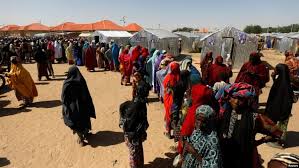
Some 3,725,593 are currently living in 3,900 Internally Displaced Persons (IDP) camps in Nigeria, indicating how bad the security situation in the country, currently on the upscale, has become.
Vanguard is reporting that the country is paying a heavy price for years now over the protracted cases of insecurity sweeping citizens from their homes into the camps, where they feel more protected from the terrorists ravaging their villages.
Relying on data compiled from the International Organisation for Migration Displacement Tracking Matrix, the National Bureau of Statistics, and humanitarian agencies and government officials showed that the figure is only an estimate, as displacement patterns change frequently, the report says.
The crisis has largely been driven by insurgency in the North-East, banditry in the North-West, farmer–herder conflicts in the North-Central, and communal clashes in parts of the South.

Nigeria’s 3.726 million displaced population is larger than the population of at least 63 countries whose populations are under 3.7 million, according to United Nations population estimates.
Among countries with fewer than 3.7 million people are Uruguay (3.4m), Jamaica (2.8m), Qatar (2.7m), Namibia (2.6m) and Botswana (2.6m).
Across several northern states, the construction and maintenance of IDP camps have become a permanent feature, resembling conditions usually associated with wartime.
Although Nigeria operates a democratic system, many communities face realities akin to conflict zones, as persistent attacks continue to uproot families and destroy livelihoods.
Entire communities have been forced out of their ancestral homes due to repeated attacks by terrorists, bandits, killer herdsmen, cattle rustlers and kidnappers, who invade villages, destroy farms and abduct residents.
The result is the emergence of hundreds of displacement camps and thousands of homeless citizens who were forced out of their homes through no fault of theirs.
The situation in Borno and Yobe states, which had the largest number of IDP camps, seems to have improved with significant decline following resettlement programmes by the two state governments, while Babagana Zulum, Governor of Borno is said to have systematically shut down many camps and resettled residents in their communities.
Currently, only the Madinnatu camp in Jere Local Government Area remains functional, according to report, .
However, the report indicates, adding however that a recent attack in Ngoshe community in Gwoza LGA forced the authorities to open a temporary camp near Pulka to accommodate thousands of displaced residents.
More than 3,000 residents fled Ngoshe, while over 300 civilians, mostly women and children, were abducted during the attack.
Addressing displaced persons during a visit to the Pulka camp, Governor Zulum said: “We are here to commiserate with the people of Ngoshe who lost their loved ones, following the unfortunate incident that occurred last Tuesday. The situation is very sad and our hearts go out to all those affected by this tragedy.
“I want to assure you that we will do everything possible to address the unfortunate situation that has befallen this community.
“For now, we will distribute food items to those affected and I have directed that cooking points be established so that everyone in this community can receive meals from a central kitchen.”
Meanwhile, in Yobe State, under Governor Mai Mala Buni, all officially designated camps have been closed after displaced residents were resettled in their communities.
Zamfara hosts 276,887 IDPs in 9 camps
In Zamfara State, more than 276,000 residents have been displaced by persistent bandit attacks.
Reports indicate that at least 107 villages were overrun by bandits between 2009 and 2026, forcing thousands to flee to Gusau, the state capital.
Data from the Zamfara State Ministry of Humanitarian and Disaster Management showed that 276,887 IDPs were recorded as of March 2026.
Of this number, about 75 per cent have experienced multiple displacement, while only 18 per cent live in formal camps.
Major camps include Tsunami, Mareri, Lalan, Premier, Tudun Wada, Unguwar Gwaza and Anka camps, alongside 46 host community locations.
According to Malam Sani Aminu, an official in charge of food supplies at the Tsunami camp, the state government provides food items such as maize, millet and sorghum.
The Commissioner for Humanitarian Affairs, Salisu Musa Tsafe, said the number had reduced by about 89,000 as security improved, allowing some residents to return home.
Benue home to over 500,000 IDPs
According to the International Organization for Migration, Benue State hosts over 500,000 internally displaced persons, making it one of the worst-hit states.
The state currently operates 14 officially recognised camps.
The Commissioner for Humanitarian Affairs, Mr. Aondowase Kunde, said the government of Governor Hyacinth Alia was shifting from emergency relief to a long-term solution.
“The government is transitioning from temporary relief to a durable solutions framework, focussing on voluntary return, resettlement and reintegration.”
Authorities have begun building 60 permanent two-bedroom houses in Yelewata community, with plans to construct 5,700 homes for displaced residents.
Additionally, 600 hectares of farmland have been allocated to IDP farming cooperatives to promote self-reliance.
90,000 displaced in Taraba camps
In Taraba State, about 90,000 displaced persons are currently sheltered in eight camps located in Peva and Kufai Ahmadu in Chanchanji Ward of Takum LGA.
Many others have crossed into neighbouring communities in Benue State for safety. The crisis prompted a joint visit by Governors Agbu Kefas and Hyacinth Alia to affected communities.
However, investigations revealed that many camps lack basic amenities.
Justin Tyopuusu, Special Adviser to the Governor on Digital Economy, said the government was working to restore security so displaced residents could return home before the rainy season.
Kebbi shuts camps, resettles displaced residents
On its part, Kebbi State government said it currently had no active IDP camps, following successful resettlement of displaced residents, the activities of terror group, Lakurawa, notwithstanding.
Special Adviser on Communications, Abdullahi Idris Zuru, said camps previously located in Kebbi South were closed after security improved.
“We have been able to contain ceaseless attacks on our communities as joint armed forces patrols pushed back the terrorists,” he said.
He added that Governor Nasir Idris provided housing, food, clothing and medical support for the affected communities.
Kwara’s sole camp remains unused
In Kwara State, the only IDP camp established by the federal government in Patigi Local Government Area has never been used.
The North-Central Coordinator of the National Commission for Refugees Migrants and Internally Displaced Persons, Hajia Jumai Ahmed, expressed surprise at the development.
“Yes, there is an IDP camp established by the Federal Government at Patigi, but it has never been put to use,” she said.
Sources said Governor AbdulRahman AbdulRazaq preferred assisting victims directly through relief support and rehabilitation, rather than establishing camps.
The Director-General of Nasarawa State Emergency Management Agency, Dr. Ben Akwash, said the state had five IDP camps, including the major camp at Ugya in Toto LGA.
Other locations include Kadarko and Giza in Keana LGA, Agyragu in Lafia LGA, and Doma in Doma LGA.
He explained that population figures fluctuate, depending on the level of communal clashes.
Thousands displaced in Plateau
In Plateau State, relentless attacks across the state have displaced thousands of residents. Communities in Mangu, Barkin Ladi, Bassa, Riyom, Jos South, Kanam and Wase have suffered repeated attacks.
Unlike other states, most displaced residents in Plateau live with relatives, rather than in formal camps, a system that preserves social ties but strains host families.
Governor Caleb Mutfwang has also launched a task force to facilitate the safe return of displaced residents. The government has also begun a housing project in Ribakwa village in Bassa LGA to resettle affected families.
Adamawa camps run by communities
In Adamawa State, the government closed all official camps as far back as 2014, allowing communities to run their own shelters.
Camps currently operate in Malkohi, Labondo, Bole, Fufore and Sangere Marghi, relying largely on NGOs, religious organisations and philanthropists for support.
Many displaced residents now depend on farming, trade and small businesses for survival.
In Sokoto State, the government established a major IDP camp at Ramen Kura, within the state capital. The camp currently shelters over 2,500 displaced persons, mostly women and children, who fled terrorists’ attacks.
Officials said the camp was created as an emergency response to a surge in displacement from Gandi, Tureta, Goronyo and Gudu LGAs.
Although authorities provide food, water, healthcare and sanitation services, overcrowding and limited resources remain major challenges.
Estimated displaced persons in 36 states; Abia – 1,000; Adamawa -218,118; Akwa Ibom – 2,000; Anambra -1,500; Bauchi -66,489; Bayelsa -1,000; Benue – 500,182; Borno – 1,711,481; Cross River – 3,000; Delta -1,000; Ebonyi – 1,000; Edo -2,000; Ekiti – 500; Enugu – 500; Gombe – 52,383; and Imo – 1,000.








“This government is killing Nigerians. I repeat, President Tinubu’s government is killing Nigerians, literally destroying lives. He has failed in the most sacred duty of protecting the lives of the citizens of this country.”
These were the exact words of Rotimi Amaechi, former Minister of Transportation, with which he lashed out at President Bola Tinubu, accusing his administration of failing to protect the lives and property of Nigerians.
The former Governor of Rivers State, who conveyed his position via a statement on Tuesday by his media office, bemoaned the bomb blast that rocked parts of Maiduguri, the Borno State capital on Monday, attributing it to the abysmally incompetent government of the President, whom he said and lacked the basic leadership skills required to safeguard citizens.
Commiserating with the families of the victims, the African Democratic Congress (ADC) chieftain said Nigerians cannot continue to mourn while the government “lives lavishly and ostentatiously” without taking decisive action to end the country’s insecurity.
His words: “The Monday bombings in Maiduguri is not just a tragedy, it is a damning indictment of a leadership that has grown complacent, incompetent, and indifferent to the sufferings and death of Nigerians to ravaging bandits.
“While families mourn and communities live in fear, those in power issue hollow statements and make empty promises. In fact, now, they don’t bother to make promises anymore. They just move on as if nothing happened. Tinubu would rather be dining and partying in London while Nigeria burns. They just don’t care!
“How many more lives must be lost before they admit their failure? How many more communities must be shattered and destroyed before they take decisive action? Insecurity has become the daily reality of ordinary citizens, and yet the government continues to stumble, unprepared and unwilling to confront the menace with the seriousness it demands.
“Nigerians deserve safety, peace, and dignity, not negligence and continued excuses. If those in power cannot guarantee that, then they have no business clinging to authority. Leadership is not about rhetoric, it is about responsibility, action, and making the right decisions for the good of the people. Right now, this government has abandoned that responsibility, and the nation is paying the price.”
Empathising with the people of Borno State and the victims’ families, whose lives he said were “shattered because of Tinubu’s government failure to protect them,” the former Minister added: “Enough is enough. The President must resign.”

Senegal has announced that it is heading upstairs with an appeal to the Court of Arbitration for Sport the after as Les Lions de la Téranga (The Lions of Teranga), its national team was stripped of the Africa Cup of Nations title on Tuesday.
Established in 1984, the CAS, an independent organisation that resolves sports disputes worldwide has tailored procedural rules to render impartial decisions through arbitration and mediation, while bodies and athletes assign it the judicial authority to uphold an equal and just application of sporting regulations.
“The Senegalese Football Federation condemns this unjust, unprecedented and unacceptable decision, which brings African football into disrepute.
“To defend its rights and the interests of Senegalese football, the federation will, as soon as possible, file an appeal with the Court of Arbitration for Sport (CAS) in Lausanne,” a statement from the West African country, said hours after the CAF hammer fell on it for the behaviour of the team, which the confederation considered abandonment of the game in the AFCON 2025 finals.
Several Senegalese players controversially walked off the pitch in Rabat during the final on January 18 in protest when the hosts were awarded a penalty late in second-half stoppage time.
After Senegal’s players eventually returned having been coaxed back onto the pitch by captain Sadio Mane, Morocco missed the penalty and Pape Gueye went on to score the goal in extra time that gave his team a 1-0 victory.
CAF said that having studied Morocco’s appeal, “the Senegal national team is declared to have forfeited the match” and the result was “officially recorded as 3-0” in favour of Morocco.
The CAF Appeals Committee justified its decision by applying Articles 82 and 84 of the AFCON Regulations, which state that if a team “refuses to play or leaves the ground before the regular end of the match without the authorisation of the referee, it shall be considered (loser) and shall be eliminated for good from the current competition while losing its match by 3-0.
The Royal Moroccan Football Federation (FRMF) said in a statement its appeal was never intended to contest the sporting performance of the teams participating in this competition, but solely to request the application of the competition regulations.
It added: “The Federation reaffirms its commitment to respecting the rules, to the clarity of the competitive framework, and to the stability of African competitions.”
Vowing to appeal “as soon as possible” to the Court of Arbitration for Sport, Senegal’s football body, stated: “The Senegalese Football Federation condemns this unjust, unprecedented and unacceptable decision, which brings African football into disrepute.”
Minutes before the end of the match, some Senegalese supporters attempted a pitch invasion, while Senegal’s players halted the game for nearly 20 minutes to protest the late penalty awarded to Morocco.
The controversial spot-kick was awarded by Congolese referee Jean-Jacques Ndala right at the end of the allotted eight added minutes in normal time following a VAR check for a challenge on Brahim Diaz by El Hadji Malick Diouf.
The game was goalless at the time and Diaz could have won the trophy for Morocco with the spot-kick in the 24th minute of added time at the end of normal time.
But Senegal goalkeeper Edouard Mendy easily saved the weak attempted ‘Panenka’ chip by the Real Madrid winger, who was clearly distracted by the long delay that followed the penalty award.
The game at the Prince Moulay Abdellah Stadium then went to extra time, and Gueye’s brilliant 94th-minute strike won it for Senegal.
Several of the team’s players posted on social media after the announcement that they had been stripped of the title.
Defender Moussa Niakhate, who plays for French club Lyon, posted a picture of himself lifting the Africa Cup of Nations trophy with a message that said “they’re mad”, in an apparent reference to CAF.
In the immediate aftermath of the final, FIFA president Gianni Infantino had condemned “some Senegal players” for the “unacceptable scenes”.
“It is unacceptable to leave the field of play in this manner, and equally, violence cannot be tolerated in our sport, it is simply not right,” Infantino, who attended the match, said.
In late January, CAF imposed a series of disciplinary sanctions, including fines amounting to several hundred thousand euros, on the federations of both countries for unsportsmanlike conduct and violations of fair play principles.
The appeal trial of 18 Senegalese supporters, imprisoned since the final and sentenced to prison terms ranging from three months to one year for “hooliganism,” which was scheduled to take place on Monday, has been postponed until March 30.
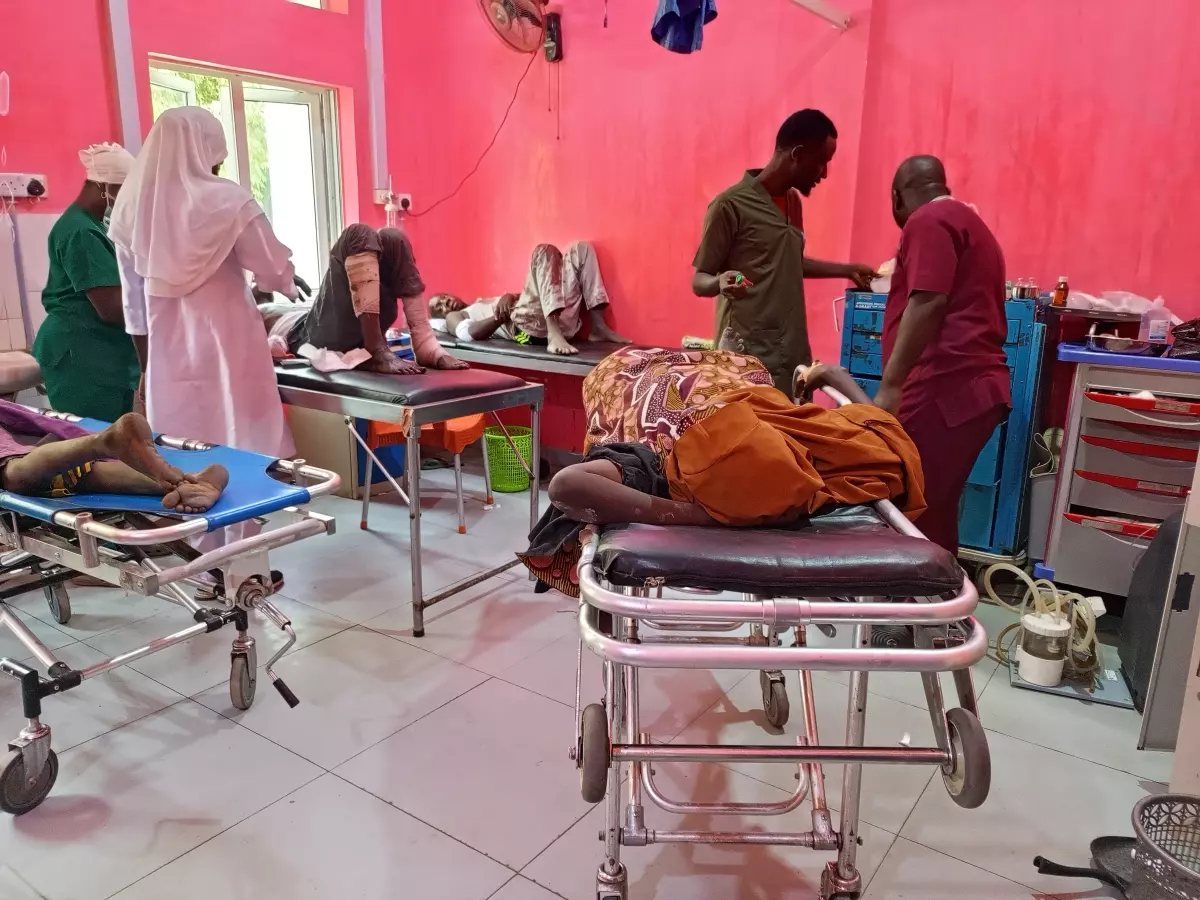
“We broke our fast and were about to leave after closing our shops when the first bomb detonated. I heard a loud sound and suddenly my neck started bleeding.”
These were the exact words of Abacha Mustapha, one of the victims of the Monday night’s bomb blasts that rocked parts of Maiduguri, Borno State – one of those currently recounting their ordeals in the ugly incident.
The multiple explosions said to have occurred simultaneously, came on a day President Bola Tinubu, while jetting out to the United Kingdom on a State Visit, ordered Service Chiefs to relocate to Maiduguri to take charge of the situation.
Though the police put the death toll to 23 and the wounded to 108, independent witnesses say the fatalities were as many as 40, as the incident has continued to generate a lot of public outcries with many calling on concerted action by the Federal Government to deal with the situation decisively.
Mustapha, who spoke from his bed at Umaru Shehu Hospital, Maiduguri, said the impact of the blast threw people into confusion as traders and residents scampered for safety.
His words: “It was chaotic. People were running in different directions. Some fell, others were shouting. I couldn’t even understand what had happened at first. My brother used his cloth to tie my neck to stop the bleeding before rushing me to the hospital. If not for him, I don’t know what would have happened.”
Mohammed Jubril, while giving his own account, said he could not explain how he survived the blasts as it happened very close to where he had gone to make payment for items he bought hours earlier.
‘’The blast deafened me immediately as I could no longer hear anything. People were running in different directions. The whole place was covered in smoke and I saw many people lying on the floor with injuries. As I speak with you, I cannot hear anything,’’ he said.
For Hauwa Sanusi, who claimed her younger sister had been missing since the blasts, appealed to all concerned to help locate her sister, saying almost in tears: “I don’t know what has become of my sister. She’s been missing since yesterday (Monday). We have visited some hospitals and couldn’t find her. We are in pain, please help us.”
Another survivor and a bricklayer at Umaru Shehu UltraModern Hospital, Bulumkutu, who sustained injuries on his legs and right hand, expressed worry over how his family could get food to eat, being the only bread-winner of the family.
“I am a father of five children, though I have to thank God for sparing my life, I am a bit worried over who will put food on the table for the children as my wife is jobless, and here I am on admission,” he cried.
At the State Specialist Hospital, Nura Bukar, who sustained a minor injury on his forehead, but was hospitalised due to heavy bleeding and needed blood transfusion, called on good Samaritans to visit the hospital and donate blood, saying there were many victims in critical condition who needed immediate blood transfusion to save their lives.
Aisha Mallum Gana, a victim in the female ward of Umaru Shehu Ultramodern Hospital, Maiduguri, who narrated how she was preparing to leave the market after the day’s activities when the explosion occurred, said: “I sell soft drinks at the Post Office area. I was about to close for the day when the blast occurred. Thank God that I sustained minor injuries on my face and my legs. I am seriously responding to treatment.”
The Chief Medica Director of UMTH, Professor Ahmed Ahijo, said 25 people were confirmed dead, while over 70 were currently responding to treatment in the hospital.
However, though witnesses said over 40 persons were killed by the blasts, Borno State police command said 23 people lost their lives, while 108 were injured in the suicide bomb blasts that rocked Post Office area, Monday Market and the main entrance of the University of Maiduguri Teaching Hospital, UMTH.
“More than 40 civilians, including the suicide bombers, were killed, as some of the injured ones died while receiving treatment at medical facilities within the metropolis,’’ a witness said.





Amaechi laments: Tinubu abysmally incompetent! *Nigerians dying like flies!

BREAKING! No Way! Senegal protests loss of AFCON title, heads to CAS

Who will feed my family? *Maiduguri blast victims cry out in distress!



-

 News4 weeks ago
BREAKING: Dokpesi’s family at war! Battle over AIT goes to court!
-

 News4 weeks ago
Applauding Professor Iwe’s five years of landmark achievements in MOUA, Umudike
-

 News4 weeks ago
Don’t sign new electoral act, ex-INEC commissioner tells Tinubu
-

 News4 weeks ago
BREAKING: Blackout in FCT, as residents vote! *We’re sorry – TCN
-

 News2 weeks ago
You advised Buhari to reject electronic transmission, Wike trolls Amaechi
-

 News4 weeks ago
BREAKING: Tinubu signs new electoral act into law, 24 hours after
-

 News4 weeks ago
Wike can’t exert absolute powers over FCT affairs – Kingibe
-

 News4 weeks ago
NCDMB demands prompt one percent mandatory remittances from oil, gas stakeholders