

News
Terrorists on rampage! Close to four million Nigerians now in IDP camps

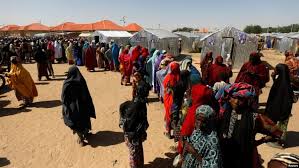
Some 3,725,593 are currently living in 3,900 Internally Displaced Persons (IDP) camps in Nigeria, indicating how bad the security situation in the country, currently on the upscale, has become.
Vanguard is reporting that the country is paying a heavy price for years now over the protracted cases of insecurity sweeping citizens from their homes into the camps, where they feel more protected from the terrorists ravaging their villages.


Relying on data compiled from the International Organisation for Migration Displacement Tracking Matrix, the National Bureau of Statistics, and humanitarian agencies and government officials showed that the figure is only an estimate, as displacement patterns change frequently, the report says.
The crisis has largely been driven by insurgency in the North-East, banditry in the North-West, farmer–herder conflicts in the North-Central, and communal clashes in parts of the South.
Nigeria’s 3.726 million displaced population is larger than the population of at least 63 countries whose populations are under 3.7 million, according to United Nations population estimates.
Among countries with fewer than 3.7 million people are Uruguay (3.4m), Jamaica (2.8m), Qatar (2.7m), Namibia (2.6m) and Botswana (2.6m).
Across several northern states, the construction and maintenance of IDP camps have become a permanent feature, resembling conditions usually associated with wartime.
Although Nigeria operates a democratic system, many communities face realities akin to conflict zones, as persistent attacks continue to uproot families and destroy livelihoods.
Entire communities have been forced out of their ancestral homes due to repeated attacks by terrorists, bandits, killer herdsmen, cattle rustlers and kidnappers, who invade villages, destroy farms and abduct residents.
The result is the emergence of hundreds of displacement camps and thousands of homeless citizens who were forced out of their homes through no fault of theirs.
The situation in Borno and Yobe states, which had the largest number of IDP camps, seems to have improved with significant decline following resettlement programmes by the two state governments, while Babagana Zulum, Governor of Borno is said to have systematically shut down many camps and resettled residents in their communities.
Currently, only the Madinnatu camp in Jere Local Government Area remains functional, according to report, .
However, the report indicates, adding however that a recent attack in Ngoshe community in Gwoza LGA forced the authorities to open a temporary camp near Pulka to accommodate thousands of displaced residents.
More than 3,000 residents fled Ngoshe, while over 300 civilians, mostly women and children, were abducted during the attack.
Addressing displaced persons during a visit to the Pulka camp, Governor Zulum said: “We are here to commiserate with the people of Ngoshe who lost their loved ones, following the unfortunate incident that occurred last Tuesday. The situation is very sad and our hearts go out to all those affected by this tragedy.
“I want to assure you that we will do everything possible to address the unfortunate situation that has befallen this community.
“For now, we will distribute food items to those affected and I have directed that cooking points be established so that everyone in this community can receive meals from a central kitchen.”
Meanwhile, in Yobe State, under Governor Mai Mala Buni, all officially designated camps have been closed after displaced residents were resettled in their communities.
Zamfara hosts 276,887 IDPs in 9 camps
In Zamfara State, more than 276,000 residents have been displaced by persistent bandit attacks.
Reports indicate that at least 107 villages were overrun by bandits between 2009 and 2026, forcing thousands to flee to Gusau, the state capital.
Data from the Zamfara State Ministry of Humanitarian and Disaster Management showed that 276,887 IDPs were recorded as of March 2026.
Of this number, about 75 per cent have experienced multiple displacement, while only 18 per cent live in formal camps.
Major camps include Tsunami, Mareri, Lalan, Premier, Tudun Wada, Unguwar Gwaza and Anka camps, alongside 46 host community locations.
According to Malam Sani Aminu, an official in charge of food supplies at the Tsunami camp, the state government provides food items such as maize, millet and sorghum.
The Commissioner for Humanitarian Affairs, Salisu Musa Tsafe, said the number had reduced by about 89,000 as security improved, allowing some residents to return home.
Benue home to over 500,000 IDPs
According to the International Organization for Migration, Benue State hosts over 500,000 internally displaced persons, making it one of the worst-hit states.
The state currently operates 14 officially recognised camps.
The Commissioner for Humanitarian Affairs, Mr. Aondowase Kunde, said the government of Governor Hyacinth Alia was shifting from emergency relief to a long-term solution.
“The government is transitioning from temporary relief to a durable solutions framework, focussing on voluntary return, resettlement and reintegration.”
Authorities have begun building 60 permanent two-bedroom houses in Yelewata community, with plans to construct 5,700 homes for displaced residents.
Additionally, 600 hectares of farmland have been allocated to IDP farming cooperatives to promote self-reliance.
90,000 displaced in Taraba camps
In Taraba State, about 90,000 displaced persons are currently sheltered in eight camps located in Peva and Kufai Ahmadu in Chanchanji Ward of Takum LGA.
Many others have crossed into neighbouring communities in Benue State for safety. The crisis prompted a joint visit by Governors Agbu Kefas and Hyacinth Alia to affected communities.
However, investigations revealed that many camps lack basic amenities.
Justin Tyopuusu, Special Adviser to the Governor on Digital Economy, said the government was working to restore security so displaced residents could return home before the rainy season.
Kebbi shuts camps, resettles displaced residents
On its part, Kebbi State government said it currently had no active IDP camps, following successful resettlement of displaced residents, the activities of terror group, Lakurawa, notwithstanding.
Special Adviser on Communications, Abdullahi Idris Zuru, said camps previously located in Kebbi South were closed after security improved.
“We have been able to contain ceaseless attacks on our communities as joint armed forces patrols pushed back the terrorists,” he said.
He added that Governor Nasir Idris provided housing, food, clothing and medical support for the affected communities.
Kwara’s sole camp remains unused
In Kwara State, the only IDP camp established by the federal government in Patigi Local Government Area has never been used.
The North-Central Coordinator of the National Commission for Refugees Migrants and Internally Displaced Persons, Hajia Jumai Ahmed, expressed surprise at the development.
“Yes, there is an IDP camp established by the Federal Government at Patigi, but it has never been put to use,” she said.
Sources said Governor AbdulRahman AbdulRazaq preferred assisting victims directly through relief support and rehabilitation, rather than establishing camps.
The Director-General of Nasarawa State Emergency Management Agency, Dr. Ben Akwash, said the state had five IDP camps, including the major camp at Ugya in Toto LGA.
Other locations include Kadarko and Giza in Keana LGA, Agyragu in Lafia LGA, and Doma in Doma LGA.
He explained that population figures fluctuate, depending on the level of communal clashes.
Thousands displaced in Plateau
In Plateau State, relentless attacks across the state have displaced thousands of residents. Communities in Mangu, Barkin Ladi, Bassa, Riyom, Jos South, Kanam and Wase have suffered repeated attacks.
Unlike other states, most displaced residents in Plateau live with relatives, rather than in formal camps, a system that preserves social ties but strains host families.
Governor Caleb Mutfwang has also launched a task force to facilitate the safe return of displaced residents. The government has also begun a housing project in Ribakwa village in Bassa LGA to resettle affected families.
Adamawa camps run by communities
In Adamawa State, the government closed all official camps as far back as 2014, allowing communities to run their own shelters.
Camps currently operate in Malkohi, Labondo, Bole, Fufore and Sangere Marghi, relying largely on NGOs, religious organisations and philanthropists for support.
Many displaced residents now depend on farming, trade and small businesses for survival.
In Sokoto State, the government established a major IDP camp at Ramen Kura, within the state capital. The camp currently shelters over 2,500 displaced persons, mostly women and children, who fled terrorists’ attacks.
Officials said the camp was created as an emergency response to a surge in displacement from Gandi, Tureta, Goronyo and Gudu LGAs.
Although authorities provide food, water, healthcare and sanitation services, overcrowding and limited resources remain major challenges.
Estimated displaced persons in 36 states; Abia – 1,000; Adamawa -218,118; Akwa Ibom – 2,000; Anambra -1,500; Bauchi -66,489; Bayelsa -1,000; Benue – 500,182; Borno – 1,711,481; Cross River – 3,000; Delta -1,000; Ebonyi – 1,000; Edo -2,000; Ekiti – 500; Enugu – 500; Gombe – 52,383; and Imo – 1,000.



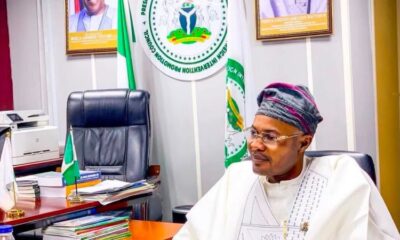






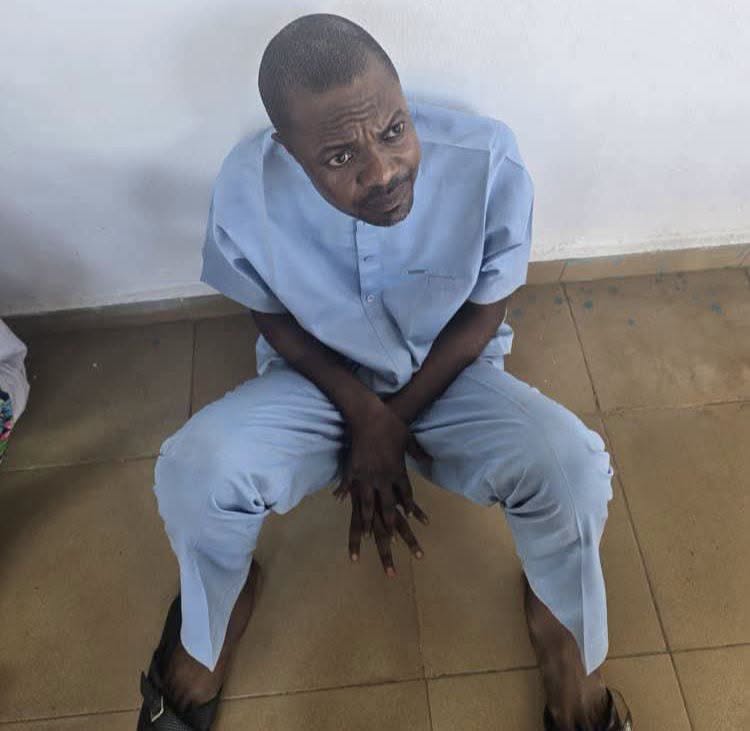
Hours after Justice Mohammed Umar of the Federal High Court, Abuja, ordered issued a bench warrant for the arrest Adeniyi Adeyemi, the controversial Director General of the Presidential Foreign Intervention Promotion Council (PFIPC), is currently in the custody police authorities.
Pictures and videos of embattled PFIPC boss being questioned in what appeared an interrogation session, surfaced on social media on Tuesday evening, with few details still sketchy on whether the police actually hunted him down or he surrendered himself.
Latest information, indicate that he is currently in the custody of the Osun State Police Command, according to a report by Channels Television, who confirmed that he has been taken in.
The order came on the prompting of Wisdom Madaki, the police lawyer after Adeyemi failed to appear in court to take his plea before on an eight-count charge marked FHC/ABJ/CR/562/2025, which relates to forgery, fraud and impersonation.
The court took the decision despite the spirited efforts by Genesis Francis, Adeyemi’s lawyer to mitigate the situation when he told Umar: “The defendant is afraid for his life. He has to be alive to be able to face trial. They have been looking for him even without an order of court.”
Regardless, the judge, while brushing aside the defence, said he was minded to accede to the application for the issuance of a warrant of arrest against the defendant, noting since case was filed on November 27, 2025, with proceedings not commencing until December 4, 2025, Adeyemi did not appear before the court more than once.
“Since then, he has failed to appear before this court on four consecutive dates,” he said, while mandating security agencies to arrest and produce the embattled PFIPC boss before the court on September 30 for arraignment.
During trial, witnesses including Femi Gbajabiamila, Chief of Staff (CoS) to the President; Paul Emmanuel; Jeremiah Imoukhede; and Ituah Sylvester, are billed to testify for the prosecution alongside the Office of the Accountant General of the Federation (OAGF), Akimbo Shola and Adamu Balongu, as well as a Deputy Superintendent of Police.
The order is coming on the heels of Adeyemi’s outcry that his life was in danger, while debunking the allegation that he was a fugitive running away from the law, saying he would appear in court once he had assurance that he would be protected from those tracking him in attempts to take his life.
A guest of Politics Today, a public affairs programme on Channels Television, Adeyemi, had told his host on Monday: “I’m ready to show my face. I’m not hiding. I’m only fearing for my life because I have it on good authority that my life is in danger. There have been several attempts on my life,” Adeyemi added.
He also maintained his allegation that he paid N400 million through a proxy to President Tinubu’s Chief of Staff, Gbajabiamila, to secure his appointment as DG of the disputed council. I’m ready to show my face. I’m not hiding. I’m only fearing for my life because I have it on good authority that my life is in danger. There have been several attempts on my life.”
An interim police investigation report had exposed how the defendant allegedly forged appointment letters and official documents to create the impression that the PFIPC was a legitimate federal government agency.
Police disclosed that the investigation was initiated after the Office of the Chief of Staff to the President petitioned the Inspector-General of Police (IGP) on October 17, 2025, over the activities of individuals allegedly forging official appointment letters purportedly issued from the office.
The petition added that preliminary findings showed the forged documents contained falsified signatures, reference numbers, official seals, and the Nigerian Coat of Arms, and that they were allegedly used to appoint individuals into the non-existent PFIPC.
Adeyemi, who was identified as the principal suspect, allegedly presented himself as the DG of the council and operated from an office within the Federal Secretariat Complex, Phase III, Abuja.
One of those allegedly linked to the fraud, Dolapo Babatunde Tanimola, was said to have died in a fire incident at a hotel in Abuja.
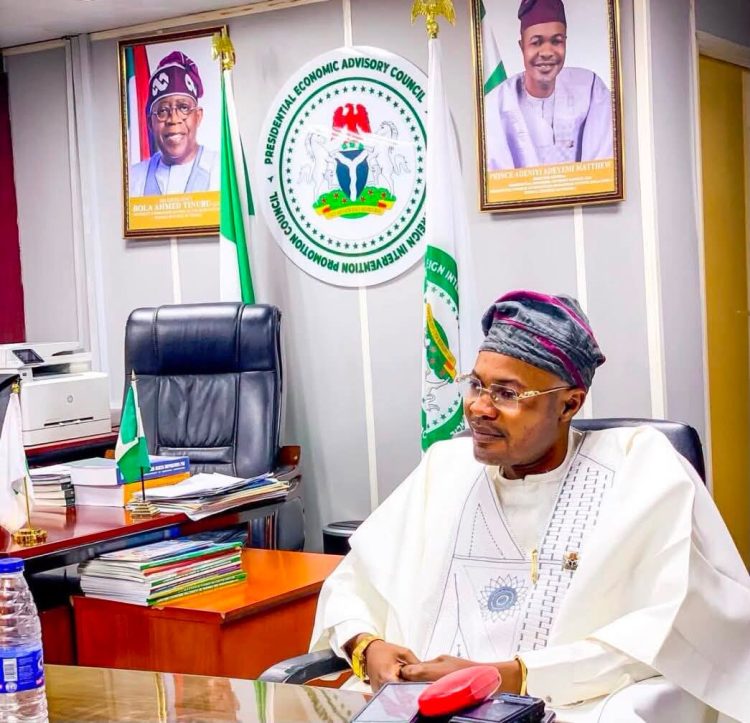
Justice Mohammed Umar of the Federal High Court, Abuja, on Tuesday, issued a bench warrant for the arrest of Adeniyi Adeyemi, controversial Director-General (DG) of an alleged “non-existent,” Presidential Foreign Investment Promotion Council (PFIPC).
The order came on the prompting of Wisdom Madaki, the police lawyer after Adeyemi failed to appear in court to take his plea before on an eight-count charge marked FHC/ABJ/CR/562/2025, which relates to forgery, fraud and impersonation.
The court took the decision despite the spirited efforts by Genesis Francis, Adeyemi’s lawyer to mitigate the situation when he told Umar: “The defendant is afraid for his life. He has to be alive to be able to face trial. They have been looking for him even without an order of court.”
Regardless, the judge, while brushing aside the defence, said he was minded to accede to the application for the issuance of a warrant of arrest against the defendant, noting since case was filed on November 27, 2025, with proceedings not commencing until December 4, 2025, Adeyemi did not appear before the court more than once.
“Since then, he has failed to appear before this court on four consecutive dates,” he said, while mandating security agencies to arrest and produce the embattled PFIPC boss before the court on September 30 for arraignment.
During trial, witnesses including Femi Gbajabiamila, Chief of Staff (CoS) to the President; Paul Emmanuel; Jeremiah Imoukhede; and Ituah Sylvester, are billed to testify for the prosecution alongside the Office of the Accountant General of the Federation (OAGF), Akimbo Shola and Adamu Balongu, as well as a Deputy Superintendent of Police.
The order is coming on the heels of Adeyemi’s outcry that his life was in danger, while debunking the allegation that he was a fugitive running away from the law, saying he would appear in court once he had assurance that he would be protected from those tracking him in attempts to take his life.
A guest of Politics Today, a public affairs programme on Channels Television, Adeyemi, had told his host on Monday: “I’m ready to show my face. I’m not hiding. I’m only fearing for my life because I have it on good authority that my life is in danger. There have been several attempts on my life,” Adeyemi added.
He also maintained his allegation that he paid N400 million through a proxy to President Tinubu’s Chief of Staff, Gbajabiamila, to secure his appointment as DG of the disputed council. I’m ready to show my face. I’m not hiding. I’m only fearing for my life because I have it on good authority that my life is in danger. There have been several attempts on my life.”
An interim police investigation report had exposed how the defendant allegedly forged appointment letters and official documents to create the impression that the PFIPC was a legitimate federal government agency.
Police disclosed that the investigation was initiated after the Office of the Chief of Staff to the President petitioned the Inspector-General of Police (IGP) on October 17, 2025, over the activities of individuals allegedly forging official appointment letters purportedly issued from the office.
The petition added that preliminary findings showed the forged documents contained falsified signatures, reference numbers, official seals, and the Nigerian Coat of Arms, and that they were allegedly used to appoint individuals into the non-existent PFIPC.
Adeyemi, who was identified as the principal suspect, allegedly presented himself as the DG of the council and operated from an office within the Federal Secretariat Complex, Phase III, Abuja.
One of those allegedly linked to the fraud, Dolapo Babatunde Tanimola, was said to have died in a fire incident at a hotel in Abuja.
Meanwhile, Adeyemi, who has since denied that the PFIPC was non-existent, demanded an independent, multi-stakeholder investigative panel to probe the controversy surrounding the alleged N1.3 billion budget insertion for the Council in the 2026 Appropriation Bill.
In an open letter to President Tinubu, Adeyemi said he was prepared to provide documentary evidence and fully cooperate with investigators once an independent panel was constituted.
He recommended the inclusion of representatives of civil society organisations, the Nigerian Bar Association (NBA), independent media organisations, international financial institutions, human rights groups, and diplomatic missions, as well as the ICPC and the EFCC, on the independent investigative panel.
Meanwhile, Adeyemi, who has since denied that the PFIPC was non-existent, demanded an independent, multi-stakeholder investigative panel to probe the controversy surrounding the alleged N1.3 billion budget insertion for the Council in the 2026 Appropriation Bill.
In an open letter to President Tinubu, Adeyemi said he was prepared to provide documentary evidence and fully cooperate with investigators once an independent panel was constituted.
He recommended the inclusion of representatives of civil society organisations, the Nigerian Bar Association (NBA), independent media organisations, international financial institutions, human rights groups, and diplomatic missions, as well as the ICPC and the EFCC, on the independent investigative panel.

Abdulrahman Bello, must die for the murder, Hafsoh Yetunde Lawal, a final-year student of the Kwara State College of Education, Ilorin, the Court of Appeal has insisted, rebuffing the attempt of the self-acclaimed Islamic cleric, to upturn the verdict of an Ilorin High Court.
Affirming the earlier death sentence imposed on cleric for the murder of the female student, said to be his lover, on February 10, 2025, at the Olunlade area of Ilorin, which attracted widespread public outrage across Kwara State and beyond, the appellate court said it found no reason to upturn the earlier verdict of the lower court.
Bello, who was one of the five people arraigned on charges bordering on conspiracy, murder, unlawful removal and possession of human parts and blood, also faced a rape charge, of which he was eventually acquitted by the trial court.
Justice Gabriel Omoniyi Kolawole, who led a three-man panel of the appellate court, while dismissing his appeal, held that the prosecution proved beyond reasonable doubt that he murdered the victim and was unlawfully in possession of human parts.
The appellate court consequently upheld the judgment of the Kwara State High Court, which sentenced Bello to death by hanging and imposed an additional 10-year jail term over his conviction for unlawful possession of human parts.
The court held that there was no merit in the appeal and consequently affirmed both the conviction and the sentence imposed by the trial court.
According to the appellate court, the trial court properly evaluated the evidence before it and rightly concluded that the prosecution established the offences beyond reasonable doubt.
The appellate court said it believed the position of Ibrahim Sulyman, Kwara State Attorney General and Commissioner for Justice, Issa Zakari, Chief State Counsel, and B.L. Abdulsalam, Assistant Chief State Counsel, who led the prosecution.
Hailing the judgment as another significant milestone in the state’s criminal justice administration, Sulyman, said in a statement: “The judgment underscores the commitment of the Kwara State Ministry of Justice and the judiciary to ensuring that criminal cases are determined strictly in accordance with the law and the evidence presented before the courts.
“It also reaffirms the principle that persons found guilty of grave offences, after a fair trial, will be held accountable under the law. The appellate court’s decision would strengthen public confidence in the justice system.
“The affirmation of the conviction and sentence represents another milestone in the administration of criminal justice and reinforces public confidence in the rule of law and the appellate process. The convict still retains any further rights of appeal available to him under the Constitution and other applicable laws.
Justice Hannah Ajayi of the Kwara State High Court, sitting at Ilorin, hand on July 2025 sentenced Bello to death after finding him guilty of murdering and dismembering Lawal, after describing his act as “the highest degree of human wickedness, and a premeditated and cold-blooded act.”
Dismissing Bello’s claims that he loved the deceased and intended to marry her as merely an afterthought designed to deceive the court, Ajayi, also ruled the convict’s conduct after committing the crime and before his arrest suggested that it might not have been his first involvement in such an act, while a book on money-making charms recovered from his apartment further strengthened the prosecution’s case.
Justice Ajayi further held that the video and written confessional statements obtained by operatives of the Department of State Services and the police were lawfully admitted in evidence, dismissing Bello’s allegation that he was tortured into making the confessions.
While acquitting Bello of the rape charge, the trial court convicted him of murder and unlawful possession of human parts, sentencing him to death by hanging for the murder and imposing a 10-year prison term, with an option of a N100,000 fine, for the human parts offence.
The court also discharged and acquitted the four other defendants in the case — Ahmed Abdulwasiu, Suleiman Muhydeen, Jamiu Uthman and Abdulrahman Jamiu — after holding that the prosecution failed to establish their involvement in the offences.
Reacting to the High Court judgment at the time, the Emir of Ilorin and Chairman of the Kwara State Traditional Rulers Council, Ibrahim Sulu-Gambari, described the killing as tragic and commended the judiciary for ensuring justice.
“The gruesome murder of Hafsoh Yetunde Lawal was pathetic, unfortunate, regrettable and worrisome,” the monarch said in a statement issued by his Press Secretary, Abdulazeez Arowona.
“The judgment has further brightened the hope and trust of the people in the judiciary and security agencies. May Almighty Allah repose the soul of the late Hafsoh Lawal and comfort her family members.”
The monarch also urged parents and guardians to be vigilant and closely monitor the activities and movements of their children and wards to prevent a recurrence of such incidents.



-

 News4 days ago
BREAKING: Mystery death! *Female student dies a day after arriving Umahi’s home!
-
 News4 weeks ago
BREAKING: Troops rescue wife of kidnapped General! *Terrorists flee scene
-

 News4 days ago
Don’t jump to conclusion! *Umahi speaks on mysterious death of female students!
-

 News4 weeks ago
BREAKING: Count me out, Okonkwo tells Atiku *Amaechi VP’s choice an insult to Ndigbo
-
 News3 weeks ago
BREAKING: Court sentences Nigerien, two others to death over terrorism
-
 News2 weeks ago
BREAKING: EX-SSG mowed down by gunmen! *He resisted being kidnapped – driver
-

 News3 weeks ago
Two hours after Igboho’s ‘red-eyes’ to ‘Fulani’ leaders, gunmen free kidnap victims!
-

 News3 weeks ago
Abductors of Oyo teachers panicking, freedom coming for victims soon!