

News
FOR THE RECORDS: Igboland needs healing now, not Presidency – Soludo

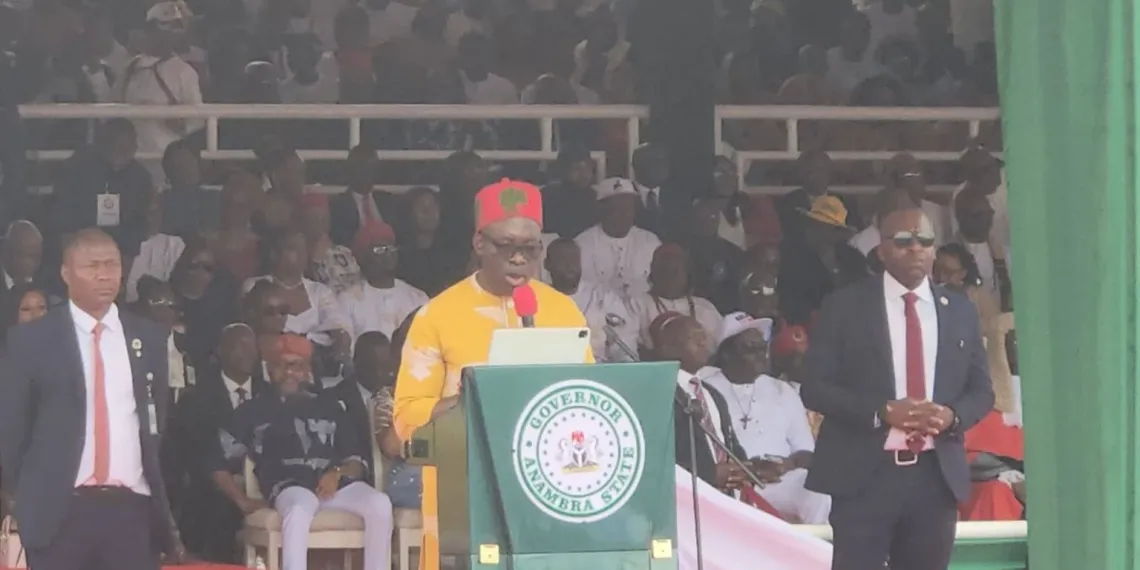

Four years ago, my deputy (Dr. Onyekachukwu Ibezim), and I took the oath of office before you at the old Governor’s Office in Agu Awka. It was a quiet ceremony attended by fewer than fifty guests, and immediately afterward we went straight to work. We were clear that the moment did not call for celebration. On that very day, we worked for 8 hours and 45 minutes—no fanfare, no parade, no celebrations of any kind—just work. We declared a state of emergency. The very next day, we began at Okpoko, the largest urban slum in the Southeast. That visit symbolized our priorities: to start where the need was greatest and to focus on the people who had long been left behind. We made a solemn promise to you then—to work 24/7 to rescue our state and make you proud.
As a technocrat in politics, our administration set out to test a simple but profound hypothesis: can the politics of transformation and development (rather than the politics of transactions) translate into political capital and popular support? Barely three years in office, after delivering more than 90% of the promises we made for our first term, it was you, Ndi Anambra who proudly proclaimed that “Anambra is back and rapidly rising.”

Indeed, several of the major projects we delivered were not in our Manifesto (e.g. new Ekwulobia, Fun City, Light House, etc.). In affirmation, all the senatorial zones bestowed on us the title “Oluatuegwu Anambra” (the one who does not fear work or the one who relishes the challenge of difficult tasks).
Then came the governorship election in November last year: Umunne m Ndi Anambra, what you did was unprecedented in Nigeria’s political history. You organized rallies at your own expense, knocked on doors across communities, and donated massively to support our campaign. It was a spontaneous movement of the people, an extraordinary demonstration of ownership of the “project Anambra”. The unprecedented 73% of the votes cast at the polls was therefore more than an electoral victory; it was a near-unanimous affirmation of the path we have chosen together and a resounding call to do even more.
I am certain that political scientists will one day write volumes about what many now call the Anambra phenomenon. Today, we stand in awesome gratitude to the Almighty God and to you, the special people of Anambra. We are gathered here at the remodeled and massively expanded Ekwueme Square not merely to mark the inauguration of a Second Term, but above all to celebrate you, Ndi Anambra—for your love, your patriotism, and your partnership in the journey of rebuilding our homeland (albeit that the “celebration” is muted with only Made in Anambra/Nigeria foods/drinks). Be assured that we will never take your historic support for granted. And as the Americans would say and as we promised during the campaigns: “you ain’t seen nothing yet”!
Many stakeholders too numerous to mention individually have proved to be worthy partners in progress over the past four years including: Mr. President, Asiwaju Bola Ahmed Tinubu, GCFR and First Lady, Senator Oluremi Tinubu, the Vice-President Senator Kashim Shettima GCON, the FGN; our distinguished elder statesmen and women; members of the Solution Team in our government; my colleague governors/friends at the Nigerian Governors’ Forum; members of the State and National Assemblies, the judiciary, INEC and security agencies; the church and clergy; traditional rulers and town union leaders; our businessmen and women, our women and youths, our friends all over the country/world; the international development community, etc.
I thank my lovely wife, Nonye, and children: Ozonna, Adaora, Chinua, Ekene, Oduko and Zikora for their love, sacrifices, and support. The Healthy Living With Nonye Soludo initiative has organically grown to become a life-changing lifestyle for thousands of Ndi Anambra/Nigeria. Unfortunately, my father who had prayed for this day died at his 92nd birthday in 2023, and together with my beloved late mother, Mgbafor, they must be smiling in their graves.
Coincidentally, today also marks the 20th anniversary of progressive governance in Anambra state under the aegis of the All-Progressives Grand Alliance (APGA). I sincerely appreciate the current and past leadership as well as members of our great party for their unwavering support. Let me also acknowledge the cooperation of other progressives, especially members of the All-Progressives Congress (APC). As we say here: the Progressives are working together! Once again, I extend my hand of fellowship to my fellow contestants in the last gubernatorial election. I am and will continue to be the governor for all Ndi Anambra over the next few years. Politics and elections are over; it is now time for governance and development. Let us join hands together to build the Anambra of our dream.
Umunne m Ndi Anambra! Uncertainty has become the defining reality of our world today. In such times, only those who think boldly, plan deliberately, and act strategically can shape and control the future. Nigeria, like many nations, faces its own familiar challenges and making sense of these realities and charting a sustainable path forward is the true test of leadership. Today, I wish to remind us of our shared destination. As the saying goes, if you do not have a destination in mind, any road will take you there. But in Anambra, we are not wandering, we have a clear destination, and we have a compass to guide us. Let me refresh our collective memory.
Some 20 years ago, in 2006, I delivered a keynote address (published) at a conference organized by the League of Anambra Professionals (LAP). In that address, I articulated a bold vision: that by 2030 (then 24 years away), Anambra State could be deliberately curated to evolve into an African Dubai–Taiwan–Silicon Valley (ADTS). The logic of this vision was rooted in Anambra’s seemingly difficult geography and demographics, as well as its strategic location, endowments, and the renowned “can-do” spirit of its people.
Anambra has the second smallest land mass in Nigeria (after Lagos), yet about 30 percent of its land is already encumbered by gully erosion and perennial flooding. This leaves the state with arguably the smallest usable land space for habitation and economic activities, while still ranking as the second most densely populated state in the country after Lagos.
The intense population pressure on this tiny expanse of largely porous sandy soil has historically driven large-scale migration out of the state and into commercial pursuits across Nigeria and around the world. Indeed, it is estimated that more than 50 percent of Anambra indigenes live outside the state. Anambra people can be found in virtually every community across the country and beyond, yet without a sufficiently livable and prosperous homeland of their own. For decades, Anambra functioned largely as a departure lounge.
Transforming it into a preferred destination—and creating a livable and prosperous homeland for an itinerant but highly enterprising people—requires imagining and deliberately building an alternative future. Such a future must be anchored on dynamic and scalable sectors capable of responding to Anambra’s unique constraints while leveraging its distinctive opportunities.
First, given Anambra’s unique strategic location—bounded by Kogi to the north; Delta and Rivers to the south-south; and Imo, Abia, and Enugu to the southeast—the state possesses inherent advantages as a commercial gateway. With Onitsha hosting so called largest market in West Africa and the strategic gateway from Southwest into the Southeast/South-South, Anambra is naturally positioned to evolve into a major commercial and logistics hub, much like Dubai. When this advantage is combined with the potentially navigable River Niger and sustained, intentional investments in leisure, tourism, and entertainment infrastructure, the foundations of a “Dubai-like” economy begin to emerge.
Similarly, drawing inspiration from Taiwan’s development strategy despite its limited natural resources, Anambra can systematically harness its greatest asset—its people. Through sustained and targeted investments in quality healthcare, education, and vocational skills, the state can cultivate a highly productive workforce capable of powering a dynamic industrial ecosystem. Industrial centres such as Nnewi, alongside emerging manufacturing clusters, can form the backbone of this transformation into a resilient and competitive industrial powerhouse.
Furthermore, in the era of the Fourth Industrial Revolution, Anambra has a unique opportunity to leverage the ingenuity, resilience, and entrepreneurial energy of its exceptionally enterprising youth population. By deliberately nurturing a thriving ecosystem of technology, innovation, and digital entrepreneurship, the state can position itself as Africa’s version of Silicon Valley—an innovation hub where ideas, talent, and capital converge to drive transformative growth. Together, these three pillars—commercial/logistics cum leisure dynamism, industrial productivity, and technology-driven innovation—form the conceptual foundation of the African Dubai–Taiwan–Silicon Valley (ADTS) vision.
In 2020–2021, I chaired the drafting of the Anambra Vision 2070, a comprehensive 50-year development blueprint for the state. Over 250 professionals contributed directly to the plan, while thousands of stakeholders across sectors provided feedback and insights. The overwhelming consensus that emerged from this extensive consultative process was that the ADTS vision remains the most compelling and robust long-term development pathway for Anambra.
Consequently, the “Soludo Solution: A People’s Manifesto for a Greater Anambra” drew heavily from both the ADTS vision and the strategic direction outlined in the Anambra Vision 2070 document. Fortuitously, the first administration to assume office after the launch of Anambra Vision 2070 in February 2022 is the government we now lead. In this unique circumstance, the visioner becomes the foundational executor. This administration therefore carries a historic responsibility: to lay the enduring foundations for the next Anambra—setting the state firmly on the path toward realizing its manifest destiny as an African Dubai–Taiwan–Silicon Valley by 2070.
By 2070, it is estimated that about 38-40 million people (up from current 9 million) will be resident in Anambra, and probably over 50 million by 2100. These people will need transport infrastructure, power, jobs, housing, sewage and waste management, schools and hospitals, care for the vulnerable and elderly, etc.
So far, every step, every project, program, law, or policy is intentional and with one question in mind: how does it align with the long-term vision? Where will it leave Anambra not only in the immediate and medium term but more fundamentally over the next 50- 100 years? Inter-generational sustainability and alignment to the destination drive our thinking and actions. This is a new chapter on how we do business in Anambra.
Yes, our aspirational alternative future is possible but must begin with disruptive but sure-footed steps founded on existing realities. When the administration assumed office in March 2022, the initial conditions were daunting. It was impossible to begin dreaming of skyscrapers when eight local government areas were under the grip of criminals and kidnappers. Cities lacked pipe-borne water and reliable electricity; infrastructure, especially roads—was in a state of severe decay; public hospitals were largely non-functional; and many public schools operated without sufficient teachers.
The environment was in crisis, the transport system chaotic, and physical planning almost non-existent, resulting in sprawling urban slums. Compounding these structural challenges was an emerging value system that increasingly disparaged hard work while celebrating obscene wealth without work. Government itself had no proper abode from where to think and act.
Given the urgency of the moment, the new administration understood that its vision was an agenda with a deadline. The world view was one that did not see any boundaries – physical or religious—and its mantra has been One State, One People, One Agenda. As a government rooted in progressivism, it is intentional about leaving no one behind: a governance principle based on equity, fairness, inclusiveness, and compassion. This is the APGA’s ideology of “onyeaghana nwanneya”.
Despite a razor focus on quantum disruptive changes to ensure inter-generational sustainability (building to last), extreme prudence and value for money (doing more with less) define the administration’s attitude to public resources. Our goal has been the reinvention of a developmental state, where each resident has a significant stake in the prosperity and sustainability of the state.
The first four years have been devoted to addressing the basics: restoring security, law and order; addressing waste management and urban regeneration; rebuilding public schools and hospitals; infrastructural revolution especially roads and unprecedented road dualization for the present and future generations; breaking the 34 year old jinx by building a befitting government house and lodge, digitizing government processes and mainstreaming transparency and value-for- money governance, restoring public finance on a path of sustainability, rescuing our environment; intentionally investing in leisure and entertainment to turn Anambra into a preferred destination, a revolution for a new social order that is intentional about ecumenism and celebrates order, enterprise and integrity, etc.
For sure, it is not possible to attempt to list the over 120 sterling achievements of this administration so far (see summary in the documentary—”Anambra on the Rise: The Foundation Towards the African Dubai-Taiwan-Silicon Valley (ADTS) – 1.0: You can also access the soft copy).
But suffice it to re-echo what Ndi Anambra are saying: Anambra is Back to winning ways! Some 62 criminal camps have been dismantled and eight local governments previously under total siege liberated. Anambra had its best Christmas season in decades last December with a mass return and over ten thousand visitors per day to the Solution Fun City, Awka until 10th January 2026. The debilitating Monday Sit-at-Home is over, and our schools, markets, businesses and public servants are back to work.
Ndi Anambra say that ours is now the safest or at least one of the safest states in Nigeria. The once biggest urban slum in the Southeast Okpoko is now ‘New Haven’; Ekwulobia is a new city; Awka is surely taking off as a befitting state capital; Onitsha and Nnewi are experiencing unprecedented urban regeneration; nearly 3,000 km of roads (both under the zero pothole initiative and brand new roads) plus over 200 km of road dualization increasingly connect Anambra as one megacity for the 21st century; urban and semi urban water schemes are back; some 300,000 youths have received digital skills and Anambra One Million Digital Tribe agenda receiving global recognition (Techies!); Over 15,000 youths have been trained and empowered under our unique 1Youth 2Skills programme with 3,000 of them confessing to be new youth millionaires. To reinvent the Dr. M.I. Okpara palm revolution, we have distributed 2.2 million palm and coconut seedlings to 180,000 households thereby empowering them for life and laying the foundation for a new palm processing ecosystem.
With our revolution in education, especially with 8,115 new teachers (recruited competitively from 18 states of Nigeria), upscaling investment in public school infrastructure and technology especially with the smart schools, and continuing subsidy to mission schools, the Anambra public schools are back to winning ways. Anambra schools and teachers (especially public schools) now dominate the annual President’s awards. They won 5 and 9 president’s awards in 2024 and 2025 respectively—the highest of any state in Nigeria —In 2025, an Anambra public school was rated the best primary school in Nigeria while a public secondary school had the overall best results in science subjects. Anambra has the lowest out of school children in Nigeria (2.9%– UNICEF). Our truly free education from kindergarten to senior secondary school in all public schools has seen enrollment up by nearly 50%.
We have been celebrated as national and regional champions in primary healthcare—winning cumulative cash awards of $1.6 million, and our program of free antenatal and free delivery for pregnant women (including free cesarian operations) in all public hospitals has benefitted over 208,000 women with zero mortality.
The five brand new general hospitals built are all in the North Senatorial zone—true to our principle of prioritizing need over politics. We have been consistently ranked number one on fiscal transparency and among the top three on fiscal sustainability. Our government is being fully digitized and our ease of doing business is robust. Yes, we are wrestling with our number one existential threat—the environment—especially flooding and gully erosion. Anambra is the gully erosion capital of Africa. The list can go on and on…And all of these so far without borrowing a kobo from any commercial bank! The nation and the world have also taken serious notice with dozens of national and international awards and recognitions.
Umunne m Ndi Anambra, if we build the skyscrapers and flyovers to be inhabited by the “Okeite” and “Ezenwanyi” generations, our homeland will be desolate and our efforts in vain. Our homeland was being overrun by a new and fastest growing religion and philosophy among our youths that promised and celebrated wealth without work. The implication for criminality was obvious. We promised a revolution towards a “new Onye Anambra”, and we are serious about it. With the enforcement of our Homeland Security Law 2025, Oso Soludo is real.
Hundreds of these dangerous native doctors are on the run. The poster boy of the new phenomenon—Akwa Okuko tiwara aki—has pleaded guilty and sentenced to a jail term. His massive shrine has been destroyed. We are on a serious crusade for ethical and cultural rebirth— going back to the roots of what made us great and unstoppable—values of enterprise and integrity (aka aja aja na-ebute onu mmanu mmanu). That way we can rescue our youths and secure the future—away from drugs, cultism, magic, and criminality.
Ndi Anambra, today marks the beginning of a new chapter. The road ahead is still long and much remains to be done. I am not wired to gloat or celebrate the millions of steps already taken; my focus is firmly on the billions of steps that still lie ahead. Our gaze is not on the next election, but on the next generation.
Over the next four years, we are changing to Gear 4.0 to consolidate the ongoing transformations across all sectors, accelerate actions to secure the spaces and pillars for the prosperity of generations yet unborn, and institutionalize change within a “built to last” framework. We move with urgency—running at the speed of 1,000 km per hour in multiple directions simultaneously. Security and electricity will remain priorities.
Anambra’s land mass is rapidly being developed in a haphazard and chaotic manner, making a physical masterplan an emergency. That is why we are intentionally securing strategic land spaces as a “Land Bank” for future developments. With an estimated population of about 40 million by 2070 and nearly 50 million by 2100, the state will require at least three airports, but in the next ten years there will hardly be any space for them except we act today.
We have already planned and investing in four new cities and a district simultaneously: New Niger City near Onitsha, Awka 2.0, the Anambra Mixed-Use Industrial City (AMIC), an Aerotropolis, and the Innovation District– our own Silicon Valley. The CPCS of Canada has completed for us the Anambra’s Rail Masterplan, and our Gas Masterplan is also ready.
Electricity remains a national binding constraint, and we are determined to find some local solutions in partnership with private investors and the FGN. Our Electricity Regulatory Commission has set out to guarantee a competitive electricity market. The Mixed-Use Industrial City and Aerotropolis have been approved as an Economic Free Trade Zone, and construction is well underway.
A 5-star hotel at our International Convention Centre is under construction, while the Coordinated Wholesale Centre (CWC)—the largest drug market in West Africa—is set for commissioning in the first quarter of 2027. These projects are not just buildings and infrastructure; they are foundations for a better life. They will create thousands of jobs, improve access to reliable electricity and transportation, enhance business opportunities, expand trade, and attract private investment.
By securing land for the future, building new cities, and modernizing our infrastructure, we are ensuring that Ndi Anambra will enjoy sustainable economic growth, improved livelihoods, and a prosperous environment for generations to come. The above present huge opportunities for private investment, and we invite all Ndi Anambra and investors to seize these opportunities and be part of the transformation that will define the state’s future.
In a few years, the second airport and a thriving nascent city around it will be delivered, and we will secure space for the third airport—laying foundations for future generations. Securing the future is urgent. Many audacious and disruptive transformations are not options—they are imperatives. For example, the regeneration of Onitsha Main Market (“Anambra’s Address”), Onitsha metropolis, and Nnewi are non-negotiable.
We sympathize with those who may be affected by the inevitable changes required to secure our collective future. Our human capital transformation is accelerating. The primary-secondary-tertiary ecosystem of our health and education sectors is being reimagined, with bold new secondary and tertiary institutions under development. Community and local government administration are being re-engineered to maximize peace, security, and grassroots development. The agenda is long, the time short, and resources finite—but we will give it everything we’ve got.
Umunne m, Anambra is just one of the 36 states of Nigeria and cannot do this alone. We need partnerships with critical stakeholders: neighboring states in the Southeast and Southsouth, the federal government, the private sector, and the international community. I commend the commitment and vision of the current governors in the Southeast, and I am convinced that together, we can achieve greatness for our people. Personally, as someone who grew up in the old East Central State, I still see the Southeast as “one state”—one people that can collaborate to create a united and prosperous homeland for our people.
Yet today, the SE region is performing far below its potential, and this must change for the sake of our future and the generations to come. Several years of self-inflicted but devastating war of attrition together with the complicit silence of the graveyard threatened to create a desolate homeland, setting the wheel of development several decades back. How did we get here? In the early 1960s, the Eastern region was reported as the fastest-growing sub-region in the world.
Nine years after the Nigerian-Biafran war, in 1979, Igbos became the Vice-President and Speaker of the House of Representatives until 1983. From 1999 to 2007, we held the Senate presidency etc. How all these positions improved the lives of the women in Okpoko, Ngorkpoala, Akwete, Ezzamgbo, or Udenu remains a question for another day. But how did we get to the recent position where we resort to politics of lamentations? The truth is that we have derailed. Perhaps someday when we ask the hard questions, it may turn out that the problem may not lie in our stars, but within ourselves.
Yes, it would be nice (at least emotionally) to see a man with a red cap at the Villa someday but whether it would matter fundamentally for the average Igbo man is debatable. In 1998, I wrote an article in which I argued that it is possible for an Igbo man to be President, Vice-President, Senate President and Speaker of House of Representatives at the same time and yet Igboland/ordinary Igbo man may not fair better. Focusing largely on transient “positions” by politicians rather than on frameworks for sustainable prosperity for all misses the major point.
Igboland needs healing. We need a new language, a new narrative and a different approach. First, let me repeat what I stated in my Inaugural Address four years ago: “With Ohanaeze’s estimate that some 11.6 million Igbos live in the North and over 7 million in Lagos state and over 70% of our non-land assets scattered all over Nigeria and the world, we need Nigeria and Nigeria needs us.
We need Africa and the world and they need us”. We must boldly assert our rights as equal citizens of Nigeria, and there are better ways to agitate for equity and fairness in a democracy. Armed struggle in our context is self-annihilating. We must, without apologies, state that Never Again will we turn the gun on ourselves in the name of agitation. Out of our experience with the civil war and the recent experiences, Igbos may need a date with history—a day of justice and healing: justice for all the victims of the acts of commission and omission, and healing of the land— with eternal lessons to teach our children!
Second, Ndigbo must play the Pan-Nigeria politics of coalition for development. Let us join hands with like-minds across Nigeria to agitate for a fairer Nigeria where everyone has equal chance to succeed irrespective of his language, dialect, region or religion, a restructured and dynamic federation. Ndigbo need to maximize benefits from Nigeria to transform the homeland. But we cannot do so by remaining on the sidelines as social critics and agitators. In a democracy no one gets what one deserves. You get what you bargain for—with your VOTES. One obvious way for us to matter and be taken seriously is the strength of our organization and votes. I pray that Ndigbo will never waste their votes again.
Today, let us commit to unite to launch our own MAGA movement (Make AlaIgbo Great Again—I have seen reference to this in the social media)—crusade for a livable and prosperous homeland as a proud component of the largest black country on earth- Nigeria. Let’s reinvent our past glories under Dr. Nnamdi Azikiwe, Dr. M.I Okpara and Dr. Akanu Ibiam or even Dr. Ukpabi Asika of East Central State after the civil war.
Enough of the lamentations! We need to organize and lobby the rest of Nigeria to live out Nigeria’s promise to the Southeast and the former Eastern Region after the civil war for massive RECONSTRUCTION. This would require a deliberate agenda (akin to the U.S Marshall Plan for Europe after the 2nd World War) or at least a principle of equality of zones in federal infrastructure distribution (e.g. national highways, gas pipelines, rail lines, river/seaports, etc.). Combined with good governance by the Southeast governors and the resilience, innovation and enterprise of our people, the Southeast will soar once again as axis of opportunity and prosperity. That will be the sustainable response to cries of marginalization.
President Tinubu is a cerebral, courageous, and patriotic Nigerian. We trust him to make a major difference for Nigeria and the Southeast. We thank him for the ongoing federal projects in the Southeast especially the Enugu-Onitsha expressway, the adjunct to the 2nd Niger Bridge amongst others. During his state visit to Anambra on May 8, 2025, I requested, among other things, for Anambra/Southeast to be included in the national gas and rail masterplans as well as dredging of River Niger for the Onitsha River port to be operational and he approved. We expect the agencies involved to deliver.
Umunne m Ndi Anambra, Ndigbo ! Let us seize this moment and make it count. As I gaze into the future I see nothing but infinite possibilities and opportunities—the ADTS. But only those who plan and organize can control that future. I applied for this job because I am a proud Igbo man/Nigerian—a neo Zikist and Pan Africanist—who believes in the strong possibility of reinventing Igboland as a livable and prosperous homeland within the context of a united and prosperous Nigeria and Africa.
Government alone cannot create that future. Only the collective actions of all of us and in partnership with the rest of the world can make the ADTS a reality. Citizens pay taxes, obey rules and laws, contribute ideas, make our environment sustainable, say something when they see something especially in aid of security, and even tar roads, build hospitals and schools, etc. We commend the Anambra billionaires who are transforming their communities and the state under our public-private-community partnership (PPCP) framework. Each of us has something to contribute, however little to make Anambra great. To our Diaspora population (including those in Lagos and Abuja), this is your state: God did not make a mistake to create you as Onye Anambra. On the last day, He will ask you how you left it better than you met it.
Let me now close by making this unshakeable promise: the Deputy Governor, our new Cabinet, and I will dedicate ourselves 24/7 over the next four years to make you proud. For me, this mission is personal, I am driven to build a state where I would be proud to retire, where my children and grandchildren will thrive, and where every Onye Anambra can proudly say, “This is my home”! This is our moment- and if not now, when?
If not us, who? Anambra is back and rising – stronger and bolder! And at the end of the next four years, there will be no doubt: the foundations to a Livable and Prosperous Smart Mega City—the ADTS– will be solid. We now have a record of delivering more than our promise. Hence, when you echo with me that “Solution is Here,” know that it is not a slogan. It is our covenant, Our promise! Ndi Anambra, let us rise, let us act, and let us build the future together!
God bless you all!
God bless Anambra State!
God bless all progressives!
God bless the Federal Republic of Nigeria!

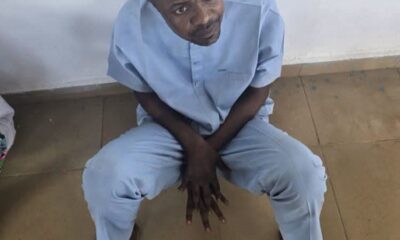






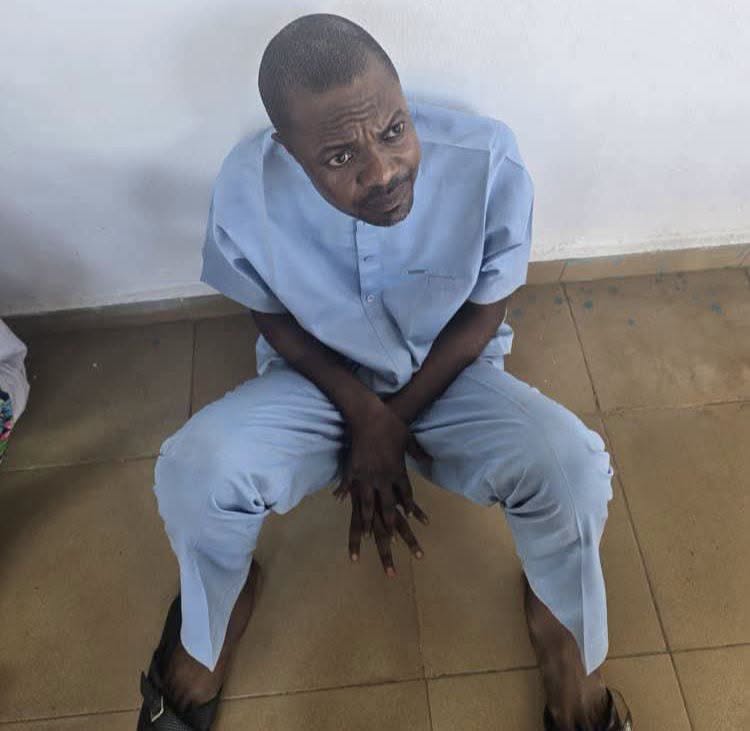
Hours after Justice Mohammed Umar of the Federal High Court, Abuja, ordered issued a bench warrant for the arrest Adeniyi Adeyemi, the controversial Director General of the Presidential Foreign Intervention Promotion Council (PFIPC), is currently in the custody police authorities.
Pictures and videos of embattled PFIPC boss being questioned in what appeared an interrogation session, surfaced on social media on Tuesday evening, with few details still sketchy on whether the police actually hunted him down or he surrendered himself.
Latest information, indicate that he is currently in the custody of the Osun State Police Command, according to a report by Channels Television, who confirmed that he has been taken in.
The order came on the prompting of Wisdom Madaki, the police lawyer after Adeyemi failed to appear in court to take his plea before on an eight-count charge marked FHC/ABJ/CR/562/2025, which relates to forgery, fraud and impersonation.
The court took the decision despite the spirited efforts by Genesis Francis, Adeyemi’s lawyer to mitigate the situation when he told Umar: “The defendant is afraid for his life. He has to be alive to be able to face trial. They have been looking for him even without an order of court.”
Regardless, the judge, while brushing aside the defence, said he was minded to accede to the application for the issuance of a warrant of arrest against the defendant, noting since case was filed on November 27, 2025, with proceedings not commencing until December 4, 2025, Adeyemi did not appear before the court more than once.
“Since then, he has failed to appear before this court on four consecutive dates,” he said, while mandating security agencies to arrest and produce the embattled PFIPC boss before the court on September 30 for arraignment.
During trial, witnesses including Femi Gbajabiamila, Chief of Staff (CoS) to the President; Paul Emmanuel; Jeremiah Imoukhede; and Ituah Sylvester, are billed to testify for the prosecution alongside the Office of the Accountant General of the Federation (OAGF), Akimbo Shola and Adamu Balongu, as well as a Deputy Superintendent of Police.
The order is coming on the heels of Adeyemi’s outcry that his life was in danger, while debunking the allegation that he was a fugitive running away from the law, saying he would appear in court once he had assurance that he would be protected from those tracking him in attempts to take his life.
A guest of Politics Today, a public affairs programme on Channels Television, Adeyemi, had told his host on Monday: “I’m ready to show my face. I’m not hiding. I’m only fearing for my life because I have it on good authority that my life is in danger. There have been several attempts on my life,” Adeyemi added.
He also maintained his allegation that he paid N400 million through a proxy to President Tinubu’s Chief of Staff, Gbajabiamila, to secure his appointment as DG of the disputed council. I’m ready to show my face. I’m not hiding. I’m only fearing for my life because I have it on good authority that my life is in danger. There have been several attempts on my life.”
An interim police investigation report had exposed how the defendant allegedly forged appointment letters and official documents to create the impression that the PFIPC was a legitimate federal government agency.
Police disclosed that the investigation was initiated after the Office of the Chief of Staff to the President petitioned the Inspector-General of Police (IGP) on October 17, 2025, over the activities of individuals allegedly forging official appointment letters purportedly issued from the office.
The petition added that preliminary findings showed the forged documents contained falsified signatures, reference numbers, official seals, and the Nigerian Coat of Arms, and that they were allegedly used to appoint individuals into the non-existent PFIPC.
Adeyemi, who was identified as the principal suspect, allegedly presented himself as the DG of the council and operated from an office within the Federal Secretariat Complex, Phase III, Abuja.
One of those allegedly linked to the fraud, Dolapo Babatunde Tanimola, was said to have died in a fire incident at a hotel in Abuja.
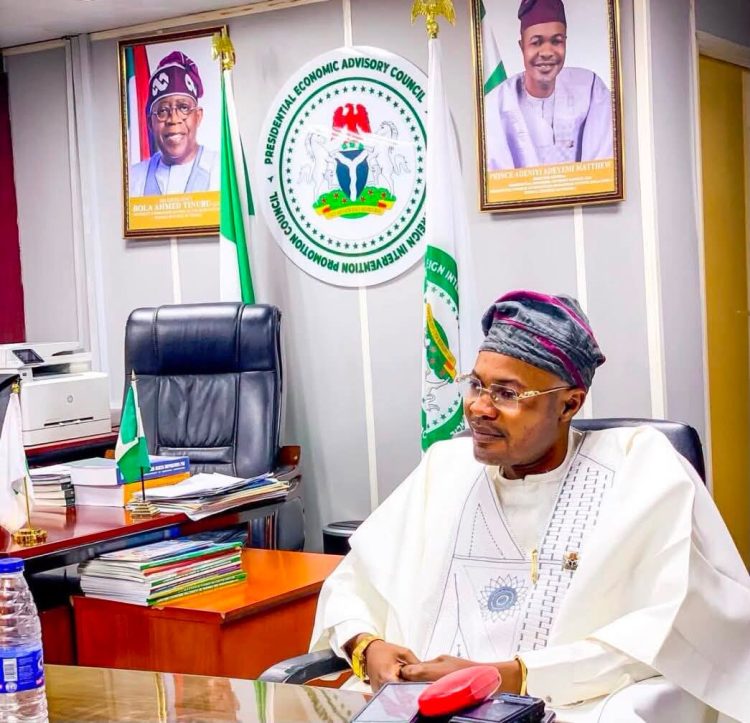
Justice Mohammed Umar of the Federal High Court, Abuja, on Tuesday, issued a bench warrant for the arrest of Adeniyi Adeyemi, controversial Director-General (DG) of an alleged “non-existent,” Presidential Foreign Investment Promotion Council (PFIPC).
The order came on the prompting of Wisdom Madaki, the police lawyer after Adeyemi failed to appear in court to take his plea before on an eight-count charge marked FHC/ABJ/CR/562/2025, which relates to forgery, fraud and impersonation.
The court took the decision despite the spirited efforts by Genesis Francis, Adeyemi’s lawyer to mitigate the situation when he told Umar: “The defendant is afraid for his life. He has to be alive to be able to face trial. They have been looking for him even without an order of court.”
Regardless, the judge, while brushing aside the defence, said he was minded to accede to the application for the issuance of a warrant of arrest against the defendant, noting since case was filed on November 27, 2025, with proceedings not commencing until December 4, 2025, Adeyemi did not appear before the court more than once.
“Since then, he has failed to appear before this court on four consecutive dates,” he said, while mandating security agencies to arrest and produce the embattled PFIPC boss before the court on September 30 for arraignment.
During trial, witnesses including Femi Gbajabiamila, Chief of Staff (CoS) to the President; Paul Emmanuel; Jeremiah Imoukhede; and Ituah Sylvester, are billed to testify for the prosecution alongside the Office of the Accountant General of the Federation (OAGF), Akimbo Shola and Adamu Balongu, as well as a Deputy Superintendent of Police.
The order is coming on the heels of Adeyemi’s outcry that his life was in danger, while debunking the allegation that he was a fugitive running away from the law, saying he would appear in court once he had assurance that he would be protected from those tracking him in attempts to take his life.
A guest of Politics Today, a public affairs programme on Channels Television, Adeyemi, had told his host on Monday: “I’m ready to show my face. I’m not hiding. I’m only fearing for my life because I have it on good authority that my life is in danger. There have been several attempts on my life,” Adeyemi added.
He also maintained his allegation that he paid N400 million through a proxy to President Tinubu’s Chief of Staff, Gbajabiamila, to secure his appointment as DG of the disputed council. I’m ready to show my face. I’m not hiding. I’m only fearing for my life because I have it on good authority that my life is in danger. There have been several attempts on my life.”
An interim police investigation report had exposed how the defendant allegedly forged appointment letters and official documents to create the impression that the PFIPC was a legitimate federal government agency.
Police disclosed that the investigation was initiated after the Office of the Chief of Staff to the President petitioned the Inspector-General of Police (IGP) on October 17, 2025, over the activities of individuals allegedly forging official appointment letters purportedly issued from the office.
The petition added that preliminary findings showed the forged documents contained falsified signatures, reference numbers, official seals, and the Nigerian Coat of Arms, and that they were allegedly used to appoint individuals into the non-existent PFIPC.
Adeyemi, who was identified as the principal suspect, allegedly presented himself as the DG of the council and operated from an office within the Federal Secretariat Complex, Phase III, Abuja.
One of those allegedly linked to the fraud, Dolapo Babatunde Tanimola, was said to have died in a fire incident at a hotel in Abuja.
Meanwhile, Adeyemi, who has since denied that the PFIPC was non-existent, demanded an independent, multi-stakeholder investigative panel to probe the controversy surrounding the alleged N1.3 billion budget insertion for the Council in the 2026 Appropriation Bill.
In an open letter to President Tinubu, Adeyemi said he was prepared to provide documentary evidence and fully cooperate with investigators once an independent panel was constituted.
He recommended the inclusion of representatives of civil society organisations, the Nigerian Bar Association (NBA), independent media organisations, international financial institutions, human rights groups, and diplomatic missions, as well as the ICPC and the EFCC, on the independent investigative panel.
Meanwhile, Adeyemi, who has since denied that the PFIPC was non-existent, demanded an independent, multi-stakeholder investigative panel to probe the controversy surrounding the alleged N1.3 billion budget insertion for the Council in the 2026 Appropriation Bill.
In an open letter to President Tinubu, Adeyemi said he was prepared to provide documentary evidence and fully cooperate with investigators once an independent panel was constituted.
He recommended the inclusion of representatives of civil society organisations, the Nigerian Bar Association (NBA), independent media organisations, international financial institutions, human rights groups, and diplomatic missions, as well as the ICPC and the EFCC, on the independent investigative panel.

Abdulrahman Bello, must die for the murder, Hafsoh Yetunde Lawal, a final-year student of the Kwara State College of Education, Ilorin, the Court of Appeal has insisted, rebuffing the attempt of the self-acclaimed Islamic cleric, to upturn the verdict of an Ilorin High Court.
Affirming the earlier death sentence imposed on cleric for the murder of the female student, said to be his lover, on February 10, 2025, at the Olunlade area of Ilorin, which attracted widespread public outrage across Kwara State and beyond, the appellate court said it found no reason to upturn the earlier verdict of the lower court.
Bello, who was one of the five people arraigned on charges bordering on conspiracy, murder, unlawful removal and possession of human parts and blood, also faced a rape charge, of which he was eventually acquitted by the trial court.
Justice Gabriel Omoniyi Kolawole, who led a three-man panel of the appellate court, while dismissing his appeal, held that the prosecution proved beyond reasonable doubt that he murdered the victim and was unlawfully in possession of human parts.
The appellate court consequently upheld the judgment of the Kwara State High Court, which sentenced Bello to death by hanging and imposed an additional 10-year jail term over his conviction for unlawful possession of human parts.
The court held that there was no merit in the appeal and consequently affirmed both the conviction and the sentence imposed by the trial court.
According to the appellate court, the trial court properly evaluated the evidence before it and rightly concluded that the prosecution established the offences beyond reasonable doubt.
The appellate court said it believed the position of Ibrahim Sulyman, Kwara State Attorney General and Commissioner for Justice, Issa Zakari, Chief State Counsel, and B.L. Abdulsalam, Assistant Chief State Counsel, who led the prosecution.
Hailing the judgment as another significant milestone in the state’s criminal justice administration, Sulyman, said in a statement: “The judgment underscores the commitment of the Kwara State Ministry of Justice and the judiciary to ensuring that criminal cases are determined strictly in accordance with the law and the evidence presented before the courts.
“It also reaffirms the principle that persons found guilty of grave offences, after a fair trial, will be held accountable under the law. The appellate court’s decision would strengthen public confidence in the justice system.
“The affirmation of the conviction and sentence represents another milestone in the administration of criminal justice and reinforces public confidence in the rule of law and the appellate process. The convict still retains any further rights of appeal available to him under the Constitution and other applicable laws.
Justice Hannah Ajayi of the Kwara State High Court, sitting at Ilorin, hand on July 2025 sentenced Bello to death after finding him guilty of murdering and dismembering Lawal, after describing his act as “the highest degree of human wickedness, and a premeditated and cold-blooded act.”
Dismissing Bello’s claims that he loved the deceased and intended to marry her as merely an afterthought designed to deceive the court, Ajayi, also ruled the convict’s conduct after committing the crime and before his arrest suggested that it might not have been his first involvement in such an act, while a book on money-making charms recovered from his apartment further strengthened the prosecution’s case.
Justice Ajayi further held that the video and written confessional statements obtained by operatives of the Department of State Services and the police were lawfully admitted in evidence, dismissing Bello’s allegation that he was tortured into making the confessions.
While acquitting Bello of the rape charge, the trial court convicted him of murder and unlawful possession of human parts, sentencing him to death by hanging for the murder and imposing a 10-year prison term, with an option of a N100,000 fine, for the human parts offence.
The court also discharged and acquitted the four other defendants in the case — Ahmed Abdulwasiu, Suleiman Muhydeen, Jamiu Uthman and Abdulrahman Jamiu — after holding that the prosecution failed to establish their involvement in the offences.
Reacting to the High Court judgment at the time, the Emir of Ilorin and Chairman of the Kwara State Traditional Rulers Council, Ibrahim Sulu-Gambari, described the killing as tragic and commended the judiciary for ensuring justice.
“The gruesome murder of Hafsoh Yetunde Lawal was pathetic, unfortunate, regrettable and worrisome,” the monarch said in a statement issued by his Press Secretary, Abdulazeez Arowona.
“The judgment has further brightened the hope and trust of the people in the judiciary and security agencies. May Almighty Allah repose the soul of the late Hafsoh Lawal and comfort her family members.”
The monarch also urged parents and guardians to be vigilant and closely monitor the activities and movements of their children and wards to prevent a recurrence of such incidents.



-

 News4 days ago
BREAKING: Mystery death! *Female student dies a day after arriving Umahi’s home!
-
 News4 weeks ago
BREAKING: Troops rescue wife of kidnapped General! *Terrorists flee scene
-

 News4 days ago
Don’t jump to conclusion! *Umahi speaks on mysterious death of female students!
-
 News4 weeks ago
BREAKING: Count me out, Okonkwo tells Atiku *Amaechi VP’s choice an insult to Ndigbo
-

 News3 weeks ago
BREAKING: Court sentences Nigerien, two others to death over terrorism
-
 News2 weeks ago
BREAKING: EX-SSG mowed down by gunmen! *He resisted being kidnapped – driver
-

 News3 weeks ago
Two hours after Igboho’s ‘red-eyes’ to ‘Fulani’ leaders, gunmen free kidnap victims!
-
 News3 weeks ago
Abductors of Oyo teachers panicking, freedom coming for victims soon!