
News
Applauding Professor Iwe’s five years of landmark achievements in MOUA, Umudike












President Bola Tinubu has directed the Federal Competition and Consumer Protection Commission (FCCPC) to investigate major technology companies and Generative Artificial Intelligence (AI) platforms operating in Nigeria over allegations of anti-competitive practices, unlawful exploitation of news content and other potentially unfair market conduct.
The investigation follows a joint petition submitted to the Presidency by the Nigerian Press Organisation (NPO), comprising the Newspaper Proprietors’ Association of Nigeria (NPAN), the Nigeria Union of Journalists (NUJ), the Broadcasting Organisations of Nigeria (BON), and the Guild of Corporate Online Publishers (GOCOP).
Announcing the development in a statement on Monday, the FCCPC said the directive was conveyed by the Minister of Information and National Orientation, Mohammed Idris.
“The Federal Government’s position was communicated to the FCCPC in a letter signed by the Honourable Minister of Information and National Orientation, Alhaji Mohammed Idris. The investigation promises to open a new vista in Nigeria’s media history.
“In recent years, concerns have been raised by the Nigerian media industry over the growing impact of certain digital platforms on the sustainability of the country’s news ecosystem. Specifically, the NPO is increasingly uncomfortable with major technology companies including Meta, Alphabet, X (formerly Twitter), and certain generative AI platforms, citing practices capable of undermining fair competition, the commercial viability of Nigerian media organisations, and the legitimate rights of content creators and publishers,” the Commission stated.
Reacting to the directive, the Executive Vice Chairman and Chief Executive Officer of the FCCPC, Mr. Tunji Bello, said the Commission would conduct an independent, transparent and evidence-based investigation.
“We recognise the strategic importance of the media to Nigeria’s democracy and the equally significant role of technology in driving innovation and economic growth. Our responsibility is to objectively determine the facts and ensure that competition within the digital ecosystem remains fair, transparent, and consistent with Nigerian law,” Bello said.
He stressed that the investigation should not be interpreted as a presumption of wrongdoing against any organisation, but as an opportunity to establish the facts through due process.
“Every party will be accorded a fair opportunity to present relevant information before any conclusions are reached. In specific terms, FCCPC will determine whether the practices in question constitute a breach of the Federal Competition and Consumer Protection Act (FCCPA) 2018 or any other applicable law.
“In the past, FCCPC had investigated META and in 2025, won a landmark case against the tech giant for violations of FCCPA, including data breach, for which the tech giant was fined $220m. Meta has, however, appealed the fine,” the statement signed by Director of Corporate Affairs, Ondaje Ijagwu, added.
According to the FCCPC, the investigation will examine allegations of market dominance and potential anti-competitive conduct by the companies involved.
It will also probe claims of unauthorised extraction, scraping, ingestion or commercial use of copyrighted news articles, broadcast materials and other original journalistic content for developing and training Generative AI models.
Another key area of inquiry is the allegation that Nigerian news publishers have been denied meaningful opportunities to negotiate fair compensation or appropriate commercial arrangements for the use of their journalistic content.
The Commission noted that similar concerns had previously been raised in South Africa, where, following an investigation by the South African Competition Commission, it said Google agreed to compensate South African news media with R688 million ($40 million) annually for three to five years.

Nigerians, intent on getting to the root of the current fake agency scandal raving around the Presidency must start by ascertaining the whereabouts of the N27.5billion, said to have triggered off the entire saga.
Babachir Lawal, former Secretary to the Government of the Federation (SGF), who weighed in on the scandal surrounding the purported Presidential Foreign Intervention Promotion Council (PFIPC), stressed on Monday night that Nigerians must not forget that the sharing formular regarding the amount, which is said to be the takeoff grant for the body, was the foundation of the dispute.
Recall that Adeniyi Adeyemi, Director General of the agency, after accusing Femi Gbajabiamila, Chief of Staff (CoS) to President Bola Tinubu, of collecting N400 million from him while awaiting a balance of N200million for facilitating his appointment, upped the ante by alleging that disagreement over the sharing formula of the grant triggered off the dispute.
Adeyemi had accused the CoS of demanding 48 per cent of the entire grant for himself, which he refused to part with, leading to the disagreement to the extent that the former Speaker of the House of Representatives now declaring war, which the Presidency relied on to declare the agency non-existence.
Babachir, a guest of Prime Time, a public affairs programme on ARISE NEWS Television, wondered why Nigerians were limiting themselves to the N1.3billion budgeted for the agency by the National Assembly in the 2026 appropriation without talking about the huger amount of N27.5billion.
Hear him: “Nigerians are talking about how 1.3 billion Naira was inserted into the budget. The man himself first said the quarrel came about because he refused to part with 48% of the 27-point-something billion Naira take-off grant. That money has been spent before this budget office was looking for the budget. Who gave him the money? It was not appropriated for; it’s not in any budget, that 27.5 billion Naira for which he says somebody demanded 48%. Who gave him the money? How did the process of generating the request for the release come up? How did it go through?
“We are just talking about the tip of the iceberg here. Down there, before we got to here, 27.5 billion Naira had already been disbursed, according to him, as a take-off grant. How did that money get to him? It was not in the budget. So, this is what should frighten us. If such money can go to a fictitious organisation, we only now begin to see it when we are quarreling about how did it get into the budget. How did that money get to them?
“I think we all know that thieves and armed robbers always fight and they expose themselves during sharing. His complaint was that the Presidency was after him because somebody demanded 48 per cent of the take-off grant of 27.5 billion Naira. And so, somebody was not happy since he refused to part with that money.
“So, you see, that’s how we got to know this to start with. That is the reason why we got to know this on his side of the coin. It’s about the sharing of the 27.5 billion Naira. That’s why the thing came up. So, it didn’t work. It should have worked before that money left the government coffers into the account of the agency.
“It depends on the will of the President. I can use myself as an example. When there was this brouhaha between me and the Senate, remember I was suspended for some time while an investigation was going on. So now, that is best practice.
“It’s already out of their hands. I believe now the thing is on the President’s desk. It is a legislative oversight. This government – this National Assembly – has no interest in scrutinising the budget that comes before them. Most of the legislators just go in there to earn their salaries and collect allowances and go. They don’t scrutinise the budget line by line. We all know how this particular government works. There are some people that when they talk, nobody else has the authority to contravene
“It’s not a one-off thing. The issue of buying appointments is not new. People have been hearing it as rumors, as allegations, all over that. In this government, people buy appointments. We’ve heard it on the streets. And so this is not a new thing. I don’t know in our time. Nobody was buying appointments. No, it’s not to my knowledge. It’s not to my knowledge that people buy appointments. It probably could be, but I wouldn’t know that. It’s not part of our mandate to know such things.
“This government doesn’t take governance seriously. When things like this happen, Nigerians are not surprised. We are only interested in this because we have an opportunity to poke attacks on the government, not because we don’t know that these things happen in this government. It’s so porous.
“There are so many power centers that, you know, nobody does a budget. Nobody implements a budget. Ministers go to the office and sit down and read newspapers. Overheads, maybe if they are lucky, it comes one per quarter, at least paid quarterly. Some governments don’t even get overheads. Everybody’s redundant. But there’s money being appropriated and money being spent, but nobody sees where the money is going to. So that is part of the loopholes.
“Why are you interested in 27.5 billion Naira that had already been collected and spent? We are talking about an agency that we are claiming doesn’t exist. Maybe it exists, but it doesn’t have a legal framework for its existence. But it exists. And there are a lot of powerful people that make sure it exists in that form. Those are the people we need to expose. The Chief of Staff, in particular, is so powerful. The SGF is there, just reneging on his responsibilities. And nothing has happened now.”
Explaining official procedures for documenting new agencies, the former SGF, said: “If an agency is received, processed, and forwarded without somebody asking in the SGF’s office exactly who these people are, it means there’s a dereliction of duty on the side of the SGF.
“The act setting up that agency will sometimes say the position has to be advertised, interviewed, and shortlisted names sent to the president for approval. Some, you just write and he just approves. So, the SGF will go through the file, and in that process of due diligence, will be able to find out whether such an organisation exists. If there is no record for it in the SGF’s office, he will raise a red flag on it.
“What we used to do is if there’s a new agency that either the President or a minister proposes to handle some specific assignments or duties, he will first of all raise a memo to the president, who will approve that such be created. And then a memo will be sent to the Federal Executive Council on that particular agency, and we’ll debate it.
“Now, sometimes it will require some legislation to give that agency a legal mandate to operate. Some will just be within the presidential approval, and then the agency is created. Because really, you cannot appropriate funds to an agency that has not been legislated for.
“There has to be a legal basis for its existence. But first of all, it is the executive that raises such an agency, makes the proposal, debates it, and the Attorney General of the Federation will normally put an opinion on it. Then, if the Federal Executive Council approves, it’s sent to the legislature for legal establishment.
“It should not have arisen in the first place if it is not a legally approved agency. It should not exist. And the SGF would know that if it doesn’t exist on any basis, why is he forwarding a request? If it doesn’t exist, such will not happen in our time.
“I’m sure the President would assume that such an entity has gone through all the checks and balances before it is established, and therefore, not every communication from that agency needs to be verified. But as far as it is coming through the office of the SGF, due diligence must be done first before it is forwarded.
“This SGF has been sidelined in a lot of things from what we hear. He has been sidelined in a lot of things. It’s institutional compromise, because in this, I sense there’s quite a big racket going on somewhere along the line. If the agency was created by maybe one big man alone, and then he wants to go through the budget process, the budget office assigns the budget code according to the chart of accounts in GIFMIS. So, how did they manage to assign the budget code for this agency that does not exist? Who inserted it?
“Because first of all, the budget office issues a budget call circular to MDAs, and everybody starts to prepare his budget according to the budget line. They give you ceilings, and you prepare your budget and forward it to the budget office as an agency or ministry. Now, the Ministry of Budget and Planning would, in our time, call every MDA to come and defend its budget. Now, if you don’t exist, how did they recognise that you are a genuine entity? Who gave out the budget code and allowed their budget to pass?
“That’s what oversight is. The SGF should be able to know, because before it gets to the National Assembly, that budget goes through the SGF. “Unless there’s a dereliction of duty by the SGF’s office, the responsibility to flag that this is a fake agency would have come from them.”
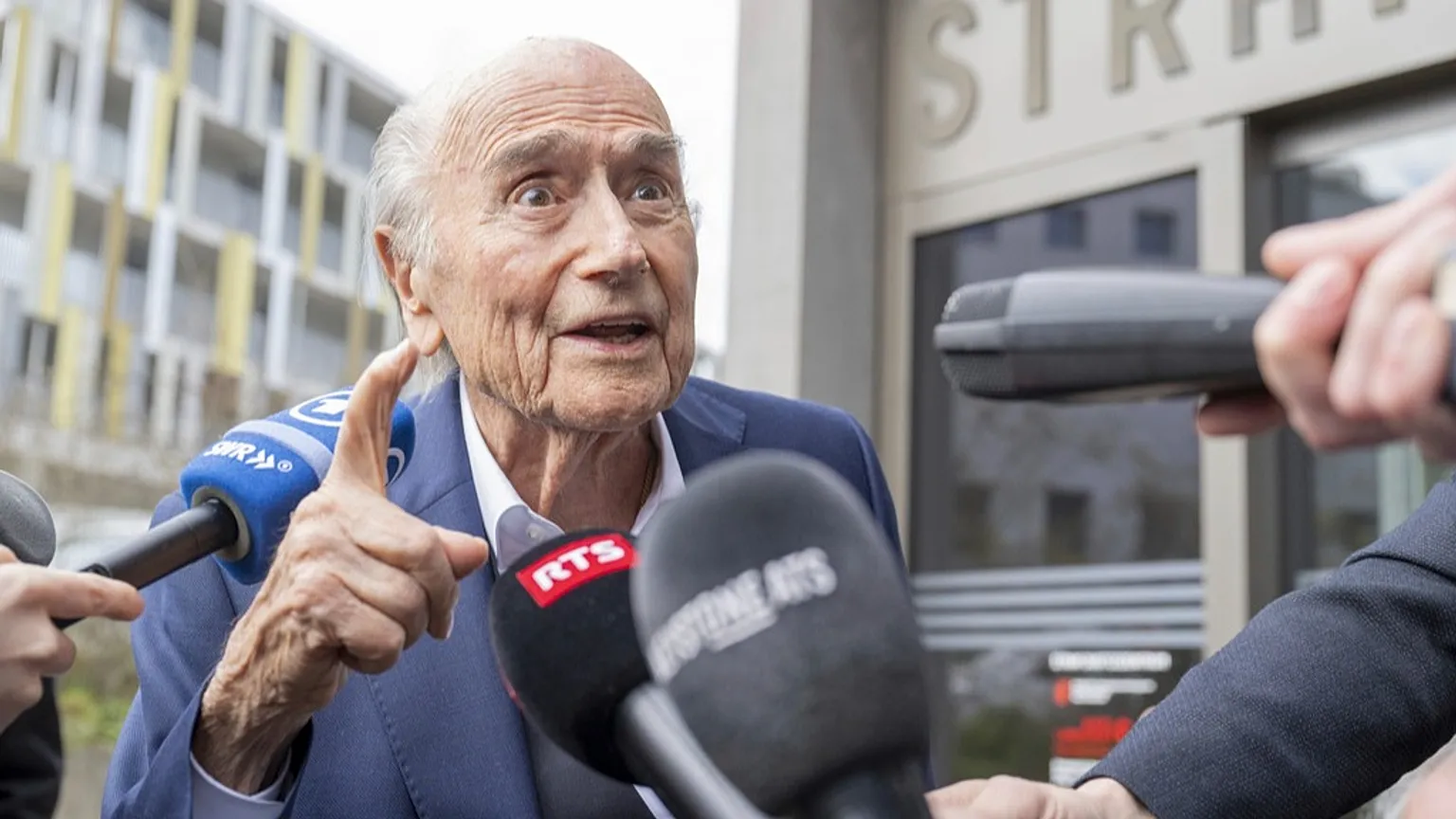
Sepp Blatter is unhappy with a situation where Donald Trump, would pick up his phone and call on the Federation of Internation Football Associations (FIFA) to change its established rules as has now emerged in the case of Folarin Balogun, a strike in the United States squad currently at the World Cup.
Balogun, a Nigerian-US citizen, is supposed to miss a match between his country and Belgium in the Round of 16, on Monday, following a red card he picked in the last encounter of the team between Bosnia and Herzegovina.
However, it has now been revealed that the intervention of the President of the United States, who reportedly called Gianni Infantino, current FIFA President to review Balogun’s automatic one-game suspension, saw to the world’s footballing regulator acquiescing by shifting the implementation of the ban by a year.
Railing on the development, which would now make the 25-year-old eligible to file out against Belgium in the last 16 of the World Cup later on Monday, Blatter, disgraced out of the FIFA Presidency in 2015, wrote on X: “Red cards are not overturned by political phone calls,” scandal-hit Blatter said on X.
“They are overturned by rules, evidence and independent bodies. If a US President intervenes with the FIFA President — and a player is suddenly cleared before a World Cup knockout match — the question is unavoidable: Quo vadis (Where are you going), FIFA?”
The 90-year-old former FIFA boss, a usual critic of Infantino, who once told Bild, German newspaper in February that the new FIFA had become a “dictator,” added: “Football must never become a playground for political power.”



-

 News3 weeks ago
BREAKING: Troops rescue wife of kidnapped General! *Terrorists flee scene
-
 News3 weeks ago
BREAKING: Count me out, Okonkwo tells Atiku *Amaechi VP’s choice an insult to Ndigbo
-

 News2 weeks ago
BREAKING: Court sentences Nigerien, two others to death over terrorism
-
 News4 weeks ago
Dickson: Obi, a big asset to NDC, we’re working together … but!
-

 News4 weeks ago
Ovia, ex-Zenith Bank boss swings into luxury apartments *Flats hit $2.8million price tag
-
 News5 days ago
BREAKING: EX-SSG mowed down by gunmen! *He resisted being kidnapped – driver
-

 News2 weeks ago
Abductors of Oyo teachers panicking, freedom coming for victims soon!
-

 News2 weeks ago
Two hours after Igboho’s ‘red-eyes’ to ‘Fulani’ leaders, gunmen free kidnap victims!