
News
Alia, Ortom in war of words over ₦100bn loan approval in Benue


On Sunday, Benue State Governor Hyacinth Alia traded barbs with his predecessor, Samuel Ortom, concerning the recent endorsement of a ₦100 billion loan by the State House of Assembly.
The Assembly granted the approval during an urgent session last Friday, responding to Alia’s proposal to secure the funds for various infrastructure initiatives throughout the state.

Alia explained that the borrowing would support efforts like upgrading and outfitting 23 general hospitals, improving and building science-focused schools across the state, and finishing current road, bridge, drainage, and power initiatives.
READ ALSO: Alia: No to self-defence! *APC worsening killings in Benue
Additional uses encompass establishing skills training facilities, constructing and furnishing smart schools in every federal constituency, and developing and equipping the Benue State University of Agriculture, Science and Technology in Ihugh, among further endeavors.
The local branch of the Peoples Democratic Party (PDP), via its spokesperson Tim Nyor, criticized the Assembly’s decision on Friday, asserting that the Alia government has already benefited from considerable federal funding over the last two years.
In response, Alia, speaking through his press secretary Kula Tersoo, countered the PDP’s remarks, charging Ortom’s tenure with spreading hardship by neglecting salary and pension payments.
Alia labeled Ortom’s eight-year leadership as a major setback that saddled the state with massive debts and stalled growth.
“For the avoidance of doubt, the PDP-led administration, especially that of Samuel Ortom, by their own admission, left behind a staggering direct debt burden of ₦187.7 billion, a weight that has constrained the state’s finances and development capacity.
“This administration later discovered that the figure was grossly understated and uncovered an additional ₦170 billion owed through local government areas. It is unbelievable that Ortom’s administration accumulated this humongous debt and still refused to pay civil servants and pensioners their entitlements.”
“Furthermore, it is shocking that the Ortom government, after receiving several financial interventions from the Federal Government — including bailout funds, LNG funds, and two tranches of the Paris Club debt refund — alongside unexplained direct borrowing, still handed over to Fr. Alia a debt profile of ₦187.7 billion, twelve months’ arrears of salaries for state civil servants, ten months’ arrears for local government staff, about thirty-six months’ pension arrears, and a landscape of collapsed infrastructure across the state, bringing the total debt to ₦359 billion”, the statement read.
Ortom quickly hit back through a release from his communications aide, Terver Akase, accusing Alia of dodging key issues raised by critics rather than facing them head-on.
Ortom pointed out that even with federal allocations to Benue surging by over 500 percent, Alia has not achieved significant advancements and prefers drawing comparisons to his forerunner.
He clarified that upon exiting office, several federal approvals were in the pipeline, such as the remaining portion of the ₦41 billion bailout and a ₦20 billion loan from the Central Bank of Nigeria.
Ortom added that the state anticipated reimbursements worth billions for fuel subsidy removals and SURE-P allocations.
Moreover, he claimed Alia has not updated residents on the receipt or application of SURE-P funds.
The ex-governor faulted Alia for not clarifying a ₦68.3 billion deal to fix a 13-kilometer stretch from Wurukum Roundabout to the Air Force Base in Makurdi.
“To date, the Alia government has not provided any explanation in response to the concerns raised. The government has similarly kept sealed lips on probing questions regarding the ₦73 billion reportedly approved for a road project leading to the governor’s village in Mbadede, Vandeikya Local Government Area.
“Each time Governor Alia is confronted with questions bordering on transparency in governance or the welfare of Benue people, his reflex action is to attack Chief Ortom instead of providing facts and figures.
“This pattern of behaviour, now clearly habitual, smacks of an administration that is averse to probity and intent on evading the responsibility of explaining how public funds are being managed”, Ortom said.
Ortom also pressed Alia to reveal the spending details of the substantial inflows to the state since May 29, 2023.
“Why the secrecy surrounding the state’s finances? And why the desperate attempt to silence anyone who dares to ask these questions?
“Rather than address these legitimate concerns, Governor Alia has chosen the path of diversion, resorting to insults, half-truths, and false claims about Chief Ortom, whose stewardship as governor remains one of selfless service, transparency, good governance, and courage in defending the people of Benue State, particularly in the face of grave security challenges,” the statement added.





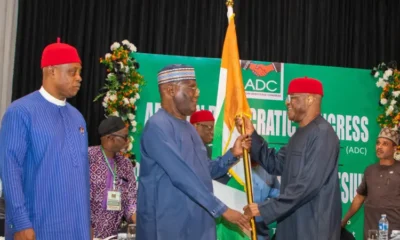


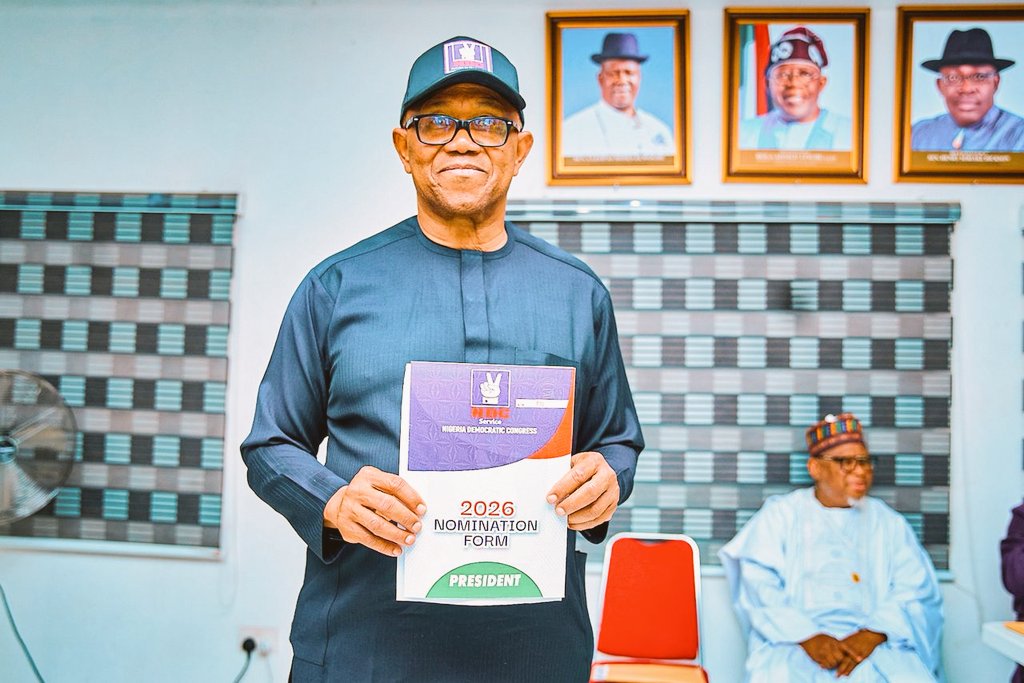

Have you been watching the drama happening in ADC? I have, and I have been thoroughly amused doing so. Have you been following the television appearances of Rotimi Amaechi recently? Did you see how the former Governor of Rivers State had been vibrating, assuring of his victory at the party’s presidential primaries?
Did you hear him boasting how he was going to vanquish Atiku Abubakar, former Vice President and now the presidential candidate of the party, indicating that ADC members would prefer him over the seventh-time election-contesting Nigerian record holder, because of his (Amaechi’s) records?
Did you see the vehemence with which he warned that television host, to “stop that nonsense,” for suggesting that he could end up as the VP candidate to the same Atiku? Did you see how he rolled his bulging eyes and how angry he sounded?
Did you read the statement of the former Minister of Transportation, rejecting the outcome of the ADC presidential primaries, even before it was finally announced on Wednesday.
Now, pan the camera to the Abuja home of the same Amaechi – by the way – I could swear the ambiance could compete with the palace of the Sultan of Brunei – how did he do it – but how could I forget his wife is a money-minting machine!
Did you see the selfsame man with Atiku? Did you notice the difference? Did you notice the robustness, the comicalness? Did you watch the chumminess and the camaraderie? What meaning did you read into it? You actually have to be an initiate to correctly read everything perfectly.
Just wait for a few days to hear the announcement. I won’t be the one to tell you that the huffing and puffing, the air-punching and the table-banging is all for one thing – the VP position.
For those who had advocated that Obi stayed back and contested with Atiku, it would have been a fatal gambit. He would have come a distant third in the contest, competing with Mohammed Hayatu-Deen. Not because it will be so by the desires of the members, but the goons, wanted it so and would have made it so.
Even the position of the VP which hitherto had been bandied as his for the asking, would have eluded him. Amaechi was there to pick it up.
You heard Dele Momodu an accomplice in that plot telling you that Amaechi was more experienced than Obi in that interview with Charles Aniagolu on ARISE NEWS Television’s Prime Time.
It was all figured out. If Peter Obi had fallen to the plot he would have been the greatest political mugu of the century. He would have rubbished the rock-strong foundation on which his profile was built and stands today – as businessman and politician.
Indeed the plot appeared skewed towards not only making him wave goodbye to politics forever, but caast a huge slur on his exhilarating credentials that account to his being celebrated as one of the most successful Nigerian business tycoons today.
Only a few seconds and the trap would have snapped. Had he waited a few days more in that ADC environment, it would have been over. He would have been trapped in the odd situation of point of no return.
By now he would have become an object of mockery and an item of sport for his enemies. Tons of them would be having a bellyful of laughter over his ordeal by now – had he wasted a second more.
But having that laugh would mean that the eagle has lost its lustre. Obi isn’t Obi just by name. Now, here is the Obi they wanted to trick into a trap. Still in his early 20s, he drove three cars he bought with his own money before graduating from the university.
First year – a Volkswagen Beetle (today’s Venza) – second year a Peugeot 505 (today’s Prado) – third year – a BMW (Today’s Maybach). Now think of yourself as a student then. Think of your children that are students today. That would bring you closer to the persona in question.
It didn’t end there. Still as an undergraduate, he owned the supermarket on campus. There was more. He built residential houses and became a landlord to students and locals in the university community – one of them, said to be Abubakar Sa’ad, the current Sultan of Sokoto, who was then a military officer.
De hear o! This same Obi, was among the 1,000-ONLY, UK customers the American Express Bank gave their Platinum Cards. You know what that means. In the whole of the UK – including oyibo people of all nationalities doing business.
Before his 33rd birthday, this Obi, had become Chairman of a commercial bank and director of other blue-chip companies. At the same age when his colleagues still clutch files in their armpits in pursuit of jobs, he was already heading a conglomerate of firms dealing with supplies and distribution of goods.
So, add all these up! Imagine the number of intriguing situations he must have dealt with in this long journey. Imagine the boardroom politics. Imaging the various business tricks he must have survived.
In politics, this same Obi practically cut off the head of the political monster prowling Anambra for years.
Before his arrival, the whole of the state was one huge conflagration and cataclysm. Elements sponsored by patrons of evil had razing down structures including the Government House of governor’s residence. Anambra was all chaos – a huge bedlam!
But all these Obi faced and conquered, arresting the tempest, quietening the tide and smoothening the waves – not without battles – there was a deluge of them – but with willpower, wisdom, tenacity, consistency, and above all – courage.
He battled the electoral heist that stole his original mandate, won, then impeachment, triumphed, then abrupt tenure termination, challenged it and returned to power – battled entrenched interests in the labour unions – teachers, doctors, workers – et al – prevailed and handed down a new Anambra sitting on the foundation of sobriety and good behaviour.
Now this was the man they wanted to trick. Obi’s case would have been that of the late John Chukwu, the hero in the tragicomedy, Isubru Ekperi – described as the crab which swam across the mighty ocean, but fell in the woman’s pot of soup.
Had Obi, stayed in ADC to contest against Atiku, his fate would have mimicked Okonkwo in Chinua Achebe’s Things Fall Apart, whom for fear of being thought weak, destroyed his own destiny by killing Ikemefuna and ended up committing suicide! But providence was on his side;
Thankfully, he did not. And today, NDC provides a new horizon. Nigerians are being provided the opportunity of a new country, that could rise from the ashes of the old order – a clean break from the past – a new hope of awakening the sleeping giant!
The Tiny Voice!

It began less than 10 minutes after taking the oath of office. In his address to the nation, he uttered those three-letter words – subsidy is gone. The ink with which he signed the documents declaring him President was yet to dry.
That was it. From that moment, Nigerians have known nothing but poverty, tears and death. It was a declaration that came out of impulse rather than articulacy. It was not even contained in his original speech prepared for the occasion. But it sprouted out – from a rash, unthinking and impetuous mental construct.
But the effect was instant, the impact direct. From that moment, Nigerians have never known peace. Every thing took a cue. Minutes after, the news broke that the price of Premium Motor Spirit, otherwise known as petrol had jumped from N189 to N550. It was that instant. Today, it hovers around N1,500.
The effect: Within minutes, transportation cost quadrupled. So too, commodity prices. Caught unawares, marketers, who had earlier thought it was a day of the rains as customers rushed to their shops, soon became suspicious and then got wiser – these were not ordinary customers but smart alecs playing a fast one on them.
They stopped selling, retrieved the items they could from those who had not disappeared with their goods and closed shop to study the situation properly. Hours after, they responded. A plate of eba and soup, went up from N200 to N1,000. Prices hit the rooftops.
In fact, the vehicle transporting what used to be Nigeria, which had been moving at a horse and buggy pace in the days of Muhammadu Buhari, stopped abruptly, engaged the reverse gear and began galloping backwards. That has remained the ugly, parlous tale of the Tinubu days, since May 29, 2023.
Now, the expectation would be that the President and his government that wrought such a horrendous punishment on the polity, would themselves take some blows. But nada! Instead, the opposite was the case. Within months of plunging the citizens into the untold hardship Tinubu went on a binge, spending money – in the words of Olusegun Obasanjo, former President – like a drunken sailor.
Few weeks after, as Nigerians were reeling and gasping in pain from the impact of their new situation, 469 newly-minted Sport Utility Vehicles (SUVs), rolled out from factories in Japan, where they were produced into the premises of the National Assembly for the just inaugurated members.
Put the cost at N100billion – that is N160million for each unit, plus other charges. Reason: The lawmakers needed the vehicles because of their good suspension system, to navigate the so many bad roads in Nigeria. Yes, you heard right. How could they think well and make good laws after the hassles of the bad roads? Tinubu saw reasons, acquiesced and voila!
But it did not end there. Tinubu suddenly realised that Kashim Shettima, his deputy, needed a new home “befitting” his new office. Pronto! A voucher of N21billion was raised and he had it. Till date a haze still hovers over the project.
The last news that was heard was that Number Two refused to take residence because the entire environment, including the toilets was wired to the teeth to monitor him. And Number Two needed privacy.
Again, in the same weeks, Oga Patapata, also realised that Madam needed to transport more comfortably. Pronto! It was arranged. Another voucher was raised for cars for the Office of the First Lady. Cost N1.2billion. Of course, madam needed the comfort for peace at home.
Naturally, since transportation is not done by land alone, he also took care of that. For the sea, a yacht was procured. Cost N5billion. Because the birds in the presidential fleet were not good enough, Tinubu did the needful.
He enriched the fleet with the one befitting of his status and had it transformed to mimic the US Air Force One. To complete the status symbol project, he also added a replica of The Beast, the US presidential automobile.
Ironically, the funds used in procuring these luxury lifestyle, came, not out of productive ventures of Nigeria, but through borrowing. Today, Tinubu has practically borrowed Nigeria blind, doubling or even tripling that of his predecessors.
Meanwhile Nigerians had upped the ante from mere groaning and skreiching. Citizens, unable to take it anymore, now stop their hitherto sleek vehicles on the Third Mainland Bridge and plunge into the Lagos lagoon to end it all. The option is now more rampant than remote and occasional.
Many others, taking the Socrates option, now drink hemlock and many more simply sleep off without any intention of waking up. That is where we are. That is the new Nigeria – the Tinubu Nigeria. But there is more.
Terrorists and the landlords of the forest, having now discovered that the Commander-in-Chief has other fancies than security and welfare of the people – the constitutionally-declared primary purpose of government and scant regard for the citizens, have practically gone haywire. They have taken over and established their authority.
Presently, outside those wantonly slaughtered or butchered in their homes like animals at the abattoir, incinerated alive while sleeping on their beds, among other forms of decimation, many more citizens are now spending months, going to years as victims of captivity with them in various forests in Nigeria.
In their rampage, the terrorists have since broken all barriers considered out of place hitherto. One of their escapades is the present videos of the school children and teachers taken from Oyo State. The gory imagery captures the current Nigerian story.
For instance, on Thursday, just as the sound of heavy celebration was going on in neighbouring Ogun State as the world marked the Ojude Oba yearly carnival, two of the victims, one of them with a toddler on her back, were pleading for their lives, as others went through various forms of torture, including heavy whipping like beasts.
Don’t forget that the terrorists had earlier slaughtered one of their colleagues. In the new video, the totally terrified women, informed that they had chosen another victim to be similarly eliminated. Yet, no word about rescue! Terrible!
Interestingly, if not painfully, Tinubu’s response, in the few cases he bothered, was to see the crisis through the politics lens. His most recent reaction was to tell the world that the harvest of attacks and carnages ravaging the country, were sponsored by his political enemies, intent on shoving him out of power. That to him was all that mattered.
Now, where are your powers as C-in-C? They are mostly found in the most disgraceful economic and political acts of impunity. Nigerians now waking up to hear of the award of brain-dazing contracts such as the N15trillion Lagos-Calabar Coastal Highway and Badagry-Maiduguri Highway – with scant regard for official regulations, is now becoming more common than rare.
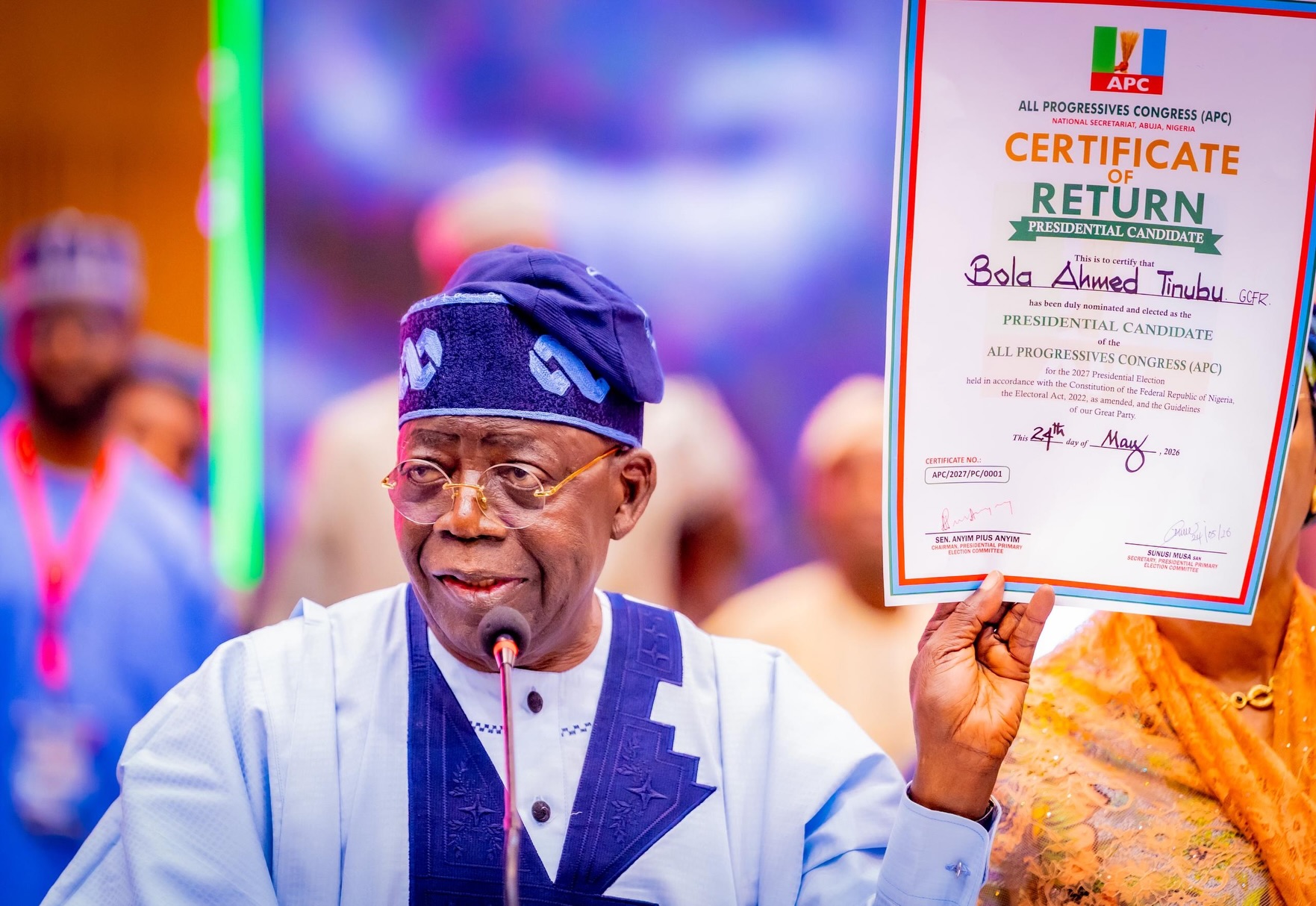
Few days after one of the teachers was beheaded and the video of the hideous act made to circulate on the social media, the President and his All Progressives Congress (APC), party, rolled out the drums of his winning the party’s ticket to contest the 2027 presidential election.
To say that it has been three years of weeping, wailing, mourning and gnashing of the teeth, is a clear euphemism. There is no starker way of putting it than calamity – pure, unmitigated catastrophe – disaster.
Then comes the big question. Nigeria is already breasting the tape of these ruinous years of the first term. Suppose Tinubu succeeds in renewing his tenure by January next year? Will Nigeria survive five more years of a life like the last three? What will be left of Nigeria? Is there a way out, outside shouting – God forbid!?
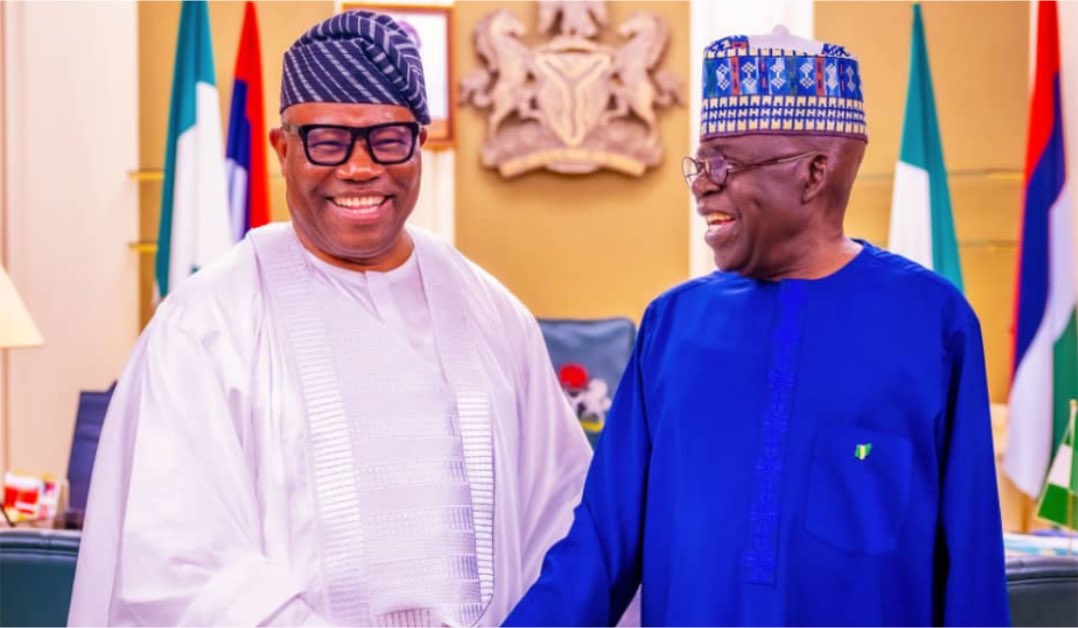
Only a man of rare courage and unquestionable love for country, could have been daring enough to undertake the level of reforms President Bola Tinubu has taken the country through in the last three years that is turning its fortunes around.
This was the verdict of Godswill Akpabio, Senate President, on Friday, as he extolled Tinubu’s exceptional foresight, grit and resilience in pursuing policies that have resulted in quantum growth for the country, stating that under him, the National Assembly would remain solidly behind him all the way.
Akpabio, who joined other Nigerians in hailing the President in the celebration of his three-year anniversary in office, said in a statement he personally signed, noted that for three years Tinubu had undertaken bold reforms, strategic leadership, and unwavering commitment to Nigeria’s Renewed Hope Agenda.
Stressing that the administration’s focus on economic diversification, infrastructure renewal, security, and social welfare, had laid a solid foundation for sustainable growth and prosperity, Akpabio praised the bold leadership and the Renewed Hope Agenda, noting that three years of focused governance had produced landmark projects and reforms that are repositioning Nigeria for its growth and greatness.
Naming some of the initiatives as the Lagos-Calabar Coastal Highway, now opening up coastal trade and connectivity, the Nigerian Student Loan Scheme, making tertiary education accessible to more youths, the Renewed Hope Housing Programme, delivering affordable homes nationwide and the nationwide rollout of Compressed Natural Gas buses and conversion centres to ease transport costs.
Akpabio also spoke about the ongoing tax reforms aimed at broadening the tax base while reducing burden on low-income earners and the completion of OB3 pipeline delivery two billion standard cubic feet of gas per day into the national transmission network.
His words: “The courage to remove fuel subsidy, unify exchange rates, and drive infrastructure despite global headwinds shows a President committed to long-term prosperity over short-term comfort.
“The 10th Senate remains a committed partner in enacting laws that will sustain these gains and secure the future we all desire,” the Senate President stated. Mr President, your courage to take difficult but necessary decisions in the national interest is already yielding results Nigerians can see and feel.”
Praying for God to continue to shower the President with wisdom, strength, and good health, while leading the nation into the next phase of transformation, he also wished him victory in 2027 to finish his assignment of transforming Nigeria.
Hear him:: “Mr. President, on behalf of my family, constituents, the Senate and entire 10th National Assembly, I wish you a successful completion of your tenure and resounding victory in the forthcoming elections.”



-
 News3 weeks ago
Tinubu to African leaders: Copy Nigeria, produce your way out of poverty
-
 News2 weeks ago
BREAKING: US-Nigeria troops slaughter 175 ISWAP fighters
-
 Columns1 week ago
Dear General Gowon: That apology you’re running from is your nemesis
-
 News3 weeks ago
Why we pegged presidential ticket forms at N60million – NDC
-
 News3 weeks ago
BREAKING! Coast brightens for Obi, as NDC zones presidency to South
-

 News3 weeks ago
Gowon on civil war: My book is to put records straight, remove falsehood
-
 News2 weeks ago
BREAKING: Wait over! Arsenal are CHAMPIONS! Win EPL after 22 years hiatus
-
 News2 weeks ago
BREAKING: Jonathan emerges presidential candidate *Gets automatic PDP ticket!