
News
Tinubu to African leaders: Copy Nigeria, produce your way out of poverty

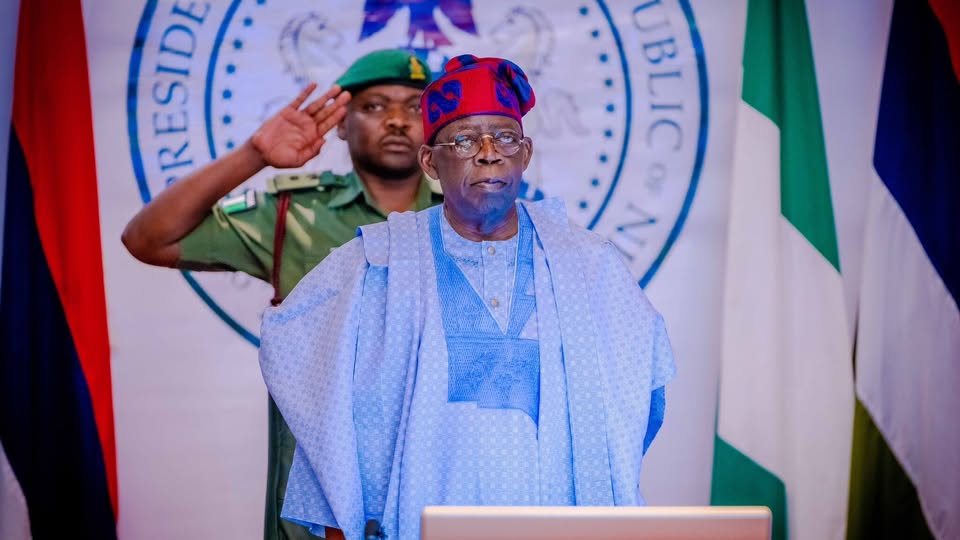
For President Bola Ahmed Tinubu there is no other way for African countries to get out of the woods but to engage in massive industrialisation – transforming their rich mineral resources into finished products rather than exporting them in their raw states.
This was the major highlight as he took the podium on Tuesday at the ongoing Africa Forward Summit at the Kenyatta Convention Centre in Nairobi.


Tinubu, who led Nigeria’s government, diplomatic, and business delegation to event, told his audience that Nigeria was ready to assist in the deeper economic integration and industrial growth and prosperity he envisaged for the continent.
Highlighting Nigeria’s blue economy potential as a key driver of Africa’s development, and decrying its underutilisation due to insecurity and uncertainty, he said: “Today, I make an explicit commitment: Nigeria will intensify regional coordination by offering our Deep Blue Project’s maritime intelligence infrastructure as a shared data hub for willing Gulf of Guinea states.
“Interoperable systems, harmonised laws, and seamless joint enforcement must become the daily reality, not an aspiration on paper. Let no one misunderstand: maritime sovereignty does not repel investment — it attracts it. Secure sea lanes, predictable regulation, and functional courts are the preconditions that unlock private capital. Governance has de-risked Nigeria’s maritime proposition. We now invite partners to build on these gains as we advance climate-aligned port modernisation and the digital transformation of our maritime sector.
“As we endorse the Nairobi Declaration, Nigeria affirms that maritime sovereignty and ocean governance are the non-negotiable foundations of Africa’s Blue Economy transformation. We will continue to earn that sovereignty — through institutions, through assets, through law, and through iron-clad regional solidarity that turns our waters from a theatre of risk into a story of shared resilience.
“The oceans have no duplicate as a common heritage of mankind. For Africa, moving from sea blindness to ocean sovereignty is not a choice — it is a generational duty. Nigeria is ready, and we invite all present to join us in that duty.”
Blaming international financial system, for the poor state of industrialization in Africa, Tinubu insisting that Africa must not remain locked into raw-material exports while importing finished goods.
Hear him: “Last September, from the podium of the United Nations General Assembly, Nigeria warned that the international system must reform or risk irrelevance. We spoke not only of the Security Council but of the financial and trade structures that quietly de-industrialise our nations. The evidence is before us. Despite decades of independence, Africa’s share of global manufacturing value added remains below 2 per cent.
“We export raw minerals, crude oil, and agricultural commodities, and we import processed goods at a premium. This pattern is not an accident. It is the product of a global financial architecture that starves our industries of affordable capital, tolerates massive illicit financial flows, and imposes policy constraints that our competitors themselves never observed when they built their own industrial bases.
“Nigeria does not come to this discussion as a supplicant. We come as a nation that has taken painful, homegrown decisions to put our house in order — removing fuel subsidies, unifying our exchange rate, recapitalising our banking system with over US$3.4 billion, and exiting the FATF grey list. These reforms were sovereign choices, not external conditions. They have delivered a declining debt-to-GDP ratio, now projected at 32.3 per cent in 2026, stronger external reserves of $45.5 billion, and a return of investor confidence. But, Excellencies, even a reforming nation like Nigeria is being forced to de-industrialise by a financial system that is stacked against us.”
The President added that in 2026, Nigeria will spend about US$11.6 billion on debt servicing — nearly half of projected revenue.
“Every single dollar that leaves our treasury to pay punitive interest rates is a dollar that did not go into our steel sector, our textile mills, our agro-processing plants, or our digital industries. It is a dollar that did not train a young Nigerian engineer or provide affordable power for our factories. Our industrial base is being starved of the blood it needs — long-term, affordable finance — while creditors and rating agencies treat African sovereigns as permanent high-risk borrowers, regardless of our fiscal performance.
“So, I ask this gathering: how can an African manufacturer compete with a competitor in Europe, Asia, or North America when the cost of borrowing in our nations is five to ten times higher? How can we build cross-border industrial value chains under the African Continental Free Trade Area when our infrastructure projects face a financing gap deepened by the very institutions meant to bridge it? The answer is plain: we cannot. The international financial architecture, as currently constituted, is an instrument of industrial disarmament for Africa.
“Nigeria is not asking for charity. We are demanding a financial system that intentionally enables Africa to industrialise — to process its own minerals, refine its own crude oil, manufacture its own pharmaceuticals, and compete fairly in global markets. We will continue to borrow responsibly, but we insist that our creditworthiness be measured by our economic fundamentals and our industrial potential, not by outdated stereotypes,” he noted.
On migration, Tinubu said addressing root causes was essential, stressing that people would not risk dangerous journeys if opportunities existed at home.
He said Nigeria had embedded migration management within its broader economic reforms, including subsidy removal, banking recapitalisation, and agricultural modernisation.
He also called on international partners to increase investments in climate adaptation, energy access, digital skills, and job-creating sectors, urging that a portion of Official Development Assistance (ODA) be directed toward reducing irregular migration pressures.
Tinubu also called for stronger African cooperation in shaping global migration governance, saying existing frameworks such as the Global Compact for Safe, Orderly and Regular Migration remained insufficient due to their non-binding nature.
He expressed support for African Union initiatives including the Migration Policy Framework and the Khartoum Process, while urging stronger links between regional and global systems.
The Africa Forward Summit, co-hosted by Presidents Emmanuel Macron and William Ruto, brought together leaders and officials from over 30 countries.
Opening statements were delivered by Macron, Ruto, UN Secretary-General António Guterres, and African Union Commission Chair Mahamoud Ali Youssouf.
On the sidelines, Tinubu met Madagascar’s President Michael Randrianirina and held talks with CAF President Patrice Motsepe, where he reaffirmed Nigeria’s readiness to host the 2026 CAF Awards.
He was accompanied by senior government officials, including ministers of foreign affairs, finance, agriculture, marine and blue economy, environment, industry, communications, as well as leading private sector figures such as Aliko Dangote, Tony Elumelu, Abdulsamad Rabiu, and Aigboje Aig-Imoukhuede.
The summit featured discussions on investment, AI, digitalisation, agriculture, creative industries, climate change, and strategies to translate policy discussions into industrial development across Africa.






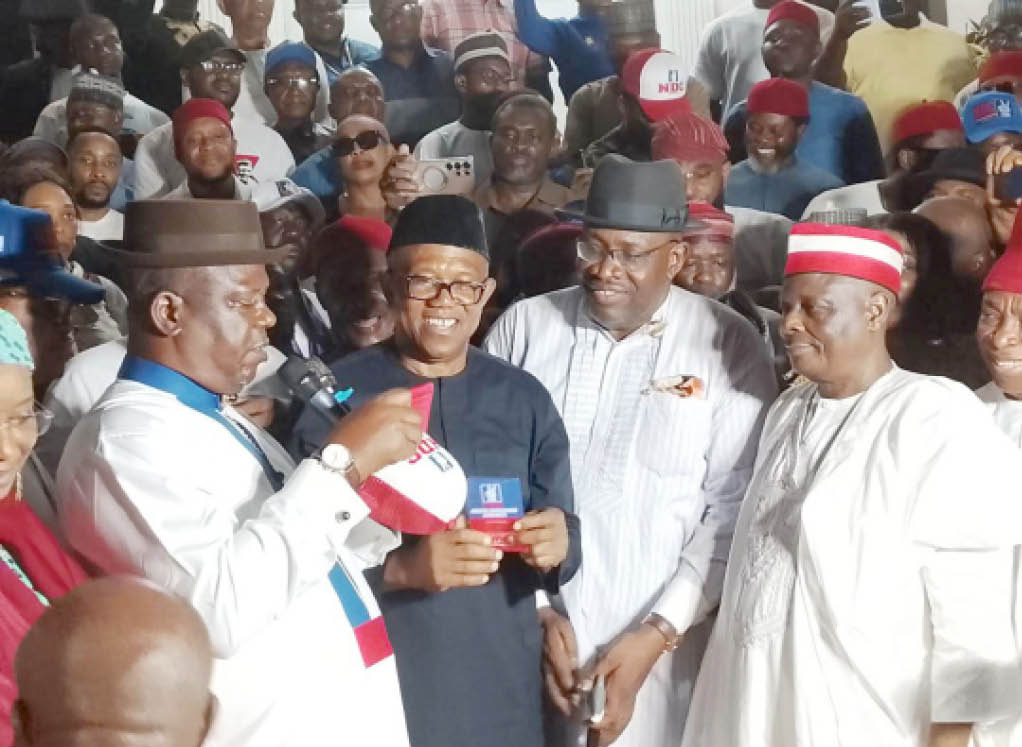
No candidate was imposed neither was any member barred from participating in the process, the Nigeria Democratic Congress (NDC), said on Thursday, which defending the integrity of the exercise, which ended on May 29.
In a statement by Ikenna Enekweizu, National Secretary, party said that all aspirants were given a fair opportunity to participate in the democratic process, adding that the selection process was driven by consultation, consensus-building, and stakeholder engagement through established leadership structures across the country.
Stressing that its National Secretariat was never involved in the business of picking, choosing, or imposing candidates on any constituency or state, contrary to allegations that have emerged following the conclusion of the primaries, the statement added: “At no time has the NDC National Secretariat been involved in the business of picking, choosing, or imposing candidates on any constituency or state.
“Aspirants seeking elective positions were directed to engage with caucus leaders, stakeholders, and grassroots members in their respective states, who were responsible for consultations and recommendations based on local political realities. In the South-East geopolitical zone, our presidential candidate, Peter Obi, joined the party with an existing network of respected political leaders and elder statesmen who currently serve as caucus heads across the region.
“These include former governors and senior political figures such as Sam Egwu, Okwesilieze Nwodo, and Achike Udenwa, among others. The party explained that these leaders were tasked with conducting stakeholder consultations and helping build consensus around aspirants in their respective states.
“These leaders were entrusted with conducting stakeholder consultations, building consensus, and making recommendations to the party based on their understanding of the peculiar political dynamics in their respective states.
“Aspirants who disagreed with stakeholder recommendations were not excluded from the process but were allowed to test their popularity through grassroots primaries. This process was conducted without prejudice to the rights of any aspirant. Where aspirants disagreed with recommendations made by stakeholders or caucus leaders, they were free to test their popularity through the democratic process at the grassroots level, and this was duly accommodated,” the party said.
Addressing concerns raised by some aspirants following the primaries, the NDC acknowledged reports of individuals prematurely declaring themselves candidates as well as complaints regarding aspects of the process.
However, it maintained that such issues had been referred to the party’s appeal panel and leadership for resolution.
The statement also highlighted the party’s commitment to affirmative action and greater female participation in politics, noting that efforts had been made to encourage women to seek elective offices while also considering the interests of serving lawmakers.
Looking ahead, the NDC announced plans to begin a broad reconciliation process aimed at healing divisions and strengthening party unity after the conclusion of the primaries.
“As resolved at yesterday’s NEC meeting, we now look forward to the commencement of a comprehensive reconciliation process. We count on our esteemed caucus leaders, state chairmen, stakeholders, and party leaders to engage all aspirants and members in the interest of unity, cohesion, and the continued growth of our party.”
The party reiterated that its role throughout the nomination process was primarily to welcome new members and aspirants, reassure them of its commitment to fairness and transparency, and direct them to the appropriate caucus structures for participation in party affairs.
According to the NDC, the approach reflects its commitment to internal democracy, consultation, inclusiveness, and respect for established leadership structures as it continues preparations for future elections.

Idi Abbas, Chief of the Naval Staff (CNS), on Friday, prayed for a legislation to establish a special court to try those caught in the business of stealing crude oil in Nigeria, saying the current general law was not too helpful in stemming the tide.
It was also a day he claimed that the powerful forces behind the syndicate had a way of projecting fronts while remaining behind the scene, which made it almost impossible to track them to face justice.
In fact, Abbas, a Vice Admiral, revealed that the operation was so perfect that those arrested at illegal refining sites were usually low-level operatives with little knowledge of the larger criminal network.
A guest on Sunrise Daily, a breakfast programme on Channels Television, the Naval Chief noted that many of those apprehended during operations are merely workers paid small sums, adding that such a complex structure of oil theft syndicates made it difficult to identify and prosecute the individuals who orchestrate the criminal enterprise.
“Most of the faces behind these thefts are not really known or are not the ones we always catch. The ones we get at most of the illegal refinery sites are just being given some paltry sum, while the big masquerades are the ones that make the real money. Prosecuting suspects is often complicated by the fact that many of those arrested have little or no information about the people directing the operations.
“In trying to prosecute some of these people that we get, some of them don’t even know who they are working for. So, the network is a very delicate one.
“But despite the challenges the Nigerian Navy and other security agencies are continually refining their strategies to counter the evolving tactics of oil thieves. As they are evolving strategies, we are also evolving new strategies. Like I keep saying, technology is the way forward. With that, we have been able to reduce the level of theft.”
Stating that the adoption of technology-driven surveillance, intelligence gathering and monitoring systems had significantly enhanced efforts to curb crude oil theft and protect critical national assets, he reaffirmed the commitment of the Nigerian Navy to sustaining operations against oil theft, stressing that collaboration among security agencies, stakeholders and host communities remains essential to safeguarding the nation’s oil resources.
The naval boss while assuring that Nigeria’s coastal and riverine communities are relatively safe, said the Nigerian Navy had made significant progress in reducing threats along the coast, particularly illegal oil-related activities and sea robbery.
“As it stands today, I can say that our coastal areas and the riverine areas are relatively safe. While crude oil theft and isolated cases of sea robbery remain areas of concern, the Navy has been largely successful in containing such activities through intensified surveillance and enforcement operations.
Hear him: “What we are contending with mostly there is the issue of crude oil theft and some pockets of sea robbery, which we are able to curtail. There is need for the establishment of a special court dedicated to prosecuting maritime crimes.
“This court will focus exclusively on cases involving crude oil theft and other maritime-related offences, helping to address delays associated with the conventional judicial process. The establishment of such a court would significantly accelerate the dispensation of justice and reduce the burden currently placed on the Navy in maintaining seized vessels and other exhibits pending the conclusion of lengthy court processes.
“If we have that in place, I believe the dispensation of justice will be done much faster and then ease the burden of keeping and maintaining some of the arrested vessels, which will be taken off from us because we spend a lot to maintain those vessels under our custody.”

Nigeria is considering refinancing some of its expensive debt obligations and raising fresh funding to bridge its budget deficit, buoyed by improved investor confidence and elevated crude oil prices triggered by tensions in the Middle East.
Minister of Finance and Coordinating Minister of the Economy, Taiwo Oyedele, disclosed that the federal government was looking to take advantage of favourable market conditions to restructure costly legacy debt and secure additional financing for development projects.
Speaking in an interview with Bloomberg TV, Oyedele said the current environment presented a unique opportunity for Nigeria to improve its debt profile while mobilising resources to support economic growth.
“We think that this timing is good for us to be able to maybe even refinance some of our expensive past debts, but also to raise more funding for our development at this critical time. You don’t know what happens tomorrow. But as of today, market conditions are actually very good,” he pointed out.
The renewed optimism stems largely from the sharp rise in crude oil prices following the conflict involving Iran, which has boosted the fortunes of oil-producing countries outside the Middle East, including Nigeria.
Higher oil prices have strengthened Nigeria’s external earnings position and improved investor perception of the country’s creditworthiness. The premium demanded by investors to hold Nigerian dollar-denominated bonds over comparable United States Treasury securities has fallen significantly, reflecting growing confidence in the economy.
Despite improvements in government revenue, Oyedele noted that Nigeria still faces a budget deficit of about N30 trillion this year, necessitating the search for additional financing sources.
The minister explained that the government was keeping its financing options open, including access to concessional loans from multilateral institutions. “We’re keeping our options open, we know the size of the deficit, including less-costly concessionary loans,” he said.
According to him, discussions are ongoing with the World Bank and other development finance institutions, while reforms implemented by the Bola Tinubu administration have continued to attract investor interest.
The government has undertaken a number of reforms since assuming office in May 2023, including fuel subsidy removal, tax policy changes, foreign exchange reforms and efforts to improve fiscal revenues.
However, while rising oil prices have boosted government earnings, they have also contributed to inflationary pressures globally, complicating monetary policy decisions and increasing the cost of delivering critical infrastructure and social services.
The US-Israeli war on Iran has pushed the price of Brent crude up as much as 63 per cent this year, creating an opportunity for producers outside the Middle East like Nigeria, while the premium investors demand to hold Nigerian dollar bonds rather than US Treasuries has fallen 80 basis points since the start of the war to 262, the lowest in more than a decade.
Meanwhile, Nigeria may face fresh trade headwinds from the United States after the Office of the United States Trade Representative (USTR) proposed imposing an additional 12.5 per cent tariff on Nigerian exports over concerns relating to alleged forced labour regulations.
The proposal forms part of action targeting 60 economies under Section 301 of the US Trade Act of 1974, following investigations into what Washington described as inadequate measures by several trading partners to combat forced labour in international supply chains.
In a statement issued by the USTR, Nigeria was listed among 54 economies found to have “failed to impose and effectively enforce a prohibition on the importation of goods produced with forced labour.” As a result, the agency proposed additional duties on products originating from the affected countries.
The agency explained that countries with existing forced labour import prohibitions or those that have committed to implementing such measures through trade agreements would face a lower tariff of 10 per cent.
However, countries categorised as having no effective prohibition regime, including Nigeria, could be subjected to a 12.5 per cent additional duty should the proposal be adopted.
U.S. Trade Representative, Ambassador Jamieson Greer, said the failure of major trading partners to adequately address the importation of goods produced with forced labour created unfair competition for American workers and businesses.
“The failure of our most important trading partners to address the importation of goods made with forced labour is unacceptable. This creates a dynamic where American workers are forced to compete globally on an unlevel playing field,” Greer said.
He added that while some countries had taken initial steps to curb the importation of forced labour goods, much more needed to be done to eliminate the practice from global supply chains.
The USTR argued that the failure of the affected economies to establish and enforce effective forced labour import prohibitions undermines global efforts to eradicate forced labour, distorts market competition and disadvantages firms that comply with acceptable labour standards.
According to the agency, such practices burden U.S. commerce by exposing American producers to unfair competition and facilitating the circumvention of existing forced labour restrictions.
Aside from Nigeria, other impacted countries include: Algeria; Angola; Argentina; Australia; the Bahamas; Bahrain; Bangladesh; Brazil; Cambodia; Chile; China, People’s Republic of; Colombia; Costa Rica; Dominican Republic; Egypt; El Salvador; Guatemala; Guyana; Honduras; Hong Kong, China; India; Iraq; Israel; Japan; Jordan; Kazakhstan; Kuwait; Libya; Malaysia and Morocco.
Others include: New Zealand; Nicaragua; Norway; Oman; Peru; the Philippines; Qatar; Russia; Saudi Arabia; Singapore; South Africa; South Korea; Sri Lanka; Switzerland; Taiwan; Thailand; Trinidad and Tobago; Türkiye; United Arab Emirates; United Kingdom; Uruguay; Venezuela; and Vietnam.
Culled from ARISE NEWS



-
 News2 weeks ago
BREAKING: US-Nigeria troops slaughter 175 ISWAP fighters
-
 Columns2 weeks ago
Dear General Gowon: That apology you’re running from is your nemesis
-
 News3 weeks ago
Why we pegged presidential ticket forms at N60million – NDC
-
 News2 days ago
BREAKING: Terrorists strike Ibadan again! Abduct ex-Minister’s sister, twin children
-
 News4 weeks ago
BREAKING! Coast brightens for Obi, as NDC zones presidency to South
-

 News3 weeks ago
Gowon on civil war: My book is to put records straight, remove falsehood
-

 News2 weeks ago
BREAKING: Wait over! Arsenal are CHAMPIONS! Win EPL after 22 years hiatus
-
 Columns1 week ago
See Tinubu’s terrible damage on Option A4 and its precious memories