

News
BREAKING! Coast brightens for Obi, as NDC zones presidency to South

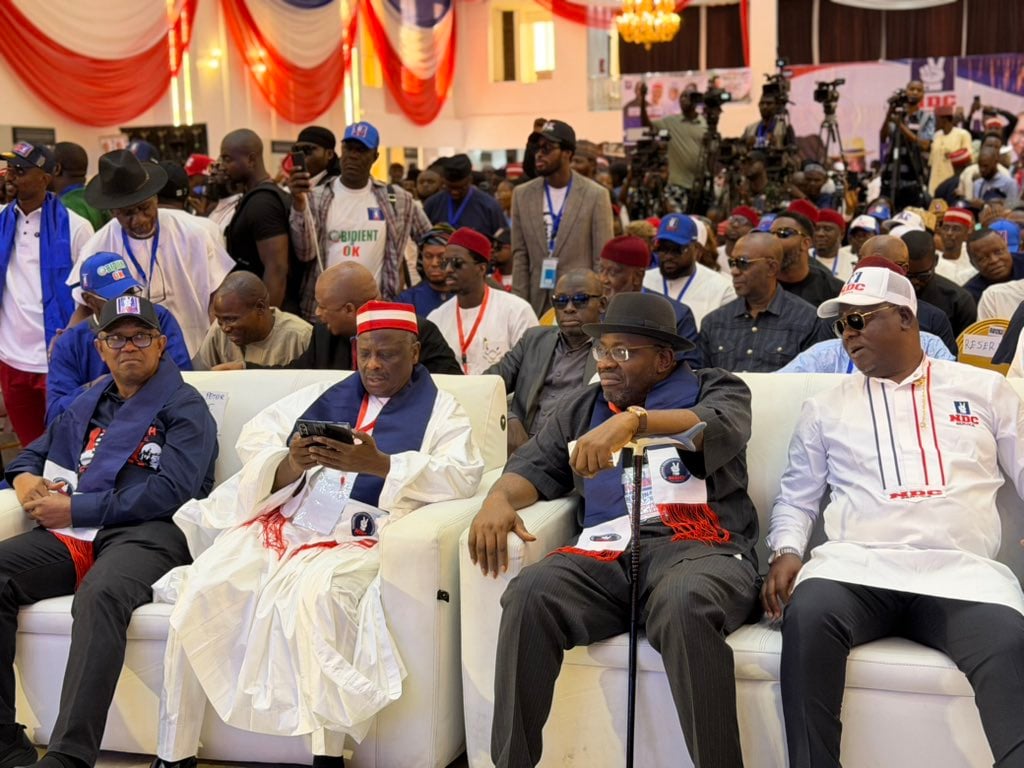
Except something unthinkable happens on the political scene to change the trajectory, Peter Obi, candidate of the Labour Party (LP) in the February 25, 2023 presidential election will return to the ballot, this time on the platform of the Nigerian Democratic Congress (NDC).
The party, announced on Saturday that it was zoning its presidential ticket to the South East, a clear indication that the Obi ticket is getting real traction, one of the major hiccups the former Governor of Anambra State faced in the African Democratic Congress (ADC), from where he defected into the NDC on Sunday.


Before he left, the ADC had failed to make a pronouncement on the issue of zoning, a development that left leaders like Atiku Abubakar, presidential candidate of the Peoples Democratic Party (PDP), making a pitch for the ticket, thus widening the conflict around the controversial matter.
The argument in certain quarters had always been that the position should be zoned to the South since the last occupant was the late President Muhammadu Buhari, who was in office between 2015 and 2023 before President Bola Tinubu took over, in line with an unwritten power-sharing arrangement between the two parts of the country.
Regardless, Atiku egged on by his supporters, who had often argued against the arrangement, insisting on running, threw his hat in the ring in 2023 under the PDP and now the ADC, where he is also favoured to pick the ticket.
However, events in the NDC looked different, as it wasted no time in solving the issue of zoning, with its promoters emphasising however that the arrangement would be for only one term – 2027 to 2031, after which the it would be reversed and revert back to the North.
The party acceded to the motion to this effect, which was moved at its first National Convention in Abuja by Victor Afam Ogene, member representing Ogbaru Constituency of Anambra State in the House of Representatives of the 10th National Assembly.
In adopting the motion, it was also resolved that after the four years single term, the Presidential ticket would be automatically zoned to the north, a development that had also been adopted by the PDP, though the current crisis in the former ruling party, seems to have blighted the development.
The convention is expected to rectify some of the recent decisions of the national executive committee of the NDC, following the agenda released by the party, which included ratification of the amended party constitution, and the election of national executives of the party
The NDC recently witnessed an influx of politicians who defected from other political parties, including the ADC and the PDP.
On Tuesday, no fewer than 17 members of the House of Representatives defected from the African Democratic Congress (ADC) to NDC.
Their defections were announced on the floor of the House during plenary.
Lawmakers who defected to the NDC include Yusuf Datti, Uchenna Okonkwo, Adamu Wakili, Thaddeus Attah, George Ozodinobi, Lilian Orogbu, Oluwaseyi Sowunmi, Peter Aniekwe, Mukhtar Zakari, George Oluwande, and Munachim Umezuruike.
Others are Emeka Idu, Jesse Onuakalusi, Ifeanyi Uzokwe, Afam Ogene, Murphy Omoruyi, and Abdulhakeem Ado.
The defections of the lawmakers to the NDC came two days after Obi and Kwankwaso formally joined the party from the ADC.
Obi, who was the 2023 presidential candidate of the Labour Party (LP), and Kwankwaso, a former presidential candidate of the New Nigeria People’s Party (NNPP), received the NDC membership cards last Sunday amid cheers from supporters, shortly after a closed-door meeting with leaders of the NDC.
The two opposition leaders were welcomed into the NDC by a former Governor of Bayelsa State and national leader of the party, Senator Seriake Dickson.
Obi had cited a worsening political climate marked by internal crises, external interference, and growing hostility within party structures as his reasons for leaving the ADC, which he joined from the Labour Party barely in December 2025.
The former Anambra State governor described Nigeria’s political space as increasingly toxic, where intimidation, insecurity, and persistent scrutiny have become the norm.
He lamented that systems meant to protect citizens now often work against them, while individuals striving for sincere service face mounting pressure both publicly and privately.









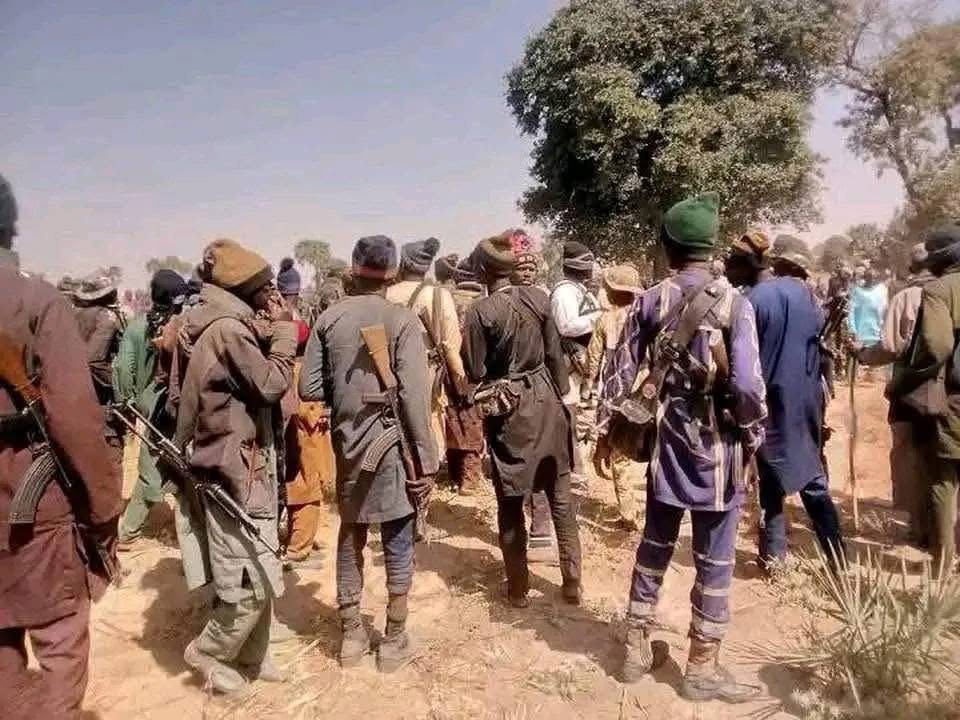
The echoes of the drums rolled out to celebrate the rescue of the 44 teachers and students, kidnapped from some schools in Oyo State, after 56 days in the bush, would surely be disrupted abruptly, with the divergent echoes of a fresh abduction, this time coming from Kogi State.
Reports indicate that the gunmen, struck on Tuesday at the Government Secondary School, Odo-Ekina, in Dekina Local Government Area of the state, abducting four students, the school principal and a National Examinations Council (NECO) ad hoc staff member.
Authorities of the Kogi State Police Command, who immediately unleashed their operatives in hot pursuit of the abductors, said the attack occurred at about 5:25 p.m. while the students were writing their NECO examination.
Saliu Oyiza Afusat, an Assistant Superintendent of Police (ASP) and spokesman of the command, said a combined team of police personnel and other security agencies has launched a search-and-rescue operation following the incident.
Informing that one of the students was actually rescued immediately, she said efforts were ongoing to secure the release of the remaining victims and apprehend the attackers, adding that Naziru Bello Kankarofi, the state Commissioner of Police, alongside the Brigade Commander and the State Security Adviser to the Governor, Commodore Jerry Omodara (Rtd), were already on the way to the scene for an on-the-spot assessment.

Oil prices are expected to go down now with the announcement of Donald Trump, US President that he will no longer impose a 20 percent “safe passage” fee on ships passing through the Strait of Hormuz.
The POTUS, hinged his reversal of the decision on the intervention from some Gulf countries, who pleaded with him not to toe the line due to the massive economic impact the decision would make on the region.
Indeed, oil prices had shot up immediately Trump announced the new levy on Monday while declaring the US ‘the guardians of the Hormuz strait,’ a measure which he said was to pay for the cost of guarding the volatile area in order keep supply of oil flowing.
Reports said that Gulf allies of the US worked frantically to get Trump on the phone in time to talk him out of the idea altogether, while a flurry of appeals came from Saudi Arabia, the United Arab Emirates, Bahrain and Qatar.
In response, the POTUS, posting on his Truth Social platform, wrote: “Based on highly productive conversations with Middle East leadership, I have decided to replace the 20% United States Reimbursement Fee with Trade and Investment Deals that the various Gulf States will be making into the United States.”
Trump, who said the investments would be “MASSIVE but, at the same time, extraordinarily good for them, and their future,” added that the deals would see factories, plants, and equipment pour into the US at “Historic levels.”
The Gulf nations have committed to invest trillions of dollars in the US, though it remains unclear how much of that they will actually spend over the next several years.
Meanwhile, the US continues to bomb Iran in what appears to be a resumption of active conflict between both countries, despite an ongoing roadmap to end the conflict.
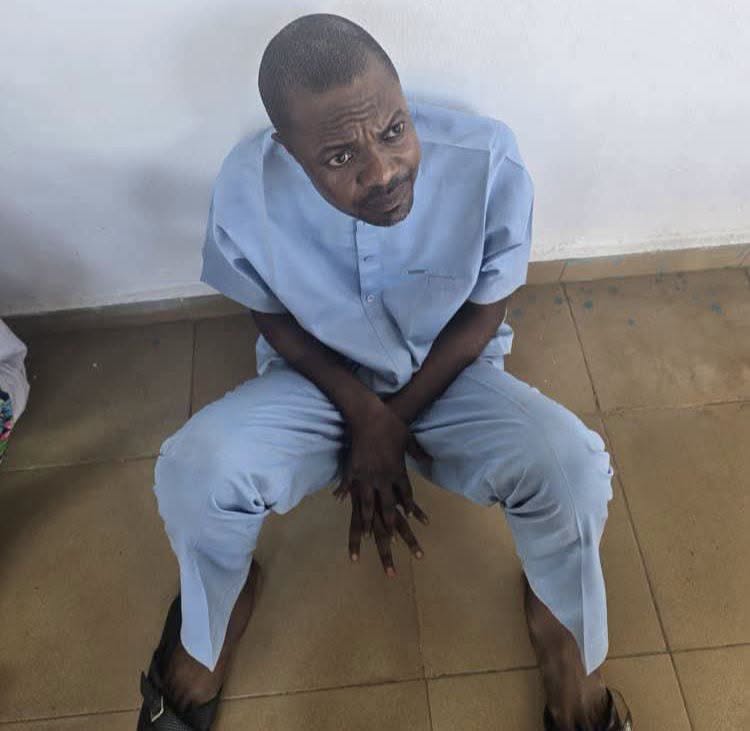
Reports say operatives of the Osun State Police Command, and those of the Department of State Services (DSS) had tracking the trail of Adeniyi Adeyemi, controversial Director General of the Presidential Foreign Intervention Promotion Council (PFIPC), for weeks, before he was eventually pulled out of his hole on Tuesday.
However, the duo, were said to have pulled back after failing to track him through his mobile phones, which he had reportedly switched off for about two days, making it difficult to locate him, leaving the stage for the members of the Police Intelligence Response Team (PI-RT) led by Moses Lohor, a Chief Superintendent of Police (CSP).
Lohor, said to have previously served as the Commander of the Anti-Kidnapping Squad of Osun State, and reported to have been involved in high-profile security operations and controversies, after taken over fielded his men to pick up signals from their well-oiled signal networks.
Regarded by many Osun residents as one of the key security officers who contributed significantly to the peace and stability enjoyed in Ilesa and other parts of the state during his tenure, he was said to have relied on his contacts before his transfer out of the state, said to have raised concerns from the public about the security situation he would be leaving behind.
His exit from the state was said to be hinged on an incident in 2024, in which he allegedly shot one Iyanda Alowonle, then Chairman of Osun State Motor Transport System, in the stomach at the police station in the state prompting an order for his arrest by then Inspector General of Police (IGP).
His effort was said to have paid off when he successfully tracked down the controversial PFIPC, boss, who was seen on Tuesday evening, in a shot video on social media undergoing interrogation, and eventually handed him over to Ibrahim Gotan, Commissioner of Police in the state.
The PUNCH quoted one of the sources as saying: “The arrest (of Adeyemi) took place on Tuesday morning by the IRT squad, who immediately moved him to Abuja. After he was arrested, he was taken to Ibadan and from there to Abuja.”



-
 News5 days ago
BREAKING: Mystery death! *Female student dies a day after arriving Umahi’s home!
-

 News5 days ago
Don’t jump to conclusion! *Umahi speaks on mysterious death of female students!
-

 News3 weeks ago
BREAKING: Court sentences Nigerien, two others to death over terrorism
-
 News2 weeks ago
BREAKING: EX-SSG mowed down by gunmen! *He resisted being kidnapped – driver
-
 News4 weeks ago
Two hours after Igboho’s ‘red-eyes’ to ‘Fulani’ leaders, gunmen free kidnap victims!
-

 News3 weeks ago
Abductors of Oyo teachers panicking, freedom coming for victims soon!
-
 News19 hours ago
BREAKING: Terrorists strikes another school! *Kidnap principal, students, NECO official!
-
 News3 weeks ago
Chicagogate: Nigerians return to court! *Move to stop Tinubu from 2027 polls