Connect with us

News

Emilokan, propaganda economics and the gathering storm

Published

on

By Ifeanyi Izeze
It is easier to talk if you don’t think, but if you think you will think thoroughly before talking, and when you talk, you will work. By now, if they have been thinking, it should be clear to  President Bola Tinubu and operators of his government that ‘Emilokan’ (it’s my turn) is not an economic policy.
They claimed to understand the problem at hand, and the President himself told us not to sympathise with him: “don’t sympathise with me, don’t pity me. I know what I am getting into.”
It is tragic that government officials and their media surrogates have amplified only one soundbite from remarks, where Dr. Okonjo-Iweala credited the administration for “stabilising the economy,” while deliberately ignoring her more serious call for urgent measures to grow the economy and establish social safety nets for millions of Nigerian families suffering the negative impacts of the government’s reforms.
Okonjo-Iweala’s recent comments on President Tinubu and the Nigerian economy “have been seized upon by government officials and their media allies as if their scandalous implementation of hard reforms, which have condemned the majority of Nigerians to absolute poverty and destroyed millions of jobs, had received endorsement by the oracle herself. This is not correct.”
How do you reconcile a government flaunting wholesale outdated economic theories based on dogmatic declarations, whilst procuring endorsements of foreign experts to re-echo and applaud same regardless of the naked extremely contradictory worsening economic situation on ground starring everyone in the face?
Headline inflation remains unyielding, sitting at 22.22 percent as of June, with food inflation at 21.97 percent, meaning that millions of Nigerians are paying more, not less. Petrol prices now average N1,037.66 per litre, still a significant burden on households and small businesses.
The naira trades at around N1,530 to the dollar at the official window — drastically weaker than President Tinubu’s pre-reform levels of N460 — eroding purchasing power across the board.
It should be clear to the government that it is the Tinubu administration’s policy choices — irrational fuel-subsidy removal, naira devaluation, tariff hikes on electricity and transport  and almost every other goods and services — that have triggered this distress and made social safety nets not optional but essential. Yet these social programs have either been administered haphazardly or rather dishonestly, suspended, or had negligible impact.
So when the African Democratic Congress (ADC) recently called on President Tinubu to fully confront the economic challenges facing Nigerians instead of “cherry-picking” comments made by World Trade Organization (WTO) Director-General, Dr. Ngozi Okonjo-Iweala, to score political points, those who are naïve took it as another opposition criticism. No, it is not at all, it was a clarion call for all it means.
That the federal government chose to ignore the real message in the comments by Okonjo-Iweala on the state of the Nigerian economy, instead prefering to celebrate the headlines is nothing but dodging to take responsibility for its actions or more aptly inactions.
It is very unfortunate that the Tinubu administration is more interested in “external validation” rather than taking responsibility for policies that have worsened living conditions.
Dr. Okonjo-Iweala knows that a stable economy is one that is growing in real terms, led by jobs and productivity. She knows that a stable economy is one that is able to guarantee minimum standards of living for the people.
How come the government chose to ignore what she is really saying that the economy is not growing, jobs are not being created, and too many people are suffering as a direct consequence of President Tinubu’s ill-conceived and badly implemented reforms?
The government seem to be deliberately ignoring that part of her message and celebrating only the superficial aspects that at best sounds like “propaganda economics” or more aptly another ‘Emilokan economic policy.’
Nigeria’s Gross Domestic Product (GDP) grew by 3.13 percent in the first quarter of 2025 and just above 3 percent in the second quarter, figures that could best be described as unimpressive compared to the administration’s promises of very strong recovery.
Are these numbers abstracts, no. They translate directly into hunger, joblessness, and despair for millions of Nigerians. The Tinubu administration’s policy choices, fuel subsidy removal, naira devaluation, tariff hikes on electricity and transport have unleashed untold hardship on Nigerians.
Every well-meaning Nigerian knows that celebrating the mere appearance of ‘stability’ is pyrrhic. Such candour from a global economic leader like Dr. Okonjo-Iweala underscores the urgent need for federal government policies that go beyond rhetoric and propaganda but addresses the daily harsh realities of millions of Nigerians under the APC-led Tinubu’s government.
Look at the CBN Governor, he thinks if he keeps raising interest rates he can fight inflation. What Cardoso is doing in CBN makes no sense as several economic experts have warned because what’s driving inflation in the country is factor cost and not the availability of credit.
The problem they have with the economy is that they went and devalued the currency and have the illusion of money in which case you will say at FAAC we used to share two trillion but now we share ten trillion but they failed to acknowledge that the present value of ten trillion is not up to the value when you were sharing two trillion simply because of the gross devaluation of the Naira.
As rightly said by a concerned Nigerian, they are simply not running the country, they’re doing business. They are business people and they don’t see us as citizens, they see us as their customers. So their mercantile approach prompts them to always see their customers and think how they can make more money from them and that’s why you see them taxing everything needed for life and basic living.
They are not willing to comply with Chapter Two of the Nigerian Constitution which stipulates how governance should be done in the country. What’s the responsibility of government? Call anybody in government, they are not responsible for anything. The minister of Water Resources is not responsible for whether you have water or not, the minister of Education is not responsible for education outcome whether the students pass or fail WAEC/NECO or Jamb. The minister of Health is not responsible for live expectancy or medical outcomes. We have people who are in power but they are not in government because they are not governing.
According to a recent report by the National Bureau of Statistics, FDI to Nigeria sharply declined by about 70 per cent in the first quarter of 2025, falling to only $126.29 million from $421.8 million in the last quarter of 2024. Of the total capital importation of about $5.64 billion in the first quarter of 2025, FDI accounted for only about 2.24 per cent, compared to 8.2 per cent in Q4 2024.
Of course how do you expect sustainable economic growth and development to be achieved under the current poor leadership and weak governance structure -problems that are clearly reflected in declining FDI and our poor performance in key governance indicators.
To further illustrate our precarious situation, capital flows to the manufacturing sector declined exponentially by 32.1 per cent, dropping to only $129.92 million in Q1 2025 from $191.92 million in the same quarter of 2023. There is no better confirmation of the lack of trust in this government, whose reforms remain uncoordinated and largely reactive.
Available statistics show that in 2024, while global FDI flows declined, FDI to Africa significantly increased to $97 billion — a rise of about 75 per cent compared to 2023. Europe, the United States, and China were the main sources of this FDI. Egypt attracted the highest share in Africa, with $46.58 billion. Other top recipients included Ethiopia ($3.98 billion), Côte d’Ivoire ($3.80 billion), Mozambique ($3.55 billion), Uganda ($3.30 billion), Democratic Republic of Congo ($3.11 billion), South Africa ($2.47 billion), Namibia ($2.06 billion), Senegal ($2.02 billion), Guinea ($1.83 billion), and Morocco ($1.64 billion).
Most disappointingly, our dear nation, Nigeria — the so-called “Giant of Africa” — received only $1.08 billion, about 1 per cent of Africa’s total FDI, representing a decline of about 42 per cent from 2023. Worse still, after this 42 per cent drop between 2023 and 2024, FDI to Nigeria has further declined by 75 per cent between Q4 2024 and Q1 2025.
Whether anybody wants to hear it or not, we cannot achieve sustainable growth and development with ineffective leadership and a weak government. This is the truth, the whole truth and nothing but the truth. God bless Nigeria!
Ifeanyi Izeze writes from Abuja and can be reached via email iizeze@yahoo.com or phone +2348033043009.

Share this story:

News

Prepare to return home, IG-Disu tells Nigerians in IDPs

Published

on

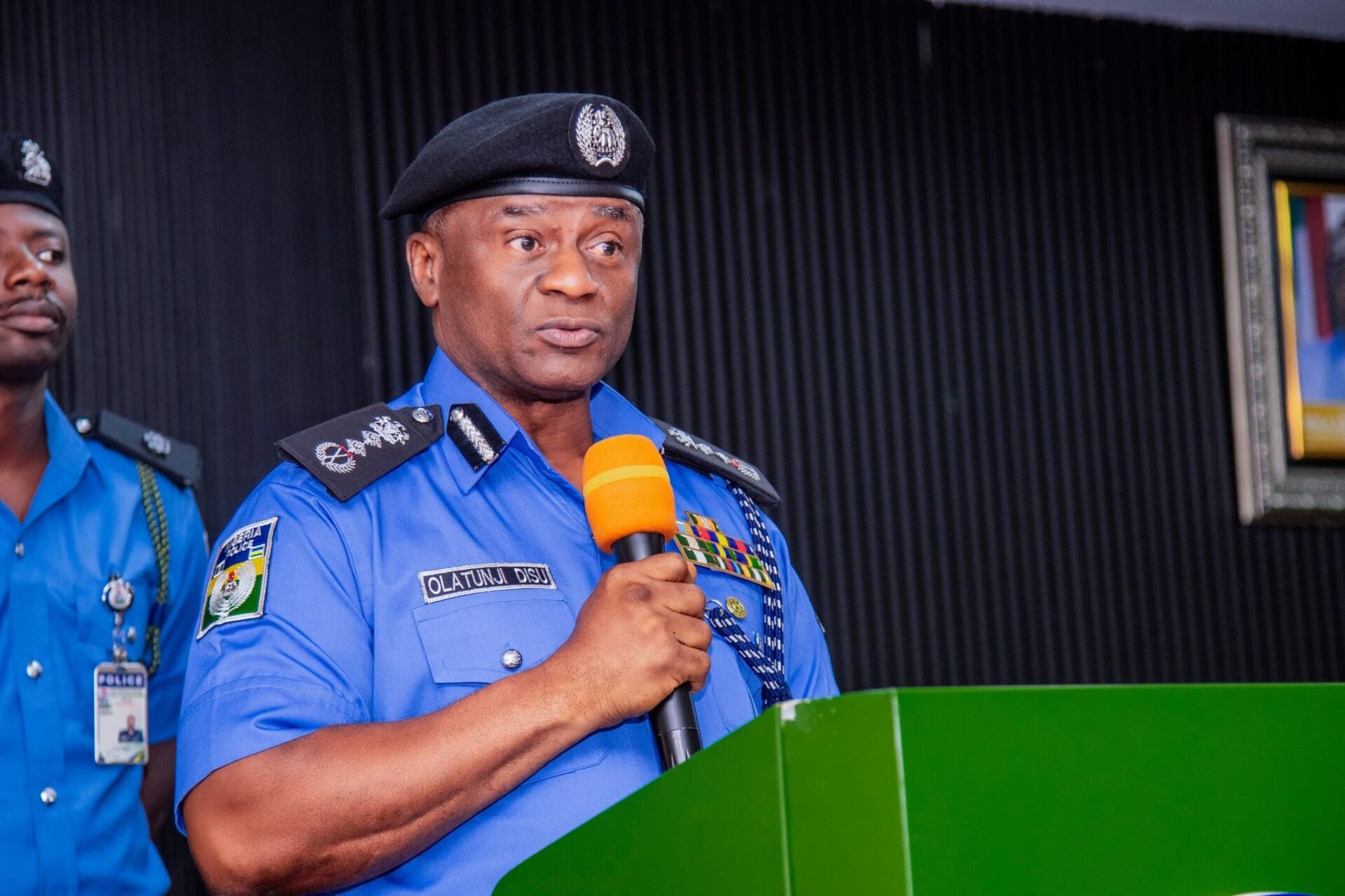
“Criminals cannot chase us out of our communities. We are the owners of the towns, and we will not allow that to happen. We have to take back our homes and our communities. That is why I am here to tell you that all of us will take back our communities.”

These were the words of Olatunji Disu, Inspector-General of Police (IGP), on Monday, with which unfolded his plans for a safer Nigeria, one of which was to reclaim communities overrun by bandits across Nigeria.

Disu, appointed last week as the 23rd IG of Nigeria, spoke in Ilorin, Kwara State, where he went on a working visit, where he promised to do everything possible, both operationally and administratively, to restore peace in communities affected by banditry and criminal attacks.

The police boss, who spoke to officers and men of the Kwara State Police Command while assuring that the police would not allow criminals to take control of communities, stressed that he was familiar with the security challenges facing the state adding that his visit was partly to encourage police personnel engaged in ongoing operations against bandits.

Advertisement

His words “I know Kwara State and the problems we are having. I am in the state for an operation. I have come to say thank you for everything you have been doing to assist us, but at the same time I want to ask for more cooperation.”

Expressing delight at the support the police had received from the state government, especially from AbdulRahman AbdulRazaq, the governor, Disu, he explained that he had since conveyed his sentiments to the governor.

His words: “I have visited Governor AbdulRahman AbdulRazaq and thanked him. He has been very wonderful by providing a lot of things to support the police command.

“I urge the residents to cooperate with security agencies by providing useful information that could help combat criminal activities. I say with all authority that we have a lot of Fulani people assisting us in doing our job. I want to give you my word that I will look into the welfare of policemen.”


Advertisement

Share this story:
Continue Reading

News

IWD: You’re the best, Akpabio greets mothers *Hails virtues of resilience, sacrifices

Published

on

Godswill Akpabio, Senate President, on Sunday, sent a special message to Nigerian women, thanking them for the resilience and sacrifices in raising a society of great men and women, of which he counts himself part of.

Akpabi, who used the occasion of this year’s International Women’s Day (IWD) to express his sentiments, conveyed through Eseme Eyiboh, his spokesman praised them declared that he was a practical example of the beneficiary of the wonders of women, as the best gift God has given man.

Eyiboh, Special Adviser on Media and Publicity, quoted his boss as saying: “Today, I join the globe to celebrate our mothers, wives, sisters, daughters, colleagues, and friends who wake up each day and work to make the world a better place. Your relentless efforts can never go unnoticed.

“I am the biggest beneficiary of the love, care, compassion and sacrifice of a woman. My mother gave her all to raise me up to become what I am today. I remain ever grateful and appreciative of what our women and mothers go through in raising their children, supporting the family and building societies.

Advertisement

“I congratulate the Nigerian Woman on the auspicious occasion of this year’s International Women’s Day. I respect and cherish your strength, resilience and invaluable contributions to our nation.  As a legislature and in consonance with the theme of this year’s celebration, “Give and Gain”, we are committed to pushing for robust investment in our womenfolk in all spheres of life, especially female participation in the economic and political processes of our nation.

“On behalf of my family, constituents, the Senate and 10th National Assembly, I congratulate all women and wish all our mothers, sisters, daughters and aunties a blessed and peaceful celebration. May your efforts never go in vain.”
 

Advertisement
Share this story:
Continue Reading

News

Bwala at Aljazeera: I never said Tinubu was corrupt! Excerpts of interview

Published

on

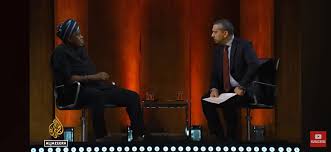
For Daniel Bwala, it was somewhat the biblical story of Daniel in the den of lions being replicated in modern days, as he climbed the hot seat in the studios of Aljazeera for what could be described as his testiest media encounter just yet.

At the popular Head to Head encounter, an audience participation encounter on the global television channel, Bwala, Special Adviser to President Bola Tinubu on Policy Communication, was confronted with statements he made in the past against his boss, which he roundly denied at the most.

Confronted by Mehdi Hasan, the anchor of the programme, the presidential spokesman, who had gone to the station to further sell the Tinubu government to the global community, flatly denied calling the President a corrupt man, an anti-democrat and a killer, all pointing to claims he made as an opposition spokesman.

Titled: Nigeria: ‘Renewed Hope’ or ‘Hopelessness’? Hasan loaded with a surfeit of Bwala’s comments, which he constantly read from, for instance, wanted to know if it was not the same Bwala who linked his boss with forming a militia in Nigeria to win election.

Advertisement

The encounter went thus:

Hassan: “Tinubu and his people created a militia! You said those words.

Bwala: “Tinubu and his people didn’t create a militia. That’s that.

Hasan: Then why did you say they did on January second 2023?

Bwala: I never said that!

Advertisement

Hasan: Does he have a militia that tried to kill you?

Bwala: He never had. I never said he tried to kill me!

Hasan, quoting Bwala: I, myself has received a threat from him and his camp!

Bwala: I never said that.

Hasan: You said it was so corrupt – the 2023 election – Tinubu’s win – you said you couldn’t eat food for three days!

Advertisement

Bwala (chuckling): I never said that! Where?

Bwala also denied saying that the bullion vans that went into Tinubu’s Bourdillon home in Ikoyi Lagos, in 2019, questioned whether those who reported the movement claimed they saw money inside the van.

Hasan: Was there no money in the bullion vans?

Bwala: How am I to know?

Hasan: You said there was money in the van at the time. February 2023?

Advertisement

Bwala: I never said that.

On insecurity, the Aljazeera anchor also took the presidential spokesman through the route of documented evidence, citing groups like Amnsty International (AI), citing the damning situation in the country.

Hasan: Amnesty International says you’re failing in insecurity. The numbers don’t lie.

Bwala: It’s unfortunate and as a government working day and night to redeem the bad situation.

Hasan: And it’s getting worse.

Advertisement

Bwala: I don’t agree to the fact that it’s getting worse

Hasan: How can it not get worse when more people die in one year than the previous year?

Bwala: Context matters

Hasan: What’s the context?

Bwala: The context is that it’s not getting worse. The context is that it’s not getting worse – you see, this is water – lifting a glass of water – if you have the water half, you could say half-glass filled or half-empty. Isn’t it right?

Advertisement

So, the Western media always see Nigeria, Africa and some of the activities in Africa as half-empty! But we see it as half-full, because when we look at it and when I say context matters, before the President took the oath of office, we knew the situation in Nigeria.

Hasan: And you made it worse?

Bwala: When he made the decision to take bold steps to put Nigeria in better trajectory, we were well aware it was going to be difficult.

Advertisement
Share this story:
Continue Reading

Trending