
News
Rivers govt evokes ₦134bn secretariat deal with Chinese contractor


The Rivers State Executive Council has canceled a ₦134 billion agreement given to the China Civil Engineering Construction Corporation for upgrading, modernizing, and equipping the Rivers State Secretariat Complex.
They have also mandated the prompt return of the ₦20 billion advance payment made to the firm.

This decision was made during a council session on Thursday at the Government House in Port Harcourt, led by Governor Siminalayi Fubara.
Dr. Austin Ezekiel-Hart, the Permanent Secretary of the Ministry of Works, addressed journalists afterward, explaining that the contract was issued too quickly without proper procedures.
READ ALSO: Fubara disbands microfinance agency board
The council also decided to restart the tendering for four key projects that were previously announced but withdrawn by the prior administration. These include the overhaul and outfitting of the state secretariat, along with building reinforced concrete barriers and land reclamation in various riverine areas of Opobo/Nkoro and Ogba/Egbema/Ndoni Local Government Areas.
Dr. Ezekiel-Hart announced that new calls for bids will appear in major newspapers, inviting skilled contractors to qualify and provide both technical and financial proposals. The projects specifically involve: a 4.8km reinforced concrete barrier and reclamation in Queenstown, Epellema, Oloma, and Minima communities in Opobo/Nkoro LGA; a 2.5km barrier and reclamation in Ndoni-Onukwu, Isikwu, and Aziazagi communities in Ogba/Egbema/Ndoni LGA; and a 2.5km barrier and reclamation in Utuechi, Obiofu, Isala, Ani-Eze, and Odugri communities in Ogba/Egbema/Ndoni LGA.
Dr. Azibaolanari Uzoma-Nwogu, the Permanent Secretary of the Ministry of Education, shared that the council has approved forming a committee to outline plans for establishing Computer-Based Test centers and ICT labs across the state’s three senatorial districts. This aligns with the Federal Government’s policy that exams from bodies like WAEC and NECO will be digital starting in 2026.
The committee, headed by the Deputy Governor, includes the Secretary to the State Government, relevant permanent secretaries, and the Commissioner for Energy. Dr. Uzoma-Nwogu explained that this effort is designed to equip young people in Rivers State for a tech-driven world and elevate educational quality.
On employment, Dr. Chisom Gbali, the Commissioner for Employment Generation and Economic Empowerment, discussed ongoing strategies to create more jobs for the youth. His ministry has been tasked with crafting a detailed plan for job growth and economic support. “We want to assure Rivers youths that there will be a rising tide of employment and steady waves of economic empowerment,” Dr. Gbali said. “Our Governor is a man of his word — when he makes a promise, he ensures it is fulfilled.”
Dr. Honour Sirawoo, the Permanent Secretary of the Ministry of Information and Communications, mentioned that the council addressed recent flooding in some areas and called for urgent fixes. He advised residents against littering in drains or constructing on flood-prone sites. He stressed that Governor Fubara is dedicated to accelerating development and steering the state toward lasting progress.






News
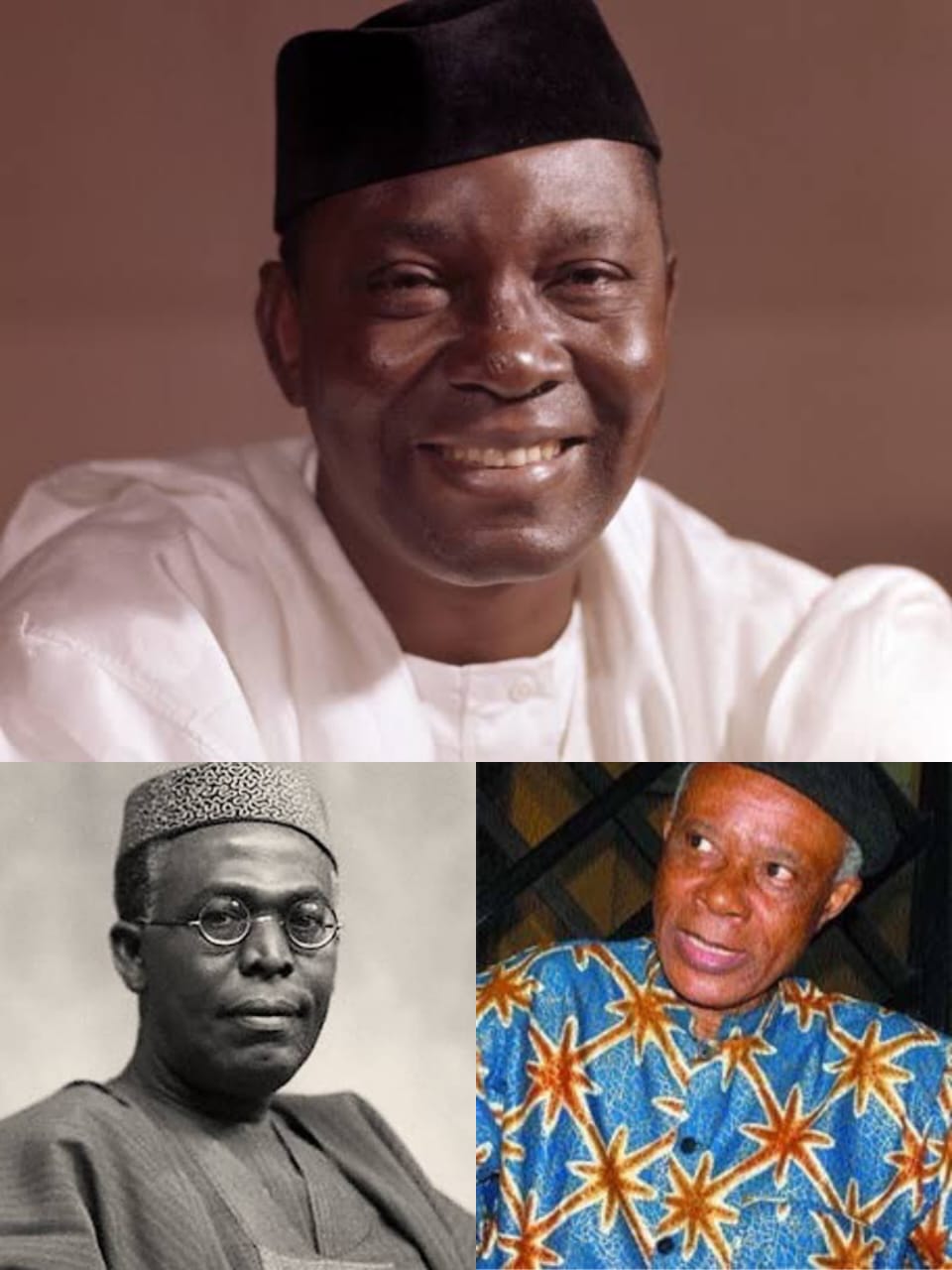
The Insecurity Triad: Azikiwe, Awolowo, and Chinweizu — Nigeria’s Elite Class of Framework Builders

By Max Amuchie
Last Sunday, I indicated that this week’s edition of The Sunday Stew would pay tribute to the late political economist and public intellectual, Claude Ake. That tribute remains, but its timing has shifted. Later this year will mark the 30th anniversary of his passing — a more fitting moment to revisit the life and legacy of one of Africa’s most consequential intellectual minds. Until then, this column turns to a related but less discussed tradition in Nigerian thought: the rare lineage of framework builders who operated outside the academy yet reshaped how society understood itself.
Nigeria’s intellectual landscape faces a persistent challenge: not the total absence of indigenous frameworks, but their relative scarcity and limited institutional consolidation. Much of our analytical vocabulary still arrives pre-assembled from elsewhere — adapted to Nigerian conditions rather than born from them. We reach habitually for tools forged in other fires, calibrated for other crises, and carrying the residue of other civilisational assumptions. The consequence is not merely intellectual dependency. It is explanatory incompleteness. Borrowed frameworks, however sophisticated, can illuminate local realities, but they do not always capture the structures beneath them.
Yet Nigeria has never been entirely without its own framework builders. What it has lacked is not indigenous conceptual production itself, but its sustained institutionalisation. Alongside the academy, it has historically produced another tradition — rarer, more independent, and deeply sovereign in character.
It is a tradition built largely beyond university faculties and disciplinary boundaries. Its practitioners did not merely interpret events; they created new conceptual vocabularies. They refused inherited explanatory tools when those tools proved insufficient, choosing instead to engineer indigenous frameworks for immediate national and civilisational questions. Their objective was not institutional approval but conceptual sovereignty.
This is the elite class of Nigeria’s framework builders. And it is within this largely extra-academic lineage — one operating beyond the formal boundaries of university production and disciplinary gatekeeping — that figures such as Azikiwe, Awolowo, and Chinweizu emerge — not merely as statesmen or writers, but as framework builders. Each refused the role of interpreter. Each chose, instead, the more demanding vocation of architect.
Nnamdi Azikiwe: The Newsroom as Primary Laboratory
To understand what Azikiwe accomplished, one must resist the temptation to reduce him to his political biography — to the president, the governor-general, the nationalist icon. These are accurate descriptions, but they obscure the more foundational achievement. Before Azikiwe was any of those things, he was a theorist of communications power.
His intellectual contribution extended beyond communications infrastructure into explicit framework construction. Through Zikism in Africa and works such as Renascent Africa and Liberia in World Politics, he advanced a political philosophy centred on spiritual balance, social regeneration, mental emancipation, economic reconstruction, and political resurgence. Zikism was not merely nationalist rhetoric. It was an indigenous ideological framework — an attempt to articulate a distinctly African vocabulary for liberation, modernity, and civilisational renewal.
Azikiwe understood, with unusual clarity for his era, that newspapers were not passive instruments of reportage. They were engines of consciousness formation. Through The West African Pilot, launched in 1937, he built a mass communications infrastructure designed not merely to inform but to manufacture national awareness where none yet existed in consolidated form. The newsroom became a laboratory of political imagination.
The West African Pilot therefore functioned not only as a newspaper but as the transmission mechanism for Zikism itself — a vehicle through which ideas moved from theory into public consciousness.
This was framework building in the most consequential sense: the creation of a conceptual technology — the politically purposive newsroom — that could transform the relationship between a population and its own self-understanding.
Azikiwe drew from global traditions of activist journalism but adapted them into a distinctly West African instrument of nationalist mobilisation.
The lesson for the contemporary era is unmistakable, and uncomfortable. The modern digital newsroom has, in large measure, abandoned this mandate. Optimised for traffic, calibrated for virality, and disciplined by the imperatives of advertising revenue, it has become a largely reactive institution — faster than its predecessors, but shallower in purpose. Azikiwe‘s example issues a rebuke and a challenge in equal measure: the newsroom cannot survive, in any meaningful civilisational sense, as a purely commercial machine. It must recover its older mandate as a theory laboratory — a place where original socio-political frameworks are serialised, tested, refined, and introduced into the public square. The medium has changed. The obligation has not.
Obafemi Awolowo: The Geometry of State Architecture
Where Azikiwe worked through the newsroom, Awolowo worked through the monograph. And where Azikiwe’s primary instrument was consciousness, Awolowo’s was structure.
Awolowo approached the Nigerian state with something that can only be described as geometric discipline. He did not merely criticise colonial administration or lament political dysfunction. He subjected the Nigerian project to systematic, structural examination. Through works such as Path to Nigerian Freedom (1947) and Thoughts on Nigerian Constitution (1966), he mapped constitutional arrangements, regional balances, socio-economic organisation, and the friction points embedded within the federation with a precision that distinguished him from his contemporaries. He treated governance as architecture — as a designed system with load-bearing elements, stress points, and the capacity to collapse if its internal logic was violated.
This temperament is what separates framework builders from analysts. The analyst produces interpretation. The framework builder produces a map of the system generating the events that require interpretation. Awolowo was interested not in the headline but in the structure producing the headline — and he was willing to do the painstaking intellectual labour of rendering that structure visible and legible.
The diagnosis of state fragility demands this same architectural temperament today. Nigeria’s security crisis is narrated, almost universally, at the level of events: the attack, the abduction, the reprisal, the press release, the lament.
But events are symptoms. Framework builders map systems. They move beneath the surface of occurrence to identify the structural arrangements generating those occurrences — the incentive structures, the sovereignty vacuums, the institutional failures that are not aberrations but outputs of a deeper logic.
His engagement with federal design, regional autonomy, and constitutional engineering reflected an understanding of governance not as administration alone, but as institutional geometry.
Awolowo‘s method remains not only valid but urgently necessary.
Chinweizu Ibekwe: The Mandate of the Intellectual Border Guard
If Azikiwe built the communications laboratory and Awolowo built the architectural method, Chinweizu performed a different but equally indispensable function. He stood watch.
Chinweizu‘s role was expressed not only through critique but through conceptual production. Among his notable interventions was Culturecide — his framework describing the systematic erosion, displacement, and destruction of indigenous cultural systems through external domination and internalised dependency. It was an attempt to name a process that conventional political language often failed to capture: the destruction of a people’s civilisational software while the institutional hardware of the state remained formally intact.
Through works such as The West and the Rest of Us (1975) and Decolonising the African Mind (1987), Chinweizu issued one of the sharpest warnings in Nigerian — and indeed African — intellectual history: the danger of mental capture. He challenged imported analytical vocabularies with a directness that was, by design, confrontational. He questioned the dependence on external civilisational lenses for interpreting African realities. He argued, with sustained rigour and deliberate provocation, that a society which cannot explain itself to itself in its own conceptual terms is a society that remains, whatever its formal independence, intellectually colonised.
His role was that of an intellectual border guard. Not merely a critic — a guardian of the threshold between conceptual sovereignty and conceptual dependency.
The challenge Chinweizu issued has not expired. It has, if anything, intensified. For every contemporary Nigerian thinker, his questions remain active and uncomfortable: Where are your own tools? What indigenous vocabulary explains your society? What framework have you built rather than borrowed? What analytical structure emerges from your own reading of your own conditions — rather than from the application of a foreign theoretical template to a local dataset?
These are not rhetorical questions. They are the standard by which any serious tradition of framework building must measure itself.
The Lineage and Its Continuation
Azikiwe built both the communications laboratory and the ideological architecture of Zikism. Awolowo built the architectural method of state design. Chinweizu defended conceptual sovereignty while naming the dangers of civilisational erosion through frameworks such as Culturecide.
Together, they constitute a tradition — dispersed across time, never formalised as a school, but coherent in its underlying conviction: that the most consequential intellectual work is the construction of original frameworks capable of explaining a society to itself.
The Insecurity Triad is offered in continuity with that tradition. It is an attempt, specific to this moment and these conditions, to construct an indigenous diagnostic framework for Nigeria’s security crisis and its relationship to state decay — one that does not merely apply existing theory but builds the conceptual architecture from the ground up, from the evidence of Nigerian and Sahelian experience, on its own terms.
The tradition is older than any single framework. What matters is that it continues — that each generation of Nigerian thinkers refuses the false comfort of borrowed explanation and accepts, instead, the more demanding obligation of original construction.
Nations are sustained not only by institutions, but by the concepts through which they understand themselves.
That obligation is not academic. It is civilisational.
A Note on This Moment
This is the twelfth edition of The Sunday Stew.
Three months ago, this column launched with a single ambition: to occupy a different intellectual space — one between journalism and scholarship, between immediate events and deeper structures, where Nigeria’s crises could be examined not only through reportage or theory, but through original reflection and framework construction. What has emerged from that ambition has exceeded the original brief.
In twelve editions, this column has produced two original analytical frameworks. The Insecurity Triad — theorising the mechanism by which armed networks sustain themselves relative to state authority through the convergence of a ransom economy, land contestation, and ideological capture — has been presented and deposited across six scholarly repositories, and has received scholarly engagement.
It has increasingly moved beyond commentary toward contribution within debates on the Nigerian state.
The Trinity of State Decay, developed as its companion diagnostic, theorises the structural condition that the Triad sustains: a decoupling into rival sovereignties, in which the state performs authority it no longer possesses while shadow orders exercise authority the state has vacated.
These are not borrowed frameworks dressed in local language. They were built here, in this column, for this crisis.
That is what this lineage — from Azikiwe to Awolowo to Chinweizu — ultimately demands: not admiration, but continuation. The Sunday Stew is, in its modest but deliberate way, an attempt to honour that demand.
Twelve editions. Two frameworks. The work continues.
Trust is Sacred. Stay Seasoned.
Dr. Max Amuchie is the CEO of Sundiata Post and architect of The Insecurity Triad and Trinity of State Decay. He writes The Sunday Stew, a weekly syndicated column on faith, character, and the forces that shape society, with a focus on Nigeria and Africa in a global context.
X — @MaxAmuchie | Email: max.a@sundiatapost.com | Tel: +234(0)8053069436

I will always refer to the encounter I once had with Kenneth Idiodi. He was then the leader of the Rosicrucian Society in Nigeria, otherwise known as Amok. It was a sit-down at Zodiac Hotel Enugu. Then, I was the reporter of The Guardian in the Coal City.
You know the Amok faith bases its philosophy or belief on the law of Retributive Justice – the law of Karma. That is to say, everything you do in life has its rewards or punishment in equal measure – much like the measure you give, the measure you receive.
I don’t know how much this society draws or links this belief from or with the Bible, but I do recall Jesus Christ warning Simon Peter – return your sword to the scabbard – for he who kills by the sword, dies by the sword.
As a child growing up I listened to one of the epics of Oriental Brothers with the lyrics – ogbu mma ga-esi n’mma na, ogba egbe ga-esi n’egbe na ooo! Translated – he who kills by the sword will die by the sword, he who kills by the gun will die by the nozzle of the gun.
Now, here is where this is relevant in present Nigerian reality – the reason I’m putting details of that encounter out publicly once again, having done so previously.
During that encounter, Idiodi used one event in Nigeria to illustrate his point. He told me of a Nigerian leader who commanded the troop that carried out the Asaba massacre in the heat of the Nigerian civil war – an episode, said to have claimed over 2,000 able-bodied men who had come out to welcome the Nigerian soldiers with songs and dances only to fall in the hail of bullets that descended on them like rainstorms – was not spared by fate.
That commander was to meet his own death in a hail of bullets even as a Head of State. He never mentioned the name of the military top brass. But I used my tongue to count my teeth to come to the answer. You could also do same – use your tongue.
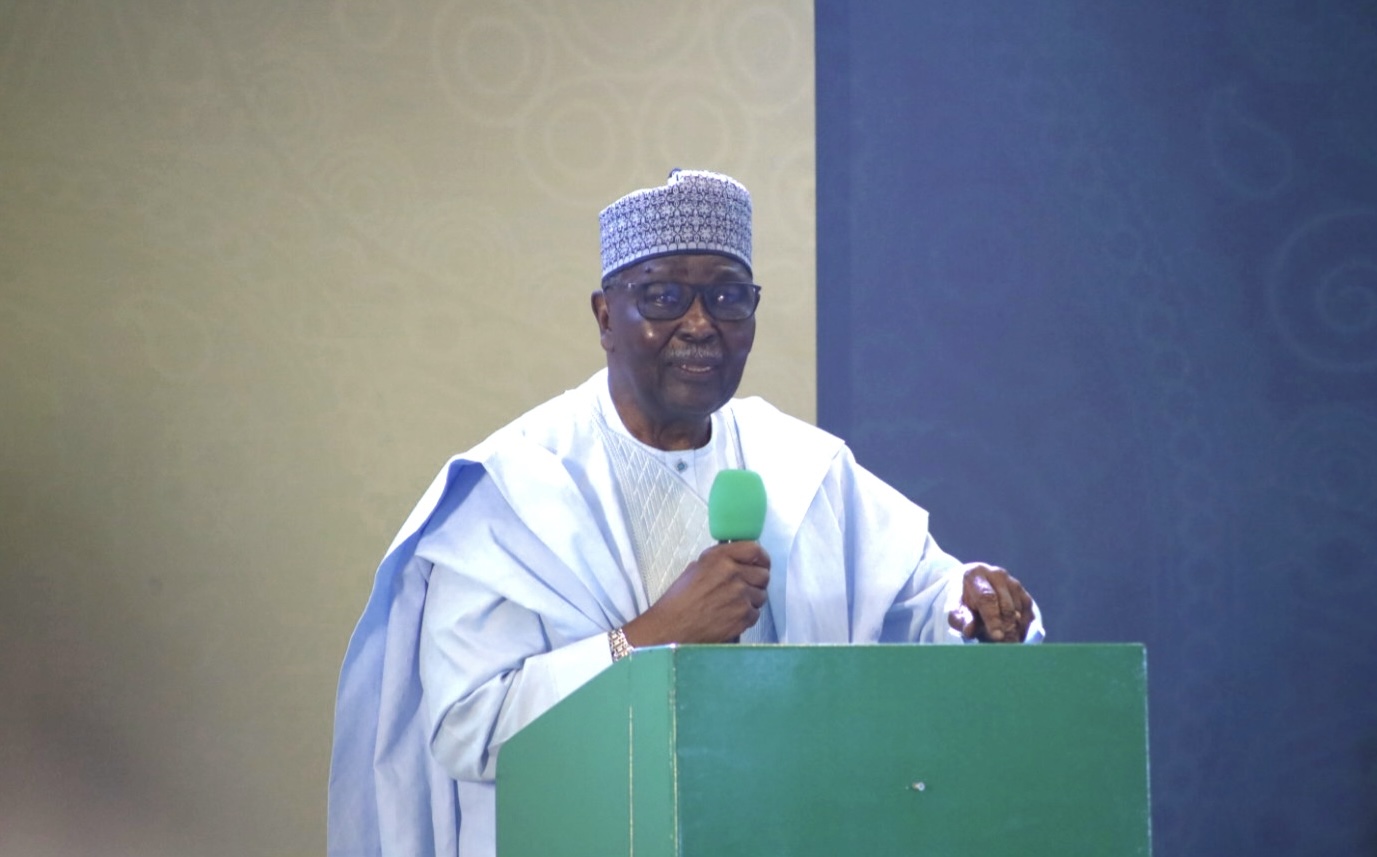
Now, how does this relate? You may have followed the outing of General Yakubu Gowon at the Bola Ahmed Tinubu International Conference Centre, Abuja, where he presented his autobiography titled: My Life of Duty and Allegiance, that contained what seemed his memoir on the Nigerian civil war, which he prosecuted as Head of State.
I’m sure you must have been observing the debate therefrom that event. Now, I’m not so much enamoured of the debate as I’m of the nuances surrounding that unfortunate episode and the role of Gowon in it, given my takeaway from that Idiodi encounter some two decades ago.
Does Gowon, now a nonagenarian really believe that presenting a pious, if not saintly account of himself to the world as snippets of his book, which I picked up here and there suggests, truly suffices for the atrocities of that period?
Take the Asaba massacre for example. Was that the handiwork of Odumegwu Ojukwu, the Biafran leader, whom the former Head of State seems to blame for everything that went wrong. Was he also the one that commanded that mass slaughtering of innocent men?
Under your nose as Head of State, you watched citizens slaughtered mercilessly like infested herds in the streets – you watched young girls corralled into leprosy colonies and wantonly raped before being wasted – you watched as train coaches bearing people fleeing the scene were stopped and their human cargoes thrown alive into River Benue like rotten goods for fishes to feast on – you watched all these and didn’t lift a finger.
Then as Head of State, you not only supervised but watched millions of children with distended stomachs, tiny feet, glazy eyes, heavy heads on ropelike necks, practically begging for death to come quickly and save them from further punishment.
You supervised and watched the cataclysmic eruptions from the blitzkrieg on churches, markets and hospitals – all to keep Nigeria together. In your mind the brutal and merciless butchery of innocent people who were not soldiers and had nothing to do with the war could be explained away just like that?
O! It was Ojukwu that caused it. Ojukwu was the one who released the bombs, caused the blockades that led to the kwashiorkor that killed millions or other atrocities thereof? What a pity!
Now, I return to Idiodi. How else could anyone interpret today’s Nigeria without introducing the law of retributive justice that the Amok leader spoke of? How do you fault the link of the commander who massacred over 2,000 souls dying by the barrel of the same gun, even as Head of State?
How could anyone fail to relate what is happening to our Gowon today with the past? This is a Geneal that wakes up to see hundreds of his brothers and sisters being buried in mass graves as was done during the onslaught he supervised against another people and he still thinks it has nothing to do with him?
Now, the story you told at that event in Abuja on Tuesday, is not new. You simply repeated yourself. My interpretation of that event is that you’re a man undergoing daily torture. You wouldn’t be a human being otherwise, given what is before you, which didn’t start today.
You’re probably trying to escape your fate by appealing to public sympathy. How helpful could that be in the face of the clear evidence of your culpability in the deliberate wasting of more than three million souls? Nobody would believe you.
Yes! They could humour you. But that’s the best anyone could do for you. I hear money rained like a fountain and that you left the scene with billions of naira in your kitty. At 90? Haba General!
Now, here is the thing General. None of these would help.
None would work. You have tried prayers. But you forget that the prayer of sinner is an abomination and a reproach before God, unless he repents. You have also written the book. Surely, this too would end up in the trashcan of history – meaningless piece of conjectures, propaganda, half-truths and outright lies – perhaps!
But, why don’t you try the one thing you have been running away from, for more than five decades – go on your knees in total supplication and surrender, repentance and penance – then rise, call all Nigerians and empty yourself with the truth.
Thereafter openly apologise to the millions of souls whose tormenting wailing you probably hear every day during your disturbed sleep and in your quiet moments, but choose to suppress with these baby tales. Ask them for forgiveness, genuinely and see. There may lie the answer you seek.
Try that and see if it wouldn’t be a more efficacious cure for this decades-old wound than this Ojukwu-bashing and those wasted prayer sessions. You might not only have atoned for the past, but saved the future. May God guide you.
My name is Sunny Igboanugo, I’m The Tiny Voice

“Now that the court has ruled against it, we are sure that, in the coming days, we will witness a mass exodus from the ruling party,” were the words with which the African Democratic Congress (ADC) welcomed Wednesday’s ruling of the Federal High Court, Abuja reversing the deadline for party primaries, among others.
Bolaji Abdullahi, spokesman, who conveyed the party’s excitement over the development, said it viewed the ruling as vindication of its objections to key aspects of the electoral body’s guidelines at the time they were issued.
Recalling its specific objections to the strict timelines on membership registration as well as the conduct of party primaries, the statement, said: “The decision of the court on these issues, including those that directly contradict the constitution, is therefore a welcome vindication of our position.”
Stressing that the ruling, which removed the impediment placed by the guidelines on politicians who wished to seek alternative platforms to contest elections, was a positive development that would promote freedom of association, the statement, added: “We believed at the time that that particular restriction was designed to prevent people from leaving the ruling party, APC.”



-

 News3 weeks ago
BREAKING: Makinde, Turaki, lose! *S’Court affirms Wike’s PDP leadership
-
 News2 weeks ago
Tinubu to African leaders: Copy Nigeria, produce your way out of poverty
-
 Features3 weeks ago
Jim Nwobodo: The Sun shines, thrills, at ‘The Vanguard Awards’
-
 News5 days ago
BREAKING: US-Nigeria troops slaughter 175 ISWAP fighters
-
 News2 weeks ago
Why we pegged presidential ticket forms at N60million – NDC
-

 News2 weeks ago
Gowon on civil war: My book is to put records straight, remove falsehood
-
 News2 weeks ago
BREAKING! Coast brightens for Obi, as NDC zones presidency to South
-
 Columns2 days ago
Dear General Gowon: That apology you’re running from is your nemesis