
News
ECOWAS in fresh moves to bring back heady B’Faso, Mali, Niger


Economic Community of West African States (ECOWAS) has commenced a fresh move of reproachment geared towards bringing back runaway members in the Sahel region, namely, Burkina Faso, Mali and Niger, who dumped the 59-year-old body last year over irreconcilable differences.
Bassirou Diomaye Faye, newly elected President of Senegal and Faure Essozimna Gnassingbé, his Togolese counterpart, are to lead the fresh initiatives to bring the countries, which exited the sub-regional bloc in 2023 over the tough stance taken against them over the military coups that took place in their countries, as ECOWAS insisted on restoration of civil rule.


The development is coming on the heels of the re-election of President Bola Tinubu of Nigeria as Chairman of the Authority of ECOWAS Heads of State and Government (AEHSG), on Tuesday, at its 65th Ordinary Session on Sunday in Abuja, “following the decision of the leaders to ensure continuity and consistency in meeting targets on security, reconciliation, and development.”
Ajuri Ngelale, presidential spokesman, said Tinubu, who was first elected to the position in Guinea-Bissau on July 9, 2023, in accepting the extension of his role, had pledged to focus on consolidating the values of democracy and upholding the interest of the regional body, which would clock 50 years in 2025.
Part of his statement, read: “The Chairman of ECOWAS appointed the President of Senegal, His Excellency, Mr. Bassirou Diomaye Faye, and the President of Togo, His Excellency, Mr. Faure Essozimna Gnassingbé, as Special Envoys to Burkina Faso, Mali, and Niger Republic.
“I have appointed the President of Senegal, Bassirou Diomaye Faye, to please become our Special Envoy to Burkina Faso, Mali, and Niger Republic, along with the President of Togo, Faure Gnassingbé, to do around the clock work with our brothers in Mali, Burkina Faso, and Niger Republic, and to coordinate with me and the ECOWAS Commission, where necessary.
“I have accepted to continue the service to the great members and the great minds that are committed to democratic values and our journey in the region. I will continue to serve our interest and build on democratic values and the structure that we inherited. Thank you very much.’’
The statement, recalled how Tinubu had earlier called on Heads of State and Government of ECOWAS to work towards the establishment and sustenance of a regional standby force for the security and economic advancement of the community, while emphasising the expediency of a standby force in the face of growing security threats in the region.








Godswill Akpabio, Nigeria’s Senate President, on Friday, pushed back against reports quoting him as promising to retrieve tickets from winners of the All Progressives Congress (APC), in lieu of sitting senators, who failed at the party’s primaries recently.
He also spoke on the issue of the comprehensive probe called by Adams Oshiomhole, former Governor of Edo State, now Senator representing Edo North at the National Assembly, clarifying his position on the matte, which has since raised a lot of dust within the polity.
The twin issues, dominated the outcome of proceedings on Thursday, on the day the Senators returned after going on recess to participate in the party primaries that took place across board in Nigeria in line with the electoral outlay of the Independent National Electoral Commission (INEC).
Akpabio, former Governor of Akwa Ibom State, former Minister of the Niger Delta and now Chairman of the National Assembly, who conveyed his position through Eseme Eyiboh, his spokesman, denied ever making such promise to his colleagues, as it went against the grain of democratic ethos, which he had vowed to uphold.
Regarding the probe of the military, Akpabio, in the statement, stressed the need not to distract the institution, but provide it with all the needed support, giving the parlous security situation in the country, its personnel had been battling relentless.
The statement read in full: “The attention of the Office of the President of the Senate has been drawn to misleading reports circulating in sections of the media suggesting that the President of the Senate has promised to secure senatorial tickets for senators who lost their party primaries.
“We must categorically assert that this report does not reflect the position of the President of the Senate. For the record, Senator Akpabio has neither made nor authorised to be made such promise.
“What the President of the Senate actually said, in the course of interacting with his colleagues, was to empathise with senators who were affected by the outcome of their primary elections.
“He assured them that the leadership of the All Progressives Congress, (APC), is actively working to address all issues arising from the primaries and that the final list of candidates will be released in due course in line with the party’s constitution and electoral guidelines.
“Senator Akpabio remains committed to party discipline, due process, and the internal mechanisms of the APC for resolving disputes. He will not interfere with the autonomous processes of the party or make commitments that are outside the purview of the National Assembly leadership.
“The office also notes another report quoting a distinguished Senator on the need for the Senate to probe the military over recent security incidents. While legislative oversight is a constitutional responsibility of the National Assembly, Senator Akpabio’s position is that this is not the opportune moment for a public probe of the Armed Forces.
“At a time when our troops are engaged on multiple fronts against terrorism, banditry and other threats to National Security, subjecting the military to a public legislative inquisition could undermine morale and operational focus.
“The Senate President believes strongly that support, collaboration and closed-door engagements with security agencies are more productive at this critical time. Oversight will be exercised responsibly, without creating distractions that embolden adversaries or divert attention from the urgent task of securing Nigeria.
“Senator Akpabio urges the media and the public to disregard sensational and inaccurate misrepresentation of his remarks and to always seek clarification from his office before publication.”
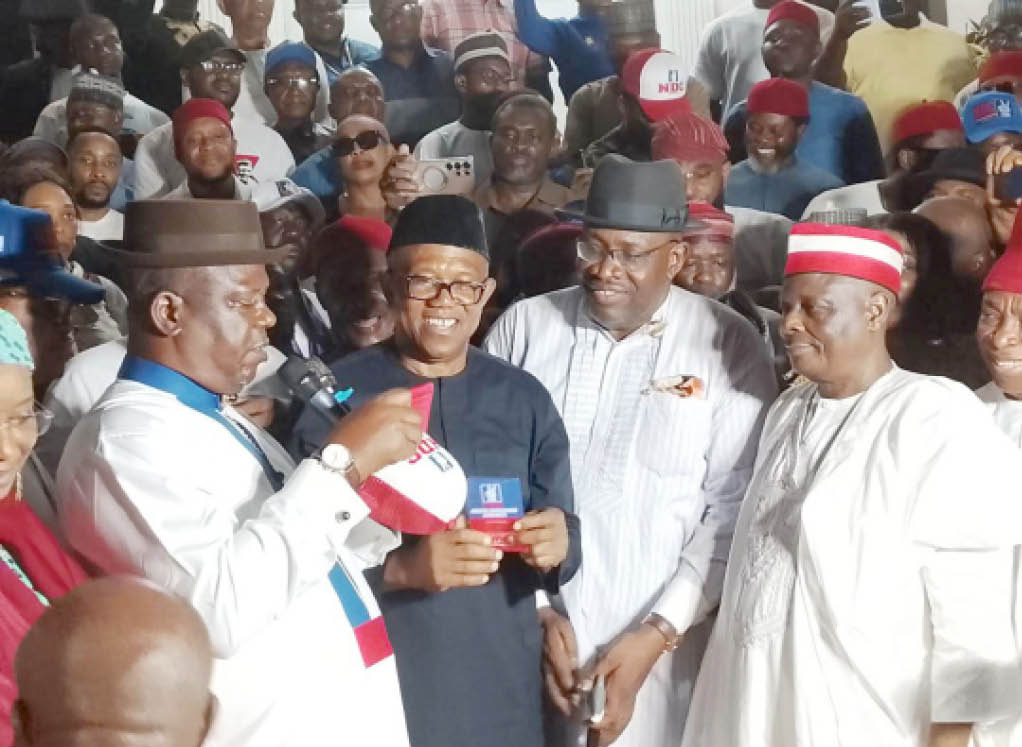
No candidate was imposed neither was any member barred from participating in the process, the Nigeria Democratic Congress (NDC), said on Thursday, which defending the integrity of the exercise, which ended on May 29.
In a statement by Ikenna Enekweizu, National Secretary, party said that all aspirants were given a fair opportunity to participate in the democratic process, adding that the selection process was driven by consultation, consensus-building, and stakeholder engagement through established leadership structures across the country.
Stressing that its National Secretariat was never involved in the business of picking, choosing, or imposing candidates on any constituency or state, contrary to allegations that have emerged following the conclusion of the primaries, the statement added: “At no time has the NDC National Secretariat been involved in the business of picking, choosing, or imposing candidates on any constituency or state.
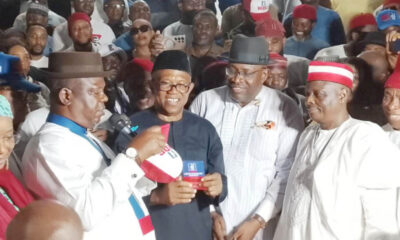
“Aspirants seeking elective positions were directed to engage with caucus leaders, stakeholders, and grassroots members in their respective states, who were responsible for consultations and recommendations based on local political realities. In the South-East geopolitical zone, our presidential candidate, Peter Obi, joined the party with an existing network of respected political leaders and elder statesmen who currently serve as caucus heads across the region.
“These include former governors and senior political figures such as Sam Egwu, Okwesilieze Nwodo, and Achike Udenwa, among others. The party explained that these leaders were tasked with conducting stakeholder consultations and helping build consensus around aspirants in their respective states.
“These leaders were entrusted with conducting stakeholder consultations, building consensus, and making recommendations to the party based on their understanding of the peculiar political dynamics in their respective states.
“Aspirants who disagreed with stakeholder recommendations were not excluded from the process but were allowed to test their popularity through grassroots primaries. This process was conducted without prejudice to the rights of any aspirant. Where aspirants disagreed with recommendations made by stakeholders or caucus leaders, they were free to test their popularity through the democratic process at the grassroots level, and this was duly accommodated,” the party said.
Addressing concerns raised by some aspirants following the primaries, the NDC acknowledged reports of individuals prematurely declaring themselves candidates as well as complaints regarding aspects of the process.
However, it maintained that such issues had been referred to the party’s appeal panel and leadership for resolution.
The statement also highlighted the party’s commitment to affirmative action and greater female participation in politics, noting that efforts had been made to encourage women to seek elective offices while also considering the interests of serving lawmakers.
Looking ahead, the NDC announced plans to begin a broad reconciliation process aimed at healing divisions and strengthening party unity after the conclusion of the primaries.
“As resolved at yesterday’s NEC meeting, we now look forward to the commencement of a comprehensive reconciliation process. We count on our esteemed caucus leaders, state chairmen, stakeholders, and party leaders to engage all aspirants and members in the interest of unity, cohesion, and the continued growth of our party.”
The party reiterated that its role throughout the nomination process was primarily to welcome new members and aspirants, reassure them of its commitment to fairness and transparency, and direct them to the appropriate caucus structures for participation in party affairs.
According to the NDC, the approach reflects its commitment to internal democracy, consultation, inclusiveness, and respect for established leadership structures as it continues preparations for future elections.

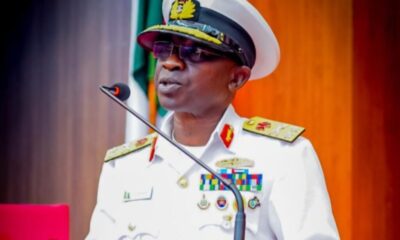
Idi Abbas, Chief of the Naval Staff (CNS), on Friday, prayed for a legislation to establish a special court to try those caught in the business of stealing crude oil in Nigeria, saying the current general law was not too helpful in stemming the tide.
It was also a day he claimed that the powerful forces behind the syndicate had a way of projecting fronts while remaining behind the scene, which made it almost impossible to track them to face justice.
In fact, Abbas, a Vice Admiral, revealed that the operation was so perfect that those arrested at illegal refining sites were usually low-level operatives with little knowledge of the larger criminal network.
A guest on Sunrise Daily, a breakfast programme on Channels Television, the Naval Chief noted that many of those apprehended during operations are merely workers paid small sums, adding that such a complex structure of oil theft syndicates made it difficult to identify and prosecute the individuals who orchestrate the criminal enterprise.
“Most of the faces behind these thefts are not really known or are not the ones we always catch. The ones we get at most of the illegal refinery sites are just being given some paltry sum, while the big masquerades are the ones that make the real money. Prosecuting suspects is often complicated by the fact that many of those arrested have little or no information about the people directing the operations.
“In trying to prosecute some of these people that we get, some of them don’t even know who they are working for. So, the network is a very delicate one.
“But despite the challenges the Nigerian Navy and other security agencies are continually refining their strategies to counter the evolving tactics of oil thieves. As they are evolving strategies, we are also evolving new strategies. Like I keep saying, technology is the way forward. With that, we have been able to reduce the level of theft.”
Stating that the adoption of technology-driven surveillance, intelligence gathering and monitoring systems had significantly enhanced efforts to curb crude oil theft and protect critical national assets, he reaffirmed the commitment of the Nigerian Navy to sustaining operations against oil theft, stressing that collaboration among security agencies, stakeholders and host communities remains essential to safeguarding the nation’s oil resources.
The naval boss while assuring that Nigeria’s coastal and riverine communities are relatively safe, said the Nigerian Navy had made significant progress in reducing threats along the coast, particularly illegal oil-related activities and sea robbery.
“As it stands today, I can say that our coastal areas and the riverine areas are relatively safe. While crude oil theft and isolated cases of sea robbery remain areas of concern, the Navy has been largely successful in containing such activities through intensified surveillance and enforcement operations.
Hear him: “What we are contending with mostly there is the issue of crude oil theft and some pockets of sea robbery, which we are able to curtail. There is need for the establishment of a special court dedicated to prosecuting maritime crimes.
“This court will focus exclusively on cases involving crude oil theft and other maritime-related offences, helping to address delays associated with the conventional judicial process. The establishment of such a court would significantly accelerate the dispensation of justice and reduce the burden currently placed on the Navy in maintaining seized vessels and other exhibits pending the conclusion of lengthy court processes.
“If we have that in place, I believe the dispensation of justice will be done much faster and then ease the burden of keeping and maintaining some of the arrested vessels, which will be taken off from us because we spend a lot to maintain those vessels under our custody.”



-
 News3 weeks ago
Tinubu to African leaders: Copy Nigeria, produce your way out of poverty
-
 News2 weeks ago
BREAKING: US-Nigeria troops slaughter 175 ISWAP fighters
-
 Columns2 weeks ago
Dear General Gowon: That apology you’re running from is your nemesis
-
 News3 weeks ago
Why we pegged presidential ticket forms at N60million – NDC
-
 News3 days ago
BREAKING: Terrorists strike Ibadan again! Abduct ex-Minister’s sister, twin children
-
 News4 weeks ago
BREAKING! Coast brightens for Obi, as NDC zones presidency to South
-

 News3 weeks ago
Gowon on civil war: My book is to put records straight, remove falsehood
-

 News2 weeks ago
BREAKING: Wait over! Arsenal are CHAMPIONS! Win EPL after 22 years hiatus