Connect with us

News

Akpabio sets the tone as Tenth Senate enters final stretch 

Published

on

By Rt Hon Eseme Eyiboh, mnipr
There are moments in a nation’s life when institutions are reminded—quietly but unmistakably—that time does not negotiate with comfort. Nigeria’s Senate, returning from the conviviality of Christmas recess and New Year reflection to the discipline of plenary, has arrived at such a moment. The period of acclimatization has passed. The era of testing intentions is over. What remains is a phase in which time asserts itself, when the calendar ceases to be a backdrop and becomes an active force in governance.
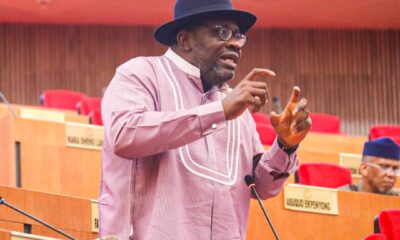
When the President of the Senate, Godswill Obot Akpabio, rose to welcome colleagues back to the chamber in early 2026, he spoke with an ease that respected ceremony while remaining alert to consequence. The tone was cordial but unsentimental; reflective without wandering. Beneath the courtesy was a clear intimation that the Tenth Senate had crossed from the comfort of beginnings into the gravity of its defining phase.
He began where seriousness often takes root—not with policy, but with people. The recess, he reminded senators, was not an escape from accountability but an extension of it: time spent among constituents, re-engaging voices that do not echo within the chamber, absorbing frustrations that do not arrive neatly packaged as memoranda, and reconnecting with the human weight behind legislative abstractions. In doing so, Akpabio quietly reaffirmed representation as a lived obligation rather than a procedural formality.
The Senate, however, resumed its work under the shadow of loss. The death of Senator Godiya Akwashiki during the recess lent the chamber a gravity that could not be ignored. Akpabio’s tribute was spare, almost austere, and for that reason it carried weight. He spoke of diligence, humility, and responsibility—not as ornament, but as the unobtrusive virtues that prevent institutions from emptying themselves of meaning. The moment of silence that followed served as a reminder that democracy rests not only on arithmetic and procedure, but on the moral character of those entrusted to serve.
The address then widened its lens to the nation beyond the chamber. Nigeria, Akpabio observed, did not pause while the Senate recessed. Economic pressures persisted. Security challenges endured. Social demands intensified. Yet threaded through this catalogue of strain was a firm insistence on resilience. Nigerians, he argued, have continued to endure and adapt, expressing themselves not only through protest or complaint, but through work, enterprise, and a stubborn conviction that tomorrow need not be a repetition of today.
This framing mattered. It acknowledged hardship without normalizing it, and resilience without romanticizing suffering. More importantly, it returned responsibility to leadership. Public expectations, Akpabio cautioned, have not diminished with time; they have sharpened.
Security, inevitably, commanded attention. The Senate President welcomed ongoing military cooperation between Nigeria and the United States as part of a broader effort to confront terrorism and safeguard stability. Yet strategy did not eclipse humanity. His condolences to families bereaved by insecurity were measured but sincere, underscoring a truth often obscured by briefings and statistics: security is not an abstraction, but the difference between return and absence, between continuity and grief.
Equally sobering was the warning that as many as 35 million Nigerians may face hunger in the coming year. This was not treated as a distant projection to be acknowledged and deferred, but as an imperative demanding legislative urgency, rigorous oversight, and collaboration. Food security, in this context, is not charity; it is statecraft.
As the political season approaches with its familiar excesses, Akpabio’s appeal for civility and restraint was timely. Democracy, he implied, is not weakened by competition but by recklessness; not threatened by ambition but by the abandonment of responsibility. National unity, he warned, must never become collateral damage in the contest for power.
The address also made deliberate space for Nigerians whose lives remain suspended in captivity within their own country. Akpabio urged continued remembrance and prayer, resisting the political impulse to move on too quickly. Progress that ignores unresolved pain, he suggested, is progress in name only.
Threaded through the address was an endorsement of the Renewed Hope Programme of the Tinubu administration—not as a panacea, but as a collective undertaking requiring patience, discipline, and cooperation. Hope, in this telling, is not sentiment; it is work.
Then came the central fact. With less than one year and five months remaining, the Tenth Senate has entered its final stretch. Akpabio stated this plainly, without theatrics. The final stretch, he argued, is where participation yields to performance—where urgency must be embraced without panic, reform pursued without recklessness, and productivity demanded without compromising standards.
What followed was a concise legislative philosophy. The months ahead must be reform-driven. Laws passed now must strengthen institutions, secure lives and property, unlock growth, and restore confidence in the Nigerian state. There was a pointed warning against legislative clutter and symbolic excess. History, Akpabio reminded his colleagues, is unimpressed by volume; it is persuaded by value.
He described the task ahead as institutional housekeeping: clearing bottlenecks, completing what was begun, and leaving behind laws that function rather than frustrate. The imagery was modest, but the implication was serious. Governance, at its best, is stewardship rather than spectacle.
The vision outlined was ambitious yet restrained: a Nigeria more governable than it was met; more just than it was found; more hopeful than it was entrusted to this generation of lawmakers. Institutions stronger than individuals. Laws that serve rather than burden. It was nation-building language—and an invitation to judgment.
Practicalities were not ignored. The budget, Akpabio noted, requires rigorous scrutiny, responsible passage, and faithful implementation. Oversight should correct rather than merely criticize. Collaboration with the Executive remains essential, grounded in constitutional responsibility rather than convenience.
Perhaps the most demanding reminder was the simplest. Senators, he said, are the ears, the eyes, and the legislative voice of Nigerians. It was not grandiose. It was exacting.
As the address concluded, the themes of time and memory returned. The clock is moving. The nation is watching. History is recording. This, Akpabio insisted, is not a moment for anxiety but for purpose. When the Tenth Senate reaches the end of its tenure, let it be remembered not as a body that slowed near the finish, but one that accelerated.
In many respects, the address captured the tone Akpabio has sought to establish since assuming the Senate presidency: stability over spectacle, substance over noise, legacy over applause. Whether the Senate finishes strong will depend not on rhetoric, but on deeds. As a declaration of intent, however, this was a serious one.
The final stretch has begun! Behold the hour cometh! The work remains unfinished. The trust has been acknowledged; it now awaits to be honored. In the end, nations remember less what was promised at the threshold, and more what was delivered before the door finally closed.
•Rt Hon Eseme Eyiboh, mnipr,
is Special Adviser on Media and Publicity and Official Spokesperson to the President of the Senate.

Share this story:

News

2027: Ndigbo will rely on numerical strength – Okorie *Mobilises 35million Igbo votes

Published

on

Chekwas Okorie, founder of the All Progressives Grand Alliance (APGA), is leading the mobilisation of 35 million Igbo vote strength for the 2027 presidential election, in the belief that it will be a game changer to the political fortunes of the people.

Okorie, himself, once a presidential candidate, in an open letter to Ndigbo, on Monday, told them to take their fate in their hands through massive voter strength by taking advantage of the ongoing voter registration exercise of the Independent National Electoral Commission (INEC), to advance their position in the nation’s political space.

In the open letter titled: 2027: Auspicious Opportunity for the Igbo to Reclaim their Political Space in Nigeria, Okorie, Convener of the Igbo Agenda Dialogue (IAD), called for the concerted efforts, indicating that he would be leading the mobilisation of 20 million Igbo voters in the South East and an another 15 million from those living in the remaining states outside Igboland.

He wrote: “I wish to commence this letter by reminding us that the Igbo population in Nigeria is unarguably the largest population by ethnic nationality. The Igbo ethnic nationality is by an undisputed wide margin the most geographically spread in Nigeria.

Advertisement

“Notwithstanding the failure of subsequent Nigerian governments to conduct population census since 2006; 20 years ago, studies have shown that Igbo people constitute about ninety-nine percent of the population in the Southeast geopolitical zone and approximately the second largest single ethnic population in the remaining thirty one states and the Federal Capital Territory.

“Studies have also proved that there are indigenous lgbo populations in thirteen of the thirty-six states in Nigeria. In Nigeria’s brand of democracy, electoral victories are predicated on numerical strength and geographical spread.

“It, therefore, follows logically that a politically conscious Igbo electorate has no excuse not to be a critical factor in Nigeria’s political power equation at any given time since the return of democratic governance in Nigeria.”

Regarding the opportunities open for the people in 2027, he added: “This is not the time to apportion blame. The time to take our destiny in our hands and redeem ourselves is now or never.

“The INEC portal remains open for online continuous voters registration. Sadly, findings show that the Southeast is still trailing behind other geopolitical zones by a wide margin.

Advertisement

“Again, it is now possible for already registered voters to change their earlier registered polling units to their preferred polling units online for ease of voting on election day. This innovation has effectively removed the incidence of disenfranchisement by INEC officials or agents.

“The results of the 2023 elections published by INEC showed that the number of registered voters in the Southeast geopolitical zone was 11.5m, and the number of voters who participated in the presidential election was 2.2m.

“In spite of the fact that the Southeast recorded the least number of registered voters per geopolitical zone, the matter was worsened by the fact that a whopping 9.3m registered voters did not participate in the 2023 presidential election. We cannot continue to do this to ourselves.”


The former APGA boss, while bemoaning the effect of lack of interest in the electoral process, listed areas such apathy took a toll on the people, saying the situation must be reversed in the interest of Ndigbo.

Advertisement

Hear him: “Failure to register as a voter amounts to self-denial of one’s inalienable rights to participate in the recruitment of your preferred representative, governor, and president at all levels.

“Refusing to vote in the election means that you have inadvertently and unwittingly voted for the person or persons you ordinarily would not want to represent or govern you.

“In the likely event of a referendum or a plebiscite for self-determination, state creation, or the recall of a failed representative, only those with their valid voters cards will be eligible to participate in such crucial events.

“In the absence of a credible population census, it is the quantum of votes recorded by the Igbo that will be the yardstick to weigh Igbo political relevance in Nigeria.

“Igbo participation in the recruitment of elected leaders where they are domiciled anywhere in Nigeria immediately becomes their bargaining chip in making claims and demands for patronages and inclusiveness in those places.”

Advertisement

Stressing the efforts of the IAD to mobilise the people, he said its leadership, in active consultation and collaboration with a network of Igbo stakeholders, extant Igbo unions, Associations, Women Organizations, Youth Groups, Civil Society, and Pro-democracy organizations had agreed to embark on proactive and robust advocacy to promote Igbo political consciousness on a non-partisan basis.

He added: “The effort will include, but is not limited to town hall meetings to be held in major cities across the length and breadth of Nigeria. IAD has incorporated and established a functional office in the United States of America to coordinate and engage the vast Igbo diaspora population.

“We have set for ourselves the modest, realizable, and measurable target of ensuring that by the end of the ongoing window of the continuous voters registration exercise, the Southeast Geopolitical zone should be able to record an impressive figure of 20 million registered voters. In the same token, we project to mobilize about 15 million aggregate number of Igbo registered voters in the rest of the country.

“We are confident that with a minimum of 35 million Igbo voting bloc for the 2027 general elections, Ndigbo will be on their way to Igbo political resurgence and restoration of our long lost relevance and respect in Nigeria.”

Advertisement
Share this story:
Continue Reading

News

NLNG’s VIBES ups the ante: Recruits 103 into 2026 training programme

Published

on

NLNG, Nigeria’s goose that lays the golden eggs, is still upping the ante through its Vocational Innovation Business and Empowerment Scheme (VIBES), with the induction of a new cohort of 103 trainees into its 2026 empowerment programme.

Officials explained at the induction ceremony, held in Port Harcourt on Monday, which they said marked a significant milestone in the scheme’s ongoing commitment to skills development and sustainable economic empowerment that the newly inducted trainees would undergo a structured series of capacity-building sessions, culminating in a competitive pitching phase, during which the most viable business proposals would be selected based on clearly defined evaluation criteria.

“Simultaneously, 26 beneficiaries from the previous cohort, who successfully completed their training and graduated from the programmme had received grant support in the preceding year, marking the close of their training.

“One year after receiving support, several of the graduates have strengthened their operations, enhanced financial management practices, expanded their customer base, and transitioned from early-stage concepts to more structured, revenue-generating enterprises. Some have scaled up production and diversified their service offerings, demonstrating measurable business growth and improved operational stability, Anne-Marie Palmer-Ikuku Manager, Corporate Communication and Public Affairs, said in a statement.

Advertisement

The statement quoted Sophia Horsfall, General Manager, External Relations and Sustainable Development, as emphasising NLNG’s commitment to sustainable community development, stating:

“The VIBES programme reflects NLNG’s long-standing commitment to sustainable development in our host communities. Through targeted capacity building, access to innovative support, and enterprise development opportunities, we are strengthening the local economy across our host and pipeline communities. The graduation of one cohort and the induction of another showcase the continuity of our investment in youth empowerment, innovation, and enterprise development as key drivers of inclusive growth.”

She added that VIBES represents a strategic intervention aligned with NLNG’s broader sustainable development objectives. The programme is designed to cultivate entrepreneurial capability and strengthen the networks required for emerging business leaders and community change-makers to thrive within their communities.

Yemi Adeyemi, Manager, Community Relations and Sustainable Development, described the milestone as rewarding, noting the progress made by the graduating cohort.

His words: “When we supported them last year, it was not only with training but also with grants to help strengthen their businesses. A year later, we can see the difference, businesses are expanding, ideas have moved beyond the planning stage, and the beneficiaries are more confident in managing their ventures. That is the essence of VIBES, practical support that helps people make real progress.”

Advertisement

VIBES is NLNG’s economic empowerment programme designed to equip young entrepreneurs with the tools, knowledge, and support required to build sustainable livelihoods. Participants receive practical training in financial management, marketing, business strategy, and foundational legal principles, complemented by mentorship and advisory guidance from experienced professionals. This integrated approach combines capacity development with funding support to enable participants to scale their businesses, improve profitability, and build sustainable enterprises.

Economic empowerment remains a key component of NLNG’s broader sustainable development efforts, alongside education, infrastructure, and healthcare. Through VIBES, the company aims to support more young entrepreneurs in building viable businesses, creating economic value, and contributing meaningfully to the development of its host and pipeline communities across Rivers State.

Following the relaunch of the programme, 26 participants have so far benefited from the grant and completed their training under the initiative.


Advertisement
Share this story:
Continue Reading

News

Maiduguri blast: Police confirm 23 dead, 108 wounded *They’ve introduced drones – Zulum

Published

on

Monday’s bomb blast in parts of Maiduguri, claimed at least 23 lives while 108 people were injured, signals from the Borno State Police Command, confirmed on Tuesday.

Nahum Daso, an Assistant Superintendent of Police (ASP) and spokesman of the command, said in a statement on Tuesday, hours after the blast that happened in the state capital that suspected suicide bombers allegedly carried out the suicide attacks at 7:24pm on Monday.

Informing that preliminary investigations indicated that the explosions were carried out using improvised explosive devices (IEDs) by suspected suicide bombers, Daso added that the incidents were carried out at the Maiduguri Central Market, popularly known as Monday Market, University of Maiduguri Teaching Hospital gate, and Post Office Flyover area of the town.

He said that a combined team of Police Tactical Units, military personnel, and other joint security operatives was swiftly deployed to the affected areas.

Advertisement

Stating that the scenes were immediately secured and cordoned off, while the Explosive Ordnance Disposal (EOD) Unit conducted thorough sweep operations to ensure no additional threats remained, he stated that Naziru Abdulmajid, Commissioner of Police in the state, had already visited the scenes for an on-the-spot assessment while commiserating with victims and their families.

Daso, who assured residents of the command’s commitment to safeguarding lives and property, said that victims were evacuated by emergency responders, including the National Emergency Management Agency and Borno State Emergency Management Agency, to medical facilities for treatment.

He said normalcy had been restored in the affected areas, while security had been heightened across the metropolis to forestall further incidents.

Urging residents to remain calm and vigilant and report any suspicious movements or objects to security agencies, the command reiterated the its commitment to maintaining peace and security in the state.

The incident occurred less than 24 hours after suspected Boko Haram insurgents attacked Ajilari community at the outskirts of Maiduguri, indicating a return of violence to the capital which had remained the safest areas in recent times in the ugly campaign that has persisted for most of the last 16 years.

Advertisement

Earlier, suspected jihadists launched an overnight attack on a Nigerian military post on the outskirts of Maiduguri, while another attack took place in the Damboa local government area, south of Maiduguri.

With at least five explosions being reported in the last six months in the state, the fighters said to be from Boko Haram and rival jihadist group Islamic State West Africa Province (ISWAP) appear to have recently stepped up attacks in the in the decade-old campaign believed to have resulted in more than 40,000 deaths with around two million displaced.

They include the 24 December 2025 explosion at a mosque in Gamboru Market, Maiduguri, during the Maghrib prayer, which killed at least five people, and the explosion reported at Tashan Kifi (a fish market entry point) in Konduga town in June, 2025, when a female suicide bomber detonated explosives.

In April 2025, an IED explosion struck commuters travelling on a military-escorted convoy along the Maiduguri–Damboa Road, killing seven commuters.

In October 2025, Zulum called on the Federal Government to conduct an immediate and comprehensive review of the nation’s air safety and defence mechanisms.

Advertisement

Speaking in Mafa town, following a disturbing incident in which Boko Haram terrorists deployed a drone to attack a military formation in the state, signaling a dangerous escalation in the capabilities of the terrorist group, the governor expressed concern over the emergence of this new threat.

“One thing I want to comment on is the issue of drones. This is frightening. In Dikwa, I was told drones were used.

“The proliferation of drones, particularly in the hands of non-state actors, is of great concern for the entire country. We have to do something to stop the rampant use of armed drones,” Zulum had said.

Advertisement
Share this story:
Continue Reading

Trending