
News
Deal with Wike, Anyanwu, Fayose, others at your own risk – Turaki


It was yet a clatter of political weaponry as the two contending factions for the soul of the Peoples Democratic Party (PDP), entered a fresh battle zone on Thursday, by releasing public disclaimers against each other, each of them still laying claims to the authentic leadership of the former ruling party.
Shortly after the leadership of the party controlled by Kabiru Turaki released a disclaimer against those it claimed to have sacked recently, the opposing group in the camp of Nyesom Wike, Minister of the Federal Capital Territory (FCT), followed suit.

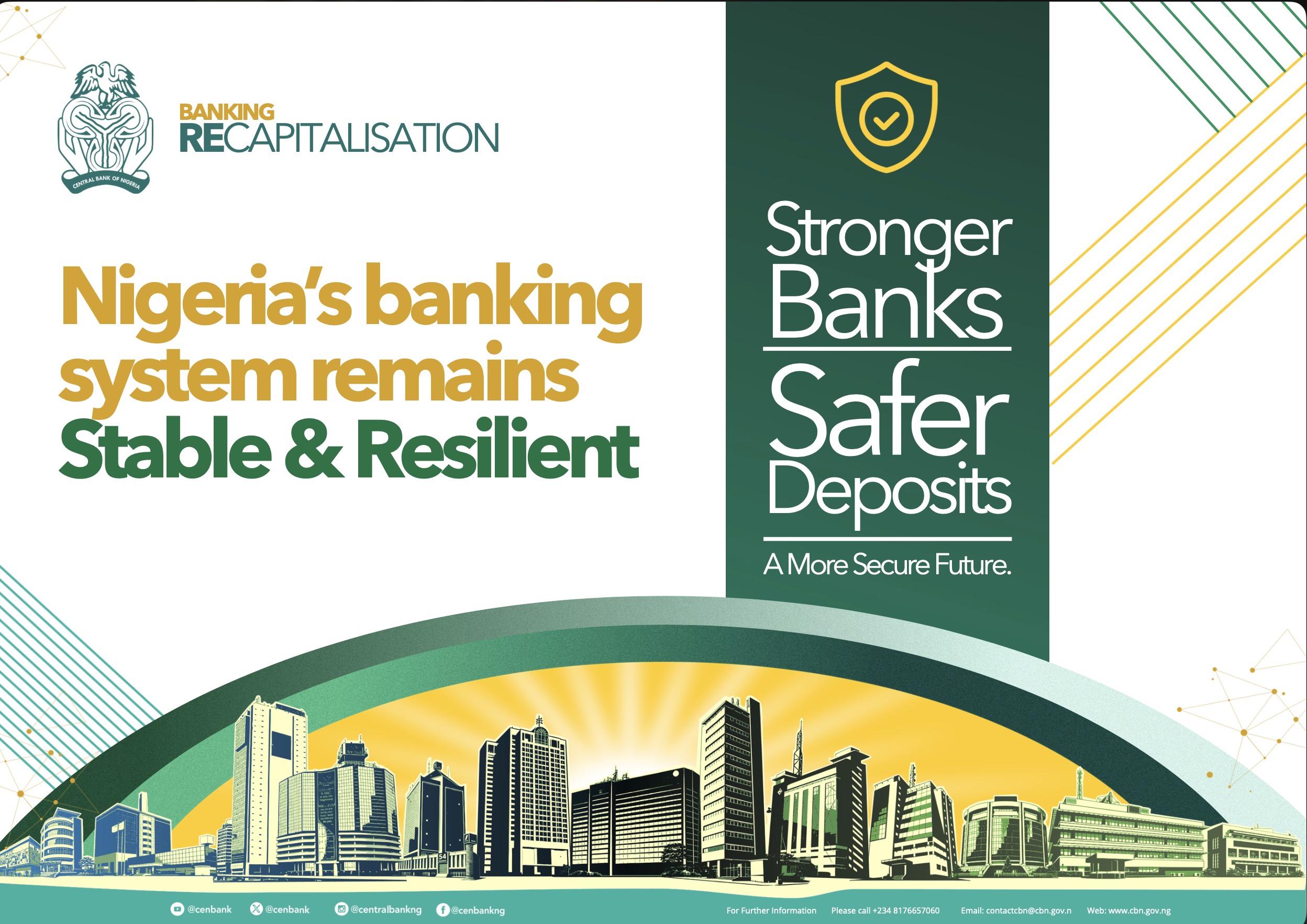
Both sides displayed pictures of those they claimed to have expelled from the party and warning the public not to deal with them with the Turaki group also containing names of Samuel Anyanwu, embattled National Secretary, Ayodele Fayose, former Governor of Ekiti State and Umar Bature, they claimed were affected by the decision of its National Convention held in Ibadan on November 15 to 16.
Others included, in the document signed by Turaki, who was elected as National Chairman at th convention, included Kamaldeen Ajibade, Mao Ohuabunwa, George Turnah, Dan Orbih, Austine Nwachukwu, Mon’d Abdulrahman and Abraham Amah.
“These actions were necessary to cleanse our ranks of elements who have consistently worked against the PDP’s interests, including holding parallel congresses, sponsoring litigations and canvassing votes for opposing parties.
“With these certificates, the affected individuals are free to continue to align with any political platform of their choice, but they can no longer claim membership of the PDP. We must now rebuild ahead of the next general election. The PDP will never die. This party is bigger than any individual or group, and those who have chosen to dine with our opponents while still wearing our colours have been shown the way out.”
But in a swift reaction, the Wike group, not only fired back, but released its own 18-man list it claimed to have been expelled at a meeting of its own National Executive Committee (NEC) on November 18 for offences ranging from “anti-party activities” to “gross misconduct”.
The 18-man list cancelling that of the 11 in the Turaki list, included, Bala Mohammed, Governor of Bauchi State, Seyi Makinde, his Oyo State counterpart, Emmanuel Udom, former Governor of Akwa-Ibom State, Adolphus Wabara, former Senate President and Board of Trustees (BoT) Chairman, Dauda Lawal, Taofeek Arapaja, Kabiru Tanimu Turaki, and Ben Obi, Bode George, Okechukwu Obiechina, Emmanuel Ogidi.
Others in the list, signed by Anyanwu, who was one time at the centre of the PDP leadership crisis, included, Emmanuel Eledan, Suleiman Kadade Mohammed, Sumaila Adamu Bunza, Kosheodo Sotonji, Daniel Woyengikuro, Umar Sani and Umar Bargo.
Anyanwu warned: “Anybody parading himself as a newly elected national officer of the party is an impostor and a meddlesome interloper. The Ibadan convention that produced Turaki’s NWC was a charade and a mere social gathering not recognised by the constitution of the party.







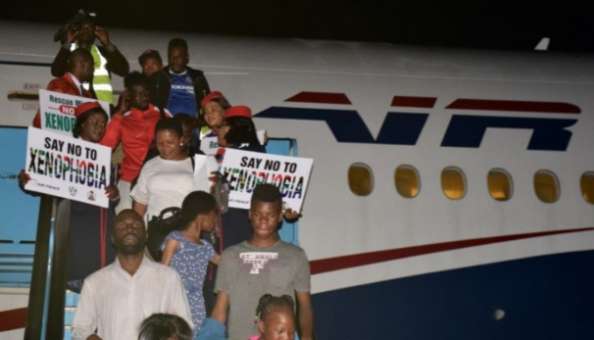
The Federal Government has begun the evacuation of its citizens from South Africa, presently home to rising xenophobic attacks against other Africans in the country, with the first batch expected Thursday evening.
Kimiebi Ebienfa, spokesman of the Ministry of Foreign Affairs, who indicated this on Wednesday, said the evacuees would leave South Africa late Wednesday and touch down at the Murtala Muhammed International Airport, (MMIA), Ikeja, Lagos on Thursday evening.
He said in a statement: “The Ministry of Foreign Affairs wishes to inform that the first batch of Nigerian nationals that will be evacuated from the Republic of South Africa due to Xenophobic attacks will depart the Oliver Thambo International Airport in Johannesburg on Wednesday night, and the expected time of arrival at the Murtala Mohammed International Airport in Lagos is 5.00 am on Thursday morning.
“The evacuation operation will be undertaken by Air Peace Airlines. The Federal Government of Nigeria has fully funded the evacuation exercise; consequently, all affected Nigerians will be repatriated at no cost to them.”
Ebienfa assured Nigerians that the Federal Government, through relevant Ministries, Departments and Agencies (MDAs), has put in place the necessary reception and support arrangements for the returnees.
“Upon arrival, the evacuees will undergo documentation and profiling procedures and will receive the appropriate assistance and support before being reunited with their families,” the ministry’s spokesperson added.
Tensions soared in South Africa after a citizen-led group opposed to irregular migration last month ordered all undocumented foreign nationals to leave by June 30.
Ghana and Mozambique have repatriated hundreds of their citizens; Malawi and Nigeria have announced they would do the same. Last week, Nigeria said it planned to repatriate more than 1,000 of its nationals from South Africa.
“Total figure not out yet,” Ebienfa said. “We are expecting over a 1,000 persons.”
In a statement, Nigeria’s High Commission in Pretoria said it had “negotiated waivers with host authorities” so that those with “immigration-related offences” would be allowed to leave on the eventual repatriation flights rather than be detained.
On Monday, the Minister of Foreign Affairs, Bianca Odumegwu-Ojukwu, said Nigeria may be considering retaliatory measures against South Africa following the hostility towards Nigerians and other black African migrants.
When asked whether Nigeria was considering retaliatory measures, Odumegwu-Ojukwu said the option was under consideration.
“Well, that is a situation that we are considering. This is up to our legislature,” she said. “This is a decision that has to be taken at the highest level of government, but it’s not off the table.”
South Africa, until recently the continent’s most industrialised economy, has long attracted workers from across the region.
But saddled with an unemployment rate of over 30 percent, it has seen repeated spurts of xenophobic protests — including renewed violence in recent weeks.
The latest tensions have revived uncomfortable debates across Africa about xenophobia, migration and the gap between pan-African rhetoric and realities facing migration on the continent.
An ultimatum by one citizen-led group for illegal migrants to be expelled by June 30 has raised fears of violence after bouts of anti-immigrant unrest in the past that claimed dozens of lives.
Last month, Ghana repatriated some 300 people, the first batch of what authorities said was expected to be a total of about 800 Ghanaian nationals.
The South African government has said it is stepping up enforcement against undocumented immigrants but urged citizens not to take matters into their own hands.
There are more than three million foreigners living in South Africa, or 5.1 percent of the population, according to the statistics agency.
More than 63 percent come from countries in the 16-member Southern African Development Community (SADC) bloc.
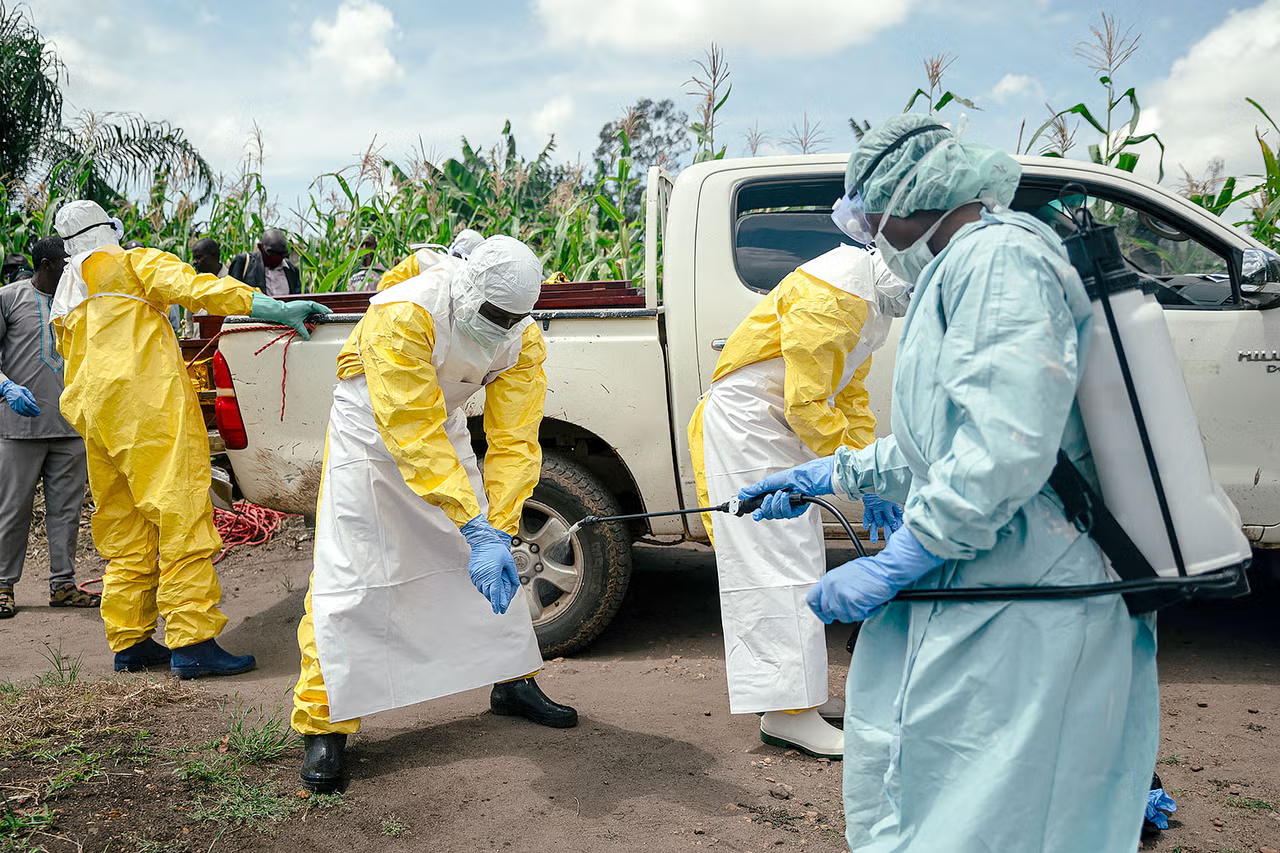
President Bola Tinubu on Tuesday, announced the approval of the establishment of a Presidential Task Force on Ebola Virus Disease Preparedness and Emerging Public Health Threats and ordered the immediate release of ₦10 billion as emergency intervention funding.
Bayo Onanuga, presidential spokesman, who conveyed the development to the public, said the fund would strengthen the operational preparedness of the National Centre for Disease Control and Prevention (NCDC) and support critical national public health emergency response activities.
To be chaired by Femi Gbajabiamila, Chief of Staff (CoS) to the President, the committee with membership drawn from relevant Ministries, Departments and Agencies (MDAs) and state representatives is also expected to get briefings on their plans to contain the disease.
Onanuga, stated that Tinubu also specifically directed all states hosting international airports and international border corridors, as well as relevant MDAs, to submit their plans, funding requirements and intervention needs for consideration and coordinated implementation.
Stating that the President’s move followed a stakeholder meeting convened under the CoS to review Nigeria’s preparedness and develop strategies against the possible importation of Ebola into the country., the statement informed that the Task Force would also intensify passenger screening at all international airports through enhanced temperature checks and crowd-control protocols.
Other measures would also include enhanced monitoring of passengers arriving through high-risk airline routes, including Air Uganda, Rwanda Air, Air Tanzania, Air Angola, Kenya Airways and Ethiopian Airlines; and the immediate activation of referral and isolation centres at the Lagos and Abuja international airports, with other airports to follow.
Other measures include the mandatory activation of QR code-based pre-arrival health declaration systems for passengers originating from or transiting through designated high-risk countries, as well as the disinfection of departure halls, cargoes, baggage areas and airport facilities as precautionary environmental measures.
The President also directed the advisory group to consult with security, diplomatic and aviation bodies on regulating flights from affected and designated high-risk countries and mandated the task force to designate specific airports or terminals for high-risk flights to enable controlled screening and isolation procedures, and to consider adjusting flight schedules to minimise interaction between high-risk passengers and other travellers.

Justice Akintoye Aluko of the Federal High Court, Lagos on Tuesday ordered the remand of Paul Jibrin Oweleke in the custody of the Department of State Services (DSS) over alleged cybercrime offences linked to social media broadcasts that allegedly called for overthrow of President Bola Tinubu.
Specifically, Oweleke, in a two-count charge was accused of publishing posts on his online platform known as “Oweleke TV”, urging the Nigerian military to remove the President from office in a manner similar to takeovers in some West African countries, an act the agency said bordered on incitement and the use of a computer system to disseminate content considered prejudicial to national security and constitutional governance.
Oweleke’s broadcasts, the agency stressed, were capable of inciting public disorder and promoting disaffection against the government, which will undermine the country’s democracy.
Legal argument had ensued immediately after Oweleke, pleaded not guilty to the charges, with his lawyer kicking vehemently against the prayer of the agency that the court should order his remand pending the commencement of trial, on the ground that a bail application had already been filed and served on the prosecution.
But Aluko, who was persuaded to grant the prayer, went with the DSS, while adjourning the matter to June 16 for the hearing of the bail application, stating that Oweleke, would remain in the facility of the agency pending the outcome.



-
 News4 weeks ago
Tinubu to African leaders: Copy Nigeria, produce your way out of poverty
-
 News3 weeks ago
BREAKING: US-Nigeria troops slaughter 175 ISWAP fighters
-
 Columns3 weeks ago
Dear General Gowon: That apology you’re running from is your nemesis
-
 News1 week ago
BREAKING: Terrorists strike Ibadan again! Abduct ex-Minister’s sister, twin children
-
 News4 weeks ago
Why we pegged presidential ticket forms at N60million – NDC
-

 News4 weeks ago
Gowon on civil war: My book is to put records straight, remove falsehood
-

 News3 weeks ago
BREAKING: Wait over! Arsenal are CHAMPIONS! Win EPL after 22 years hiatus
-
 Columns2 weeks ago
See Tinubu’s terrible damage on Option A4 and its precious memories