

News
The 10th Senate, Nigeria at 65, and legislative imperative


By Ken Harries, Esq
At 65, Nigeria finds itself in a reflective mood, and rightly so. Independence anniversaries are not just occasions for parades, gun salutes, and flag-waving. They are moments when nations pause to take stock, to ask if their institutions have matured in wisdom, steadiness, and service to the people. With this understanding, it can be said that few institutions mirror the turbulent journey of Nigeria’s democracy as vividly as the legislature.

From the fragile parliament of the First Republic through the long intermissions of military-era suspension to the sometimes noisy and fractious assemblies of the Fourth Republic, the National Assembly has embodied both the promise and the perils of the Nigerian democratic experiment. As the Red Chamber resumes under the stewardship of Senate President Godswill Akpabio, GCON, the 10th Senate can fairly be described as a maturing legislature that has delivered uncommon achievements with unprecedented vigour and steadiness.
The fact speaks clearly for itself. RES IPSA LIQUITUR. In less than two years, the Senate has passed more than 900 bills, with over 58 already signed into law by President Bola Tinubu. It has reviewed and passed over 20 executive bills, showing a willingness to collaborate with the executive arm while still retaining its independence. To be clear, this pace of legislative productivity is remarkable by any standard and the best in the annals of our history. It signals an institution committed to stabilising Nigeria’s fiscal, monetary, and political environment through purposeful and constructive lawmaking and other legislative engagements.
The Senate’s imprint on education is perhaps its most people-centred achievement. The National Education Fund Act provides a sustainable financing model for tertiary institutions. The Student Loan (Access to Higher Education) Act expands access to higher education for indigent students who might otherwise have been locked out of opportunity. The Out-of-School Children Education Act confronts one of Nigeria’s most stubborn social challenges by bringing learning to the margins where poverty often shuts doors. While these measures echo earlier efforts from Nigeria’s republican past, they are sharper, more inclusive, and better designed for the demands of today’s youth.
The economic front has also been impacted by the nation-building ambitions of the 10th Senate. Sweeping tax reforms, including the Nigeria Tax Administration Bill, the Joint Revenue Board Bill, and the Nigeria Revenue Service Bill, have streamlined policy, reduced evasion, and boosted revenue without overburdening citizens. The Securities and Exchange Commission Amendment Act has strengthened investor confidence, while the Investment and Securities Bill provides clearer frameworks for investment. The Electricity Amendment Act updates energy policy for an era that must integrate renewable power and private participation.
One standout measure, the Social Security for Unemployed Graduates Act, has provided a safety net for job seekers. It reduces frustrations that often fuel restiveness among young people. To be fair, these reforms recall the liberalisation drive of the late 1990s but are better tuned to the digital age and global competition.
Security has also remained a legislative priority. The Control of Small Arms and Light Weapons Act and the Terrorism Prevention and Prohibition Act fortifies Nigeria’s defence against multifaceted threats. These laws reflect a recognition that insecurity cannot be addressed by military might alone. It requires legal frameworks, institutional coordination, and community involvement that cut off the supply chains of violence.
Regional balance, a recurrent challenge in Nigeria’s federal arrangement, has not been neglected. The South East; South South, South West, North Central and North West Development Commission Acts are designed to reduce disparities and foster inclusive growth. The National Steel Development Act seeks to revive an industry that has long symbolised Nigeria’s industrial aspirations since independence. Even patriotic memory has been legislated into revival with the National Anthem Bill, which restored “Nigeria, We Hail Thee” to the national soundscape, evoking nostalgia and reinforcing the dignity of Nigeria’s founding years.
If these domestic milestones form one side of the 10th Senate’s record, its international diplomacy forms the other. In 2023, Senator Godswill Akpabio, GCON was elected to the Executive Committee of the Inter-Parliamentary Union, the first Nigerian in 59 years to achieve such recognition. The IPU, founded in 1889 and comprising 179 member countries, is the premier global body for parliamentary diplomacy. Akpabio’s election restores Nigeria’s voice in shaping global discourse on issues such as climate resilience, governance, and migration. His July 2025 address at the World Conference of Speakers in Geneva signalled Nigeria’s readiness to lead debates from the perspective of the Global South. This recalls the confident internationalism of Prime Minister Tafawa Balewa, who in the early years of independence positioned Nigeria as a champion of African unity and non-alignment.
Without a doubt, the 10th Senate’s work is not confined to the abstract language of lawmaking. Its impact is also felt in communities across Nigeria. Each senator has an allocation for constituency projects. These funds have been channelled into visible impact: rural electrification in the North-West, healthcare centres in the Niger Delta, agricultural hubs in the South-East, and market rehabilitation nationwide. This level of grassroots visibility gives legislative output a human face.
Discerning citizens know that tone matters in politics. Unlike the gridlocks and confrontations for which the upper chamber was known in the past, the 10th Senate has cultivated a more cooperative and robust culture. Senators from across parties, including the All Progressives Congress (APC), Peoples Democratic Party (PDP), Social Democratic Party (SDP), and Labour Party, have set aside partisanship to advance laws in the national interest. This stability is no accident. It reflects Akpabio’s deliberate leadership style, one that combines firmness with humour, using wit to defuse tension and triggering consensus to build momentum.
Still, it must be said that the road ahead demands vigilance. With the 2027 general elections on the horizon, electoral reform stands as the next critical frontier. Committees in both chambers of the National Assembly are working on a comprehensive new Electoral Act designed to guarantee credible, inclusive, and transparent elections. Proposals under review include diaspora voting, electronic transmission of results, and tighter campaign finance regulation. Similarly, both chambers of the National Assembly are neck-deep in efforts to ensure gender parity as long clamoured for by Nigerian women.
Beyond elections, there have also been calls by civil society for a robust whistleblower protection law to fully harness whistleblowing as an anti-corruption and good governance tool. Moreover, constitutional review, judicial reform, and stronger security frameworks remain pressing challenges. And even though the Petroleum Industry Act, passed into law in 2021, established a new legal, governance, administrative, and fiscal framework for Nigeria’s petroleum industry, recent turmoils in the sector indicate the 10th Senate can still revisit the Act in the national interest.
While acknowledging all that, the reality is that at 65, Nigeria has survived the turmoil of its infancy and the missteps of middle age. The 10th Senate, under Senator Godswill Akpabio’s steady hand, exemplifies a legislature that has matured. It has moved beyond the quarrels and gridlocks of the past to become a productive force, legislating boldly, engaging the world diplomatically, and impacting lives directly at the grassroots. It has helped strengthen the scaffolding of democracy and set a course for deeper reform.
If independence anniversaries are moments for reflection, then Nigeria at 65 can take solace in the fact that its Senate is not a stumbling block but a guiding hand in the democratic journey. Under the capable and unifying leadership of Senator Godswill Akpabio, the 10th Senate has emerged as a beacon of legislative achievement and democratic resilience. It signals not just what Nigeria has endured but also what it can yet become.
It is worth reiterating that inasmuch as the 10th Senate has done well, as the members resume legislative duties on October 7th, they should not rest on their oars. Much remains to be done if Nigeria is to be shaped into a modern, developed state.The 10th Senate should continue to play its central democratic role in that regard. To the Senator Akpabio’s led 10th Senate, it is not yet Uhuru!
■ Ken Harries Esq is a lawyer and an Abuja- based Development Communication Specialist.







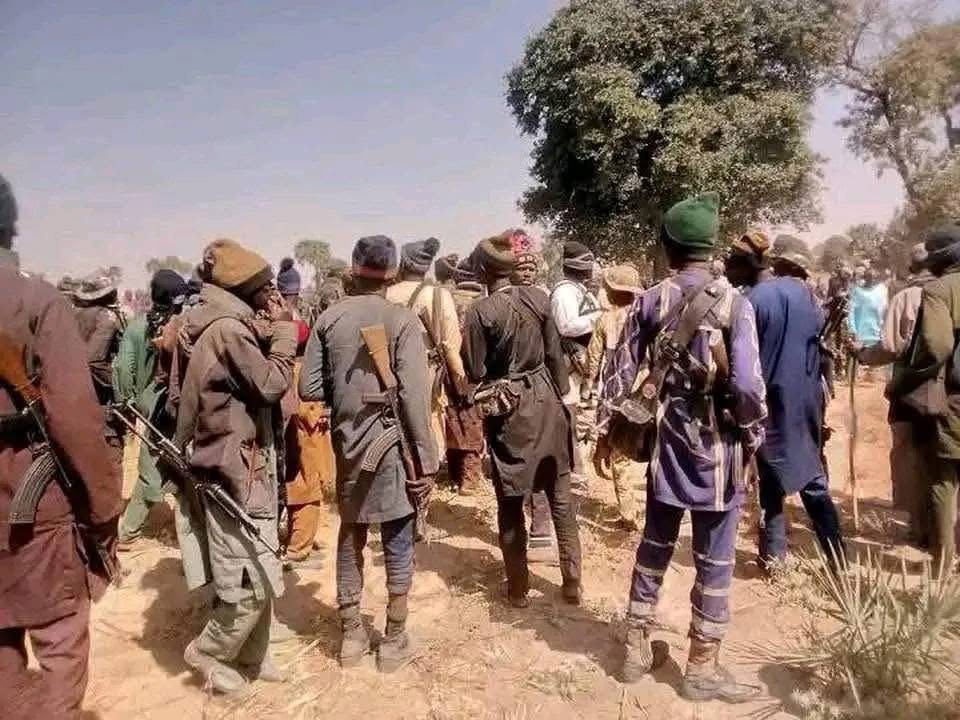
The echoes of the drums rolled out to celebrate the rescue of the 44 teachers and students, kidnapped from some schools in Oyo State, after 56 days in the bush, would surely be disrupted abruptly, with the divergent echoes of a fresh abduction, this time coming from Kogi State.
Reports indicate that the gunmen, struck on Tuesday at the Government Secondary School, Odo-Ekina, in Dekina Local Government Area of the state, abducting four students, the school principal and a National Examinations Council (NECO) ad hoc staff member.
Authorities of the Kogi State Police Command, who immediately unleashed their operatives in hot pursuit of the abductors, said the attack occurred at about 5:25 p.m. while the students were writing their NECO examination.
Saliu Oyiza Afusat, an Assistant Superintendent of Police (ASP) and spokesman of the command, said a combined team of police personnel and other security agencies has launched a search-and-rescue operation following the incident.
Informing that one of the students was actually rescued immediately, she said efforts were ongoing to secure the release of the remaining victims and apprehend the attackers, adding that Naziru Bello Kankarofi, the state Commissioner of Police, alongside the Brigade Commander and the State Security Adviser to the Governor, Commodore Jerry Omodara (Rtd), were already on the way to the scene for an on-the-spot assessment.

Oil prices are expected to go down now with the announcement of Donald Trump, US President that he will no longer impose a 20 percent “safe passage” fee on ships passing through the Strait of Hormuz.
The POTUS, hinged his reversal of the decision on the intervention from some Gulf countries, who pleaded with him not to toe the line due to the massive economic impact the decision would make on the region.
Indeed, oil prices had shot up immediately Trump announced the new levy on Monday while declaring the US ‘the guardians of the Hormuz strait,’ a measure which he said was to pay for the cost of guarding the volatile area in order keep supply of oil flowing.
Reports said that Gulf allies of the US worked frantically to get Trump on the phone in time to talk him out of the idea altogether, while a flurry of appeals came from Saudi Arabia, the United Arab Emirates, Bahrain and Qatar.
In response, the POTUS, posting on his Truth Social platform, wrote: “Based on highly productive conversations with Middle East leadership, I have decided to replace the 20% United States Reimbursement Fee with Trade and Investment Deals that the various Gulf States will be making into the United States.”
Trump, who said the investments would be “MASSIVE but, at the same time, extraordinarily good for them, and their future,” added that the deals would see factories, plants, and equipment pour into the US at “Historic levels.”
The Gulf nations have committed to invest trillions of dollars in the US, though it remains unclear how much of that they will actually spend over the next several years.
Meanwhile, the US continues to bomb Iran in what appears to be a resumption of active conflict between both countries, despite an ongoing roadmap to end the conflict.
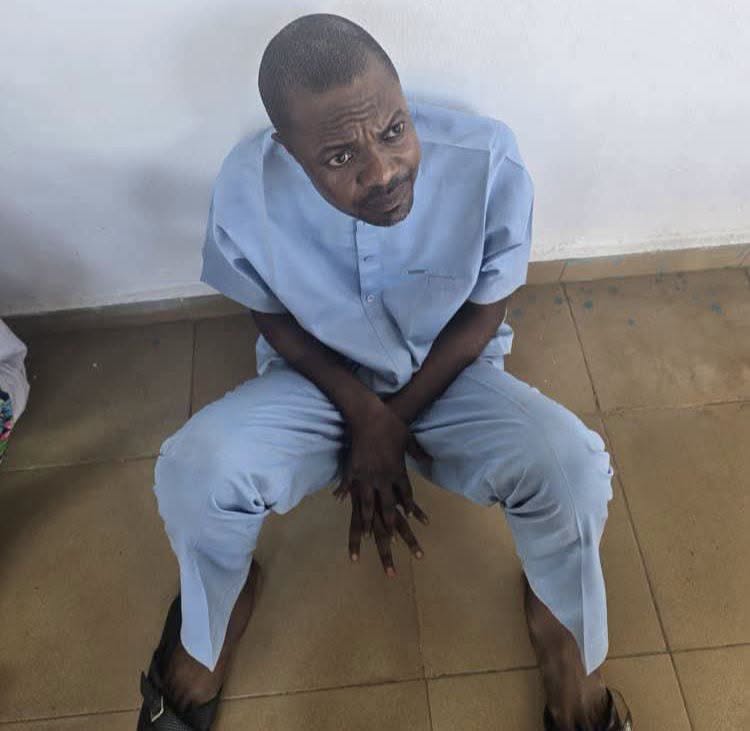
Reports say operatives of the Osun State Police Command, and those of the Department of State Services (DSS) had tracking the trail of Adeniyi Adeyemi, controversial Director General of the Presidential Foreign Intervention Promotion Council (PFIPC), for weeks, before he was eventually pulled out of his hole on Tuesday.
However, the duo, were said to have pulled back after failing to track him through his mobile phones, which he had reportedly switched off for about two days, making it difficult to locate him, leaving the stage for the members of the Police Intelligence Response Team (PI-RT) led by Moses Lohor, a Chief Superintendent of Police (CSP).
Lohor, said to have previously served as the Commander of the Anti-Kidnapping Squad of Osun State, and reported to have been involved in high-profile security operations and controversies, after taken over fielded his men to pick up signals from their well-oiled signal networks.
Regarded by many Osun residents as one of the key security officers who contributed significantly to the peace and stability enjoyed in Ilesa and other parts of the state during his tenure, he was said to have relied on his contacts before his transfer out of the state, said to have raised concerns from the public about the security situation he would be leaving behind.
His exit from the state was said to be hinged on an incident in 2024, in which he allegedly shot one Iyanda Alowonle, then Chairman of Osun State Motor Transport System, in the stomach at the police station in the state prompting an order for his arrest by then Inspector General of Police (IGP).
His effort was said to have paid off when he successfully tracked down the controversial PFIPC, boss, who was seen on Tuesday evening, in a shot video on social media undergoing interrogation, and eventually handed him over to Ibrahim Gotan, Commissioner of Police in the state.
The PUNCH quoted one of the sources as saying: “The arrest (of Adeyemi) took place on Tuesday morning by the IRT squad, who immediately moved him to Abuja. After he was arrested, he was taken to Ibadan and from there to Abuja.”



-

 News5 days ago
BREAKING: Mystery death! *Female student dies a day after arriving Umahi’s home!
-

 News5 days ago
Don’t jump to conclusion! *Umahi speaks on mysterious death of female students!
-

 News3 weeks ago
BREAKING: Court sentences Nigerien, two others to death over terrorism
-
 News2 weeks ago
BREAKING: EX-SSG mowed down by gunmen! *He resisted being kidnapped – driver
-
 News4 weeks ago
Two hours after Igboho’s ‘red-eyes’ to ‘Fulani’ leaders, gunmen free kidnap victims!
-

 News3 weeks ago
Abductors of Oyo teachers panicking, freedom coming for victims soon!
-
 News1 day ago
BREAKING: Terrorists strikes another school! *Kidnap principal, students, NECO official!
-
 News3 weeks ago
Chicagogate: Nigerians return to court! *Move to stop Tinubu from 2027 polls