
News
Senator Natasha Akpoti-Uduaghan: What really is Justice Binta Nyako’s judgement?




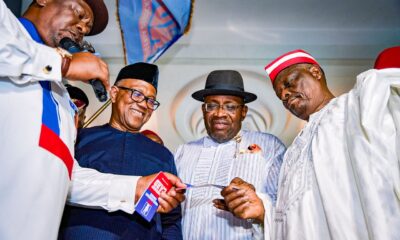






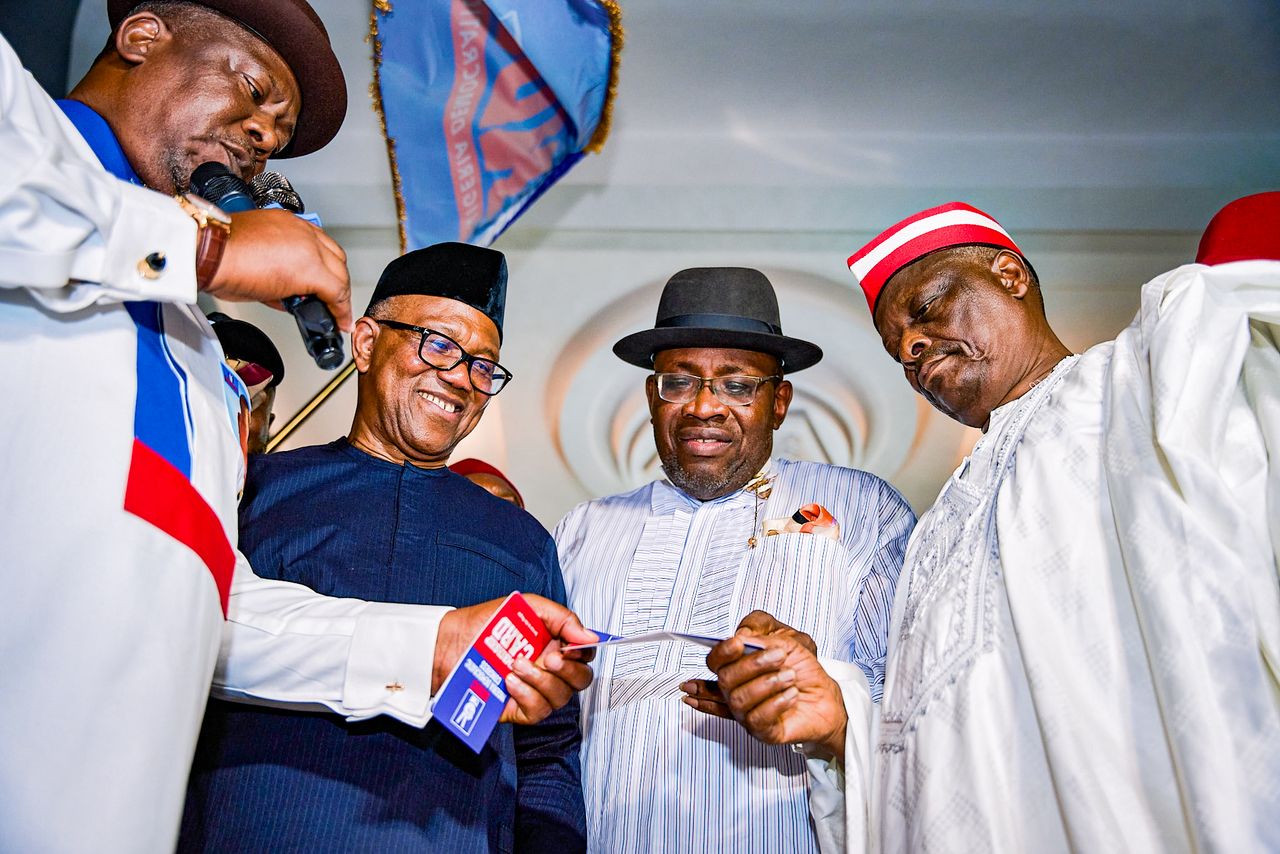
Seriake Dickson, National Leader of the Nigeria Democratic Congress (NDC), on Wednesday showcased Peter Obi, its presidential candidate in the 2027 election, but gave a proviso – his importance would not be at the expense of the party.
A guest on Prime Time, a public affairs programme on ARISE NEWS Television, the former Governor of Bayelsa State, now Senator representing West at the National Assembly, maintained that the belief in some quarters that Obi’s entrance into the party was a favour was completely misplaced.

Instead, he argued that the opposite was the case, as it was the party that was doing its candidates a favour by giving them the opportunity to contest elective positions on its platform in the 2027 elections, a gesture that ought to be returned.
Hear him: “Don’t make it look like anyone is doing NDC a favour. No one is. Rather, the NDC and I and my colleagues are doing people a favour by granting our platform. If you are genuinely supporting Peter Obi and you are disparaging me, the leader, or the platform itself. That is nonsensical.”
Stressing that NDC had demonstrated confidence in Obi by adopting Obi as its sole presidential candidate and selecting a vice-presidential candidate without internal disputes, he said it was enough to earn its leadership the gratitude it deserved.
He added: “Nobody paid shishi. So, if a presidential candidate didn’t pay shishi to be made the sole presidential candidate and sole vice-presidential candidate, that same party cannot be the one saying that small people are underprivileged.
“I could have run. There’s no one more qualified than me. There’s no one more qualified than me to run for presidential candidate. None. There is no crisis within the NDC. Peter Obi is a cherished member of our party. On our own, we have made him a presidential candidate. Sole presidential candidate. And that counts for something. We are working well together. There’s no crisis.”
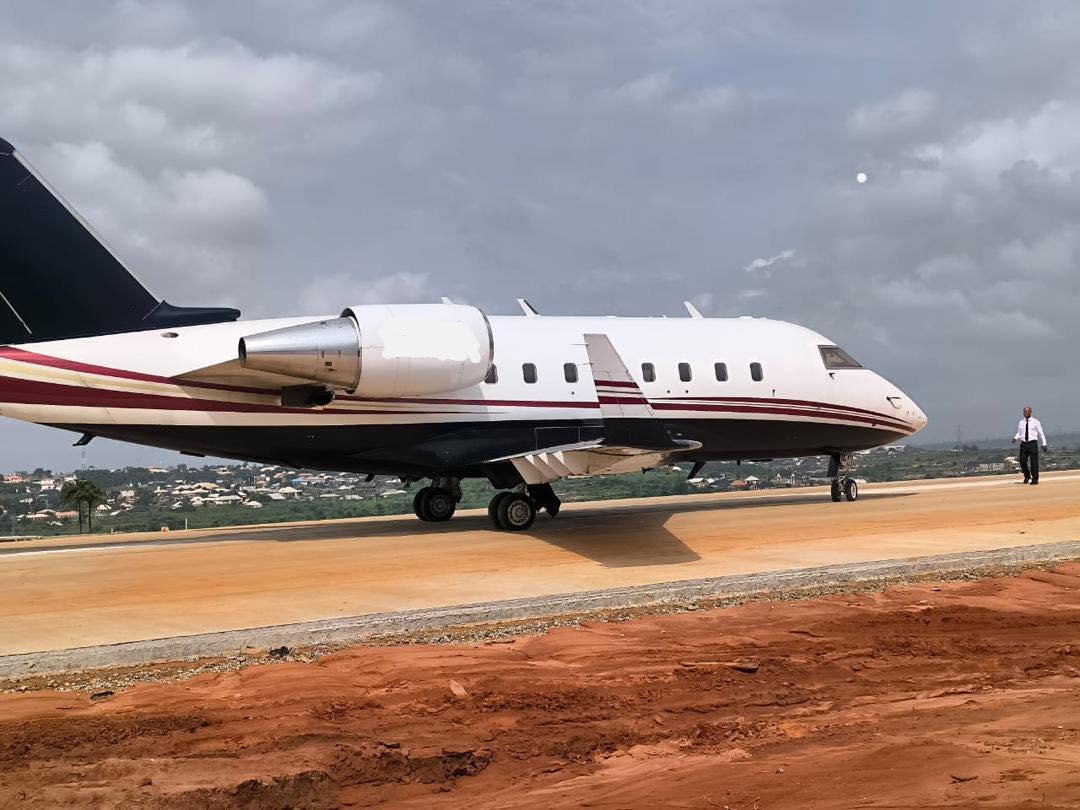
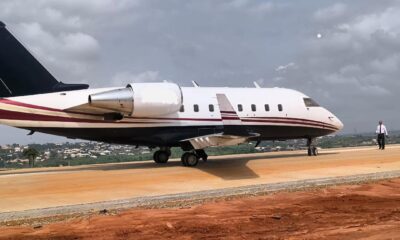
Invoking its zero tolerance on issues of security breaches, the Nigeria Civil Aviation Authority (NCAA), has clamped down on aircraft and crew of the privately operated jet that landed on a roadway in the Ogwashi-Uku area near Asaba, Delta state.
Even with regulatory body for airline operations in Nigeria informed that no casualties were recorded in the incident, it still went for its sanctions in line with its sworn position of maintaining maximum safety at every point.
In a statement on Wednesday, Michael Achimugu, its spokesman said preliminary reports indicated that the aircraft conducted a missed approach while attempting to land at Asaba airport at about 7:43am.
Achimugu: Director of Public Affairs and Consumer Protection, said: “Reports received from personnel at the scene indicate that all occupants safely exited the aircraft and were transported to Asaba by road,” Achimugu said. The aircraft had four (4) crew members on board. At this time, no injuries to passengers or crew have been reported.
“Preliminary information available to the authority indicated that the aircraft later departed the location and returned to Lagos without obtaining the required regulatory approval. Air traffic control was informed only after the aircraft had become airborne.”
Stressing that the action constitutes a violation of the Nigerian Civil Aviation Regulations (Nig.CARs) and is currently under investigation by the authority, he said the NCAA immediately grounded the aircraft upon its arrival in Lagos pending the outcome of investigations.
He added: “The flight crew have been placed under regulatory review while the NCAA conducts further inquiries into the circumstances surrounding the occurrence and the subsequent unauthorised departure of the aircraft.
“The NCAA has formally notified the Nigerian Safety Investigation Bureau (NSIB) of the occurrence and is coordinating with relevant aviation stakeholders, including the operator and the Nigerian Airspace Management Agency to establish the full circumstances surrounding the incident.”
Stating that the NCAA immediately suspended the operator’s permit for non-commercial flight (PNCF), he added that the authority would review all operational, airworthiness, maintenance and flight-related records as part of its statutory responsibilities and take further enforcement action in accordance with applicable aviation regulations.
Achimugu said the NCAA remains committed to maintaining the highest standards of aviation safety, security, and regulatory compliance within the Nigerian aviation sector.
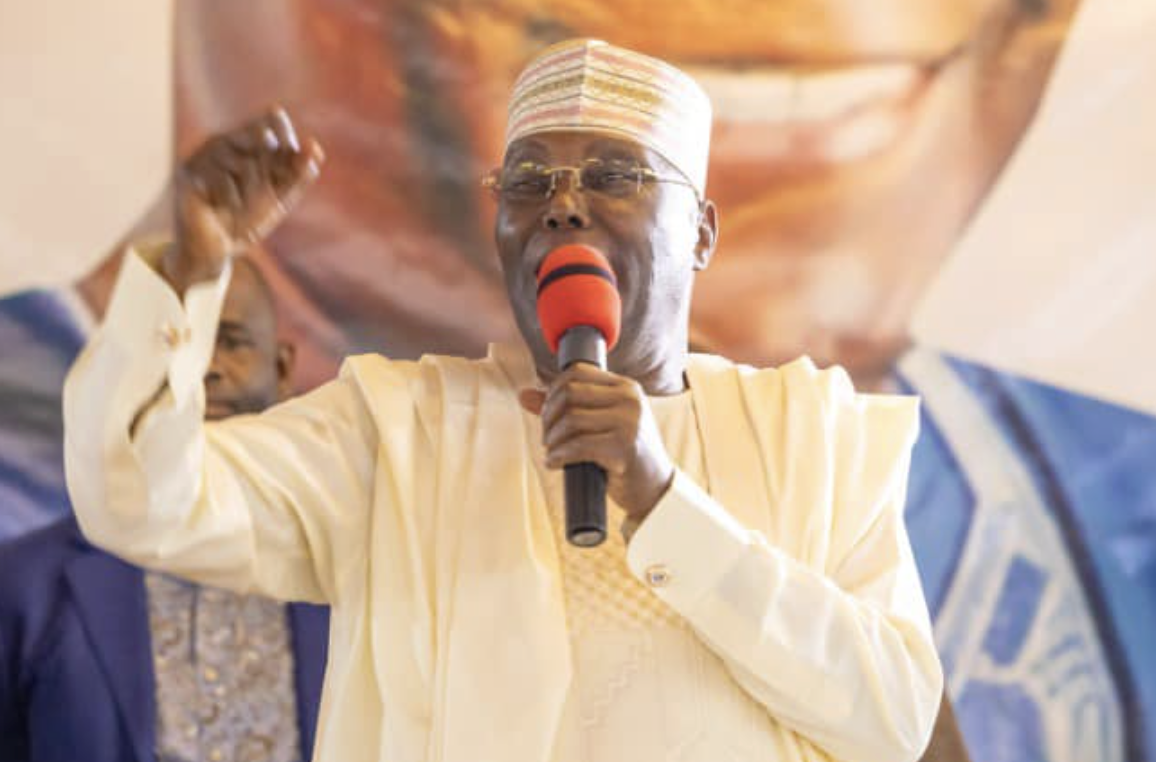
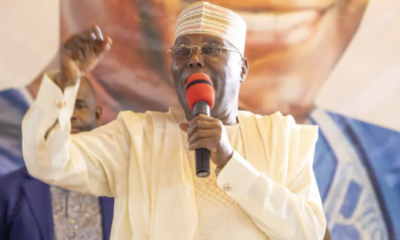
Atiku Abubakar, candidate of the African Democratic Congress (ADC), on Wednesday, swore to the integrity of the process that led to his picking the party’s ticket, saying it remained untainted and consistent with the wills of the members.
Against the backdrop of the insistence of Babachir Lawal, former Secretary to Government of the Federation (SGF), that he stole the ticket by corrupting the process, Atiku, Vice President between 1999 and 2007, pooh-poohed the claim.
Before the former SGF Rotimi Amaechi, former Governor of Rivers State and Minister of Transportation as well as Mohammed Hayatu-Deen, former Chairman of Nigeria Economic Summit Group, both candidates in the contest for the ADC ticket, had rejected the process as flawed, even before the outcome.
Lawal, who had earlier announced his resignation from the ADC a fortnight ago and made sundry allegations of gaming the system against Atiku, had doubled down on Monday, while appearing on Politics Today, a public affairs programme on Channels Television, claiming he personally monitored the exercise and had evidence that the primary was rigged.
Hear him: “Don’t forget I was the National Vice Chairman (North-East). I was in the field during the exercise, so I have evidence. Atiku’s people are the ones trying to deny what they did. We are all human beings. We know what they did. I knew the primary was rigged at the point it was being done and the results declared.”
Regardless that neither Amaechi nor Hayatu-Deen had recanted their original position Atiku, insisted that nothing was amiss, adding that his opponents actually won in the areas of their individual popularity and stronghold.
Conveying his position through Phrank Shaibu, his spokesman, who appeared as a guest on Politics Today, a public affairs programme on Channels Television, the former VP said: “Anybody who claims rigging or irregularity in the last election should check the places and locations they won. Where are the states that Rotimi Amaechi won? If you check the figures and the margins he got there, you will know that those are his strongholds. It was not a fraudulent process.
Maintaining that the burden of proving any fraud rested on the former SGF Shaibu, Shaibu depicted his boss as the most popular among the contestants, arguing that the outcome of the event should not be surprising to anybody.
He said of the ex-SGF: “Babachir reminds me of a baby who is yanked off her mother’s breast while suckling. It is like a deprived suckling; definitely the baby will throw tantrums. He admitted on your show that his preferred candidate was Hayatu-Deen. He worked for him.”



-
 News4 weeks ago
Tinubu to African leaders: Copy Nigeria, produce your way out of poverty
-
 News3 weeks ago
BREAKING: US-Nigeria troops slaughter 175 ISWAP fighters
-
 Columns3 weeks ago
Dear General Gowon: That apology you’re running from is your nemesis
-
 News1 week ago
BREAKING: Terrorists strike Ibadan again! Abduct ex-Minister’s sister, twin children
-
 News4 weeks ago
Why we pegged presidential ticket forms at N60million – NDC
-

 News4 weeks ago
Gowon on civil war: My book is to put records straight, remove falsehood
-
 News3 weeks ago
BREAKING: Wait over! Arsenal are CHAMPIONS! Win EPL after 22 years hiatus
-
 Columns2 weeks ago
See Tinubu’s terrible damage on Option A4 and its precious memories