

News
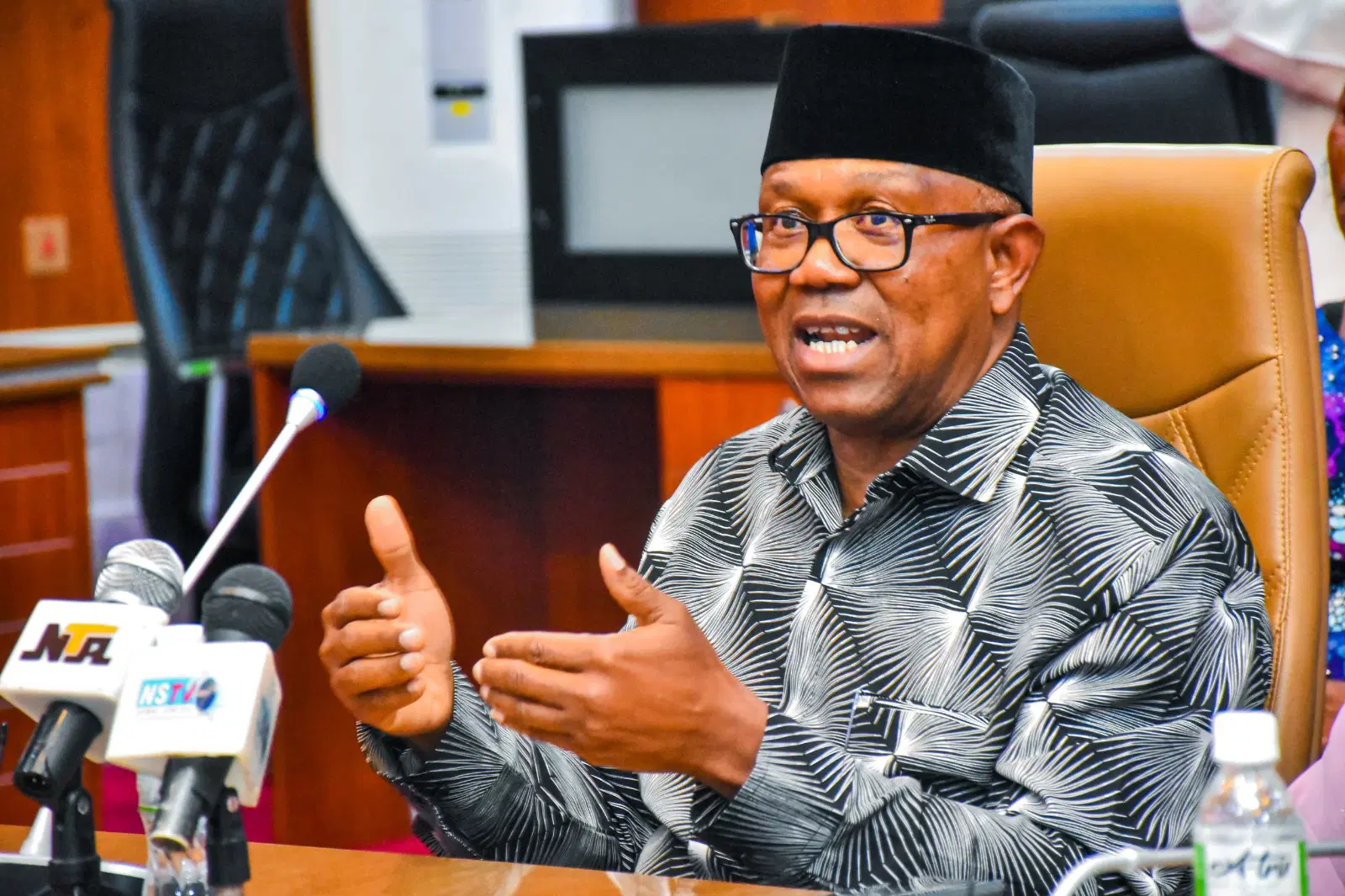
Presidency: The Peter Obi question, the choice Nigeria must make!


By Sunny Igboanugo
To boot, if Obi tells you that if any agreement binds him to quitting office after just one term he would keep to that pact, be sure that he would recant. Why? Peter Obi is neither your everyday politician to whom words are meant to be played with. Not only are his words his bond, making him wear integrity like a second skin.

Let me explain. If there is any sin Peter Obi ever committed against me and many others in Anambra, it was his decision to implant the idea of power sharing through zoning in Anambra State.
Unlike many other states where the division along zonal lines is so sharp, strong and pungent, Anambra’s case was different. If it ever existed, it was ensconced in the bellies of only a few people, most of them politicians. The ordinary Anambra man paid scant regard otherwise.
Samplers: Nnamdi Azikiwe was from Onitsha, in today’s Anambra North. But nobody ever noticed that fact. The man from Anambra South or Central saw him from the same prism as those from his senatorial zone. Zik was Zik – a public property – owned by the people – in fact owned by the entire Igbo, if not Nigeria.
Ojukwu was never put in the straightjacket of such sub-zonal structure. Yes, he was from Nnewi. But to many people from Anambra, Nnewi could have been any other town including theirs. The Ikemba was loved and sometimes hated, not because he came from Anambra South, but because of who he was – simpliciter!
It was the same with Chuba Okadigbo, Mbazuluike Amaechi, Chukwuemeka Ezeife and other great sons and daughters of the state. Anambra was simply Anambra. They collectively owned their icons together, celebrated them or damned them together, not because of where they came from, but who they were and what they represented.
Even though created by law and adhered to in terms of other elections, it was never a major issue of division in the state. Every governor of the state was chosen on prevailing sentiments of the time and not on zonal considerations.
Political pressure must have imbued Obi to bow to the new sentiment of power sharing along zonal lines, an intrusion that upset the applecart and unsettled that monolithic Anambra political structure.
Obi was said to have insisted on that prior to leaving office. The outcome of that focus on power shift led to the choice of Willie Obiano from Anambra North as his successor. Today the disaster of that outcome can only be measured by the further mess Charles Chukwuma Soludo, from Anambra South, has been making of his job functions in the state since succeeding Obiano.
I have since learnt that Obi took that path purely to define the space, remove conjectures and introduce a sharp and decisive political atmosphere, where justice, equity and fair-play would subsist and where nobody would either feel cheated or grumble about being left out.
Even at that, a part of me still finds it difficult to forgive him, since I still hug the old order of a monolithic Anambra, even though I have come to terms and learnt how to live with the new reality, over time.
However, it seems by sheer providence that decision some 10 or more years ago, could come handy today. Anyone wondering how would leave office after four years, could be pointed to how as former governor, he insisted on abiding by the same principle of zoning at that time. See?
On Sunday night during a live X Space conversation with his supporters, he had told his audience: “If there is any form of agreement that will restrict me to four years in office, I will comply with the agreement and be ready to leave office on the 28th of May, 2031—not the 29th, but the 28th.”
Now, regardless that this comment, which has gone viral in the media, with the deafening din reverberating everywhere, was not prompted by Obi himself just out of the blues, but a response to a question put to him by one of the participants, it has become a major topic in the polity.
Many naysayers, including the media have either advertently or inadvertently paid more heed to the response than what prompted it. The interpretation seems to be that it was made out some sort of desperation rather than an attempt to mitigate the fears and misconceptions. They simply ignore the context.
The camp of President Bola Tinubu and goons of the All Progressives Congress (APC) have since latched on it, mounted the rostrum to trumpet a counter narrative. You hear words like Obi is now desperate. How could anyone fix Nigeria in four years? Was he able to fix Anambra in eight years? He spent eight years in Anambra with nothing to show for it. How can you trust a politician to leave power after four years, when he has the opportunity of doing eight?
Well, I have just cited one of the examples of Obi’s grip to the idea of equity, justice and fair-play, regardless the cost. Others, he has addressed himself directly or indirectly.
For instance, when people accuse him of desperation, he has a ready and consistent answer – I’m not desperate to be President, I’m desperate to fix Nigeria. What could be more pointed. For those asking how he fixed Anambra, it is also a case of res ipsa loquitur – the facts speak for themselves.
In 2014, Obi was invited mounted the podium before a global audience to speak on how he achieved more than 90 per cent of the provisions of the Millennium Development Goals (MDGs) initiative. He had emerged first position among the 36 governors in the country in the delivery of that mandate.
For emphasis, among about eight key areas the MDGs focused, was eradicating extreme poverty and hunger, one of the major crises facing Nigeria today, especially since Tinubu took over power on May 29, 2023 and decided to plunge the country into untold hardship, with his impulsive, reckless, brainwave policies.
He has also not shied away from prompt and direct response on how to fix Nigeria – first, stop the bleeding and stabilise the patient. Indeed, if in two years, as he promised last Sunday, he was able to end the massive theft of Nigerian crude in the Niger Delta alone, think of what that feat could lead to.
It means ramping up production and ploughing back the revenues therefrom into the national till. Indeed, if the magnitude of stealing is as high as many project, it means more than 100 per cent of the revenue that hitherto went into private pockets would be recovered.
Picture what it means when Nigeria is able to double its current oil revenue by just plugging the holes to the massive pillaging. Think of what it is capable of achieving. A fraction of it might be all that would be required to create the magic Obi has been trumpeting about the North. He has not failed to tell anyone who cares to listen that the new Nigerian wealth and prosperity would come from the North, given the massive arable land in the region.
Imagine just 10 per cent of the land in Niger alone transformed into an agricultural hub, not to talk about the entire North on full scale, producing food and processing raw materials therefrom for local consumption and export. I believe him when he says that these things are not rocket-science, but simple things that only a focused and caring government could achieve.
An Obi that took education from the state of nadir to the number one in the country, where it sat long after he left will be capable of ridding the streets of children and youths recruited as feed-mill for banditry, terrorism and all other manner of crimes. He will be capable of transforming a gigantic illiterate society to massively educated society is the vortex of economic and social development.
In all, a governor, who resisted all temptations and pressures to leave a whopping N75billion in bank accounts for his successor when his colleagues and counterparts were pocketing the same or even far higher amounts, is a man to be trusted with the commonwealth of Nigeria, not only to warehouse it, but apply it in the right places and at the right time.
Such man can be trusted to create and enthrone a tamper-free electoral system that would enable the people elect their leaders freely without official interference. Of course, once Nigerians are able to eradicate the grab, snatch and run with it, electoral model and capable of choosing their leaders in free and fair elections, more than half of their problems would be solved.
A governor who, in today’s Nigeria, where greed and avarice struggle for small space, could turn his eyes away from N75billion sitting in the bank and which he could easily pocket, is not only unique but a man of his words. So, when he tells you that he would do one term, trust him, he will.
Instead of sitting tight and plunging Nigeria into a fresh wave of crises, which could consume him ultimately like former President Goodluck Jonathan, he is more likely after stabilising the country, cleaning the Augean Stables and redirecting the polity, help in enthroning a successor of like mind that would continue where he stopped?
Now, here are other scenarios, which makes the one-term tenure the most attractive. One is for Obi to run with Atiku Abubakar, former Vice President and wait for 2031 to start his own process, meaning that the former VP himself would once again usurp the South.
Would that option work? Can Nigerians afford the pain of waiting? Would Nigerians invest their trust on Atiku using the scale of integrity measurement compared to Obi? Again, would Atiku fix Nigeria and redirect it the way Obi would?
Not a few people see the Atiku-Obi ticket as not only dead on arrival, but a sure way of handing Tinubu a second term on a platter. The question then is, would Nigerians prefer another four years of Tinubu and endure or risk the dangers of the galloping drive to perdition such as Nigeria is witnessing today?
In other words, are they willing to allow Tinubu crash Nigeria finally in the next four years? If they survive that crash, what will remain of you and of Nigeria thereafter? These are the abiding questions. If no, the quick answer lies in the Peter Obi presidency – even if for just four years!
My name is Sunny Igboanugo, I’m The Tiny Voice!








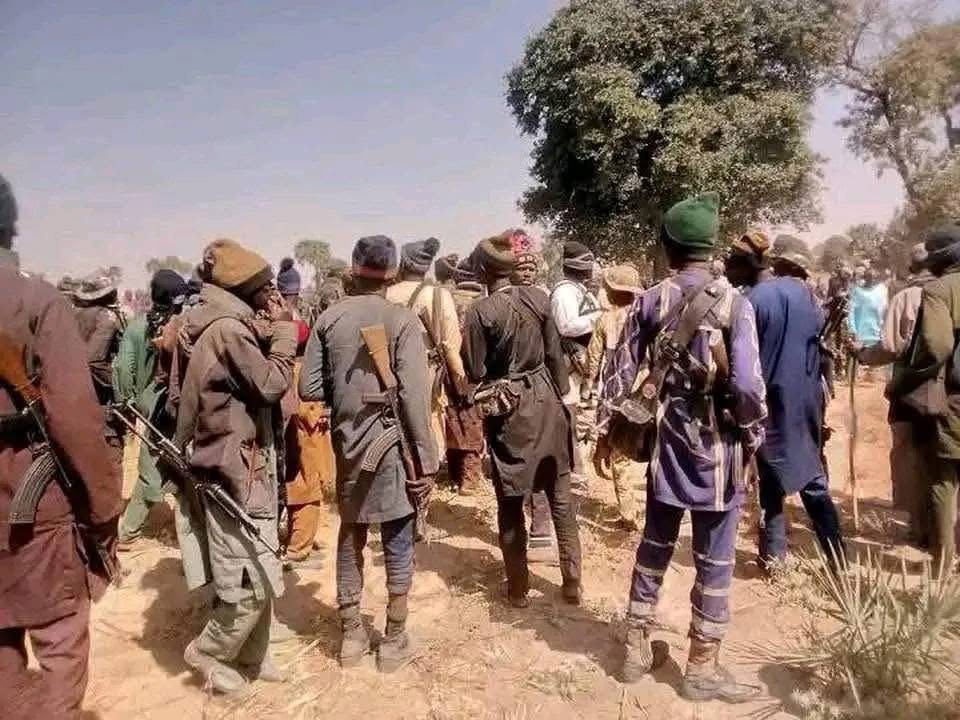
The echoes of the drums rolled out to celebrate the rescue of the 44 teachers and students, kidnapped from some schools in Oyo State, after 56 days in the bush, would surely be disrupted abruptly, with the divergent echoes of a fresh abduction, this time coming from Kogi State.
Reports indicate that the gunmen, struck on Tuesday at the Government Secondary School, Odo-Ekina, in Dekina Local Government Area of the state, abducting four students, the school principal and a National Examinations Council (NECO) ad hoc staff member.
Authorities of the Kogi State Police Command, who immediately unleashed their operatives in hot pursuit of the abductors, said the attack occurred at about 5:25 p.m. while the students were writing their NECO examination.
Saliu Oyiza Afusat, an Assistant Superintendent of Police (ASP) and spokesman of the command, said a combined team of police personnel and other security agencies has launched a search-and-rescue operation following the incident.
Informing that one of the students was actually rescued immediately, she said efforts were ongoing to secure the release of the remaining victims and apprehend the attackers, adding that Naziru Bello Kankarofi, the state Commissioner of Police, alongside the Brigade Commander and the State Security Adviser to the Governor, Commodore Jerry Omodara (Rtd), were already on the way to the scene for an on-the-spot assessment.

Oil prices are expected to go down now with the announcement of Donald Trump, US President that he will no longer impose a 20 percent “safe passage” fee on ships passing through the Strait of Hormuz.
The POTUS, hinged his reversal of the decision on the intervention from some Gulf countries, who pleaded with him not to toe the line due to the massive economic impact the decision would make on the region.
Indeed, oil prices had shot up immediately Trump announced the new levy on Monday while declaring the US ‘the guardians of the Hormuz strait,’ a measure which he said was to pay for the cost of guarding the volatile area in order keep supply of oil flowing.
Reports said that Gulf allies of the US worked frantically to get Trump on the phone in time to talk him out of the idea altogether, while a flurry of appeals came from Saudi Arabia, the United Arab Emirates, Bahrain and Qatar.
In response, the POTUS, posting on his Truth Social platform, wrote: “Based on highly productive conversations with Middle East leadership, I have decided to replace the 20% United States Reimbursement Fee with Trade and Investment Deals that the various Gulf States will be making into the United States.”
Trump, who said the investments would be “MASSIVE but, at the same time, extraordinarily good for them, and their future,” added that the deals would see factories, plants, and equipment pour into the US at “Historic levels.”
The Gulf nations have committed to invest trillions of dollars in the US, though it remains unclear how much of that they will actually spend over the next several years.
Meanwhile, the US continues to bomb Iran in what appears to be a resumption of active conflict between both countries, despite an ongoing roadmap to end the conflict.
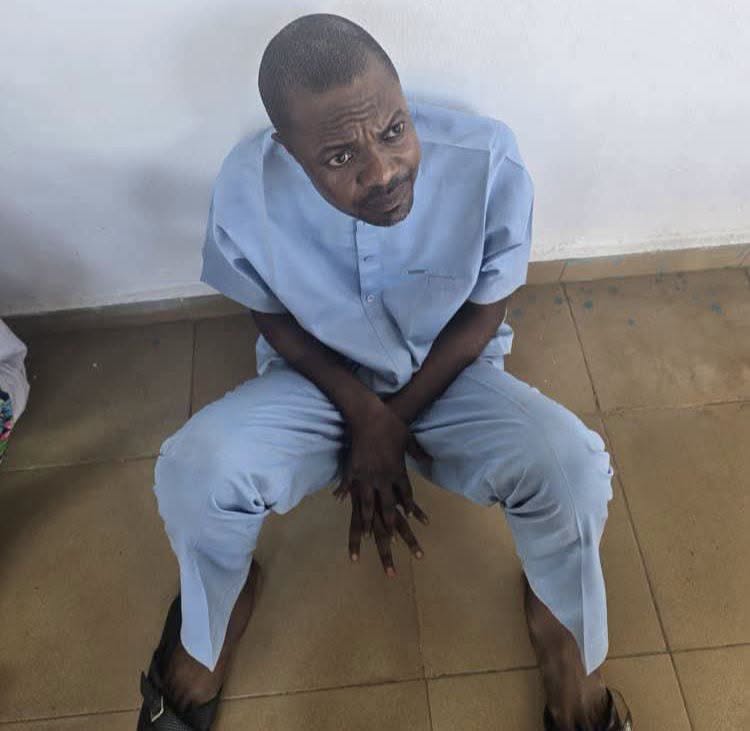
Reports say operatives of the Osun State Police Command, and those of the Department of State Services (DSS) had tracking the trail of Adeniyi Adeyemi, controversial Director General of the Presidential Foreign Intervention Promotion Council (PFIPC), for weeks, before he was eventually pulled out of his hole on Tuesday.
However, the duo, were said to have pulled back after failing to track him through his mobile phones, which he had reportedly switched off for about two days, making it difficult to locate him, leaving the stage for the members of the Police Intelligence Response Team (PI-RT) led by Moses Lohor, a Chief Superintendent of Police (CSP).
Lohor, said to have previously served as the Commander of the Anti-Kidnapping Squad of Osun State, and reported to have been involved in high-profile security operations and controversies, after taken over fielded his men to pick up signals from their well-oiled signal networks.
Regarded by many Osun residents as one of the key security officers who contributed significantly to the peace and stability enjoyed in Ilesa and other parts of the state during his tenure, he was said to have relied on his contacts before his transfer out of the state, said to have raised concerns from the public about the security situation he would be leaving behind.
His exit from the state was said to be hinged on an incident in 2024, in which he allegedly shot one Iyanda Alowonle, then Chairman of Osun State Motor Transport System, in the stomach at the police station in the state prompting an order for his arrest by then Inspector General of Police (IGP).
His effort was said to have paid off when he successfully tracked down the controversial PFIPC, boss, who was seen on Tuesday evening, in a shot video on social media undergoing interrogation, and eventually handed him over to Ibrahim Gotan, Commissioner of Police in the state.
The PUNCH quoted one of the sources as saying: “The arrest (of Adeyemi) took place on Tuesday morning by the IRT squad, who immediately moved him to Abuja. After he was arrested, he was taken to Ibadan and from there to Abuja.”



-

 News5 days ago
BREAKING: Mystery death! *Female student dies a day after arriving Umahi’s home!
-

 News5 days ago
Don’t jump to conclusion! *Umahi speaks on mysterious death of female students!
-
 News3 weeks ago
BREAKING: Court sentences Nigerien, two others to death over terrorism
-
 News2 weeks ago
BREAKING: EX-SSG mowed down by gunmen! *He resisted being kidnapped – driver
-
 News4 weeks ago
Two hours after Igboho’s ‘red-eyes’ to ‘Fulani’ leaders, gunmen free kidnap victims!
-
 News3 weeks ago
Abductors of Oyo teachers panicking, freedom coming for victims soon!
-
 News19 hours ago
BREAKING: Terrorists strikes another school! *Kidnap principal, students, NECO official!
-
 News3 weeks ago
Chicagogate: Nigerians return to court! *Move to stop Tinubu from 2027 polls