
News
Explain N24billion Government House CCTV project, NASS queries Ibas

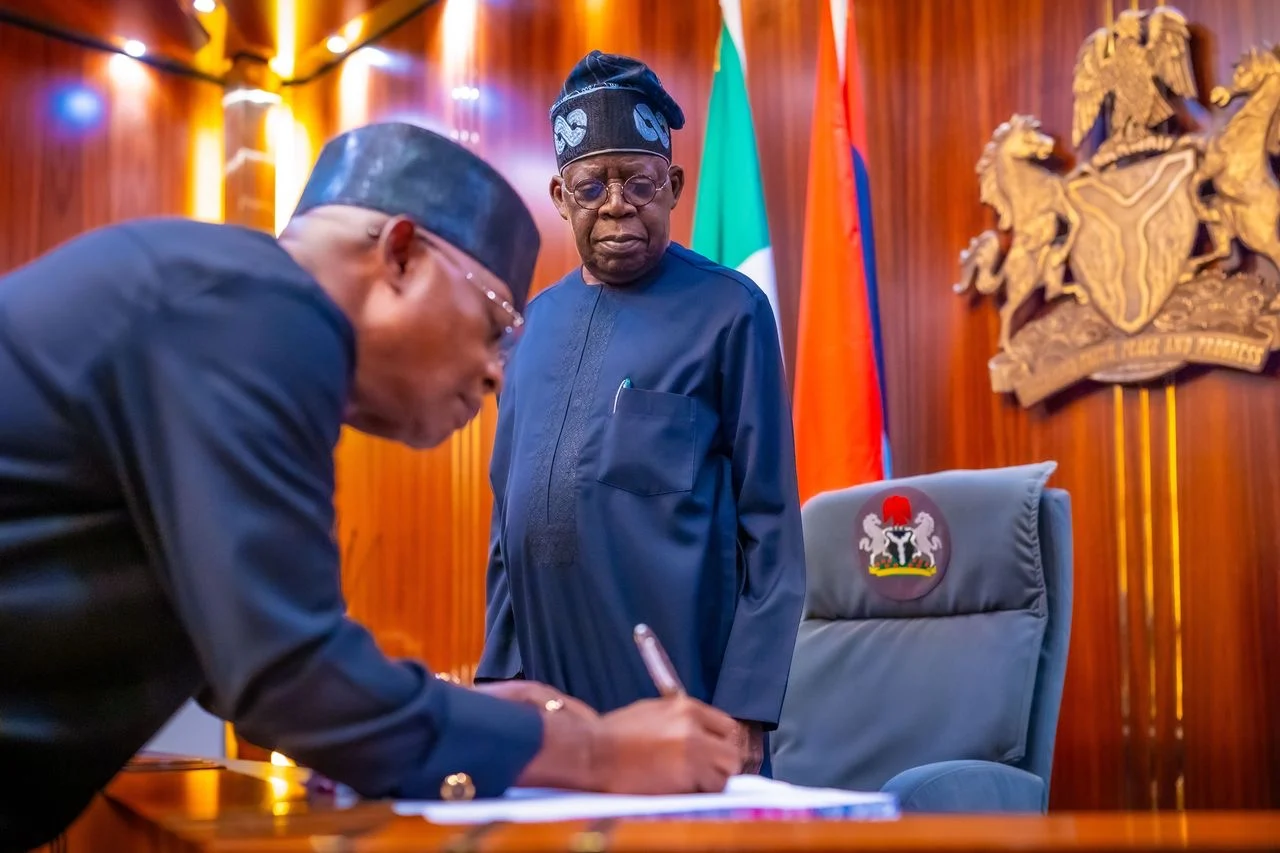
How could the installation of Close Circuit Television in the Government House of Rivers State gulp a whopping N24billion and what purpose would such a project serve at a moment when the people have joined other Nigerians in experiencing the deep pains of a struggling economy?
These were the question Ibok Ibas, the Sole Administrator of Rivers State, currently in charge of the state since it went under emergency rule on March 18, 2025 would have to provide answers to the members of the House of Representatives, currently in charge of the state’s legislative functions.

The federal lawmakers, currently picking holes in the expenditure proposals of the N1.48 trillion 2025 budget, sent to them by President Bola Tinubu, last month, spotted this particular project as one that required urgent answer for them to approve the document, which has already passed at the Senate.
The budget breakdown, N120.8 billion, which contained a debt servicing portfolio of N287.38 billion for recurrent (non-debt) expenditure, would see the state spending N1.077 trillion for capital projects, one of them being the provision of N24billion for installation of CCTV cameras.
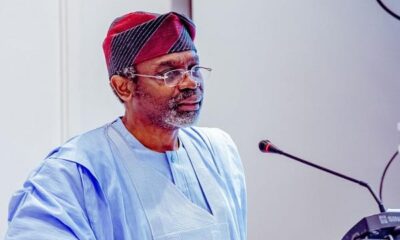
Julius Ihonvbere, Majority Leader of the House and Chairman of the ad hoc committee on Rivers, who said the committee had reviewed the proposal and flagged multiple concerns, particularly queried CCTV project, the N30 billion allocated for gunboats, and N23 billion for contingency allocations, demanding a breakdown and justification for the allocations.
Also stressing that the budget was presented without an accompanying medium-term expenditure framework (MTEF) — which is a legal requirement, the former university teacher, also questioned why the state was funding federal projects without any agreement with the Federal Government for reimbursement.
Demanding for details of transfers to local governments, including how funds meant for the third tier are being managed, Ihonvbere, representing Owan West/East Federal Constituency, said: “We need additional details for those allocations. We request details of the state’s Internally Generated Revenue (IGR) in the last three months.
“That will enable us to know your financial flows so that we can weigh it against the deficit in the budget in terms of financing it and carrying out some of the projects. We also need details of transfers to local governments — essentially, how local government funds that came into the state are being managed at the moment.
“Those documents we have requested must reach us within 48 hours; rest assured that we are all on the same side in terms of getting Rivers working again. We want to ensure that we promote a lot of accountability and ensure that the interests of the people themselves, no matter how remote they are from the state capital, are protected.”
But Andrew Nweke, Senior Special Assistant on Strategy and Policy, in explanation, told the lawmakers that most of the projects contained in the budgetary items in question were inherited, adding that the allocations reflected the priorities of Rivers people, based on a needs assessment conducted by implementing agencies.
Regarding the CCTV project, Nweke, who represented Ibas at the budget defence sitting, explained that the allocation was for modern surveillance infrastructure at the government house, adding that the gunboats were meant to aid security agencies patrolling Rivers’ waterways.
Regarding the contingency funds, which was also found to be contentious by the lawmakers, was meant to address flooding, insecurity, and other emergencies, promising to make all documents available to back up the answers to the query the lawmakers raised.




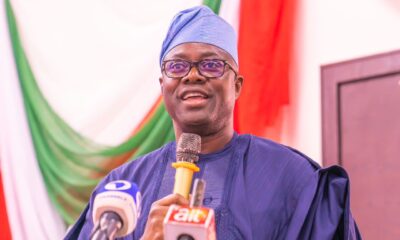



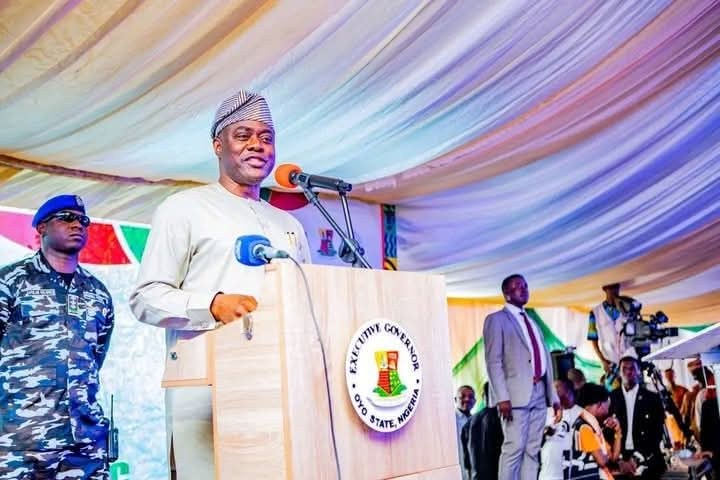
Seyi Makinde of Oyo State, Governor of Oyo State, on Thursday, finally threw his hats into the ring by declaring his intention to run for president in 2027, with a message – history beckons.
The governor, whose ambition has been a matter of speculations for months now and who had teamed up with forces angling to force President Bola Tinubu, out of power, told a teeming crowd in Ibadan on Thursday that time had come to reset Nigeria.
At a mega-rally to announce the alliance between the People’s Democratic Party (PDP), and the Allied Peoples’ Movement, (APM), Makinde, expressed worry over the dwindling fortunes of Nigerians, vowing to engage Nigerians to end the drift.
Hear him: “Without a multi-party system, there is no democracy. Where is our multi-party? Where do we go from here? We have been pushed to the wall.
“They calculated and self-opposition cannot unite but I am here to say that the opposition is the everyday Nigerian. This is the time for all us to ensure Nigeria works for us. This is the time to confront it fears. It is time to engage as citizens and not spectators.
“For the opposition political parties, this is the time to unite and work in unity and give our nation the much reset it needs. The time to reset Nigeria is now. Ibadan is the city of warriors. The first grand alliance is formed. The PDP and APM is formed. This handshake will allow us to field candidates from presidency to state Assembly. And so, I declare my candidacy for office of the president of Nigeria.”
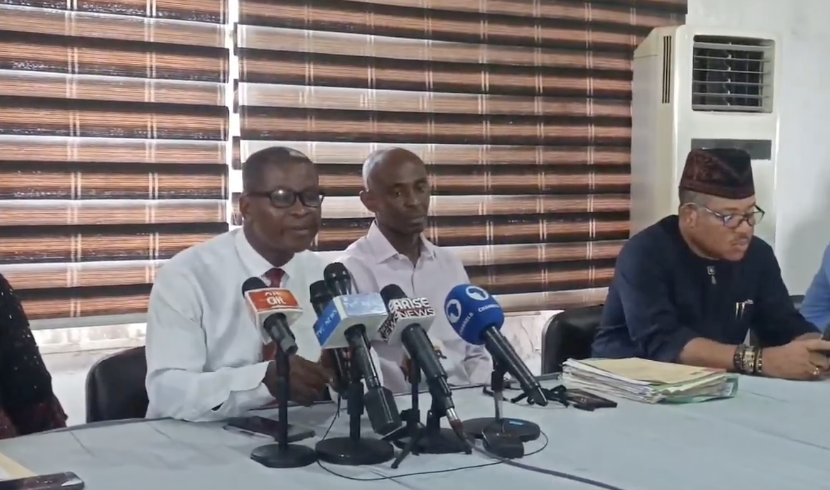
Eyo Ekpe, a professor of cardiothoracic surgery at the University of Uyo Teaching Hospital (UUTH), on Wednesday, gave a detailed account on how operatives of the Economic and Financial Crimes Commission (EFCC) manhandled him on Monday.
He told reporters that he was at sea on why he should fall victim to the assault against his person and eventually arrested given that was not right person directly involved in the information the agency sought.
Some operatives of the EFCC who invaded the hospital, had whisked Ekpe away after firing teargas to scare away the workers, patients and visitors to the hospital, following what appeared like a fracas the ensued over what it claimed was a routine duty in the facility.
Ekpe, Deputy Chairman of the hospital’s Medical Advisory Committee (MAC), described how an operative had first entered his office to make inquiries on why the hospital was yet to give a response to an EFCC inquiry over a medical report linked to a suspect facing trial.
He detailed how he briefed the operative that the said response was being prepared and even went ahead to show him the draft of a letter in that regard, which needed to go through the gamut of official endorsement before being released.
Hear him: “The head of that internal medicine department looked at the report and also discovered that the name of the doctor that signed the report is not a member of staff of that department.
“I had prepared prepared a response to the EFCC on Monday, May 11, 2026, based on the findings. When the EFCC operative visited my office the next morning to collect the document, I told him that the response was ready in draft. I even showed him the draft, but told him that the document still needed approval from the Chief Medical Director (CMD) of the hospital before it could be officially signed and released.
“He pretended to have accepted that. He left, but later later returned with another armed operative and informed me that I was under arrest. I asked him why. I was not the one that issued the medical report. My name is not on the medical report. The report was not issued from my unit.
“But he said I would get the answer when I get to their office. I then asked him to at least wait for my staff member who I sent on an errand before joining them. But they refused.
“They started pushing me. They dragged me out of the office. Then I began to cry while they were dragging me. They had warned me not to speak. They had taken my phone. My cry as they were dragging me, attracted the workers to the scene, who enquired what was going on, but because they ordered me not to speak, I couldn’t say anything. They had their guns.
The members of staff of the hospital initially blocked them from taking me away. They then made a call. After that I saw many masked and armed men came violently, broke the protector, threatening the people that were around and people ran away.
“They picked some staff that were still by me. they dragged me and other staff, five of us into their van downstairs. By that time they discovered that the gate of the hospital were locked. So, they drove towards the gate and packed and the commotion continued. We were inside the van.
“I was so emotionally and psychologically traumatised that I couldn’t even look out of the vehicle to see what was happening outside. But I know that teargas and live bullets were shot. That’s all I can say for now.”

Joyce Abdulmalik, of the Federal High Court, Abuja, heard on Wednesday, how Zenith Bank raised alarm over the huge transaction in one of its branches by Abubakar Malami, former Attorney General of the Federation and Minister of Justice (AGF-MoJ).
The bank said it immediately filed a Suspicious Transaction Report (STR) in respect to the transactions, during its appearance in the ongoing trial of Malami, his wife, and son over allegation of massive looting of funds belonging to the Federal Government during his tenure.
Mashelia Bata, a compliance officer with the bank, who appeared as witness in the case, where Malami, et al, are facing a 16-count charge bordering on alleged money laundering to the tune of N8.7 billion, to which they pleaded not guilty, gave the testimony while being questioned on the bank’s roles in the matter.
Details of the testimony conveyed by the Economic and Financial Crimes Commission (EFCC), stated how the compliance officer who was cross-examined by Adebayo Adedeji, lawyer to the defendants admitted that the deposits in the account statements complied with the guidelines of the Central Bank of Nigeria (CBN).
Arguments had stretched when Adedeji, opposed Jibrin Okutepa (SAN), lawyer to the EFCC, who had asked the witness to explain the meaning of a suspicious transaction report, stressing that there was no ambiguity in the term.
However, Okutepa, in response, maintained that section 215(3) of the Evidence Act did not preclude him from re-examining the witness while urging the court to allow the question for proper explanation.
After Abdulmalik, agreed and overruled Adedeji, the witness told the court that banks were required to alert the Nigerian Financial Intelligence Unit (NFIU) about fund deposits coming in a repetitive pattern, adding: “Any deposition of funds seen in a pattern or repetitive, you must escalate it to the NFIU.”



-

 Columns4 weeks ago
Abike Dabiri: Did Obi raise a monster or you’re drunk on Tinubu’s poisoned chalice?
-
 News3 weeks ago
Jandor: Tinubu didn’t endorses Hamzat *I’ve briefed President on my ambition
-
 Columns4 weeks ago
Be the hero that saved Nigeria! Open letter to Alhaji Atiku Abubakar
-

 News2 weeks ago
BREAKING: Makinde, Turaki, lose! *S’Court affirms Wike’s PDP leadership
-

 Columns4 weeks ago
Now VDM has become Sowore’s nemesis, does Peter Obi need anther advocate?
-

 Features2 weeks ago
Jim Nwobodo: The Sun shines, thrills, at ‘The Vanguard Awards’
-
 News1 day ago
Tinubu to African leaders: Copy Nigeria, produce your way out of poverty
-
 News3 weeks ago
ADC: Fight, scatter them! *Presidency goads Kogi lawmaker on Mark’s leadership