
News
The Tax Reform Bills and Akpabio’s brinkmanship






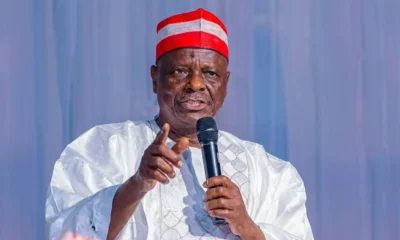

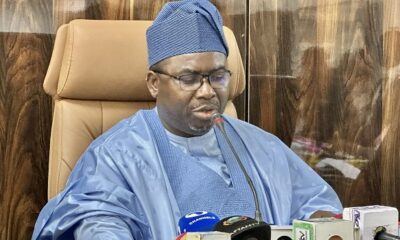




Taiwo Oyedele, Minister of Finance, General Chris Musa, Minister of Defence, Nuhu Ribadu, National Security Adviser (NSA), Adeola Ajayi, Director General, Department of State Services (DSS), Tunji Disu, Inspector General of Police (IGP), art to appear before members of the House of Representatives to answer question on the state of insecurity in the country.
Also to appear are the Service Chiefs – General Olufemi Olatubosun Oluyede, Chief of Defence Staff (CDS), Waidi Shaibu, Chief of Army Staff (COAS), Idi Abbas, Chief of Naval Staff (CNS) and Sunday Kelvin Aneke, Chief of Air Staff (CAS).

While the Minister of Finance is expected to brief the House on the financial releases to security agencies to fight insecurity, the others are expected to brief the lawmakers on efforts to curb rising insecurity across the country.
The House called on the President to urgently deploy a more aggressive, comprehensive, and sustained security strategy aimed at flushing out bandits from their strongholds, securing vulnerable schools and places of worship, and ensuring the immediate and unconditional release of all persons currently held in captivity.
In their resolutions following two separate motions of urgent public importance sponsored by Abubakar Gumi (APC, Zamfara), and Ibe Osonwa (LP, Abia) the House also spoke of the need to revisit the cashless policy of government, which discourages the movement of large sums of money, adding that it is often difficult to pay ransom money through bank transfers.
The House also asked the President to immediately order the recruitment of more forest guards in all states of the federation in line with the security challenges in the various states.
Gumi, who lamented that insecurity in Zamfara State and the entire North West had escalated into a complex humanitarian crisis, driven by armed banditry, kidnappings, and the infiltration of transnational jihadist groups, told his colleagues that between the first and sixth of June, 2026, rampaging bandits riding on about 250 motorcycles with three riders on each invaded Gumi/Bukkuyum federal constituency of Zamfara state and some parts of Sokoto state, killing 93 people.
He also said that on the night of June 2, 2026, into the early hours of June 3, 2026, seven students of the Federal Polytechnic, Kaura Namoda, Zamfara State, were abducted by bandits at their off-campus students’ hostel. Earlier, two senior lecturers of the same Polytechnic (Federal Polytechnic, Kaura Namoda) were kidnapped and had been in captivity for more than two months, despite ransom payments for their release.
He also spoke of the violent attack by bandits on Zurmi Local Government Area of Zamfara State where four people were killed and several travellers abducted, while in Talata Marafa Local Government Area, a Councillor and a Director were abducted while travelling from Jangebe to the local government headquarters over Hajj activities for intending pilgrims from Jangebe.
He said the bandits killed both of them after refusing to collect any ransom, while also raising alarm at the escalation of bandit attacks in other North West States of Sokoto, Katsina, Kaduna, Kano, Kebbi and Jigawa.
He said further that “on 3 1st May, 2026, 17 villagers were killed when bandits in their hundreds and riding on motorcycles invaded Dangulbi community in Tureta Local Government Area of Sokoto State. It was also reported that more than 15 communities in Tureta and Sabon Birni Local Government Areas of Sokoto State have been deserted due to constant bandit attacks.
“In Katsina State, a former Director of Defence Information of the Nigerian Army, Major General Rabe Abubakar Batsari (rtd), and his wife were abducted when their vehicle was ambushed along the Marabar Musawa-Kafinsoli road in Matazu Local Government Area on 30 May, 2026.
He also expressed concern about the continuous, unchallenged movement of bandits between the towns, states and their hideouts, severely undermining the credibility of the nation’s security, while expressing conviction that if the recurring trend of insecurity and kidnapping in Zamfara State and the entire North West is not checked, it will destroy lives and ruin the socio/economic fortunes of the entire North West Region.
Stanley Olajide (APM, Oyo), also bewailing the situation, called for investment in satellite imaging to monitor activities of terrorists, while Olumide Osoba said state governments should invest in CCTV.
Babajimi Benson spoke of the need to place the establishment of state police on the front burner of legislative activities, adding that the parliament should set aside a day to hold a special session to pass the bill on the establishment of state police.
Adopting another motion on insecurity by Ibe Okwara Osonwa (LP, Abia), the House called for immediate and decisive executive action to address the escalating wave of insecurity across Nigeria, particularly the surge in banditry, the daily abduction of schoolchildren, and repeated attacks on schools and places of worship.
In considering the motion, the House anchored its concerns on Section 14(2)(b) of the 1999 Constitution (as amended), which provides that the security and welfare of the people shall be the primary purpose of government.
The House expressed grief and alarm over what they described as the unrelenting escalation of banditry, mass kidnappings, and terror attacks across various parts of the country, warning that the development has left Nigerians in a continuous state of fear, mourning, and uncertainty.
The House noted that the persistent abduction of schoolchildren has gone beyond isolated incidents, stressing that it has severely disrupted the nation’s educational system, forced thousands of children out of school, worsened the out-of-school children crisis, and inflicted lasting trauma on affected families and communities.
It further observed with concern that schools and places of worship, once regarded as safe havens for learning, spiritual reflection, and communal peace, have increasingly become prime targets for armed criminal groups.
Lawmakers also highlighted the disturbing trend of attacks on worshippers, noting that religious congregants are now regularly abducted or killed during services, a situation they said constitutes a serious infringement on citizens’ fundamental rights to freedom of thought, conscience, and religion.
The House expressed worry that ordinary Nigerians are increasingly feeling abandoned by the state as insecurity continues to cripple economic and social life. It noted that farming communities have been deserted due to terror threats, businesses are collapsing, and families are being pushed into extreme poverty as they struggle to meet ransom demands for kidnapped relatives.
It also observed that despite trillions of naira allocated to the defence and security sectors in successive national budgets, the country’s security architecture appears overwhelmed, reactive, and incapable of effectively countering the sophistication of criminal networks operating across different regions.
The House further raised concern over what they described as the absence of a decisive and coordinated military response, warning that the situation has created the impression that the state may be losing control over parts of its territory.
The House also warned that should the administration fail or prove unwilling to decisively halt the worsening insecurity within a clearly defined timeframe, the Service Chiefs should honourably resign their positions, having failed in their constitutional responsibility to guarantee the safety and welfare of Nigerians.
It further mandated its Committees on Defence, National Security and Intelligence, and the Army to intensify oversight of the implementation of the resolution and report back within two weeks for further legislative action.
The House reaffirmed that the protection of lives and property remains the fundamental duty of government under the Constitution, urging urgent and sustained action to stem the tide of insecurity across the country.

Now that push has come to shove, with hundreds of its citizens being evacuated due to continued xenophobic attacks, Nigeria may be considering retaliatory measures against South Africa over the hostilities, which have intensified in recent months.
Nigerians and other black African migrants in the country, have come under serious attacks, with their businesses being looted by South Africans demonstrating against what the refer as illegal immigrants populating their country.
But Bianca Ojukwu, Minister of Foreign Affairs while expressing the displeasure of Abuja over the development stressed that the actions being directed at black African migrants were particularly troubling given the role they played in supporting South Africa’s struggle against apartheid.
Giving example with the efforts of Nigeria in particular, she said: “Nigeria is not happy because Nigeria has sacrificed much for the South African struggle for independence. Nigeria sacrificed quite a lot, committed funds, committed resources to aid South Africa.
“In schools, seats were reserved for South African students. My own generation, we carried placards. We demonstrated in front of South African assets. Sometimes, we even got arrested for doing this. And Nigeria is a serious frontline state, and Nigerians are not happy about how they have treated us.
“They (South Africans) are not asking other migrants to leave. They’re only asking black migrants to leave. Well, that (retaliation) is a situation that we are considering. This is up to our legislature. This is a decision that has to be taken at the highest level of government, but it’s not off the table.”
Blaming the South African authorities for failing to act, she lamented how the police in particular had always looked the other way while Nigerians were being attacked saying this did not speak well of the country’s attitude to the crisis.
“So, our citizens are imperiled. They are in distress. So, they cannot be said to be illegal migrants. People who are doing legitimate business have their shops looted, they have their shops set on fire,” she added.
The remarks come amid mounting concern over anti-migrant sentiment in South Africa, where Nigerians and other African nationals have increasingly become targets of protests and campaigns demanding the removal of undocumented migrants.
There have been growing concerns over the safety of Nigerians in South Africa following renewed anti-immigrant protests and hostility directed at foreign nationals.
The demonstrations, which have taken place in parts of Pretoria and Johannesburg, have largely focused on undocumented migrants, with protesters accusing them of contributing to unemployment, crime and pressure on public services.
Babachir Lawal, former Secretary to the Government of the Federation (SGF) on Monday doubled down on his attack on Atiku Abubakar, whom he a fortnight ago, accused of having sympathy for terrorist rampaging across Nigeria, especially those of Fulani extraction.
The former SGF had recently accused the VP of not condemning the attacks carried out by the group, including kidnap of citizens in various parts of the country and in some cases, actually killing their victims, apart from other acts of outright carnage against communities.
But Atiku, had in a strong rebuttal, dismissed the allegation, stating that the beef with him stemmed from losing out in the last presidential primaries of the African Democratic Congress (ADC), where a candidate he had promised the party’s ticket for financial gains, lost the bid.
But unpersuaded, the former SGF claimed that the attempt by the former VP, who is now the candidate of the party, having picked the ticket at the end of the exercise, to extricate himself of complicity fell flat on its face because the only time he spoke against the series of attacks, was to direct his condemnation against the government rather than the perpetrators,
A guest of Politics Today, a public affairs programme on Channels Television, he argued that making general comments condemning insecurity did not equate to specificity in calling out the actual criminals committing the carnage.
Lawal, a prominent member who announced his decision to quit the party a fortnight ago, after accusing the former VP of corrupting the process, said he and other party members had expected a keen contest among the leading aspirants.
Hear him: “Someone like Rotimi Amaechi was very confident that if we go to primaries he would win. Everybody around him was extremely confident that Amaechi would win. And for me, who has been in this process, I was watching the indices to see where his confidence was coming from. Among the three candidates, he was the one moving around, working hard to see that he got the ticket
“Then, we have Atiku Abubakar. That time we used to wonder what is he going to do to win the primary because he was practically not doing much. He was not talking, he was not campaigning, he wasn’t going out. We were wondering how was he going to do it? So, we were watching how it was going to be done. But he ended up manipulating the exercise in his favour.”
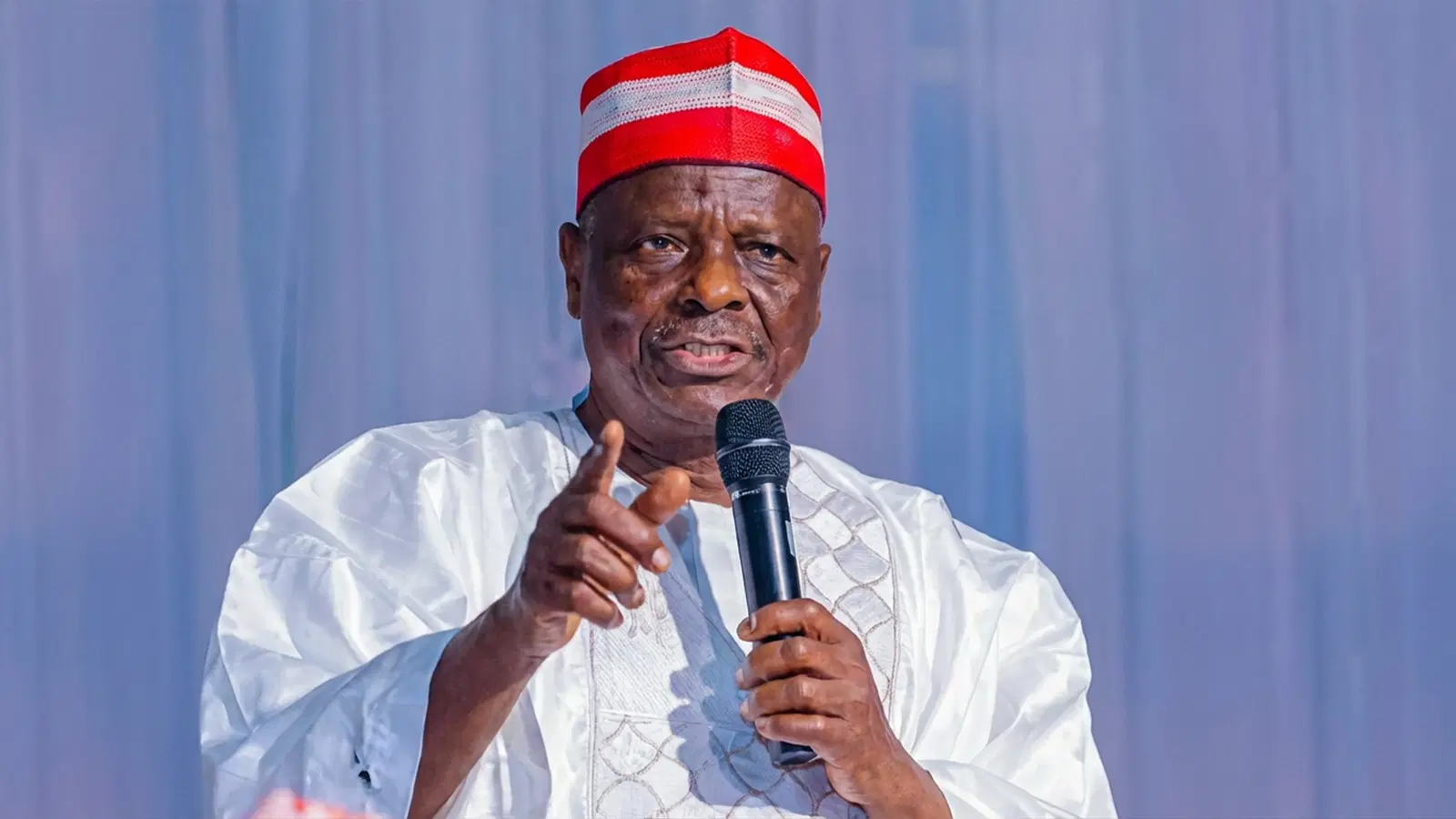
“Neither the Kwankwasiyya Movement, not its leader, is complaining,” were the words with which the camp of Rabiu Musa Kwankwaso dismissed reports that the Vice Presidential candidate of the Nigerian Democratic Congress (NDC), has served notes to the party leadership of his planned exit.
Reports in the media had indicated that that the former Governor of Kano State and former Minister of Defence, had threatened to leave the party over disputes arising from the party’s recent primaries.
The reports specifically claim that the threat came after Seriake Dickson, the party’s national leader attempted to substitute some of the candidates submitted to the party leadership, in a power-sharing arrangement, which Kwankwaso was said to have found offensive.
But Habibu Sale Mohammed, spokesman of the Kwankwasiya Movement, the political family of the former governor, dismissed the report, explaining that the party primaries were conducted on May 29 in line with the Electoral Act and INEC guidelines, and that the winners were affirmed the same day.
Stressing that the NDC stakeholders and members had earlier agreed on a consensus model where necessary, adopted candidates accordingly, and submitted the list without internal squabbles, he stated that Kwankwaso had not communicated any grievance with the party to the movement.



-
 News4 weeks ago
Tinubu to African leaders: Copy Nigeria, produce your way out of poverty
-
 News3 weeks ago
BREAKING: US-Nigeria troops slaughter 175 ISWAP fighters
-
 Columns3 weeks ago
Dear General Gowon: That apology you’re running from is your nemesis
-
 News7 days ago
BREAKING: Terrorists strike Ibadan again! Abduct ex-Minister’s sister, twin children
-
 News4 weeks ago
Why we pegged presidential ticket forms at N60million – NDC
-

 News4 weeks ago
Gowon on civil war: My book is to put records straight, remove falsehood
-

 News3 weeks ago
BREAKING: Wait over! Arsenal are CHAMPIONS! Win EPL after 22 years hiatus
-
 Columns2 weeks ago
See Tinubu’s terrible damage on Option A4 and its precious memories