

News
We’re spending N1.2trillion on electricity tariff – FG


Rather than the touted 65 per cent increase in electricity tariff across the country, the Federal Government, has declared its readiness to continue assisting Nigerians get cheap electricity.
Olu Verheijen, Special Adviser to President Bola Tinubu on Energy, who conveyed this on Monday, explained that already a whopping N200billion was being invested as subsidy for electricity monthly, totalling N1.2trillion yearly.

Explaining that the government would continue to explore ways to improve supply and ensure the subsidies were delivered to the most vulnerable households, she dismissed insinuations in some quarters that the government was considering a 65 per cent increase in electricity tariffs.
Dwelling on the attitude of the government in providing cheap power, Verheijen, stated in a statement, agaist the loud outcry over the said new proposal for tariff increase, that even with the increase in tariffs for Band A electricity consumers last year, the government still provided about 35 per cent electricity subsidy.
She said: “It is a misrepresentation of what I actually said in a recent press interview. I highlighted the fact that, following the increase in Band A tariffs in 2024, current tariffs now cover approximately 65 per cent of the actual cost of supplying electricity, with the Federal Government continuing to subsidise the difference.”
Bemoaning a situation where she claimed that much of the N200 billion subsidy “benefits the wealthiest 25 per cent of Nigerians rather than those who truly need assistance,” she said the government was implementing a multi-faceted programme to ensure effective pricing and metering of electricity, reduce general cost of electricity supply and ensure that the most vulnerable segment of the society have access to electricity supply.
“While the government is committed to ensuring fairer pricing over the long term, the immediate focus is on taking decisive actions to deliver more electricity to Nigerians, ensure fewer outages, and guarantee the protection of the poorest and most vulnerable Nigerians.
“The government fully understands the economic realities facing citizens and is committed to ensuring that reforms in the power sector lead to tangible improvements in people’s daily lives. Every policy is designed with the Nigerian people in mind-eliminating unfair estimated billing, ensuring that subsidies benefit the right people, and creating the conditions for stable, affordable electricity.
“These reforms are laying the foundation for better service delivery, expanded access to electricity for homes and businesses, and unlocking prosperity for all Nigerians. Under the Presidential Metering Initiative (PMI), the government plans to accelerate nationwide rollout of seven million prepaid meters, starting this year.
“The mass rollout of prepaid meters will finally put an end to the practice of estimated billing, giving consumers confidence in what they are paying for and ensuring transparency in electricity charges.
“Metering will also improve revenue collection across the sector and thus attract the investments needed to strengthen Nigeria’s power infrastructure. A new subsidy regime template is underway to ensure that electricity subsidies get more to the most vulnerable in the society.
“To address this, the Federal Government is working towards a targeted subsidy system to ensure that low-income households receive the most support. This approach will make electricity more affordable and accessible for millions of hardworking families.”
She also spoke on settlement of legacy power debt, explaining that it remained a top priority for the government as mounting debts owed to power generation companies had been part of the major roadblocks to improved service in the sector.
She added: “For years, these debts have prevented investments in new infrastructure and hampered efforts to improve electricity supply. By clearing these outstanding obligations, the government is ensuring that power companies can reinvest in better service delivery, stronger infrastructure, and a more stable electricity supply for all Nigerians.
“Through a range of fiscal incentives, including the Value Added Tax (VAT) and Customs Duty waivers, the government is working to lower the cost of alternative power sources such as Compressed Natural Gas (CNG) and Liquefied Petroleum Gas (LPG).
“These priorities reflect the President Bola Ahmed Tinubu administration’s recognition of the economic realities facing Nigerians and its commitment to ensuring that power sector reforms deliver tangible benefits to citizens.”





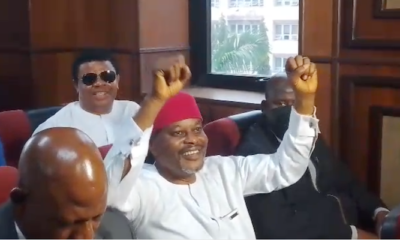



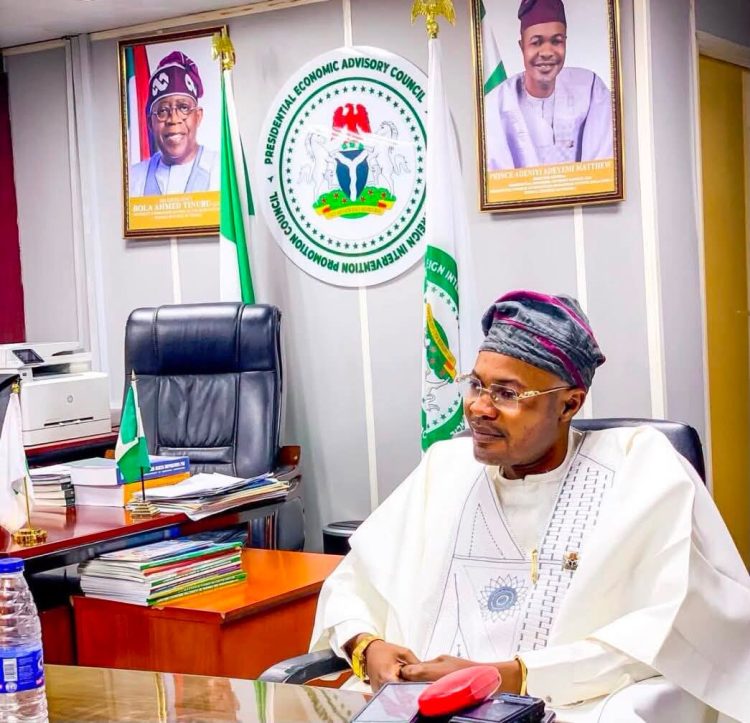
Nothing outside external intervention free from direct and indirect government influences, will assuage the feelings of Adeniyi Adeyemi, controversial Director General of the Presidential Foreign Intervention Promotion Council (PFIPC), in his current ordeal with the Federal Government
He wants President Bola Tinubu to constitute an independent, multi-stakeholder investigative panel to probe the controversy surrounding the council and the alleged N1.3 billion budget allocation.
Adeyemi, who made the request through an open letter to the President is emphatic that the current efforts by the Independent Corrupt Practices and Other Related Offences Commission (ICPC) to investigate the PFIPC scandal, would yield little positive result.
Maintaining that he did not believe the agency would come up with the true picture of what transpired, in the saga, which has seized the national space in the last three weeks, Adeyemi, said impartiality under the current framework of ICPC was almost zero.
In the letter copied to both Nigerian and global institutions, he wrote: “I commend your recent directive tasking the Independent Corrupt Practices and Other Related Offences Commission (ICPC) with investigating the circumstances surrounding the PFIPC Scandal and ₦1.3 billion allocation inserted into the 2026 Appropriation Bill.
“This directive is a vital first step, but the structural realities of this investigation compel me to speak out of a profound desire for absolute transparency.
“Under the current framework, obtaining a truly impartial hearing presents severe structural challenges. The public narrative emanating from official channels remains heavily weighted toward my immediate arrest, effectively overshadowing the gravity of the systemic vulnerabilities and high-level involvement I have brought to light. True accountability cannot be achieved when the agency conducting the investigation answers directly to the branch of government within which the core allegations lie.
“Furthermore, I must state clearly that walking freely into custody under the current arrangement poses an immediate, existential threat to my life. I have received verified, highly reliable intelligence indicating that I am targeted for elimination the moment I surface in an unmonitored environment.
“This is not an unfounded fear. My concerns are deeply validated by the highly alarming events surrounding Mr. Dolapo Babatunde Tanimola, a central intermediary in this matter.
Official reports claim Mr. Tanimola tragically died in a sudden fire incident at Kachi Hotel in Utako, Abuja. Yet, there remains a total absence of independent eyewitness or media verification of any such inferno.
“More disturbingly, under highly unclear circumstances and without the official involvement of any federal capital regulatory agency, the entire Kachi Hotel structure was swiftly invaded by unidentified armed actors and manually demolished down to the rubble days later — effectively erasing a vital physical crime scene and erasing material evidence.
“Following this calculated destruction of a key locus of this investigation, alongside multiple direct attempts on my life and the safety of my family, I am forced to communicate from a secure, undisclosed location.
“If this investigation is to command the absolute trust of the Nigerian public and the international community, it must transcend standard bureaucratic boundaries. Therefore, I respectfully urge Your Excellency to expand the scope of this inquiry by establishing an independent, multi-stakeholder investigative panel.
“To guarantee complete neutrality, this panel should comprise:
- Civil Society Organisations: Specifically Amnesty International, the Socio-Economic Rights and Accountability Project (SERAP) and other transparency Organisations.
- The Nigerian Bar Association (NBA): To guarantee strict adherence to constitutional due process.
- Independent Media Representatives: Selected members from reputable print and broadcast institutions to ensure unfettered, transparent access to documentation.
- International Financial Observers: Representatives from the World Bank and the IMF, given that the funds in question tie directly to multilateral credit frameworks.
- Human Rights Observers: Amnesty International, to monitor compliance with international safety and legal standards.
- Diplomatic Observers: Representatives from the United Nations, United States, the United Kingdom, the European Union, ECOWAS and the African Union.
- Statutory Enforcement: The ICPC and EFCC, serving as technical partners within this broader, independent coalition.
“The moment this independent, multi-stakeholder panel is constituted, I will immediately step forward to present comprehensive documentation and verifiable evidences. A system cannot credibly investigate itself when its own key actors are central to the discourse.
“By broadening this panel, you will demonstrate to the world that your administration’s commitment to anti-corruption is absolute, institutional, and above palace politics. The international community is closely watching how Nigeria handles this test of fiscal integrity and governance.
“I remain fully prepared to present the facts and cooperate entirely with a balanced, secure and independent panel.”

All is now set for the wholesome debate on President Bola Tinubu’s proposal for the creation of state police, with members of the House of Representatives, abandoning their own version of the pitch in favour of that of the executive.
The development, which was part of Tuesday’s plenary, saw the members began an accelerated hearing on the version of the legislation submitted by the President recently, leading to its speedily racing through the first and second readings to rest at the committee stage.
After the Green Chambers adopted the presidential version, effectively suspending the House’s earlier proposal, and attention shifted to the Executive-backed amendment, the document was transported to the House Committee on Constitutional Review for further legislative action.
The Executive bill is expected to undergo detailed scrutiny at the committee stage, where lawmakers will examine its key provisions before it is returned to the floor for further consideration.
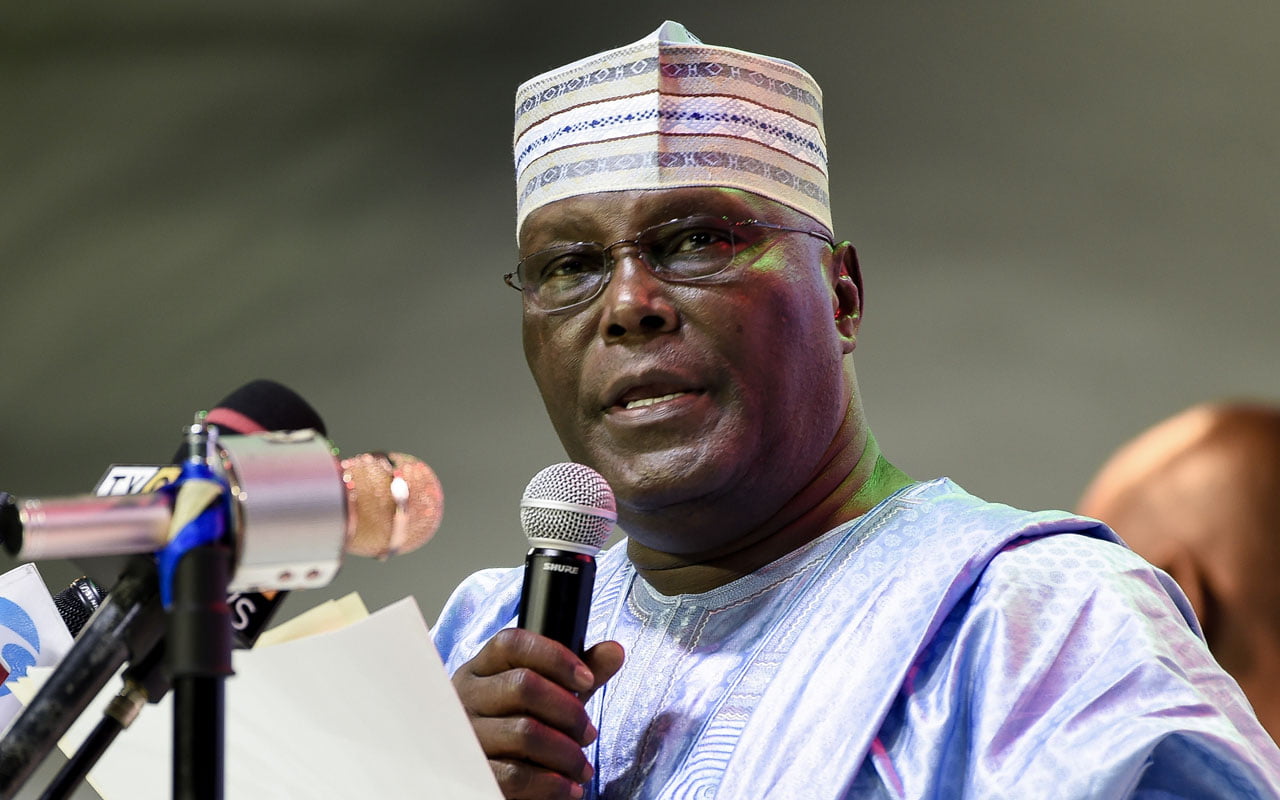
Atiku Abubakar seventh attempt at the presidency has been halted by the Court of Appeal in Abuja, which held that David Mark is not the fit and proper person to assume the position of the National Chairman of the African Democratic Congress (ADC) – the camp that produced the former Vice President as candidate of the party.
Hours after the former VP, who had attempted the bid for the nation’s number one job and is on the seventh edition by virtue of his nomination for the 2027 presidential election by the Mark, agreed with the position of the Federal High Court, Abuja, restraining the Independent National Electoral Commission (INEC) from recognising or participating in any state congresses organised by the former Senate President.
Justice Okon Abang, while reading the lead-judgement in the three-to-one split, said there was no reason for the appellate court to set aside the April 29 order by the lower court, adding that Justice Joyce Abdulmalik, who barred Mark and his executives from interfering with the tenure and functions of the party’s elected state executives, was in order.
Agreeing that the responsibility for conducting state congresses of political parties rested with elected state executive committees and not with the national leadership, he ordered INEC not to recognise the executive produced as a result of the defective process.
Though his position was echoed by Donatus Okorowo in the majority, Justice Abba Mohammed, who disagreed sharply, with a dissenting judgment, held that the case that precipitated the restraining order bordered on a non-justiciable internal affair of a political party, adding that lower court was wrong to have assumed jurisdiction to entertain the matter.



-
 News3 days ago
BREAKING: Mystery death! *Female student dies a day after arriving Umahi’s home!
-
 News4 weeks ago
BREAKING: Troops rescue wife of kidnapped General! *Terrorists flee scene
-

 News3 days ago
Don’t jump to conclusion! *Umahi speaks on mysterious death of female students!
-
 News4 weeks ago
BREAKING: Count me out, Okonkwo tells Atiku *Amaechi VP’s choice an insult to Ndigbo
-

 News3 weeks ago
BREAKING: Court sentences Nigerien, two others to death over terrorism
-
 News2 weeks ago
BREAKING: EX-SSG mowed down by gunmen! *He resisted being kidnapped – driver
-
 News3 weeks ago
Two hours after Igboho’s ‘red-eyes’ to ‘Fulani’ leaders, gunmen free kidnap victims!
-

 News3 weeks ago
Abductors of Oyo teachers panicking, freedom coming for victims soon!