

News
“Leadership Failure and State Capture in Nigeria” – by Olusegun Obasanjo


KEYNOTE ADDRESS
By

President Olusegun Obasanjo, GCFR
At the Chinua Achebe Leadership Forum, Yale University New Haven, Connecticut, USA, November 15, 2024
Professor Christie Achebe and the Achebe family; Maurie McInnis, President, Yale University; Steven Wilkinson, Nilekani Professor of India and South Asian Studies, Professor of Political Science and International Affairs, Henry Luce Director, the Whitney and Betty MacMillan Center for International & Area Studies; Vice Provost for Global Strategy, Professor Cajetan Iheka, Convener, Director, Whitney Humanities Center, Chair, Council on African Studies and Head, Yale Africa Initiative; distinguished professors and scholars, esteemed guests, students, ladies and gentlemen.
Without being immodest, I will begin by saying that it is appropriate that I was invited to deliver the keynote address at a gathering in honour of the late Professor Chinua Achebe. Not just because I have been Head of State and President of Nigerian on two different periods of our beloved nation’s history – most will agree fairly successfully – but because I have known the man, his work, and his values for as long as our Nation has been in existence. He was a great and distinguished Nigerian.
Yale university would be correct in their belief that Achebe belongs to the world – and therefore to them as well – but I am here to tell them that he is an African Icon that belongs to Nigeria first. The Igbo amongst us – his own ethnic people – will remind us that within Igboland he is known as “the Eagle on Iroko” – the “king of the birds” perched on the tallest tree in the African rainforest – a title that encompasses the reverence and awe in which he was held.
As Head of State of Nigeria, I oversaw the establishment of the Nigerian National Merit Award (now known as The Nigerian National Order of Merit Award (NNOM)- Nigeria’s highest award for outstanding academic and intellectual contributions to the growth and development of Nigeria.
The young people in the room will be pleased to know that the first recipients of this prestigious award were Professor Chinua Achebe, Professor Teslim Olawale Elias, Professor Thomas Adeoye Lambo, and Alhaji Abubakar Imam. They were all conferred with the merit award in 1979 by a debonair, young Head of State named Olusegun Obasanjo. I was 42 years old at that time. That same year, Achebe accepted a national award from me as well. That he later, developed an aversion to National Awards is a topic for Yale University’s epistemological researchers to uncover.
I invoke jest to parlay into a much darker topic for which we are gathered here to address: The failure of governance in Nigeria and the near collapse of our Nation State. What better way to tackle this uncomfortable topic than to revisit a short, classic treatise published in 1983, called The Trouble with Nigeria, by non-other than Chinua Achebe.
Leadership: The Nigerian Conundrum
Achebe opens that slim book like this: “The trouble with Nigeria is simply and squarely a failure of leadership. There is nothing basically wrong with the Nigerian character. There is nothing wrong with the Nigerian land or climate or water or air or anything else. The Nigerian problem is the unwillingness or inability of its leaders to rise to the responsibility, to the challenge of personal example which are the hallmarks of true leadership.”
In hindsight, this forty-one-year-old prescriptive analysis on the root causes of Nigeria’s leadership crisis is quite moderate and appropriate. It is at least not as desolate as the diagnosis provided by Robert Rotberg and John Campbell, two prominent US intellectuals – the latter a former United States ambassador to Nigeria to boot: “Nigeria has long teetered on the precipice of failure,” they argue. “Unable to keep its citizens safe and secure, Nigeria has become a fully failed state of critical geopolitical concern. Its failure matters because the peace and prosperity of Africa and preventing the spread of disorder and militancy around the globe depend on a stronger Nigeria.”
At least, they acknowledge that Nigeria – the most populous and economically viable country on the African continent – is, as the Americans will popularly put it, “too big to fail…” Let us not fool ourselves, there is a lot to be concerned about, where Nigeria is concerned. For one, Nigeria’s GDP has declined from $510 billion – after it was rebased in July, 2014, by then Finance Minister, Ngozi Okonjo-Iweala and colleagues – to the recent revision downwards by the IMF to $199 billion today. By the end of my tenure in 2007, the country’s average GDP growth over my 8 years in office was 6.59 per cent (reaching 15.3% in 2002) – one of the highest in the world. This increase was attributable to the quality of the leaders we had in our government – the eminent, late, Bola Ige, General TY Danjuma, Adamu Ciroma, Sule Lamido, Mohammed Arzika, Liyel Imoke, Jerry Gana, Kanu Agabi, the aforementioned Ngozi Okonjo-Iweala, and several others who came on board in my second term.
One of the stars of that cabinet, Mrs. Oby Ezekwesili, Former Minister of Solid Minerals and later Education of Nigeria is also here today. Other reasons for the country’s robust growth at the time can be attributable to reforms we instituted, especially in the private sector and service delivery. They include the liberalization of the telecommunications sector, the recapitalization exercise witnessed in the banking sector in 2004, pension scheme and administration and many areas of production and productivity and investment. I must not forget debt relief.
The genesis of the Leadership Crisis
Home grown, American based, political science experts Professor Obasesam Okoi and MaryAnne Iwara, in a recent article published by the Georgetown Journal of International Affairs explored the complex, cacophony of factors at the root of Nigeria’s leadership conundrum: “The failure of governance in Nigeria manifests in the declining capacity of political leaders to recognize systemic risks such as election fraud, terrorist attacks, herder-farmer conflict, armed banditry, and police brutality and put in place the necessary measures to navigate these challenges.
In contrast with the current system in which leadership is attained through bribery, intimidation, and violence, Nigeria needs a system of governance that is founded on the pedigree of its political leaders and the education of its voters.”
So, what is to be done? I am sure you ask. To tackle and symbolically cut-off the head of this hydra-headed monster, Nigeria must address a number of these challenges head-on.
Strengthening Democracy:
“The government is us; we are the government, you and I.” – Theodore Roosevelt
I dare say that, that is when democracy works and delivers. The 2023 elections in Nigeria were “a travesty” by all rational measures. Following that problem prone exercise, electoral system reform is now among the top targets for change in Nigeria. Global think tanks such as the Pew Research Center, The Carnegie Foundation as well as the Electoral Knowledge network suggest that there should be three principal areas of focus – Legal, Administrative and Political. Electoral Management Bodies ( EMBs) – INEC (Independent National Electoral Commission) in Nigeria – as well as its stakeholders will need to play distinct roles within the rubric of each area.
- Legal: Many scholars and some well- meaning Nigerians believe that Nigeria needs to take a closer look at our Constitution. We may have to “amend our constitution, electoral and/ or related rules, and regulations to enhance the integrity, relevance, and adequacy of the legal framework within which the INEC delivers its This may include institutional reform of the INEC itself.”ii
- Administrative: This will require several levels of intervention:
- Integrity of INEC officials. As a matter of urgency, we must make sure the INEC Chairperson and his or her staff are thoroughly vetted. The vetting exercise should yield dispassionate, non-partisan, actors with impeccable reputations. Nigeria must ensure the appointment of new credible INEC leadership at the Federal, State, Local government and municipal – city, town, and village levels – with short tenures – to prevent undesirable political influence and corruption, and reestablish trust in the electoral systems by its citizens. The INEC Chairperson must not only be absolutely above board, he must also be transparently independent and incorruptible.
- Political: Nigeria must find a way to prevent electoral interference at every Protecting elections from foreign as well as local malevolent actors is critical. Doing away with their malign influence is crucial for safeguarding democratic integrity and ensuring that election outcomes truly reflect the will of the people.iii On the local level, we should implement and enforce clearly defined financial regulations for political campaigns, establish effective control and enforcement mechanisms to ensure compliance with financial regulations; and intensify activities to prepare and secure the voting infrastructure – such as safeguarding the technology used to collate, transmit, verify, and disperse election results.
- Cybersecurity level: Prior to elections, we should have a transparent exercise (witnessed by international observers) where so called “penetration testing of the election system and infrastructure” is conducted for all to witness and
- Prevention of Electoral violence: Nigeria must ensure the physical security of the commissions and Our security apparatus must be professionally trained to protect our citizens during elections not to be participants in electoral malfeasance.
- Foreign interference can undermine public trust in the electoral process and distort the democratic decision-making that underpins the nation’s governance. Additionally, preventing such influence and interference helps maintain national security and protects the sovereignty of the electoral system from external manipulation.
- Voter Registration and Identification: We must ensure that our voter rolls are accurate and up to date and free from interference from the political class or any other corrupting
- Ballot Security: INEC must ensure that it institutes ballot security to prevent tinkering or unauthorized access – manually or by Ballot security also means the secure storage and transport of ballots to collation centers to prevent any form of interference.
- Vote Counting and Reporting: Let’s be clear: The Bimodal Voter Accreditation System (BVAS) and INEC Election Result Viewing Portal (IReV) are two technological innovations that prior to 2023 were celebrated for their promise. They were to “potentially” enhance the accuracy and transparency of our election results, eliminate the threat of election rigging, and boost public trust in electoral outcomes. These technologies were touted by the INEC chairman himself. In the end, these technologies did not fail. INEC willfully failed to use or implement them which resulted in widespread voting irregularities.v It was a case of inviting the Fox into the hen house.
- Improving our Educational System: The French statesman and lawyer Maximilien Robespierre famously stated that: “The secret of freedom lies in educating people, whereas the secret of tyranny is in keeping them ignorant.”
The great Nelson Mandela reminds us that: “Education is the most powerful weapon which you can use to change the world.” Our own Achebe implores that “A functioning, robust democracy requires a healthy educated, participatory followership, and an educated, morally grounded leadership.”
Professor Obasesam Okoi and MaryAnne Iwara call for epistocratic governance and electoral practices, greater civic engagement and provide a salient explanation of Nigeria’s election woes and a path forward: “In Nigeria, the majority of citizens are uneducated on political issues. Simultaneously, those who are highly educated are increasingly becoming indifferent to political participation; they have lost faith in the power of their votes and the integrity of the political system…in Nigeria, there must be significant improvements in literacy levels so that citizens are educated about the issues and can use their knowledge to make informed decisions about Nigeria’s political future.
It is important to mention that Nigeria’s political elites have exploited illiteracy to reinforce ethnic, religious, and political divisions between groups that impede democratic ideals…The Constitution must ensure that only citizens who can formulate policies and make informed decisions in the public’s best interest can run for public office. When the Constitution dictates the standard of [ governance], informed citizens will be better equipped to champion political leadership or determine the qualifications of their leaders.”
Unfortunately, like many other sectors, the educational system in Nigeria has collapsed. Nigerians are excelling in every academic discipline globally, why have we allowed our educational system to rot back home? In order for Democracy to thrive, we must collectively rebuild our once envied educational sector.
The starting point for me is paying adequate attention to popular education to ensure education for all. A situation where 24 million children that should in school and are out of school does not augur well for our present and our future.
The second task here would be to pull together the ‘best and brightest experienced minds’ in education to help us achieve some of the following goals:
- Revamping our entire educational Mediocrity runs rampant in many spheres of Nigerian society. There has to be an increased emphasis on excellence, accountability and performance at all levels including within the Educational sector to salvage it.
- This will require great leadership and financial commitment from the private and public I know that we can get support from our development partners.
- Transparency: We must put in place post- election audits and transparent processes – clear documentation and paths for meticulous and free and fair voting, and credible electoral system – that builds trust and comfort for all stakeholders and vii
- Again, more on Cybersecurity: “In an age where cyber threats are increasingly sophisticated, protecting election systems from hacking, data breaches, and other cyberattacks is vital. This includes everything from the security of voter databases to the protection of websites used to report results.” We saw this cybersecurity failure play out during the last election and we must make sure it never happens again.
- Impunity: Politicians corruptly getting themselves declared as winner in an election where votes do not matter and asking winner declared loser to go to court where justice cannot be assured is the easiest and best way to kill electoral democracy.
Corruption in Nigeria: “Among a people generally corrupt, liberty cannot long exist.” – Edmund Burke. Let me return to Achebe and the Trouble with Nigeria for clarity of perspective on the Nigerian dilemma. According to Chinua Achebe: “… Corruption goes with power; …therefore to hold any useful discussion of corruption, we must first locate it where it properly belongs – in the ranks of the powerful…Corruption in Nigeria has passed the alarming and entered the fatal stage; and Nigeria will die if we keep pretending that she is only slightly indisposed.”
Ranked 150 out of 180 countries in the Transparency International 2022 Corruption Perceptions Index,1 Nigeria’s ranking places it in the bottom 20 per cent of the comity of Nations; and illustrates how systemic and embedded corruption is in the country. It is, in my opinion, and those of many, the most serious developmental challenge to the nation. When I joined Peter Eigen to establish Transparency International on May 4, 1993, we saw corruption as possible death knell of development and democracy.
The Economic and Financial Crimes Commission (EFCC) is a Nigerian law enforcement agency promulgated to tackle corruption in Nigeria. It is but one of numerous bodies – buttressed by Acts and laws – established in Nigeria to tackle and address the exponential growth of corruption in the country.
Nigeria’s Report Card on Corruption:
To get a snapshot on how Nigeria is faring in its fight against corruption (some cynics will say cuddling or even, promotion of corruption), we need not look further than the UNODC ( the United Nations office of Drugs and Crimes) in its publication: Corruption in Nigeria: patterns and trends, 2024,x which provides novel conclusions while identifying several areas of deepening pathology:
- In 2024, Corruption continues to rank among the most important problems affecting
- More than NGN 700 billion in cash bribes were paid by citizens to public officials in
- Most bribes are paid in the street or in a public official’s
- Private sector bribery is increasing, but continues to be less prevalent than in the public
- Issues specific to the criminal justice system are a sore point – I will tackle that in the next
- Nepotism and bribery in public sector recruitment and promotion – In recent years we have witnessed outrageous, open recruitment of children of Judges onto our Judiciary benches by their parents! Why has the Nigerian Bar Association allowed this to persist? The manipulation of ethnic sentiments to further corrupt agendas – the last political exercise is replete with ample evidence of
The Survey findings indicate that corruption in Nigeria has penetrated every layer of society:
In 2023, 5.1 bribes were paid on average by each bribe payer in Nigeria in the 12 months prior to the election. Out of all Nigerian citizens who had at least one contact with a public official in the 12 months prior to the 2023 survey, 27 per cent paid a bribe to a public official.
Happily, there was some good news to report: 70 per cent of Nigerians who were asked to pay a bribe in 2023, refused to do so on at least one occasion. The bribery refusal rate was found to be highest in the North-West (at 76 per cent), although all zones recorded refusal rates above 60 per cent. Public officials continue to be blatant about bribe requests, but less so than in the Nigerians are increasingly reporting bribe payments to official.
I will conclude this section by quoting Achebe once more: “… Nigerians are corrupt because the system under which they live today makes corruption easy and profitable; they will cease to be corrupt when corruption is made difficult and inconvenient.” The greatest antidote of corruption is leadership integrity with consequences for offenders no matter who they are.
Rebuilding the Judiciary:
“True peace is not merely the absence of tension; it is the presence of justice.” – Martin Luther King
According to Willian H. Neukom, CEO of the World Justice Project: “The rule of law is a durable system of laws, institutions, norms, and community commitment that delivers four universal principles: accountability, just law, open government, and accessible and impartial justice.”
The Judiciary in Nigeria is a very pale version of its once internationally esteemed self. Politicians after rigging elections openly ask their rivals to “go to court” in Nigeria because they are aware that they have completely compromised the Judiciary system. A number of Judges are in the pockets of wealthy politicians and individuals and make judgements – not based on the law of the land but to the highest bidder. This, my learned audience, is one of the most effective strategies of State Capture – discussed next – that must be excised from Nigeria like a surgeon cutting out a malignant cancer.
Transparency International suggests that “Corruption in the judicial system breaks the basic principle of equality before the law and deprives people of their right to a fair trial. In a corrupt judicial system, money and influence may decide which cases are prioritized or dismissed. Perpetrators may get away unpunished while victims are left with no answer and no justice.”
“Simple reforms can prevent this. An independent body and public oversight can guarantee that appointments in the judiciary are based on merit rather than favoritism. Judicial personnel should be adequately trained and receive fair salaries and pensions, to make them less vulnerable to bribery. Judges’ personal liability for decisions should be limited and, to protect them from pressure by powerful interests, only credible and transparent investigations should be conducted against them. Civil society, the private sector, and the media – we all have a vital role to play.”
What is State Capture?
The World Bank and Transparency International define State capture as one of the most pervasive forms of corruption, “a situation where powerful individuals, institutions, companies, or groups within or outside a country use corruption to shape a nation’s policies, legal environment, and economy, to benefit their own private interests.
State capture is not always overt and obvious. It can also arise from the more subtle close alignment of interests between specific business and political elites through family ties, friendships, and the intertwined ownership of economic assets.
What is happening in Nigeria -right before our eyes – is state capture: The purchase of National assets by political elites – and their family members – at bargain prices, the allocation of national resources – minerals, land, and even human resources – to local, regional, and international actors. It must be prohibited and prevented through local and international laws.
“Public institutions such as the legislature, the executive, the judiciary, and regulatory agencies both at the federal and local levels are subject to capture. As such, state capture can broadly be understood as the disproportionate and unregulated influence of interest groups or decision-making processes, where special interest groups manage to bend state laws, policies, and regulations. They do so through practices such as illicit contributions paid by private interests to political parties, and for election campaigns, vote-buying, buying of presidential decrees or court decisions, as well as through illegitimate lobbying and revolving door appointments.
The main risk of state capture is that decisions no longer take into consideration the public interest, but instead favor a specific special interest group or individual. Laws, policies, and regulations are designed to benefit a specific interest group, often times to the detriment of smaller firms and groups and society in general. State capture can seriously affect economic development, regulatory quality, the provision of public services, quality of education and health services, infrastructure decisions, and even the environment and public health.”
My military training and experience taught me that what you capture, you tend to hold under your sole control for as long as you can hold it. That is the case of one governor of a state who still holds the state captive in his pocket 25 years after being the governor of the state.
Insecurity:
“A series of overlapping security, political and economic crises has left Nigeria facing its worst instability since the end of the Biafran war in 1970.”xviii Writing in Security and Defense Quarterly, Tope Shola Akinyetun, Victor Chukwugekwu Ebonine, Iyase Ambrose profess: “Nigeria is presently bedeviled by an abundance of security challenges that gnaw at the very soul of the nation’s existence. The prevalence of insecurity in the country is multipronged and caught in a cyclic web. Insecurity in Nigeria comprises insurgency, killer herdsmen, extrajudicial killings, ethnoreligious conflict, armed robbery, militancy, banditry, cybercrime, and attacks by unknown gunmen, among other things”.
How did Nigeria the giant of Africa get to this situation?
The genesis of insecurity in Nigeria is a perfect storm of political incompetence and corruption, state capture, institutional collapse, porous borders, religious extremism, and severe multi- dimensional poverty. There is a compelling need to address the protracted and recurring multidimensional insecurity in Nigeria. “These security threats not only undermine national stability and the rule of law, but also have adverse effects on the economy, affecting price, output, employment, trade balance, poverty, inequality, defense expenditure, government budget patterns, socio-political environment, and several others.”
Nigeria’s own government’s Ministry of Budget and Economic planning has a thought or two about our current predicament: “Security challenges in any nation constitute a threat to the lives and properties of its citizens, hinder business activities, and discourage local and foreign investors which invariably slow down economic growth and development.
Nigeria in recent times has recorded unprecedented security challenges such as Boko Haram Terrorists (BHTs) attacks, militancy, armed robbery, banditry, kidnapping for ransom, Fulani-Herders farmers clashes, cultism among other social vices. These security challenges have propelled then to the top of the list of the most critical tests to Nigeria’s sovereign existence. Its presence looms unabated even as it has attracted huge allocation of national budget to the security sector (Achumba and Akpor). But it has become an industry in some quarters. Throw more money to what money cannot buy.
Nigeria’s Porous Borders:
“Nigeria has porous borders and herders from other parts of West Africa nations armed with AK 47 have found easy access into.
“A nation that opens her borders, allows other nationalities to come in at will and has so many ungoverned spaces would certainly face security challenges. As a consequence of our porous borders, the forests are not secured due to lack of Forest Guards, and 75 per cent of the illicit arms in West Africa sub region are domiciled in. This is a recipe for disaster – as we are currently witnessing.
So, What is the Genesis of Insecurity in Nigeria?
Professor Obasesam Okoi and MaryAnne Iwara and Suleiman Arzika provide some salient insights:
- Mismanagement of public funds and Corruption: We have already tackled this topic earlier in this address. Suffice is to say that “the democratic space [for too long] has been dominated by political elites who consistently violate fundamental principles associated with a liberal democratic system, such as competitive elections, the rule of law, political freedom, and respect for human. The outcome of the recent 2023 elections further eroded public trust in the ability of the Independent Electoral Commission (INEC) to organize competitive elections unfettered by the authoritarian influences of the ruling class. This challenge is an indicator of the systemic failure in Nigeria’s governance system. A continuation of the current system will only accelerate the erosion of public trust and democratic institutions. In contrast with the current system in which votes are attained through empty promises, bribery, voter intimidation, and violence, Nigeria needs a governance system that will enhance the education of its voters and the capability of its leaders.”
- Poor planning: Lack of sustainable national development plans and Poor implementation of projects and
- Poor Security Architecture: The security challenges we have in Nigeria today are also a result of the inability of the government to reform the security architecture of the country to suit the current demands. The Police, Military and intelligence agencies are still structured and operated along colonial constructs and systems.
- Lack of adequate personnel: The combined number of the military, police and civil defense forces is less than 1m and over half of them are mostly engaged in administrative, VIP and other mundane work. For a country of over 200 million population, the ratio is quite The land area is vast and the population is mostly poor, illiterate, and prone to exploitation.
- Lack of Equipment: The police and military have poor equipment for the most basic security work. They lack basic communication devices, hardware like guns, bullets, protective kits, They lack transportation and logistics. They lack database and IT systems for tracking and record keeping.
- Corruption, Poor training, and Remuneration: Our police are some of the worst paid and trained on the African continent– leaving them prone to, and occasional active participants in corrupt practices. A police officer who cannot feed himself or his/her family cannot be expected to establish order and security hampered by the lack of equipment, coordination, and poor training. Corruption: Massive corruption at the top of the security forces has permeated the entire system from the top officials to the patrol officers on the streets. This is caused by poor conditions of service and employee treatment: where salaries are poor and not paid on time, devoid of benefits – inadequate or lack of life insurance, poor housing, planning, etc. Deployment of security forces has become more synonymous with extortion in the areas they are deployed than improvement in security.
- Neglect of industrial, agricultural, and other sectors of the economy and over dependence on oil sector.
- Lack of electricity generative capacity which has forced several local and international companies to close or flee our
- Food Insecurity Food insecurity requires special attention as this is one of the most serious developments in Nigeria in recent years. At this juncture in the address, it is important to cast our minds back in history. There are several corollaries between what is happening in Nigeria today and the events leading up to the French Revolution:
Food insecurity was a major factor in the French Revolution (1789–1799):
- Crop failures: A series of poor harvests in the 1770s and late 1780s led to food shortages and famine. The lower class, who produced most of the country’s food, relied on grain as a primary food
- High food prices: The lower grain yields caused prices to
- Substandard food quality: The bread that was available was often poor quality, blackish, earthy, and
- Food distribution: There was a discrepancy in food distribution within and around
- Marie Antoinette’s comment: The queen’s comment, “Qu’ils mangent de la brioche” (“Let them eat cake”), when told that her subjects had no bread, made her a hated symbol of the
Other factors that contributed to the French Revolution include: The Estate System, Absolutism, Enlightenment ideas, and The American Revolution.
In the seminal book Food Security and Political Stability: A Humanitarian Perspective, Daniel Maxwell postulates that “In terms of causation, when it comes to Food insecurity in particular, these links run in both directions—food insecurity can be a cause of political instability, but political instability and conflict have also been causes of food insecurity or famine.” According to UNICEF: “ Nearly 25 million Nigerians are at risk of facing starvation and severe hunger if urgent action is not taken. This is a projected increase from the estimated 17 million people currently at risk of food insecurity. Continued conflict, climate change, inflation and rising food prices are key drivers of this alarming trend. Food access has been affected by persistent violence in the north-east states of Borno, Adamawa and Yobe (BAY) and armed banditry and kidnapping in states such as Katsina, Sokoto, Kaduna, Benue, and Niger. According to the National Emergency Management Agency, widespread flooding in the 2024 rainy season damaged more than 676,000 hectares of farmlands, which diminished harvests and increased the risk of food insecurity for families across the country. The flooding is one of the effects of climate change and variability impacting Nigeria. More extreme weather patterns affecting food security are anticipated in the future.
Aggravating this desperate situation are the unscrupulous members of Nigeria’s Political elites who, rather than fix the aforementioned problems highlighted here, have exploited the hunger, poverty, and illiteracy of the masses to mobilize voters with food items such as rice, beans, garri, yams, salt and seasonings, and money. The food items are usually packaged strategically with the image of political candidates and the parties they represent.
The political calculation here is that destitute people are more likely to vote for a politician who brings along gifts – ironically, bought by looted treasury funds belonging to the very same people that are condescended upon – than one who only provides concrete solutions to their everyday problems that might take time. The practice of using food to mobilize voters is commonly described in Nigeria as “Stomach infrastructure” politics. Nigerians must put an end to this practice.
Is Nigeria a failed State?
Let us return to Professor Robert I. Rotberg, the founding director of the Harvard Kennedy School’s Program on Intrastate Conflict and president emeritus of the World Peace Foundation, and John Campbell, a senior fellow at the Council on Foreign Relations and a former U.S. ambassador to Nigeria.
According to these intellectuals and Africanists: “There are four kinds of nations: the strong, the weak, the failed, and the collapsed. Of the 193 members of the United Nations, 60 or 70 are strong. There are three places that should be considered collapsed: Somalia, South Sudan, and Yemen.
Eighty or 90 U.N. members are weak. Weakness consists of providing many, but not all, of essential public goods, the most important of which are security and safety. If citizens are not secure from harm within national borders, governments cannot deliver good governance (the essential services that citizens expect) to their constituents.
A dozen or so states are failed, including the Democratic Republic of Congo, Central African Republic, and Myanmar. Each lacks security, is unsafe, has weak rules of law, is corrupt, limits political participation and voice, discriminates within its borders against various classes and kinds of citizens, and provides educational and medical services sparingly.
Most of all, failed states are violent. All failed states harbor some form of violent internal strife, such as civil war or insurgency. Nigeria now confronts six or more internal insurrections and the inability of the Nigerian state to provide peace and stability to its people has tipped a hitherto very weak state into failure.”
What is to be done to pull Nigeria back from the precipice?
Following in the footsteps of Japan, Singapore along with South Korea in Asia have made the remarkable transition from poor, underdeveloped countries into the coveted ranks of the advanced nations of the first world – in our lifetime. How was this possible?
The Heritage board reminds us that “the 1960s and 1970s was a period when Singapore was beset with many uncertainties as it sought an identity of its own. The country was facing massive unemployment and a declining entrepot trade at the time of independence, while grappling with a rapidly growing population.”
Into this murky milieu stepped Prime Minister, Lee Kuan Yew. Often referred to by his initials LKY, Yew was a Singaporean statesman and lawyer who served as the first prime minister of Singapore from 1959 to 1990. It was during his tenure that the phenomenal transformation of Singapore took place. Now, I must state categorically that I am not calling for 30 year tenures for our politicians (before someone accuses me of doing so), but merely a focus on the quality of political leadership.
Engineer Zeeshan Jawaid, a marketing expert from Pakistan – a country with its own panoply of challenges – suggests that The Yew doctrine (remembered by the acronym MPH) has 3 simples components:
Meritocracy: “The first element of the MPH formula is meritocracy. This means that individuals are promoted based on their abilities and achievements, rather than their social background or connections. In Singapore, this is reflected in the country’s education system, which is based on meritocracy and places a strong emphasis on academic performance.
Students are encouraged to excel and are given opportunities to highlight their abilities through various competitions and programs. This focus on meritocracy has helped Singapore to develop a highly skilled and talented workforce, which has been critical in the country’s economic success.”
Pragmatism: “The second element of the MPH formula is pragmatism. This means that policies and decisions are made based on practical considerations, rather than religious, class, ethnic, tribal, creed, ideology, or political beliefs. In Singapore, this is reflected in the government’s approach to economic development. The government has been pragmatic in its policies, focusing on attracting foreign investment, building a skilled workforce, and developing key industries such as finance, logistics, and manufacturing. This pragmatic approach has enabled Singapore to develop a strong and diversified economy that is able to weather economic challenges.”
Honesty: “The third and final element of the MPH formula is honesty, which means zero tolerance for corruption. In Singapore, the government has taken a strong stance against corruption, with strict laws and severe punishments for corrupt practices. This has helped to create a culture of honesty and integrity in the country, which has been critical in building trust and confidence among investors and businesses.
The MPH formula has been a key driver of Singapore’s success, but it is not the only factor. The country’s leadership has also played a crucial role in its development journey. Under the leadership of Lee Kuan Yew and his successors, the government has been proactive in identifying challenges and opportunities and has implemented policies that have helped to propel Singapore forward. The government has also been responsive to the changing needs of its people and has invested heavily in areas such as healthcare, education, and social welfare.”
Nigeria Situation
As we can see and understand, Nigeria’s situation is bad. The more the immorality and corruption of a nation, the more the nation sinks into chaos, insecurity, conflict, discord, division, disunity, depression, youth restiveness, confusion, violence, and underdevelopment. That’s the situation mostly in Nigeria in the reign of Baba-go-slow and Emilokan. The failing state status of Nigeria is confirmed and glaringly indicated and manifested for every honest person to see through the consequences of the level of our pervasive corruption, mediocrity, immorality, misconduct, mismanagement, perversion, injustice, incompetence and all other forms of iniquity. But yes, there is hope.
Conclusion:
I conclude this address by once again quoting our Professor Chinua Achebe, this time from his New York Times Opinion piece on Nigeria, January 15, 2011. For the young people gathered here today, please note that this late, African bard, Icon, and crusader for social justice, kept engaging with the “troubles with Nigeria, nay Africa” till the very end of his life. He never gave in until he gave up. He fought to the end. We expect you to embrace him as your role model, and emerge as the next generation to tackle Africa’s myriad problems in the same manner and with the same zeal, dedication and commitment:
“In the end [Achebe states], I foresee that the Nigerian solution will come in stages. First we have to nurture and strengthen our democratic institutions – and strive for the freest and fairest elections possible. That will place the true candidates of the people in office. Within the fabric of a democracy, a free press can thrive and a strong justice system can flourish. The checks and balances we have spoken about and the laws needed to curb corruption will then naturally find a footing. And there has to be the development of a new patriotic consciousness, not one simply based on the well-worn notions of the “Unity of Nigeria” or “Faith in Nigeria” often touted by our corrupt leaders; but one based on an awareness of the responsibility of leaders to the led, and disseminated by civil society, schools, and intellectuals. It is from this kind of environment that a leader, humbled by the trust placed upon him by the people, will emerge, willing to use the power given to him or her for the good of the people.”
There lies my hope and there is my optimism for Nigeria and for Africa.
Thank you!








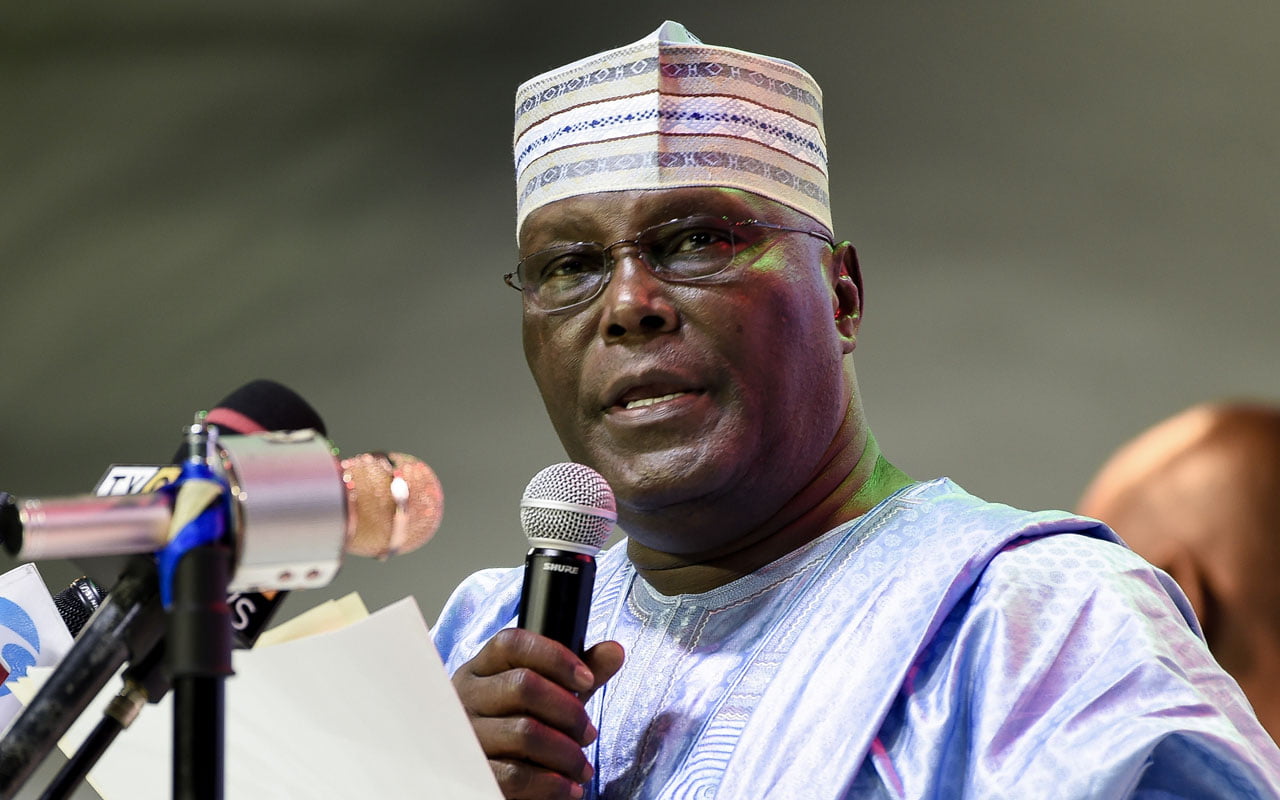
Atiku Abubakar seventh attempt at the presidency has been halted by the Court of Appeal in Abuja, which held that David Mark is not the fit and proper person to assume the position of the National Chairman of the African Democratic Congress (ADC) – the camp that produced the former Vice President as candidate of the party.
Hours after the former VP, who had attempted the bid for the nation’s number one job and is on the seventh edition by virtue of his nomination for the 2027 presidential election by the Mark, agreed with the position of the Federal High Court, Abuja, restraining the Independent National Electoral Commission (INEC) from recognising or participating in any state congresses organised by the former Senate President.
Justice Okon Abang, while reading the lead-judgement in the three-to-one split, said there was no reason for the appellate court to set aside the April 29 order by the lower court, adding that Justice Joyce Abdulmalik, who barred Mark and his executives from interfering with the tenure and functions of the party’s elected state executives, was in order.
Agreeing that the responsibility for conducting state congresses of political parties rested with elected state executive committees and not with the national leadership, he ordered INEC not to recognise the executive produced as a result of the defective process.
Though his position was echoed by Donatus Okorowo in the majority, Justice Abba Mohammed, who disagreed sharply, with a dissenting judgment, held that the case that precipitated the restraining order bordered on a non-justiciable internal affair of a political party, adding that lower court was wrong to have assumed jurisdiction to entertain the matter.
By Ken Harries Esq
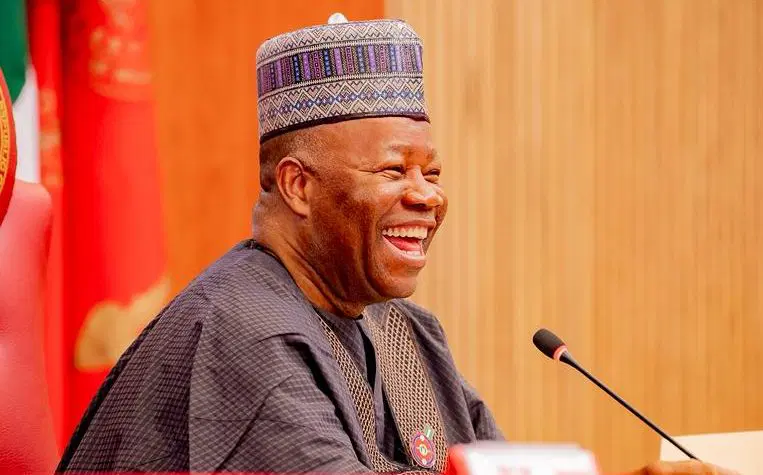
Some speeches disappear with the applause that greets them. Others acquire greater force with the passing of time. Their words do not change; history simply grows into them. Years later, they resonate with fresh power, not because they have been rewritten, but because the nation has finally arrived at the realities they foresaw.
One such speech was delivered in April 2012 at the 2nd South South Economic Summit in Asaba. There, Senator Godswill Akpabio, then Governor of Akwa Ibom State, presented what many regarded as an ambitious vision for maritime corridor and blue economy development.
Speaking before political leaders, investors, and development stakeholders at the 2nd South South Economic Summit in Asaba, Akpabio outlined what many regarded as an ambitious vision for a model state in particular and regional development in general. Long before the Ibom Deep Seaport became a national priority, he argued that Nigeria needed new maritime gateways, integrated industrial clusters, aviation maintenance facilities, and modern logistics infrastructure to unlock economic growth. His vision was not simply about building a port; it was about creating an economic ecosystem capable of transforming a region and strengthening the nation’s competitiveness.
Fourteen years later, those remarks read less like political advocacy and more like an economic blueprint whose underlying logic has steadily been vindicated by events and times. Looking back today, his address appears almost prophetic—not because it predicted the future in mystical terms, but because Nigeria has gradually grown into the ideas it contained.
Truly visionary speeches never fade; they gather strength with time. This one deserves renewed attention, not because every prediction has materialised exactly as envisioned, but because it reveals a quality increasingly scarce in public leadership: the ability to think beyond electoral cycles.
Nigeria has never lacked projects. What it has often lacked are leaders willing to imagine the infrastructure of tomorrow while grappling with the demands of today. Akpabio’s vision was shaped by precisely that instinct.
At a time when public discourse was largely focused on roads and recurrent expenditure, he spoke instead of logistics corridors, industrial ecosystems, aviation maintenance, manufacturing clusters, export processing zones, maritime and blue economy opportunities, and security reform—not as isolated initiatives, but as interconnected pillars of national competitiveness.
His vision for the then proposed Ibaka Deep Seaport, now known as the Ibom Deep Seaport, best illustrates this broader philosophy. Rather than presenting it as another state prestige project, he framed it as a strategic response to structural inefficiencies in Nigeria’s maritime sector and the wider economy. He argued that the Lagos ports were already burdened by severe congestion, with vessels waiting for extended periods to berth, driving up costs, disrupting supply chains, and delaying the delivery of critical imports, including pharmaceuticals.
His objective, however, was never to rival Lagos, but to complement it. The distinction is fundamental. No major trading nation concentrates all its strategic maritime infrastructure within a single corridor. Successful economies spread capacity, ease bottlenecks, and create multiple gateways through which commerce can flow efficiently. Nigeria has long recognised this principle in policy documents; Akpabio was among the few public leaders articulating it so clearly more than a decade ago.
Equally significant was his emphasis on geography. He reminded his audience that Ibaka possessed a naturally deep coastline requiring little or no dredging, with water depths of approximately fifteen to seventeen metres. According to his account, the location had been identified as suitable for a deep seaport as far back as 1963, yet decades passed without meaningful progress. His observation that “being a minority area, there was nobody to push it” reflected a broader concern that strategic national investments have too often been influenced by political considerations rather than economic merit.
Whether one agrees entirely with that assessment is, in many respects, secondary. The larger point is that Akpabio consistently argued that national infrastructure should be driven by economic logic, strategic necessity, and long-term national interest rather than sentiment or political convenience. More than a decade later, that remains a lesson Nigeria is still striving to learn.
Yet, to see the 2012 Asaba address merely as a speech about a deep seaport is to miss its larger significance. The Ibom Deep Seaport was never presented as an end in itself. It was conceived as the anchor of a much broader economic ecosystem—a platform around which industries, manufacturing, aviation, logistics, free trade, and investment could flourish.
Akpabio envisioned the acquisition of about 14,000 hectares of land to support a self-sustaining industrial city comprising fertiliser and ammonia plants, refining capacity, manufacturing facilities, and a Free Trade Zone. What development economists today describe as industrial clustering was already embedded in his thinking. The port was simply the gateway.
That broader vision deserves a discussion of its own. Today, Ibom Deep Seaport in that Asaba Speech has berthed.
•Ken Harries Esq is an Abuja-based Development Communication Strategist.
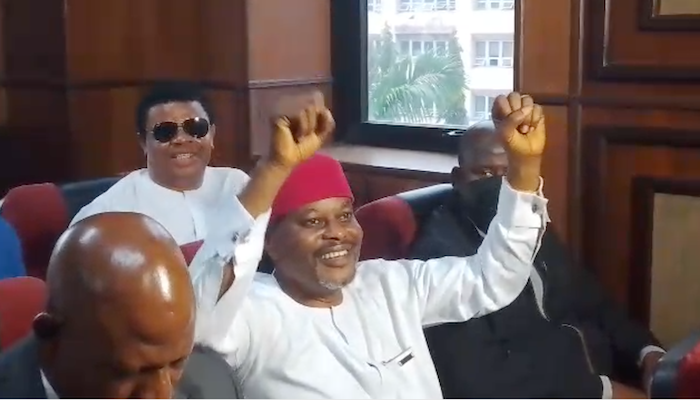
Justice Joyce Abdulmalik of the Federal High Court in Abuja, on Monday, granted allowed Uche Nnaji former Minister of Science and Technology, to go home, on the condition of a N20million bail bond.
Nnaji, who was arrested at Nnamdi Azikiwe International Airport (NAIA), Abuja on July 1 by officials of the Independent Corrupt Practices and other Offences Commission (ICPC), while returning to Abuja, was granted bail after pleading not guilty to a six-count certificate forgery charge.
The anti-corruption agency alleged that Nnaji, Minister of Science and Technology between August 16, 2023 and October 6, 2025, when he resigned office after a crisis regarding his university degree broke out is currently the governorship candidate of the Peoples Democratic Party (PDP) in Enugu for in the 2027 general election, squaring up against Peter Mba, the incumbent, who incidentally won his office in 2023 under the same PDP, before defecting to the ruling All Progressives Congress (APC).
He was accused of forging his academic credentials, especially a degree certificate from the University of Nigeria, Nsukka (UNN) alongside presenting a bogus National Youth Service Corps (NYSC) discharge certificate during his ministerial screening process in 2023.
At the proceedings on Monday, the former Minister pleaded not guilty to the charges, and following an application by James Onoja (SAN), his lawyer, was granted to bail in the sum of N20 million with one surety in the like sum, who must also be a civil servant resident in Abuja, not be below grade level 15.
The court, which ordered the surety to depose to an affidavit of means, mandated the former Minister to also surrender his international passport and not travel outside the country without permission, while fixing September 21 for the commencement of the trial.



-

 News3 days ago
BREAKING: Mystery death! *Female student dies a day after arriving Umahi’s home!
-
 News4 weeks ago
BREAKING: Troops rescue wife of kidnapped General! *Terrorists flee scene
-

 News3 days ago
Don’t jump to conclusion! *Umahi speaks on mysterious death of female students!
-
 News4 weeks ago
BREAKING: Count me out, Okonkwo tells Atiku *Amaechi VP’s choice an insult to Ndigbo
-

 News3 weeks ago
BREAKING: Court sentences Nigerien, two others to death over terrorism
-
 News2 weeks ago
BREAKING: EX-SSG mowed down by gunmen! *He resisted being kidnapped – driver
-
 News3 weeks ago
Two hours after Igboho’s ‘red-eyes’ to ‘Fulani’ leaders, gunmen free kidnap victims!
-

 News3 weeks ago
Abductors of Oyo teachers panicking, freedom coming for victims soon!