
News
Tinubu to Atiku: I feel your pains! But, it’s time to heal


President Bola Tinubu, on Sunday, sent a special set of messages to Atiku Abubakar, one time political ally, now a major foe on the same turf, against whom he triumphed in the 2023 presidential election – take it easy – I understand your pain – it’s all about envy because I succeeded where you failed.
In one of the lengthiest responses so far to the consistent attacks by the former Vice President, who conducted the 2007 presidential election under the Action Congress of Nigeria (ACN), firmly in the hands of Tinubu, then Governor of Lagos State, the President dismissed the latest edition of launched at him, last week as part of the attempt by a man licking the wound of failure.

Pointing to how the former VP had failed on six occasions to clinch the nation’s number one job, Tinubu, who succeeded at the first try last year, in his clapback conveyed through Bayo Onanuga, his spokesman, noted how Atiku, had shown since his defeat, more interest in undermining his government than addressing his party’s implosion.
“We suspect he is envious of Tinubu’s position—an office he has unsuccessfully sought six times,” Onanuga, Special Adviser on Information and Strategy, said in the statement, adding: “It is perplexing that he would elevate his untested, hypothetical proposal, which Nigerians soundly rejected during the 2023 Presidential Election, and seek to present it as a superior alternative to the multi-faceted reform programmes implemented by the Tinubu administration. If his plan lacked popular appeal, he must acknowledge that merely repackaging it will not resolve the social and economic challenges his People’s Democratic Party (PDP) bequeathed after 16 years in power.”
Dissecting Atiku’s position last week, in a treatise titled: What We Would Have Done Differently, where he again railed against Tinubu for unleashing terrible suffering on Nigerians, through his ill-thoughtout economic policies, the President, said what the former VP was suggesting, reflected why he was rejected at the polls last year.
The other part of the response, read: „Atiku’s economic analysis demonstrates a significant misunderstanding of Nigeria’s realities. His narrative, “What We Would Have Done Differently,” indicates an inability to engage with the pressing economic realities being revitalised multidimensionally under President Tinubu’s leadership.
“What reforms would Atiku propose at the onset of his hypothetical and fabled presidency? While he suggests a consultation period upon assuming office, the reality is that the Nigerian economy requires immediate and decisive action. A leader must be prepared to tackle challenges from Day One, as President Tinubu has done.
“Atiku, going further to accuse President Tinubu of “stealing his presidency,” exposed his sense of entitlement and his disconnect from the electorate. The truth is that Tinubu rightfully won the presidency, a position Atiku was simply unqualified for due to his arrogance, insensitivity to Nigeria’s diversity, and the decision to disregard his party’s power rotation arrangement between the North and the South after eight years of President Muhammadu Buhari.
“Atiku’s idea of a consultation period upon entering office shows a troubling lack of awareness regarding the state of the economy, which was in dire need of urgent action. The Tinubu administration came prepared with a firm action plan to address the shortcomings that persisted during President Olusegun Obasanjo’s time when Atiku was vice president.
“We can only speculate what detrimental impact Atiku’s proposed lengthy town hall and Village Square meetings would have had on Nigeria’s economy if he had been elected president and taken such an approach. The country needed a proactive leader such as Tinubu, who immediately set to work on addressing economic challenges rather than one who would have squandered precious time on consultations and a questionable privatisation agenda.
“Atiku’s critiques of Tinubu’s presidency are mere harebrained propositions devoid of realistic alternatives. He must reckon with the decades of mismanaged economy inherited by the current administration, including exorbitant subsidy expenditures far exceeding government earnings from crude oil. As of mid-2023, the landing cost of fuel was between N500 and N600, while it was sold nationwide at an average of N200. The 2023 budget allocated N3.36 trillion for fuel subsidies until June 2023 against a projected N2.23 trillion in oil revenue for the year. The Nigerian state was on life support.
“Instead of conjuring imaginary scenarios, we expect the former vice president to engage with these urgent realities. The estimated N5.4 trillion savings from subsidy removal in 2024 are being actively directed toward infrastructure development and social intervention programmes, initiatives that will benefit all tiers of government and enhance Nigerians’ quality of life.
“We expect Atiku to commend what the Tinubu administration has done concerning revenue generation for the Federation. Without factoring in oil sales, revenue proceeds generated by the Federal Inland Revenue Service almost doubled in the first half of 2024, compared with the level Tinubu met in 2023. The states and councils are more prosperous because of it, as many states have increased the minimum wage for their workers to between N70,000 and N85,000.
“Atiku’s proposal to privatise the four government-owned refineries, which collectively can only meet a fraction of the nation’s daily fuel consumption when activated, lacks originality. In 2007, investors were only willing to offer $160 million for 51% equity in the Port Harcourt Refinery, while the Kaduna Refinery had an offer of $102 million. According to industry experts and the late President Umar Musa Yar’Adua, Nigeria’s Head of State at the time, who cancelled the sale of the refineries by the Obasanjo-Atiku government, the offered bids were considered scrap value.
“As vice president, Atiku oversaw the sale of the nation’s assets to private individuals and cronies at low prices. Today, most public enterprises Atiku sold have been stripped and become dead assets. The model of farming the completely rehabilitated refineries to private sector managers at an agreed-upon rate of return to the government, as adopted by Tinubu’s government, is more practical and value-laden than selling our national patrimony to some private interests that are not technically capable of operating the refineries. The Tinubu administration focuses on revitalising these refineries while supporting modular refineries and the Dangote Refinery, which has greater capacity.
“This approach will guarantee domestic production and stabilise retail prices by reducing foreign exchange challenges. It includes selling crude oil to the refineries in Naira, enabling potential cost reductions that could reflect in retail prices. Regarding Atiku’s allegations of corruption within the NNPC, the fuel subsidy has historically been the leading corruption enabler in the state-owned oil company. President Tinubu’s removal of this subsidy eliminated the most significant incentive for corruption within the NNPC. During his eight-year tenure as Vice President, Atiku and his boss had an opportunity to address this issue but failed to make any significant reforms in the oil sector.
“In any case, is it not ironic that an Atiku, who was entangled in corruption allegations, including one in which his wife was indicted and his business associate, former US Congressman William Jefferson, was jailed for 13 years, is now talking about corruption matters?
“The suggestion of phased-out subsidy removal is an outdated approach that has historically led to fiscal challenges for countries like Indonesia, which Atiku references. Nigeria has gradually phased out subsidies since 1978, with numerous adjustments made. Fuel prices were adjusted 22 times between 1978 and 2020. Rather than pushing for unrealistic timelines, Atiku should recognise the necessity of President Tinubu’s bold reforms.
“Notably, while Atiku peddles his economic fantasies, he has yet to denounce President Tinubu’s removal of the fuel subsidy because he knows that the reform was necessary and correct. We can only urge him to purge himself of the petty, derisive politics of a sore loser.
“To alleviate the effect of the fuel subsidy removal on the very poor and vulnerable, the Tinubu administration has embarked on an active social intervention campaign involving cash transfers and the distribution of palliatives. So far, 20 million Nigerians are being targeted for direct cash transfers, an established social protection mechanism described as economically transformative by the World Bank and many development partners. The Tinubu administration has designed well-targeted social inclusion programmes, including student loans, consumer credits, and the Presidential CNG Initiative, all initiated within the first 12 months.
“In his foreign exchange management proposal, Atiku declared that a fixed exchange rate system was out of the question. Yet his managed float proposal, another gradualist approach, is still the same as the old fixed exchange rate system, which stagnated the national economy by subsidising forex up to $1.5 billion monthly to a privileged few.
“Atiku should remember that a managed float is also known as a dirty float because of its inherent flaws. The system combines elements of fixed and floating exchange rates. The CBN will still have to set the exchange rate and make it available to people and businesses. Access is not guaranteed to all, as it is now.
“In conclusion, Atiku’s economic proposals fail to present a viable alternative to Tinubu’s decisive reforms. We encourage him to reassess his approach and repair his reputation as a statesman. The rejection of his proposals in the 2023 election indicates that Nigerians will be reluctant to entertain his future political ambitions.
“President Tinubu remains focused on leading Nigeria toward a prosperous future and addressing our nation’s real challenges. Atiku Abubakar should abandon his politics of distraction and fantasies and focus on constructive discourse.”





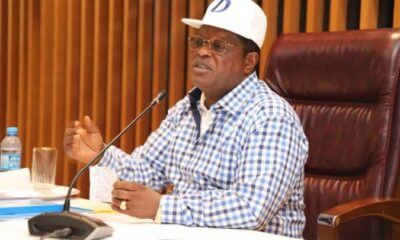




Anyone can pay the N25,000 wrong packing penalty slammed on Peter Obi, candidate of the Nigeria Democratic Congress by Festus Keyamo, Minister of Aviation and Aerospace Development, last week.
This was the angle introduced by the Minister, on Friday, when he acceded to the request of one Nnaemeka Ikerionwu, who volunteered to pick up the tab against the former Governor of Anambra State and candidate of the Labour (LP), in the 2023 presidential election.
Keyamo, who directed to the volunteer to liaise with the Federal Airports Authority of Nigeria (FAAN), on the payment process, had last Friday, Keyamo, in a statement posted on his X handle, demanded that Obi tendered a public apology to airport officials and pay a N25,000 fine.
Though the minister’s latest response suggests that government is willing to accept payment of the fine through a third party, he was however silent on whether his earlier demand that Obi tender a public apology to airport officials had been waived.
The new twist came as a consequence of what the Minister said was his investigation after the former governor cried out about alleged harassment by the Federal Government, citing the clamping of his car by airport staff during one of his use of the facility as an example.
The Minister had released as part of the investigation, a Close Circuit Television (CCTV) footage, to prove that Obi’s vehicle was parked unattended in a restricted area, prompting airport security personnel to clamp its tyres.
Keyamo said Obi arrived at the domestic wing of the Nnamdi Azikiwe International Airport, Abuja, on July 4, 2026, and left the vehicle after being dropped off by a police driver.
Meanwhile, in a post on his X handle, the Minister responded to Ikerionwu’s offer to settle the fine on Obi’s behalf by asking him to meet with FAAN’s Director of Commercial and Business Development for guidance on the payment process.
He wrote: “Thank you for bringing this to my attention. Please, Mr Nnaemeka Ikerionwu should proceed to see the Director of Commercial and Business Development for the Federal Airports Authority of Nigeria (FAAN), and he will be directed on the mode of payment of the fine for the offender.
“Now that we have burst his bubble, next time, Peter Obi should think twice before making outlandish claims of being targeted at our airports or anywhere for that matter in order to get ‘sympathy votes’.”
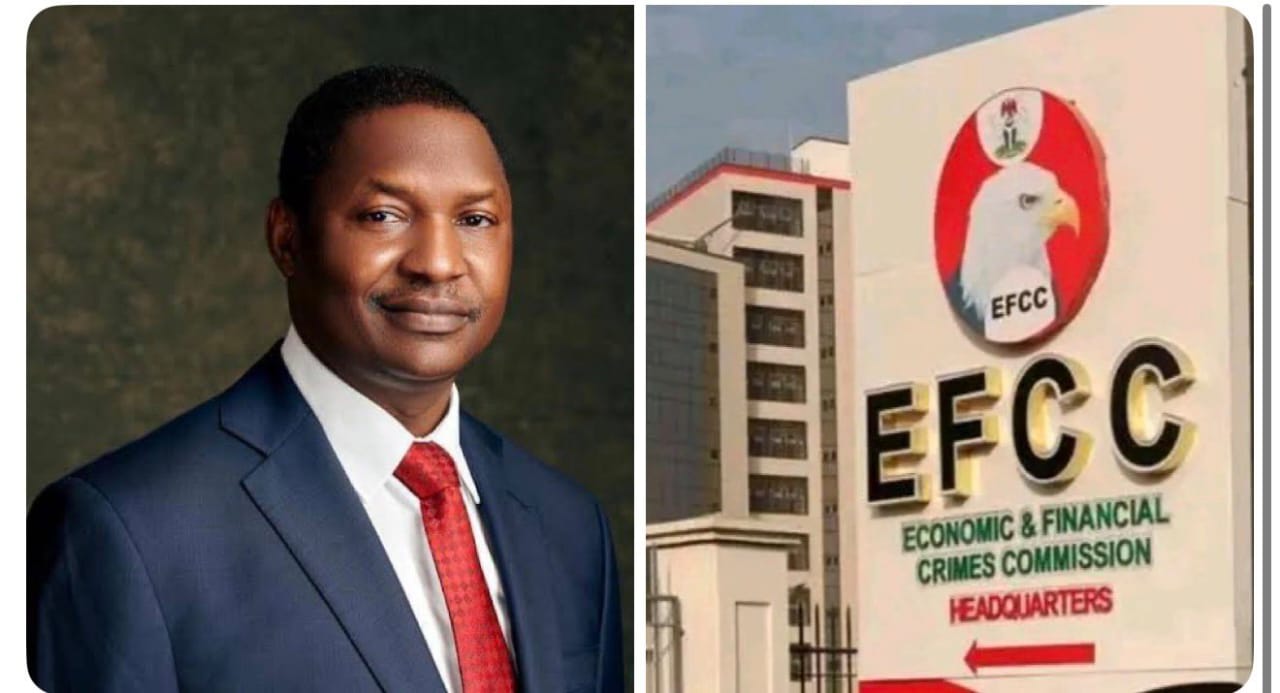
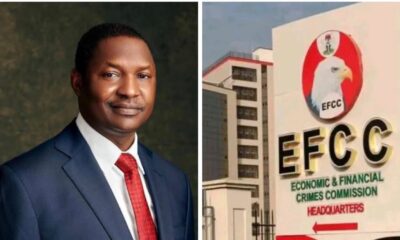
Abubakar Malami, is going upstairs to get the Court of Appeal quash the judgement of the Federal High Court, Abuja, empowering the Federal Government to seize 40 properties allegedly linked to him.
Justice Joyce Abdulmalik of the Federal High Court, Abuja, had ordered the forfeiture of the properties valued at N212.8billion, after the Economic and Financial Crimes Commission (EFCC), convinced him that they were obtained through illegal means by the former AGF-MoJ.
Before delivering the substantive judgment, the judge dismissed several applications, motions on notice and applications to show cause filed by Malami, his family members, and some companies linked to the properties, describing them as “wanting in merit”.
She held that the issue before the court was not “who owns the property, but how legitimate are the funds used to acquire the properties, adding that Malami, had “not dislodged the reasonable suspicion that the property was acquired by unlawful activities.”
But the ex-AGF-MoJ, in a statement conveyed through Bello Doka, his spokesman on Friday, stated that he respectfully disagreed with aspects of the judgment, though he remained fully committed to the rule of law and the independence of the judiciary.
He said he had instructed his legal team to immediately challenge the decision at the Court of Appeal, in line with his fundamental rights, adding that the judgement of the lower court was not the final stamp on the matter.
“The appellate process exists to ensure that every legal issue is thoroughly examined, and Mr. Malami is confident that justice will ultimately prevail,” he said, urging the public and the media to avoid premature conclusions while the judicial process runs its full course. Respect for due process remains the cornerstone of every democratic society.
Expressing his sincere appreciation of the prayers, goodwill, and steadfast support of the people of Kebbi State and Nigerians across the country, over the matter, he assured them that the development would not distract him from his unwavering commitment to serving the people and advancing his vision for a peaceful, secure, and prosperous Kebbi State.
“Supporters are encouraged to remain calm, peaceful, and law-abiding while allowing the courts to perform their constitutional role,” he said.
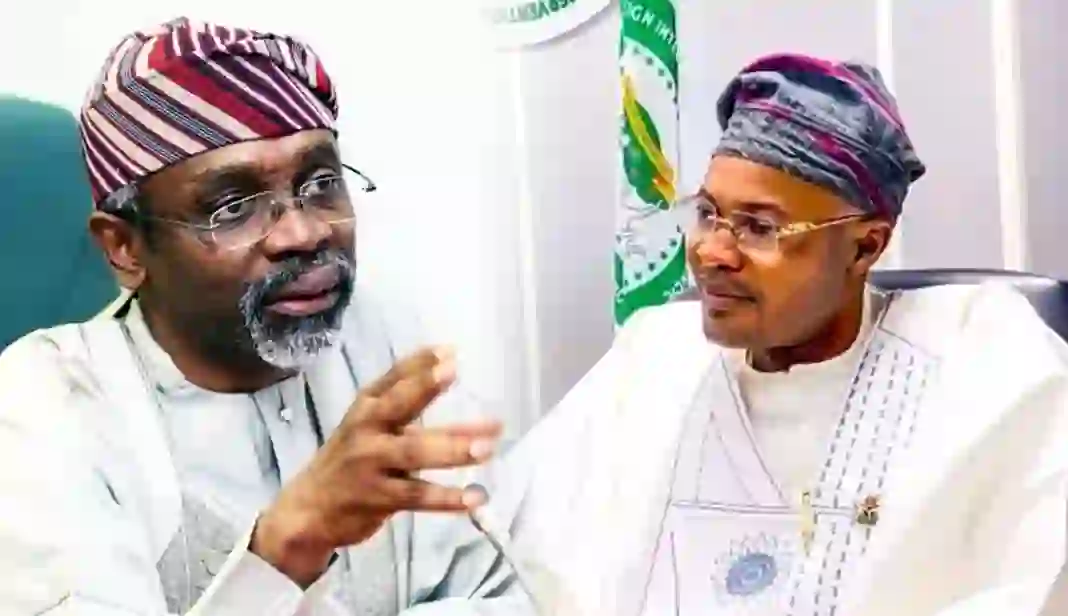
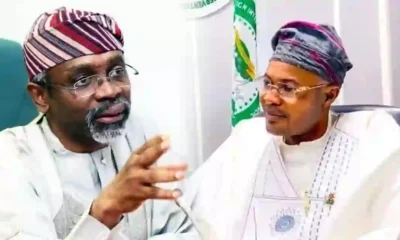
Adeniyi Adeyemi, controversial Director General of the Presidential Foreign Intervention Promotion Council (PFIPC), is to cough out a whopping N15billion, should he be found guilty of defaming Femi Gbajabiamila, Chief of Staff (CoS) to President Bola Tinubu.
The former Speaker of the House of Representatives, has approached the Federal Capital Territory (FCT) High Court, Abuja, Gbajabiamila, with a suit to compel the payment after flatly denying the allegation of the embattled DG, having ignored his earlier demand of N10billion and an apology from Adeyemi as the only option to stop the legal action.
Adeyemi, who was on Tuesday, arrested by the police in Osun State, barely hours after Justice Mohammed Umar of a Federal High Court in Abuja issued a warrant for that purpose, had publicly accused Gbajabiamila during a press conference on June 25, 2026, of demanding a 48 per cent kickback from a N27.3 billion take-off grant, after receiving an initial N400 million through a proxy, and demanded an additional N200 million balance.
Gbajabiamila, who handed him a 72-hour ultimatum to retract the allegation and tender a public apology or face legal action, in the suit filed on Thursday is seeking N10 billion as general damages, N5 billion as aggravated damages, N200 million as cost of the action, and an order compelling Adeyemi to publish a full retraction and apology in five national newspapers.
He is also asking the court to direct the defendant to pin the apology on all social media platforms and online channels where the alleged defamatory statements were published for 30 days.
The Chief of Staff, through his legal team from Pinheiro LP led by Kemi Pinheiro, SAN, described the allegations as false, malicious and defamatory.
In the statement of claim, Gbajabiamila denied ever meeting or communicating with Adeyemi or authorising anyone to act on his behalf.
Adeyemi, who had alleged at a press conference that a disagreement arose after Gbajabiamila purportedly demanded a 48 per cent kickback from the agency’s N27.3 billion take-off grant, had also claimed that N400 million had already been paid through a proxy on behalf of the Chief of Staff, while an additional N200 million was required to secure presidential approvals.
“The claimant has never met the defendant, never held any meeting with him and has never authorised any intermediary, representative, agent or proxy to demand or receive money on his behalf,” the court filing stated.
The suit also referred to Adeyemi’s claims regarding the alleged mysterious death of an intermediary, Mr. Babatunde Tanimola, whom he claimed served as the link between himself and the Chief of Staff.
Adeyemi alleged that Tanimola died in a suspicious hotel fire in Utako, Abuja, on October 22, 2025, a day after Gbajabiamila allegedly petitioned the police.
He further claimed that he narrowly escaped an assassination attempt along the Abuja-Kaduna Expressway in September 2025, and alleged that a “directive from above” instructed the Department of State Services, DSS, and the Nigeria Police Force to discontinue efforts to recover his stolen mobile phones, which he claimed contained crucial evidence.



-

 News1 week ago
BREAKING: Mystery death! *Female student dies a day after arriving Umahi’s home!
-

 News1 week ago
Don’t jump to conclusion! *Umahi speaks on mysterious death of female students!
-

 News3 weeks ago
BREAKING: Court sentences Nigerien, two others to death over terrorism
-
 News2 weeks ago
BREAKING: EX-SSG mowed down by gunmen! *He resisted being kidnapped – driver
-
 News4 weeks ago
Two hours after Igboho’s ‘red-eyes’ to ‘Fulani’ leaders, gunmen free kidnap victims!
-
 News3 days ago
BREAKING: Terrorists strikes another school! *Kidnap principal, students, NECO official!
-

 News4 weeks ago
Abductors of Oyo teachers panicking, freedom coming for victims soon!
-
 News4 weeks ago
Chicagogate: Nigerians return to court! *Move to stop Tinubu from 2027 polls