

News
Dangote: Local and international conspiracy, sabotaging our fuel production


Local and international vested interests are at the root of a grand plot to stop the new Dangote Oil Refinery and Petrochemicals, from pumping out refined products, Nigeria’s major hope for lower prices of petroleum products, responsible for the high cost of commodities in the country, including skyrocketing food prices.
Devakumar Edwin, Vice President of Oil and Gas at Dangote Industries Limited, who particularly accused International Oil Companies (IOCs) in Nigeria of plans to frustrate the survival of the refinery, by “deliberately and willfully frustrating” the its efforts to buy local crude by hiking the cost above the market price, thereby forcing the it to import crude from countries as far as the United States, with its attendant high costs, also accused the Nigerian Midstream and Downstream Petroleum Regulatory Authority of granting licences indiscriminately to marketers to import dirty refined products into the country.


Edwin, who recalled how the Federal Government issued 25 licences for the construction of refineries in Nigeria, but only the Dangote Group delivered on its promise, while calling for the government’s support, noted that more than 3.5 billion litres of diesel and aviation fuel had been exported to Europe by the refinery in the past few months.
He said: “The Federal Government issued 25 licences to build refineries and we are the only one that delivered on our promise. In effect, we deserve every support from the government. It is good to note that from the start of production, more than 3.5 billion litres, which represents 90 per cent of our production, have been exported. We are calling on the Federal Government and regulators to give us the necessary support to create jobs and prosperity for the nation.”
He added that though the Nigerian Upstream Petroleum Regulatory Commission was trying its best to allocate crude oil for the 650,000-capacity refinery, “the IOCs are deliberately and willfully frustrating our efforts to buy the local crude.”
The Dangote official said the IOCs sometimes made the refinery pay $6 over and above the market price, saying this has forced the company to reduce its output as well as import crude from countries like the United States at a higher cost.
He said, “Recall that the NUPRC recently met with crude oil producers as well as refineries’ owners in Nigeria, in a bid to ensure full adherence to Domestic Crude Oil Supply Obligations as enunciated under section 109(2) of the Petroleum Industry Act. It seems that the IOCs’ objective is to ensure that our petroleum refinery fails. It is either they are deliberately asking for a ridiculous/humongous premium or they simply state that crude is not available. At some point, we paid $6 over and above the market price. This has forced us to reduce our output as well as import crude from countries as far as the US, increasing our cost of production.
“It appears that the objective of the IOCs is to ensure that Nigeria remains a country which exports crude oil and imports refined petroleum products. They (IOCs) are keen on exporting the raw materials to their home countries, creating employment and wealth for their countries, adding to their Gross Domestic Product, and dumping the expensive refined products into Nigeria – thus making us to be dependent on imported products. It is the same strategy the multinationals have been adopting in every commodity, making Nigeria and Sub-Saharan Africa to be facing unemployment and poverty, while they create wealth for themselves at our expense.”
“This is exploitation – pure and simple. Unfortunately, the country is also playing into their hands by continuing to issue import licences at the expense of our economy and at the cost of the health of the Nigerians who are exposed to carcinogenic products.”
It was said that even though Dangote is producing and bringing diesel into the market, complying with the regulations of the Economic Community of West African States, “licences are being issued, in large quantities, to traders who are buying the extremely high sulphur diesel from Russia and dumping it in the Nigerian market.”
Edwin explained, “Since the US, European Union and the United Kingdom imposed a price cap scheme from February 5, 2023, on Russian petroleum products, a large number of vessels are waiting near Togo with Russian ultra-high sulphur diesel and they are being purchased and dumped into the Nigerian market.
“Some of the European countries were so alarmed about the carcinogenic effect of the extra high sulphur diesel being dumped into the Nigerian market that countries like Belgium and the Netherlands imposed a ban on such fuel being exported from its country, into West Africa recently. Sadly, the country is giving import licences for such dirty diesel to be imported into Nigeria when we have more than adequate petroleum refining capacity locally.”
He recalled that in May, Belgium and the Netherlands adopted new quality standards to halt the export of cheap, low-quality fuels to West Africa, harmonising its standards with those of the European Union.
These measures, according to Edwin, synchronised fuel export standards with the European domestic market, specifically targeting diesel and petrol with high sulphur and chemical content.
Historically, he recounted that these fuels with sulphur content reaching up to 10,000 ppm, were exported at reduced rates to countries like Nigeria and other West African consumers.
He mentioned that Belgium’s Minister of Environment, Zakia Khattabi, announced that his country followed the Netherlands, which in April 2023 also prohibited the export of low-quality petrol and diesel to West Africa via the ports of Amsterdam and Rotterdam.
He quoted Khattabi as saying, “For far too long toxic fuels have been departing from Belgium to destinations including Africa. They cause extremely poor air quality in countries such as Ghana, Nigeria, and Cameroon and are even carcinogenic.”
Edwin narrated that a September 2017 investigation by an international organisation, Public Eye, revealed that polluted and toxic fuels were being exported on a large scale from the ports of Rotterdam and Amsterdam for export to African markets.
He reiterated that as much as a quarter of the petrol and diesel available in West Africa originated from the ports of Amsterdam, Rotterdam, and Antwerp, stressing that these fuels contain sulphur and other pollutants, such as cancer-causing benzene, in quantities up to 400 times the limits permitted in Europe.
Edwin fumed, “The decision of the Nigerian Midstream and Downstream Petroleum Regulatory Authority in granting licenses indiscriminately for the importation of dirty diesel and aviation fuel has made the Dangote refinery expand into foreign markets. The refinery has recently exported diesel and aviation fuel to Europe and other parts of the world. The same industry players fought us for crashing the price of diesel and aviation fuel, but our aim, as I have said earlier, is to grow our economy.”
He noted that because the refinery meets the international standard as well as complies with stringent guidelines and regulations to protect the local environment, it has been able to export its products to Europe and other parts of the world.
While appealing to the Federal Government and the National Assembly to urgently intervene for speedy implementation of the PIA and to ensure the interest of Nigeria and Nigerians are protected, he remarked, “Recently, the government of Ghana, through legislation has banned the importation of highly contaminated diesel and PMS into their county.
“It is regrettable that in Nigeria, import licences are granted despite knowing that we can produce nearly double the amount of products needed in Nigeria and even export the surplus. Since January 2021, ECOWAS regulations have prohibited the import of highly contaminated diesel into the region.”
The PUNCH reports that the President of the Dangote Group, Aliko Dangote, had recently accused some powerful individuals of frustrating his refinery, adding that the IOCs were denying him access to crude oil.
“In a system where, for 35 years, people are used to counting good money, and all of a sudden, they see that the days of counting that money have come to an end, you don’t expect them to pray for you. Of course, you expect them to fight back.
“And I think that is the process that we’re now really going through. But the truth is that, yes, the country, the sub-region, and also the continent, of sub-Saharan Africa, need this refinery. So, you expect them to fight through non-supply of crude, non-purchase of the product, but I think it’s all temporary. We’ll get there,” Aliko added.
Dangote recalled that he was once persuaded by a former Minister of Energy in Saudi Arabia, Khalid Al-Falih, to shelve the idea of building a refinery. However, he said he told the former minister that he did not need his advice.
“Four years ago, I was in Saudi Arabia during the fasting period, and I was invited for the breaking of the fast, Dr Falih, who used to be the Minister of Energy invited me to come and break the fast with him and I went there. He just said, ‘Aliko, I heard that you’re planning on building a refinery, what capacity?’ I said 650,000. He kept quiet for a while and said, ‘You know just about 120km from Mecca, we are building one and I think I would like you to go and have a look. We as Saudi Aramco, are facing a lot of challenges and, we are proceeding with it, but my advice to you is not to do it because normally, refineries are built by major oil corporations or sovereign countries.’
“I said, ‘But Your Excellency, unfortunately, we have already started, so I’m not looking for advice.’ That was really how we continued,” he recounted.
Dangote revealed that both local and international cartels, which he described as “mafia”, made repeated attempts to sabotage the $19bn refinery project located in Lagos.
“Well, I knew that there would be a fight. But I didn’t know that the mafia in oil, they are stronger than the mafia in drugs. I can tell you that. Yes, it’s a fact,” he said.
Dangote, who described himself as a fighter, said they tried all sorts to stop him.
“As a matter of fact, during the COVID period, some of the international banks were looking forward to making sure that they push us into default of our loans so that the project would just be dead. And that didn’t happen with the help of banks like Afreximbank,” it was stated.
The PUNCH reports that despite its huge crude oil reserves, Nigeria still depends heavily on imported refined fuel.
But Dangote recently said Nigeria would no longer import any fuel by the time he begins the sale of PMS in the third week of July.
Efforts to get the IOCs to react to the development through the Oil Producers Trade Section of the Lagos Chamber of Commerce and Industry were unsuccessful.
The Director-General, LCCI, Chinyere Almona, had yet to respond to a text sent to her on the matter up till when this report was filed after her phone number remained unreachable.
Also, the spokesperson of NMDPRA, George Ene-Ita, requested details about the claims of the Dangote official when contacted. This was sent to him, but he had yet to send a response up till when this report was filed.









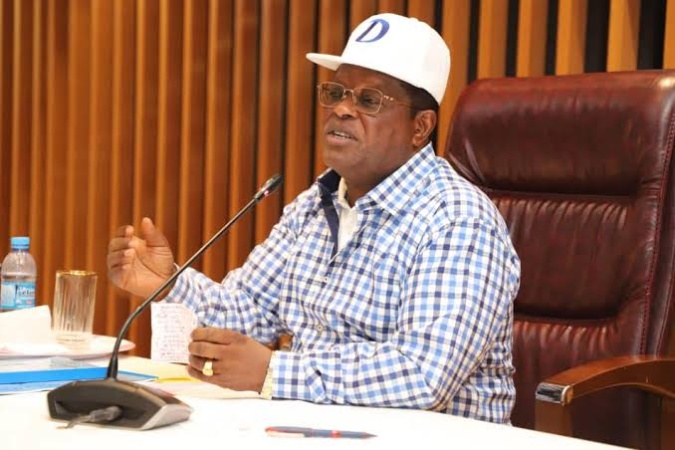
For those eager to speculate around the sudden death of Mary Habila, a female student who reportedly died inside one of the rooms in the country home of Dave Umahi, located in Uburu, Ebonyi State, there is a message from the Minister of Works – prepare to meet me in court.
The circumstances surrounding the mysterious death of the lady said to be a physiotherapist, has been a subject of intense speculation, since the news was broken on Saturday by SaharaReporters, a foremost Nigerian online newspaper.
Umahi, who had earlier stated how he was shocked by the incident, explained that the deceased was one of the two employees of the David Umahi Federal University of Health Sciences, Uburu, who had been on secondment to the Federal Ministry of Works as physiotherapists for the past three years until, before her unfortunate passing.
On Saturday, the Minister, had warned those he referred as “tale bearers” to apply caution, to enable the police conduct unfettered investigation into the matter, said to have occurred in his palatial home on June 27.
Conveying the position of his boss, Nwaze, Senior Special Assistant on Media and Publicity had said in a statement: “The attention of the Media Office of the Honourable Minister of Works, Senator Engr. David Nweze Umahi, has been drawn to a publication by a publication concerning the unfortunate passing of Miss Mary Habila in Uburu, Ebonyi State, alleging that the circumstances surrounding her death were shrouded in secrecy.
“The Honourable Minister received the news with profound shock and sadness and has since extended his heartfelt condolences to the bereaved family. For the avoidance of doubt, immediately the unfortunate incident occurred, appropriate emergency steps were taken. Medical personnel, including the Chief Medical Director of the David Umahi Federal University of Health Sciences, Uburu, were contacted without delay, while the Nigeria Police was promptly notified in accordance with the law.
“Following confirmation of Miss Habila’s passing, the Honourable Minister personally received her parents, conveyed his sincere condolences, and advised that an autopsy be conducted to scientifically establish the exact cause of death. At the time, however, the family declined the recommendation.
“It is important to clarify that Miss Mary Habila and Miss Anita Baski are employees of the David Umahi Federal University of Health Sciences, Uburu, who had been on secondment to the Federal Ministry of Works as physiotherapists for the past three years until the unfortunate passing of Miss Habila.
“Following the recent developments and in the interest of ensuring that the truth is established beyond doubt, the Honourable Minister has again reiterated his position that an autopsy must be conducted. He remains convinced that this is the most credible and responsible path to resolving all questions surrounding the unfortunate incident.
“We therefore urge the public to exercise restraint, refrain from speculation or premature conclusions, and allow the relevant authorities to carry out their responsibilities without interference. At this difficult time, our thoughts and prayers remain with the family of the deceased, and we pray that God grants them the strength to bear this irreparable loss.”
Upping the ante, Umahi, told reporters on Sunday during the inspection of work along the Ebonyi section of the Calabar–Ebonyi–Benue–Nasarawa–Abuja Super Highway, saying his lawyers had been fully briefed to pursue legal action against those responsible for circulating alleged defamatory reports against him.
The Minister, who was quoted as condemning what he described as defamatory activities by “evil people who claim to be freedom fighters”, insisting such conduct should never be tolerated, explained that there was nothing hidden about the incident.
Explaining that the family of the deceased was in the full picture of the incident, being the ones who forced open the doors to the room after becoming concerned and immediately sought medical assistance, he said the police was fully in the matter also.
Wondering what led to people insinuating coverup on a matter that was already with the police, he was quoted as saying: “The family broke the girl’s door, called doctors from DUFUTH, who took her to hospital and did everything to revive her, but failed. The family reported the matter to the police, so where is the secrecy?”
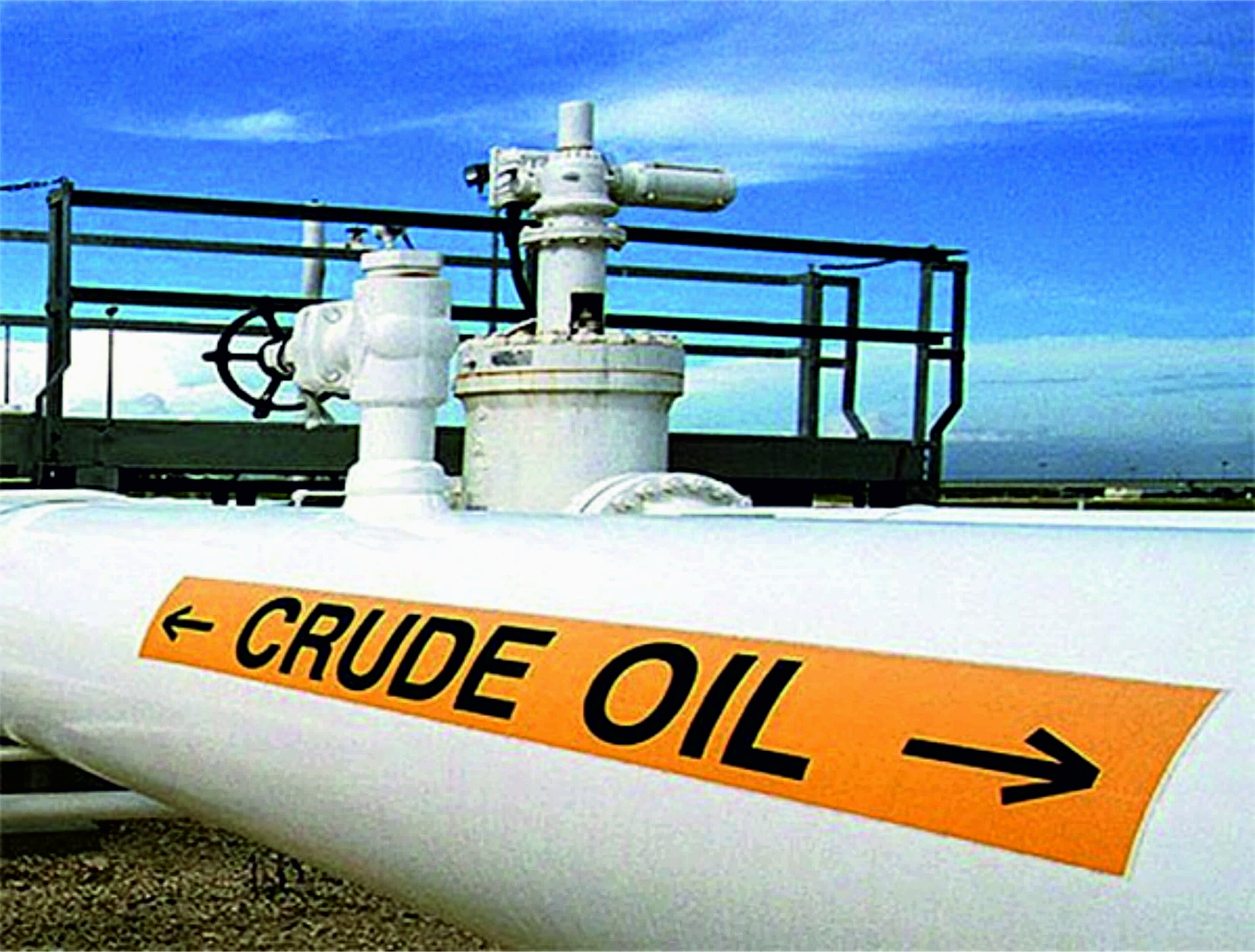
For the first time in six years, Nigeria has recorded a crude oil and condensate production increase of an average of 1,735,398 barrels per day in June 2026, after posting consecutive four-month growth.
The Nigerian Upstream Petroleum Regulatory Commission (NUPRC), which made the announcement on Sunday, also indicated that the also met its production quota set by the Organisation of Petroleum Exporting Countries (OPEC).
Against the backdrop of scenarios, where oil theft and other shortcomings in the industry, which seemed peculiar had previously hampered crude production, which at a point dipped to as low as 700,000bpd, the agency through Eniola Akinkuotu, its spokesman, stated that in June, crude oil production hit 1.56mbpd while 0.18mbpd of condensates was produced, meaning the figure exceeded the OPEC quota of 1.5 mbpd by four per cent.
In strict crude oil terms (excluding condensates), the 1.56 million daily average production Nigeria witnessed in June is the highest that Africa’s biggest oil producer has recorded since April 2020, thus representing a 74-month high, the statement added.
Stressing the feat, the agency said in June, the peak combined crude oil and condensate production was 1.89mbpd, reflecting Nigeria’s potential to reach two million barrels per day in the near term, but however, the lowest production was 1.57mbpd for the period in review.
The NUPRC, while also stating that the improved performance was primarily driven by stable production operations across most producing assets, said the absence of any major pipeline outages during the period under review, resulting in enhanced operational stability supported improved production uptime and crude evacuation efficiency.

If a marching order by President Bola Tinubu, is achieved, every Nigerian would be captured in in the national identity database before the end of 2026, going by the signals coming from the National Identity Management Commission (NIMC).
Abisoye Coker-Odusote, Director General and Chief Executive Officer, who gave the out the information, said the President, the directive formed part of the Federal Government’s efforts to establish a comprehensive national identity system capable of supporting effective governance, planning, and service delivery.
A guest on Sunday Politics, a public affairs programme on Channels Television, the NIMC boss, told her host: “The President has given us till the end of this year to make sure that we capture every single Nigerian.
“What we have done is we have partnered through the World Bank ID4D project with front-end partners. They are part of the digital identity ecosystem. These are private citizens that we’ve enabled and given jobs to enrol citizens on our behalf.”
Stressing that the mandate of the agency, she explained that the National Identification Number (NIN) remained a unique identifier, ensuring that every individual is registered only once, stating that presently, Nigeria’s actual population remains uncertain, with estimates ranging from 200 million to 250 million, making a comprehensive identity database essential for national planning.
She said: “That’s why it’s called a unique identifier, so that you’re only enrolled once. It is estimated that we’re 200 million. When we’re done enrolling, we will then know the actual numbers that we have. Some estimates say 230 million, while a few people say 250 million.
“Your identity is basically the foundation for effective governance and service delivery. How can you plan if you don’t know the total number of persons that you have? We have been mandated by Mr President to go down to the community levels to enrol every single Nigerian.”
Dismissing the possibility of double registration under different guises, she said the NIMC boss said the commission’s biometric verification system prevents such occurrences, adding that while the previous system could accept duplicate enrolments before detecting them later, the current process automatically identified and invalidated multiple registrations.
“The legacy system had no way of verifying at the front end whether you had already been captured. Once the record comes into the system, it flags it as a duplicate or that the person already exists in the database.
“You would only have one identity generated for you. The other record goes into a deduplication bucket where it is invalidated. One of the things that this Act has done is to cement our role in capturing biometrics. Private and public sector organisations will no longer capture biometrics independently. They will validate identities through API integration with NIMC.
“The telcos are already doing that with us. If you need a SIM card, they capture your facial biometrics, which are matched against our database in real time to confirm that you are who you claim to be. We’re using biometric validation to tighten security around identity confirmation.”



-

 News2 days ago
BREAKING: Mystery death! *Female student dies a day after arriving Umahi’s home!
-
 News4 weeks ago
BREAKING: Troops rescue wife of kidnapped General! *Terrorists flee scene
-
 News4 weeks ago
BREAKING: Count me out, Okonkwo tells Atiku *Amaechi VP’s choice an insult to Ndigbo
-

 News3 weeks ago
BREAKING: Court sentences Nigerien, two others to death over terrorism
-

 News2 days ago
Don’t jump to conclusion! *Umahi speaks on mysterious death of female students!
-
 News1 week ago
BREAKING: EX-SSG mowed down by gunmen! *He resisted being kidnapped – driver
-

 News3 weeks ago
Abductors of Oyo teachers panicking, freedom coming for victims soon!
-

 News3 weeks ago
Two hours after Igboho’s ‘red-eyes’ to ‘Fulani’ leaders, gunmen free kidnap victims!