

News
Fulanis avenge MACBAN boss’ death with fresh deadly Benue killings

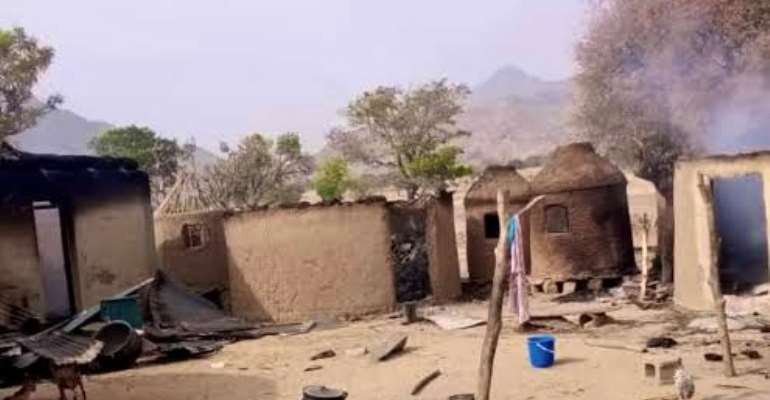
Another coordinated attacks on farming communities in Otukpo Local Government Area, have increased the tally of the continuous killings in Benue State, Nigeria’s food basket, which has remained a major hotbed in the massive insecurity Nigeria is currently witnessing.
Zagazola Makama, a counter-insurgency publication focused on the Lake Chad region, which broke the story, said the attacks took place between Friday and the early hours of Sunday, targeting Akpachi village in Ugboju community and Otukpo-Nobi community.


The publication said several residents were injured, while many fled their homes to escape the violence, quoted sources as saying specifically that the attacks began on Friday when armed men invaded farmlands at Akpachi village.
“According to the sources, the assailants killed two of the farmers, while the third victim managed to escape and alerted members of the community. Search teams later recovered the bodies on Saturday, and the victims were buried shortly afterwards.
“However, before residents could recover from the tragedy, the attackers returned in the early hours of Sunday, launching another deadly assault on Otukpo-Nobi community at about 4:00 a.m.
“The gunmen reportedly opened fire indiscriminately on sleeping residents, killing at least 16 people on the spot while leaving several others with gunshot injuries.”
The publication said the actual casualty figure is feared to be higher as local volunteers and security personnel continued search operations in surrounding bushes for missing persons, adding that the attacks had thrown communities across Otukpo into mourning, with many residents abandoning their homes amid fears of further attacks.
The report, said the attacks came barely two weeks after the killing of Ardo Risku Mohammed, Benue state chairman of the Miyetti Allah Cattle Breeders Association of Nigeria (MACBAN), and Yakubu Isah, his associate, who were ambushed and killed at Okutu community while returning from a peace meeting in Idekpa, Ohimini LGA.
Informing that security operatives had launched investigation, the report said one of the angles being probed into included the possibility of the the latest attacks being carried out in retaliation for the earlier killing of the MACBAN chairman.
The incident was said to have sparked immediate responses from communities in Otukpo, where hundreds of youths were said to have taken to the streets on Sunday, carrying the bodies of some of the victims to the palace of the Och’Idoma during a church service to demand urgent government intervention.
Quoting witnesses as saying that the protesters accused the government and security agencies of failing to protect farming communities from repeated attacks, the report said: “The protest quickly spread across Otukpo town, with major roads barricaded by demonstrators, causing severe traffic disruption and leaving commuters stranded for several hours.
“Residents described the atmosphere as tense, with businesses temporarily shutting down while security operatives monitored the situation to prevent further escalation.
“One of the protesters, Ebi Adoyi, lamented that many families had been devastated by the attacks and warned that the casualty figure could rise as more bodies might still be discovered in nearby forests.”
Maxwell Ogiri, Chairman of Otukpo LGA, who confirmed both attacks, was quoted as saying preliminary findings suggested they might be linked to reprisals following the killing of the MACBAN chairman, adding that after the first attack at Akpachi village, security personnel and local vigilantes searched the surrounding bushes, believing the attackers had fled.
His words: “The bandits came and killed two farmers on Friday. One escaped and alerted the community. We recovered the bodies on Saturday and buried them. After searching the surrounding bushes, we believed they had left the area, but around 4 a.m. on Sunday, we received distress calls that they had invaded Otukpo-Nobi, killing several people and injuring many others.”












For the first time in six years, Nigeria has recorded a crude oil and condensate production increase of an average of 1,735,398 barrels per day in June 2026, after posting consecutive four-month growth.
The Nigerian Upstream Petroleum Regulatory Commission (NUPRC), which made the announcement on Sunday, also indicated that the also met its production quota set by the Organisation of Petroleum Exporting Countries (OPEC).
Against the backdrop of scenarios, where oil theft and other shortcomings in the industry, which seemed peculiar had previously hampered crude production, which at a point dipped to as low as 700,000bpd, the agency through Eniola Akinkuotu, its spokesman, stated that in June, crude oil production hit 1.56mbpd while 0.18mbpd of condensates was produced, meaning the figure exceeded the OPEC quota of 1.5 mbpd by four per cent.
In strict crude oil terms (excluding condensates), the 1.56 million daily average production Nigeria witnessed in June is the highest that Africa’s biggest oil producer has recorded since April 2020, thus representing a 74-month high, the statement added.
Stressing the feat, the agency said in June, the peak combined crude oil and condensate production was 1.89mbpd, reflecting Nigeria’s potential to reach two million barrels per day in the near term, but however, the lowest production was 1.57mbpd for the period in review.
The NUPRC, while also stating that the improved performance was primarily driven by stable production operations across most producing assets, said the absence of any major pipeline outages during the period under review, resulting in enhanced operational stability supported improved production uptime and crude evacuation efficiency.
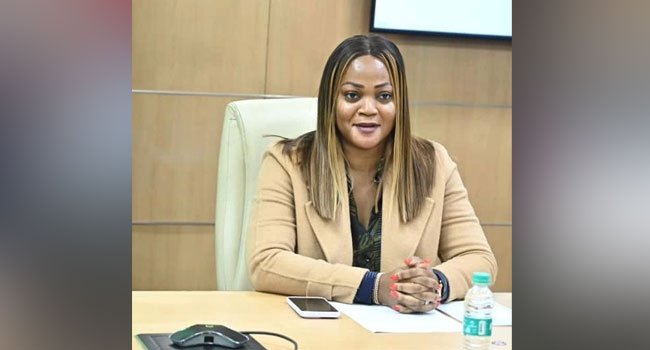
If a marching order by President Bola Tinubu, is achieved, every Nigerian would be captured in in the national identity database before the end of 2026, going by the signals coming from the National Identity Management Commission (NIMC).
Abisoye Coker-Odusote, Director General and Chief Executive Officer, who gave the out the information, said the President, the directive formed part of the Federal Government’s efforts to establish a comprehensive national identity system capable of supporting effective governance, planning, and service delivery.
A guest on Sunday Politics, a public affairs programme on Channels Television, the NIMC boss, told her host: “The President has given us till the end of this year to make sure that we capture every single Nigerian.
“What we have done is we have partnered through the World Bank ID4D project with front-end partners. They are part of the digital identity ecosystem. These are private citizens that we’ve enabled and given jobs to enrol citizens on our behalf.”
Stressing that the mandate of the agency, she explained that the National Identification Number (NIN) remained a unique identifier, ensuring that every individual is registered only once, stating that presently, Nigeria’s actual population remains uncertain, with estimates ranging from 200 million to 250 million, making a comprehensive identity database essential for national planning.
She said: “That’s why it’s called a unique identifier, so that you’re only enrolled once. It is estimated that we’re 200 million. When we’re done enrolling, we will then know the actual numbers that we have. Some estimates say 230 million, while a few people say 250 million.
“Your identity is basically the foundation for effective governance and service delivery. How can you plan if you don’t know the total number of persons that you have? We have been mandated by Mr President to go down to the community levels to enrol every single Nigerian.”
Dismissing the possibility of double registration under different guises, she said the NIMC boss said the commission’s biometric verification system prevents such occurrences, adding that while the previous system could accept duplicate enrolments before detecting them later, the current process automatically identified and invalidated multiple registrations.
“The legacy system had no way of verifying at the front end whether you had already been captured. Once the record comes into the system, it flags it as a duplicate or that the person already exists in the database.
“You would only have one identity generated for you. The other record goes into a deduplication bucket where it is invalidated. One of the things that this Act has done is to cement our role in capturing biometrics. Private and public sector organisations will no longer capture biometrics independently. They will validate identities through API integration with NIMC.
“The telcos are already doing that with us. If you need a SIM card, they capture your facial biometrics, which are matched against our database in real time to confirm that you are who you claim to be. We’re using biometric validation to tighten security around identity confirmation.”
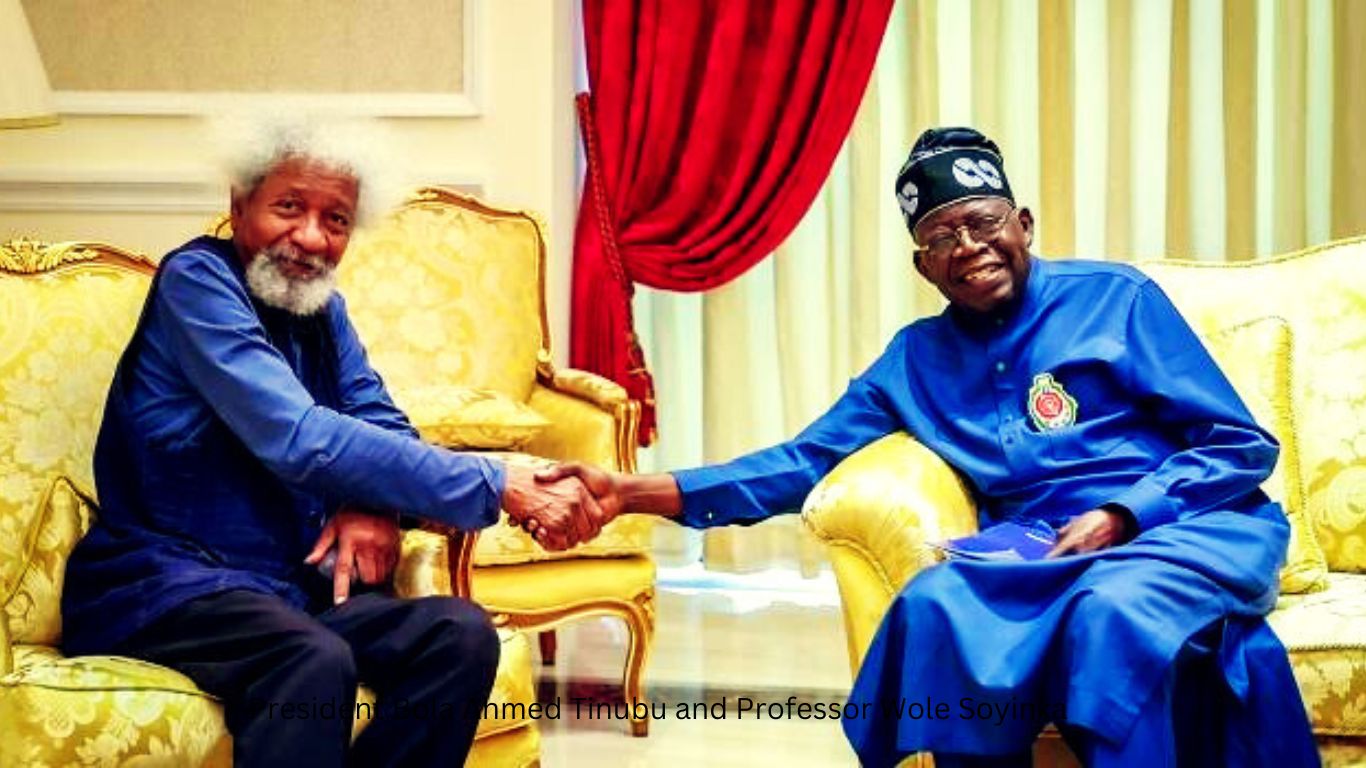
“Exceptional individuals like Professor Soyinka do not come often in a generation, men who illuminate the paths for humanity to follow across diverse endeavours, who are not afraid to go against convention, and who do not let the man die in the face of oppression and injustice.”
These were the words of President Bola Tinubu, with which he rolled out the red carpets at the Presidential Villa Abuja, to celebrate Wole Soyinka as “a gift we will always treasure” as the renowned playwright, author and activist turned 92 on Monday.
In the emotion-dripping tribute, conveyed through a the State House on Sunday, the President spoke of Soyinka’s contributions to literature, democracy and good governance, describing him as one of Nigeria’s most influential public figures.
Praising the nonagenarian for showcasing courage and commitment to justice, Tinubu said: “Today, I celebrate a global icon and our nation’s literary star, Professor Akinwande Oluwole Babatunde Soyinka, on his 92nd birthday, July 13.”
The President recalled Soyinka’s achievements, including becoming the first African to win the Nobel Prize in Literature in 1986, and also reflected on Soyinka’s role in Nigeria’s democratic struggle, reminiscing on Professor Soyinka’s “valiant struggle against military dictatorship for decades, and his efforts in the June 12 struggle, for which we were both in the trenches.”
Describing the literary icon as a national treasure, Tinubu said: “Today, I salute one of our nation’s living repositories of history, knowledge, and courage. That he is with us is a gift we will always treasure. I thank him for his undying faith in the Nigerian project and wise counsel.”
The President said he joined people around the world in celebrating Soyinka’s influence on generations of writers, scholars and activists, adding: “I wish ‘Kongi’ many more years in excellent health.”



-

 News2 days ago
BREAKING: Mystery death! *Female student dies a day after arriving Umahi’s home!
-
 News4 weeks ago
BREAKING: Troops rescue wife of kidnapped General! *Terrorists flee scene
-
 News4 weeks ago
BREAKING: Count me out, Okonkwo tells Atiku *Amaechi VP’s choice an insult to Ndigbo
-
 News3 weeks ago
BREAKING: Court sentences Nigerien, two others to death over terrorism
-

 News2 days ago
Don’t jump to conclusion! *Umahi speaks on mysterious death of female students!
-
 News1 week ago
BREAKING: EX-SSG mowed down by gunmen! *He resisted being kidnapped – driver
-

 News3 weeks ago
Abductors of Oyo teachers panicking, freedom coming for victims soon!
-

 News3 weeks ago
Two hours after Igboho’s ‘red-eyes’ to ‘Fulani’ leaders, gunmen free kidnap victims!