

News
Fubara storms Rivers Assembly quarters *I’m in charge here! I’ve a new Speaker


In apparent determination to stamp his authority as Governor of Rivers State, Siminalayi Fubara, on Thursday, stormed the residential quarters of the 32 members of the state House of Assembly, 27 of whom are believed to have commenced the move to remove him from office through impeachment on the orders of the All Progressives Congress (APC).
In November 2023, 27 members of the assembly, had served the governor with an impeachment noticed, a move which set off a flurry of political brickbats in the state, including the demolition of the multi-billion naira state assembly complex by the governor and the division of the legislature into two houses, with one led by Edison Ehie loyal to the governor, while that of the G-27 LED BY Martin Amaewhule, loyal to Nyesom Wike, Fubara’s predecessor and now Minister of the Federal Capital Territory (FCT).


Matters got to a head with the eventual defection of the 27 members originally elected on the platform of the Peoples Democratic Party (PDP) to the All Progressives Congress (APC) on December 11, leading to their seats being declared vacant by the five-man assembly of Edihe, which further heightened the tension.
It took the intervention of President Bola Tinubu, who brokered a peace deal between the two camps, which led to de-escalation of hostilities, with the assembly members allowed to remain and Edihe resigning his office as Speaker to take up the assignment of Chief of Staff (CoS) to Fubara,
But both sides picked up the gauntlets again recently following the vetoing of the refusal of assent by the G27 on some of the laws it made and the governor’s declaration within the week that the lawmakers were not existing in his own reckoning, leading to the APC directing the assemblymen to commence his impeachment.
In apparent move to push down his authority in the state, the governor led some of officials to visit the assembly quarters, which serve as the official residence for the 32 legislators of the state and also houses the temporary chambers of the Martin Amaewhule-led state Assembly since the demolition of the main assembly building.
After the brief tour the governor left to inspect the Emohua-Kalabari road, slated for inauguration as part of his upcoming first-anniversary celebrations next week, where he praised the contractors to doing a good job, while also highlighting the importance of the project to the economic and social wellbeing of the state.
Regarding assembly visit, Fubara tsaid it was to assess the facility in light of the emergence of the new Speaker, suggesting that some work may be necessary to be carried out there, adding: “Is Assembly not part of my property? Is anything wrong going to check how things are going on there? You are aware of the development, we have a new speaker and I went there to see for myself how things are for myself because there might be a few things that I may do there for the good of our people.”
Four lawmakers loyal to the governor, who had on Wednesday elected the member representing the Bonny constituency Victor Oko-Jumbo as their Speaker, said the new assembly boss sworn in at 10 am during plenary on Wednesday, was enthroned in line with the Standing Order of the House.










For the first time in six years, Nigeria has recorded a crude oil and condensate production increase of an average of 1,735,398 barrels per day in June 2026, after posting consecutive four-month growth.
The Nigerian Upstream Petroleum Regulatory Commission (NUPRC), which made the announcement on Sunday, also indicated that the also met its production quota set by the Organisation of Petroleum Exporting Countries (OPEC).
Against the backdrop of scenarios, where oil theft and other shortcomings in the industry, which seemed peculiar had previously hampered crude production, which at a point dipped to as low as 700,000bpd, the agency through Eniola Akinkuotu, its spokesman, stated that in June, crude oil production hit 1.56mbpd while 0.18mbpd of condensates was produced, meaning the figure exceeded the OPEC quota of 1.5 mbpd by four per cent.
In strict crude oil terms (excluding condensates), the 1.56 million daily average production Nigeria witnessed in June is the highest that Africa’s biggest oil producer has recorded since April 2020, thus representing a 74-month high, the statement added.
Stressing the feat, the agency said in June, the peak combined crude oil and condensate production was 1.89mbpd, reflecting Nigeria’s potential to reach two million barrels per day in the near term, but however, the lowest production was 1.57mbpd for the period in review.
The NUPRC, while also stating that the improved performance was primarily driven by stable production operations across most producing assets, said the absence of any major pipeline outages during the period under review, resulting in enhanced operational stability supported improved production uptime and crude evacuation efficiency.
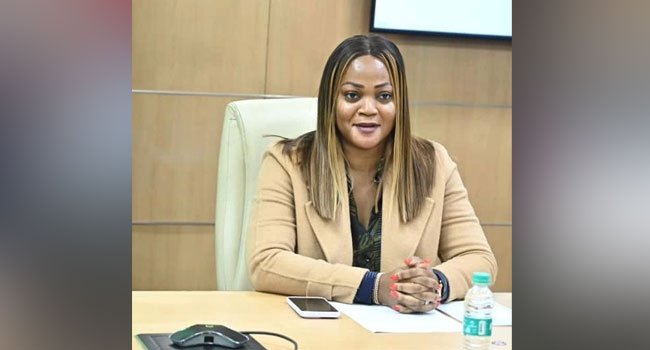
If a marching order by President Bola Tinubu, is achieved, every Nigerian would be captured in in the national identity database before the end of 2026, going by the signals coming from the National Identity Management Commission (NIMC).
Abisoye Coker-Odusote, Director General and Chief Executive Officer, who gave the out the information, said the President, the directive formed part of the Federal Government’s efforts to establish a comprehensive national identity system capable of supporting effective governance, planning, and service delivery.
A guest on Sunday Politics, a public affairs programme on Channels Television, the NIMC boss, told her host: “The President has given us till the end of this year to make sure that we capture every single Nigerian.
“What we have done is we have partnered through the World Bank ID4D project with front-end partners. They are part of the digital identity ecosystem. These are private citizens that we’ve enabled and given jobs to enrol citizens on our behalf.”
Stressing that the mandate of the agency, she explained that the National Identification Number (NIN) remained a unique identifier, ensuring that every individual is registered only once, stating that presently, Nigeria’s actual population remains uncertain, with estimates ranging from 200 million to 250 million, making a comprehensive identity database essential for national planning.
She said: “That’s why it’s called a unique identifier, so that you’re only enrolled once. It is estimated that we’re 200 million. When we’re done enrolling, we will then know the actual numbers that we have. Some estimates say 230 million, while a few people say 250 million.
“Your identity is basically the foundation for effective governance and service delivery. How can you plan if you don’t know the total number of persons that you have? We have been mandated by Mr President to go down to the community levels to enrol every single Nigerian.”
Dismissing the possibility of double registration under different guises, she said the NIMC boss said the commission’s biometric verification system prevents such occurrences, adding that while the previous system could accept duplicate enrolments before detecting them later, the current process automatically identified and invalidated multiple registrations.
“The legacy system had no way of verifying at the front end whether you had already been captured. Once the record comes into the system, it flags it as a duplicate or that the person already exists in the database.
“You would only have one identity generated for you. The other record goes into a deduplication bucket where it is invalidated. One of the things that this Act has done is to cement our role in capturing biometrics. Private and public sector organisations will no longer capture biometrics independently. They will validate identities through API integration with NIMC.
“The telcos are already doing that with us. If you need a SIM card, they capture your facial biometrics, which are matched against our database in real time to confirm that you are who you claim to be. We’re using biometric validation to tighten security around identity confirmation.”
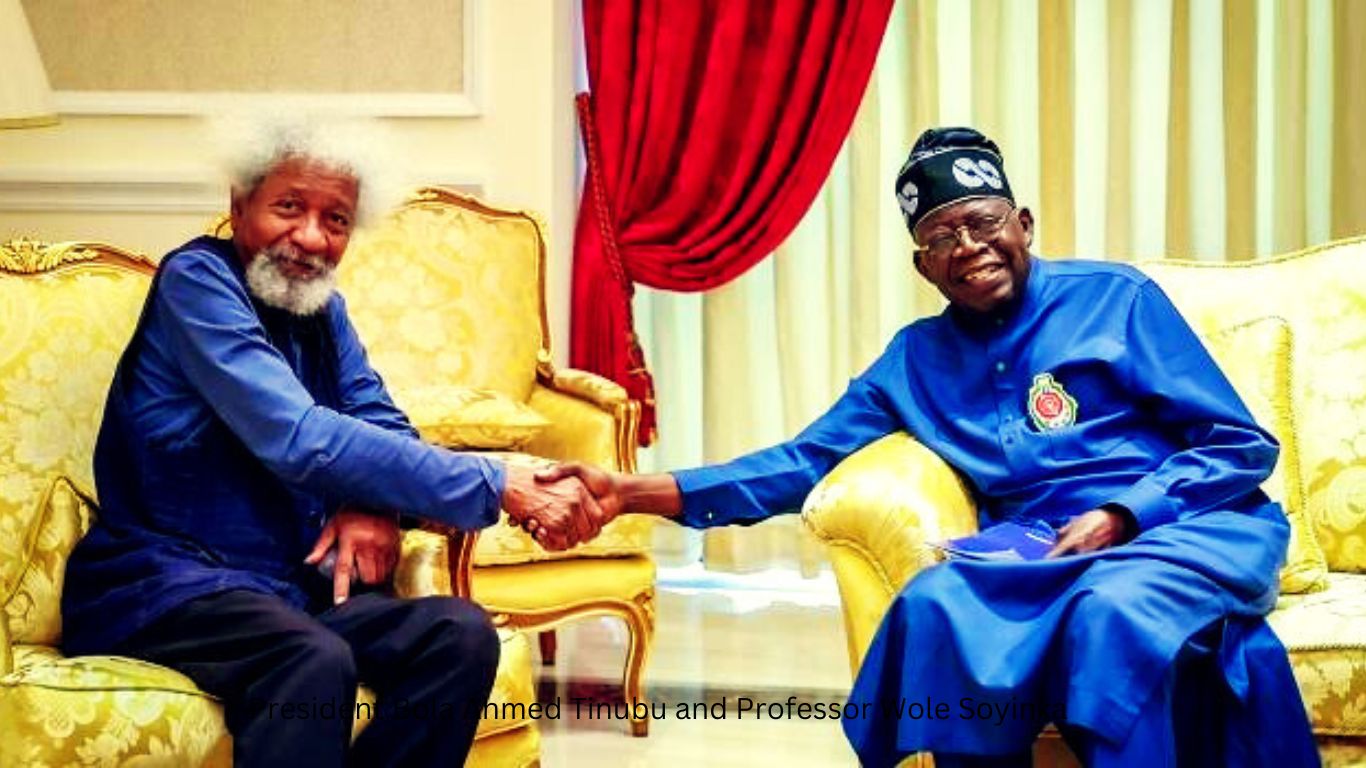
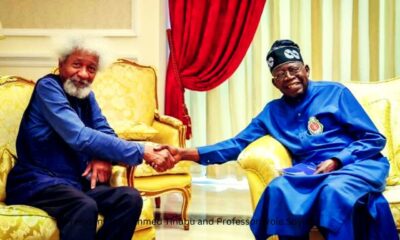
“Exceptional individuals like Professor Soyinka do not come often in a generation, men who illuminate the paths for humanity to follow across diverse endeavours, who are not afraid to go against convention, and who do not let the man die in the face of oppression and injustice.”
These were the words of President Bola Tinubu, with which he rolled out the red carpets at the Presidential Villa Abuja, to celebrate Wole Soyinka as “a gift we will always treasure” as the renowned playwright, author and activist turned 92 on Monday.
In the emotion-dripping tribute, conveyed through a the State House on Sunday, the President spoke of Soyinka’s contributions to literature, democracy and good governance, describing him as one of Nigeria’s most influential public figures.
Praising the nonagenarian for showcasing courage and commitment to justice, Tinubu said: “Today, I celebrate a global icon and our nation’s literary star, Professor Akinwande Oluwole Babatunde Soyinka, on his 92nd birthday, July 13.”
The President recalled Soyinka’s achievements, including becoming the first African to win the Nobel Prize in Literature in 1986, and also reflected on Soyinka’s role in Nigeria’s democratic struggle, reminiscing on Professor Soyinka’s “valiant struggle against military dictatorship for decades, and his efforts in the June 12 struggle, for which we were both in the trenches.”
Describing the literary icon as a national treasure, Tinubu said: “Today, I salute one of our nation’s living repositories of history, knowledge, and courage. That he is with us is a gift we will always treasure. I thank him for his undying faith in the Nigerian project and wise counsel.”
The President said he joined people around the world in celebrating Soyinka’s influence on generations of writers, scholars and activists, adding: “I wish ‘Kongi’ many more years in excellent health.”



-
 News2 days ago
BREAKING: Mystery death! *Female student dies a day after arriving Umahi’s home!
-
 News4 weeks ago
BREAKING: Troops rescue wife of kidnapped General! *Terrorists flee scene
-
 News4 weeks ago
BREAKING: Count me out, Okonkwo tells Atiku *Amaechi VP’s choice an insult to Ndigbo
-

 News3 weeks ago
BREAKING: Court sentences Nigerien, two others to death over terrorism
-

 News2 days ago
Don’t jump to conclusion! *Umahi speaks on mysterious death of female students!
-
 News1 week ago
BREAKING: EX-SSG mowed down by gunmen! *He resisted being kidnapped – driver
-
 News3 weeks ago
Abductors of Oyo teachers panicking, freedom coming for victims soon!
-
 News3 weeks ago
Two hours after Igboho’s ‘red-eyes’ to ‘Fulani’ leaders, gunmen free kidnap victims!