

News
Fuel scarcity: Pay our N200billion debt or face total collapse, marketers warn FG


Nigerians currently facing testy times over the scarcity of Premium Motor Spirit (PMS), also known as petrol, may be facing a worsening situation, if marketers of the products, under the umbrella of Independent Petroleum Marketers Association of Nigeria (IPMAN), carries out their threats to cripple the supply.
Against the backdrop of the intense situation, which has seen the price of the commodity hitting the roofs both at the few filling stations, selling the products and at the black markets, the marketers are peeved that nobody is talking about the over ₦200billion debt owed them due to bridging claims.


Oliver Okolo, Unit Chairman and Spokesperson, Aba Depot, who upped the ante on the parlous situation, claiming the backing of the IPMAN’s national leadership, said the debt was being owed by the Nigerian Midstream and Downstream Petroleum Regulatory Commission (NMDPRA), adding that NMDPRA failed to pay the ₦200billion debt despite a directive for payment from the Petroleum Minister (Oil) Heineken Lokpobiri.
Okolo, in a communique released after a press conference on Tuesday, stressed how since the directive by the minister in February 2024, only ₦13bn had been paid to their members, while the unpaid claim had crippled their businesses, stated: “We are extremely distressed and depressed by the laidback attitude of the leadership of the Nigerian Midstream Downstream Petroleum Regulatory Authority (NMDPRA), towards the survival of our member’s businesses, arising from NMDPRA’s deliberate delay and refusal to offset the debt of over N200 Billion owed our members, which has consequently led to the deaths of many of our members and the unfortunate collapse of their businesses.”
Okolo, who blamed the Nigerian National Petroleum Company Limited (NNPCL), the sole importer of petroleum products, for the current nationwide petrol scarcity, added that some of its members have “completely” shut down their businesses, and retrenched their employees.
“We have watched with apprehension also, the unpatriotic attitude of the leadership of the NMDPRA to offset this debt that has been accrued to us since September 2022. As businessmen and women, our members acquired bank loans to keep their fuel retail outlets running daily across the nooks and crannies of Nigeria, to serve the teeming population of Nigerians. However, it is demoralising to know that many of our members have gone bankrupt and have become financially insolvent as a result of their inability to meet their financial obligations to their banks, arising wholly from their inability to get their monies from the NMDPRA. Consequently, also, the banks have taken over the business premises of many of our members. As indigenous organisations, and Depot Chairmen, we are unhappy that rather than receiving support from the government to boost our businesses, we are being discouraged, by the head
of NMDPRA.
“It is noteworthy to recall and state here that at a stakeholders meeting held on the 20th of February, 2024 with Mr. Heineken Lokpobiri, the Honourable Minister of Petroleum Resources (Oil), and the NSA Nuhu Ribadu, Engr. Farouk Ahmed, the Chief Authority of NMDPRA, was mandated by Mr. Heinehken
Lokpobiri to clear the entire debt in 40 days. However today, we have crossed the 40 days time-lapse given to the NMDPRA to clear the debt, and it is shameful to state that only the paltry sum of N13Billion has been paid, thus going the
whole length to ignore our plight without remorse and without recourse to the Honourable Minister’s directive.
“NNPC Ltd imports products, and supplies to private depots who then sell to us at exorbitant prices of between ₦820 and ₦950 per litre. IPMAN members pay an extra ₦2illlion to transport it to other parts of the country, making it difficult for us to sell to Nigerians at the agreed pump price. We call on President Bola Tinubu, to closely look into the matter, which is highly detrimental to our businesses and reverse it forthwith, as it is bound to impact negatively on the masses thereafter.
“We see no reason why there should be an increment of over 500% on the Sales and Storage License by the NMDPRA. We totally reject it. We also hereby call on the federal government of Nigeria to wholly intervene forthwith in these lingering issues between the Independent Petroleum Marketers Association of Nigeria (IPMAN) and the Nigerian Midstream & Downstream Petroleum
Regulatory Authority (NMDPRA).
“We are poised to take far-reaching decisions that may cripple the supply and sales of petroleum products across Nigeria, if our demands are not met within the shortest period,” the group said.

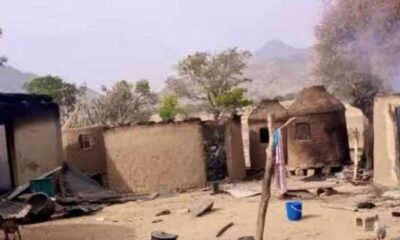






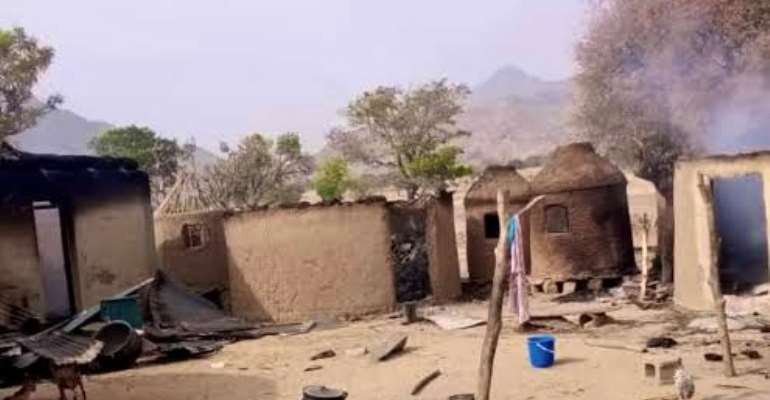
Another coordinated attacks on farming communities in Otukpo Local Government Area, have increased the tally of the continuous killings in Benue State, Nigeria’s food basket, which has remained a major hotbed in the massive insecurity Nigeria is currently witnessing.
Zagazola Makama, a counter-insurgency publication focused on the Lake Chad region, which broke the story, said the attacks took place between Friday and the early hours of Sunday, targeting Akpachi village in Ugboju community and Otukpo-Nobi community.
The publication said several residents were injured, while many fled their homes to escape the violence, quoted sources as saying specifically that the attacks began on Friday when armed men invaded farmlands at Akpachi village.
“According to the sources, the assailants killed two of the farmers, while the third victim managed to escape and alerted members of the community. Search teams later recovered the bodies on Saturday, and the victims were buried shortly afterwards.
“However, before residents could recover from the tragedy, the attackers returned in the early hours of Sunday, launching another deadly assault on Otukpo-Nobi community at about 4:00 a.m.
“The gunmen reportedly opened fire indiscriminately on sleeping residents, killing at least 16 people on the spot while leaving several others with gunshot injuries.”
The publication said the actual casualty figure is feared to be higher as local volunteers and security personnel continued search operations in surrounding bushes for missing persons, adding that the attacks had thrown communities across Otukpo into mourning, with many residents abandoning their homes amid fears of further attacks.
The report, said the attacks came barely two weeks after the killing of Ardo Risku Mohammed, Benue state chairman of the Miyetti Allah Cattle Breeders Association of Nigeria (MACBAN), and Yakubu Isah, his associate, who were ambushed and killed at Okutu community while returning from a peace meeting in Idekpa, Ohimini LGA.
Informing that security operatives had launched investigation, the report said one of the angles being probed into included the possibility of the the latest attacks being carried out in retaliation for the earlier killing of the MACBAN chairman.
The incident was said to have sparked immediate responses from communities in Otukpo, where hundreds of youths were said to have taken to the streets on Sunday, carrying the bodies of some of the victims to the palace of the Och’Idoma during a church service to demand urgent government intervention.
Quoting witnesses as saying that the protesters accused the government and security agencies of failing to protect farming communities from repeated attacks, the report said: “The protest quickly spread across Otukpo town, with major roads barricaded by demonstrators, causing severe traffic disruption and leaving commuters stranded for several hours.
“Residents described the atmosphere as tense, with businesses temporarily shutting down while security operatives monitored the situation to prevent further escalation.
“One of the protesters, Ebi Adoyi, lamented that many families had been devastated by the attacks and warned that the casualty figure could rise as more bodies might still be discovered in nearby forests.”
Maxwell Ogiri, Chairman of Otukpo LGA, who confirmed both attacks, was quoted as saying preliminary findings suggested they might be linked to reprisals following the killing of the MACBAN chairman, adding that after the first attack at Akpachi village, security personnel and local vigilantes searched the surrounding bushes, believing the attackers had fled.
His words: “The bandits came and killed two farmers on Friday. One escaped and alerted the community. We recovered the bodies on Saturday and buried them. After searching the surrounding bushes, we believed they had left the area, but around 4 a.m. on Sunday, we received distress calls that they had invaded Otukpo-Nobi, killing several people and injuring many others.”
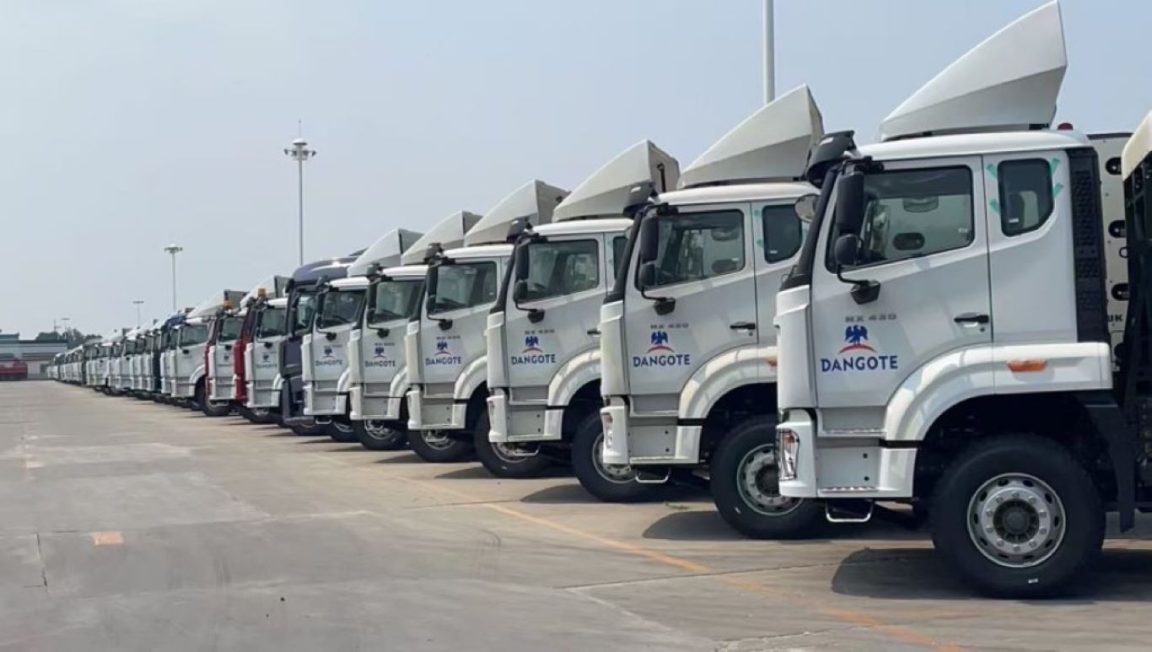
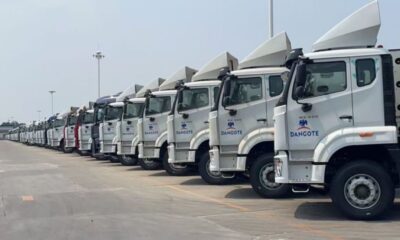
Anybody with credible information on the wrong use of its trucks will be richer by a whopping N500,000, going by signals coming from Dangote Industries Limited (DIL) – an initiative to encourage whistleblower to report sharp practices within its operations.
The company, which said the move is part of efforts to curb unauthorised haulage activities and protect the integrity of its nationwide logistics operations, encouraged the public to report any suspected cases of its trucks being used to transport unauthorised goods or passengers.
The conglomerate in a statement on Sunday, reiterating it consistent warning that only approved products were permitted to be conveyed by trucks belonging to its subsidiaries, maintained that Dangote Cement trucks are authorised to transport only cement, limestone, high-grade gypsum, coal and clinker, Dangote Sugar Refinery trucks, to sugar products while those of NASCON Allied Industries were designated for Dangote Salt and DanQ Seasoning products.
Part of the statement, read: “Dangote Packaging vehicles are to carry bags and packaging materials, Dangote Petroleum Refinery and Petrochemicals trucks are approved for polypropylene products, while Dangote Fertiliser Limited vehicles are authorised to transport urea fertilizer.
“Anyone with verifiable information that leads to the arrest of persons involved in illegal haulage activities or the recovery of unauthorized goods transported on Dangote trucks will receive a cash reward of Five Hundred Thousand Naira.”
In the programme, whistleblowers would be required to to provide details such as the truck type, registration plate number, cab number, location, description of the goods being transported, colour of the vehicle, and photographs where possible, to aid investigations through dedicated hotlines across its operations to receive reports of illegal haulage activities.
Stating that law enforcement agencies, including the police, have been authorised to arrest drivers found using Dangote trucks for unauthorised commercial haulage, the company reiterated its zero-tolerance stance against logistics-related fraud, saying the whistleblower programme is aimed at strengthening transparency, accountability and compliance across its logistics network.
It added: “Public cooperation remains critical in our efforts to eradicate illegal haulage activities. We encourage anyone with credible information to come forward and help us maintain the integrity of our transportation system.”
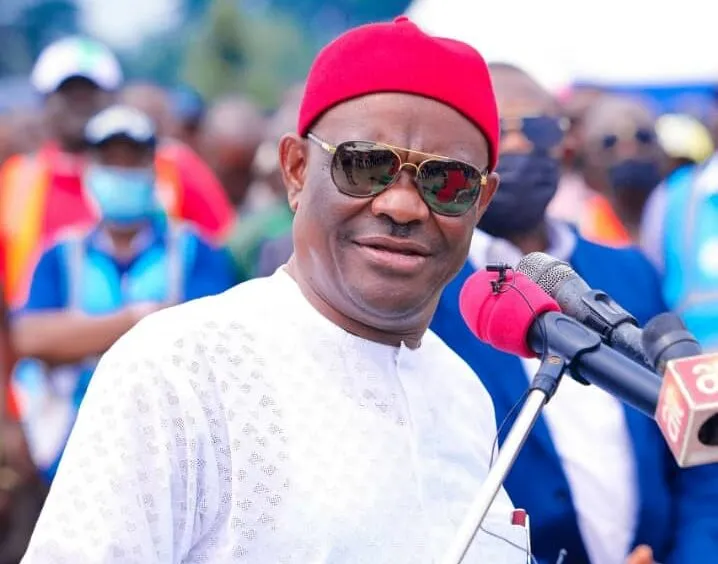
Except any miracle happens, it is becoming obvious that no member of the Kabiru Tanimu Turaki-led Peoples Democratic Party (PDP), will contest the 2027 general elections at any level, as the door has obviously been slammed on the face of the camp by the Independent National Electoral Commission (INEC).
This fact became evident with the opposite camp led by Nyesom Wike, Minister of the Federal Capital Territory (FCT), fully uploading the names of its own candidates in the commission’s nomination portal.
After ostensibly losing out in the bid to remain the National Chairman of the party, on the strength of the PDP convention held in Ibadan in November 2025, Turaki, had a lee-way when he was announced by the party’s Boad of Trustees (BoT), as the Chairman of a 13-man Caretaker Committee, inaugurated by Adolphus Wabara on May 4 this year.
INEC appears not swayed over the Wabara initiative, and has continued to deal with the Wike group, despite the argument that the verdict of the Supreme Court also decapitated the wings upon which it sought to fly by upholding the suspension of Sam Anyanwu, as National Secretary, and thus rendered the meeting he called that led to the opposite leadership, INEC, appears swayed.
Abdulrahman Mohammed, National Chairman, of the Wike camp, who announced the latest development in a statement on Sunday, said: “This is a clear demonstration of our commitment to the promise we made that, under my leadership, the PDP will fully participate in the 2027 General Elections. Today, we have taken another decisive step towards fulfilling that promise.
“As we await the conclusion of the upload of our Governorship and State Houses of Assembly candidates, I, on behalf of the National Working Committee of our Party, extend my heartfelt congratulations to all PDP members across Nigeria and around the world. Together, we will continue to build a stronger, more united Party and a better future for our nation.”
On May 26, the Wike-backed PDP named Sandy Onor, a former senator, as its presidential candidate.
On May 30, the opposition party faction led by Kabiru Turaki announced former President Goodluck Jonathan as its standard-bearer for the 2027 elections.
On July 10, Wike said it would be difficult for the PDP to win a presidential election unless it first resolved its lingering internal crises.
The minister added that political parties hoping to win the presidency must surmount their internal challenges and strengthen their grassroots structures.



-

 News2 days ago
BREAKING: Mystery death! *Female student dies a day after arriving Umahi’s home!
-
 News4 weeks ago
BREAKING: Troops rescue wife of kidnapped General! *Terrorists flee scene
-
 News4 weeks ago
BREAKING: Count me out, Okonkwo tells Atiku *Amaechi VP’s choice an insult to Ndigbo
-

 News3 weeks ago
BREAKING: Court sentences Nigerien, two others to death over terrorism
-

 News2 days ago
Don’t jump to conclusion! *Umahi speaks on mysterious death of female students!
-
 News1 week ago
BREAKING: EX-SSG mowed down by gunmen! *He resisted being kidnapped – driver
-

 News3 weeks ago
Abductors of Oyo teachers panicking, freedom coming for victims soon!
-

 News3 weeks ago
Two hours after Igboho’s ‘red-eyes’ to ‘Fulani’ leaders, gunmen free kidnap victims!