
News
BREAKING: GRV drags Buhari, Tinubu, Sanwo-Olu, Oluomo, 14 others to ICC, alleges genocide *See full list


President Muhammadu Buhari, Bola Ahmed Tinubu, presidential candidate of the All Progressives Congress (APC) Lagos State Governor, Babajide Sanwo-Olu, and Musiliu Akinsanya, alias MC Oluomo, may become guests at the International Criminal Court (ICC) at The Hague, The Netherlands, if lawyers to Gbadebo, Rhodes-Vivour, governorship candidate of the Labour Party (LP) in the March 18 governorship election, are able to push their case through.
The lawyers have fired petition to the court, charging the All Progressives Congress (APC), chieftains and other key elements in the Nigerian polity, accusing them of genocide and crimes against humanity, following the aftermaths of the 2023 general elections.

Others named in the petition, seeking investigation for their roles in the mayhem, which resulted in the deaths and bodily harms to citizens, include former Minister of Aviation, Fani Kayode, APC Presidential Campaign Council (APC-PCC), spokesman, Bayo Onanuga, his Peoples Democratic Party (PDP), counterpart, Reno Omokri.
The group of lawyers in the petition, addressed to Karim A. A. Khan QC, the Prosecutor of the Court, dated 30 March 2023, also included the Inspector General of the Nigeria Police; Chief of Military Intelligence; Deputy Inspector of General of Police; Commissioner of Police, Lagos State.
In it, MC Oluomo, identified as the Chief thug of Tinubu, was also named alongside Sam Omatseye – a journalist, Otunba Biodun Ajiboye, Dele Alake another journalist, Governor Yahaya Bello of Kogi State, and a traditional ruler; the Baale of Igbara Jakande area in Eti-osa Local government area of Lagos State.
The petition, entitled: Complaint and a request for the initiation of an investigation into crimes against humanity in Nigeria pursuant to Articles 13©, 15 & 53 of the Rome Statute, on the basis of information on crimes within the jurisdiction of the International Criminal Court, reads in full:
Dear Prosecutor,
We act for the following “Complainants/Petitioners” under whose instructions we address this complaint to you. They are:
Architect Gbadebo Rhodes-Vivour – The Labour Party Gubernatorial Candidate in Lagos State, Nigeria;
Princess Abiodun Oyefusi – The Labour Party Deputy Gubernatorial Candidate in Lagos State, Nigeria;
Mr Emmanuel Adogbeji – Labour Party Election Agent in Lagos State, Nigeria;
Mr Ebere Chinedu – Labour Party member in Lagos State, Nigeria;
Mr Chukwudi – Lagos State, Nigeria;
Mr Austin Iruobe Asuerimen – Labour Party, Lagos State;
Mr Henry Ogheneovo Afiowor – Labour Party, Lagos State;
Dr Gladys C Nwankwo – Labour Party, Lagos State
Ms Chidinma – Labour Party, Lagos State
Mr Sunday Olakunle – Labour Party, Lagos State
Hon. Seyi Lawal – Labour Party, Lagos State
Mr Femi Badiah – Labour Party, Lagos State
Mr Raphael George – Labour Party, Lagos State
Specified Members of the Labour Party of Nigeria.
NB:
Other victims’ names shall be joined in due course, together with supplementary submissions.
They are citizens of Nigeria who are interested in the protection of human and civil rights in Nigeria. They are also members of the Labour Party; a leading political party contesting for the 2023 general elections in Nigeria.
This complaint is against the below-mentioned persons “Respondents” who have jointly and severally committed genocide and crimes against humanity under the Rome Statute of the International Criminal Court. These persons and officials of the state of Nigeria are the subjects of the request for investigations and criminal charges and prosecution:
(a) Muhammadu Buhari – the President of Nigeria; and a member of All Progressive Congress “APC” the current political party in government;
(b) Mr Babajide Sanwo-Olu – the Governor of Lagos State, Nigeria; “APC”
(C) Senator Bola Ahmed Tinubu, a Presidential Candidate of the All Progressive Congress “APC” (and whose full and further particulars are unknown)
(D) The Leaders of All Progressive Congress “APC – a political Party;
(E) The Inspector General of the Nigeria Police;
(f) Chief of Military Intelligence;
(g) Deputy Inspector of General of Police;
(h) The Commissioner of Police, Lagos State;
(i) Mr Musiliu Akinsanya (also known as MC Oluomo) – the chief thug of Senator Bola Ahmed Tinubu, and a member of APC
(j) Mr Femi Fani Kayode – a member of the APC
(k) Mr Bayo Onanuga – a member of APC
(l) Mr Sam Omatseye – a journalist
(m) Otunba Biodun Ajiboye – a member of the APC
(n) Mr Reno Omokri
(o) Mr Dele Alake – a member of APC
(p) Governor Yahaya Bello of Kogi State, and APC member
(q) Traditional ruler; the Baale of Igbara Jakande area in Eti-osa Local government area of Lagos State
The above-mentioned Respondents have jointly and collectively incited genocide and tribal conflicts in Nigeria during and around the 2023 general elections in Lagos State, Nigeria; and which incitement has resulted in deaths, grievous bodily harm and injuries, destruction of lives and properties.
We have compiled and are compiling the following documents for submission:
(a) A detailed complaint with specific particularity including online links to video, photos, and publications to support the allegations; and,
(b) A Schedule of Links which are, material evidence, reports and investigations by Human Rights Bodies and Non-Governmental Organizations “NGOs” for ease of reference.
(C) Nigeria is a signatory to the Rome Statute and it deposited at the UN its instrument of ratification of the Rome Statute, thus becoming one of the first 60 State parties which contributed to the entry into force of the Rome Statute on 1st July 2012.
(D) In light of the gravity of the situation in Nigeria, in particular a history of continued repression including attacks on independent media, arrests and torture of opposition leaders and supporters, and a failure to prosecute those responsible for incitement of violence and extra-judicial killings, we strongly urge the Office of the Prosecutor to immediately use its power under Article 15 of the Rome Statute to initiate a preliminary investigation on “the basis of information on crimes within the jurisdiction of the Court” (Article 15(1)).
(E) A number of non-governmental organizations have conducted preliminary investigations and prepared reports that strongly suggest that crimes within the jurisdiction of the International Criminal Court (ICC) have been and are being committed. Credible information from “states’ organs of the United Nations, intergovernmental or non-governmental organizations and other reliable sources,” including eyewitness accounts (Article 15(2)), is readily and widely available. The “seriousness of the information” available is beyond doubt, which is why this complaint is aimed to call for accountability and justice. The reports are as detailed hereunder.
(f) The general elections in Nigeria were held on the 25th of February 2023, and on the 18th of March 2023; these are for the Presidential and the National Assembly elections, and the States Gubernatorial and State House of Assembly elections respectively. During these periods, the Respondents actively incited ethnic violence and crimes against humanity with brazen impunity; none of them have been arrested by the law enforcement agents in spite of the fact that their individual and collective conducts resulted in deaths, grievous bodily harm, destruction of lives and properties of victims.
NB:
(g) We shall compile more names of perpetrators and collate further evidence of crimes for onward submission to your office from time to time.
CRIMES AGAINST HUMANITY
As defined by the Rome Statute (Article 7), “crimes against humanity” means any of the following when committed as part of a widespread or systematic attack directed against any civilian population, with knowledge of the attack:
(a) Murder;
(b) Persecution against a group or collectivity based on its political, racial, national, ethnic or religious character;
(C) The crime of apartheid (inhumane acts committed in the context of an institutional regime of systematic oppression and domination by one racial group over another racial group, with the intent to maintain that regime).
PARTICULARS OF CRIMES
There have been several incitements to ethnic violence, extra judicial killings, torture, physical assaults, abductions and gross abuse of human rights in Nigeria which include but are not limited to:
ORGANIZED VIOLENCE, ETHNIC BAITING, AND ATTACKS
(a) A few days before the election day, Senator Bola Ahmed Tinubu while addressing his supporters during a town hall meeting ordered his party members and his thugs to violently grab, snatch and run away with ballot boxes during elections; the plan was to denied Peter Obi and other Labour Party candidates their popular mandate. It might be argued that this conduct does not fall within the jurisdiction of the ICC, it is however evidence that the said conduct resulted in several casualties and fatalities to individuals. Herewith video evidence of Tinubu’s infamous address:
(i) Herewith a video where Tinubu inciting ethnic violence in Lagos:
- Video of Tinubu Inciting Ethnic Violence in Lagos Election 2023
Translation: “These are people who left their villages, came into Lagos from childhood, 12 years of age. We accommodated and took care of them. Now, they want to bite the fingers that fed them”. He further said proverbially that “their case has now become that of hen”. When a western/Nigerian leader can express this much animosity against certain people in public, there’s trouble.
(ii) Video of Tinubu giving orders to APC members and thugs to grab, snatch and run away with ballot boxes
(b) Subsequent to Tinubu’s address, and on and about the 25 February 2023 being the Presidential election day, on 18 March 2023 being the Gubernatorial election day and post-election days; Mr Musiliu Akinsanya, Tinubu’s chief thug also known as MC Oluomo; his supporters and followers acting upon Tinubu’s orders and in compliance thereof took to the streets and unleashed mayhem in and around the country. Some of these barbaric incidents are as documented hereunder.
(c) Furthermore, also acting in concert with other Respondents, the following persons incited ethnic hatred and violence which resulted in injuries and deaths during and after the general elections in Nigeria.
These are: Mr Bayo Onanuga, a journalist member of the APC and the Director of Media and Publicity for Tinubu’s presidential campaign; Mr Femi Fani Kayode the Spokesman for Tinubu; Governor Yahaya Bello of Kogi State; Mr Sam Omatseye a journalist in one of Tinubu’s media companies; Otunba Biodun Ajiboye a member of APC; Mr Dele Alake a member of APC and Reno Omokri:
(i) Herewith a link to a newspaper which reported that the government of the United Kingdom has collated names of people that incited violence and voter suppression for ease of reference.
(ii) Herewith a link to a newspaper report on MC Oluomo and Governor Yahaya Bello invitation by the Nigerian Human Rights Commission for inciting genocide.
(iii) Herewith a link to a newspaper report where Bayo Onanuga was telling people of Igbo tribe to steer clear of Lagos State.
(iv) Herewith a link to a newspaper report of Bayo Onanuga inciting ethnic violence.
(v) Herewith a video and newspaper links where MC Oluomo is threatening to kill opposition voters of different ethnic group living in Lagos should they not vote for APC.
Video of MC Oluomo threats to kill igbos in Lagos should they not vote for AAPC
(c) These attacks and incidents where the results of incitement to ethnic hatred by the Respondents, politicians and their agents who actively participated in these criminal acts, they supplied arms and ammunitions to their foot soldiers and incited them to kill and inflict grievous bodily harm on other individuals of different ethnic groups in Nigeria.
They further publicly warned members of other ethnic groups who reside in Lagos State not to show up to exercise their fundamental human rights on the election dates.
(E) On 19 March 2023, following the completion of the gubernatorial and other elections in Lagos State, the attacks on opposition party supporters continued after various ethnic baiting tweets by Mr Bayo Onanuga, Femi Fani Kayode, Reno Omokri and others.
These tweets had fuelled election and post-election violence against individuals from the specific ethnic group who were the target of the incitements, and therefore must be treated as crimes against humanity.
(f) The promotion of attacks and violence against targeted groups residing in a particular area is a clear violation of international law which falls within the jurisdiction of the ICC. The ICC is hereby called upon to take action and to prevent a repeat, and also to hold the perpetrators to account. The comments on their social media handles are nothing other than hate speech.
(g) Bola Ahmed Tinubu’s inciting rhetoric about other ethnic groups living in Lagos State is largely responsible for the obvious suppression, oppression, attacks and killings witnessed during the recently concluded general elections in Nigeria.
There are material evidences of persons of non-Igbo tribes that suffered similar fate as the Igbo just because they look like the Igbo.
(h) The eerie silence, or rather the acquiescence of the Mr Sanwo-Olu the Executive Governor of Lagos State shows that he is complicit. There has not been any arrest made, and no one has been held responsible for these crimes. Mr. MC Oluomo is the Head Lagos State Park Management Agency which is a political appointment of the government of Lagos State; he was seen making open threats against people of other ethnic groups living in Lagos, there are videos of him inciting hate and violence against targeted individuals during the just concluded general elections in Lagos State. These proofs of organized crimes against humanity.
(i) The political attacks of the members of the Labour Party during a political rally in Lagos State on the 11th of February 2023 by the members and political thugs of the APC. They acted under the command of Senator Bola Ahmed Tinubu, a Presidential candidate of the APC; and the Governor of Lagos State, Babajide Sanwo-Olu.
We have evidence of these attacks on video and the links are hereunder for your perusal:
(i) Video attack on Bus of Labour Party Lagos
(ii) Video attack on Bus 2 Labour Party
(iii) Video attack on Bus 3 Labour Party
(iv) Video attack on Labour Party in Lagos
(j) Further, on 15th of February 2023 at Aguda in Surulere area of Lagos State, there were brutal attacks on the Labour Party Deputy Governorship candidate, Princess Oyefusi and her campaign entourage. These attacks occurred under the watch of law enforcement agents who stood idly and without doing anything.
They are vicariously liable and complicit. One wonders why they did not carry out their duty of “to serve and protect” citizens and properties. Herewith, a video link of one of those injured in the process for ease of reference:
Video attack on Princess Oyefusi campaign train on 15 Feb
(v) On 11th of February 2023 Mr Bamidele Akpata a Labour Party was brutalized near Femi Okunnu Estate at Jakande, Lekki area of Lagos State during a Labour Party political rally. They were gathered peacefully when APC men with all kinds of weapons arrived in a bus, suddenly came down from it and brutally assaulted them. Some of the victims sustained various degree of injuries in addition to losing valuable items during the attack. Herewith video evidence of the attack:
Video attack on Labour Party at Jakande Lagos
(k) On 11th February 2023 at Adeniji Adele area of Lagos Island, members of the Labour Party were attacked, brutalized and their buses vandalized by APC thugs on their way to a political rally. These attacked happened under the watch and command of the Lagos State Governor, Babajide Sanwo-Olu; the State Commissioner of Police; the national Inspector General of Police, and the national and state leadership of the APC. Herewith, video evidence of the said attack for ease of reference:
Video attack on Labour Party in Lagos 2
(l) A certain traditional ruler; the Baale of Igbara Jakande area in Eti-osa Local government area of Lagos who happens to be a member of APC release an audio material in which he made a death threat to people should they cast their votes against APC.
Herewith a newspaper report on the threat audio material for ease of reference.
(m) The political attacks of members of the Labour Party at their homes and political offices in Ebonyi State by members and political thugs of the APC under the command of Governor David Umahi through the commander of Ebubeagu, and security details attached to Governor David Umahi. Kindly take note that the Ebubeagu vigilante group was recently disbanded by a court of competent jurisdiction in Nigeria for their nefarious and criminal activities.
Here is a link to a publication in respect hereof.
(n) These crimes occur on a daily basis without check, and without any form of assistance for the victims and their families. The persons and offices whose names appear as Respondents parties should be held jointly and severally liable for these crimes by virtue of their official capacities and the authority imbued therein.
AIDING AND ABETTING ROME STATUTE VIOLATIONS
The Complainants/Petitioners submit that for there to be true justice and accountability, the investigation should include; whether certain Nigerian officials or state actors have aided and abetted in any way the commission of crimes against humanity in Nigeria for prosecution.
An Individual can be convicted of a crime against humanity in the International Criminal Court if he or she “aids, abets or otherwise assists” in the commission or attempted commission of the crime, “including providing the means for its commission” (Article 25). By issuing the shoot to kill orders and other orders that go against any set standard of humanity then, the military commanders, police chiefs and any other state actors have aided and abetted the commission of crimes against humanity.
TORTURE, MURDER, PAIN AND SUFFERING
As defined by Article 1 of the Convention against Torture and Other Cruel, Inhuman or Degrading Treatment or Punishment, Torture means any act by which severe pain or suffering, whether physical or mental, is intentionally inflicted on a person for such purposes as obtaining from him or a third person information or a confession, punishing him for an act he or a third person has committed or is suspected of having committed, or intimidating or coercing him or a third person, or for any reason based on discrimination of any kind, when such pain or suffering is inflicted by or at the instigation of or with the consent or acquiescence of a public official or other person acting in an official capacity. It does not include pain or suffering arising only from, inherent in or incidental to lawful sanctions.
During these current political campaigns in Nigeria, several opposition aspirants and supporters have been tortured through illegal detentions, physical assault, brutalized with machetes, guns, and assault weapons by APC thugs.
Below are some of the victims and pictorial evidence of their injuries; some attacks happened on the 18 of March 2023, while some attacks happened after the elections have been finalized. Some of the victims were waylaid at Abule Ado area of Lagos on their way back from church services on Sunday 19 March 2023, a day after the Gubernatorial elections in Lagos:
(i) Video of a victim with multiple machete wounds to head and body
(ii) Video and pictorial evidence of Austin Iruobe Asuerimen with severe head injuries
(iii) Pictorial evidence of victim Austin Iruobe Asuerimen with stitches on his head
(iv) Video of Ebere Chinedu with machete cuts wounds to his head and body
(v) Video evidence of Ebere Chinedu in the hospital in bandages
(vi) MORE EVIDENCE OF FATALITIES, VICTIMS AND THEIR IDENTITIES
Herewith a link to many victims’ identities and their injuries.
(vii) Mr. Onyeka Abali a Labour Party member and our Polling Unit agent at K1 lost his brother who also was a Polling Unit agent at Trade Fair area of Lagos State.
He was shot on Saturday 18 March 2023 by APC thugs. His body has been taken home to the East by his mother yesterday.
Herewith a pictorial evidence for ease of reference:
Photo of Onyeka Abali and his deceased brother who was killed by APC thugs in Lagos
(viii) Herewith video of Emmanuel Adogbeji with eye injury sustained during APC attacks in Lagos:
Video of Emmanuel Adogbeji Oberhiri with eye injury
(ix) Video evidence of Henry Ogheneovo Afiowor who was brutally attacked by APC thugs at Ikorodu during the Gubernatorial election on 18 March 2023:
Video attack on Henry Ogheneovo Afiowor in Ikorodu
(x) Video evidence of Ms Chidinma who was brutalized by APC thugs at Oshodi area of Lagos during the Gubernatorial election on 18 March 2023:
Video of attack on Ms Chidinma at Oshodi
(xi) Pictorial evidence of attack on Dr Gladys Nwankwo with a leg injury
(xii) Below are pictorial evidences of victims with injuries sustained during the Sunday 19th March 2023 attacks by APC thugs at Abule Ado area of Lagos State, a day after the Gubernatorial election:
NAMES OF OTHER VICTIMS:
Uchenna Murphy
Uchenna Nwazuo
Ekwonna Chukwubuike
Emeka Frances
Sochima Ezekwem
Walter Okoro
Okundu Anukeyi
Nwaorie Obinna
Orakwe Emeka
Picture of Abule Ado Victim 1
Picture of Abule Ado Victim 2
Picture of Abule Ado Victim 3
Picture of Abule Ado Victim 4
Picture of Abule Ado Victim 5
Picture of Abule Ado Victim 6
Picture of Abule Ado Victim with multiple injuries to head 7
Many other opposition party members have been killed, detained and tortured for several hours in Lagos State during political rallies, or at their homes.
There has also been unwarranted use of tear gas to disperse unarmed civilians in addition to brutal beatings and brutal handling of civilians by the different state agencies around the country.
The Complainants/Petitioners submit that all the perpetrators, culprits and state actors who were involved in the commission of crimes against humanity and who also subjected civilians to torture have never been arrested or held accountable; and the State is silent about the same.
The Complainants/Petitioners further submit that all the requirements for the initiation of an investigation pursuant to Article 15 have been clearly met. The “information available to the prosecutor provides,” at the very least, “a reasonable basis to believe that crimes within the jurisdiction of the Court have been or are being committed” (Article 53(1) (a). The “gravity of the crimes and the interests of the victims” warrant an investigation, and there can be no doubt that such an investigation would serve the interests of justice (article 53(1) (c)).
The Initiation of an investigation would send a clear message to all those involved either in committing or in aiding and abetting of the aforementioned crimes that they stand to be held personally accountable for their actions. This could help end the continuing breaches of International laws and put an end to the impunity that has underpinned the ever-increasing violence in Nigeria, which has caused and continues to cause extreme suffering to its civilian population.
The President of Nigeria; Muhammadu Buhari is joined to this proceeding by virtue of the office he occupies as the Chief Security Officer of the country. No relief is sought against him, save and in the event of him opposing this proceeding, in which event, it is totally the discretion of the Prosecutor to make a value judgment on whether or not to extent the investigation to his office. It should however be noted that during the current campaign period, Mr. Buhari as commander in chief of the armed forces has not been responsive to all the crimes and atrocities happening under his watch.
Mr. Buhari further has deployed military blockade on roads, where soldiers openly extort money from poor citizens, they sometimes kill innocent citizens, and they deny opposition members access to all highways and impeding their campaign teams from campaigning; all these are in violation of the basic principles of free and fair elections. Despite several efforts to engage the Nigeria Human Rights Commission, the West Africa Regional Office of the International Human Rights Commission and the Independent National Electoral Commission “INEC” to address violations and attacks on the democratic process, the Head of the Electoral Commission continues to be partisan, aiding and encouraging the conduct of the offenders.
These persons are criminally culpable because of their command responsibility over security forces operating under their directions or control and who are terrorizing tens of millions of Nigerians specifically because of their ethnic and political leaning. The crimes include, incitement to violence, ethnic baiting, extrajudicial killings, abductions, torture and sister unspeakable horrors. They are grisly hallmark of crimes against humanity.
The Complainant/Petitioner, should it become necessary, shall cooperate with the ICC to gather more photographic, video, and testimonial evidence of the ongoing genocide and crimes against humanity perpetrated by the Respondents and their accomplices.
The prosecution of the Respondents and accomplices before the International Criminal Court would prompt the United Nations Security Council to immediately commence the process of sanctions against the President of Nigeria and other co-accused.
CONCLUSION
It is respectfully submitted that there are prima facie evidences of crimes to warrant investigation by the International Criminal Court “the ICC” for violation of international human rights law, violations of the United Nations Covenant on Civil and Political Rights and other norms of international law, both customary and by convention.
The Nigerian organs of state and prosecutorial system have become the instruments of such violations and as such the vehicles used to arrest and impose detention.
We await your kind response in this regard.
Your faithfully,
Austin Okeke Esq.
Head: International Litigation and Diplomacy
Tel: +27837289081







Columns
The Three-Month Sprint (1): Philosophical Architecture of an Intellectual Trilogy of State Decay
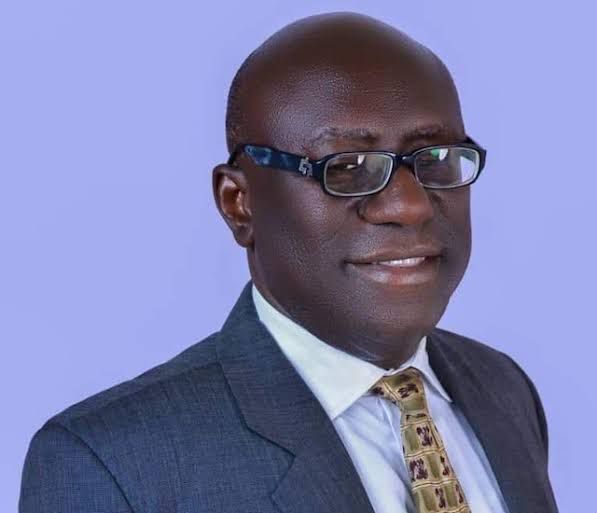

Last week on The Sunday Stew, we unveiled the Decoupling Sovereignty Index (DSI), a quantitative metric I developed as an extension of the Trinity of State Decay. It is meant to be a mathematical instrument for measuring the degree of separation between a state’s juridical sovereignty and its lived reality. I had planned to follow up today with the first instalment of a three-part series on the methodology and indicators of the DSI.
Then, from the middle of last week, there was a development that sent me into a sustained period of reflection.
On Wednesday, Zenodo — the open-access repository developed by CERN, the European Organisation for Nuclear Research, and the European Commission — published my 16,315-word theoretical treatise, ‘The Trinity of State Decay (Part 1): Sovereign Decoupling and Rival Sovereignty — A Theoretical Statement.’ On Thursday, Harvard Dataverse, owned and operated by Harvard University, published the same work. On Friday morning, an email arrived from the Social Science Open Access Repository (SSOAR), operated by GESIS — the Leibniz Institute for the Social Sciences in Germany — confirming that they too had accepted, published, and archived the paper.

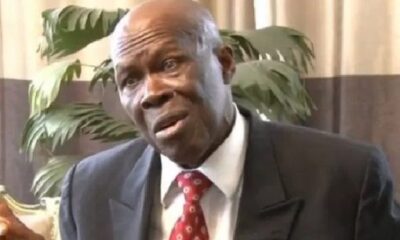
Late Prof. Edward Said
I sat with that for a while. It is exactly three months since The Sunday Stew made its debut. In those three short months, we have produced an original analytical framework (The Insecurity Triad), a comprehensive theoretical formulation (the Trinity of State Decay), and a quantitative index (DSI). Within the same period, the framework entered global scholarly circulation, and now the theoretical paper has been published by three of the world’s most respected scholarly repositories within seventy-two hours of each other. I found myself thinking about the symmetry of it: three months. A trilogy of original contributions. A triple publication in a single week.
Numbers sometimes carry meaning far beyond arithmetic. This one felt like it was trying to tell me something.
I. The Seed Planted in a Library
When The Sunday Stew was conceived, I did not set out to become a framework architect, a theorist, or an index creator. But looking back, I think the seed was planted much earlier — by accident, in the history section of the University of Calabar library.
I was preparing a term paper on Nigerian history. Our lecturer was the late Dr. Erim O. Erim — a man you had to do your absolute best to satisfy. I was moving along the shelves when I stopped. What arrested me was a name on a spine: Sigmund Freud. His biography. I could not understand what such a book was doing in the history section. I took it anyway, borrowed it, and in one week read it cover to cover.
Of everything I read about Freud’s life, one idea lodged itself in my subconscious and has never left: Freud’s concept of immortality. He defined it simply but profoundly: immortality is being known by many anonymous people. Not a mystical phenomenon, but a psychological and systemic one. It is the act of leaving behind an intellectual footprint so distinct that your ideas are absorbed by millions of people who may never meet you, but who must use your language to understand their own reality.
Freud did not merely write a theory. He changed the global vocabulary. Because of Freud, anonymous people who have never read a page of psychoanalysis use the words ego, subconscious, projection, and defence mechanism every single day. They are operating within his architecture without ever knowing it. That, he argued, was immortality.
I was a young man in a university library who had come looking for Nigerian history and stumbled into a philosophy of intellectual legacy. I did not know, at the time, that I had been given a compass.

•Late Antonio Gramsci
II. The Book C.Don Handed Me
Several years later, when I lived in Lagos, I had someone who was (and still is) a friend, a big brother, and a mentor. The home of C.Don Adinuba — then at Ilupeju — was like my second home. I could walk in at any time. C.Don was the perfect host, and his wife a hostess of uncommon warmth. There was never a dull moment in that house. He knew I loved books, and he is himself one of the most intellectually deep people I have ever encountered.
On one of those days, he pulled a book from his shelf, handed it to me, and said: “Go and read this.” I looked at it. The author was unfamiliar. I asked: “Who is Edward Said?” He replied: “Just go and read the book.”
Representations of the Intellectual — which grew out of Said’s 1993 Reith Lectures for the BBC — turned out to be, apart from the Bible, one of the most impactful books I have ever read. In its pages I first encountered Antonio Gramsci, whose Prison Notebooks has made an enduring impression on my intellectual formation and theoretical development. Said’s argument — that the intellectual’s vocation is to speak truth to power, to represent the unrepresented, and to refuse the comfort of specialisation in favour of the discomfort of genuine engagement — became a way of understanding what journalism, practised seriously, is actually for.
And from Antonio Gramsci, particularly his broad conception of the intellectual, I came to understand that intellectuals are not confined to universities, research institutes, or academic titles. Gramsci argued that intellectual activity exists wherever people help shape ideas, interpret reality, organise knowledge, and influence how society understands itself. Through that lens, I realised that journalism is not merely a profession of reporting events; it is an inherently intellectual vocation.
As a journalist, I do more than gather facts and relay information. I help frame public conversations, interrogate power, highlight social challenges, preserve collective memory, and contribute to the global marketplace of ideas. This understanding deepened my sense of responsibility to society. It reinforced the belief that journalism carries a duty not only to inform but also to enlighten, challenge assumptions, encourage critical thinking, and provide citizens with the knowledge necessary to make informed decisions.
Gramsci’s perspective helped me see that the journalist occupies a vital bridge in the relationship between structured knowledge and public life. The responsibility is therefore not simply to report what happens, but to pursue truth rigorously, interpret developments thoughtfully, and contribute constructively to the intellectual and moral development of society. In that sense, journalism became for me not just a career, but a pure form of public intellectual engagement.
These two books — one stumbled upon by accident, one pressed into my hands by C.Don — formed the philosophical foundation on which everything that follows in this column rests. I did not know that at the time. I know it now.

Late Sigmund Freud
III. The Question That Started Everything
When The Sunday Stew made its debut on March 8th, I initially envisioned a column anchored broadly on faith, character, and the structural forces that shape society, with a focus on Nigeria and Africa in a global context. But the second edition on March 15 inspired our current trajectory. Entitled ‘A Country Without Earthquakes — Yet Shaken by Itself’, it explored the tragic reality of Nigeria manufacturing catastrophic man-made disasters while other nations contend merely with natural ones. The insights that came from writing that piece—drawing heavily from an expansive interview a former colleague and I conducted with the late Professor Jubril Aminu in 2012—inspired the rigorous analytical direction this column ultimately took, beginning with the development of The Insecurity Triad.
At the outset, I only set out to understand why Nigeria keeps bleeding. I wanted to discover why the same communities bury the same dead in the same circumstances decade after decade, while the state issues the same predictable condemnations, commissions the same redundant reports, and recommends the same superficial reforms that are never implemented. I set out, in other words, to do journalism.
What I did not anticipate was that the honest, uncompromising pursuit of that question would eventually produce what the academy calls a macro-theoretical framework—and that this framework would, in time, find its home at Harvard and other top-tier scientific repositories.
The Trinity of State Decay did not arrive fully formed. It emerged from a profound frustration—the frustration of a scholar-journalist who has spent years watching analytical frameworks imported wholesale from external academic traditions fail to explain the immediate reality happening in front of his eyes.
Failed state theory, useful as far as it goes, describes a static outcome. It names the corpse but completely fails to trace the actual cause of death. The Fragile States Index produces superficial comparative rankings but isolates no mechanisms. What was missing was an indigenous framework that could explain the operational process—the structural logic by which sovereign authority fractures and is progressively displaced by rival formations.
The insight, when it came, was disarmingly simple: states do not lose control randomly. They lose it systematically along three specific axes—Money, Land, and Mind. When the state loses its command of fiscal and economic legitimacy, when it loses territorial authority over its physical space, and when it loses ideological and psychological hold over the behavioural psyche of the population, something else moves in. Not chaos. Something far worse than chaos: a disciplined, purposeful Shadow Order, which is often more efficient at its enforcement functions than the formal state it is displacing.
This is what the Trinity of State Decay theorises. Not the mere failure of the state—but the active production of an alternative to it.
The geography of legitimate knowledge production has long maintained a centre and a periphery. The global centre produces the theoretical frameworks; the periphery receives them, submissively applies them, and occasionally pushes back against them in minor footnotes. What is happening right now with the Sundiata Post Intelligence Unit (SPIU)—with The Insecurity Triad already circulating in global academic repositories and the Trinity of State Decay now anchored across multiple institutions—is a clear demonstration that intellectual rigour does not possess a postal address.
The publication of the Trinity of State Decay on global scholarly platforms is not an end point. It is the formal opening of a conversation three decades in the making. If in the months, years, and decades to come, a professor at Harvard, a post-doctoral fellow in Legon, a PhD candidate in Oxford, or an undergraduate in Makerere writing a term paper finds it useful and engages with it, our purpose will have been fulfilled. None of them may ever know me personally, just as I never knew Freud, Gramsci, or Said.
Coda: The Symmetry Completes Itself
I began this reflection thinking about the symmetry of three: three months, a trilogy of contributions, a triple publication. But symmetry, I have come to understand, is not always visible at the beginning of a journey. It reveals itself exclusively in retrospect—which is, incidentally, also how Sovereignty Decoupling becomes visible to those who are living through it.
A young man borrowing a biography of Freud by accident in a university library. A mentor handing him Edward Said across a table in Ilupeju. Several years of frontline journalism asking the same stubborn questions about why our nation bleeds. A column that began as political commentary and rapidly transformed, by structural necessity, into a site of deep theoretical production. And now: Harvard, Zenodo, GESIS-SSOAR, all in a single week.
Three months. A trilogy. A triple publication. And with SSOAR’s confirmation arriving on Friday morning, our overall global archival footprint expands to seven critical institutional repositories when we include the foundational papers of The Insecurity Triad: SSRN, Harvard Dataverse, Zenodo, SocArXiv, SSOAR, ResearchGate, and Academia.edu. The symmetry, it appears, was not done with me yet.
The Trinity of State Decay is now available on Harvard Dataverse (doi:10.7910/DVN/ZQWEM7), Zenodo (doi.org/10.5281/zenodo.20580627), SSOAR (nbn-resolving.org/urn:nbn:de:0168-ssoar-110533-8), ResearchGate, and Academia.edu. Read it. Push back against it. Apply it. Find its limits. That is exactly what it is there for.
Trust is sacred. Stay seasoned.
•Dr. Max Amuchie is a Scholar-Journalist, Media CEO, and Lead Researcher at the Sundiata Post Intelligence Unit (SPIU). He is the architect of The Insecurity Triad framework for African security analysis, the Trinity of State Decay theory, and the Decoupling Sovereignty Index (DSI)—original, indigenous analytical frameworks for understanding, categorising, and measuring conflict, state decay, and sovereignty in the Global South. He writes The Sunday Stew, a weekly syndicated column on faith, character, and the structural forces that shape society, with a focus on Nigeria, Africa, and the Global South in a changing world.
X (formerly Twitter): @MaxAmuchie | Email: max.a@sundiatapost.com | Tel: +234(0)8053069436
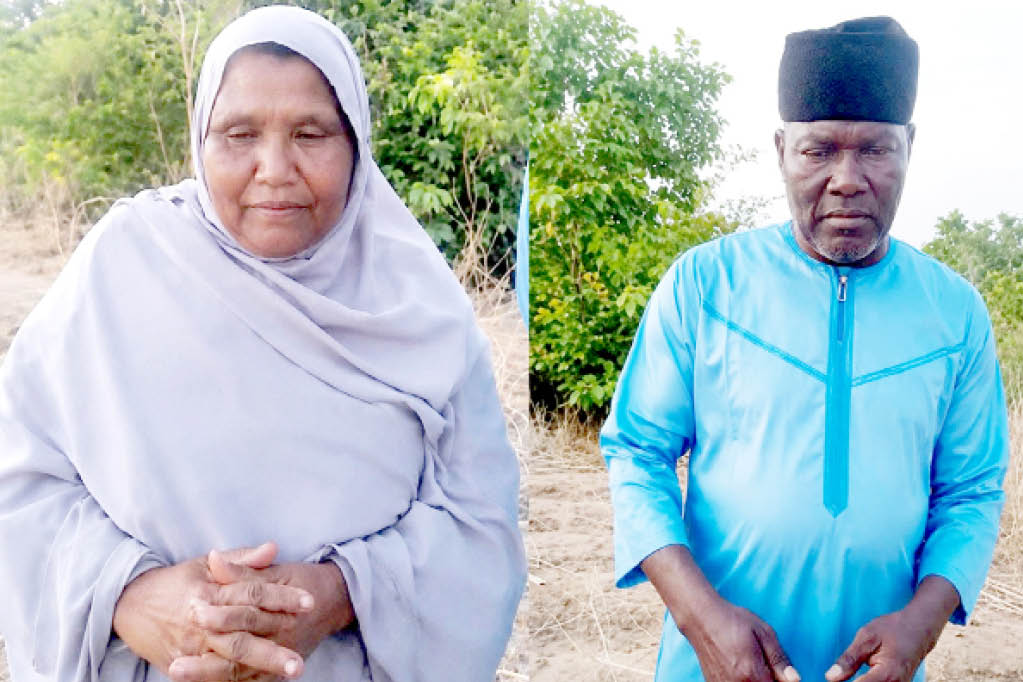

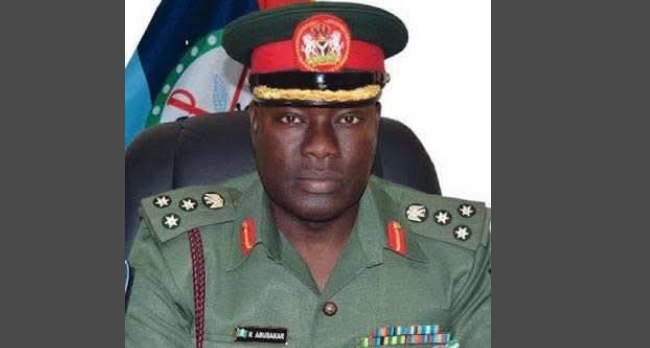
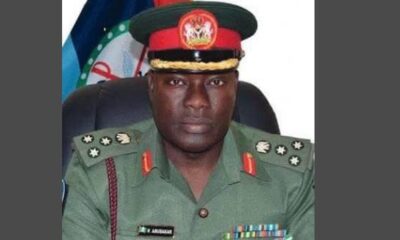
Abubakar Rabe, retired Major General former spokesman of the Nigerian Army who was abducted by bandits in Katsina State exactly two weeks ago, has died in captivity, reports coming from the state, one of the hotbeds of terrorist activities in Nigeria, confirmed on Saturday.
The retired senior military officer was kidnapped alongside his wife around the Matazu area of Katsina State while traveling to attend a wedding ceremony, was said to have died of complications from diabetes and high blood pressure in the camp of his abductors.
Nasiru Mu’azu, Commissioner for Internal Security and Home Affairs, in the state, who confirmed the incident, in a statement, said the government received the news with heavy heart and deep sense of loss.
He wrote: “It is with profound sadness that we confirm the General’s death while in bandits captivity. Despite the relentless and concerted efforts of the State Government and various Security Agencies to secure his safe release, the situation ended in this tragedy.
“The deceased Retired General died a natural death from complications of diabetes and hypertension. His abduction and subsequent death are not only a loss to his family and Katsina State but a monumental loss to the entire country.
“His Excellency, the Executive Governor of Katsina State Malam Dikko Umaru Radda, PhD, CON, extends his deepest condolences to the family of the late General and the country at-large.
“The Governor has described this incident as a “dark moment” and a reminder of the urgent need for a collective and intensified front against the criminal elements threatening the peace of our communities.
“The Katsina State Government remains committed to working with the Federal Government and security forces to ensure that those responsible for this heinous act are brought to justice. We assure the citizens of Katsina State that our resolve to eliminate banditry and ensure the safety of all residents remains unshaken.
“Our thoughts and prayers are with the bereaved family during this difficult time. May the soul of the departed Retired Major General Rabe Abdulakdir rest in eternal peace.”



-
 News4 weeks ago
BREAKING: US-Nigeria troops slaughter 175 ISWAP fighters
-
 Columns3 weeks ago
Dear General Gowon: That apology you’re running from is your nemesis
-
 News2 weeks ago
BREAKING: Terrorists strike Ibadan again! Abduct ex-Minister’s sister, twin children
-

 News4 weeks ago
BREAKING: Wait over! Arsenal are CHAMPIONS! Win EPL after 22 years hiatus
-
 Columns3 weeks ago
See Tinubu’s terrible damage on Option A4 and its precious memories
-
 News4 weeks ago
BREAKING: Jonathan emerges presidential candidate *Gets automatic PDP ticket!
-

 News4 weeks ago
Presidency: Obi met all requirements – NDC *Cleared to contest primaries
-
 News2 weeks ago
Emeka Ike: I’ll make example of Lere Olayinka for prying into my privacy