
News
Tinubu a symbol of collective suffering


Senator Bola Ahmed Tinubu has been a politician for the better part of his life. He has the uncanny reputation of seeking to do the impossible, in very difficult circumstances. By his own declarations, the presidential ambition has been in the works for a very long time, so he was well prepared for the job and nobody should pity or cry for him. We were taught that the best way to know somebody is through what other people say about him, what he does and what he says about himself.
This piece is a simple analysis of the impact of Tinubu’s government upon the people of Nigeria since May 29, 2023, when he commenced his four-year tenure. The President gave out himself as a progressive, by which term it is understood that he will implement programmes and policies that will lead to major and remarkable improvements in the lives of the people.
The President is seen as a welfarist, judging by his eight-year tenure as governor of Lagos State, during which time his supporters claimed that he executed people-oriented programmes of mass transit, that he revolutionized the judicial sector and even increased the internally generated revenue of the State. You will have a hard time convincing them that he was not a thorough democrat as they will cite examples of his legal battles to enthrone true federalism, when he pioneered the creation of local government development areas and dared the federal government.

You will not be able to convince his fans that the President as governor of Lagos State could not guarantee water supply to many homes, that he was not able to arrest the incidences of cultism, the ‘area boys’ syndrome and that he did nothing to upgrade the various slums that litter the State beyond primitive land acquisition and reallocation.
The governance structure in Nigeria is designed to deliver durable infrastructure and guarantee inclusive government for the people. This is clearly the purport of Chapter 2 of the Constitution. In its various sections, the Constitution provides for a government of the people, for the people and by the people.
Section 13 enjoins all persons exercising legislative, executive and judicial authorities to uphold the provisions of the Constitution. Section 14 (1) states clearly that the Nigerian State shall be governed on the principles of democracy and social justice, while section 14 (2) (a) gives ultimate power (sovereignty) to the people.
Section 14 (3) prohibits nepotism by stating that the composition of the Government of the Federation and indeed the conduct of its affairs shall be carried out in such a manner as to reflect the federal character of Nigeria and to promote national unity, thereby ensuring that there shall be no predominance of persons from a few States or from a few ethnic or other sectional groups in that Government. What do we have in the current Tinubu dispensation?
The judiciary is headed by the South-West, the Army is headed by the South-West, the police is headed by the South-West, the Economic and Financial Crimes Commission is headed by the South-West, the Immigration is headed by the South-West, the Customs is headed by the South-West, the FIRS is headed by the South-West, the Governor of Central Bank is from the South-West, the Comptroller-General of the Correctional Centre is from the South-West and the Minister of Petroleum (Tinubu) is from the South-West. In simple terms, the South-West region of Nigeria controls the executive, the judiciary, the security and the finance architectures.
This is one of the causes of constant agitation in the land, when the leader in power sees himself as the representative of his region alone. And as if following Tinubu’s example, I was shocked to read that in the composition of the new governing councils of federal universities, Adamawa, the home-state of the Minister of Education, produced a whopping 22 chairmen. Section 15 (2) requires the President to promote national integration and to avoid all forms of discrimination. For this to happen, the government will provide adequate facilities for and encourage free mobility of people, goods and services throughout the Federation.
But you and I know that the roads are not motorable and even when they are, the fear of terrorists will not encourage people to use the roads. In section 15 (3) (b), the government is to secure full residence rights for every citizen in all parts of the Federation. Some weeks ago, it was reported in the news that the Lagos State Government gathered persons suspected to be from Osun State into a truck and dropped them off in Osogbo to go back to their State. This is not new.
Should other States of the Federation retaliate this gesture, there will be crisis everywhere. Section 15 (5) enjoins the government to abolish all forms of corrupt practices and abuse of power. Since the advent of the Tinubu administration, the State Security Service (SSS) has been let loose on Nigerians. The agency invaded a court in Ota area of Ogun State to arrest litigants right inside the court. Journalists are languishing in various detention centres on account of their professional engagements. The sad impression being conveyed by the President and his team is that might is right.
Section 16 (1) (a) directs the government to harness the resources of the nation to promote national prosperity and an efficient, dynamic and self-reliant economy, with equality of status and opportunity granted to all citizens. The question to ask is this: what is the current state of the Nigerian economy?
Inflation is at its highest ever (33%), energy cost has gone beyond reach, many companies are closing down due to negative economic factors and the unemployment rate is rising daily. The ballooning exchange rate has worked to cripple many businesses, with the unfortunate result that purchasing power has dwindled drastically whilst the cost of living has quadrupled.
This has led to mass exodus of Nigerians to other climes in search of greener pastures. In section 16 (1) (b), the State is directed to control the national economy in such a manner as to secure the maximum welfare, freedom and happiness of every citizen on the basis of social justice and equality of status and opportunity. I am pretty sure you can resolve this issue yourself, if you go by the increasing cases of suicide, mental illness, broken homes and crime rate.
From being the happiest people on earth a while ago, most Nigerians have been turned into emergency beggars, barely able to eke out a decent living. If you get fifty messages in one day, forty of them must come from those who claim not to have eaten the whole day or to have medical bills to settle or they need your support to pay their children’s school fees or settle their accommodation bills.
The fuel subsidy removal has only worked to pauperize the people, creating lamentations in various homes and businesses. Section 16 (2) states that the government shall ensure that the material resources of the nation are harnessed and distributed as best as possible to serve the common good. Nigeria has oil and gas in very large quantities but they are not harnessed for the benefit of the people.
If you go to the Niger-Delta area you will see degradation and the wicked effects of oil production and pollution on the ecosystem. We also have gold, bitumen and other natural and mineral resources. The real issue is that our leaders are not deploying these huge resources for the common good.
In section 16 (2) ©, the government is to ensure that the economic system is not operated in such a manner as to permit the concentration of wealth or the means of production and exchange in the hands of a few individuals.
It is the opposite that operates presently, as the same people who control the banks also control the real estate sector, they play in the oil and gas sector, they dominate the power sector and indeed all other important sectors of the Nigerian economy. It is a circle of friends who have not allowed and will not allow any outsider to invade their “privacy”.
In particular and for loud emphasis, section 14 (2) (b) states that the security and welfare of the people shall be the primary purpose of the government. And this is the real deal. Or how do you promote the welfare of people by keeping them in perpetual darkness without electricity?
I cannot remember anytime that we have enjoyed stable power supply for up to one week since May 29, 2023 when Tinubu was sworn in. We are currently experiencing the worst in power supply because all we hear across the land is the sound of generators.
To make matters worse, the government empowered the power distribution companies to extort money from their consumers, when the nebulous Band A group was purportedly created, with the assurance of 18-22 hours of power supply everyday. It was only a clever design to milk the people dry, given that those who are touted to be in Band A have since confirmed the scheme to be false.
The Tinubu administration has not done anything to improve the lives of Nigerians since it assumed office. Insecurity is at its worst and nobody is ever sure of who is next but for God. Nigeria is presently an open field of suffering such that even those who have are themselves victims. No government should pride itself for foisting suffering on its citizens.
Adegboruwa, Senior Advocate of Nigeria (SAN), is a rights activist and human rights crusader







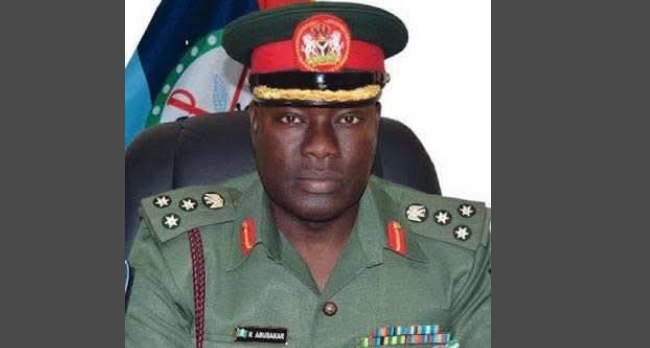
Abubakar Rabe, retired Major General former spokesman of the Nigerian Army who was abducted by bandits in Katsina State exactly two weeks ago, has died in captivity, reports coming from the state, one of the hotbeds of terrorist activities in Nigeria, confirmed on Saturday.
The retired senior military officer was kidnapped alongside his wife around the Matazu area of Katsina State while traveling to attend a wedding ceremony, was said to have died of complications from diabetes and high blood pressure in the camp of his abductors.
Nasiru Mu’azu, Commissioner for Internal Security and Home Affairs, in the state, who confirmed the incident, in a statement, said the government received the news with heavy heart and deep sense of loss.
He wrote: “It is with profound sadness that we confirm the General’s death while in bandits captivity. Despite the relentless and concerted efforts of the State Government and various Security Agencies to secure his safe release, the situation ended in this tragedy.
“The deceased Retired General died a natural death from complications of diabetes and hypertension. His abduction and subsequent death are not only a loss to his family and Katsina State but a monumental loss to the entire country.
“His Excellency, the Executive Governor of Katsina State Malam Dikko Umaru Radda, PhD, CON, extends his deepest condolences to the family of the late General and the country at-large.
“The Governor has described this incident as a “dark moment” and a reminder of the urgent need for a collective and intensified front against the criminal elements threatening the peace of our communities.
“The Katsina State Government remains committed to working with the Federal Government and security forces to ensure that those responsible for this heinous act are brought to justice. We assure the citizens of Katsina State that our resolve to eliminate banditry and ensure the safety of all residents remains unshaken.
“Our thoughts and prayers are with the bereaved family during this difficult time. May the soul of the departed Retired Major General Rabe Abdulakdir rest in eternal peace.”
By Hon Eseme Eyiboh mnipr
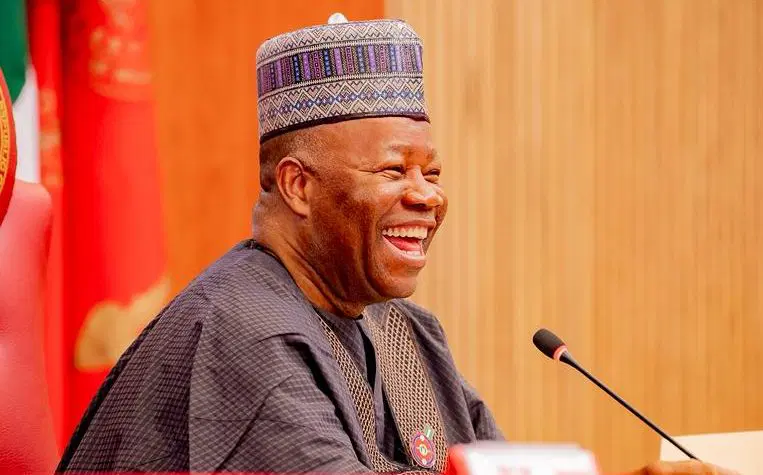
When Senator Godswill Obot Akpabio assumed office as President of Nigeria’s 10th Senate in June 2023, expectations were understandably high. Nigeria was grappling with economic headwinds, persistent security challenges, and growing public demand for more responsive and effective democratic institutions. In such a climate, the National Assembly was expected not merely to make laws, but to provide leadership, strengthen oversight, and restore public confidence in governance.
Three years into his tenure, the Senate under Akpabio has increasingly sought to position itself as a stable, proactive, and policy-driven legislative institution. Through a combination of legislative initiatives, institutional reforms, parliamentary diplomacy, and engagement with critical national issues, the Senate has played a visible role in shaping the country’s governance landscape. While critics have raised concerns on certain matters—an inevitable feature of democratic leadership—the overall record presents a legislature that has remained active, cohesive, and focused on its constitutional responsibilities during a period of significant national transition.
The foremost responsibility of any legislature is lawmaking, and in this regard, the 10th Senate has maintained an ambitious legislative agenda. Hundreds of bills have been introduced and processed, many of them directly targeting Nigeria’s pressing economic, fiscal, and governance challenges. According to Senate Leader Opeyemi Bamidele, in a midterm scorecard released in June 2025, the upper chamber introduced 983 bills and passed 108 into law between June 2023 and June 2025. This included 83 bills passed in the 2024/2025 legislative year alone, compared to 25 bills in the 9th Senate in the same period. Official legislative records also indicate a significant rise in legislative activity compared to previous assemblies, suggesting that the 10th Senate has been notably active by legislative output metrics.
More significant than the volume of legislation, however, has been the Senate’s focus on measures with far-reaching national implications. The emphasis has not been on legislative activity for its own sake, but on advancing reforms designed to address some of Nigeria’s most pressing economic and governance challenges. The Senate has prioritised reforms aimed at stimulating economic growth, improving public finance management, strengthening institutions, and expanding social protection.
One of the defining legislative undertakings of the 10th Senate has been its commitment to tax reform and fiscal modernization. Nigeria’s tax system has long been criticised for fragmentation, multiple taxation, weak compliance, and excessive dependence on oil revenue. Under Akpabio’s leadership, the Senate pursued reforms aimed at simplifying tax administration, broadening the tax base, promoting digital compliance, and providing greater relief for small businesses and low-income earners. In May 2025, the Senate passed four major tax reform bills which, according to the Chairman of the Presidential Committee on Fiscal Policy and Tax Reforms and now Minister of Finance, Taiwo Oyedele, could increase Nigeria’s tax-to-GDP ratio from about 10 per cent in 2023 to approximately 18 per cent by the end of 2027.
These reforms are significant because Nigeria’s tax-to-GDP ratio remains among the lowest in Africa, limiting government revenue and public investment capacity. By supporting measures aimed at modernising tax collection and reducing leakages, the Senate sought to create a more sustainable fiscal framework capable of supporting infrastructure, education, healthcare, and social services.
Beyond fiscal reforms, the Senate has devoted significant legislative attention to education, regional development, agriculture, energy, and the digital economy. Bills relating to tertiary education, regional development etc commissions, agricultural growth, and public sector modernization have featured prominently on its agenda. Notable examples include the Student Loan (Access to Higher Education) Act, 2024, which reportedly facilitated over one million applications through the Nigerian Education Loan Fund, and the Electricity Act (Amendment) 2023, which expanded the role of states and private investors in electricity generation and distribution.
To strengthen the country’s electoral process, the Senate also pursued amendments to the Electoral Act aimed at improving internal party democracy and clarifying procedures around party primaries and consensus candidacies. Supporters of the reforms argue that clearer legal definitions and procedural safeguards could help reduce arbitrary candidate selection and strengthen transparency within political parties. Senate Leader Bamidele has also indicated that additional reforms, including possible provisions for diaspora voting and early voting for security personnel, remain priorities for the remaining legislative period.
Beyond lawmaking, one of the less visible but significant developments of the 10th Senate has been institutional stability. Historically, Nigeria’s upper legislative chamber has often been characterised by prolonged leadership disputes, partisan confrontations, and disruptions capable of slowing governance processes. Under Akpabio’s leadership, however, the Senate has largely maintained operational cohesion and stability.
Plenary debates have generally remained issue-focused rather than personality-driven, while contentious national matters have often been managed through consultation and negotiation. This atmosphere of relative stability has reduced legislative deadlocks and allowed committees to function with greater consistency.
The Senate President’s leadership style has leaned heavily toward consultation and consensus-building. In a politically diverse chamber comprising members of the APC, PDP, Labour Party, NNPP, SDP, and other minority parties, Akpabio has consistently emphasized bipartisan cooperation over rigid partisanship. Committee appointments, major motions, and sensitive legislative debates have reflected efforts to accommodate competing interests while preserving institutional cohesion.
As a result, the 10th Senate has witnessed substantial cross-party cooperation on key national issues, even though disagreements naturally remain part of democratic governance.
Another area in which the Senate has demonstrated effectiveness is budgetary coordination. For three consecutive fiscal years, the National Assembly passed the national budget before the start of the new financial year. The 2024 budget of N27.5 trillion, for instance, was approved on December 30, 2023, ahead of the fiscal cycle. The Senate also passed the 2024 and 2025 appropriations totalling N43.5 trillion, although implementation timelines for some projects were subsequently extended to facilitate completion.
This marked a departure from previous cycles characterised by delayed budget approvals and implementation uncertainty. Timely budget passage improves predictability for Ministries, Departments, and Agencies, enhances investor confidence, allows contractors to plan more effectively, and supports smoother execution of government projects. In a developing economy like Nigeria, where public expenditure plays a major role in economic activity, budget stability remains important to growth and development.
At the same time, the Senate has continued to discharge its constitutional oversight responsibilities through investigative hearings, committee reviews, and ministerial screenings. During periods of persistent fuel scarcity, the Senate leadership engaged key stakeholders in the petroleum sector, including an oversight visit to the Dangote Petroleum Refinery. Supporters contend that the intervention helped keep national attention focused on domestic refining capacity and crude supply arrangements.
Subsequent Federal Government measures, including support for naira-denominated crude transactions, were widely viewed as part of a broader effort to ease supply constraints and calm the downstream market. Today, the long fuel queues that once defined daily life have receded considerably, although deeper challenges in the energy sector remain.
On the international stage, the Senate under Akpabio has strengthened parliamentary diplomacy, carrying Nigeria’s voice into global conversations on democracy, development, security, and international cooperation. Nigeria has assumed a more visible role within the Inter-Parliamentary Union (IPU), contributing to debates on democratic governance, collective security, climate resilience, and legislative best practices. Through these engagements, the Senate has sought not only to advance Nigeria’s interests but also to position the country as a constructive participant in addressing shared global challenges.
A notable diplomatic milestone was Nigeria’s election into the IPU Executive Committee for the first time in decades, a development widely interpreted as recognition of the country’s renewed parliamentary engagement within international legislative circles. Akpabio was also designated to serve on the Preparatory Committee for the 6th World Conference of Speakers of Parliament in 2024.
Domestically, one of the Senate’s most consequential constitutional moments came in August 2023 during the crisis in the Niger Republic following the military coup. When President Bola Ahmed Tinubu, acting as Chairman of ECOWAS, sought legislative backing for possible regional intervention, the Senate urged restraint and prioritized diplomatic engagement over immediate military action. Widely viewed as a demonstration of legislative independence and respect for the principle of separation of powers, the decision reaffirmed the Senate’s constitutional role in matters of security and foreign policy while underscoring a preference for dialogue, diplomacy, and regional stability at a moment of heightened tension across West Africa.
No balanced assessment of the 10th Senate can entirely overlook concerns raised by critics and observers. Questions have occasionally been raised regarding the depth of scrutiny applied during the confirmation of some executive nominees, while certain oversight investigations produced outcomes that critics considered less robust than expected.
In broader terms, the 10th Senate has combined increased legislative activity with relative political stability while attempting to align its priorities with Nigeria’s economic and governance realities. Supporters point to the passage of the National Minimum Wage Amendment Act, the Investments and Securities Act, and multiple regional development commission bills as examples of substantive legislation with potentially long-term national impact.
With one legislative year remaining before the next election cycle begins to dominate political discourse, the principal test facing the 10th Senate may ultimately be one of implementation and public confidence. If the tax reforms strengthen revenue generation, if the student loan programme continues to expand educational access without major controversy, and if the Senate further enhances oversight transparency, the chamber may secure a more enduring institutional legacy. Conversely, if concerns about public perception and executive accommodation persist, critics may continue to question whether legislative productivity has translated into sufficient institutional independence. It is worth noting, however, that history suggests the most successful periods of national development have often occurred not during eras of executive-legislative confrontation, but when both arms of government cooperated effectively while remaining faithful to their distinct constitutional responsibilities.
If the reforms advanced by the Senate continue to produce measurable national impact, and if the institution successfully addresses concerns relating to oversight and accountability, history may ultimately remember the 10th Senate not merely as a productive legislature, but as one that contributed to stabilising governance and repositioning democratic institutions during a consequential period in Nigeria’s development.
* Rt Hon Eseme Eyiboh mnipr is a former member and Spokesperson in the House of Representatives and currently, the Special Adviser on Media/ Publicity and Official Spokesperson to the President of the 10th Senate.
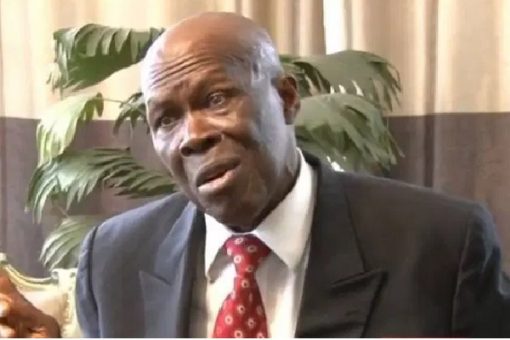
For those believing that President Bola Tinubu’s exclusion of Humphrey Nwosu, the late Chairman of the defunct National Electoral Commission (NEC), was an error that would be corrected subsequently, their expectation came to naught on Friday, with his non-recognition once again.
In a surprise outing, the President failed once again to name the late Professor of Political Science as one of the Nigerians honoured, on the day Nigerians would be celebrating this year’s anniversary of June 12, designed to mark the historic 1993 presidential election, which has now been designated as Nigeria’s Democracy Day.
It was a day Moshood Kashimawo Olawale Abiola (MKO), the candidate of the defunct Social Democratic Party (SDP), was elected President in a transition programme undertaken by the military government of then President Ibrahim Badamasi Babangida (IBB).
Expectations are that because the Option A4 model used in achieving the outcome of the election, acknowledged as the freest and fairest election in Nigerian history, the late electoral commission’s boss, would feature prominently in the list of those to be honoured by the government.
But another list contained in the national broadcast by the President, suggested that the position of the treatment meted to the former NEC Chairman, reflected the thinking in the All Progressives Congress (APC), as the late President Muhammadu Buhari, Tinubu’s predecessor, under whom June 12 was given national recognition.
The list, populated mainly by names from the South West, which included both civilians and military personnel, did not capture the category of national honours to be bestowed on the recipients, as the government said further information would be released in due course.
Prominent among those recognized, was Shehu Musa Yar’Adua, a General and former Chief of Army Staff, Supreme Headquarters between 1976 and 1979, under the military regime of Olusegun Obasanjo, who died in Abakaliki Prison in 1997, where he was detained for allegedly participation in carrying out a coup against Sani Abacha, then Head of State.
Tinubu, said the completed Institute of Petroleum Studies, Kaduna, would now be known as General Shehu Musa Yar’Adua University of Geological Sciences and Engineering Technology, to honour the General, who later became a prominent figure in Nigerian politics, “for his vision of national partnership.”
Listing the other names, Tinubu said: “I am also pleased to announce national awards to the following Nigerians, who suffered persecution, endured indignities, exile, incarceration, and, at times, solitary confinement, so that we have democracy today.”
The recipients included: Ayoka Lawani, Tunde Fagbenle, Oladele Alake, Olatunji Bello, Louis Odion, Segun Babatope, Sam Omatseye, Ademola Osinubi, Bola Bolawole and the duo of Lade Bonuola, former Managing Director of The Guardian and Femi Kusa, former Editor of the Nigerian foremost newspaper.
Others, were: Debo Adeniran, Ayo Opadokun, Chief Ralph Obiora, Ose Osayande, Osa Director, Sylvester Odion-Akhaine, Arthur Nwankwo (Posthumous) and Osagie Obayuwana, all pro-democracy activists.
The list also included Joe Okei-Odumakin , Titus Mann, Joe Igbokwe, Richard Akinnola, Ben Charles-Obi (Posthumous), George Mbah Niran Malaolu, Ishola Williams, a retired Major-General, Femi Aborisade, Jenkins Alumona, Gbemiga Ogunleye, Muyiwa Adekeye, Babajide Kolade-Otitoju and Ike Okonta.
“We also recognise the soldier-democrats of the June 12 struggle: Major General MA Garba, Brigadier General Lawal Jaafaru Isa, Col Umar Farouk Ahmed; Col Sambo Dasuki;
Col Lawan Gwadabe; Brigadier Jonathan Ndam Temlong, Col Musa Shehu; Major General Chris Eze; Major General Harris Dzarma; Col Isa Jibrin; Maj. General Joseph Oshanupin; Col Olusegun Oloruntoba, Olugbede of Gbede Kingdom), Lieutenant Colonel Happy Kefas Bulus, Col J Okai;
Col Emmanuel Ndubueze; Lt Col Yakubu Muazu and Brigadier Yahaya Abubakar, the Current Etsu Nupe, who is already the holder of the CFR title.”



-
 News4 weeks ago
BREAKING: US-Nigeria troops slaughter 175 ISWAP fighters
-
 Columns3 weeks ago
Dear General Gowon: That apology you’re running from is your nemesis
-
 News2 weeks ago
BREAKING: Terrorists strike Ibadan again! Abduct ex-Minister’s sister, twin children
-

 News4 weeks ago
BREAKING: Wait over! Arsenal are CHAMPIONS! Win EPL after 22 years hiatus
-
 Columns3 weeks ago
See Tinubu’s terrible damage on Option A4 and its precious memories
-
 News4 weeks ago
BREAKING: Jonathan emerges presidential candidate *Gets automatic PDP ticket!
-

 News4 weeks ago
Presidency: Obi met all requirements – NDC *Cleared to contest primaries
-
 News2 weeks ago
Emeka Ike: I’ll make example of Lere Olayinka for prying into my privacy