

News
Tinubu a symbol of collective suffering


Senator Bola Ahmed Tinubu has been a politician for the better part of his life. He has the uncanny reputation of seeking to do the impossible, in very difficult circumstances. By his own declarations, the presidential ambition has been in the works for a very long time, so he was well prepared for the job and nobody should pity or cry for him. We were taught that the best way to know somebody is through what other people say about him, what he does and what he says about himself.
This piece is a simple analysis of the impact of Tinubu’s government upon the people of Nigeria since May 29, 2023, when he commenced his four-year tenure. The President gave out himself as a progressive, by which term it is understood that he will implement programmes and policies that will lead to major and remarkable improvements in the lives of the people.
The President is seen as a welfarist, judging by his eight-year tenure as governor of Lagos State, during which time his supporters claimed that he executed people-oriented programmes of mass transit, that he revolutionized the judicial sector and even increased the internally generated revenue of the State. You will have a hard time convincing them that he was not a thorough democrat as they will cite examples of his legal battles to enthrone true federalism, when he pioneered the creation of local government development areas and dared the federal government.

You will not be able to convince his fans that the President as governor of Lagos State could not guarantee water supply to many homes, that he was not able to arrest the incidences of cultism, the ‘area boys’ syndrome and that he did nothing to upgrade the various slums that litter the State beyond primitive land acquisition and reallocation.
The governance structure in Nigeria is designed to deliver durable infrastructure and guarantee inclusive government for the people. This is clearly the purport of Chapter 2 of the Constitution. In its various sections, the Constitution provides for a government of the people, for the people and by the people.
Section 13 enjoins all persons exercising legislative, executive and judicial authorities to uphold the provisions of the Constitution. Section 14 (1) states clearly that the Nigerian State shall be governed on the principles of democracy and social justice, while section 14 (2) (a) gives ultimate power (sovereignty) to the people.
Section 14 (3) prohibits nepotism by stating that the composition of the Government of the Federation and indeed the conduct of its affairs shall be carried out in such a manner as to reflect the federal character of Nigeria and to promote national unity, thereby ensuring that there shall be no predominance of persons from a few States or from a few ethnic or other sectional groups in that Government. What do we have in the current Tinubu dispensation?
The judiciary is headed by the South-West, the Army is headed by the South-West, the police is headed by the South-West, the Economic and Financial Crimes Commission is headed by the South-West, the Immigration is headed by the South-West, the Customs is headed by the South-West, the FIRS is headed by the South-West, the Governor of Central Bank is from the South-West, the Comptroller-General of the Correctional Centre is from the South-West and the Minister of Petroleum (Tinubu) is from the South-West. In simple terms, the South-West region of Nigeria controls the executive, the judiciary, the security and the finance architectures.
This is one of the causes of constant agitation in the land, when the leader in power sees himself as the representative of his region alone. And as if following Tinubu’s example, I was shocked to read that in the composition of the new governing councils of federal universities, Adamawa, the home-state of the Minister of Education, produced a whopping 22 chairmen. Section 15 (2) requires the President to promote national integration and to avoid all forms of discrimination. For this to happen, the government will provide adequate facilities for and encourage free mobility of people, goods and services throughout the Federation.
But you and I know that the roads are not motorable and even when they are, the fear of terrorists will not encourage people to use the roads. In section 15 (3) (b), the government is to secure full residence rights for every citizen in all parts of the Federation. Some weeks ago, it was reported in the news that the Lagos State Government gathered persons suspected to be from Osun State into a truck and dropped them off in Osogbo to go back to their State. This is not new.
Should other States of the Federation retaliate this gesture, there will be crisis everywhere. Section 15 (5) enjoins the government to abolish all forms of corrupt practices and abuse of power. Since the advent of the Tinubu administration, the State Security Service (SSS) has been let loose on Nigerians. The agency invaded a court in Ota area of Ogun State to arrest litigants right inside the court. Journalists are languishing in various detention centres on account of their professional engagements. The sad impression being conveyed by the President and his team is that might is right.
Section 16 (1) (a) directs the government to harness the resources of the nation to promote national prosperity and an efficient, dynamic and self-reliant economy, with equality of status and opportunity granted to all citizens. The question to ask is this: what is the current state of the Nigerian economy?
Inflation is at its highest ever (33%), energy cost has gone beyond reach, many companies are closing down due to negative economic factors and the unemployment rate is rising daily. The ballooning exchange rate has worked to cripple many businesses, with the unfortunate result that purchasing power has dwindled drastically whilst the cost of living has quadrupled.
This has led to mass exodus of Nigerians to other climes in search of greener pastures. In section 16 (1) (b), the State is directed to control the national economy in such a manner as to secure the maximum welfare, freedom and happiness of every citizen on the basis of social justice and equality of status and opportunity. I am pretty sure you can resolve this issue yourself, if you go by the increasing cases of suicide, mental illness, broken homes and crime rate.
From being the happiest people on earth a while ago, most Nigerians have been turned into emergency beggars, barely able to eke out a decent living. If you get fifty messages in one day, forty of them must come from those who claim not to have eaten the whole day or to have medical bills to settle or they need your support to pay their children’s school fees or settle their accommodation bills.
The fuel subsidy removal has only worked to pauperize the people, creating lamentations in various homes and businesses. Section 16 (2) states that the government shall ensure that the material resources of the nation are harnessed and distributed as best as possible to serve the common good. Nigeria has oil and gas in very large quantities but they are not harnessed for the benefit of the people.
If you go to the Niger-Delta area you will see degradation and the wicked effects of oil production and pollution on the ecosystem. We also have gold, bitumen and other natural and mineral resources. The real issue is that our leaders are not deploying these huge resources for the common good.
In section 16 (2) ©, the government is to ensure that the economic system is not operated in such a manner as to permit the concentration of wealth or the means of production and exchange in the hands of a few individuals.
It is the opposite that operates presently, as the same people who control the banks also control the real estate sector, they play in the oil and gas sector, they dominate the power sector and indeed all other important sectors of the Nigerian economy. It is a circle of friends who have not allowed and will not allow any outsider to invade their “privacy”.
In particular and for loud emphasis, section 14 (2) (b) states that the security and welfare of the people shall be the primary purpose of the government. And this is the real deal. Or how do you promote the welfare of people by keeping them in perpetual darkness without electricity?
I cannot remember anytime that we have enjoyed stable power supply for up to one week since May 29, 2023 when Tinubu was sworn in. We are currently experiencing the worst in power supply because all we hear across the land is the sound of generators.
To make matters worse, the government empowered the power distribution companies to extort money from their consumers, when the nebulous Band A group was purportedly created, with the assurance of 18-22 hours of power supply everyday. It was only a clever design to milk the people dry, given that those who are touted to be in Band A have since confirmed the scheme to be false.
The Tinubu administration has not done anything to improve the lives of Nigerians since it assumed office. Insecurity is at its worst and nobody is ever sure of who is next but for God. Nigeria is presently an open field of suffering such that even those who have are themselves victims. No government should pride itself for foisting suffering on its citizens.
Adegboruwa, Senior Advocate of Nigeria (SAN), is a rights activist and human rights crusader

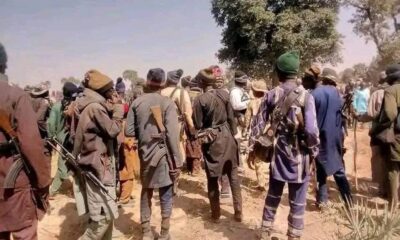







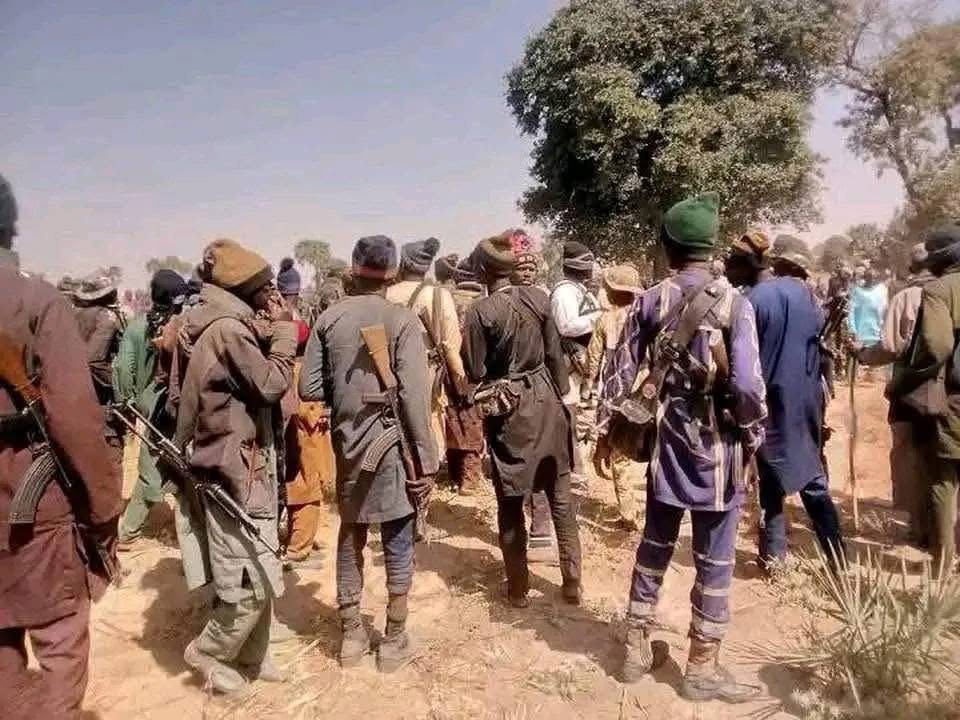
Unlike in other cases, security operatives in Nigeria have upped the ante by adding the arrest of perpetrators to the menu of rescue operations, with the announcement of the capture of eight terrorists who participated in the abduction of school teachers and students in Oyo State on May 15.
All the 46 pupils, students and teachers abducted by terrorists from three schools in Oriire Local Government Area of Oyo State, regained their freedom on Friday, after about 56 days in captivity, with several others reportedly also neutralised during the operation.
Giving a clue of what transpired during the operation, Bayo Onanuga, who broke the story of the feat, said it was the outcome of sustained security operations, which also foiled the attempt by the abductors to secure the release of one of their captured leaders.
Onanuga, Special Adviser to the President on Information and Strategy, using his X handle to give details about the operation, said: “Finally, all the kidnapped pupils and teachers in Orire, Oyo have been rescued by our security agencies. In the course of the rescue operation, eight of the kidnappers were arrested and are now in DSS custody, while some of them were neutralised.”
“There was no quid pro quo in the rescue as one of the terrorists, a kingpin, that the kidnappers demanded his release, is being prosecuted for his atrocities. The security agencies will give full account soon.”
The victims were abducted on May 15 when heavily armed bandits attacked Community Grammar School, Baptist Nursery and Primary School, and L.A. Primary School in the Esiele and Yawota communities of Oriire Local Government Area, seizing dozens of pupils, students and teachers.
The abduction sparked nationwide outrage, with parents, labour unions, traditional rulers and civil society groups mounting sustained pressure on the authorities to secure the victims’ release.
The incident also triggered an indefinite strike by the Nigeria Union of Teachers in Oyo State over growing insecurity in schools.
President Bola Tinubu had condemned the attack and ordered security agencies to intensify intelligence-led operations to rescue the captives and bring the perpetrators to justice.
The President subsequently dispatched a high-powered Federal Government delegation to the affected communities, approved the deployment of specialised rescue assets and authorised the recruitment of 1,000 forest guards to strengthen security across Oyo State.
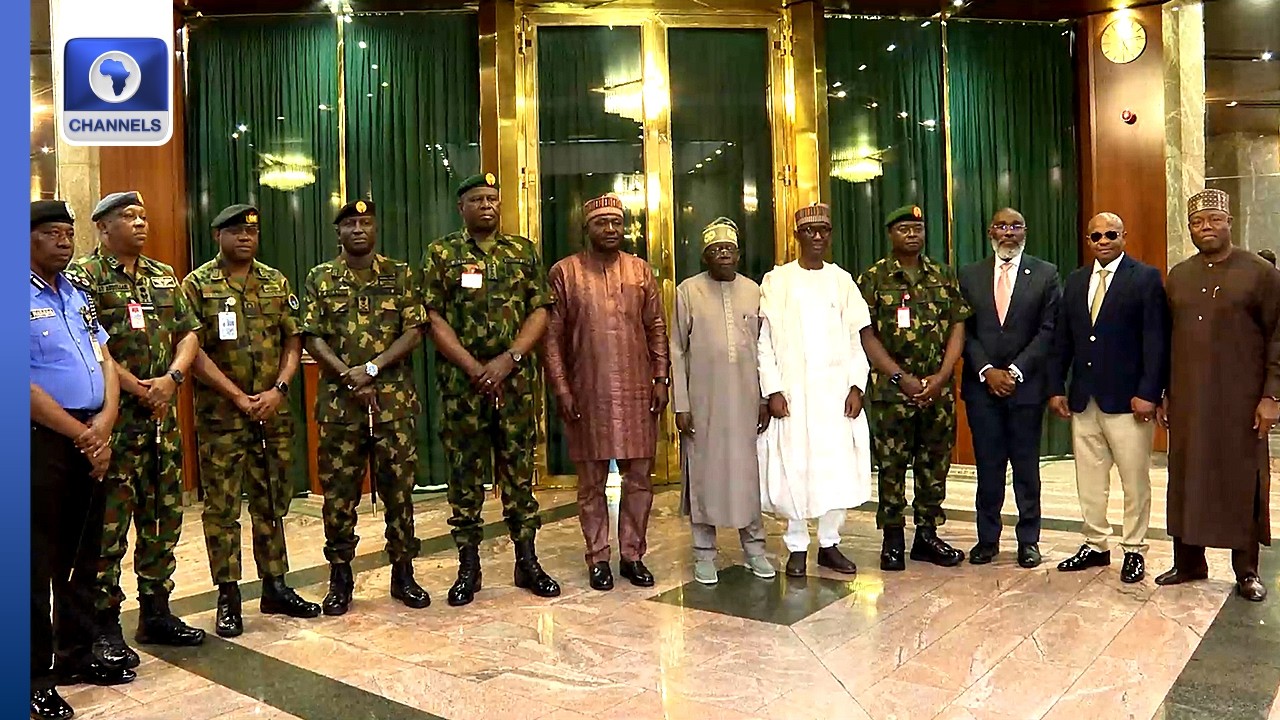
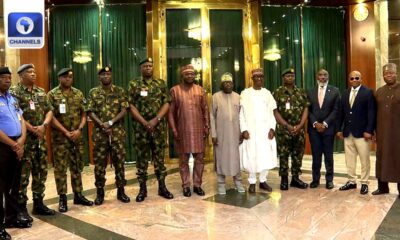
For the umpteenth times in recent months, President Bola Tinubu, was on Thursday, again locked in a crucial meeting with security chiefs at the Presidential Villa in Abuja to review the security situation across the country, with the duo of Christopher Musa, Minister of Defence and Nuhu Ribadu, the National Security Adviser (NSA), leading the other Service Chiefs to the parley.
Channels Television, reports that each agency heads, briefed the President on ongoing efforts and strategies aimed at tackling insecurity in different parts of the nation, while acknowledging improvement in the security situation in Nigeria with a resolve to build on the current achievements.
While they agreed that Intelligence will continue to play a critical role in the security arena of the nation, the security bosses, were said to have also resolved to strengthen collaboration with neighbouring countries for greater results at the meeting, which held behind closed doors.
The report indicated that Thursday’s meeting was coming amid renewed moves by the Nigerian government to address insecurity across the country. President Tinubu had already sent the bill for the establishment of state police to the National Assembly as part of measures to restore stability to troubled zones and secure Nigeria.
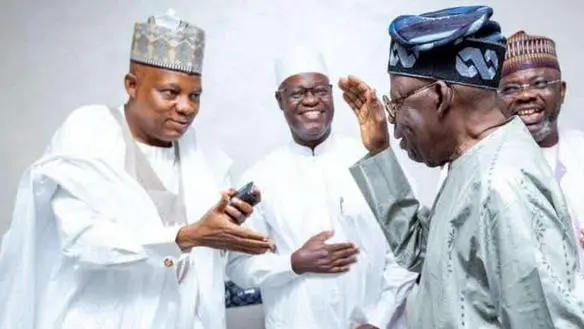
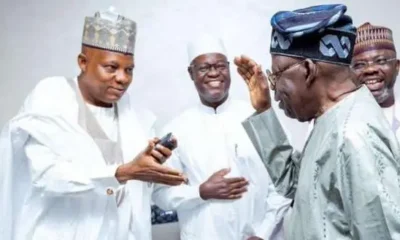
Apparently not swayed by the rumble in informed political quarters over the Muslim-Muslim ticket in the Presidential Villa, Abuja, President Bola Tinubu, has sworn his readiness to swim and sink with Kashim Shettima, as Vice President in the 2027 presidential election.
The President rested the issue of retaining or dumping the VP, which has been a subject of intense speculations over several months now, when he forwarded the name of the former Governor of Borno State for the Aso Rock Villa’s joint ticket on the platform of the All Progressives Congress (APC).
The ruling party forwarded the names of the duo on Friday to formalise its presidential ticket for the 2027 general election, brushing aside contentions that unlike the 2023 edition, such a ticket might not fly this time.
Nentawe Yilwatda, APC National Chairman, received the duly completed nomination forms for both Tinubu and Shettima from Ibrahim Masari, the Special Adviser to the President on Political Matters, at a colourful ceremony at the Ladi Kwaki International Conference Centre of Abuja Continental Hotel, Abuja, for onward transmission to the Independent National Electoral Commission (INEC) portal.
The high-profile ceremony drew heavyweights from across the party, including members of the Progressive Governors’ Forum (PGF) led by Imo State Governor Hope Uzodimma, representatives from the National Assembly, the Federal Executive Council (FEC), and state party chairmen.
Welcoming dignitaries to the brief but solemn ceremony, APC National Organising Secretary Sulaiman Muhammad Argungu noted that the event was the natural climax of a highly transparent internal process.
“The presidential flag bearer emerged through a thoroughly transparent primary process,” Argungu said, while praising President Tinubu’s “positive strides” and urging party faithful to remain united, prayerful, and steadfast.
The ceremony culminated in the presentation of the completed nomination forms for the President and his running mate by the Presidential Adviser, Masari, who was accompanied by all the governors in attendance, members of the National Assembly and the Federal Executive Council (FEC).
Reinforcing the governors’ total commitment to the ticket, PGF Chairman Governor Hope Uzodimma stated that the transparent nature of the primaries had made marketing the candidates seamless.
Uzodimma, said: “We are delighted that this event is coming after a well-organised and thoroughly supervised primary process. We reiterate our commitment to continue supporting President Tinubu and the party.”
Describing the APC as a beacon of internal democracy and inclusiveness, promising that the governors would spearhead a total clean sweep at the polls, he added: “We will continue to support him in the larger interest of Nigerians and to take the country to greater heights. Together, we are going to deliver victory for President Tinubu and ensure the party wins all elective positions, including the National and State Assemblies.”
On his part, Yilwatda stated that the revalidation of the Tinubu-Shettima ticket represents the authentic heartbeat of the party’s grassroots, adding: “Today is a reflection of the wishes of over 12 million members of our party who supported the President’s candidature,” Yilwatda remarked. “We are proud of the support already in the kitty of President Tinubu, and we are convinced that many more Nigerians will vote for him.”
The APC boss, while pointing to key initiatives such as the student loan scheme—which he noted has already benefited over 1.5 million students—alongside targeted agricultural interventions and nationwide infrastructure projects as verifiable proof of performance, urged members to return to their local communities armed with facts rather than rhetoric to dismantle opposition narratives.
His words: “While others are busy spreading propaganda, let us counter them with facts. Nigerians have seen governance that touches lives across the six geopolitical zones. APC holds a distinct institutional advantage over its rivals, being the only political platform in the country backed by a fully digitalised and verified membership database.
“We already have about 12 million verified members. We are going round the country to mobilise support for the President. I am also confident that our governors will compete among themselves to deliver the highest number of votes.
“Go and tell the leader of our party (President Tinubu) that our members and Nigerians will vote for him to continue the excellent work he is doing. As a party, we are proud to be presenting the best candidate. There is no shaking at all. Come 2027, our victory is assured.”



-
 News4 weeks ago
BREAKING: Troops rescue wife of kidnapped General! *Terrorists flee scene
-
 News4 weeks ago
BREAKING: Count me out, Okonkwo tells Atiku *Amaechi VP’s choice an insult to Ndigbo
-

 News2 weeks ago
BREAKING: Court sentences Nigerien, two others to death over terrorism
-
 News1 week ago
BREAKING: EX-SSG mowed down by gunmen! *He resisted being kidnapped – driver
-

 News3 weeks ago
Abductors of Oyo teachers panicking, freedom coming for victims soon!
-
 News3 weeks ago
Two hours after Igboho’s ‘red-eyes’ to ‘Fulani’ leaders, gunmen free kidnap victims!
-
 News3 weeks ago
Chicagogate: Nigerians return to court! *Move to stop Tinubu from 2027 polls
-
 News2 weeks ago
BREAKING: Primate Ayodele to pay Kwankwaso N10billion over Obi betrayal claim!