
News
You’re shylocks! FG carpets Dangote, NNPCL, others over high petrol prices


The Federal Government has called out the major stakeholders in the petroleum sector over the continued astronomical cost of products, saying there was no reason for it to remain so given the latest development on the global space.

Short of accusing the big players like the Dangote Refinery, the only company refining Premium Motor Spirit (PMS) in Nigeria, and the Nigerian National Petroleum Company Limited (NNPCL), of playing the modern day shylock on vulnerable Nigerians, the government, through the Competition and Consumer Protection Commission (FCCPC) warned against exploitation.
Explaining that the current petrol pump prices did not match the global crude cost reduction, the agency said in a statement on Sunday, that findings from its ongoing surveillance of the downstream petroleum market suggested undue exploitation of consumers.
Basing its report on the review of the gantry prices of local refiners, marketers, depot operators, and retail outlet operators, which revealed “token reductions” in prices that were not commensurate with the steep fall in crude prices in the global market, it maintained that the current ceasefire accord between the United States (US) and Iran two weeks ago and the reopening of the Straits of Hormuz, had led to a crash in crude prices to $73, from the peak of $120 per barrel in April.
The statement, said: “The earlier spike in crude prices saw local refiners and marketers raising pump prices swiftly across the country, with petrol price climbing to between N1,350 to N1,500 and diesel selling N2,000 as hostilities intensified in the gulf between April and May,” the statement reads.
“In February, common PMS (petrol) averaged between N800 and N900. Across the country today, PMS is still sold at average of N1,200 while some local refiners fixed between N1,025 and N1,075 as their gantry prices.
“Though recognising that domestic prices are influenced by a range of commercial and market factors (including refining costs, foreign exchange movements, logistics, financing and distribution expenses), the Commission however expects competitive market dynamics to have eased the swift transmission of resulting cost efficiencies to consumers.”
Tunji Bello, the executive vice-chairman and chief executive officer (CEO) of the FCCPC, said although the commission does not regulate petrol prices in a deregulated market, it has a statutory responsibility to protect consumers from exploitative business practices.
“To be clear, the Commission does not regulate or approve petroleum prices in a deregulated downstream market. Our responsibility under the Federal Competition and Consumer Protection Act, 2018, is to promote competitive markets, prevent anti-competitive conduct, and protect consumers from unfair, deceptive and exploitative business practices.
“We are concerned that while dealers often respond swiftly by hiking pump prices whenever crude prices rise, it is curious that it is taking forever for consumers to benefit significantly when crude prices fall. Competitive markets must work fairly in both directions.”
The FCCPC boss said market liberalisation does not diminish businesses’ obligations to compete fairly or consumers’ right to fair treatment.
“Where credible evidence indicates conduct that undermines competition, exploits consumers or otherwise contravenes the Federal Competition and Consumer Protection Act, the Commission will investigate and take appropriate enforcement action,” he said.
He encouraged consumers to continue reporting suspected anti-competitive conduct, misleading pricing practices and other forms of unfair market behaviour through the commission’s established complaint channels.
Brent crude, the global oil benchmark, dropped to $72.97 per barrel as at June 26 — its lowest since February, when the conflict began.
On June 25, the Dangote refinery cut its petrol ex-gantry price to N1,125/litre from N1,175.
The United States President Donald Trump recently accused US oil firms of petrol price gouging, directing the department of justice (DOJ) to immediately probe oil marketing companies in the country.


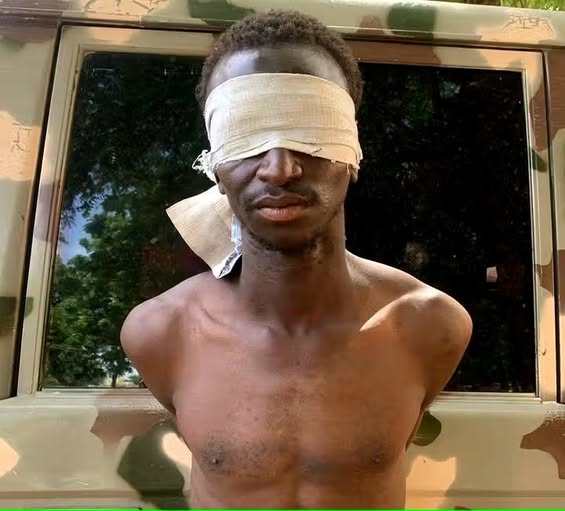
Troops of Operation Hadin Kai have arrested a suspected operative of the Islamic State West Africa Province (ISWAP) over an alleged plot to attack two military formations in Borno state.
The suspect, identified as Muhammad Shuaibu, was arrested by troops of the 212 Battalion at the Forward Operating Base (FOB) Chabbol following intelligence on a planned terrorist attack.
Quoting military sources, Zagazola Makama, a counter-insurgency publication focused on the Lake Chad region, said Shuaibu was apprehended during a routine perimeter patrol conducted about 500 metres from the anti-vehicle ditch protecting the base.
The publication said the arrest followed what the military described as credible human intelligence on an impending attack.
Preliminary investigation reportedly linked the suspect to a planned assault on the 199 Special Forces Battalion, also known as Mosquito Camp, and the Forward Operating Base in Chabbol.
Military sources said the suspect admitted during interrogation that an attack had been planned and claimed the terrorists intended to proceed with the operation regardless of his arrest.
The military said the arrest enabled troops to reinforce security around the targeted formations and strengthen defensive measures against any attempted attack.
The suspect has since been handed over to the 7 Military Intelligence Brigade for further investigation.
The arrest is part of ongoing intelligence-led operations by Operation Hadin Kai aimed at disrupting terrorist activities, dismantling insurgent networks and improving the security of military formations across the north-east.
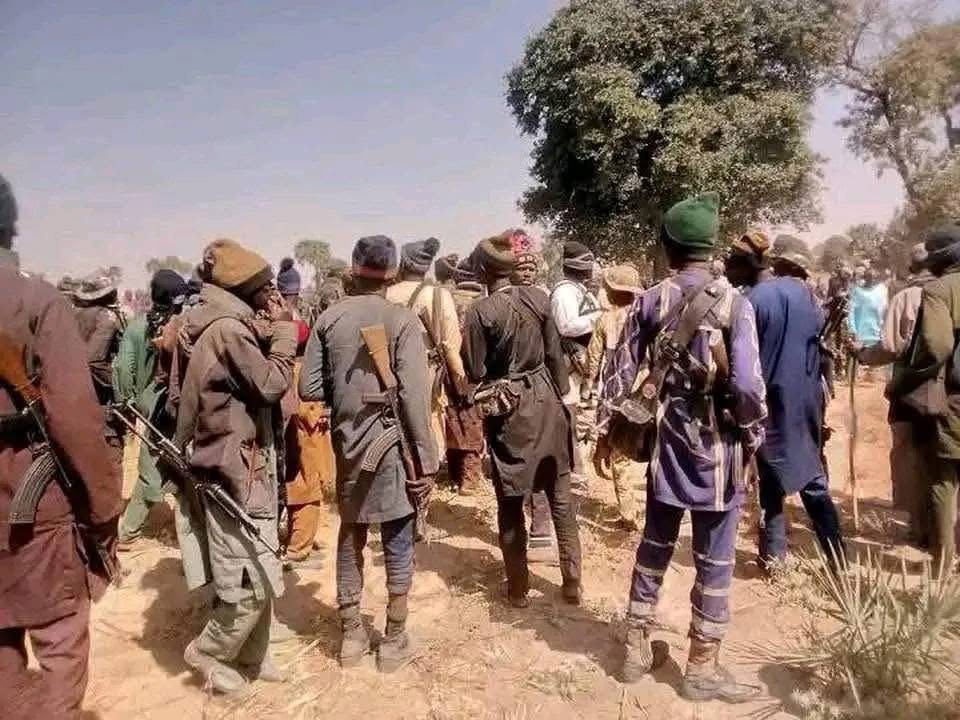
More than 76 ISWAP terrorists have abandoned their enclaves and surrendered to troops within the North-East theatre of operations as part of the Joint Task Force (North East), Operation HADIN KAI (OPHK), and continued operational successes.
The North East geopolitical zone comprises six states: Adamawa, Bauchi, Borno, Gombe, Taraba, and Yobe.
In a statement by the Acting Military Information Officer, Headquarters Joint Task Force North East Operation Hadin Kai, Captain Mohammed Goni, revealed that among those who surrendered were key members of the terrorist network, due to relentless military pressure.
“The development highlights the devastating impact of the sustained offensive by Operation HADIN KAI, which continues to dismantle terrorist strongholds, disrupt command and logistics structures, and deny the insurgents freedom of action across the theatre”.
“Persistent military operations have continued to degrade the terrorists’ combat capabilities while eroding confidence within their ranks and leadership. Within the last week alone, a total of 76 terrorist foot soldiers with some families surrendered to troops.
“They are currently in a secure location undergoing profiling, debriefing, and other established procedures in accordance with extant operational protocols,” the statement reads in part.
According to Captain Goni, the operational gains demonstrate the effectiveness of the Nigerian military’s comprehensive counter-terrorism and counter-insurgency strategy, combining precision combat operations, intelligence-led engagements, and coordinated joint efforts with partners.
He added that “the Operation HADIN KAI remains resolute in its mission to completely defeat terrorism and restore lasting peace and security across the North-East and the pressure on the remaining terrorist elements will continue unabated until they are completely neutralised or forced to surrender.”
News
Adeboye, Oyedepo, endorse Trump’s military intervention in Nigeria *Want prompt elimination of terrorism
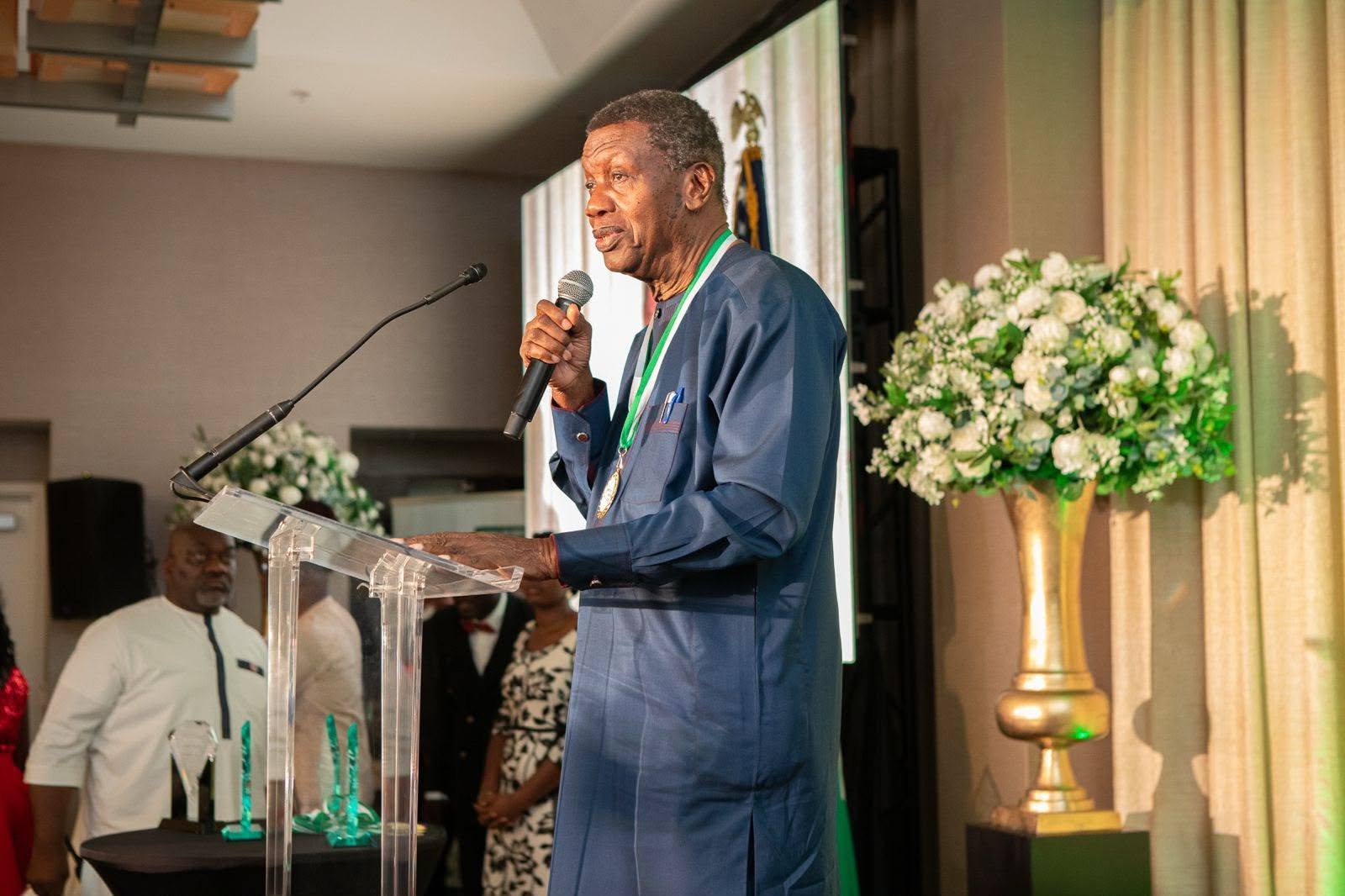
Enoch Adeboye and David Oyedepo, two of Nigeria’s most prominent church leaders, have given their full endorsement to the decision of the United States to intervene in redeeming Nigeria’s parlous security crisis.
Both Pastors, were particularly grateful to Donald Trump, the US President for taking special interest in the Nigerian situation, by ordering the military actions aimed at stemming the tide of the unrelenting terror attacks by extremists in the country.
Adeboye, the General Overseer of the Redeemed Christian Church of God (RCCG), and Oyedepo the Senior Pastor and the founder of The Living Faith Church Worldwide, both spoke to a packed audience drawn from a cross section of activists of all races and cadres from across the United States in Washington DC during award night for the POTUS as well as Chris Smith and Riley Moore both, members of the House of Representatives.
Both House members, who have been on the Nigerian case in recent months had upped their ante by tabling a bill seeking to end terrorism in Nigeria by punishing the sponsors, and other activists who have championed the cause of religious freedom in Nigeria.
Adeboye, who earlier dismissed criticism that he had maintained a stoic silence while extremists carried out the killings and kidnaps of Christians and other vulnerable communities across Nigeria, had explained that as an elder religious leader, he embarked on a “spiritual warfare” rather than scream to escalate tension with concomitant reactions.
Stressing that he was not a surprised when the US President intervened having followed events, he warned of dire consequences for the perpetrators of the violence, urging the country not to lower its interests over the escalating security crisis.
At the grand event tagged: Faith Heroes Award Gala, organised by the Save Nigeria Group, U.S.A which had in participation the US-Nigeria Civil Society Coalition at the Hilton Garden Inn, Capitol Hill, Washington, D.C, the RCCG, Pastor, bemoaned the ugly situation, telling his audience: “Terrorism is now at my doorstep.”
He particularly appealed for a global coalition, led by the United States and its Western allies, to help defeat terrorism in Nigeria, while lamenting that the violence that had consumed communities across the country was no longer distant from him.
The appeal came as former United States Ambassador-at-Large for International Religious Freedom, Sam Brownback, and Dr. Katrina Swett, a prominent advocate for human rights, religious freedom and international justice, criticised Nigerian authorities for failing to protect citizens of all faiths from extremist violence.
In an emotion-laden address after receiving an award at the gala, Adeboye, who said terrorism had worsened since the December attacks on terrorist camps in northern Nigeria, added that the United States and other Western powers would need to take more decisive action if peace was to return to Nigeria.
Drawing from Isaac Newton’s first law of motion, Adeboye said Nigeria was trapped by what he described as a structure of untouchables, powerful actors who make the fight against terrorism difficult from within, adding: “There are certain people in my country that, I regret to say, are untouchable, and only God can deal with them. If you want to help us, help us more. No matter who is in office in Nigeria, only God can help us. Use your influence to help us.”
Further expressing pleasure towards Trump and his government’s assistance to Nigeria, he stated that the work was far from being done, stressing that Nigeria needed the combined effort of countries such as the United States, Britain, Australia and other Western allies to help confront terrorist groups and restore peace.
While acknowledging that people of different religions have suffered from terrorist attacks, Adeboye said Christians had become the prime targets of many of the killings. He added that none of the major ongoing attacks could be traced to Christians.
Brushing aside criticisms of not doing enough because much of the violence was concentrated in northern Nigeria, he said the scale of the crisis had moved beyond what any religious leader or local institution could address alone, warning that without external support, Nigeria might not know peace, saying terrorists were emboldened and communities were being overrun.
Adeboye said his church had established an internally displaced persons camp to help victims of terrorist violence adding that victims were being provided food and relief, and that plans were underway to establish a secondary school for young people in the camp, along with skills training for adults.
Lamenting how the crisis, had created an estimated 11 million displaced persons, many of whom had lost homes, livelihoods and access to education, he said he did not support sweeping accusations that the administration of President Bola Tinubu was doing nothing to fight terrorism.
To him, like Trump, Tinubu’s role as commander in chief was to give instructions to the military, while the effectiveness of those instructions depended on execution, explaining how he advised the Nigerian President to meet with the POTUS to demonstrate seriousness in the fight against terrorism before the December military action.
Though Adeboye said he did not agree with all the comments of the US President Trump, he still rated him as the best politician he had ever known, for his decisiveness in action on his promises, adding that this must be brought to bear on the Nigerian situation.
Hear him: “To be a good politician, you must be able to speak two different things from the same mouth. And I like him because when he says, ‘I want to do this,’ you better get ready.

“As he winds down the Iran war, he should complete the good work he started in December against terrorist camps in Nigeria. The terrorists are mocking the faith of their victims. They are asking, ‘Where is their God?’ I have gone to God in agony and deep prayer several times over this crisis.”
Echoing this profound urgency in a powerful keynote address, Bishop David Oyedepo—who extended his apologies for his physical absence but whose words resonated deeply through the hall—declared that Nigeria is “virtually at the brink of collapse.”
The fiery Chancellor of Covenant University threw his weight behind a monumental legislative move unfolding in Washington: the “Nigeria Religious Freedom and Accountability Act of 2026.”
Citing the horrific data compiled within the US Congressional findings, Oyedepo confronted the stark reality of Nigeria’s bleeding landscape. The findings reveal that between 2009 and 2025, an estimated 50,000 to 125,000 Christians have been martyred, with over 19,000 churches destroyed. Shockingly, the report confirms that Nigeria alone accounts for a staggering 72 percent of all Christians martyred worldwide.
Pointing directly to the operations of Fulani-ethnic militias, Boko Haram, and ISWAP, Oyedepo backed the US legislative framework seeking to designate these militant groups as Foreign Terrorist Organizations (FTOs) under international law, referencing the brutal massacres in Benue and Plateau States that claimed over 9,500 lives between 2023 and 2025 alone.
“From the above, you can see that the happenings in our country today call for urgent action from all stakeholders and well-meaning individuals to prevent a situation of total anarchy,” Oyedepo warned.
“The intervention of the United States of America in Nigeria’s affairs is a most welcome one,” Oyedepo noted, expressing deep gratitude to President Trump for his passionate concern. “My heart bleeds as I put down these few lines. We look forward to a nation that will be safe, peaceful, and prosperous again.”
Brownback, a former governor of Kansas who also served in the United States Senate and House of Representatives, said it was painful that Nigeria was still bleeding, making apparent reference to the latest killings of 22 persons in Plateau State by suspected Islamist terrorists.
Warning that Nigeria risked losing the nation if terrorists were allowed to overrun it, he said the United States wanted to help Nigeria defeat terrorism so that Nigerians could fulfil the promise of their country.
He described Nigeria as being “out in the fork” and urged Nigerians and their allies to subdue terrorist networks, including Fulani terrorist groups, and resist any attempt to turn the country into a caliphate.
Swett, who in her remarks, described Nigeria as a country of extraordinary people, saying America must do more to help Nigeria fight terrorism, added: “Yes, the future is in the hands of Nigerians, but America has powerful leverage to do more.”
She expressed satisfaction that the Trump administration was placing Nigeria at the centre of international discussion on religious freedom and terrorism.
Stephen Osemwegie, President of Save Nigeria Group USA and convener of the US-Nigeria Civil Society Coalition, said the mission would not be complete until the entire terrorist network in Nigeria was dismantled.
Hear him: “Terrorism is not a Nigerian or American issue. We need global support to establish global peace. We urge both chambers of the United States Congress to speedily pass H.R. 7457, the Nigeria Religious Freedom and Accountability Act of 2025, and send it to President Trump for signature.”
Also paying tribute to two members of Congress, Christopher Smith of New Jersey’s 4th Congressional District and Riley Moore of West Virginia’s 2nd Congressional District, for their sustained efforts in keeping terrorism in Nigeria on the American policy agenda, he also praised Rev. Ezekiel Dachomo and Leah Sharibu, describing them as symbols of Christian resilience in the face of persecution.
The event, which organisers called “Thank You, America,” brought together religious leaders, Nigerian diaspora advocates and American human rights voices pressing for stronger action against terrorism and religious persecution in Nigeria.
Among those honoured with the Faith Heroes Award was Bishop David Oyedepo of Living Faith Church, who was represented at the event.
For the organisers, the Washington gathering was both a tribute and a warning: a tribute to those they say have stood for persecuted Christians in Nigeria, and a warning that without global intervention, the crisis could further unravel Africa’s most populous nation.
The Gala Night capped off a week of intense advocacy by Save Nigeria USA, which began on Saturday with a massive, roaring Save Nigeria Rally at MacPherson Square, just steps away from the White House.
With 26 civil society groups united under a single banner, the diaspora community has made it clear: they will no longer remain silent while their homeland bleeds. As the echoes of Adeboye’s and Oyedepo’s warnings reverberate across Washington and Nigeria, the pressure now shifts squarely back to Abuja. With the US Congress moving forward on aggressive accountability acts and a US President willing to utilize hard military leverage, Nigeria’s leadership faces an unavoidable ultimatum: secure the nation, or watch the international community take the reins.

You’re shylocks! FG carpets Dangote, NNPCL, others over high petrol prices

Troops arrest informant ahead of planned ISWAP major attack on military base

Army announces major breakthrough! *Says, 75 ISWAP terrorists surrender
Army announces major breakthrough! *Says, 75 ISWAP terrorists surrender
You’re shylocks! FG carpets Dangote, NNPCL, others over high petrol prices

Adeboye, Oyedepo, endorse Trump’s military intervention in Nigeria *Want prompt elimination of terrorism




-
 News4 weeks ago
BREAKING: Terrorists strike Ibadan again! Abduct ex-Minister’s sister, twin children
-
 News2 weeks ago
BREAKING: Troops rescue wife of kidnapped General! *Terrorists flee scene
-
 News4 weeks ago
Emeka Ike: I’ll make example of Lere Olayinka for prying into my privacy
-
 News2 weeks ago
BREAKING: Count me out, Okonkwo tells Atiku *Amaechi VP’s choice an insult to Ndigbo
-
 News5 days ago
BREAKING: Court sentences Nigerien, two others to death over terrorism
-
 News3 weeks ago
Dickson: Obi, a big asset to NDC, we’re working together … but!
-
 Columns4 weeks ago
Atiku-Amaechi tag-team: An indication of ADC’s hideous plan for Obi
-
 News3 weeks ago
Ovia, ex-Zenith Bank boss swings into luxury apartments *Flats hit $2.8million price tag