

News
From US: Military, police, complicit in terrorism in Nigeria

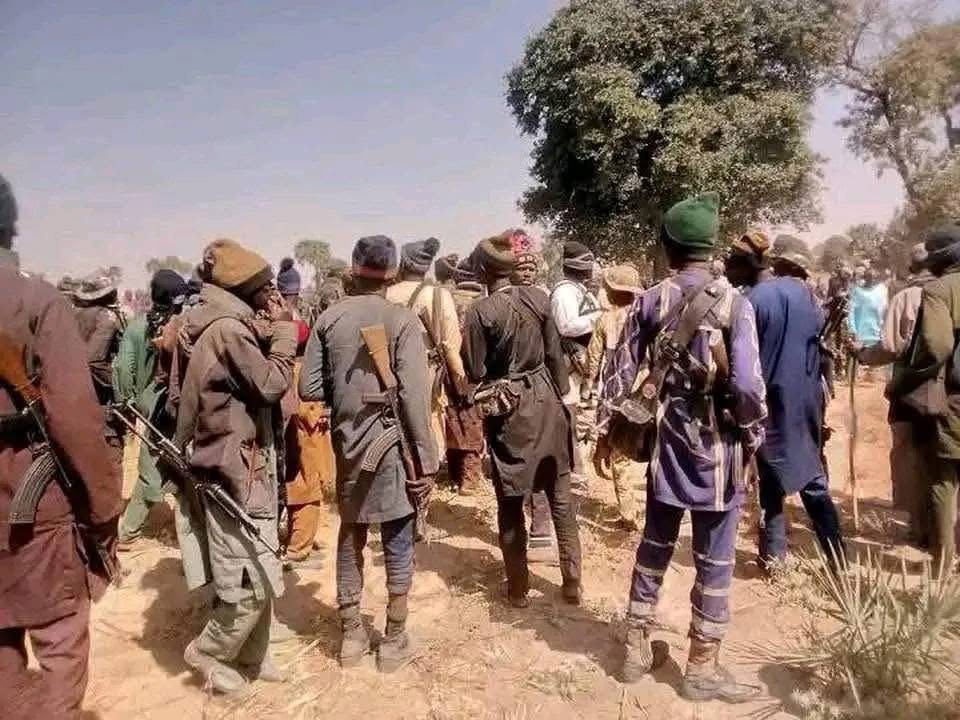
Signals coming from the United States, are indicating that personnel of both the Nigerian Army (NA) and the Nigerian Police Force (NPF) are complicit in the massive terrorism activities Nigerians have been subjected in over the years, which have grown to a new high quite recently.
The US Commission on International Religious Freedom (USCIRF), which made the allegation on Wednesday, pointedly accused some police and army officers of colluding with Fulani militias in deadly attacks and mass abductions targeting religious communities across Nigeria.

The group in a report on the security crisis, urged US Congress to bar individuals lobbying on behalf of foreign governments Washington had blacklisted for severe religious freedom violations from receiving payment for such services.
Part of the report, read: “The fates of all these kidnapping victims, like so many others, remain unknown to the public due to the sensitivity of ransom negotiations and, in some cases, possible collusion between perpetrators and some officials from the police and/or army.
“Further complicating matters is the fact that both conflicting media narratives and reported government censorship have hindered accurate analysis of the identities and motivations of the alarming number of armed nonstate actors that violate religious freedom in Nigeria.
“Some observers have argued environmental and economic factors as the driving force behind Fulani militants’ acts of violence, while others have suggested that these actors are engaged in a concerted campaign of outright genocide against non-Muslims, especially Christians.
“In fact, multiple and overlapping factors, including religion in many cases, likely spur Fulani militants to attack communities or individuals.’’
The report, which revealed that escalating violence in Nigeria’s Middle Belt had driven at least 1.3 million people from their homes, as armed attacks continued to destabilise several states in the region, estimated that about 30,000 armed actors operated across the country in loosely organised groups, ranging from 10 to 1,000 members, with activity concentrated in the North-West, Middle Belt and parts of the south.
Stressing that the scale of displacement reflected what it described as a persistent and widening security crisis affecting millions of residents across central Nigeria, it added: “These actors operate in a variety of contexts and with a multiplicity of likely aims and motivations.
“While many Fulani militant groups wage independent attacks, others periodically coordinate with a wide range of other actors, from conventional bandit gangs seeking financial enrichment to recognised terrorist organisations that espouse a violent interpretation of Islam.
“These Fulani militant attacks, among those of other actors, have forced at least 1.3 million people in the Middle Belt off their lands and into overcrowded, unsanitary, and unsafe conditions in displacement camps.
“The militants frequently attack isolated rural communities at night using motorcycles, automatic weapons and machetes. They often wield machetes and descend on vulnerable communities during the night, eliciting terror as a way to force victims to quickly leave and to achieve greater control of desired land.
“The violence has been driven by repeated attacks on rural settlements, often leaving entire communities abandoned as residents flee for safety. These armed actors are operating without centralised leadership but frequently carrying out coordinated raids on vulnerable rural communities across several states.
“Several attacks carried out in 2025 and early 2026, including mass killings in Benue and Plateau states. One attack in Benue in June 2025 killed at least 200 people, including internally displaced persons living in a Catholic mission.
“In Yelwata, Benue State, in 2025, more than 200 Christians, mostly sleeping women and children, were reportedly killed and over 3,000 people displaced. Militants deliberately timed some attacks to coincide with Christian religious holidays. Militant actors have often carried out operations during Christian holidays such as Christmas or Easter to further maximise the psychological impact.”
The report, also cited how the terrorists in February 2026, killed at least 32 people in Niger State and subsequently attacked Holy Trinity Parish in the Kafanchan Diocese of Kaduna State, abducting 11 including parish priest, Father Nathaniel Asuwaye, after killing three others, highlighting how in many cases, both churches and mosques.
“In February 2026, armed men kidnapped an imam and seven worshipers from a mosque in Plateau. They demanded a ransom of N16m. On Easter Sunday, Fulani militants reportedly killed five worshippers at two churches in Kaduna State while abducting 31 others.”
Noting that conflicting narratives surrounding the violence had complicated efforts to determine the motivations behind the attacks, the commission criticised the federal and state authorities for what it described as inadequate responses to the violence.
It also revealed how some Christian advocates accused security agencies of showing favouritism toward Muslim communities during investigations and security operations, noting that governors from 11 states launched an initiative in June 2025 to establish ranch lands for herders in a bid to reduce clashes over grazing routes and farmland.
While referring to the concern of the Federal Government to the October 2025 decision by US President, Donald Trump, to designate Nigeria as a Country of Particular Concern (CPC), over religious freedom violations, the group urged Congress to bar individuals lobbying on behalf of foreign governments the US had blacklisted for severe religious freedom violations from receiving payment for such services.
It also recommended for legislation “prohibiting any person from receiving compensation for lobbying on behalf of foreign governments of countries the State Department designates as Country of Particular Concern, CPCs.”








The echoes of the drums rolled out to celebrate the rescue of the 44 teachers and students, kidnapped from some schools in Oyo State, after 56 days in the bush, would surely be disrupted abruptly, with the divergent echoes of a fresh abduction, this time coming from Kogi State.
Reports indicate that the gunmen, struck on Tuesday at the Government Secondary School, Odo-Ekina, in Dekina Local Government Area of the state, abducting four students, the school principal and a National Examinations Council (NECO) ad hoc staff member.
Authorities of the Kogi State Police Command, who immediately unleashed their operatives in hot pursuit of the abductors, said the attack occurred at about 5:25 p.m. while the students were writing their NECO examination.
Saliu Oyiza Afusat, an Assistant Superintendent of Police (ASP) and spokesman of the command, said a combined team of police personnel and other security agencies has launched a search-and-rescue operation following the incident.
Informing that one of the students was actually rescued immediately, she said efforts were ongoing to secure the release of the remaining victims and apprehend the attackers, adding that Naziru Bello Kankarofi, the state Commissioner of Police, alongside the Brigade Commander and the State Security Adviser to the Governor, Commodore Jerry Omodara (Rtd), were already on the way to the scene for an on-the-spot assessment.

Oil prices are expected to go down now with the announcement of Donald Trump, US President that he will no longer impose a 20 percent “safe passage” fee on ships passing through the Strait of Hormuz.
The POTUS, hinged his reversal of the decision on the intervention from some Gulf countries, who pleaded with him not to toe the line due to the massive economic impact the decision would make on the region.
Indeed, oil prices had shot up immediately Trump announced the new levy on Monday while declaring the US ‘the guardians of the Hormuz strait,’ a measure which he said was to pay for the cost of guarding the volatile area in order keep supply of oil flowing.
Reports said that Gulf allies of the US worked frantically to get Trump on the phone in time to talk him out of the idea altogether, while a flurry of appeals came from Saudi Arabia, the United Arab Emirates, Bahrain and Qatar.
In response, the POTUS, posting on his Truth Social platform, wrote: “Based on highly productive conversations with Middle East leadership, I have decided to replace the 20% United States Reimbursement Fee with Trade and Investment Deals that the various Gulf States will be making into the United States.”
Trump, who said the investments would be “MASSIVE but, at the same time, extraordinarily good for them, and their future,” added that the deals would see factories, plants, and equipment pour into the US at “Historic levels.”
The Gulf nations have committed to invest trillions of dollars in the US, though it remains unclear how much of that they will actually spend over the next several years.
Meanwhile, the US continues to bomb Iran in what appears to be a resumption of active conflict between both countries, despite an ongoing roadmap to end the conflict.
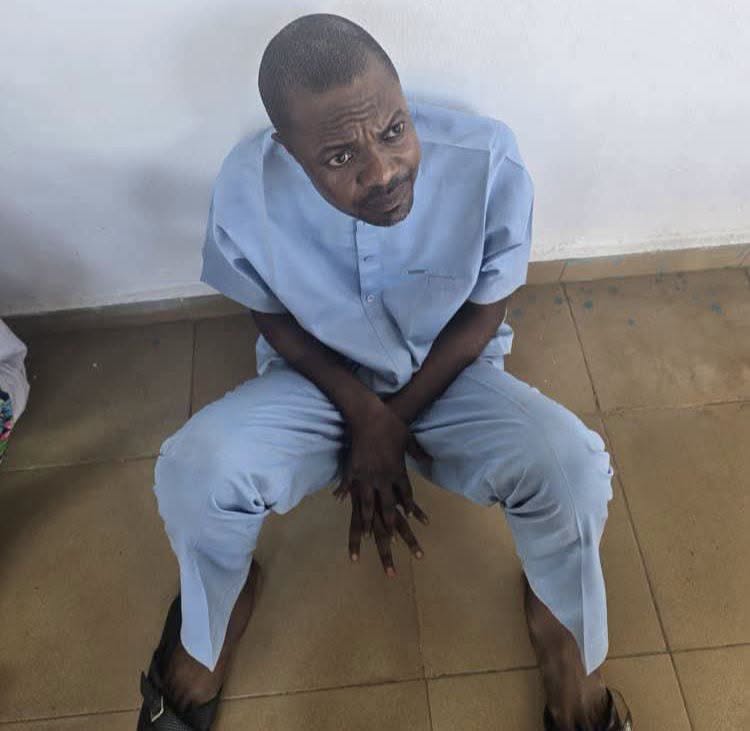
Reports say operatives of the Osun State Police Command, and those of the Department of State Services (DSS) had tracking the trail of Adeniyi Adeyemi, controversial Director General of the Presidential Foreign Intervention Promotion Council (PFIPC), for weeks, before he was eventually pulled out of his hole on Tuesday.
However, the duo, were said to have pulled back after failing to track him through his mobile phones, which he had reportedly switched off for about two days, making it difficult to locate him, leaving the stage for the members of the Police Intelligence Response Team (PI-RT) led by Moses Lohor, a Chief Superintendent of Police (CSP).
Lohor, said to have previously served as the Commander of the Anti-Kidnapping Squad of Osun State, and reported to have been involved in high-profile security operations and controversies, after taken over fielded his men to pick up signals from their well-oiled signal networks.
Regarded by many Osun residents as one of the key security officers who contributed significantly to the peace and stability enjoyed in Ilesa and other parts of the state during his tenure, he was said to have relied on his contacts before his transfer out of the state, said to have raised concerns from the public about the security situation he would be leaving behind.
His exit from the state was said to be hinged on an incident in 2024, in which he allegedly shot one Iyanda Alowonle, then Chairman of Osun State Motor Transport System, in the stomach at the police station in the state prompting an order for his arrest by then Inspector General of Police (IGP).
His effort was said to have paid off when he successfully tracked down the controversial PFIPC, boss, who was seen on Tuesday evening, in a shot video on social media undergoing interrogation, and eventually handed him over to Ibrahim Gotan, Commissioner of Police in the state.
The PUNCH quoted one of the sources as saying: “The arrest (of Adeyemi) took place on Tuesday morning by the IRT squad, who immediately moved him to Abuja. After he was arrested, he was taken to Ibadan and from there to Abuja.”



-
 News4 days ago
BREAKING: Mystery death! *Female student dies a day after arriving Umahi’s home!
-
 News4 weeks ago
BREAKING: Troops rescue wife of kidnapped General! *Terrorists flee scene
-

 News4 days ago
Don’t jump to conclusion! *Umahi speaks on mysterious death of female students!
-
 News4 weeks ago
BREAKING: Count me out, Okonkwo tells Atiku *Amaechi VP’s choice an insult to Ndigbo
-
 News3 weeks ago
BREAKING: Court sentences Nigerien, two others to death over terrorism
-
 News2 weeks ago
BREAKING: EX-SSG mowed down by gunmen! *He resisted being kidnapped – driver
-

 News4 weeks ago
Two hours after Igboho’s ‘red-eyes’ to ‘Fulani’ leaders, gunmen free kidnap victims!
-

 News3 weeks ago
Abductors of Oyo teachers panicking, freedom coming for victims soon!