
News
From Abuja to the world: The Insecurity Triad and Rise of the Independent African Scholar

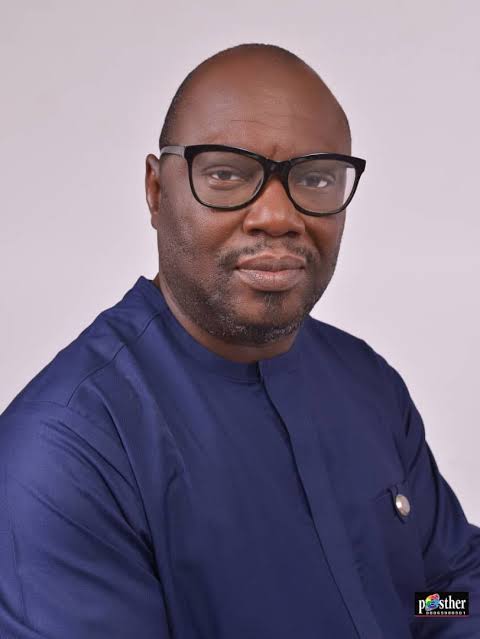

By Max Amuchie

There are moments when an idea moves beyond commentary and begins entering systems.
The week that just ended was one of those moments.
Within the span of days, The Insecurity Triad experienced three separate but interconnected breakthroughs.
First came the Brussels intervention, last Sunday via an Op-ed piece in BusinessDay by hugely respected Collins Nweke, where the framework was interpreted within a European geopolitical context as an explanatory model for Sahel instability and its implications for Europe’s own strategic future.
Second came its consolidation into the global scholarly archive through repositories including Academia.edu, Harvard Dataverse, Zenodo, SSRN, OSF, and SocArXiv — six distinct platforms representing the full architecture of contemporary open-access scholarship.
Then came a third development whose symbolism may ultimately prove just as significant: my integration into the ResearchGate ecosystem.
At first glance, this may appear procedural. Another profile. Another platform. Another account.
But within the architecture of global scholarship, ResearchGate represents something much larger than social networking.
It is one of the world’s largest academic visibility platforms — a digital meeting ground where researchers, scholars, institutions, laboratories, journals, policy specialists, and interdisciplinary thinkers interact within a continuously evolving scholarly network.
To understand why this matters, one must first understand what ResearchGate actually represents in contemporary academic life.
What ResearchGate Really Is
Founded in 2008 by physicians Ijad Madisch and Sören Hofmayer alongside computer scientist Horst Fischbach, ResearchGate emerged as part of a broader transformation in global scholarship: the migration of academic visibility from closed institutional corridors into digital knowledge ecosystems.
Traditionally, scholarly recognition depended heavily on university affiliation, conference access, institutional journals, and physical academic networks.
ResearchGate altered part of that equation.
With over 25 million researchers from 193 countries, it created a platform where research outputs, citations, working papers, datasets, methodological discussions, and scholarly engagement could circulate beyond the limits of geography and institutional hierarchy.
Today, researchers from universities, think-tanks, laboratories, policy institutes, and independent research environments use the platform to upload publications, track citations, share datasets, engage with disciplinary debates, connect with other scholars, and increase discoverability across fields.
In effect, ResearchGate functions as part archive, part visibility engine, and part intellectual networking infrastructure.
And visibility matters in scholarship.
Because ideas do not influence debates merely by existing. They influence debates by becoming discoverable.
The Platforms and What They Represent
The repositories into which The Insecurity Triad has now been archived are not equivalent. Each represents a distinct layer of global scholarly infrastructure.
Academia.edu, with over 250 million registered users, is the world’s largest platform for academic sharing — the first point of entry into the global research conversation for many independent scholars.
Harvard Dataverse is an open-source repository operated by Harvard University, one of the most trusted and widely indexed academic archives in existence. A deposit there is not a symbolic gesture. It is a permanent record.
Zenodo, developed under the European OpenAIRE programme and operated by the European Council for Nuclear Research (CERN), assigns each deposit a Digital Object Identifier — a DOI — making it permanently citable in academic literature worldwide regardless of what happens to any journal or institution that might otherwise have hosted it.
OSF — the Open Science Framework — developed by the US Centre for Open Science, supports the full research lifecycle from planning through archiving and dissemination. It has become a standard for researchers committed to transparency and reproducibility.
SocArXiv is a premier open-access repository designed to ensure that social science research is shared rapidly and transparently.
It serves as a vital bridge between rigorous academic inquiry and the public interest.
It was founded in 2016 by Philip N. Cohen, a distinguished Professor of Sociology at the University of Maryland, College Park with a vision to create a “knowledge commons” that returns power to the scholars themselves.
And SSRN — the US-based Social Science Research Network, owned by Elsevier — is where social science scholarship enters the citation economy. With over one million papers and three million registered users, it is the platform through which working papers reach the global research community before and alongside formal peer review. It is also, notably, where Nobel Economics laureates Joseph Stiglitz, Esther Duflo, and Paul Krugman circulate their working papers — not because they are required to, but because that is where the serious readership is.
Together, these six platforms represent discovery, archiving, citation, networking, and dissemination. A coordinated presence across all six creates an unusually broad discoverability footprint for an independent scholar. For a scholar-journalist working from a newsroom in Abuja, it is extraordinary.
The Scholarly Series
Embedded within the developments of the week just ended is a commitment that deserves to be named directly.
Over the next twelve months, The Insecurity Triad will be developed into a ten-part scholarly series — engaging the framework, the Trinity of State Decay theory, and Sahel security dynamics in full academic register. Not as journalism. Not as commentary. As scholarship.
Part One — The Insecurity Triad (Part 1): Foundations of Convergence and Rival Sovereignty — An Analysis of Money, Land, and Mind (MLM) — has already been published and archived across Academia.edu, Harvard Dataverse, Zenodo, OSF, and SocArXiv, with SSRN forthcoming.
That is the opening instalment of a structured, year-long intellectual undertaking. Nine parts remain.
Why Admission Matters for an Independent Scholar
This is where the significance of these developments becomes clear.
Admission into these global scholarly platforms from outside formal academia carries symbolic and structural weight because it challenges one of the oldest assumptions within global intellectual culture: that legitimate scholarship must originate exclusively from institutional spaces.
For generations, the architecture of scholarship has largely been built around universities as gatekeepers of credibility.
The university conferred identity. The institution supplied legitimacy. The department validated intellectual existence.
But digital scholarly ecosystems are increasingly disrupting that monopoly.
An independent scholar operating from Abuja can now enter the same searchable research environment inhabited by professors in London, policy researchers in Brussels, doctoral candidates in Toronto, and analysts in Pretoria.
That does not erase institutional inequalities. But it narrows intellectual distance.
And that narrowing matters enormously for African thinkers working outside formal academic systems.
The African Reality of Intellectual Production
Across Africa, some of the continent’s most original analytical work often emerges under structurally difficult conditions.
Many researchers operate without university grants, funded research assistants, subscription journal access, institutional methodological support, conference travel funding, or formal research laboratories.
Yet despite these constraints, important ideas continue to emerge.
This is partly because African intellectual production has historically developed through hybrid spaces: journalism, activism, policy observation, civil society, strategic commentary, and independent inquiry.
In many cases, African thinkers are forced to become researchers, archivists, editors, publishers, and distributors simultaneously.
That reality makes entry into global scholarly ecosystems especially important.
Because platforms like Harvard Dataverse, SSRN, ResearchGate and others do more than host publications. They insert researchers into discoverability networks where their work can be found, cited, discussed, questioned, and expanded upon.
For an independent scholar, that visibility is not cosmetic. It is infrastructural.
The Insecurity Triad’s Expanding Scholarly Geography
Taken together, this sequence reveals the expanding geography of the framework’s circulation
The Insecurity Triad is no longer confined to one medium, one geography, or one intellectual ecosystem.
It now exists simultaneously across media discourse, policy interpretation, repository preservation, and scholarly networking systems.
From Abuja’s grounded observation of insecurity dynamics, to Brussels’ geopolitical interpretation of Sahel instability, to integration within global repository and research infrastructures, the framework is beginning to circulate through multiple layers of international knowledge production.
That circulation matters because frameworks gain strength through repeated engagement across different environments.
Some will critique it. Others will refine it. Some may reject aspects of it. Others may adapt it to new contexts.
But circulation itself is the beginning of intellectual life.
Beyond Personal Achievement
It is tempting to read these developments purely as personal achievement.
That would be too narrow.
What makes this moment significant is what it signals for African media institutions, independent scholars, and emerging researchers across the continent who operate outside traditional academic pathways.
It suggests that the global knowledge system — while still unequal — is becoming more permeable.
An idea no longer needs to begin at Oxford, Harvard, or Sciences Po before it can enter international circulation.
It can begin in Abuja.
It can emerge from a newsroom. From a scholar-journalist’s research desk. From a media-backed analytical unit. From a self-funded intellectual project.
And if sufficiently coherent, persistent, and discoverable, it can travel.
The Deeper Meaning of This Convergence
Perhaps the most important lesson of this moment is not institutional.
It is psychological.
For many African thinkers, the greatest barrier has often not been intelligence or originality, but proximity to recognised systems of validation.
The old model suggested: first secure institutional acceptance, then produce ideas.
The emerging reality increasingly suggests the reverse: produce durable ideas, and institutions may eventually begin to engage them.
That is the quiet significance of last week.
From Brussels to ResearchGate, from repositories to scholarly circulation, The Insecurity Triad is beginning to move through systems that were historically difficult for independent African frameworks to enter.
Not as charity. Not as symbolic inclusion. But through interpretive engagement.
And in the evolving geography of global scholarship, that distinction changes everything.
Interlude
In the last eight or nine weeks, this column has birthed The Insecurity Triad, defined its architecture, examined its dynamics, and from there developed the Trinity of State Decay theory. There is still much more to explore.
But next week, we step briefly away from the Triad and the Trinity to pay tribute to one of the outstanding intellectual giants of twentieth-century Africa.
Thirty years after his passing, Claude Ake remains profoundly missed.
Trust Is Sacred. Stay seasoned.
- Dr. Max Amuchie is the CEO of Sundiata Post and architect of The Insecurity Triad Analytical Framework, and the Trinity of State Decay theory. He writes The Sunday Stew, a weekly syndicated column on faith, character, and the forces that shape society, with a focus on Nigeria and Africa in a global context.
X — @MaxAmuchie | Email: max.a@sundiatapost.com | Tel: +234(0)8053069436








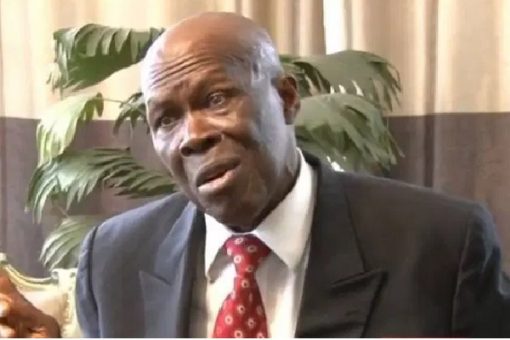
For those believing that President Bola Tinubu’s exclusion of Humphrey Nwosu, the late Chairman of the defunct National Electoral Commission (NEC), was an error that would be corrected subsequently, their expectation came to naught on Friday, with his non-recognition once again.
In a surprise outing, the President failed once again to name the late Professor of Political Science as one of the Nigerians honoured, on the day Nigerians would be celebrating this year’s anniversary of June 12, designed to mark the historic 1993 presidential election, which has now been designated as Nigeria’s Democracy Day.
It was a day Moshood Kashimawo Olawale Abiola (MKO), the candidate of the defunct Social Democratic Party (SDP), was elected President in a transition programme undertaken by the military government of then President Ibrahim Badamasi Babangida (IBB).
Expectations are that because the Option A4 model used in achieving the outcome of the election, acknowledged as the freest and fairest election in Nigerian history, the late electoral commission’s boss, would feature prominently in the list of those to be honoured by the government.
But another list contained in the national broadcast by the President, suggested that the position of the treatment meted to the former NEC Chairman, reflected the thinking in the All Progressives Congress (APC), as the late President Muhammadu Buhari, Tinubu’s predecessor, under whom June 12 was given national recognition.
The list, populated mainly by names from the South West, which included both civilians and military personnel, did not capture the category of national honours to be bestowed on the recipients, as the government said further information would be released in due course.
Prominent among those recognized, was Shehu Musa Yar’Adua, a General and former Chief of Army Staff, Supreme Headquarters between 1976 and 1979, under the military regime of Olusegun Obasanjo, who died in Abakaliki Prison in 1997, where he was detained for allegedly participation in carrying out a coup against Sani Abacha, then Head of State.
Tinubu, said the completed Institute of Petroleum Studies, Kaduna, would now be known as General Shehu Musa Yar’Adua University of Geological Sciences and Engineering Technology, to honour the General, who later became a prominent figure in Nigerian politics, “for his vision of national partnership.”
Listing the other names, Tinubu said: “I am also pleased to announce national awards to the following Nigerians, who suffered persecution, endured indignities, exile, incarceration, and, at times, solitary confinement, so that we have democracy today.”
The recipients included: Ayoka Lawani, Tunde Fagbenle, Oladele Alake, Olatunji Bello, Louis Odion, Segun Babatope, Sam Omatseye, Ademola Osinubi, Bola Bolawole and the duo of Lade Bonuola, former Managing Director of The Guardian and Femi Kusa, former Editor of the Nigerian foremost newspaper.
Others, were: Debo Adeniran, Ayo Opadokun, Chief Ralph Obiora, Ose Osayande, Osa Director, Sylvester Odion-Akhaine, Arthur Nwankwo (Posthumous) and Osagie Obayuwana, all pro-democracy activists.
The list also included Joe Okei-Odumakin , Titus Mann, Joe Igbokwe, Richard Akinnola, Ben Charles-Obi (Posthumous), George Mbah Niran Malaolu, Ishola Williams, a retired Major-General, Femi Aborisade, Jenkins Alumona, Gbemiga Ogunleye, Muyiwa Adekeye, Babajide Kolade-Otitoju and Ike Okonta.
“We also recognise the soldier-democrats of the June 12 struggle: Major General MA Garba, Brigadier General Lawal Jaafaru Isa, Col Umar Farouk Ahmed; Col Sambo Dasuki;
Col Lawan Gwadabe; Brigadier Jonathan Ndam Temlong, Col Musa Shehu; Major General Chris Eze; Major General Harris Dzarma; Col Isa Jibrin; Maj. General Joseph Oshanupin; Col Olusegun Oloruntoba, Olugbede of Gbede Kingdom), Lieutenant Colonel Happy Kefas Bulus, Col J Okai;
Col Emmanuel Ndubueze; Lt Col Yakubu Muazu and Brigadier Yahaya Abubakar, the Current Etsu Nupe, who is already the holder of the CFR title.”
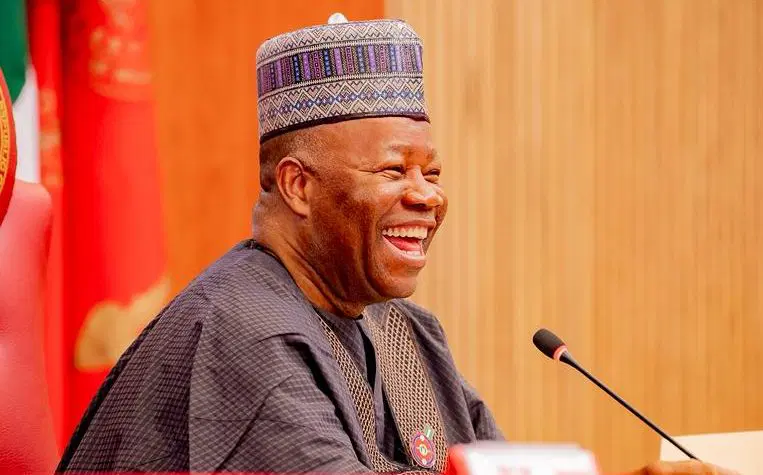
From Godswill Obot Akpabio, Senate President, came a definitive message to Nigerians on Friday – the future is bright, the road is clear and destination is assured under a strong, visionary and purposeful democratic leadership of President Bola Tinubu.
But he also raised a proviso – since democracy is participatory all citizens of the country, must get involved in providing the planks, which when nailed together, would enable the leaders fortify the platform for its growth, to enhance a robust, viable future.
These formed the fulcrum of his admonishment, as he joined other national leaders to celebrate Nigeria’s 27th anniversary of uninterrupted democracy, in which it not only broke the vice grip of military rule, but witnessed seven election circles to choose leaders at both national and other levels of government.
Akpabio, Chairman of the National Assembly, Nigeria’s lawmaking institution, was particular about the participation of the Nigerian youths in making his admonition come true, reminding them that they actually owned the future being fashioned today.
Conveying his message through Eseme Eyiboh, his spokesman the former Governor of Akwa Ibom State and former Minister of Niger Delta, also called on Nigerians to embrace unity, vigilance, and active participation in nation-building, commending them for showcasing resilience and support for democracy despite some low moments.
Noting that democratic experiment remained a testimony of endurance despite years of agitations, he said: “On behalf of the 10th National Assembly, I congratulate every Nigerian for the sustenance of democracy for close to three decades. Mistakes have been made in the course of this journey but we will surely get to the desired destination with your support.”
“Democracy should extend beyond the conduct of elections and be anchored on accountability, justice, compassion and service to the common good.”
Particularly for the Nigerian youths, he was emphatic about their active participation in the nation’s political process stressing that the younger generation forms the fulcrum of leadership succession.
Hear him: “As we commemorate June 12, I wish to encourage the youth not to sit on the fence but be active participants in the nation’s political activities. The youths constitute the fulcrum of those who will succeed us tomorrow.
“Let us therefore rededicate ourselves to the ideals of freedom, transparency and accountable government, social justice, and active citizen participation, especially the youths.”
The Senate President, also spoke the current parlous state of carnage in the country, appealing to Nigerians to unite with one another and cooperate with the government to tame “the monster that has befallen the nation.”
Assuring that Tinubu’s administration remained committed to ending the menace and securing the release of all persons in captivity, he said: “I urge every Nigerian to support the administration of President Bola Ahmed Tinubu in her efforts in fighting terrorism. We understand the pains you are going through but the government is not resting on its oars and hopefully we shall overcome this current challenge and all will be well with Nigeria.”
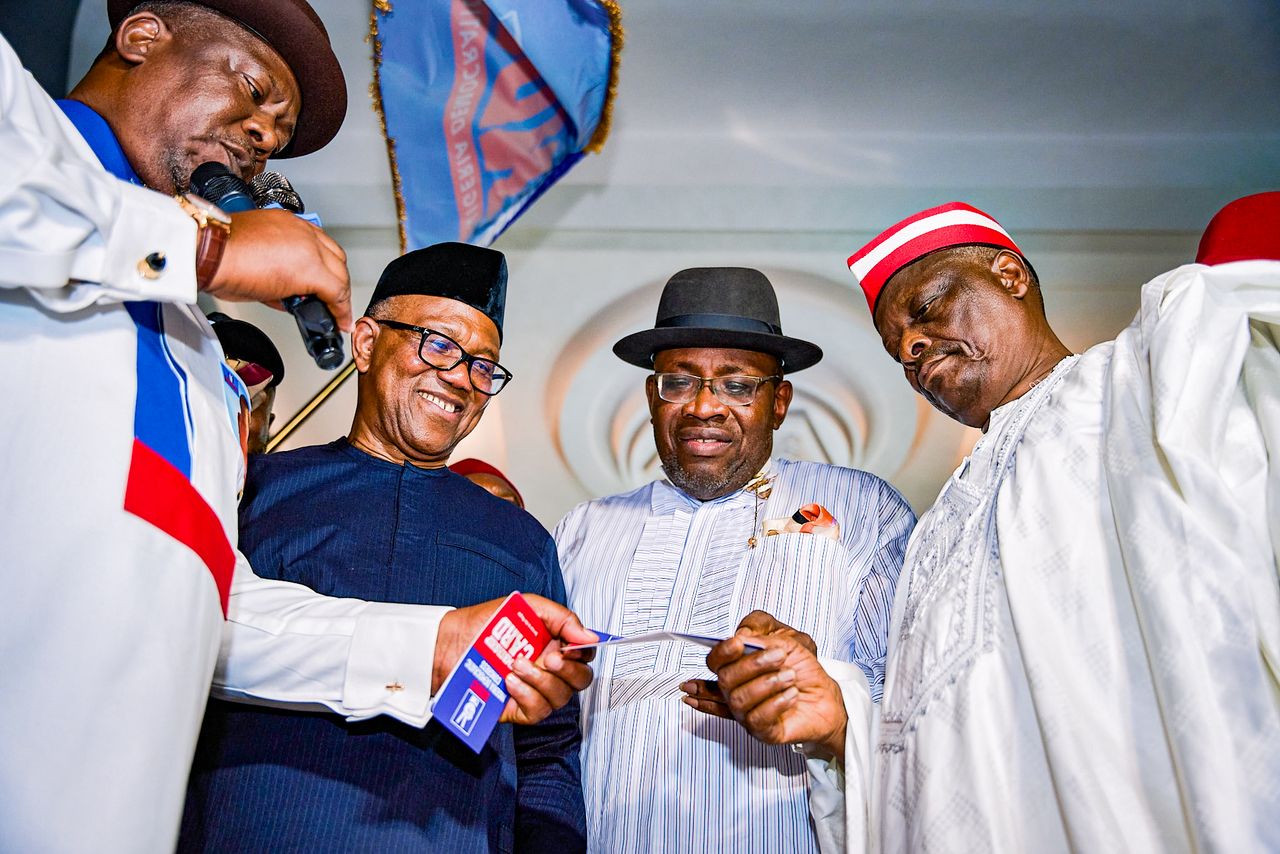
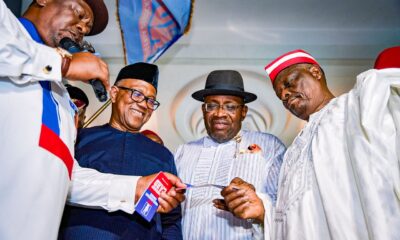
Seriake Dickson, National Leader of the Nigeria Democratic Congress (NDC), on Wednesday showcased Peter Obi, its presidential candidate in the 2027 election, but gave a proviso – his importance would not be at the expense of the party.
A guest on Prime Time, a public affairs programme on ARISE NEWS Television, the former Governor of Bayelsa State, now Senator representing West at the National Assembly, maintained that the belief in some quarters that Obi’s entrance into the party was a favour was completely misplaced.
Instead, he argued that the opposite was the case, as it was the party that was doing its candidates a favour by giving them the opportunity to contest elective positions on its platform in the 2027 elections, a gesture that ought to be returned.
Hear him: “Don’t make it look like anyone is doing NDC a favour. No one is. Rather, the NDC and I and my colleagues are doing people a favour by granting our platform. If you are genuinely supporting Peter Obi and you are disparaging me, the leader, or the platform itself. That is nonsensical.”
Stressing that NDC had demonstrated confidence in Obi by adopting Obi as its sole presidential candidate and selecting a vice-presidential candidate without internal disputes, he said it was enough to earn its leadership the gratitude it deserved.
He added: “Nobody paid shishi. So, if a presidential candidate didn’t pay shishi to be made the sole presidential candidate and sole vice-presidential candidate, that same party cannot be the one saying that small people are underprivileged.
“I could have run. There’s no one more qualified than me. There’s no one more qualified than me to run for presidential candidate. None. There is no crisis within the NDC. Peter Obi is a cherished member of our party. On our own, we have made him a presidential candidate. Sole presidential candidate. And that counts for something. We are working well together. There’s no crisis.”



-
 News3 weeks ago
BREAKING: US-Nigeria troops slaughter 175 ISWAP fighters
-
 Columns3 weeks ago
Dear General Gowon: That apology you’re running from is your nemesis
-
 News1 week ago
BREAKING: Terrorists strike Ibadan again! Abduct ex-Minister’s sister, twin children
-

 News3 weeks ago
BREAKING: Wait over! Arsenal are CHAMPIONS! Win EPL after 22 years hiatus
-
 Columns3 weeks ago
See Tinubu’s terrible damage on Option A4 and its precious memories
-
 News3 weeks ago
BREAKING: Jonathan emerges presidential candidate *Gets automatic PDP ticket!
-

 News3 weeks ago
Presidency: Obi met all requirements – NDC *Cleared to contest primaries
-

 News1 week ago
Emeka Ike: I’ll make example of Lere Olayinka for prying into my privacy