Connect with us

News

Osimhen heading for Barcelona to replace Lewandowski after Álvarez’s miss

Published

on

Victor Osimhen, Nigeria’s prodigy, may be heading to Catalonia to lace his boots for  La Liga giants FC Barcelona, in a development that would see the Super Eagles striker’s much-advertised move out of Turkey, coming to reality eventually.

PUNCH Sports Extra reports, that the move is consequent upon the failure of the Catalonian giants to secure the services of Julián Álvarez from Atlético Madrid, which is insisting on keeping the ace striker in the club.

Advertisement


Barcelona, which said to have identified Álvarez as their primary target for the summer transfer window, reportedly zeroed in on the Super Eagles striker after the move for the Argentine met a bulwark, quoting Football España.

Barcelona had aimed to sign the Argentine, who was purchased for €95million in the summer of 2024 in place of veteran forward Robert Lewandowski, but were reportedly slammed with a fee in excess of €100, for the striker now valued at €200million.

Because, the Riyadh Air Metropolitano, had insisted that any deal below the €100, would not stoke any interest, Barcelona, unwilling to stretch beyond €70, were said to have looked away from Álvarez ane are now looking the way of Osimhen, currently the top striker for both Galatasaray his club and in the Turkish league.

Advertisement


Even if willing to stretch its limits to meet the price tag, Barcelona’s financial constraints is said to be a major obstacle in any move for Álvarez, with the club considering a player-plus-cash offer—an approach Atlético are expected to reject.

“The main issue is that Barcelona will struggle to spend as heavily as they have previously on a single position, given their ongoing financial difficulties. Furthermore, they have several areas to strengthen during the summer transfer window, meaning their funds must be spread across the squad.

“Nevertheless, Barcelona are prepared to move for Álvarez by offering a player-plus-cash deal to reduce the immediate financial outlay, although this is unlikely to appeal to Atlético,” the report said, adding that with negotiations for Álvarez appearing increasingly difficult,  they are now turning their focus to Osimhen, who is valued at around €75m.

Advertisement


That figure is in line with what Galatasaray SK paid for the Nigerian striker last summer, although it remains unclear whether the Turkish club would demand a higher fee to part with their talisman.

“If Atleti continue to take a hard-line stance, which is expected, it would make sense for Barcelona to explore alternatives.

Victor Osimhen is one of the players under consideration, and he is viewed as a more attainable option than the 2022 World Cup winner,” the report added.

Advertisement


Atlético are no longer under the same financial pressure as in previous years, reducing the likelihood of a forced sale and further complicating Barcelona’s pursuit of Álvarez.

While they have no immediate plans to sell, Atlético could reconsider if a significantly improved offer arrives. However, Barcelona are now aware that any realistic chance of signing the Argentina international would require a bid exceeding €100m.

Advertisement


Share this story:

News

Why we pegged presidential ticket forms at N60million – NDC

Published

on

Nigeria Democratic Congress (NDC) has released a list of nomination fees for all its elective positions in 2027, with that of presidential office pegged at N60million – N20million for Expression of Interest and for Nomination Forms, respectively, while putting that of the governorship at N30million.

The forms which would be on sale from Wednesday, would also has those of the Senate put at N8million cumulatively, that of the House of Representatives is pegged at N6million, while aspirants for Houses of Assembly in states are to pay N2.5million.

Advertisement


In a statement signed by Moses Cleopas Zuwoghe, National Chairman and Ikenna Morgan Enekweizu, National Secretary the party also released the timetable and deadlines for the purchase and return of the forms.

Specifically for the governors, the NDC fixed N10 million and N20million for the Expression of Interest and Nomination Forms, respectively, N3 million and N5 million respectively, for the Senate and N2 million and N4 million for the Nomination Forms respectively for the Reps.

State House of Assembly aspirants would be required to pay N1 million for the Expression of Interest and N1.5 million for the Nomination Forms respectively, the statement said, adding that sale of the forms for all elective positions would commence Wednesday, May 13, 2026, and close on Monday, May 18, 2026.

Advertisement


All aspirants would undergo screening and interviews between May 19 and May 21 before becoming eligible to purchase Nomination Forms, the statement noted, adding that the sale of Nomination Forms would commence immediately after the screening exercise and run from May 21 to May 23, while completed forms must be returned not later than May 25.

Disclosing that appeals arising from the screening process would be handled on May 25 and 26, while primary elections for various offices would hold on May 27 and 28, the party put its presidential primary election for May 29, 2026, in Abuja.

While aspirants for the state assemblies would be screened in their respective states, those for National Assembly and presidential aspirants would take place at the party’s national headquarters in Abuja.

Advertisement


For the governorship primaries the assignment would be conducted at the local government level, the statement said, adding that all aspirants seeking its tickets would be required to sign undertakings in line with the party’s code of conduct and electoral guidelines.

Assuring members and aspirants of what it described as a transparent, inclusive and credible primary process capable of producing competent candidates for the 2027 elections, the statement said: “The party remains committed to a transparent and democratic process that guarantees fairness, inclusiveness and internal democracy in the conduct of its primaries.”

In the conduct of the primaries, the party said it had adopted “open secret ballot” system, to strengthen credibility and transparency during delegate voting, adding that its nomination fees remained among the lowest when compared with those charged by other major political parties in the country.

Advertisement


Announcing concessions for female aspirants and persons living with disabilities, the statement said while women would pay only 50 per cent of the approved fees, while PWDs would enjoy a 75 per cent waiver across all categories.

The statement further added: “The Nigeria Democratic Congress (NDC) has officially announced the commencement of the sale of Expression of Interest and Nomination Forms for aspirants seeking to contest various elective positions on the platform of the party ahead of the 2027 general elections.

“The screening and interview of aspirants, which will determine eligibility for the purchase of Nomination Forms, will hold from Tuesday, May 19, to Thursday, May 21, 2026. The sale of Nomination Forms will commence immediately after the screening exercise, from Thursday, May 21, to Saturday, May 23, 2026, while completed forms must be submitted on or before Monday, May 25, 2026.

Advertisement


“The NDC further stated that appeals arising from the screening process will be entertained on May 25 and 26, while primary elections for various elective offices are scheduled to hold on May 27 and 28, 2026.

“The Presidential Primary Election is slated for May 29, 2026, in Abuja.

“The party explained that aspirants seeking tickets for State Houses of Assembly will be screened in their respective states, while screening for aspirants to the National Assembly and Presidential positions will be conducted at the party’s National Headquarters in Abuja.

Advertisement


“It also disclosed that governorship primaries would be conducted at the local government level. All aspirants will be required to sign an undertaking in line with the party’s guidelines and code of conduct.

“The NDC assured members and aspirants of a transparent, inclusive, and democratic process in the sale of forms and conduct of primaries.

“The party also announced that it would adopt the “open secret ballot” system for its primaries in order to guarantee credibility, fairness, and internal democracy.

Advertisement


“The NDC noted that its approved nomination fees remain among the lowest compared to those of other major political parties in the country.

“A breakdown of the approved fees is as follows:

  • State House of Assembly:
    Expression of Interest Form – N1 million
    Nomination Form – N1.5 million
  • House of Representatives:
    Expression of Interest Form – N2 million
    Nomination Form – N4 million
  • Senate:
    Expression of Interest Form – N3 million
    Nomination Form – N5 million
  • Governorship:
    Expression of Interest Form – N10 million
    Nomination Form – N20 million
  • Presidency:
    Expression of Interest Form – N20 million
    Nomination Form – N40 million
    Meanwhile, female aspirants and persons living with disability (PWDs) are to pay 50% and 25% of the fees across all categories.

“The party reaffirmed its commitment to a transparent and credible primary election process capable of producing competent candidates for the 2027 general elections.”

Advertisement


Share this story:
Continue Reading

News

Tinubu to African leaders: Copy Nigeria, produce your way out of poverty

Published

on

For President Bola Ahmed Tinubu there is no other way for African countries to get out of the woods but to engage in massive industrialisation – transforming their rich mineral resources into finished products rather than exporting them in their raw states.

This was the major highlight as he took the podium on Tuesday at the ongoing Africa Forward Summit at the Kenyatta Convention Centre in Nairobi.

Advertisement


Tinubu, who led Nigeria’s government, diplomatic, and business delegation to event, told his audience that Nigeria was ready to assist in the deeper economic integration and industrial growth and prosperity he envisaged for the continent.

Highlighting Nigeria’s blue economy potential as a key driver of Africa’s development, and decrying its underutilisation due to insecurity and uncertainty, he said: “Today, I make an explicit commitment: Nigeria will intensify regional coordination by offering our Deep Blue Project’s maritime intelligence infrastructure as a shared data hub for willing Gulf of Guinea states.

“Interoperable systems, harmonised laws, and seamless joint enforcement must become the daily reality, not an aspiration on paper. Let no one misunderstand: maritime sovereignty does not repel investment — it attracts it. Secure sea lanes, predictable regulation, and functional courts are the preconditions that unlock private capital. Governance has de-risked Nigeria’s maritime proposition. We now invite partners to build on these gains as we advance climate-aligned port modernisation and the digital transformation of our maritime sector.

Advertisement


“As we endorse the Nairobi Declaration, Nigeria affirms that maritime sovereignty and ocean governance are the non-negotiable foundations of Africa’s Blue Economy transformation. We will continue to earn that sovereignty — through institutions, through assets, through law, and through iron-clad regional solidarity that turns our waters from a theatre of risk into a story of shared resilience.

“The oceans have no duplicate as a common heritage of mankind. For Africa, moving from sea blindness to ocean sovereignty is not a choice — it is a generational duty. Nigeria is ready, and we invite all present to join us in that duty.”

Blaming international financial system, for the poor state of industrialization in Africa, Tinubu insisting that Africa must not remain locked into raw-material exports while importing finished goods.

Advertisement


Hear him: “Last September, from the podium of the United Nations General Assembly, Nigeria warned that the international system must reform or risk irrelevance. We spoke not only of the Security Council but of the financial and trade structures that quietly de-industrialise our nations. The evidence is before us. Despite decades of independence, Africa’s share of global manufacturing value added remains below 2 per cent.

“We export raw minerals, crude oil, and agricultural commodities, and we import processed goods at a premium. This pattern is not an accident. It is the product of a global financial architecture that starves our industries of affordable capital, tolerates massive illicit financial flows, and imposes policy constraints that our competitors themselves never observed when they built their own industrial bases.

“Nigeria does not come to this discussion as a supplicant. We come as a nation that has taken painful, homegrown decisions to put our house in order — removing fuel subsidies, unifying our exchange rate, recapitalising our banking system with over US$3.4 billion, and exiting the FATF grey list. These reforms were sovereign choices, not external conditions. They have delivered a declining debt-to-GDP ratio, now projected at 32.3 per cent in 2026, stronger external reserves of $45.5 billion, and a return of investor confidence. But, Excellencies, even a reforming nation like Nigeria is being forced to de-industrialise by a financial system that is stacked against us.”

Advertisement


The President added that in 2026, Nigeria will spend about US$11.6 billion on debt servicing — nearly half of projected revenue.

“Every single dollar that leaves our treasury to pay punitive interest rates is a dollar that did not go into our steel sector, our textile mills, our agro-processing plants, or our digital industries. It is a dollar that did not train a young Nigerian engineer or provide affordable power for our factories. Our industrial base is being starved of the blood it needs — long-term, affordable finance — while creditors and rating agencies treat African sovereigns as permanent high-risk borrowers, regardless of our fiscal performance.

“So, I ask this gathering: how can an African manufacturer compete with a competitor in Europe, Asia, or North America when the cost of borrowing in our nations is five to ten times higher? How can we build cross-border industrial value chains under the African Continental Free Trade Area when our infrastructure projects face a financing gap deepened by the very institutions meant to bridge it? The answer is plain: we cannot. The international financial architecture, as currently constituted, is an instrument of industrial disarmament for Africa.

Advertisement


“Nigeria is not asking for charity. We are demanding a financial system that intentionally enables Africa to industrialise — to process its own minerals, refine its own crude oil, manufacture its own pharmaceuticals, and compete fairly in global markets. We will continue to borrow responsibly, but we insist that our creditworthiness be measured by our economic fundamentals and our industrial potential, not by outdated stereotypes,” he noted.

On migration, Tinubu said addressing root causes was essential, stressing that people would not risk dangerous journeys if opportunities existed at home.

He said Nigeria had embedded migration management within its broader economic reforms, including subsidy removal, banking recapitalisation, and agricultural modernisation.

Advertisement


He also called on international partners to increase investments in climate adaptation, energy access, digital skills, and job-creating sectors, urging that a portion of Official Development Assistance (ODA) be directed toward reducing irregular migration pressures.

Tinubu also called for stronger African cooperation in shaping global migration governance, saying existing frameworks such as the Global Compact for Safe, Orderly and Regular Migration remained insufficient due to their non-binding nature.

He expressed support for African Union initiatives including the Migration Policy Framework and the Khartoum Process, while urging stronger links between regional and global systems.

Advertisement


The Africa Forward Summit, co-hosted by Presidents Emmanuel Macron and William Ruto, brought together leaders and officials from over 30 countries.

Opening statements were delivered by Macron, Ruto, UN Secretary-General António Guterres, and African Union Commission Chair Mahamoud Ali Youssouf.

On the sidelines, Tinubu met Madagascar’s President Michael Randrianirina and held talks with CAF President Patrice Motsepe, where he reaffirmed Nigeria’s readiness to host the 2026 CAF Awards.

Advertisement


He was accompanied by senior government officials, including ministers of foreign affairs, finance, agriculture, marine and blue economy, environment, industry, communications, as well as leading private sector figures such as Aliko Dangote, Tony Elumelu, Abdulsamad Rabiu, and Aigboje Aig-Imoukhuede.

The summit featured discussions on investment, AI, digitalisation, agriculture, creative industries, climate change, and strategies to translate policy discussions into industrial development across Africa.

Advertisement


Share this story:
Continue Reading

News

Uyo varsity saga: How irate staff attacked, detained our operatives – EFCC

Published

on

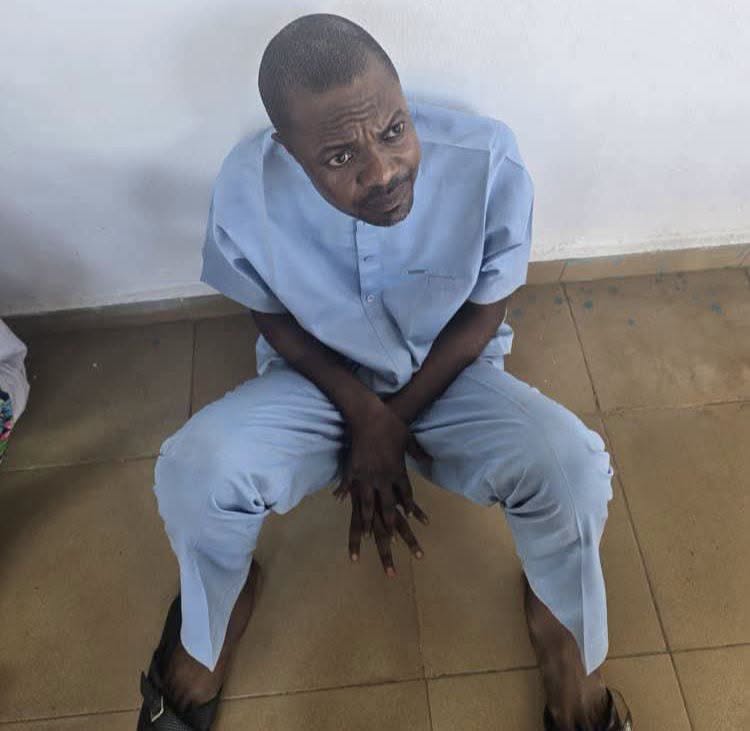
The Economic and Financial Crimes Commission (EFCC) is claiming to be the victim in the fracas that ensued at the University of Uyo Teaching Hospital (UUTH) in Akwa Ibom on Tuesday, which led to the arrest of Eyo Ekpe, Deputy Chairman of the hospital’s Medical Advisory Committee (MAC).

In a detailed account of the incident, which caused panic at the institution following the arrival of the EFCC operatives at the facility, the anti-graft agency, explained that its operatives were in the hospital on lawful duties to make enquiries on a medical report of one of its suspects.

Advertisement


On Tuesday, a video clip showing workers, patients and visitors, scampering away as plumes of smoke suspected to be from teargas canisters fired into the premises, went viral, attracting a backlash from the public.

Amid the commotion that ensued, the operatives, said to have arrived the institution in two saloon cars and a tinted bus, with some officers wearing masks and others dressed in EFCC-branded jackets, eventually spirited away Epe, Professor of Cardiothoracic Surgery.

Dele Oyewale, spokesman of the commission, however said the operation was legitimate, adding that the operatives only visited the hospital to authenticate a medical report presented by a suspect who has been remanded over allegations of defrauding multiple microfinance banks, including University of Uyo Microfinance Bank.

Advertisement


Oyewale Head of Media and Publicity, who narrated how the agency previously wrote two different letters to the hospital management over the medical report but received no response, added decided to visit the hospital for further enquiry over the matter.

He wrote in a statement: “As a last resort, operatives of the Commission visited the Chief Medical Director of the hospital on Tuesday to make further enquiries, only to be locked in with a false alarm and subjected to unprovoked attack by misguided staff of the facility who pelted them with stones and other dangerous objects,” the statement reads.

“While within the hospital, the CMD reportedly directed that gates of the facility be shut, making it impossible for any lawful enquiry to be made.

Advertisement


“Police authorities in Akwa Ibom State advised the CMD to open the hospital gates to enable the operatives exit the premises peacefully but the entreaties were turned down.

“In spite of the hostility and provocation, there was no breakdown of law and order as the operatives exercised restraint and professionally made their ways out of the hospital premises without disrupting its activities.

“Enquiries bordering on operational engagements of the Commission are lawful. It is therefore necessary to remind the public and corporate bodies that they are obligated to cooperate with the agency in such circumstances.”

Advertisement


Share this story:
Continue Reading

Trending

Copyright © 2024. WhirlwindNews