

News
FG chides Atiku: You’re wicked, enemy of progress *Nigeria will move without you

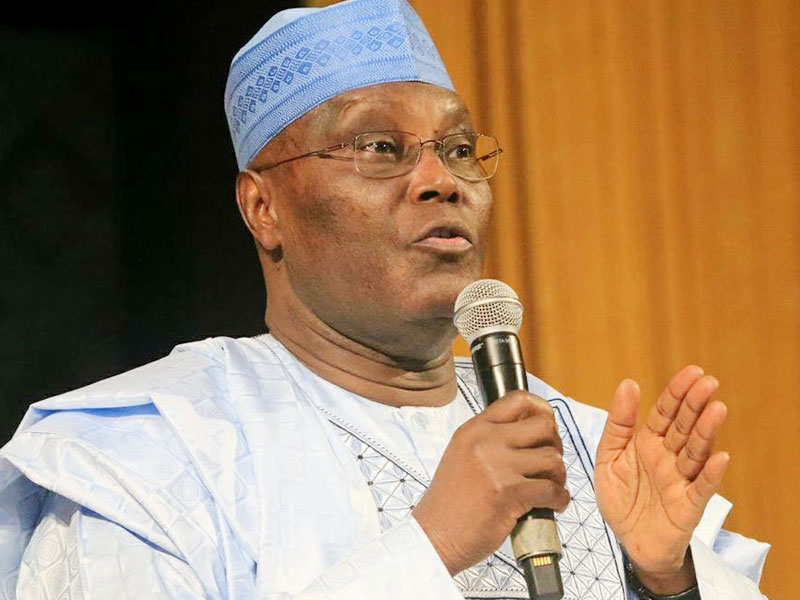
From the Federal Government on Wednesday, came a mouthful of lacerating lashes against Atiku Abubakar, former Vice President, for assailing the agreement Nigeria entered into, to finally rest the issue of the decades-old OPL 245 disputation, which has survived different administrations.
The issue has to do with a highly controversial revocation of the deal between the Federal Government and Malabu Oil and Gas for the exploitation of the ultra-deepwater oil block in Nigeria, estimated to hold 9 billion barrels of crude.

The government, following allegations of fraud in the deal entered into in 1998, by the government of the late Sani Abacha, Nigeria’s former Head of State, revoked it and awarded a new deal in 2011 to Eni and Shell, thus triggering of years of international bribery lawsuits and arbitration, as funds allegedly flowed to private individuals rather than the Nigerian state.
But the latest, which has seemingly opened a new chapter in the unending controversy, is Atiku, assailing the FG’s claims of finally resolving the matter, which he dismissed as a lie, insisting that the matter was still live.
Atiku, had on Sunday, poohpoohed the FG’s announcement of a successful deal to end the dispute, which it made through Lateef Fagbemi, Attorney General of the Federation and Minister of Justice, on March 5.
The Minister had described the deal, which was reportedly cut with Eni, and Nigerian Agip Exploration Limited (NAEL), as a milestone in repositioning Nigeria’s economic landscape, a statement the former VP, dismissed.
Stressing his disagreement with the claim, Atiku not only described it as “nothing more than political theatrics,” but added that the matter was far from resolved, as it remained subject to ongoing legal proceedings.
Bemoaning the outcome, where he claimed that some key stakeholders were excluded from the process, he had warned: “A government that sidelines critical stakeholders, disregards pending judicial processes, and proceeds to celebrate a disputed agreement demonstrates not strength, but recklessness.”
But, in a quick riposte, Fagbemi, replied the former VP in a lengthy statement, where he all but dismissed the Waziri Adamawa, as an enemy of progress, warning Nigerians to beware of his antics together with his camp.
Giving a historical sequence through which the government reached what he saw as a permanent resolution of the issue, the AGF-MoJ, stated that the ongoing opposition revealed what the country was dealing with at this moment of its development, regarding the likes of the former VP.
Hear him: “The persistence of these criticisms, despite clear legal, commercial, and national interest considerations, strongly suggests that they are driven not by patriotism or objective reasoning, but by undisclosed and self-serving interests.
“Those advancing such narratives must be understood for what they represent—an attempt to frustrate a lawful and strategic resolution that stands to unlock immense value for the Nigerian people.
“Their posture is not only misleading but ultimately inimical to the collective interest, as it seeks to deny over 200 million Nigerians the economic and developmental benefits of a critical national asset.
“Nigerians should, therefore, view such interventions with the caution they deserve and reject efforts aimed at derailing progress for narrow personal or political gain. The national interest must not be sacrificed on the altar of hidden agenda.”
Giving a snapshot of the entire event, Fagbemi, stated: “It will be recalled that the block was originally awarded to Malabu Oil & Gas Ltd (Malabu) in April 1998, revoked in July 2001, and subsequently allocated to Shell Nigeria Ultra-Deep Limited (SNUD) in May 2002. These actions gave rise to extensive litigation and public hearings before the National Assembly.
“The disputes arising from the revocation and reallocation were eventually addressed through the 2011 Resolution Agreement involving the Federal Government of Nigeria (FGN), Malabu, SNUD (now succeeded by Shell Nigeria Exploration and Production Company Limited – SNEPCo), and Nigerian Agip Exploration (NAE)/Eni entities.
“Under that Agreement, Malabu relinquished all claims and interests in OPL 245 for valuable consideration, while the Federal Government reallocated the block to SNUD (SNEPCo) and NAE as joint license holders. The Agreement also required the Federal Government to convert OPL 245 into an Oil Mining Lease (OML).
Subsequently, the transactions and actions arising from the 2011 Agreement were subjected to rigorous judicial scrutiny in multiple criminal and civil proceedings across jurisdictions, including the United States, the United Kingdom, and Italy.
“These proceedings did not establish any wrongdoing against Eni, SNEPCo, or the transaction as a whole. Following the conclusion of these litigations, and in light of the Federal Government’s delay in converting OPL 245 into an OML, Eni entities and Nigerian Agip Exploration Limited initiated arbitration proceedings against the Federal Republic of Nigeria at the International Centre for Settlement of Investment Disputes (ICSID).
“They contended that the delay constituted a breach of Nigeria’s obligations under the Nigeria–Netherlands Bilateral Investment Treaty. As a result, Nigeria faced a potential liability exceeding US$2 billion in damages and associated costs.
“It is noteworthy that although the ICSID arbitration, which commenced in 2020, received considerable public attention, none of the stakeholders now being referenced by the former Vice-President participated in those proceedings.
“The arbitration was not concerned with questions of ownership of Malabu or internal disputes within the company. Rather, it focused strictly on whether Nigeria had wrongfully delayed or refused the conversion of OPL 245 into an OML, and whether such actions breached its treaty obligations to foreign investors.
“At no point did the individuals now laying claim to interests in Malabu initiate proceedings in that forum, nor did they possess a legal basis to intervene in a dispute centered on sovereign obligations and licensing decisions.
“It is also important to highlight that OPL 245, located in deep offshore waters approximately 150 kilometres from Nigeria’s coastline, has long been regarded as one of the country’s most commercially promising hydrocarbon assets. However, for decades, it remained largely undeveloped due to persistent legal and political disputes.
“The decisive action taken by the current administration is aimed at resolving these long-standing issues, avoiding significant financial exposure, and creating the conditions necessary for the asset to be fully developed and brought into production.
“The significance of this development cannot be overstated. OPL 245 is projected to contribute approximately 150,000 barrels per day to Nigeria’s oil production capacity. The project is designed around a large-scale floating production system and includes substantial gas export components linked to Nigeria LNG. For decades, OPL 245 symbolised unrealised national potential.
“The present resolution, achieved under the leadership of President Bola Tinubu, transforms it into a viable and bankable development opportunity capable of delivering substantial economic and social benefits, including increased government revenue, enhanced energy security, and renewed investor confidence.
“Furthermore, the public should be guided by the most recent and authoritative judicial pronouncement on the matter. In Nigerian Agip Exploration Limited v. Malabu Oil & Gas Ltd (2025) 15 NWLR (Pt 2009) 551, the Court of Appeal dismissed Malabu’s challenge to the allocation of OPL 245 to Shell Nigeria Exploration and Production Company Limited, holding that the action was statute-barred and constituted an abuse of court process.”









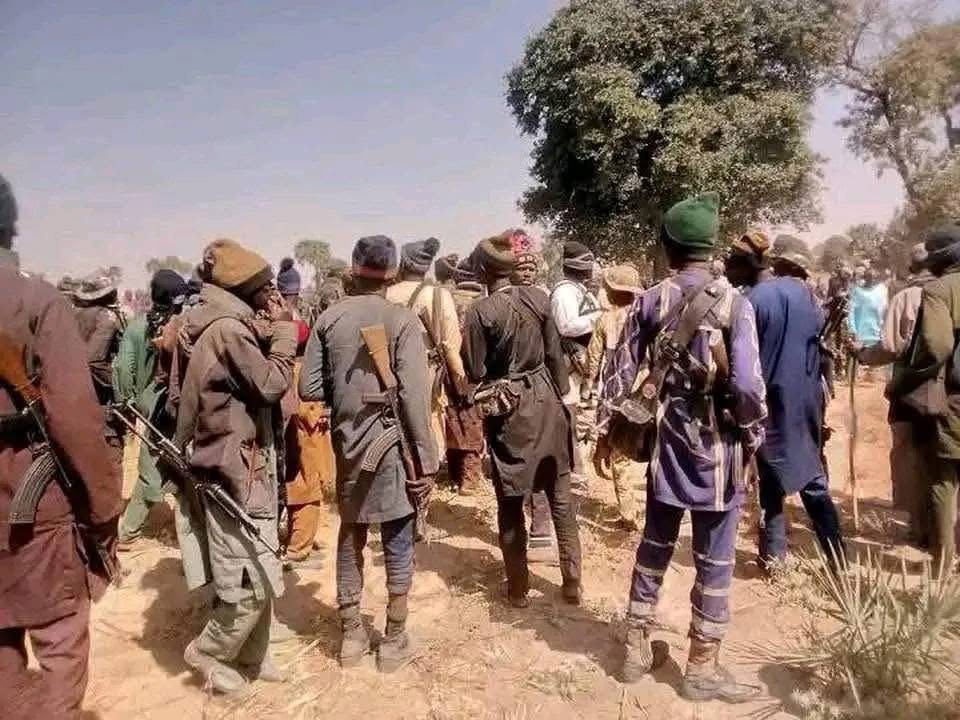
The echoes of the drums rolled out to celebrate the rescue of the 44 teachers and students, kidnapped from some schools in Oyo State, after 56 days in the bush, would surely be disrupted abruptly, with the divergent echoes of a fresh abduction, this time coming from Kogi State.
Reports indicate that the gunmen, struck on Tuesday at the Government Secondary School, Odo-Ekina, in Dekina Local Government Area of the state, abducting four students, the school principal and a National Examinations Council (NECO) ad hoc staff member.
Authorities of the Kogi State Police Command, who immediately unleashed their operatives in hot pursuit of the abductors, said the attack occurred at about 5:25 p.m. while the students were writing their NECO examination.
Saliu Oyiza Afusat, an Assistant Superintendent of Police (ASP) and spokesman of the command, said a combined team of police personnel and other security agencies has launched a search-and-rescue operation following the incident.
Informing that one of the students was actually rescued immediately, she said efforts were ongoing to secure the release of the remaining victims and apprehend the attackers, adding that Naziru Bello Kankarofi, the state Commissioner of Police, alongside the Brigade Commander and the State Security Adviser to the Governor, Commodore Jerry Omodara (Rtd), were already on the way to the scene for an on-the-spot assessment.

Oil prices are expected to go down now with the announcement of Donald Trump, US President that he will no longer impose a 20 percent “safe passage” fee on ships passing through the Strait of Hormuz.
The POTUS, hinged his reversal of the decision on the intervention from some Gulf countries, who pleaded with him not to toe the line due to the massive economic impact the decision would make on the region.
Indeed, oil prices had shot up immediately Trump announced the new levy on Monday while declaring the US ‘the guardians of the Hormuz strait,’ a measure which he said was to pay for the cost of guarding the volatile area in order keep supply of oil flowing.
Reports said that Gulf allies of the US worked frantically to get Trump on the phone in time to talk him out of the idea altogether, while a flurry of appeals came from Saudi Arabia, the United Arab Emirates, Bahrain and Qatar.
In response, the POTUS, posting on his Truth Social platform, wrote: “Based on highly productive conversations with Middle East leadership, I have decided to replace the 20% United States Reimbursement Fee with Trade and Investment Deals that the various Gulf States will be making into the United States.”
Trump, who said the investments would be “MASSIVE but, at the same time, extraordinarily good for them, and their future,” added that the deals would see factories, plants, and equipment pour into the US at “Historic levels.”
The Gulf nations have committed to invest trillions of dollars in the US, though it remains unclear how much of that they will actually spend over the next several years.
Meanwhile, the US continues to bomb Iran in what appears to be a resumption of active conflict between both countries, despite an ongoing roadmap to end the conflict.
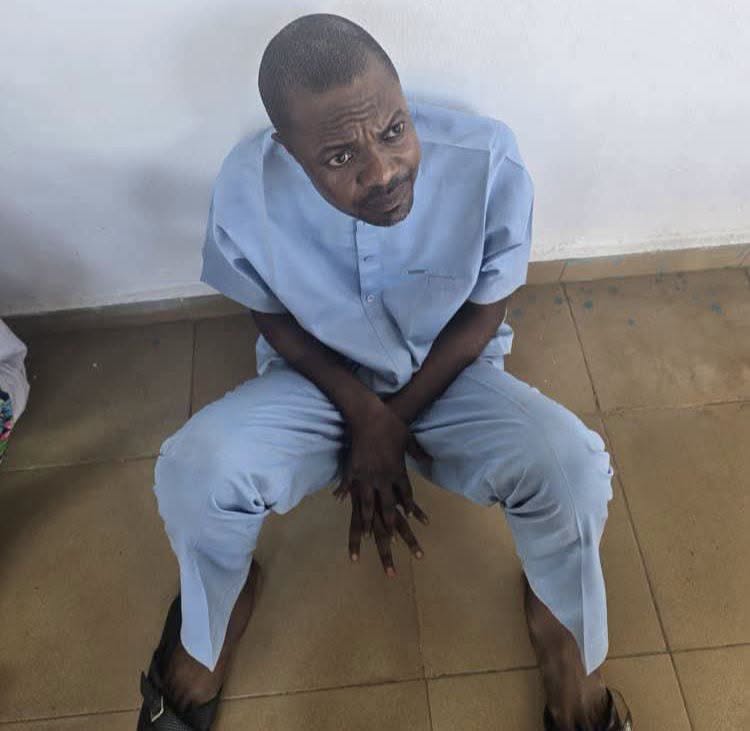
Reports say operatives of the Osun State Police Command, and those of the Department of State Services (DSS) had tracking the trail of Adeniyi Adeyemi, controversial Director General of the Presidential Foreign Intervention Promotion Council (PFIPC), for weeks, before he was eventually pulled out of his hole on Tuesday.
However, the duo, were said to have pulled back after failing to track him through his mobile phones, which he had reportedly switched off for about two days, making it difficult to locate him, leaving the stage for the members of the Police Intelligence Response Team (PI-RT) led by Moses Lohor, a Chief Superintendent of Police (CSP).
Lohor, said to have previously served as the Commander of the Anti-Kidnapping Squad of Osun State, and reported to have been involved in high-profile security operations and controversies, after taken over fielded his men to pick up signals from their well-oiled signal networks.
Regarded by many Osun residents as one of the key security officers who contributed significantly to the peace and stability enjoyed in Ilesa and other parts of the state during his tenure, he was said to have relied on his contacts before his transfer out of the state, said to have raised concerns from the public about the security situation he would be leaving behind.
His exit from the state was said to be hinged on an incident in 2024, in which he allegedly shot one Iyanda Alowonle, then Chairman of Osun State Motor Transport System, in the stomach at the police station in the state prompting an order for his arrest by then Inspector General of Police (IGP).
His effort was said to have paid off when he successfully tracked down the controversial PFIPC, boss, who was seen on Tuesday evening, in a shot video on social media undergoing interrogation, and eventually handed him over to Ibrahim Gotan, Commissioner of Police in the state.
The PUNCH quoted one of the sources as saying: “The arrest (of Adeyemi) took place on Tuesday morning by the IRT squad, who immediately moved him to Abuja. After he was arrested, he was taken to Ibadan and from there to Abuja.”



-

 News6 days ago
BREAKING: Mystery death! *Female student dies a day after arriving Umahi’s home!
-

 News6 days ago
Don’t jump to conclusion! *Umahi speaks on mysterious death of female students!
-

 News3 weeks ago
BREAKING: Court sentences Nigerien, two others to death over terrorism
-
 News2 weeks ago
BREAKING: EX-SSG mowed down by gunmen! *He resisted being kidnapped – driver
-

 News4 weeks ago
Two hours after Igboho’s ‘red-eyes’ to ‘Fulani’ leaders, gunmen free kidnap victims!
-

 News4 weeks ago
Abductors of Oyo teachers panicking, freedom coming for victims soon!
-
 News2 days ago
BREAKING: Terrorists strikes another school! *Kidnap principal, students, NECO official!
-
 News4 weeks ago
Chicagogate: Nigerians return to court! *Move to stop Tinubu from 2027 polls