

News
Three tax laws in circulation – Reps *Say, alterations, executive rascality


Executive rascality cannot be discountenanced in the alteration of the new tax laws passed by the National Assembly last year, the House of Representatives, said on Friday, as it claims that there are at least three versions of the document currently in circulation.
Victor Afam Ogene, spokesman of the House Minority Caucus, who initially unveiled the discovery of “illegal” alterations in the gazetted copies of the tax reform laws, earlier in the day, upped the ante later in the night, attributing the move to “overzealousness and executive rascality.”


A guest on News Night, a late night programme on ARISE NEWS Television, told his host that there were actually three versions of the document as a result of the decision of some people in the executive branch of government to tamper with the clean copy passed by the National Assembly.
Hear him: “You can easily point to overzealousness by some officials on the executive side, which in summary you could tag as executive rascality. A lot of times people think that when you bring executive bills, the bills should return to you as was sent.
“Then we should simply be – I don’t want to use rubberstamp – we cannot be garbage in garbage out. That is why 360 of us sit in that assembly, and there are processes in law-making – first reading – second reading – public hearings – then it comes back to the committee of the whole and then harmonisation between the House and the Senate and then the Clerk of the House prepares a clean-copy that is sent to the President.
“In doing so, ensure that it is what is passed by the National Assembly. This tax law went through all these processes. It is the duty of the executive to publish the gazzetted law. The Nigerian Printing Press is under the Federal Ministry of Information. So, it is their remit to publish the laws.”
Ogene, Chairman of the seven-member committee set up by the caucus to probe the alleged alterations, had initially raised the alarm about the alteration while submitting the interim report based on an initial signal by Abdussamad Dasuki, a member of the House on December 17, last year to that effect.
On December 17, Abdussamad Dasuki, a member of the lower legislative chamber, alleged that there are differences between the tax laws passed by parliament and the gazetted copy available to the public.
The alleged alteration sparked public outrage, with some Nigerians calling for a suspension of the implementation of the laws.
On December 16, the leadership of the senate and house of representatives directed Kamoru Ogunlana, clerk of the national assembly, to work with relevant agencies in the executive branch in a bid to re-gazette the tax laws.
The tax laws are the Nigeria Tax Act, 2025; the Nigeria Tax Administration Act, 2025; the Joint Revenue Board of Nigeria (Establishment) Act, 2025; and the Nigeria Revenue Service (Establishment) Act, 2025.
On January 3, the green chamber released the gazetted copy of the tax laws for public scrutiny.
‘ILLEGAL ALTERATIONS’
Ogene said the directive of the leadership of the red and green chambers to the clerk to “take steps to align” the Acts passed by the parliament with the federal government printing press to ensure accuracy, conformity, and uniformity is a “clear indication that there were some procedural anomalies in the previously gazetted version that illegally encroached on the core mandate of the national assembly”.
The lawmaker said Kingsley Chinda, minority leader of the house, constituted a committee on January 2 to thoroughly investigate the “scandal.”
He said the committee comprises lawmakers from the six geopolitical zones — Aliyu Garu (Bauchi), Stanley Adedeji (Oyo), Ibe Osonwa (Abia), Marie Ebikake (Bayelsa), Shehu Fagge (Kano), and Gaza Jonathan (Nasarawa).
Ogene said preliminary findings, based on a comparison of the certified true copies (CTCs) released by the house and the gazetted copies, indicated that the laws were altered.
“There were three different versions of the documents in circulation, particularly the Nigeria Tax Administration Act, 2025,” the statement reads.
“The Nigeria Tax Administration Act (NTAA), 2025, has a number of discrepancies from the version passed by the National Assembly and the version earlier published in the official gazette. These discrepancies are obvious, going by the released Certified True Copies (CTCs) by the House referenced earlier.”
Advertisement
He said under section 29(1), the version certified by the national assembly set the tax compliance reporting threshold at N50 million for individuals and N100 million for companies, but the gazetted copy lowered the threshold for individuals to N25 million and altered the threshold for companies.
“This is a clear case of the executive undermining legislative powers by illegally altering an already passed law to drag more taxpayers into the net,” the legislator said.
In section 41, Ogene said the gazetted version introduced new subsections 41(8) and 41(9), which require taxpayers to deposit 20 percent of the disputed tax amount as a condition for appealing decisions of the tax appeal tribunal to the high court.
Ogene said the provisions were not included in the version passed by the national assembly.
He said in section 64, the gazetted law “illegally increased the powers of the tax authority to include the power to arrest individuals suspected of tax violations through law enforcement agencies, and allowed for the sale of seized assets without a court order”.
Ogene said in section 3(1)(b), the version certified by the national assembly defined federal taxes to include income tax, petroleum income tax, stamp duties, and VAT, but the gazetted copy removed petroleum income tax and VAT from the definition of taxes administered by the federal government.
“We consider this an affront to the exclusive powers of the national assembly to make laws,” he said.
The lawmaker said section 39(3) of the gazetted law was “illegally altered” to mandate that tax computations for petroleum operations be carried out in US dollars, contrary to the version passed by the national assembly, which provided that tax calculations be done in the currency of the transaction.
In sections 30(1)(d) and 30(3) of the National Revenue Service (Establishment) Act, Ogene said the version passed by the national assembly empowered lawmakers to summon officials, demand reports, and enforce accountability in line with their constitutional oversight role.
The lawmaker said the gazetted version deleted the provisions requiring quarterly and annual reports to parliament, describing it as a disregard for the national assembly and the doctrine of checks and balances.
“Given the anomalies, illegalities, and impunity observed, which clearly undermine the national assembly’s constitutional powers and democracy, the committee finds the current evidence sufficient to warrant a deeper investigation,” Ogene said.
“This will ensure accountability for the affront against the legislature. To achieve this, the Committee respectfully requests an extension to conduct a more thorough examination of the matter.”








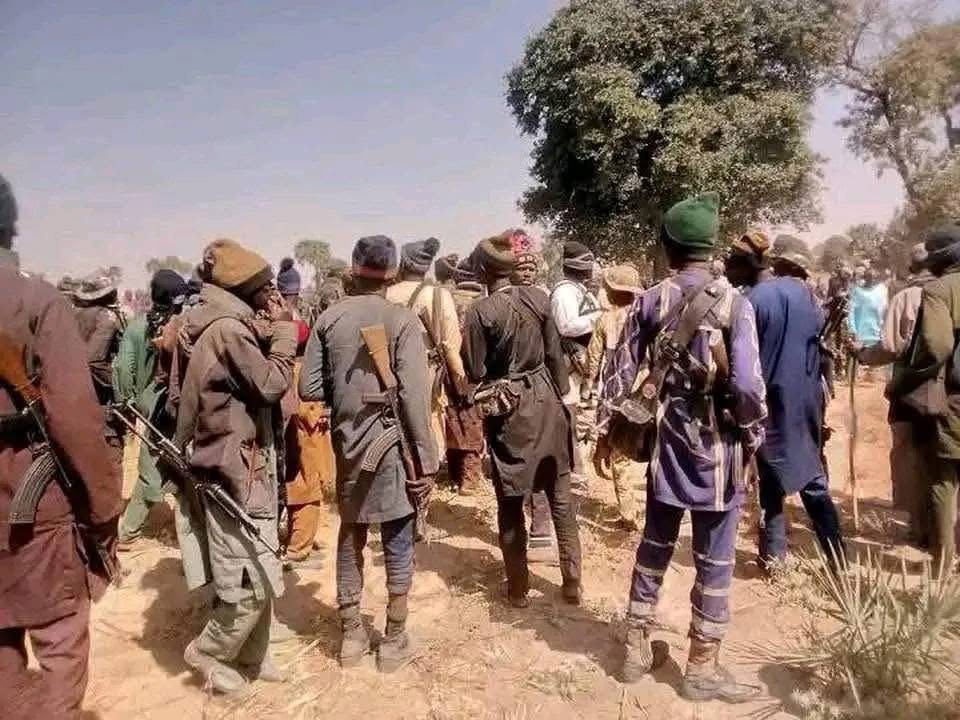
The echoes of the drums rolled out to celebrate the rescue of the 44 teachers and students, kidnapped from some schools in Oyo State, after 56 days in the bush, would surely be disrupted abruptly, with the divergent echoes of a fresh abduction, this time coming from Kogi State.
Reports indicate that the gunmen, struck on Tuesday at the Government Secondary School, Odo-Ekina, in Dekina Local Government Area of the state, abducting four students, the school principal and a National Examinations Council (NECO) ad hoc staff member.
Authorities of the Kogi State Police Command, who immediately unleashed their operatives in hot pursuit of the abductors, said the attack occurred at about 5:25 p.m. while the students were writing their NECO examination.
Saliu Oyiza Afusat, an Assistant Superintendent of Police (ASP) and spokesman of the command, said a combined team of police personnel and other security agencies has launched a search-and-rescue operation following the incident.
Informing that one of the students was actually rescued immediately, she said efforts were ongoing to secure the release of the remaining victims and apprehend the attackers, adding that Naziru Bello Kankarofi, the state Commissioner of Police, alongside the Brigade Commander and the State Security Adviser to the Governor, Commodore Jerry Omodara (Rtd), were already on the way to the scene for an on-the-spot assessment.

Oil prices are expected to go down now with the announcement of Donald Trump, US President that he will no longer impose a 20 percent “safe passage” fee on ships passing through the Strait of Hormuz.
The POTUS, hinged his reversal of the decision on the intervention from some Gulf countries, who pleaded with him not to toe the line due to the massive economic impact the decision would make on the region.
Indeed, oil prices had shot up immediately Trump announced the new levy on Monday while declaring the US ‘the guardians of the Hormuz strait,’ a measure which he said was to pay for the cost of guarding the volatile area in order keep supply of oil flowing.
Reports said that Gulf allies of the US worked frantically to get Trump on the phone in time to talk him out of the idea altogether, while a flurry of appeals came from Saudi Arabia, the United Arab Emirates, Bahrain and Qatar.
In response, the POTUS, posting on his Truth Social platform, wrote: “Based on highly productive conversations with Middle East leadership, I have decided to replace the 20% United States Reimbursement Fee with Trade and Investment Deals that the various Gulf States will be making into the United States.”
Trump, who said the investments would be “MASSIVE but, at the same time, extraordinarily good for them, and their future,” added that the deals would see factories, plants, and equipment pour into the US at “Historic levels.”
The Gulf nations have committed to invest trillions of dollars in the US, though it remains unclear how much of that they will actually spend over the next several years.
Meanwhile, the US continues to bomb Iran in what appears to be a resumption of active conflict between both countries, despite an ongoing roadmap to end the conflict.
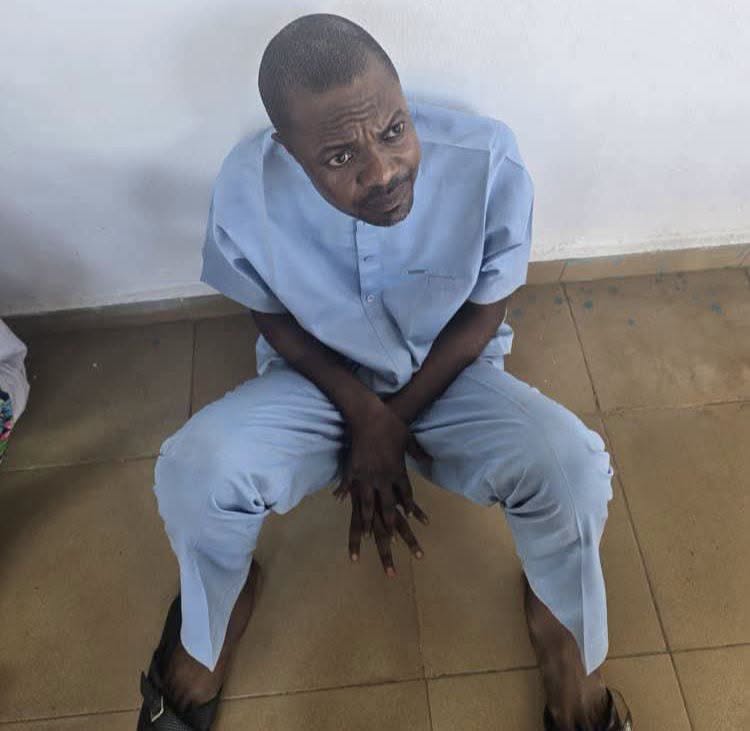
Reports say operatives of the Osun State Police Command, and those of the Department of State Services (DSS) had tracking the trail of Adeniyi Adeyemi, controversial Director General of the Presidential Foreign Intervention Promotion Council (PFIPC), for weeks, before he was eventually pulled out of his hole on Tuesday.
However, the duo, were said to have pulled back after failing to track him through his mobile phones, which he had reportedly switched off for about two days, making it difficult to locate him, leaving the stage for the members of the Police Intelligence Response Team (PI-RT) led by Moses Lohor, a Chief Superintendent of Police (CSP).
Lohor, said to have previously served as the Commander of the Anti-Kidnapping Squad of Osun State, and reported to have been involved in high-profile security operations and controversies, after taken over fielded his men to pick up signals from their well-oiled signal networks.
Regarded by many Osun residents as one of the key security officers who contributed significantly to the peace and stability enjoyed in Ilesa and other parts of the state during his tenure, he was said to have relied on his contacts before his transfer out of the state, said to have raised concerns from the public about the security situation he would be leaving behind.
His exit from the state was said to be hinged on an incident in 2024, in which he allegedly shot one Iyanda Alowonle, then Chairman of Osun State Motor Transport System, in the stomach at the police station in the state prompting an order for his arrest by then Inspector General of Police (IGP).
His effort was said to have paid off when he successfully tracked down the controversial PFIPC, boss, who was seen on Tuesday evening, in a shot video on social media undergoing interrogation, and eventually handed him over to Ibrahim Gotan, Commissioner of Police in the state.
The PUNCH quoted one of the sources as saying: “The arrest (of Adeyemi) took place on Tuesday morning by the IRT squad, who immediately moved him to Abuja. After he was arrested, he was taken to Ibadan and from there to Abuja.”



-

 News5 days ago
BREAKING: Mystery death! *Female student dies a day after arriving Umahi’s home!
-

 News5 days ago
Don’t jump to conclusion! *Umahi speaks on mysterious death of female students!
-

 News3 weeks ago
BREAKING: Court sentences Nigerien, two others to death over terrorism
-
 News2 weeks ago
BREAKING: EX-SSG mowed down by gunmen! *He resisted being kidnapped – driver
-

 News4 weeks ago
Two hours after Igboho’s ‘red-eyes’ to ‘Fulani’ leaders, gunmen free kidnap victims!
-

 News3 weeks ago
Abductors of Oyo teachers panicking, freedom coming for victims soon!
-
 News1 day ago
BREAKING: Terrorists strikes another school! *Kidnap principal, students, NECO official!
-
 News3 weeks ago
Chicagogate: Nigerians return to court! *Move to stop Tinubu from 2027 polls