
Connect with us

News

Akpabio’s New Year Resolution: Forgiveness, Faith, and Leadership

Published

on

By Hon. Eseme Eyiboh, MNIPR
In politics, silence is often louder than speech, for it speaks in the language of calculation and consequence. Forgiveness, when declared by a powerful man, is louder still—a thunderclap in a quiet chamber. It unsettles expectations, invites suspicion, and demands interrogation, not because it is weak, but because power is never presumed innocent when it chooses mercy.
When Senate President Godswill Akpabio, GCON, announced his New Year resolution to forgive all offenders and withdraw every suit he had instituted, Nigeria’s political class instinctively reached for its usual tools—cynicism, calculation, conspiracy. This decision, however, does not fit comfortably within the margins of the country’s familiar scripts of power and vendetta; it demands a slower reading.
The context itself matters. On New Year’s Day 2026, Akpabio was not behind a podium, flanked by politicians. He was seated in Sacred Heart Parish, Uyo, listening to a homily—not as Nigeria’s number-three citizen, but as a humble, God-fearing parishioner. The priest, Reverend Father Donatus Udoette, preaching with quiet authority and pastoral fervor, exhorted his congregants to let go of past hurts and choose peace over grievance. Akpabio would later say that, at some point, he realised the sermon was speaking directly to him.
The announcement that followed shortly after bore the unmistakable imprint of that moment. About nine defamation suits would be withdrawn, including the ₦200 billion case against Senator Natasha Akpoti-Uduaghan, arising from allegations he had consistently denied and publicly rejected. Other cases, some involving his close associates, would go the same way. In a political culture where litigation has become an extension of reputation management, this was no minor gesture. Akpabio had been unapologetic about defending his name through the courts. The law, in his hands, had been both shield and sword. To voluntarily lay it down is to interrupt a habit of power.
The question, therefore, is not whether Akpabio could afford to forgive. It is why he chose to do so.
To answer that, one must resist the temptation to isolate this act from the man’s broader leadership story. Akpabio has always lived publicly in dual registers. There is the assertive politician who, as governor of Akwa Ibom State, left behind concrete evidence of ambition fulfilled—flyovers, boulevards, hospitals, model schools, an international airport, and an international stadium. Supporters invoke the Latin phrase res ipsa loquitur: the facts speak for themselves.
Then there is the other register: the man who frames his political journey in spiritual terms; who describes his rise from the shadows to national limelight as evidence of divine ordering and grace; who once called himself, without irony, “the most ranked Christian in government.” A man who sees himself not merely as a participant in Nigeria’s politics, but as an instrument within a providential design—God’s will, he believes, for Nigeria at this moment.
In Nigeria, faith in politics is common. Stability of faith is rarer. Akpabio’s Christianity is not episodic. It has shaped how he understands authority itself. Power, in this worldview, is not merely seized or negotiated; it is entrusted. And what is entrusted carries moral obligation.
This is where forgiveness ceases to be sentimental and becomes political philosophy.
The same drive for tangible outcomes has characterised, albeit differently, his tenure as Senate President. It has been defined less by flamboyance than by control. The Senate he leads has been unusually productive and notably calm—more than ninety-six bills passed in two years, with over fifty-eight assented to by the President. In a chamber once notorious for theatrics, this stability is not accidental. It reflects a leadership style that values restraint over spectacle and consensus over conquest.
While his action was inspired, it also makes political sense. Withdrawing defamation suits fits neatly into this logic. Legal battles consume attention. They tether leaders to old grievances. They narrow the emotional bandwidth required for institutional leadership. To let them go is to reclaim focus—and to recommit to what ultimately matters: nation-building.
Critics will argue that forgiveness is easier from a position of strength. They are right. That is precisely why it matters. In fragile political systems, restraint by the powerful sets a tone no code of conduct can enforce. It lowers the temperature. It changes incentives.
Nigeria’s public sphere has become deeply adversarial. Every disagreement is framed as insult. Every critique is personalised. Politics has learned to confuse hostility with toughness. In such an environment, Akpabio’s choice rightly disrupts a dangerous rhythm.
Faith provides the language; humility provides the discipline. Humility here is not self-effacement. No one can accuse Akpabio of being unaware of his own stature. Rather, it is a confidence that does not require constant vindication. As the late global gospel icon, Uma Ukpai, once told him: “Only fruit-bearing trees draw missiles. If you are drawing missiles, it means you are bearing fruit.”
To accept that counsel is to understand leadership as emotional labour. To forgive is not to deny injury; it is to refuse to let injury define governance.
There is, of course, a strategic dimension. Nigerian politics does not permit innocence. The decision comes at a time when Senate unity is under constant scrutiny and rumours of internal challenge circulate freely. Choosing reconciliation over escalation strengthens institutional cohesion. It preserves authority without making it brittle.
Yet strategy does not cancel sincerity. In Nigerian leadership, the sacred and the secular are not opposing realms but overlapping obligations. Godswill Akpabio’s Catholic identity, deeply rooted in his home state, has always been both personal and public. He has hosted bishops at the national level. He is planning a worship centre within the National Assembly complex. These are not gestures of convenience; they are expressions of a worldview in which governance, godliness, and morality intersect.
This is why the withdrawal of lawsuits should be read not merely as personal forgiveness but as public modelling. Akpabio has often spoken of nation-building as a collective task, insisting that it requires citizens to rise above division and embrace shared purpose. Forgiveness, in this sense, becomes civic pedagogy.
Nigeria suffers from obvious physical infrastructure deficits. It also suffers from what might be called spiritual infrastructure decay. Distrust is habitual. Anger is efficient. Leaders who demonstrate emotional regulation contribute to national repair in ways budgets cannot capture.
The implications extend directly into legislative leadership. Managing one hundred and nine senators with competing ambitions requires more than procedural mastery. It demands moral authority—authority that flows not only from rules, but from example.
By choosing forgiveness over litigation, Akpabio strengthens his hand not through coercion but through credibility. He signals that power can afford generosity; that leadership does not require perpetual combat; that not every insult deserves a reply.
There is risk, of course. Forgiveness can be misread as weakness. Silence can be exploited. But leadership that waits for perfect safety rarely leads. Akpabio’s resolution accepts vulnerability as the price of example.
What emerges, then, is a synthesis: the force of developmental leadership from his gubernatorial years, the finesse of institutional management as Senate President, obedience to God and now a claim to moral authority through public restraint.
Nigeria often produces leaders who deliver material progress but corrode trust, or leaders who speak ethically but govern ineffectively. Akpabio’s gesture attempts to collapse that false choice.
To be clear, the true test lies ahead. Forgiveness must be sustained, not performed once and shelved. Its power will be measured by whether it cools tempers, reshapes conduct, and encourages reciprocal restraint.
For now, Akpabio has offered an unconventional lesson in Nigerian statecraft: that surrendering legal claims can strengthen authority; that stable faith produces calm rather than noise; and that humility, properly understood, is not the absence of confidence but its highest expression.
In a country struggling to rebuild trust while confronting insurgency, economic hardship, and climate anxiety, reconciliation is not a luxury. It is governance.
Sometimes, the most radical act in politics is not retaliation, but restraint. And with his New Year’s resolution, Senator Godswill Akpabio, the Senate President, has demonstrated precisely that.
Rt Hon Eseme Eyiboh mnipr is the Special Adviser, Media/Publicity and Official Spokesperson to the President of the Senate

Share this story:

News

Presidency: Obi met all requirements – NDC *Cleared to contest primaries

Published

on

Only an official pronouncement by the Nigeria Democratic Congress (NDC), seems to be last barrier to cross for Peter Obi to appear on the ballot for the January 7, 2027 presidential, the second time he would be chasing the nation’s number one job.

That hurdle is also set to be cleared in no time, all things being equal, given the speed with which the party is taking to ensure that all the loose ends are tied in order to meet the deadline of the Independent National Electoral Commission for all parties to conclude their selection processes for all the candidates for next years general elections.

Advertisement


Against the backdrop of initial date of May 29 scheduled for the presidential primaries, Sam Egwu, Chairman of the screening committee for the presidential election, said on Tuesday night that the exercise would take place on a date to be announced.

He spoke on a day he handed Obi, the only candidate that bought form for the high office a clean bill of health to contest the election after a two-hour drill at the party secretariat in Abuja, on Tuesday night.

Egwu former Governor of Ebonyi State announced Obi’s clearance as the party’s sole presidential aspirant ahead of its forthcoming primaries, about two hours after the arrival of the former Governor of Anambra State, who would be running for the presidential office for a second time after the bid in 2023, where he was declared to have come third by the INEC, in a heavily-disputed outcome, in which his supporters claimed he clearly won.

Advertisement


Obi had arrived at the party secretariat at about 6:45pm on Tuesday, accompanied by Victor Umeh, senator representing Anambra central and immediately went into business, where he was drilled on his qualifications and intentions and other nuances of governance.

Egwu, who announced that the panel was satisfied with his performance, as he answered all questions correctly, told reporters who besieged the venue: “This is to certify that following the screening of the presidential aspirant of the Nigeria Democratic Congress (NDC), His Excellency Peter Obi, and being satisfied that he has complied with all the requirements of the Constitution of the Federal Republic of Nigeria and all provisions of the Electoral Act, and the satisfactory answers given by him to all the questions from members of the national screening committee.

“He is hereby cleared to contest in the presidential primaries of the party for the 2027 presidential election on a date to be announced by the party. Congratulations.”

Advertisement


He then presented an official clearance letter to Obi with the party’s official nomination form numbered 001.

Obi picked NDC presidential nomination and expression of interest forms on Sunday, May 17, the initial deadline set by the party for the collection of forms by all categories of aspirants.

On Monday, the party extended the deadline to May 24 to enable more aspirants pick forms, noting that the return of completed nomination forms for all screened and cleared aspirants would commence on Wednesday, May 20 and close on May 26.

Advertisement


However, the party did not extend the deadline for the collection of presidential nomination forms, noting that it had already closed.

Advertisement


Share this story:
Continue Reading

News

The man who saw tomorrow: Senator Akpabio and the uncommon politics of certainty

Published

on

By Hon Eseme Eyiboh

Let us begin with a confession. There is something unsettling about a politician who no longer appears to struggle.

Advertisement


In the turbulent theatre of Nigerian politics, where noise is often mistaken for relevance, where primaries resemble wrestling contests and delegate management demands the instincts of a hostage negotiator, a man who walks in unopposed does not merely win. He transforms the entire contest into a rehearsal.

On Monday, May 18, 2026, at Methodist Primary School, Ukana, in Essien Udim Local Government Area, Senator Godswill Akpabio did exactly that. No contest. No drama. No nervous counting of votes. He simply emerged as the candidate of the All Progressives Congress for the Akwa Ibom North West Senatorial District without a single challenger.

While many politicians remain trapped in the exhausting rituals of horse trading, factional bargaining, and survival politics, Akpabio’s good works delivered something far rarer in Nigeria’s political environment than gold itself. Absolute consensus.

Advertisement


To the casual observer, an unopposed return may suggest the absence of competition. That would be a dangerously shallow interpretation.
Those familiar with the political phenomenon long associated with the “Uncommon Transformer” understand the distinction clearly. An unopposed ticket does not mean nobody desired to contest. Politics naturally attracts ambition the way light attracts insects. Power always generates interest. Influence always provokes aspiration.
What an unopposed return truly means is far more significant: potential challengers surveyed the landscape, studied the numbers, weighed the networks, measured the emotional connection between the man and the political structure around him, and quietly concluded that the road to victory simply did not exist.
There is a profound difference between lack of opposition and the collapse of viable opposition

Why is there no road to victory for others? Because what Akpabio has built in Akwa Ibom State in general and Akwa Ibom North West in particular is no longer merely a political structure. It is a fortress. Its walls are not made of concrete. They are made of cultivated loyalty. Enduring networks. Strategic generosity. And the unspoken understanding that confronting him politically is not simply difficult. It is often futile and absurd.

The atmosphere at the ward centre resembled less a political exercise and more a carnival of affirmation. Supporters, community leaders, women groups, youths, and party faithful gathered not to determine an outcome but to endorse a grace carrier already settled in the public imagination. The votes were counted without end. The votes were celebrated.

Advertisement


Here is the remarkable part.

The whispers surrounding Akpabio’s dominance do not come only from admirers. They come from seeming opponents too.

They do not fear his voice. They fear his results. They do not tremble at confrontation. They confront something more sobering: the recognition that within his political territory, the arithmetic has been solved with almost clinical precision.

Advertisement


While others are still assembling coalitions, Akpabio consolidated his long ago. While rivals continue calculating delegate figures, he has already moved to the next question: what happens after victory? How does political power translate into enduring relevance and measurable impact?

That is the distinction between a career politician and a political architect. One chases office. The other shapes the terrain on which the chase itself occurs.

Since assuming office as President of the 10th Senate, Akpabio has projected a measure of stability within the Red Chamber. That should not be understated.

Advertisement


The Nigerian Senate has earned a reputation for turbulence over the years. Leadership rebellions. Internal fractures. Floor dramas that generate headlines while weakening governance and social democratic structures. Against that backdrop, a Senate President capable of maintaining institutional stability without recurring crises becomes more than merely effective. He becomes uncommon.

His admirers see in him a politician who has consistently combined institutional authority with emotional loyalty from his base through the National to International arena. From Governor to Minister to Senate President, his rise is framed as the journey of a man who understood tomorrow before others arrived there. A politician deeply conscious of timing, alignment, and the delicate craft of converting social capital into durable influence and uncommon power (political capital).

This point matters enormously. Political capital is easy to squander. This point matters enormously. Political goodwill is easy to destroy. Many politicians exhaust it through arrogance, exclusion, or the endless pursuit of personal advantage. But Akpabio appears to understand something deeper about leadership: goodwill grows when people genuinely feel seen, valued, included, and carried along.
Over the years, he has cultivated relationships not merely through politics, but through accessibility, generosity of spirit, loyalty to associates, and an unusual ability to make people feel remembered even in the midst of high office. That is why his support structure often appears less like a coalition held together by convenience and more like a community bound by shared experience and enduring personal connection.
What some interpret merely as political dominance may actually be the long-term harvest of sustained human investment.
And perhaps that explains the ease with which the field gradually cleared around him. Not because opposition was forcibly silenced, but because many within the political environment saw little wisdom in disrupting a consensus built around continuity, stability, experience, and an existing relationship of trust.
His commitment to continue working closely with President Bola Ahmed Tinubu and Governor Umo Eno reinforces a broader message of continuity and strategic alignment. At a time when fragmentation remains the temptation of many ambitious actors, Senator Akpabio has chosen coordination. That is not a weakness. It is political arithmetic.

Advertisement


And this is where the conversation shifts from the present to the near future. The same political capital that secured his senatorial return without resistance is not a one-use currency. It accumulates. It compounds. The goodwill he has cultivated, the equilibrium he has maintained, and the pragmatic preference for results over rhetoric are not merely tools for another Senate term. They form the foundation of something larger and forthcoming.

The crystal ball is not required to observe the trajectory. A Senate President who secures his own return effortlessly, stabilises a chamber historically associated with instability, aligns himself with the centre of national power grid while maintaining grassroots legitimacy, is a Senate President who has solved one of Nigerian politics’ most difficult equations.

He has demonstrated to his colleagues that he can deliver. He has shown the party hierarchy that he can be trusted. He has reassured constituents that proximity to power has not disconnected him from them.

Advertisement


This combination is rarer than any single attribute standing alone. So when the 11th Senate eventually convenes and the question of leadership emerges once again, the conversation may prove shorter than many anticipate. Not because there will be no interested contenders. There always are. But because the arithmetic of loyalty, institutional experience, strategic alignment, and demonstrated political capacity will already have completed its quiet work.

Akpabio has not formally declared interest in leading the 11th Senate. He does not need to. The declaration already exists in the pattern of his movements, the stability of his stewardship, and the political field he has cleared without visible strain. It is simply the discipline of reading political signs as they present themselves* .

In the end, Nigerian politics rewards those who understand the people more deeply than those who merely master performance and noise.That is not sentimentality. It is a political reality.

Advertisement


A politician capable of delivering his constituency without violence, panic, or emergency intervention is a politician who understands something fundamental: power is never truly declared. It is demonstrated. And it is demonstrated most convincingly when nobody steps forward to challenge it.

On that Monday in Ukana, the drums rolled. Praises echoed across the gathering. And the political message arrived without ambiguity. In Akwa Ibom North West, the conversation has moved beyond opposition. What remains is an audience waiting to see the next chapter unfold without ceasing.

Senator Godswill Akpabio has once again reminded observers that in certain political spaces, dominance is not always loud.

Advertisement


Sometimes, it is simply complete. And in the intricate chessboard of Nigerian politics, where many players are still learning how the pieces move, that level of mastery remains rare, consequential, and deeply potent.

The man who saw tomorrow understood something else too. The loudest voice in the room is rarely the one that prevails.

The one that prevails is the one that no longer needs to shout because everybody already understands. And that is what Senator Godswill Akpabio has demonstrated that he is the man who saw tomorrow.

Advertisement


Rt Hon Eseme Eyiboh mnipr is a former member and Spokesperson of the House of Representatives and currently Special Adviser, Media/Publicity and official Spokesperson to the President of the Senate

Advertisement


Share this story:
Continue Reading

News

BREAKING: US-Nigeria troops slaughter 175 ISWAP fighters

Published

on

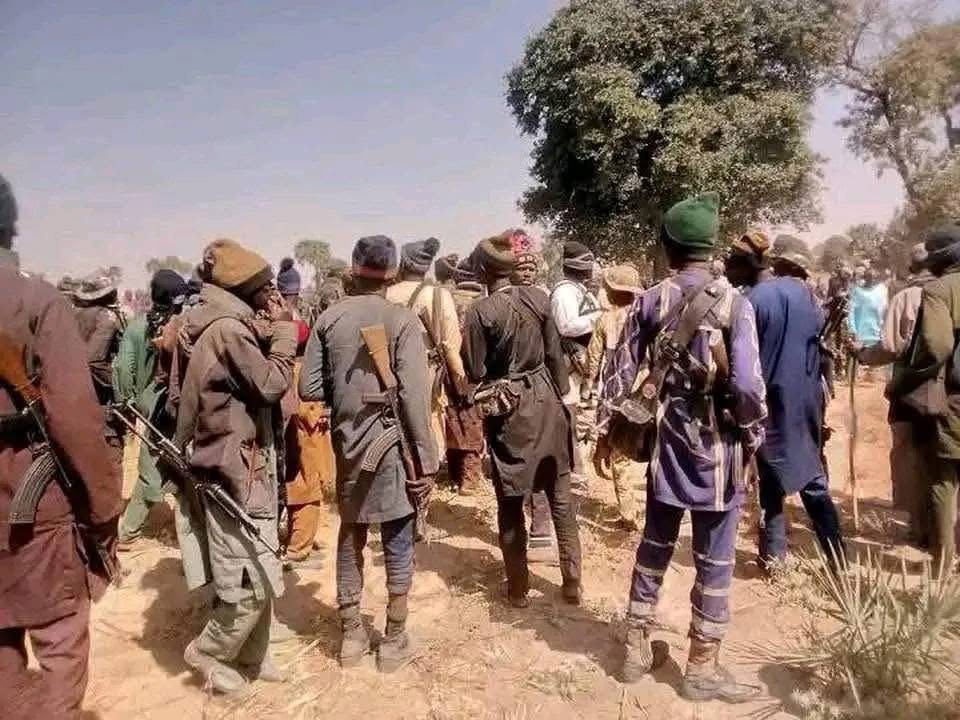
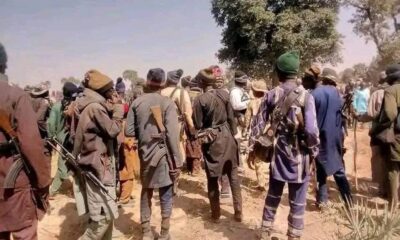
The heat has been turned on against fighters of Islamic State of West African Province (ISWAP), with reports that Nigeria and the United States claiming on Tuesday that their joint airstrikes has killed 175 their fighters in the country’s northeast.

Samaila Uba, a Major General and spokesman of the Defence Headquarters, the seat of military authority in Nigeria, said in a statement that the operations inflicted what it described as a “devastating blow” on terrorist networks operating within the region, with several strategic targets destroyed during the offensive.

Advertisement


Dagvin Anderson, an AFRICOM spokesman, who confirmed the toll of 175 among the jihadists, was also quoted as telling a Congressional hearing in Washington that Nigeria had been “instrumental throughout the last several months, developing the target, helping us with the intelligence, and providing support”.

The revelation is coming a few days after the same joint operation was said to have led to the liquidation of Abu-Bilal al-Minuki, an IS leader described as the “most active terrorist” in the world, at a remote village in the northeast last weekend and the wiping out of another 20 ISWAP fighters a day after.

As director of global operations for IS, the slain al-Minuki provided strategic guidance on media and financial operations and “the development and manufacturing of weapons, explosives and drones”, according to the Nigerian military and the US Africa Command (AFRICOM).

Advertisement


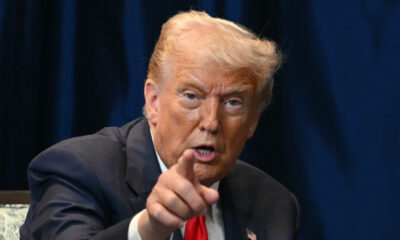
Stressing that after the announcement of al-Minuki’s death, Nigerian President Bola Tinubu thanked his US counterpart, Donald Trump, for his “leadership and unwavering support,” he said he looked forward to “more decisive strikes against all terrorist enclaves across the nation”.

The statement on Tuesday, also spoke of the killing of other key IS figures in the last few days, including Abd-al Wahhab, said to be a “senior leader” of ISWAP, “responsible for coordinating attacks and distributing propaganda”.

Abu Musa al-Mangawi was said to be a high-ranking ISWAP member, while Abu al-Muthanna al-Muhajir was a “senior media production team manager and close confidant to al-Minuki,” Anderson, was quoted as saying.

Advertisement


Boko Haram and ISWAP had recently stepped up reported attacks on villages, police stations, and workers such as loggers and fishermen, as well as military bases, causing the deaths of several civilians and senior army officers.

The upsurge in attacks prompted Tinubu to declare a nationwide state of emergency in 2025 and the US president to threaten Nigeria with military intervention.

Trump has claimed that Christians in Nigeria were being “persecuted” and were victims of a “genocide” carried out by “terrorists”.

Advertisement


The government in Abuja and most experts reject the claim and point out that the violence generally affects Christians and Muslims without distinction.

The US military, in coordination with the Nigerian authorities, carried out airstrikes on December 25 last year in the northwestern state of Sokoto, targeting what Washington called jihadists.

Northern Nigeria has been grappling with violence from criminal gangs known locally as bandits, who frequently carry out attacks on villages and mass kidnappings for ransom.

Advertisement


Africom has also taken action against IS and al-Shabaab militants in Somalia, intensifying airstrikes since the beginning of the year.

Advertisement


Share this story:
Continue Reading

Trending

Copyright © 2024. WhirlwindNews