

News
Tinubu @Xmas: Pains you see today, you’ll see no more!


Bola Tinubu, Nigeria’s President, on Wednesday, swore that under his watch, no Nigerian would be made to suffer on account of his religion, emphasising that religious freedom remained the sine qua non of his administration.
Tinubu in his Christmas message to Nigerians, also spoke about the insecurity in the country, stating that he would do everything to make Nigerians safe and secure especially in the coming years, adding that he owed it to the people.

The President’s assurance is coming against the backdrop of pressures from the United State, which has taken more than a passing interest in the parlous security situation in Nigeria, with President Donald Trump, raising the red flag of Christian genocide, that could see him conducting military operations in the country.
Tinubu, in a statement he personally signed, said: “As we mark this year’s Christmas, may the love of Christ and his message of grace, hope, peace, and goodwill to humanity abide with us all.
“Beyond the celebration and festivities of this season, Christmas reminds us to reflect on the significance of Jesus Christ’s birth and his message of salvation as the Prince of Peace.
“On this Holy Day, I wish all Christians in Nigeria and around the world a Merry Christmas. I thank God for the opportunity to serve as the leader of our great country, and I pray for peace in our land, especially among individuals of differing religious beliefs.
“As your President, I remain committed to doing everything within my power to enshrine religious freedom in Nigeria and to protect all people of different faiths from violence.
“As we celebrate the birth of Jesus, let us also reflect on the many contributions that Christians in Nigeria, as followers of Christ, have made and continue to make toward the progress of our country.
“The love of Christ and the message of the Gospel have inspired many Christians to care for the vulnerable and less privileged in our society. We honour those who, following the example of Jesus, work tirelessly to promote peace, harmony, and tolerance in their communities.
“For those who bring hope and faith in the midst of despair, this season is a reminder that, despite daunting challenges, God is with us.
Since I assumed office in 2023, I have continually reassured Nigerians of our unyielding commitment to safeguarding the security, unity, and stability of our nation.
“That commitment remains steadfast under God and the Constitution of the Federal Republic of Nigeria. All Nigerians have the right to live, worship, and pursue their aspirations in safety and dignity.
“No one, regardless of ethnicity or belief, should be made to suffer for professing and practising his faith. The love for God and love for humanity is at the heart of all the great faiths. These shared values must continue to bind us together as one indivisible and resilient people of our blessed country.
“Throughout the year, I have had the privilege of engaging with prominent leaders from the two major faiths in the country, particularly amid concerns about religious intolerance and insecurity. We will build on these conversations to strengthen collaboration between government and religious institutions, prevent conflict and promote peaceful coexistence.
“As many Nigerians travel to reunite with family and loved ones during this holiday period, I urge all citizens to exercise patience and maintain discipline on the roads. I wish all travellers a safe journey and a safe return to their destinations.
“With confidence in divine providence and our collective strength, we will continue the work of building a greater Nigeria-one that future generations will be proud of. I wish you all a Merry Christmas and a happy New Year in advance.”

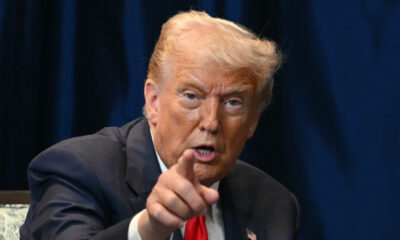







Oil prices are expected to go down now with the announcement of Donald Trump, US President that he will no longer impose a 20 percent “safe passage” fee on ships passing through the Strait of Hormuz.
The POTUS, hinged his reversal of the decision on the intervention from some Gulf countries, who pleaded with him not to toe the line due to the massive economic impact the decision would make on the region.
Indeed, oil prices had shot up immediately Trump announced the new levy on Monday while declaring the US ‘the guardians of the Hormuz strait,’ a measure which he said was to pay for the cost of guarding the volatile area in order keep supply of oil flowing.
Reports said that Gulf allies of the US worked frantically to get Trump on the phone in time to talk him out of the idea altogether, while a flurry of appeals came from Saudi Arabia, the United Arab Emirates, Bahrain and Qatar.
In response, the POTUS, posting on his Truth Social platform, wrote: “Based on highly productive conversations with Middle East leadership, I have decided to replace the 20% United States Reimbursement Fee with Trade and Investment Deals that the various Gulf States will be making into the United States.”
Trump, who said the investments would be “MASSIVE but, at the same time, extraordinarily good for them, and their future,” added that the deals would see factories, plants, and equipment pour into the US at “Historic levels.”
The Gulf nations have committed to invest trillions of dollars in the US, though it remains unclear how much of that they will actually spend over the next several years.
Meanwhile, the US continues to bomb Iran in what appears to be a resumption of active conflict between both countries, despite an ongoing roadmap to end the conflict.
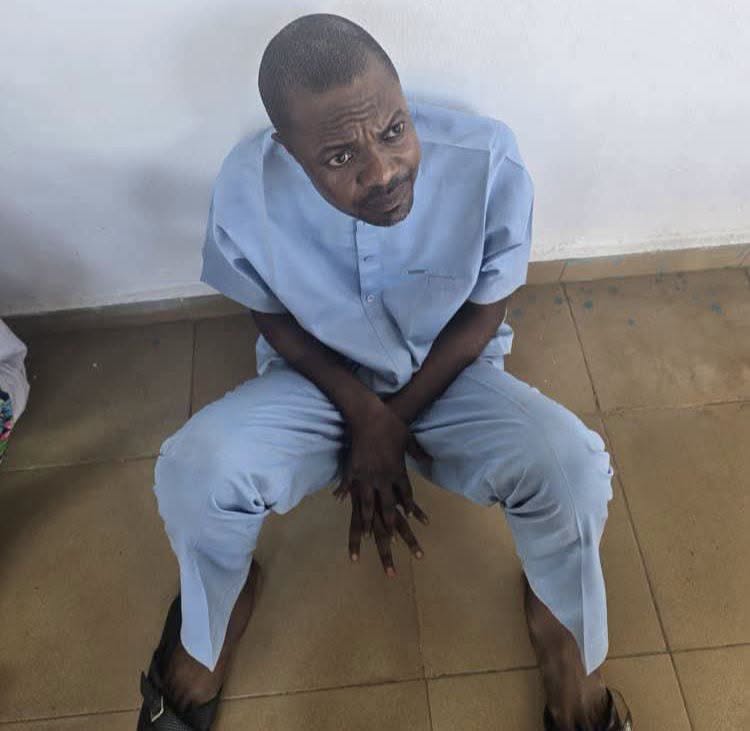
Reports say operatives of the Osun State Police Command, and those of the Department of State Services (DSS) had tracking the trail of Adeniyi Adeyemi, controversial Director General of the Presidential Foreign Intervention Promotion Council (PFIPC), for weeks, before he was eventually pulled out of his hole on Tuesday.
However, the duo, were said to have pulled back after failing to track him through his mobile phones, which he had reportedly switched off for about two days, making it difficult to locate him, leaving the stage for the members of the Police Intelligence Response Team (PI-RT) led by Moses Lohor, a Chief Superintendent of Police (CSP).
Lohor, said to have previously served as the Commander of the Anti-Kidnapping Squad of Osun State, and reported to have been involved in high-profile security operations and controversies, after taken over fielded his men to pick up signals from their well-oiled signal networks.
Regarded by many Osun residents as one of the key security officers who contributed significantly to the peace and stability enjoyed in Ilesa and other parts of the state during his tenure, he was said to have relied on his contacts before his transfer out of the state, said to have raised concerns from the public about the security situation he would be leaving behind.
His exit from the state was said to be hinged on an incident in 2024, in which he allegedly shot one Iyanda Alowonle, then Chairman of Osun State Motor Transport System, in the stomach at the police station in the state prompting an order for his arrest by then Inspector General of Police (IGP).
His effort was said to have paid off when he successfully tracked down the controversial PFIPC, boss, who was seen on Tuesday evening, in a shot video on social media undergoing interrogation, and eventually handed him over to Ibrahim Gotan, Commissioner of Police in the state.
The PUNCH quoted one of the sources as saying: “The arrest (of Adeyemi) took place on Tuesday morning by the IRT squad, who immediately moved him to Abuja. After he was arrested, he was taken to Ibadan and from there to Abuja.”

“Constructive partnership should never be mistaken for constitutional surrender. Parliament does not prove its independence by manufacturing conflict, nor its relevance by opposing for opposition’s sake,” were the words with which Godswill Akpabio, moved to shoot down a groundswell of allegations against the National Assembly as a lapdog to the Executive.
At the opening of the 2026 National Assembly Open Week in Abuja, Akpabio, Chairman of the National Assembly, insisted on collaboration as the basis of engagement, with checks and balances called when absolutely necessary and relevant.
He added: “Our constitutional duty is to support what advances the national interest, to question what requires scrutiny, and to correct what demands improvement. That is the balance we have sought to maintain, and history, I believe, will judge it fairly. The Senate and House of Representatives have worked with uncommon harmony and mutual respect over the past three years.
“Whether you are with us today, following these proceedings online, listening on radio, watching on television, or gathered beneath a mango tree in a village square, this parliament belongs to you.
“Come closer. Attend our public hearings. Read the laws we make. Question us. Challenge us. Encourage us. Democracy flourishes when citizens remain active participants in the work of self-government. The true measure of parliament is not the height of its walls, but the depth of its people’s confidence.”
Arguing that the assembly’s constitutional duty was to serve Nigerians rather than manufacture conflict with the executive, he maintained it would remain accessible to citizens rather than operate as a closed institution.
His words: “Throughout these responsibilities, the national assembly has worked constructively with President Bola Ahmed Tinubu, GCFR, in pursuit of national progress.”
Relating to the participation of Nigerians in the affairs of the legislature, he said, it would never build walls to keep Nigerians out, adding: “They were built to welcome them in — not merely as spectators of democracy, but as its rightful owners. Parliament belongs not to those elected to sit within it, but to the millions whose hopes and votes brought it into existence.
“Parliament was never built to keep the people out. It was built to bring them in, for democracy flourishes only in the confidence of an informed and engaged citizenry.
“Public confidence is earned not by asking citizens to trust institutions blindly, but by embracing transparency and accountability Parliament should never fear informed criticism. Questions strengthen democracy. Transparency strengthens legitimacy. The more Nigerians understand our work, the stronger our democracy becomes.
“We invite Nigerians not merely to observe us, but to engage with us; not merely to applaud where they agree, but to challenge us where they believe we can do better. A parliament that listens becomes wiser. A democracy that listens becomes stronger.”
Giving further details of the achievements of the 10th NASS, Akpabio, apart from commending it for passing more than 100 bills in its first three years, which he described as unprecedented at this stage of Nigeria’s democratic journey, also pointed to other feats.
They included the enactment of the laws to strengthen national security, return out-of-school children to classrooms, modernise the country’s tax system, approve a new national minimum wage, stimulate investment and establish regional development commissions.
Brushing aside the oft-challenged practice of benign approach in the screening and confirmation of public officeholders, Akpabio, former Governor of Akwa Ibom State and former Minister of the Niger Delta, said such tasks had always been met with the seriousness required by the constitution.
He also showcased how the assembly aided Nigeria to regain a seat on the executive committee of the Inter-Parliamentary Union after nearly six decades, describing the feat as a sign of renewed international confidence in the country’s democratic institutions.



-
 News4 days ago
BREAKING: Mystery death! *Female student dies a day after arriving Umahi’s home!
-
 News4 weeks ago
BREAKING: Troops rescue wife of kidnapped General! *Terrorists flee scene
-

 News4 days ago
Don’t jump to conclusion! *Umahi speaks on mysterious death of female students!
-
 News4 weeks ago
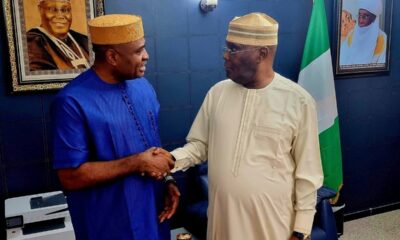
BREAKING: Count me out, Okonkwo tells Atiku *Amaechi VP’s choice an insult to Ndigbo
-
 News3 weeks ago
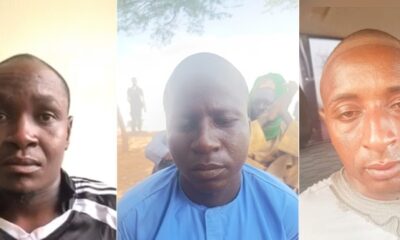
BREAKING: Court sentences Nigerien, two others to death over terrorism
-
 News2 weeks ago
BREAKING: EX-SSG mowed down by gunmen! *He resisted being kidnapped – driver
-
 News3 weeks ago
Two hours after Igboho’s ‘red-eyes’ to ‘Fulani’ leaders, gunmen free kidnap victims!
-
 News3 weeks ago
Abductors of Oyo teachers panicking, freedom coming for victims soon!