

News
Tinubu bows to pressure, revises pardon list


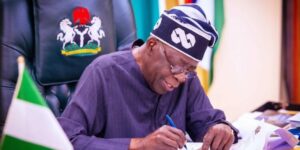
President Bola Ahmed Tinubu has finalized a revised list of pardoned individuals, removing several convicts of serious offenses following widespread public criticism and consultations with the Council of State.
Bayo Onanuga, Special Adviser to the President on Information and Strategy, announced Wednesday that the President had completed the formal process of exercising his constitutional clemency powers, but only after significant modifications to the initial list.


READ ALSO: Pardon of Ogoni nine: Tinubu has murdered my father a second time – Bade
“President Bola Ahmed Tinubu, GCFR, has executed the relevant instruments of release to complete the process of formally exercising his constitutional power of prerogative of mercy to grant pardon and clemency to specific individuals who were earlier convicted for various offences,” Onanuga stated.
The presidential aide explained that the revision followed careful deliberation with key stakeholders and consideration of public sentiment.
“Following consultations with the Council of State and public opinion on the matter, the President directed a further review of the initially approved list for consideration in furtherance of the President’s discretionary powers under Section 175(1)(&(2) of the 1999 Constitution (as amended),” he said.
The revised list saw the removal of individuals convicted of grave offenses that posed significant security and social concerns.
“Consequently, certain persons convicted of serious crimes such as kidnapping, drug-related offences, human trafficking, fraud, unlawful possession of firearms/arms dealing, etc, were deleted from the list. Others who had been hitherto pardoned in the old list had their sentences commuted,” Onanuga revealed.
The Special Adviser outlined several factors that necessitated the review, emphasizing the administration’s commitment to balancing mercy with justice.
“This action became necessary in view of the seriousness and security implications of some of the offences, the need to be sensitive to the feelings of the victims of the crimes and society in general, the need to boost the morale of law enforcement agencies and adherence to bilateral obligations. The concept of justice as a three-way traffic for the Accused, the Victim, and the State/Society also guided the review,” he explained.
According to Onanuga, the updated list has been forwarded to correctional authorities for immediate action.
“The approved list of eligible beneficiaries has been transmitted to the Nigerian Correctional Service for implementation in line with the duly signed instruments of release,” he confirmed.
In a move aimed at improving the clemency process, President Tinubu has ordered structural and procedural changes to prevent future controversies.
“Furthermore, to ensure that future exercises meet public expectations and best practices, the President has directed the immediate relocation of the Secretariat of the Presidential Advisory Committee on Prerogative of Mercy from the Federal Ministry of Special Duties to the Federal Ministry of Justice,” Onanuga announced.
The President has also mandated the Attorney-General to develop comprehensive guidelines governing the exercise of presidential pardons.
“President Tinubu also directed the Attorney-General of the Federation to issue appropriate Guidelines for the Exercise of the Power of Prerogative of Mercy, which includes compulsory consultation with relevant prosecuting agencies,” the statement noted.
“This will ensure that only persons who fully meet the stipulated legal and procedural requirements will henceforth benefit from the issuance of instruments of release,” Onanuga added.
The President acknowledged the role of public discourse in shaping the final decision.
“The President appreciated the constructive feedback and engagement from stakeholders and the general public on this matter,” Onanuga said.
He concluded by reaffirming the administration’s dedication to strengthening Nigeria’s justice system.
“President Tinubu also reaffirmed his administration’s broader commitment to judicial reforms and improving the administration of justice in Nigeria,” the Special Adviser stated.
The revision of the pardon list follows intense public criticism, particularly regarding the initial inclusion of Maryam Sanda, who was sentenced to death in 2020 for killing her husband. Her pardon was subsequently revoked and her sentence commuted to 12 years imprisonment.







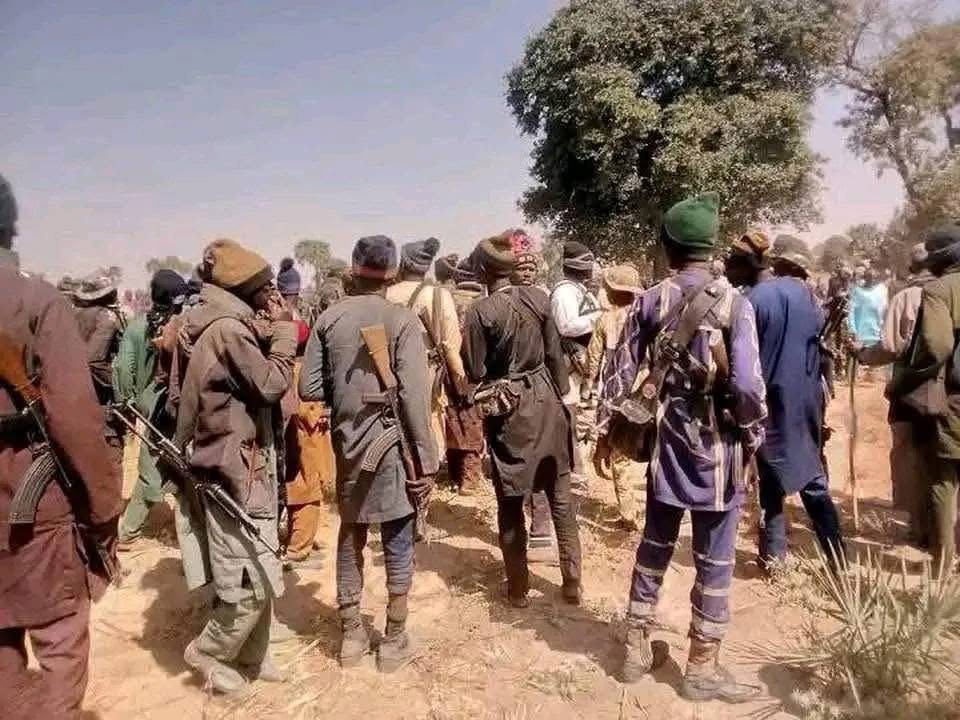
The echoes of the drums rolled out to celebrate the rescue of the 44 teachers and students, kidnapped from some schools in Oyo State, after 56 days in the bush, would surely be disrupted abruptly, with the divergent echoes of a fresh abduction, this time coming from Kogi State.
Reports indicate that the gunmen, struck on Tuesday at the Government Secondary School, Odo-Ekina, in Dekina Local Government Area of the state, abducting four students, the school principal and a National Examinations Council (NECO) ad hoc staff member.
Authorities of the Kogi State Police Command, who immediately unleashed their operatives in hot pursuit of the abductors, said the attack occurred at about 5:25 p.m. while the students were writing their NECO examination.
Saliu Oyiza Afusat, an Assistant Superintendent of Police (ASP) and spokesman of the command, said a combined team of police personnel and other security agencies has launched a search-and-rescue operation following the incident.
Informing that one of the students was actually rescued immediately, she said efforts were ongoing to secure the release of the remaining victims and apprehend the attackers, adding that Naziru Bello Kankarofi, the state Commissioner of Police, alongside the Brigade Commander and the State Security Adviser to the Governor, Commodore Jerry Omodara (Rtd), were already on the way to the scene for an on-the-spot assessment.

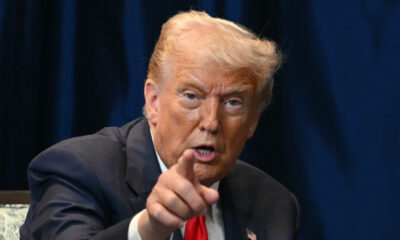
Oil prices are expected to go down now with the announcement of Donald Trump, US President that he will no longer impose a 20 percent “safe passage” fee on ships passing through the Strait of Hormuz.
The POTUS, hinged his reversal of the decision on the intervention from some Gulf countries, who pleaded with him not to toe the line due to the massive economic impact the decision would make on the region.
Indeed, oil prices had shot up immediately Trump announced the new levy on Monday while declaring the US ‘the guardians of the Hormuz strait,’ a measure which he said was to pay for the cost of guarding the volatile area in order keep supply of oil flowing.
Reports said that Gulf allies of the US worked frantically to get Trump on the phone in time to talk him out of the idea altogether, while a flurry of appeals came from Saudi Arabia, the United Arab Emirates, Bahrain and Qatar.
In response, the POTUS, posting on his Truth Social platform, wrote: “Based on highly productive conversations with Middle East leadership, I have decided to replace the 20% United States Reimbursement Fee with Trade and Investment Deals that the various Gulf States will be making into the United States.”
Trump, who said the investments would be “MASSIVE but, at the same time, extraordinarily good for them, and their future,” added that the deals would see factories, plants, and equipment pour into the US at “Historic levels.”
The Gulf nations have committed to invest trillions of dollars in the US, though it remains unclear how much of that they will actually spend over the next several years.
Meanwhile, the US continues to bomb Iran in what appears to be a resumption of active conflict between both countries, despite an ongoing roadmap to end the conflict.
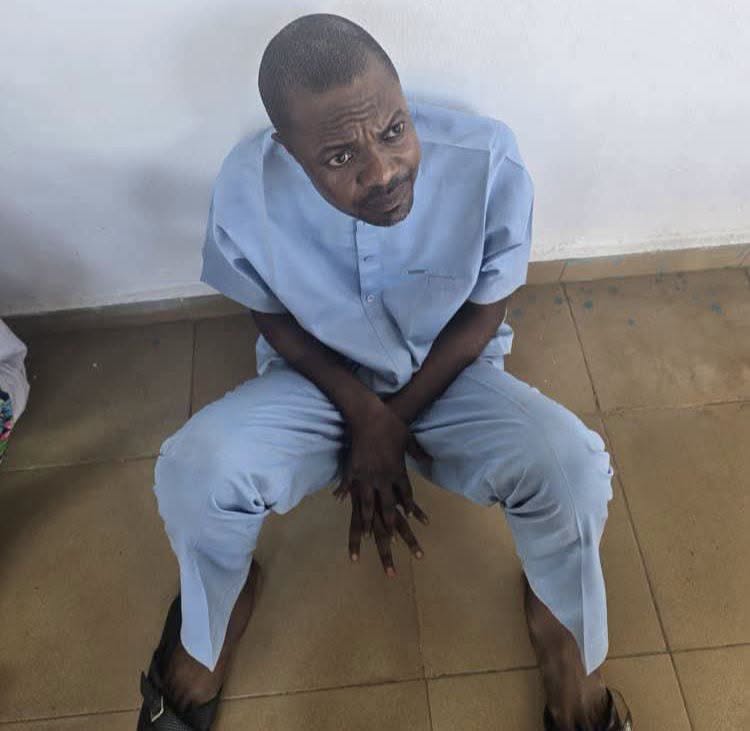
Reports say operatives of the Osun State Police Command, and those of the Department of State Services (DSS) had tracking the trail of Adeniyi Adeyemi, controversial Director General of the Presidential Foreign Intervention Promotion Council (PFIPC), for weeks, before he was eventually pulled out of his hole on Tuesday.
However, the duo, were said to have pulled back after failing to track him through his mobile phones, which he had reportedly switched off for about two days, making it difficult to locate him, leaving the stage for the members of the Police Intelligence Response Team (PI-RT) led by Moses Lohor, a Chief Superintendent of Police (CSP).
Lohor, said to have previously served as the Commander of the Anti-Kidnapping Squad of Osun State, and reported to have been involved in high-profile security operations and controversies, after taken over fielded his men to pick up signals from their well-oiled signal networks.
Regarded by many Osun residents as one of the key security officers who contributed significantly to the peace and stability enjoyed in Ilesa and other parts of the state during his tenure, he was said to have relied on his contacts before his transfer out of the state, said to have raised concerns from the public about the security situation he would be leaving behind.
His exit from the state was said to be hinged on an incident in 2024, in which he allegedly shot one Iyanda Alowonle, then Chairman of Osun State Motor Transport System, in the stomach at the police station in the state prompting an order for his arrest by then Inspector General of Police (IGP).
His effort was said to have paid off when he successfully tracked down the controversial PFIPC, boss, who was seen on Tuesday evening, in a shot video on social media undergoing interrogation, and eventually handed him over to Ibrahim Gotan, Commissioner of Police in the state.
The PUNCH quoted one of the sources as saying: “The arrest (of Adeyemi) took place on Tuesday morning by the IRT squad, who immediately moved him to Abuja. After he was arrested, he was taken to Ibadan and from there to Abuja.”



-
 News6 days ago
BREAKING: Mystery death! *Female student dies a day after arriving Umahi’s home!
-

 News6 days ago
Don’t jump to conclusion! *Umahi speaks on mysterious death of female students!
-
 News3 weeks ago
BREAKING: Court sentences Nigerien, two others to death over terrorism
-
 News2 weeks ago
BREAKING: EX-SSG mowed down by gunmen! *He resisted being kidnapped – driver
-
 News4 weeks ago
Two hours after Igboho’s ‘red-eyes’ to ‘Fulani’ leaders, gunmen free kidnap victims!
-
 News4 weeks ago
Abductors of Oyo teachers panicking, freedom coming for victims soon!
-
 News2 days ago
BREAKING: Terrorists strikes another school! *Kidnap principal, students, NECO official!
-
 News4 weeks ago
Chicagogate: Nigerians return to court! *Move to stop Tinubu from 2027 polls