
Connect with us

News

The trials and triumphs of a resilient Nigeria’s 10th Senate

Published

on

By Eseme Eyiboh
In the unfolding story of Nigeria’s democracy, the Senate remains one of its most enduring symbols of institutional resilience and national balance. Beyond the spectacle of debates and the colour of political persuasion, it is the grand arena where the destiny of the nation is shaped, refined, and defended through rules, order, and reason. It is the one chamber where passion must bow to procedure and where leadership must blend authority with decorum.
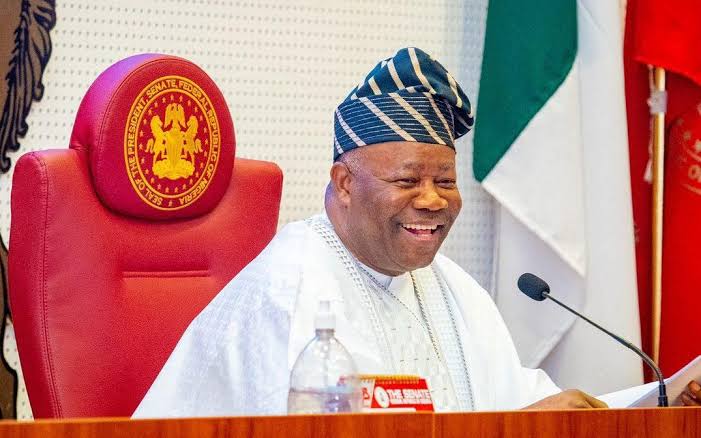
Under the current stewardship of Senator Godswill Akpabio,GCON the Nigerian Senate has again shown that discipline is not the enemy of democracy but its lifeblood. In a political climate often prone to impulsive rhetoric and theatrical defiance, the Senate’s commitment to its Standing Orders has reaffirmed the solemn truth that democracy thrives only when its institutions are respected and its rules upheld.
At a time when political tempers can easily flare and institutional boundaries are tested, the Senate has chosen the steadier path of order. Its resilience is not borne out of the absence of conflict but from the maturity to resolve such tensions through due process. It is this adherence to procedure that transforms the Senate from a mere congregation of political actors into a citadel of constitutional governance. The Tenth National Assembly has therefore become more than a legislature; it has risen to become the custodian of Nigeria’s democratic rhythm, ensuring that the music of governance remains in tune even when discordant notes arise.
● The Architecture of Order
Every functioning democracy stands or falls by the strength of its institutions. Rules are the unseen architecture that hold those institutions together, shaping not only how decisions are made but also how power is exercised and limited. The Nigerian Senate’s Standing Orders are not ceremonial relics from the past. They are the living constitution of the institution, carefully designed to preserve fairness, consistency, and the sanctity of the legislative process.
The discipline of parliamentary conduct is a universal marker of political civilisation. In the United Kingdom’s House of Commons, the authority of the Speaker is absolute and unchallenged, ensuring that debates proceed with respect and precision. No member, regardless of party or popularity, may openly defy the Speaker’s ruling without consequences. In Canada’s Parliament, even the fiercest partisans understand that procedure is sacred.
Heated disagreements are channelled through decorum, not chaos. Similarly, in Australia, the Senate’s ability to hold the executive accountable depends not on the whims of politics but on the meticulous enforcement of rules that keep legislative integrity intact.
Without a doubt, Nigeria’s Senate belongs in that global fellowship of parliaments that recognise chaos as the heart of anarchy and order as the soul of democracy. Its insistence on upholding internal discipline and protecting the authority of its leadership is, therefore, neither personal nor punitive. It is institutional self-preservation.
When the chamber asserts that it will not be held hostage by the disruptive instincts of any single member, it is affirming the primacy of collective responsibility over individual grandstanding. This is how strong legislatures endure: not by silencing dissent, but by ensuring that dissent respects the bounds of procedure.
In many ways, the Akpabio-led Senate has re-introduced a tone of seriousness into the conduct of legislative affairs. The presiding officer’s calm firmness, coupled with his inclusivity, has reminded both senators and citizens that freedom within order is the truest form of democracy. Leadership of this sort does not seek applause; it seeks stability. By upholding its Standing Orders, the Senate has reclaimed its moral authority and demonstrated that rules, properly enforced, are not instruments of oppression but shields against institutional decay.
● A Record of Uncommon Legislative Action
To judge a legislature by its distractions is easy, but to measure it by its legislative work is wiser. By that measure, the Tenth Senate has already left an imprint that few in Nigeria’s democratic history can rival. In barely two years, the Senate has processed over 90 bills, with more than 50 receiving presidential assent. To be clear, these are solid, impactful achievements; they are substantive interventions in the nation’s economic, social, and security architecture.
Among them are landmark reforms such as the Nigeria Tax Administration Act and the Joint Revenue Board Act, which harmonise tax collection across the federal, state, and local governments, thereby reducing duplication and boosting fiscal efficiency. These laws lay the groundwork for a more coherent revenue system that can fund Nigeria’s development priorities sustainably. The Electricity Act (Amendment) has opened the power sector to decentralised innovation by placing generation and distribution within concurrent legislative jurisdiction, allowing states to take greater ownership of electrification drives.
Equally significant is the Student Loans (Access to Higher Education) Act, which has established the Nigerian Education Loan Fund, a mechanism designed to democratise access to tertiary education and build the nation’s human capital. Through this law, thousands of young Nigerians from modest backgrounds can now dream beyond financial constraints.
In matters of national security, the Senate has enacted the Control of Small Arms and Light Weapons Act and reformed the Defence Industries Corporation to modernise local arms production and improve oversight. It has strengthened the Police Act and advanced the legal framework for community policing, ensuring that law enforcement is both professional and accountable. Social welfare has not been neglected either. The Senate’s approval of an increased national minimum wage reflects its sensitivity to the economic pressures faced by ordinary citizens.
Beyond these legislative milestones, the Senate has exercised its oversight powers with renewed vigour. Ministerial nominees have faced rigorous scrutiny, and budgetary processes have been more transparent than in previous sessions. Committee reports are now subjected to fuller debate, while public hearings are reclaiming their role as forums of accountability rather than ceremonial formality. This spirit of constructive collaboration with the executive, balanced by a firm assertion of institutional independence, has restored public confidence in the Senate’s purpose and performance.
Senator Akpabio’s leadership style has been pivotal in this transformation. Combining political experience with procedural discipline, he has stabilised the chamber and inspired cooperation across party lines. The result is a Senate that legislates with urgency but without recklessness, that debates with passion but within the boundaries of respect. It is a model of legislative management that other emerging democracies might do well to emulate.
● Discipline as Democracy’s Anchor
In any democracy, the question is never whether there will be dissent. Instead, it is always about how it will be handled. The real measure of a democratic institution is how it handles internal turbulence. The Tenth Senate has faced its fair share of provocations and personality clashes, yet it has consistently chosen the path of principle over populism. When it insists that rules must be followed and that leadership must be respected, it is not acting out of pride but out of duty. Every time the Senate enforces its Standing Orders, it sends a message that Nigeria’s democracy is strong enough to discipline itself.
In the world’s most respected parliaments, members who flout rules face swift consequences.
In the British House of Commons, suspension or expulsion is not rare when a member’s behaviour undermines parliamentary dignity. In Canada, contempt of Parliament remains one of the gravest offences, warranting public apology or even exclusion. Nigeria’s Senate has every right to apply similar standards, for to allow disorder in the name of political freedom is to invite the slow death of the institution itself.
There is a reason democracies that survive for centuries place such premium on decorum. Discipline is the invisible thread that connects authority to accountability. A Senator who disregards procedure may think he is exercising personal liberty, but in truth, he is unravelling the very order that gives that liberty meaning. The Senate, as the upper chamber of Nigeria’s legislature, bears the burden of showing restraint even when provoked and firmness even when misunderstood.
Under Akpabio’s guidance, that balance has largely been achieved. His steady hand has preserved the Senate’s institutional dignity while ensuring that disagreements, inevitable in a plural polity, never degenerate into institutional disrespect. His colleagues, through their support, have shown that the Senate’s unity is not fragile but founded on shared commitment to the republic’s greater good. This collective resilience is what distinguishes a mature legislature from a mere gathering of political actors.
As democracy worldwide faces disillusionment, with parliaments in many countries besieged by populist anger and public cynicism, Nigeria’s Senate stands out as a stabilising force. Its insistence on rule-based conduct, its robust legislative output, and its respect for leadership all reinforce the idea that democratic governance is not sustained by emotion but by discipline. In times of uncertainty, Nigerians can look to their Senate as a beacon of institutional steadiness, where procedure triumphs over impulse and order over anarchy.
● A Legacy of Institutional Maturity
Every democratic generation must reaffirm its faith in its institutions. For Nigeria, the Senate remains one of the surest proofs that despite imperfections, the system endures. It is the forum where politics matures into policy and ambition yields to service. Its current trajectory under Akpabio’s stewardship shows that a disciplined legislature can coexist with vibrant debate, and that leadership tempered by wisdom can guide even the most divided chamber towards a common purpose.
The trials of the Senate are many: public scepticism, partisan rivalry, and the ever-present temptation of populist showmanship. Yet its triumphs are greater still. By choosing law over noise, the Senate has shown that Nigeria’s democracy can heal itself from within. Each bill passed, each order enforced, and each moment of collective restraint strengthens not just the chamber but the republic it represents.
The true triumph of the Senate lies in its rediscovery of itself as a body governed by rules, led by example, and anchored in service to the nation. In doing so, it has become a model for the continent and a reassurance to Nigerians that the spirit of democracy, though tested, remains alive and well.
As the nation moves through uncertain times, the Senate’s resilience will remain a cornerstone of Nigeria’s democratic stability. Its fidelity to order and leadership not only safeguards the present but also lights the path for future generations. For, in the end, it is not the noise of politics that defines a nation’s greatness but the calm persistence of its institutions. In that regard, the Nigerian Senate stands triumphant, disciplined, dignified, and resolutely democratic in all terms.
•Rt. Hon. Eseme Eyiboh mnipr is the Special Adviser on Media/Publicity and Official Spokesperson to the President of the Senate.

Share this story:

News

BREAKING: Nwosu, ADC candidate, rejects result of Anambra polls over vote-buying

Published

on

A win bought with cash is a loss for democracy, John Nwosu, candidate of the African Democratic Congress (ADC), said on Sunday, flatly rejecting the result of Saturday’s polls, hours after it was released by the Independent National Electoral Commission (INEC), announcing, Charles Chukwuma Soludo as winner.

In the result announced by INEC Returning Officer, Edoba B. Omoregie, a Senior Advocate of Nigeria (SAN), and Vice Chancellor of University of Benin announced the total tally for the election, said Charles Chukwuma Soludo, incumbent, who ran on the platform of the All Progressives Grand Alliance (APGA), scored 422,664 to win the contest and stood re-elected,

Omoregie, who said that Nicholas Ukachukwu of the All Progressives Congress (APC), came second with 99,445, Paul Chukwuma of Young Progressives Party (YPP) 37,753, George Moghalu of the Labour Party (LP) 10,576 and Nwosu credited Nwosu with 8,208, votes out of the registered voters of 2,788,864, and accredited voters of 598,229.”

But pooh-poohing the entire process, Nwosu said it lacked credibility, which was the highest element for consideration in any election, adding that in almost all the polling units where the exercise took place, there were noticeable acts of buying and selling of votes akin to a market place, a development that negated democratic principles and clearly unacceptable to the ADC and himself.

Advertisement

Conveying his position in a statement he personally signed, he said: “I, John Chuma Nwosu (JCN), the governorship candidate of the African Democratic Congress (ADC), hereby categorically reject the outcome of the just-concluded gubernatorial election in Anambra State. What took place yesteday was a ruse and total subversion of the people’s will, marred by massive vote buying and shameless financial inducement at polling units across the state. By every account, the people have not spoken.

“In almost every polling unit, voters were openly induced with cash ranging from ₦3,000 to ₦20,000, turning the entire process into a marketplace rather than a democratic exercise. This is a national embarrassment and a direct assault on the integrity of our democracy.

“Let it be clear: True victory is judged not by the outcome but by the integrity of the process. An election riddled with corruption, manipulation, and vote trading cannot and will never represent the voice of the people. Moreover, a shambolic election confers a shambolic mandate.

“The conscience of our democracy has been wounded. When votes are bought, the future is sold. What we witnessed was not the expression of choice, but the glaring triumph of desperation and greed over the principles of justice and fairness.

“I strongly condemn the failure of relevant institutions to safeguard the sanctity of the ballot. When the system fails to uphold fairness, it loses the moral right to declare winners. This culture of electoral corruption must end if we truly desire a prosperous and just society.

Advertisement

“To my Party members , campaign team , volunteers, and every supporter of our movement — I say thank you. You stood firm in the face of intimidation and inducement. You chose honour over compromise, truth over deceit, and conviction over convenience. You are the true defenders of democracy.

“Our mission has never been about winning at all costs; it was about redefining governance and building a new Anambra anchored on values, transparency, elimination of corruption, and a secure state driven by the innovative use of technology.

“This struggle continues. We will not surrender. We will not be silent. Our movement will keep pressing until the people of Anambra can freely choose their leaders without fear or inducement.

“Anambra deserves better — and together, we will build it.”


Advertisement

Share this story:
Continue Reading

News

The last hours are nigh! Here is another chance! Open letter to Ndi-Anambra

Published

on

By Sunny Igboanugo

Today, November 6, 2025, the campaigns end for all the political parties that will participate in the governorship election, scheduled for Saturday. These parties have put their messages out and now it is decision time. That decision is in your hands. The fate of Anambra is firmly in your hands. How do you go?

But as you ruminate on what you have heard these past few weeks and months it is apposite to pause, take a deep breath and look at the issues clearly. You must reflect on how the journey started, where you were yesterday, where you are today and where you are likely to be tomorrow, given the variables before you. Take time to look at all sides of the coin.

Four years ago, faced with the same setting you donated your votes to Charles Chukwuma Soludo. You didn’t make that choice in a vacuum against a set of agreements. Now rev your minds and recall the key issues against which you took that vital position and ponder on them. I’ll help you.

Advertisement

Security: Were you not promised that thenceforth, you were going to sleep with both eyes closed? Are you doing so today?
Lest we forget: In December 2024, Reverend Father Emmanuel Obimma, the outspoken Catholic cleric, popularly known as Ebubemuonso declared Charles Chukwuma Soludo as possessed of a reprobate spirit. Please, google what that expression means. I’ve just done and what I found are not palatable at all. Now, why would a clergyman, no less a Catholic cleric, known for reticence and measured approach go that far to use such an extreme phrase to capture the persona of the governor?

The answers are not farfetched. At the time Ebubemuonso spoke, he was reflecting on the parlous state of security in the state, occasioned by the massive carnage, kidnappings and other forms of high crimes and the apparent insensitivity, if not the complicity of the government of Soludo towards tackling it.

In fact, at that time, one of the brother-priests of the vocal cleric, who just returned to Nigeria from the US, was undergoing a testy time in the hands of kidnappers who abducted him at a filling station, where he had packed to buy petrol.

Just as the wincing of the abducted priest was reverberating across the state and beyond, news again broke of another high-profile case – the seizure of Justice Azuka, member representing Onitsha North 1 constituency at the Anambra State House of Assembly, with the government, still, paying scant heed to the development.
Obimma’s heightened frustration was therefore not only obvious, but understandable. He also not only spoke out, but loudly and clearly. Against the backdrop of his palpably lacerating comments, the government was finally roused to action from its hitherto slumbering mode.

The result, after unleashing a horde of attack dogs against the priest and the few other compatriots, who cared to speak out, was the birthing of Operation Udogachi, what it termed the Anambra Homeland Security Laws, under which the now dreaded Agunechemba outfit currently operates.

Advertisement

But compatriots, what is the result? Is Anambra State safer today, even with the frenzy and audacious commentaries that flowed ceaselessly from the government? I leave you to answer. But before you do, consider the fate of that lawmaker. Yes! What has happened to those people you were told were the culprits in his abduction and subsequent murder?

Yes! Azuka’s remains were later recovered at the foot of the Second Niger Bridge, Onitsha, several weeks later in February – meaning that he was actually in the confinement of his assailants for a long time without rescue. Yes! A lot of fever was generated by the news of the arrest of the abductors. But how has it ended? The matter, as we say here in Nigeria, has entered voicemail.

Indeed, the last I heard of that case was that some of the said culprits escaped from police custody. Now, you needed hear the circumstances under which they were said to have made good their escape. Even a complete retard – an irredeemable imbecile or Mongolian idiot, would be bemused with their incredulous tale.

But let us assume, though difficult to believe that this official side of this sordid story, is credible, have you heard anything else about the other culprits. Shouldn’t their trial have been concluded before now in court and their fate decided? Has Azuka gotten any form of justice.

Now, I ask, my dear compatriots, is this the government you’re going to endorse on Saturday? Do you not smell a rat? Is it not obvious that something is amiss? Can you trust this government? You must consider the answers to these questions. It is not only imperative; you have a right to ask them as well as provide the answers. Yes! It is your right!
Economy:

Advertisement

Lest we forget: By this time four years ago, you were told that in four years, Anambra would be transformed into the Dubai-Taiwan of Africa. Has that happened? Is there any part of Anambra State that resembles Abuja, Accra or even Lome, not to talk about Dubai or Taiwan? Is there any likelihood that in the next 50 years at the pace of development any part of Anambra would look a fraction of Dubai? Aren’t you smelling deceit? Senator Natasha’s Airport antics and the theatre of distraction

Today, having failed woefully to deliver, they have tactfully changed the narrative. They now tell you that they are building the FOUNDATION. Foundation? Is it in the Uga-Amawbia Road – that unending project that is already undergoing patches and rehabilitation in many areas even before it is concluded?

Compatriots, take a drive through major streets in Awka, Nnewi, Onitsha and other major places in Anambra to understand the psychology and philosophy of the Soludo government. It’ll explain the obvious panic mode that you see today around Soludo and his officials. You’ll begin to realise the reason for you to apply your votes wisely on Saturday.

Ask yourself, what would make a government go into the frenzy of knocking down people’s buildings, and business places including INNOSON Motors Showroom on the pretence of dualising their road, only to engage in the horse and buggy pace the project has witnessed?

You must have heard about the Anyamelum hospital saga, where your dear governor, claimed to have commissioned the “first-ever General Hospital. Lacing it with salt and pepper, our dear Charlie Nwa Mgbafor regaled his audience with the seducing tale of how he not only personally visited the patients upon whom four surgeries were performed “in one day, free of charge,” but gave them “something” for their transportation back home?

Advertisement

Didn’t you hear how this tale was busted no sooner thereafter with video evidence that your governor lied and that the hospital was still in fact uncompleted, let alone having the more than 200 patients and the 65 staff the governor claimed? How does that resonate with you.

Compatriots! Did you also miss the drama of communities donating money to his campaigns? How much did you contribute in the N250 million your community contributed in aide of support for him to return as governor. My Ogidi compatriots, how much did you donate? Was it to thank the governor for abandoning your community that was almost swallowed by flood recently.

To you students of Nnamdi Azikiwe University, you were said to have also donated from your savings to “encourage” your governor and to thank him. It was your gesture of gratitude that he has refused to grant you bursary award or any form of financial relief.
Welfare:

Lest we forget: Compatriots, are you aware that Anambra is among the very few states in Nigeria that is not paying minimum wage. What do you say to a professor who knows the difference between the quality of money as against the quantity of money posting such a dismal outing?

Ndi-Anambra, I do not wish this letter to be too long. So, let me stop here. But before then, you may have heard your governor suggest that only first-class brains in terms of education are fit to govern you. He readily cites Nnamdi Azikiwe, Odumegwu Ojukwu, Akwaeke Abyssinia Nwafor Orizu, Chinua Achebe and the rest. But let me ask which of these great sons of the land has he mimicked in terms of courage and character.

Advertisement

Zik, it was who confronted the white man and brought independence to Nigeria. Ojukwu, for three good years commanded an army which withstood the whole world – Nigeria, Egypt, United Kingdom, United States and even Russia, who either took direct part in the attempt to annihilate his people or provided deadly weapons to carry out the blitzkrieg that became their lot under the Biafran effort.

What about Nwafor Orizu? Please read up his historic courage as Senate President during the January 1966 coup saga. Now, were you not here when twice, Chinua Achebe threw the national honours awarded him by the Federal Government to their faces? Could this be said of your governor?

If high education is all it takes to be in governance why should the most arguably educated and endowed governor be trembling before a President whose own certificates have remained a subject of controversy and who has not shown publicly proof of primary school education, let alone other levels such attainments, simply because you rely on him for your second term. Where is the courage – the character of Zik, Ikemba and Ugobelunenuoji?

Yes! Our dear governor is a Professor of Economics – of world renown at that – consulting for the highest global institutions. But where has that led us? How better is he head-on with those he claimed to be illiterates and should never be allowed near governance. Has he discharged himself in anyway to suggest his best-brain education?

If yes, in what way? Is it in awarding road contracts? Even a confirmed retard could put pen on paper to award contracts for roads and other projects – not to talk of those that have managed their own businesses, employed labour and empowered people therefrom. So, where does the education bragging rights derive? Wherein lies the prestige of high education when all we see is the crudest form of government business.

Advertisement

Would Zik, et al, condone the breaking of people’s spines with aka-odo or engage in market-women altercations such as we have witnessed today? Would Achebe be silent after the NYSC lady was stripped to her birthday suit? Ponder on this, my people. You have more than 72 hours to do so.

As you approach the polling booth to cast your votes, ask yourself, where are the Ocha Brigade men that slaughtered four people in Onitsha, including a pregnant woman? What has happened to the culprits that killed the Owelle Ezukala three and other victims of trigger-happy state-sponsored actors? Where are those who killed Okechukwu Akanaeme? How come nobody has heard about the ruffians that stripped the NYSC lady?

Since Dubai-Taiwan is no longer feasible or possible, the next question is what next? What will be the fate of Anambra in the hands of Soludo, four years on if you donate that vote to him? Would you risk it? Think about it!

My name is Sunny Igboanugo – The Tiny Voice!

Advertisement
Share this story:
Continue Reading

News

Senator Natasha’s Airport antics and the theatre of distraction

Published

on

By Ken Harries Esq
In the solemn business of national representation, a senator’s foremost calling is to amplify the voices of their people, legislate with diligence, and defend the public trust through measured engagement. Yet Senator Natasha Akpoti-Uduaghan, freshly returned from a six-month suspension, seems determined to turn her senatorial tenure into a one-woman reality show.
Her latest instalment, a live-streamed confrontation with immigration officers at the Abuja airport, would have been laughable if it were not such a national embarrassment. Nigerians are left wondering: is the senator for Kogi Central now auditioning for the role of a roving diplomat, or is she simply addicted to the thrill of the trending page?
The people of Kogi Central have already endured half a year of silence in the Senate, an involuntary punishment imposed by their representative’s own previous confrontations. That absence alone was costly. But rather than return with quiet purpose and renewed focus, Senator Natasha re-emerged like an actress desperate to reclaim the spotlight. What should have been a routine airport check on Tuesday, November 4, 2025, turned into a fully choreographed spectacle, complete with emotional close-ups, selective narration, and the familiar undertone of self-victimisation. This was not governance; it was pure theatre, crafted for likes, retweets, and short-term sympathy from an audience forever in search of the next trending video.
It would have been forgivable if this were the only episode, but beneath the noise lies a more corrosive narrative. Those familiar with the inner workings of the Senate confirm that behind the scenes, delicate negotiations were underway to rebuild bridges. Influential figures, alarmed by the cycle of hostility and public brawling, had opened quiet back channels to help Senator Natasha reintegrate into the Senate family and disentangle her outstanding issues. Such diplomatic rehabilitation requires patience, tact, and an understanding of timing. But in her rush to play the heroine in her own story, she may well have detonated the entire process with a livestream.
That impulsive act did more than attract public attention; it could very well have sabotaged private efforts at reconciliation altogether. By turning what could have been a discreet dialogue into a noisy spectacle, she signalled to allies and adversaries alike that discretion is not in her vocabulary. One senior observer quipped that engaging her politically is like trying to hold a private meeting in a market square. Every moment becomes a performance; every silence is an invitation for drama. In the world of governance, that is a fatal flaw.
Her behaviour betrays a deeper malaise: a craving for digital validation that outweighs any hunger for legislative accomplishment. It is an addiction to applause without achievement. In the psychology of power, this is a dangerous stage, when the pursuit of relevance overtakes the pursuit of results. It is the kind of political juvenilia that alienates allies and exhausts goodwill.
The principle of qui fruit iure, alterius non debet laedi; that one who enjoys a right should not be injured by another’s act, captures the injustice now suffered by the constituents of Kogi Central. The people have the right to serious, stable representation, yet their senator continues to trade substance for spectacle. There is also damnum sine injuria, a loss without legal wrong. For while her passport was promptly returned, the true damage lies in her constituency’s loss of confidence. Their representative seems to prioritise personal publicity over public purpose, and in that, there is real injury to the spirit of service.
In mature democracies, a returning legislator would treat suspension as a sobering lesson, a reminder that humility often wins where braggadocio fails. A British MP or Canadian senator in such a position would use the moment to reflect on personal conduct, rebuild credibility, reconnect with constituents, and demonstrate the humility that follows hard lessons. But Senator Natasha Akpoti-Uduaghan appears to mistake constant noise for courage. Her actions suggest not reformist zeal but performative confusion, an unfortunate habit of mistaking movement for progress.
She now stands at a defining crossroads. She can choose maturity over melodrama, wisdom over whining, and re-enter the Senate chamber with the dignity her office deserves. She can heed the quiet counsel of those who still see potential in her and redirect her undeniable energy towards committee work, constituency projects, and national debate. That path may lack the instant thrill of a viral clip, but it offers the solid respect that endures beyond social media cycles.
Or, she can persist on the present road, mistaking online traction for political traction, and treating the grave art of governance as her personal vlog. She can continue to perform like a young adult content creator, amplifying every emotion, dramatising every interaction, and scripting every encounter for maximum digital engagement but minimal public impact. It may be entertaining, yes, but it is also embarrassing. Worse, the audience for whom she performs can be incredibly fickle and will eventually tire of her antics.
The people of Kogi Central deserve a workhorse, not a showhorse. The Senate of the Federal Republic is a chamber of law, not a theatre of the absurd. Senator Natasha Akpoti-Uduaghan must decide whether she will finally act like a lawmaker or remain trapped in the endless loop of self-inflicted spectacle. For if this continues, her legacy may not be one of service or reform, but that of a politician who was always online, always aggrieved, always in front of the camera performing, yet never truly on the job. And what a grand pity that would be.
• Ken Harries Esq is an Abuja-based Development Communication Specialist

Share this story:
Continue Reading

Trending