

News
Why Senator Natasha Akpoti-Uduaghan cannot resume at the Senate yet


By Ken Harries Esq
In Nigeria’s political landscape, the National Assembly is meant to be a sanctuary of sober deliberation and a place where rules and processes are observed with discipline, decorum and responsibility. Yet in this same hallowed chamber, the suspended Kogi Central Senatorial District Senator, Natasha Akpoti-Uduaghan, has continued to demonstrate a determination not to play by the book but to tear it up altogether. Her rebuffed threat to resume legislative duties on 4 September 2025, after a six-month suspension, has exposed a troubling mix of arrogance, hypocrisy, and legal incoherence. It is one thing for a politician to fight for survival. It is quite another for a trained lawyer to insult the intelligence of the very system of justice she once pledged to defend.


The acting Clerk of the National Assembly, Dr Yahaya Danzaria, wrote a letter that has since circulated widely, calmly reminding Senator Natasha Akpoti-Uduaghan that her case is still before the Court of Appeal and that her unilateral announcement to return to the Senate chamber is an exercise in futility.
That letter was not a mere administrative formality. It was the institutional voice of the legislature reaffirming a principle as old as democracy itself: that one cannot be both litigant and judge in the same matter. It was the Senate standing firm, refusing to be bullied, and placing fidelity to process above the whims of one desperate politician.
■ The Suspension, the Court, and the Contempt
To understand the quagmire in which Senator Natasha Akpoti-Uduaghan now writhes, one must trace the sequence of her missteps. On 6 March 2025, she was suspended for six months following an unruly behavior towards the Senate President Godswill Akpabio over seat allocation, a quarrel that she escalated by levelling accusations of sexual harassment without any proof. The Senate Committee on Ethics, Privileges, and Public Petitions investigated and imposed suspension as a disciplinary measure to preserve the dignity of the hallowed chamber.
Senator Natasha Akpoti-Uduaghan refused to accept this sanction. Instead, she raced to the Federal High Court in Abuja, seeking judicial intervention. There, she encountered a ruling that should have taught her humility. On 4 July 2025, Justice Binta Nyako delivered an unambiguous verdict. The disciplinary measures and suspension were indeed found to be constitutional and well situated within the prisms of law and order. Yet, in the same ruling, the court fined her five million naira and to apologize in some National Newspapers for civil contempt after finding that she had violated a gag order. To be clear, the very court to which she turned for relief also found her guilty of misconduct.
This is where the doctrine of equity becomes relevant. The maxim that he who goes to equity must go with clean hands is not a rhetorical flourish but a cornerstone of legal reasoning, recognised in common law and frequently cited in Nigerian jurisprudence. Cases, such as Awojugbagbe Light Industries Ltd v. Chinukwe (1995), stand as monuments to its enduring power. Senator Natasha Akpoti-Uduaghan’s contempt conviction poisoned her entire plea. She sought justice with stained hands. She left the court diminished and shredded.
Her response to the judgement was not to acknowledge this taint with remorse but to appeal. She challenged the fine imposed while the Senate simultaneously filed a cross appeal. By their appeals, both sides placed the matter before the Court of Appeal, which has yet to pronounce upon it. Under Section 18 of the Court of Appeal Act, filing an appeal does not itself stay the execution of a judgement unless expressly ordered. Yet, in cases involving parliamentary privileges, a higher principle comes into play. The subjudice rule demands that parties refrain from actions that may prejudice an ongoing case. That is why the Clerk’s letter pointed out to the obvious: until the Court of Appeal delivers judgement, nothing can be done. Senator Natasha Akpoti-Uduaghan is bound by that rule. Her decision to disregard it is not only reckless but also contemptuous of the very system she invoked.
■ Playing Judge in Her Own Case
The arrogance of Senator Natasha Akpoti-Uduaghan’s conduct lies in her decision to appoint herself as judge, jury, and enforcer. She announced her return to the Senate chamber as though she were the Court of Appeal itself. This is not only laughable but also dangerous, for it undermines the doctrine of natural justice embodied in the principle of __nemo judex in causa sua,_ which holds that no one should sit in judgement over his or her own case.
This principle has been enforced repeatedly in the Nigerian courts. In _Garba v. University of Maiduguri_ (1986), the Supreme Court made it clear that fairness requires impartial adjudication. Yet here is Senator Natasha Akpoti-Uduaghan, a lawyer no less, choosing to place herself above that principle. Her unilateral declaration that her suspension has expired ignores the fact that the Senate’s cross appeal is still alive and pending. It also ignores the constitutional power of the National Assembly to regulate its own procedures under Section 60 of the 1999 Constitution(as amended). The Senate has exercised that power and appealed to defend it. By attempting to circumvent this process, Senator Natasha Akpoti-Uduaghan is attempting to tear apart the fabric of separation of powers.
Those who argue that the High Court’s order should have an immediate effect overlook the unique character of this case. This is not a landlord–tenant quarrel or a commercial dispute where execution can run immediately unless stayed. This is a constitutional contest between legislative privilege and judicial oversight. In such matters, courts themselves have traditionally acted with restraint to avoid unnecessary intrusions into parliamentary autonomy. The case of __El-Rufai v. House of Representatives_ (2003) is instructive, demonstrating the caution with which Nigerian courts approach disciplinary decisions of legislative bodies.
For the avoidance of doubt, Senator Natasha Akpoti-Uduaghan’s insistence on barging back into the chamber while the matter is under judicial review is more than procedural error. It is an affront to both the Senate and the Court of Appeal. It is akin to storming the pitch during a football match, while the referee is still consulting the video assistant referee(VAR). It is not only premature, but it is also disruptive. And, in politics, disruption of this kind invites fresh sanctions. The Senate would be well within its rights to impose additional penalties, and the Court of Appeal itself might take notice if it sees her conduct as an attempt to ridicule its authority.
■ Hypocrisy, Partisan Noise, and Lessons from History
The hypocrisy at play here is simply breathtaking. Senator Natasha Akpoti-Uduaghan claims to be the champion of justice and victim of harassment, yet she herself has been fined for contempt by a court of law. She insists on the sanctity of judicial review, yet now chooses to disregard the same judicial process by cherry picking and acting as though the appellate court’s verdict has already been written in her favour. She wears the robe of victimhood while wielding the sword of impunity. This is not the behaviour of a principled lawmaker. It is the behaviour of a political opportunist who wants sympathy when it suits her and who spits on process when it does not.
Her political party, the Peoples Democratic Party, has joined the charade by urging her to resume duties regardless of the pending appeal. This exposes the bankruptcy of its legal reasoning. It treats the law like a buffet table where one can select only the dishes that appeal to one’s palate. But the law does not work that way. It is a full meal that must be consumed in its entirety, bitter herbs and all. The acting Clerk’s letter is not an excuse, as her party would claim, but a necessary reminder that institutions must be defended from the tyranny of personal ambition and lure for power.
Comparisons from other democracies shed further light. In the United Kingdom, Members of Parliament have been suspended for lesser infractions, and none has dared return without due process. In Canada, suspensions have been treated with the utmost seriousness, with courts declining to interfere in the internal proceedings of Parliament. In India, similar disputes have arisen, and each time, the judiciary has been careful not to usurp the disciplinary powers of the legislature. Senator Natasha Akpoti-Uduaghan’s antics, therefore, do not represent boldness but recklessness. They show contempt not only for Nigerian institutions but also for the global traditions of parliamentary governance.
■ The Road Ahead
As of 10 September 2025, the Court of Appeal remained silent. That silence is eloquent. It tells the country that the matter is not yet ripe for conclusion. It reminds us that justice takes time and that impatience is not a substitute for law. Senator Natasha Akpoti-Uduaghan’s seat remains empty, and rightly so. She has entangled herself in a legal bind of her own making. She appealed a ruling that never favoured her, yet she now demands the immediate enforcement of a non existent judgement, ignoring the fact that the whole case remains under review.
This is the behaviour of a politician who has lost sight of principle. It is the behaviour of a lawyer who has betrayed her calling. By attempting to bulldoze her way back into the Senate chamber, she has deepened her isolation, eroded her credibility, and risked a legacy as the senator who could not wait for the courts to do their job.
The question here is not whether the Senate is right to shut its doors against the erring senator. The National Assembly has acted with restraint, dignity, and firmness. It has shown that it will not be cowed by theatrics. Most importantly, it has respected the judiciary by waiting for its verdict. And, it has upheld the constitutional order by refusing to allow an individual to hijack its processes. That is the mark of an institution that takes itself seriously.
The right question to ponder now is whether Senator Natasha Akpoti-Uduaghan has learned that theatrics cannot upstage set legal procedures. Whatever the answer, she still has a choice. She can pay her fine, show contrition, and await the judgement of the Court of Appeal. Or she can continue along the reckless path of self-aggrandisement, in which case she risks being remembered not as a trailblazing senator but as a cautionary tale. Nigeria deserves lawmakers who live by the law and not by political theatrics. Clean hands remain the only acceptable requirement in the court of justice. Until Senator Natasha Akpoti-Uduaghan acquires them, her rightful place is not on the floor of the Senate but in the waiting room of accountability.
•Ken Harries Esq is an Abuja based Development Communication Specialist


The echoes of the drums rolled out to celebrate the rescue of the 44 teachers and students, kidnapped from some schools in Oyo State, after 56 days in the bush, would surely be disrupted abruptly, with the divergent echoes of a fresh abduction, this time coming from Kogi State.
Reports indicate that the gunmen, struck on Tuesday at the Government Secondary School, Odo-Ekina, in Dekina Local Government Area of the state, abducting four students, the school principal and a National Examinations Council (NECO) ad hoc staff member.
Authorities of the Kogi State Police Command, who immediately unleashed their operatives in hot pursuit of the abductors, said the attack occurred at about 5:25 p.m. while the students were writing their NECO examination.
Saliu Oyiza Afusat, an Assistant Superintendent of Police (ASP) and spokesman of the command, said a combined team of police personnel and other security agencies has launched a search-and-rescue operation following the incident.
Informing that one of the students was actually rescued immediately, she said efforts were ongoing to secure the release of the remaining victims and apprehend the attackers, adding that Naziru Bello Kankarofi, the state Commissioner of Police, alongside the Brigade Commander and the State Security Adviser to the Governor, Commodore Jerry Omodara (Rtd), were already on the way to the scene for an on-the-spot assessment.

Oil prices are expected to go down now with the announcement of Donald Trump, US President that he will no longer impose a 20 percent “safe passage” fee on ships passing through the Strait of Hormuz.
The POTUS, hinged his reversal of the decision on the intervention from some Gulf countries, who pleaded with him not to toe the line due to the massive economic impact the decision would make on the region.
Indeed, oil prices had shot up immediately Trump announced the new levy on Monday while declaring the US ‘the guardians of the Hormuz strait,’ a measure which he said was to pay for the cost of guarding the volatile area in order keep supply of oil flowing.
Reports said that Gulf allies of the US worked frantically to get Trump on the phone in time to talk him out of the idea altogether, while a flurry of appeals came from Saudi Arabia, the United Arab Emirates, Bahrain and Qatar.
In response, the POTUS, posting on his Truth Social platform, wrote: “Based on highly productive conversations with Middle East leadership, I have decided to replace the 20% United States Reimbursement Fee with Trade and Investment Deals that the various Gulf States will be making into the United States.”
Trump, who said the investments would be “MASSIVE but, at the same time, extraordinarily good for them, and their future,” added that the deals would see factories, plants, and equipment pour into the US at “Historic levels.”
The Gulf nations have committed to invest trillions of dollars in the US, though it remains unclear how much of that they will actually spend over the next several years.
Meanwhile, the US continues to bomb Iran in what appears to be a resumption of active conflict between both countries, despite an ongoing roadmap to end the conflict.
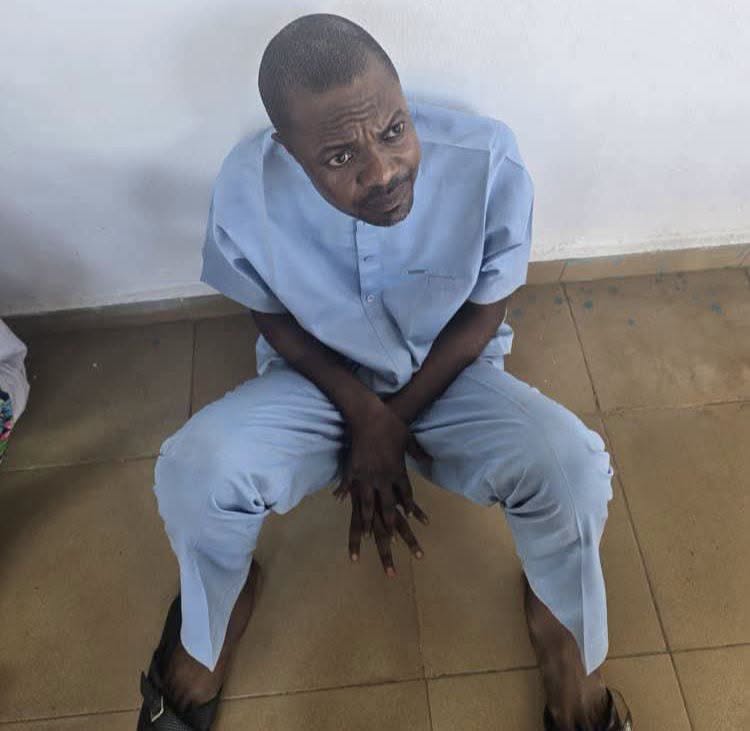
Reports say operatives of the Osun State Police Command, and those of the Department of State Services (DSS) had tracking the trail of Adeniyi Adeyemi, controversial Director General of the Presidential Foreign Intervention Promotion Council (PFIPC), for weeks, before he was eventually pulled out of his hole on Tuesday.
However, the duo, were said to have pulled back after failing to track him through his mobile phones, which he had reportedly switched off for about two days, making it difficult to locate him, leaving the stage for the members of the Police Intelligence Response Team (PI-RT) led by Moses Lohor, a Chief Superintendent of Police (CSP).
Lohor, said to have previously served as the Commander of the Anti-Kidnapping Squad of Osun State, and reported to have been involved in high-profile security operations and controversies, after taken over fielded his men to pick up signals from their well-oiled signal networks.
Regarded by many Osun residents as one of the key security officers who contributed significantly to the peace and stability enjoyed in Ilesa and other parts of the state during his tenure, he was said to have relied on his contacts before his transfer out of the state, said to have raised concerns from the public about the security situation he would be leaving behind.
His exit from the state was said to be hinged on an incident in 2024, in which he allegedly shot one Iyanda Alowonle, then Chairman of Osun State Motor Transport System, in the stomach at the police station in the state prompting an order for his arrest by then Inspector General of Police (IGP).
His effort was said to have paid off when he successfully tracked down the controversial PFIPC, boss, who was seen on Tuesday evening, in a shot video on social media undergoing interrogation, and eventually handed him over to Ibrahim Gotan, Commissioner of Police in the state.
The PUNCH quoted one of the sources as saying: “The arrest (of Adeyemi) took place on Tuesday morning by the IRT squad, who immediately moved him to Abuja. After he was arrested, he was taken to Ibadan and from there to Abuja.”



-

 News6 days ago
BREAKING: Mystery death! *Female student dies a day after arriving Umahi’s home!
-

 News6 days ago
Don’t jump to conclusion! *Umahi speaks on mysterious death of female students!
-

 News3 weeks ago
BREAKING: Court sentences Nigerien, two others to death over terrorism
-

 News2 weeks ago
BREAKING: EX-SSG mowed down by gunmen! *He resisted being kidnapped – driver
-

 News4 weeks ago
Two hours after Igboho’s ‘red-eyes’ to ‘Fulani’ leaders, gunmen free kidnap victims!
-

 News4 weeks ago
Abductors of Oyo teachers panicking, freedom coming for victims soon!
-

 News2 days ago
BREAKING: Terrorists strikes another school! *Kidnap principal, students, NECO official!
-
 News4 weeks ago
Chicagogate: Nigerians return to court! *Move to stop Tinubu from 2027 polls