

News
Poor economy: Heavy drop in fuel consumption, as Nigerians groan!


Petrol consumption nationwide has fallen by 28 per cent over the past two years, as pump attendants across filling stations are left with scanty vehicular calls, with latest figures from the Nigerian Midstream and Downstream Petroleum Regulatory Authority (NMDPRA) showing that the daily volume of Premium Motor Spirit (PMS), popularly known as petrol, dropped from 68.353 million litres in June 2023, when fuel subsidy was removed, to 49.277 million litres in June 2025.
Vanguard reports that since the coming on stream of the Dangote Refinery, marketers have reviewed prices multiple times, explained that investigations last weekend showed that despite fuel stations across major cities in Nigeria adjusting prices and displaying same, a large number of consumers no longer bother with the price as they make purchase decisions before getting to the fuel station.


It added that such decisions were always based on availability of money and considerations for competing needs in their lives, stating that low patronage and dwindling vehicle presence at the fuel stations, were causing rise in idle time at the stations.
For instance, Ibrahim Gambo, Station Manager at RYBL Services Limited in Karshi, Abuja, was quoted as saying that it now took about two months to sell a single 30,000-litre tanker due to poor patronage, adding: “The market is not moving well. We used to have three pump attendants, but now we keep only one. We cannot pay salaries for three because sales are too low.
‘’Before, people came with jerry cans, but now you hardly see that. Many only buy when they have important and compelling need to drive. Also, people are now using generators at home sparingly.”
In filling stations visited in some parts of Lagos, including Amuwo-Odofin, Apapa, Ajegunle and Orile, independent marketers lamented that sales have dropped significantly, with another attendant, this time at Techno Oil at Alaba Oro, saying: “Within the last two weeks, the price of petrol increased by N50 and dropped N20 few days ago. But one cannot say the business is all that lucrative at the moment.
‘’This is because, prior to deregulation, we had a lot of demand from customers to fill up when cars come to purchase fuel, but the reverse is the case now. Most times, our turnover is very low compared to what was obtainable in the past.”
The situation, however, appeared to be different at retail outlets such as MRS, one the retail partners to the Dangote Refinery and sells petrol at about the lowest price in the country, and Fatgbems at Amuwo, Oshodi/Apapa expressway, and Mile 2 road, respectively which had long queues of cars trying to buy petrol, where the pump price was pegged at N865 per litre, compared to N870 to N890 at other stations.
At the MRS station, an attendant who identified herself simply as Chinenye, said: “We are very grateful for the number of customers and the turnover we are getting. I can tell you for certain that things have turned around for us at MRS, against the regulated period of the downstream.”
Retail outlets visited along Benin-Asaba Road showed a few vehicles being attended to. Vanguard gathered that pump price has also dropped from an average of N950 per litre it sold a week ago, to the current rate of N910 per litre.
In Nasarawa State, checks by Vanguard showed that while most stations operated by independents and major marketers remained largely empty, those operated by MRS, AYM Sharfa and AA Rano had a good number of vehicles, tricycles (Keke) and commercial motor cycles (Okada) in them.
With very few vehicles seen at filling stations visited in Kano, where pump attendants could be seen sitting idle in most of the filing stations, a petrol attendant at Ammasco, Court Road branch, lamented low patronage of customers, explaining that the low patronage has affected their daily sales.
One A. Y. Maikifi, who said sales had dropped drastically due to rise in the pump price of the product, added: “You can’t compare sales two years ago with now. We recorded more sales in the past than now. The increase in the price of fuel is the major factor for the low patronage.’’
In Kaduna, attendants across the stations visited by Vanguard disclosed that sales had improved slightly compared to recent weeks, as motorists were returning to the pumps. However, they observed that sales volumes remained lower than they were two years ago, largely due to fewer vehicles on the roads and the increasing shift to Compressed Natural Gas, CNG, by some vehicle owners.
The gloomy picture at petrol stations contrasts sharply with the growing demand for Compressed Natural Gas, CNG.
Across the FCT, long queues were seen at CNG outlets, where prices range from N230 to N235 per kilogram, far lower than petrol.
At the NNPC CNG retail station in Wuse Zone 2, a Bolt driver, Onyebuchi Okeke, told Vanguard he had already spent an hour on the queue but noted that the waiting was worth it.
“I really don’t mind the time because it is by far cheaper than petrol. I have a 10kg cylinder and it costs just N2,300 to fill. I will work with it for about four hours and make over N10,000. So, I will be here until it’s my turn. I have about half a tank of petrol in my car. It has been there for about two weeks. If there is need to use it, I will,” he stated.
He disclosed that he hardly goes to filling stations to buy, adding that “since I got my car converted to CNG, I don’t go to petrol stations often. It is once in a while.”
The report, quoted Chinedu Ukadike, spokesman for the Independent Petroleum Marketers Association of Nigeria (IPMAN), as saying it was a trying time for independent marketers, while attributing the drop to the increase in the price of the product, vehicle conversions to CNG and the general hike in the cost of living in the country.
Stressing that the drop in consumers volume could partly be due to reduction in the volumes smuggled across Nigeria’s borders to neighbouring countries due to removal of subsidies in Nigeria, he said: “The issue of smuggling has dropped drastically. Movement across the borders have dropped because the removal of subsidies means that neighbouring countries which have been benefiting from low prices in Nigeria are no longer able to do so.
“Secondly, many vehicles have been converted to CNG because it is cheaper. I am sure you have noticed the length of queues at the CNG stations. It is far cheaper and makes more economic sense. In fact, if the presidential committee on CNG continues to work at the rate they are doing, by this time next year, petrol supply will drop by half of what NMDPRA has declared.
“Thirdly, small scale industries are also converting to gas usage. All these have made the petrol supply business not as lucrative as it used to be. The cost in petrol price has also moderated the pocket of Nigerians. Since the removal of subsidies, many car owners have dropped cars and now use commercial vehicles. Also a lot of people now use commercial motor bikes to pick up items or parcels, rather than drive to pick them.”
On the impact of the drop in consumption on their business, Ukadike said: “It is actually a trying time for marketers. The return on investment is now very small. For most, the turnover is not more than one truck per month, for some it is one truck in two months.
“This is why we have been asking government to intervene so that independent marketers do not go out of business. With the way things are going, independent marketers will go into extinction by 2028.”
Henry Adigun, Chief Executive Officer (CEO) AHA Consultancies, while enhancing the belief by experts that frequent price changes were unhealthy for sector, was quoted as saying that for the sector to attract the needed investment, there had to be more certainty in the downstream sector.
“The downstream market should be driven by competition. The market must be fair, must be seen to be fair, must be well regulated and must provide benefits for consumers. When there is competition in any market, the consumers benefit.
“The Dangote Refinery is a state-of-the-art facility and there is no other in the country that can compete with it. That is why government has continued to allow importation of petrol. That is the only way to provide competition, for now. Competition ensures that there is no monopoly and price gorging.
“The frequent changes in price is leading to a lot of losses in the market, and this will affect the capacity of marketers to pay back money loaned secured from banks to purchase the product.”









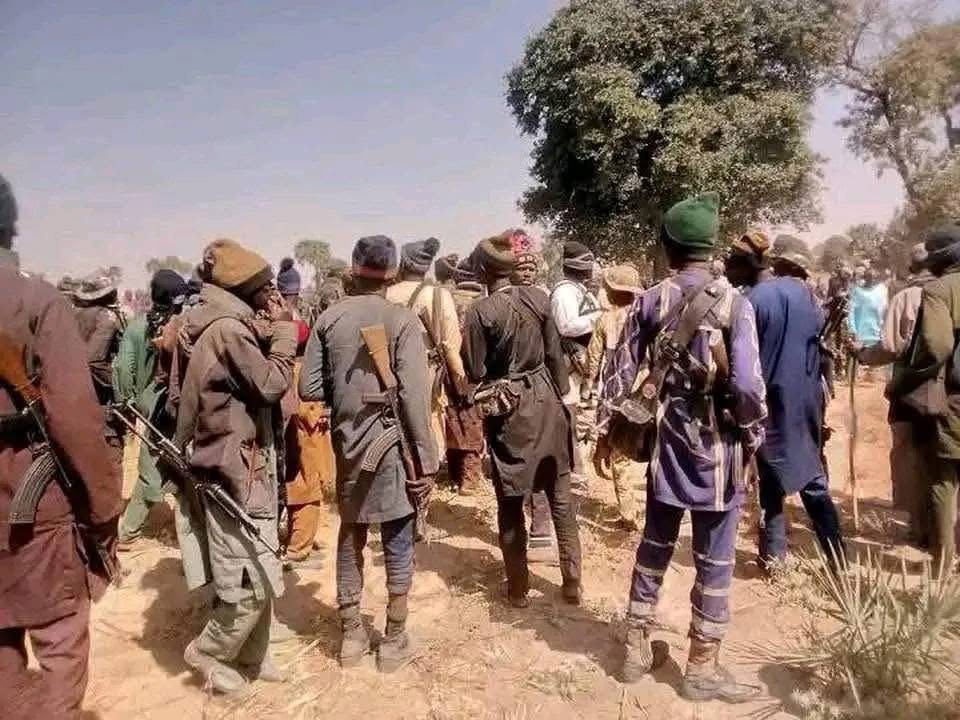
The echoes of the drums rolled out to celebrate the rescue of the 44 teachers and students, kidnapped from some schools in Oyo State, after 56 days in the bush, would surely be disrupted abruptly, with the divergent echoes of a fresh abduction, this time coming from Kogi State.
Reports indicate that the gunmen, struck on Tuesday at the Government Secondary School, Odo-Ekina, in Dekina Local Government Area of the state, abducting four students, the school principal and a National Examinations Council (NECO) ad hoc staff member.
Authorities of the Kogi State Police Command, who immediately unleashed their operatives in hot pursuit of the abductors, said the attack occurred at about 5:25 p.m. while the students were writing their NECO examination.
Saliu Oyiza Afusat, an Assistant Superintendent of Police (ASP) and spokesman of the command, said a combined team of police personnel and other security agencies has launched a search-and-rescue operation following the incident.
Informing that one of the students was actually rescued immediately, she said efforts were ongoing to secure the release of the remaining victims and apprehend the attackers, adding that Naziru Bello Kankarofi, the state Commissioner of Police, alongside the Brigade Commander and the State Security Adviser to the Governor, Commodore Jerry Omodara (Rtd), were already on the way to the scene for an on-the-spot assessment.

Oil prices are expected to go down now with the announcement of Donald Trump, US President that he will no longer impose a 20 percent “safe passage” fee on ships passing through the Strait of Hormuz.
The POTUS, hinged his reversal of the decision on the intervention from some Gulf countries, who pleaded with him not to toe the line due to the massive economic impact the decision would make on the region.
Indeed, oil prices had shot up immediately Trump announced the new levy on Monday while declaring the US ‘the guardians of the Hormuz strait,’ a measure which he said was to pay for the cost of guarding the volatile area in order keep supply of oil flowing.
Reports said that Gulf allies of the US worked frantically to get Trump on the phone in time to talk him out of the idea altogether, while a flurry of appeals came from Saudi Arabia, the United Arab Emirates, Bahrain and Qatar.
In response, the POTUS, posting on his Truth Social platform, wrote: “Based on highly productive conversations with Middle East leadership, I have decided to replace the 20% United States Reimbursement Fee with Trade and Investment Deals that the various Gulf States will be making into the United States.”
Trump, who said the investments would be “MASSIVE but, at the same time, extraordinarily good for them, and their future,” added that the deals would see factories, plants, and equipment pour into the US at “Historic levels.”
The Gulf nations have committed to invest trillions of dollars in the US, though it remains unclear how much of that they will actually spend over the next several years.
Meanwhile, the US continues to bomb Iran in what appears to be a resumption of active conflict between both countries, despite an ongoing roadmap to end the conflict.
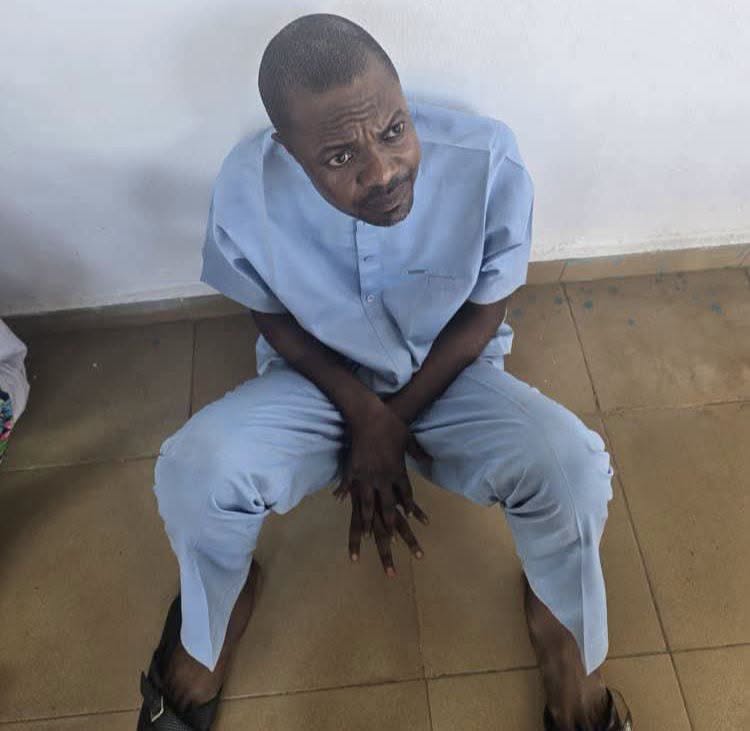
Reports say operatives of the Osun State Police Command, and those of the Department of State Services (DSS) had tracking the trail of Adeniyi Adeyemi, controversial Director General of the Presidential Foreign Intervention Promotion Council (PFIPC), for weeks, before he was eventually pulled out of his hole on Tuesday.
However, the duo, were said to have pulled back after failing to track him through his mobile phones, which he had reportedly switched off for about two days, making it difficult to locate him, leaving the stage for the members of the Police Intelligence Response Team (PI-RT) led by Moses Lohor, a Chief Superintendent of Police (CSP).
Lohor, said to have previously served as the Commander of the Anti-Kidnapping Squad of Osun State, and reported to have been involved in high-profile security operations and controversies, after taken over fielded his men to pick up signals from their well-oiled signal networks.
Regarded by many Osun residents as one of the key security officers who contributed significantly to the peace and stability enjoyed in Ilesa and other parts of the state during his tenure, he was said to have relied on his contacts before his transfer out of the state, said to have raised concerns from the public about the security situation he would be leaving behind.
His exit from the state was said to be hinged on an incident in 2024, in which he allegedly shot one Iyanda Alowonle, then Chairman of Osun State Motor Transport System, in the stomach at the police station in the state prompting an order for his arrest by then Inspector General of Police (IGP).
His effort was said to have paid off when he successfully tracked down the controversial PFIPC, boss, who was seen on Tuesday evening, in a shot video on social media undergoing interrogation, and eventually handed him over to Ibrahim Gotan, Commissioner of Police in the state.
The PUNCH quoted one of the sources as saying: “The arrest (of Adeyemi) took place on Tuesday morning by the IRT squad, who immediately moved him to Abuja. After he was arrested, he was taken to Ibadan and from there to Abuja.”



-

 News5 days ago
BREAKING: Mystery death! *Female student dies a day after arriving Umahi’s home!
-

 News5 days ago
Don’t jump to conclusion! *Umahi speaks on mysterious death of female students!
-

 News3 weeks ago
BREAKING: Court sentences Nigerien, two others to death over terrorism
-
 News2 weeks ago
BREAKING: EX-SSG mowed down by gunmen! *He resisted being kidnapped – driver
-

 News4 weeks ago
Two hours after Igboho’s ‘red-eyes’ to ‘Fulani’ leaders, gunmen free kidnap victims!
-

 News3 weeks ago
Abductors of Oyo teachers panicking, freedom coming for victims soon!
-
 News1 day ago
BREAKING: Terrorists strikes another school! *Kidnap principal, students, NECO official!
-
 News3 weeks ago
Chicagogate: Nigerians return to court! *Move to stop Tinubu from 2027 polls