

News
Niger Delta Faces ‘Ecological Genocide,’ INC President Okaba Warns


Professor Benjamin Okaba, President of the Ijaw National Council (INC), expressed concern on Wednesday that the Nigerian federation has subjected the oil-rich Niger Delta to what he termed “ecological genocide.”
The INC President accused the military and International Oil Companies (IOCs) of being complicit in oil theft in the region and called for urgent equity and justice for the long-suffering people of the Niger Delta.

Additionally, the Ijaw leader noted that oil host communities have yet to receive the three percent allocation stipulated in the Petroleum Industry Act (PIA), which he described as inadequate.
READ ALSO: Niger Delta oil spill: Nigeria loses big! *UK S’Court strikes out case against Shell
Professor Okaba made these remarks in Abuja while delivering the lead paper titled “Gaps and Silences in Nigeria’s Oil and Gas Economy: Appraisal of Resources Control, Security and Media Dynamics” at the 10th Anniversary Public Lecture of GbaramatuVoice, a prominent pan-Niger Delta media platform.
He lamented that despite being the economic backbone of the country for decades, the Niger Delta continues to suffer from poverty, neglect, and environmental degradation.
He stated, “Our freshwater, swamp, and mangrove forests have been devastated by multinationals. Our rivers, once pristine, now bear the toxic legacy of extraction without restoration. These statistics are not merely painful; they are criminal.”
Professor Okaba argued that the situation in the Niger Delta amounts to an “economic war,” with thousands of infants dying daily from contaminated water, while gas flaring continues to emit carbon emissions that would be deemed illegal in Europe.
He noted that between 1960 and 2024, Nigeria earned over $1 trillion in oil revenue, with more than 75 percent originating from the Niger Delta.
Yet, he pointed out that while the proceeds have financed skyscrapers in Abuja and Lagos, communities in oil-producing states remain impoverished, with over 70 percent of the population living on less than $2 a day.
“Those who endure degradation, those who bear the oil, those whom God has blessed with the resource, should be the primary beneficiaries of the oil industry’s dividends. Anything less will perpetuate our suffering, crisis, and conflict,” he warned.
Professor Okaba criticized the Petroleum Industry Act (PIA), particularly the three percent allocation to host communities, calling it an insult to the people of the Niger Delta.
He argued that bureaucratic obstacles have prevented any community from successfully accessing the so-called community trust funds since the law was enacted, effectively reducing oil-bearing communities to “hostages in their own land.”
He also accused security agencies of complicity in oil theft, noting that institutionalized insider collusion in pipeline vandalism results in losses estimated at over $27 billion annually.
According to him, the divestment of international oil companies from onshore operations has further exacerbated the plight of the region, as marginal fields are now awarded to politically connected individuals “who cannot distinguish between palm wine and oil,” leaving host communities even more impoverished.
Okaba emphasized that unless justice and equity are embedded in the governance of oil resources, Nigeria risks perpetuating a cycle of conflict and underdevelopment.
“The Niger Delta has been the goose that laid the golden egg, only to be sacrificed at every fiscal cycle. This must end. We demand justice, equity, and a future where our people are no longer slaves in their own land,” he concluded.
The 10th anniversary public lecture of the media platform attracted distinguished guests who praised the resilience of the Niger Delta-based media outlet and its role in amplifying the region’s voice.
In his goodwill message, His Royal Majesty, King Obukohwo Monday Arthur Whiskey, Ovie of Idjerhe Kingdom, lamented the ongoing deprivation of the oil-rich Niger Delta despite its contributions to Nigeria’s economy.
He stated that the region has significantly contributed to the nation’s prosperity yet remains in a state of neglect.
“If you consider the state of roads in the Niger Delta, the employment opportunities, and the development indicators, we have nothing to show for what we are producing,” the monarch remarked.
He added, “If you can construct a Third Mainland Bridge in Lagos, what prevents you from building similar infrastructure in the Niger Delta, where these resources are produced and which support the nation’s economy?”
Commending GbaramatuVoice, he referred to it as “our CNN,” emphasizing that only those who experience the realities of the Niger Delta can accurately tell its story.
“They understand our culture, our traditions, and our people. We view them as our voice, as our CNN,” King Whiskey affirmed.
Also addressing the audience, King Bubaraye Dakolo, Chairman of the Bayelsa State Traditional Rulers Council, commended the media outlet for filling a gap that “mainstream media has not been able to address.”
Peace ambassador Sheriff Mulade described GbaramatuVoice as crucial in highlighting the region’s struggles and successes, stating it “has contributed over 70% of the popularity of Gbaramatu Kingdom.”
Representing the Chief of Army Staff, Major-General Oluremi Fadairo called for collective responsibility for security in the Niger Delta, adding, “We must reject militancy and oil bunkering to achieve a better Nigeria.”
In his welcome address, Jacob Brakere Abai, Publisher and CEO of GbaramatuVoice, celebrated the milestone as a decade of “telling stories that matter” and amplifying the voices of the Niger Delta.
“Ten years ago, we witnessed a Niger Delta whose struggles were overlooked and voices silenced. From a modest tabloid, we have evolved into a multimedia platform with a global reach,” Abai stated.
He noted that GbaramatuVoice adheres to Nigeria’s proud journalistic tradition, pledging to expand into a Media Institute to train future storytellers.


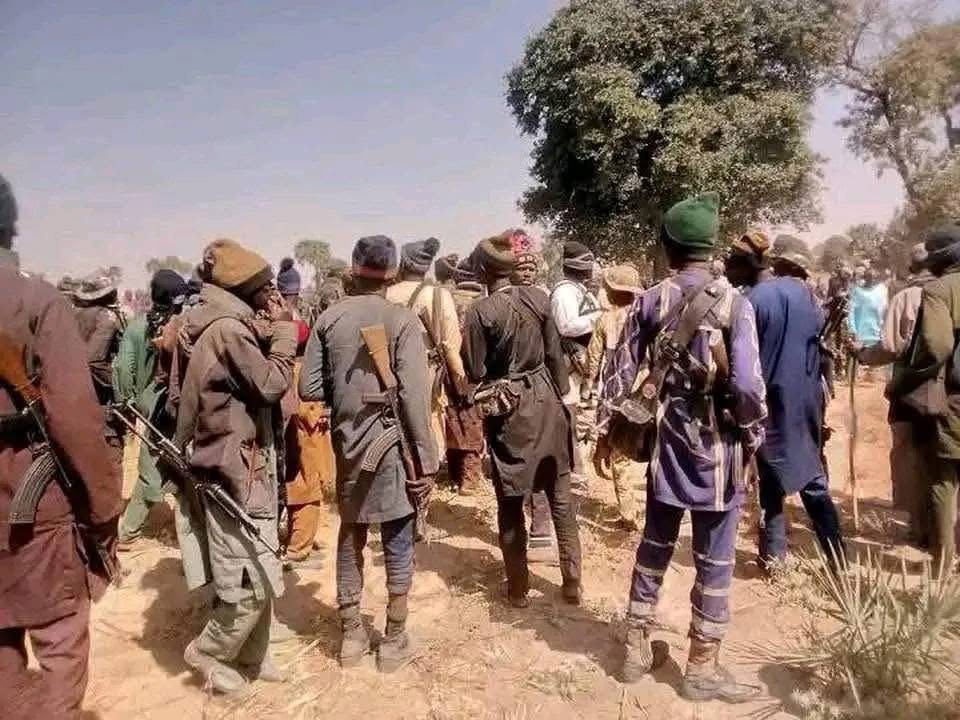
The echoes of the drums rolled out to celebrate the rescue of the 44 teachers and students, kidnapped from some schools in Oyo State, after 56 days in the bush, would surely be disrupted abruptly, with the divergent echoes of a fresh abduction, this time coming from Kogi State.
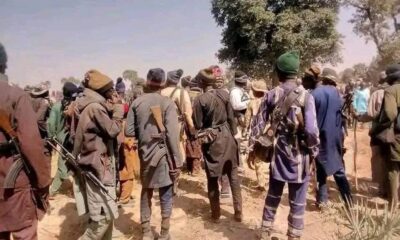
Reports indicate that the gunmen, struck on Tuesday at the Government Secondary School, Odo-Ekina, in Dekina Local Government Area of the state, abducting four students, the school principal and a National Examinations Council (NECO) ad hoc staff member.
Authorities of the Kogi State Police Command, who immediately unleashed their operatives in hot pursuit of the abductors, said the attack occurred at about 5:25 p.m. while the students were writing their NECO examination.
Saliu Oyiza Afusat, an Assistant Superintendent of Police (ASP) and spokesman of the command, said a combined team of police personnel and other security agencies has launched a search-and-rescue operation following the incident.
Informing that one of the students was actually rescued immediately, she said efforts were ongoing to secure the release of the remaining victims and apprehend the attackers, adding that Naziru Bello Kankarofi, the state Commissioner of Police, alongside the Brigade Commander and the State Security Adviser to the Governor, Commodore Jerry Omodara (Rtd), were already on the way to the scene for an on-the-spot assessment.

Oil prices are expected to go down now with the announcement of Donald Trump, US President that he will no longer impose a 20 percent “safe passage” fee on ships passing through the Strait of Hormuz.
The POTUS, hinged his reversal of the decision on the intervention from some Gulf countries, who pleaded with him not to toe the line due to the massive economic impact the decision would make on the region.
Indeed, oil prices had shot up immediately Trump announced the new levy on Monday while declaring the US ‘the guardians of the Hormuz strait,’ a measure which he said was to pay for the cost of guarding the volatile area in order keep supply of oil flowing.
Reports said that Gulf allies of the US worked frantically to get Trump on the phone in time to talk him out of the idea altogether, while a flurry of appeals came from Saudi Arabia, the United Arab Emirates, Bahrain and Qatar.
In response, the POTUS, posting on his Truth Social platform, wrote: “Based on highly productive conversations with Middle East leadership, I have decided to replace the 20% United States Reimbursement Fee with Trade and Investment Deals that the various Gulf States will be making into the United States.”
Trump, who said the investments would be “MASSIVE but, at the same time, extraordinarily good for them, and their future,” added that the deals would see factories, plants, and equipment pour into the US at “Historic levels.”
The Gulf nations have committed to invest trillions of dollars in the US, though it remains unclear how much of that they will actually spend over the next several years.
Meanwhile, the US continues to bomb Iran in what appears to be a resumption of active conflict between both countries, despite an ongoing roadmap to end the conflict.
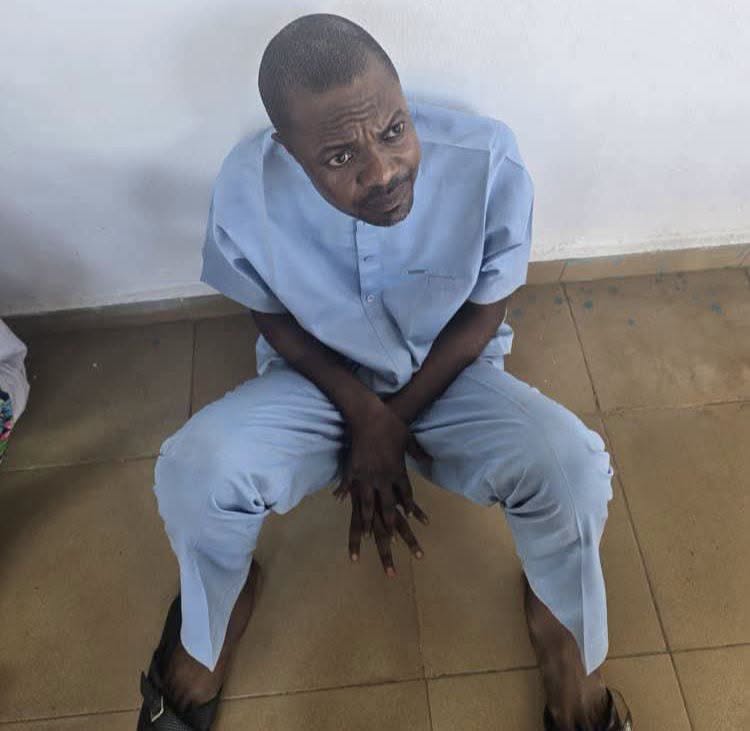
Reports say operatives of the Osun State Police Command, and those of the Department of State Services (DSS) had tracking the trail of Adeniyi Adeyemi, controversial Director General of the Presidential Foreign Intervention Promotion Council (PFIPC), for weeks, before he was eventually pulled out of his hole on Tuesday.
However, the duo, were said to have pulled back after failing to track him through his mobile phones, which he had reportedly switched off for about two days, making it difficult to locate him, leaving the stage for the members of the Police Intelligence Response Team (PI-RT) led by Moses Lohor, a Chief Superintendent of Police (CSP).
Lohor, said to have previously served as the Commander of the Anti-Kidnapping Squad of Osun State, and reported to have been involved in high-profile security operations and controversies, after taken over fielded his men to pick up signals from their well-oiled signal networks.
Regarded by many Osun residents as one of the key security officers who contributed significantly to the peace and stability enjoyed in Ilesa and other parts of the state during his tenure, he was said to have relied on his contacts before his transfer out of the state, said to have raised concerns from the public about the security situation he would be leaving behind.
His exit from the state was said to be hinged on an incident in 2024, in which he allegedly shot one Iyanda Alowonle, then Chairman of Osun State Motor Transport System, in the stomach at the police station in the state prompting an order for his arrest by then Inspector General of Police (IGP).
His effort was said to have paid off when he successfully tracked down the controversial PFIPC, boss, who was seen on Tuesday evening, in a shot video on social media undergoing interrogation, and eventually handed him over to Ibrahim Gotan, Commissioner of Police in the state.
The PUNCH quoted one of the sources as saying: “The arrest (of Adeyemi) took place on Tuesday morning by the IRT squad, who immediately moved him to Abuja. After he was arrested, he was taken to Ibadan and from there to Abuja.”



-
 News5 days ago
BREAKING: Mystery death! *Female student dies a day after arriving Umahi’s home!
-

 News5 days ago
Don’t jump to conclusion! *Umahi speaks on mysterious death of female students!
-
 News3 weeks ago
BREAKING: Court sentences Nigerien, two others to death over terrorism
-
 News2 weeks ago
BREAKING: EX-SSG mowed down by gunmen! *He resisted being kidnapped – driver
-
 News4 weeks ago
Two hours after Igboho’s ‘red-eyes’ to ‘Fulani’ leaders, gunmen free kidnap victims!
-
 News3 weeks ago
Abductors of Oyo teachers panicking, freedom coming for victims soon!
-
 News20 hours ago
BREAKING: Terrorists strikes another school! *Kidnap principal, students, NECO official!
-
 News3 weeks ago
Chicagogate: Nigerians return to court! *Move to stop Tinubu from 2027 polls