

News
ASUU urges FG to address issues to avert strike

The Academic Staff Union of Universities (ASUU) issued a warning on Saturday, pressing the Federal Government to take immediate action to avert an impending strike in public universities.
In a statement signed by its National President, Prof. Chris Piwuna, ASUU expressed frustration with the government’s inaction, stating it had been pushed to its limits.

The union highlighted a recent comment by the Minister of Education, Dr. Tunji Alausa, who asserted, “not again ever in this country will ASUU or tertiary institutions, trade unions, teachers, lecturers go on strike.”
READ ALSO: Fresh varsity shut-down imminent! *Don’t blame us for fresh strike – ASUU
According to ASUU, Alausa based his optimism on the government’s approach of fostering dialogue, maintaining strong ties with union leaders, and addressing union demands.
While ASUU acknowledged the value of dialogue and collaboration, it emphasized that the government must translate its promises into concrete actions to resolve longstanding issues.
“Feelers across campuses indicate that lecturers in Nigerian public universities are, to put it mildly, not happy. They teach students on empty stomachs.
“They conduct research in libraries and laboratories bereft of essential electronic and physical journals, books, chemicals, and reagents.
“They engage with communities and agencies in rickety cars while encumbered by utility bills, children’s fees, house rents, family upkeep, and a legion of other unmet responsibilities.
“Yet, elite Nigerians are quick to blame the universities for ‘producing unemployable graduates’ and failure to initiate innovative research for addressing the country’s problems.
“Our members feel forgotten, shamed, and demoralised by past and present governments,” it said.
ASUU stressed its ongoing efforts to caution both federal and state governments about the dangers of neglecting university lecturers, which could lead to a disengaged and disillusioned academic workforce.
The union underscored its commitment to the principles of collective bargaining as outlined in the International Labour Organisation’s Conventions No. 98 (1949) and No. 154 (1981).
It criticized successive governments for their inconsistent approach to collective bargaining, fostering distrust that the current administration must work hard to overcome.
The union pointed out that the stalled renegotiation of the 2009 FGN-ASUU Agreement, despite a draft submitted by the Alhaji Yayale Ahmed committee in December 2024, remains a major point of contention.
“Every major dispute ASUU has had with governments since 2012, when the 2009 Agreement was due for renegotiation, emanated from failure to respect the provisions of the signed document on (i) conditions of service; (ii) funding; (iii) university autonomy and academic freedom; and (iv) other matters, including the review of the laws governing the National Universities Commission and Joint Admissions and Matriculation Board.
“Agents of government at the state and federal levels have characteristically thrown the underlying principles of the agreement overboard and resorted to platitudes and tokenism. They pick and choose what aspect(s) of the package to ‘renegotiate’ and implement. They discountenance the morale of intellectual workers and basic requirements for delivering on their mandate of teaching, research, and (community) service.
“And now, we hear of attracting academics who were forced into seeking better work environments elsewhere as ‘volunteers’ with the ‘Diaspora Bridge’! On what foundation will the bridge stand? Does this not amount to hypocrisy? Nigerian governments have distracted and deceived university lecturers for too long. They push academics to the point of a strike and turn around to withhold their salaries.
“Our union is also gravely concerned by decisions of some governing councils at the federal and state universities. Universities that are built on merit and scholarship are being turned into commodities for politicians and contractors in the appointment of Vice Chancellors,” it said.
ASUU also condemned efforts to reinstate the Acting Vice Chancellor of Alvan Ikoku University of Education, noting that “despite clear evidence that her promotion to the rank of Reader and Professor was fraught with a lot of contradictions.”
The union reported similar issues occurring in other federal universities.
“For the umpteenth time, ASUU invites all genuine patriots to prevail on Nigeria’s Federal and State Governments to address all lingering labour issues in the Nigerian University System to avert another looming industrial crisis. Nigerian academics are tired of governments’ excuses,” the union said.



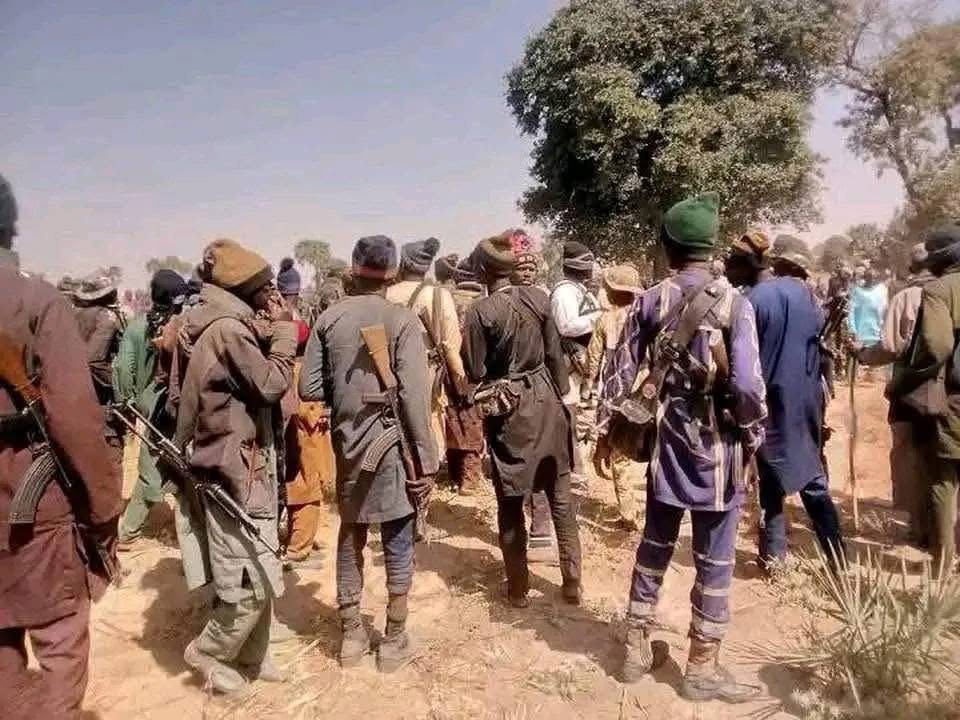
The echoes of the drums rolled out to celebrate the rescue of the 44 teachers and students, kidnapped from some schools in Oyo State, after 56 days in the bush, would surely be disrupted abruptly, with the divergent echoes of a fresh abduction, this time coming from Kogi State.
Reports indicate that the gunmen, struck on Tuesday at the Government Secondary School, Odo-Ekina, in Dekina Local Government Area of the state, abducting four students, the school principal and a National Examinations Council (NECO) ad hoc staff member.
Authorities of the Kogi State Police Command, who immediately unleashed their operatives in hot pursuit of the abductors, said the attack occurred at about 5:25 p.m. while the students were writing their NECO examination.
Saliu Oyiza Afusat, an Assistant Superintendent of Police (ASP) and spokesman of the command, said a combined team of police personnel and other security agencies has launched a search-and-rescue operation following the incident.
Informing that one of the students was actually rescued immediately, she said efforts were ongoing to secure the release of the remaining victims and apprehend the attackers, adding that Naziru Bello Kankarofi, the state Commissioner of Police, alongside the Brigade Commander and the State Security Adviser to the Governor, Commodore Jerry Omodara (Rtd), were already on the way to the scene for an on-the-spot assessment.

Oil prices are expected to go down now with the announcement of Donald Trump, US President that he will no longer impose a 20 percent “safe passage” fee on ships passing through the Strait of Hormuz.
The POTUS, hinged his reversal of the decision on the intervention from some Gulf countries, who pleaded with him not to toe the line due to the massive economic impact the decision would make on the region.
Indeed, oil prices had shot up immediately Trump announced the new levy on Monday while declaring the US ‘the guardians of the Hormuz strait,’ a measure which he said was to pay for the cost of guarding the volatile area in order keep supply of oil flowing.
Reports said that Gulf allies of the US worked frantically to get Trump on the phone in time to talk him out of the idea altogether, while a flurry of appeals came from Saudi Arabia, the United Arab Emirates, Bahrain and Qatar.
In response, the POTUS, posting on his Truth Social platform, wrote: “Based on highly productive conversations with Middle East leadership, I have decided to replace the 20% United States Reimbursement Fee with Trade and Investment Deals that the various Gulf States will be making into the United States.”
Trump, who said the investments would be “MASSIVE but, at the same time, extraordinarily good for them, and their future,” added that the deals would see factories, plants, and equipment pour into the US at “Historic levels.”
The Gulf nations have committed to invest trillions of dollars in the US, though it remains unclear how much of that they will actually spend over the next several years.
Meanwhile, the US continues to bomb Iran in what appears to be a resumption of active conflict between both countries, despite an ongoing roadmap to end the conflict.
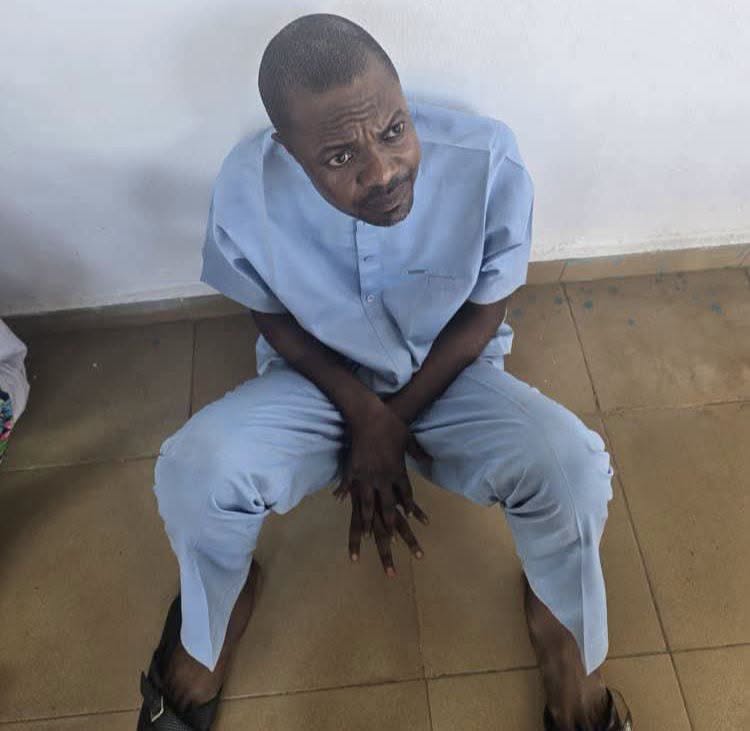
Reports say operatives of the Osun State Police Command, and those of the Department of State Services (DSS) had tracking the trail of Adeniyi Adeyemi, controversial Director General of the Presidential Foreign Intervention Promotion Council (PFIPC), for weeks, before he was eventually pulled out of his hole on Tuesday.
However, the duo, were said to have pulled back after failing to track him through his mobile phones, which he had reportedly switched off for about two days, making it difficult to locate him, leaving the stage for the members of the Police Intelligence Response Team (PI-RT) led by Moses Lohor, a Chief Superintendent of Police (CSP).
Lohor, said to have previously served as the Commander of the Anti-Kidnapping Squad of Osun State, and reported to have been involved in high-profile security operations and controversies, after taken over fielded his men to pick up signals from their well-oiled signal networks.
Regarded by many Osun residents as one of the key security officers who contributed significantly to the peace and stability enjoyed in Ilesa and other parts of the state during his tenure, he was said to have relied on his contacts before his transfer out of the state, said to have raised concerns from the public about the security situation he would be leaving behind.
His exit from the state was said to be hinged on an incident in 2024, in which he allegedly shot one Iyanda Alowonle, then Chairman of Osun State Motor Transport System, in the stomach at the police station in the state prompting an order for his arrest by then Inspector General of Police (IGP).
His effort was said to have paid off when he successfully tracked down the controversial PFIPC, boss, who was seen on Tuesday evening, in a shot video on social media undergoing interrogation, and eventually handed him over to Ibrahim Gotan, Commissioner of Police in the state.
The PUNCH quoted one of the sources as saying: “The arrest (of Adeyemi) took place on Tuesday morning by the IRT squad, who immediately moved him to Abuja. After he was arrested, he was taken to Ibadan and from there to Abuja.”



-

 News5 days ago
BREAKING: Mystery death! *Female student dies a day after arriving Umahi’s home!
-

 News5 days ago
Don’t jump to conclusion! *Umahi speaks on mysterious death of female students!
-

 News3 weeks ago
BREAKING: Court sentences Nigerien, two others to death over terrorism
-
 News2 weeks ago
BREAKING: EX-SSG mowed down by gunmen! *He resisted being kidnapped – driver
-

 News4 weeks ago
Two hours after Igboho’s ‘red-eyes’ to ‘Fulani’ leaders, gunmen free kidnap victims!
-

 News3 weeks ago
Abductors of Oyo teachers panicking, freedom coming for victims soon!
-
 News22 hours ago
BREAKING: Terrorists strikes another school! *Kidnap principal, students, NECO official!
-
 News3 weeks ago
Chicagogate: Nigerians return to court! *Move to stop Tinubu from 2027 polls