

News
ADC will restore security, empathy in governance of Anambra – Nwosu


Under the coming African Democratic Congress (ADC), Anambra State will not witness citizens being brutalised in the streets by officials of the state for any reason particularly on security issues or revenue collection, John Chuma Nwosu, the governorship candidate of the party, has said, maintaining that the government would rely on modern way of both seamlessly.
Nwosu who spoke at the inauguration of the John Chuma Nwosu Governorship Campaign Council (JCN-GCC), who described both the optics and loud complaints coming from the state daily in this regard promised a total change method adding that his administration would run on Smart Model, where the entire state would wired using hi-tech security architecture, not only to detect, but combat crimes with promptness and precision in a manner that would not be at variance with psyche of the people.

At the ceremony, which took place inside the conference room of the JCN Secretariat and campaign headquarters in Awka, the Anambra State capital at the weekend, the ADC candidate, emphasised that modern society had since moved away from the use of thugs and enforcers to brutalise citizens in whatever guise.
Tracking criminals and fighting crimes will be a function of hi-tech such as in modern societies where crimes could be detected in split-seconds through a network of alarm bells that would trigger off the relevant agencies that would move to check them within the same split-seconds.
The streets would be devoid of the eyesore optics of crudity where all manner of brutality are unleashed on citizens in the guise of fighting crimes, adding: “We will introduce the use of Artificial Intelligence (AI-enabled) security system that will run on face-recognition technology with a fully-equipped Command and Control (CAC) certre.”
Stating that the government would tackle issues of Security, Health, Education, Environment, Markets and Social Welfare (SHEEMS) Agenda, he said the administration would run with the mindset of empathy, emotional intelligence and consideration for the people, adding that building the human infrastructure would take precedent over the physical structures.
We cannot run a state where the people are separated from the government. We will concentrate on building the people so that they will become the driving force in building and enhancing those infrastructures. If you don’t build a society where people are sure of their next meal, no matter what you put in place as infrastructure, is likely to be destroyed by the same people. So, our strategy under the SHEEMS Agenda is to ensure a buoyant public structure, based on mutual trust.
“Our Anambra must be devoid of incentives for crimes by providing the people a sense of ownership of government. Government will not run on them and us basis. Achieving that will be the springboard for the quantum leap we envisage will happen in the next four years that our administration will last,” he said.
Healthcare would also take similar pattern of modernity by procuring hi-tech medical facilities, with focus on first-class assessable and affordable programmes anchored on Primary Health Care (PHC), complete with Emergency Medical and Transport Services (EMTS), he said.
Education would run basically on the STEM model of Science, Technology, Engineering and Mathematics – the current global prototype to equip the children of the state with the ability of grappling with modern developments, in addition to the current system, with the focus of standing out once again as national bests in the West African Examination Council (WAEC) and the National Education Council (NECO) examinations.
“We shall deliver a new infrastructural map for Anambra State with a solid Road Maintenance Department (RMD) similar to the PWD (Public Works Department) in compliance with the Anambra Integrated Development Strategy (ANIDS).” Recall that ANIDS was the template with which Peter Obi, former Governor of the state, achieved the feat of becoming the national best in the global programme called Millenium Development Goals (MDGs), for which he was invited to give a speech by the United Nations in 2014.”
In his Markets programme, Nwosu spoke ending the excessive taxing in the state rather than choking the people, stating: “To enhance enterprises and improve ease of doing business, we will ensure tax reduction and our means of Internally Generated Revenue (IGR) recovery will have human face. We shall deploy technology in revenue collection instead of the use of thugs.”
Social Welfare – the last in his robust programme, he talked extensively on empathy towards the poor in the society, stating that the state would come into the aide of “members of our state population, who are indigent, fall on hard times or face catastrophes, especially in housing assistance, food and nutrition charity healthcare, orphanage or indigent child support while providing supplementary security income for the aged.”







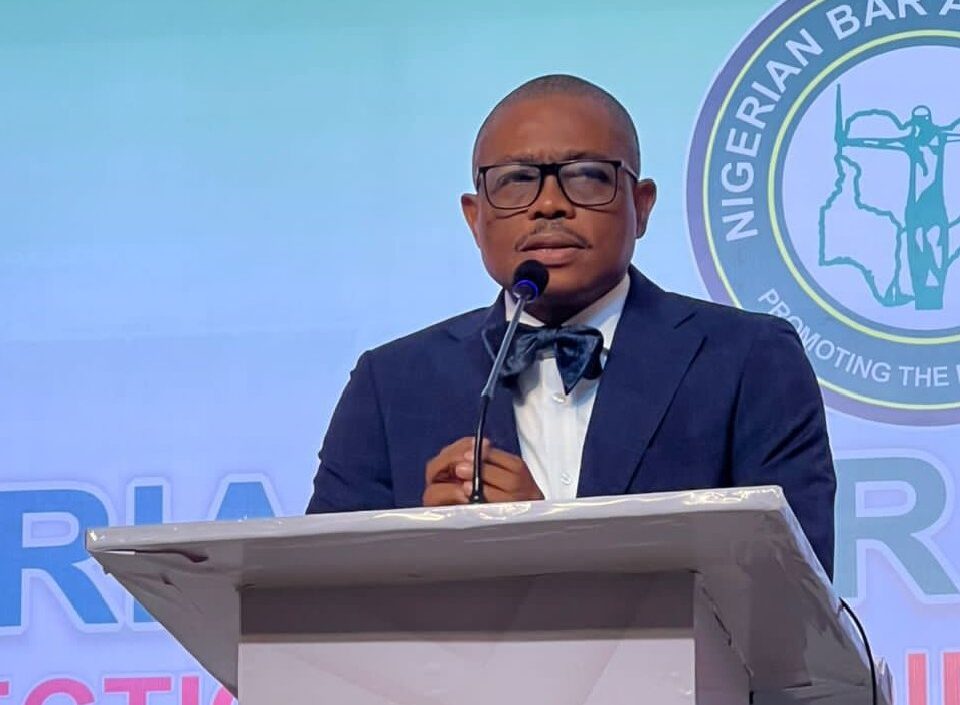
As the Nigerian Bar Association (NBA) prepares to elect its next set of national officers on Saturday, July 18, the process has been troubled by court battles, an unprecedented intervention from the office of the attorney-general of the federation, allegations of bias against the association’s leadership, and disputes over zoning arrangements.
This has turned what should have been a routine internal election into one of the most contested election processes in the NBA’s recent history.
With over 82,000 lawyers across 139 branches of the NBA eligible to vote, three senior advocates (SANs) running for the presidency, and legal challenges still pending hours before polls open, the outcome — whether it will be broadly accepted across the profession — remains genuinely uncertain.
HOW IT STARTED
The process for the 2026 election formally began at a national executive council meeting in Edo state on November 20, 2025, where a five-member Electoral Committee of the Nigerian Bar Association (ECNBA) was approved, chaired by Aham Ejelam, SAN, with Ibrahim Aliyu Nassarawa as secretary.
Section 10(1) of the NBA’s 2015 Constitution (amended 2025) establishes the ECNBA as an independent body that runs elections for the association’s national offices and for NBA representatives on the General Council of the Bar.
By June 18, the ECNBA had cleared 35 candidates to contest the various national offices, with three senior advocates emerging as presidential contenders: Olumuyiwa Akinboro of the Abuja branch, Oyinkansola Badejo-Okusanya (the only woman among recent presidential candidates) of the Lagos branch and Lateef Akangbe, also of Lagos.
COURT CASES/ZONING TENSIONS

Trouble surfaced early. On March 4, Gabriel Opayinka, judge of the Oyo state high court, granted an interim order restraining the NBA from taking further steps toward the election, and barring Afam Osigwe, NBA president, from constituting or supervising the ECNBA. The order came following a suit filed by four lawyers — Ibrahim Lawal, Raymond Oki, Omotan Olusola Ogunmodede and Chief Gabriel Ojo Adekunle Ijalana — challenging the legitimacy of the process. In the suit, the applicants contested the legitimacy of the electoral process and the role allegedly played by the NBA leadership in the composition of the ECNBA.
Also, Egbe Amofin O’odua, an association of lawyers of Yoruba extraction, has been pushing for Akinboro to be adopted as the sole western-zone candidate, arguing that he is the zone’s consensus choice.
On February 24, Y. S. Adekunle, the presiding judge, granted an interim injunction barring the NBA from recognising or processing nominations outside the Yoruba lawyers’ consensus candidate arrangement for the presidency.
CALLS FOR OSIGWE’S RESIGNATION
Weeks before the courts got involved, the dispute had already turned personal. At an NEC meeting in Maiduguri, Borno state, on February 5, Akinboro and Akangbe, candidates vying for the presidential office, accused Osigwe of bias. They alleged that the NBA president, while responding to concerns raised over campaign materials being distributed at the venue, declared he could not remain neutral in the election because he holds voting rights as a member. In a letter dated February 15 to the NBA board of trustees, the two candidates cited that remark, along with what they called a pattern of partisan conduct, as grounds to demand Osigwe’s immediate resignation.
AGF’S ‘INTERVENTION’
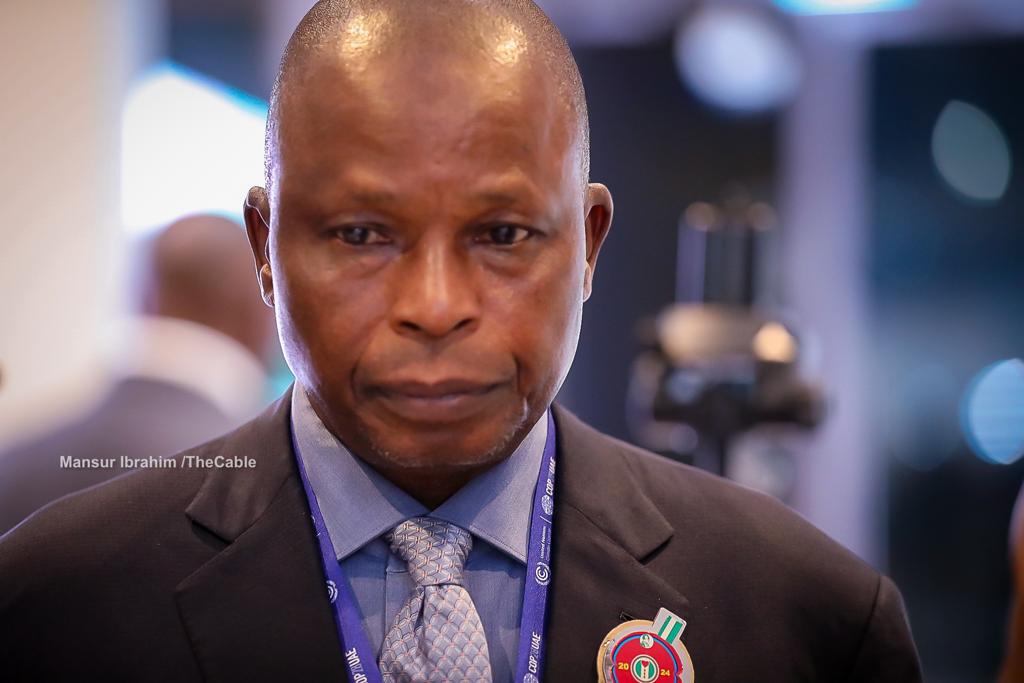
The dispute heightened after Lateef Fagbemi, attorney-general of the federation (AGF), allegedly issued a directive that the election be pushed from July into August. A document said to contain a sub-committee report and comments attributed to Fagbemi, which circulated online, reportedly went further by calling for the ECNBA to be disbanded, its election technology vendor replaced, a caretaker committee installed, NIN verification introduced, and even the NBA constitution altered to curtail universal suffrage.
However, Osigwe rejected the intervention outright. In a statement, he argued that only the NBA’s national executive council has constitutional power to alter or suspend the election, and described the alleged directives as unconstitutional and beyond the AGF’s authority.
The NBA also defended its election vendor and said its own risk assessment had found that introducing NIN verification at this stage could disrupt the vote, partly because the national identity database might not handle the surge in authentication requests.
As tensions built, a document falsely claiming the election had been suspended began circulating and had to be publicly debunked by the ECNBA, which said it had no connection to the AGF’s office.
On July 14, the court of appeal, Ibadan division, set aside Opayinka’s interim order, which restrained the association from taking further steps towards the election.
In a unanimous judgement, a three-member panel of the appellate court held that the Oyo state high court never had jurisdiction to hear it in the first place. The appellate court held that jurisdiction is foundational to any judicial proceeding and that everything built on a jurisdiction-less order, including the injunction that had restrained the ECNBA and Osigwe, was void. The appeal had been brought by ECNBA chairman Aham Ejelam and other committee members against the four lawyers who filed the original suit, as well as against Osigwe and others.
WHERE THINGS STAND
With voting just one day away, the ECNBA has confirmed a final register of 82,213 eligible voters across 139 branches, published on July 10. The committee has repeatedly said the July 18 date is fixed and that there is no legal barrier to proceeding and said election observers, including the Department of State Services (DSS), the Nigeria Police Force, Economic and Financial Crimes Commission (EFCC) and the Independent Corrupt Practices and Other Related Offences Commission (ICPC), are expected to monitor the process from a central control room at the NBA’s Abuja secretariat.
Voting is due to run electronically from midnight to 11:59 p.m. on Saturday, with results expected Sunday.
Culled from TheCable

By Ken Harries Esq
“Vision is the art of seeing what is invisible to others,” observed Jonathan Swift. Every generation encounters leaders who solve today’s problems, but far fewer produce leaders who design tomorrow’s possibilities. The true measure of visionary leadership lies in the ability to recognise opportunities long before they become obvious, to imagine possibilities where others see only limitations, and to lay foundations whose full significance may not be appreciated until years later. History’s greatest builders are remembered not merely for the projects they completed, but for the future they envisioned before anyone else believed it was possible.
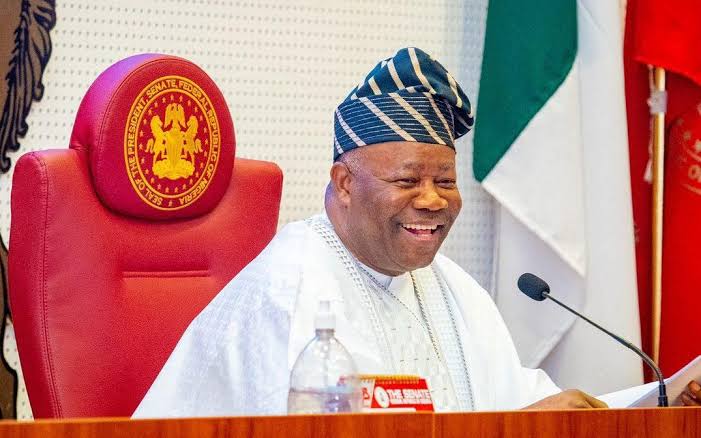
The true measure of visionary leadership lies not in the number of projects conceived, but in the ability to understand how seemingly unrelated sectors of the economy can reinforce one another to produce lasting prosperity. That was the deeper story behind Senator Godswill Akpabio’s presentation at the 2nd South South Economic Summit in Asaba in April 2012.
Many remember the address for its most celebrated proposal—the Ibom Deep Seaport. Yet the speech revealed something far more profound: a philosophy of development that viewed infrastructure not as isolated monuments, but as interconnected instruments of economic prosperity and social transformation.
That philosophy permeated virtually every aspect of the presentation. It was evident in aviation. At a time when aircraft maintenance in Nigeria depended almost entirely on foreign facilities, Akpabio announced plans for what he described as West Africa’s first Maintenance, Repair and Overhaul (MRO) facility alongside the Akwa Ibom International Airport. Once again, the objective was not merely to construct another public facility. It was to retain within Nigeria the economic value, technical expertise, and skilled employment that routinely left the country whenever aircraft were serviced abroad.
Long before expressions such as local value addition, industrial self-reliance, and reducing capital flight became part of mainstream policy discussions across Africa, those ideas had already found practical expression in the development strategy he articulated in Asaba.
Even his brief remarks on state policing now possess remarkable contemporary relevance. Years before today’s broad national consensus that Nigeria’s security architecture requires fundamental reform, he argued that governors could not reasonably be held fully accountable for security while operational control remained centralised. Over time, national debate has steadily moved closer to the position he advanced.
Vision, however, should never be mistaken for perfection. Every transformative project encounters obstacles—financing constraints, regulatory hurdles, political transitions, implementation delays, and public controversy. The Ibom Deep Seaport has experienced each of these realities. When Governor Udom Emmanuel renamed the project from the Ibaka Deep Seaport to the Ibom Deep Seaport, many perceived the change as accompanying a relocation of the proposed site from Ibaka in Mbo Local Government Area to a coastal location in Ibeno Local Government Area. Government maintained that the final location emerged from rigorous technical evaluation, but the episode illustrated how even the most carefully conceived projects can become entangled in local sensitivities and competing interests.
Yet the endurance of the underlying idea is precisely what makes the original vision remarkable.
Governments changed. Political actors came and went. Debates arose and subsided. But the central economic concept endured. The Federal Executive Council approved the project’s business case in 2015, and successive administrations have continued to advance it under the Ibom Deep Seaport name. Good ideas possess a resilience that often outlives the administrations that first conceive them.
Therein lies perhaps the greatest lesson of the Asaba address. Vision is not measured by how loudly it is proclaimed, but by how far ahead it sees. History’s greatest builders were rarely those who merely responded to the demands of their own generation and time. They were those who imagined opportunities others could not yet see and laid foundations whose full value would only be appreciated years later.
Nigeria’s development story will ultimately belong not only to those who completed great projects, but also to those who first conceived them. The true legacy of public leadership is not merely the structures that rise from the ground, but the ideas that continue to shape a nation’s future long after the speeches have ended and the applause has faded. Judged by that standard, the Akpabio’s Asaba address remains an enduring lesson in visionary leadership.
•Ken Harries Esq is an Abuja based development Communication Strategist
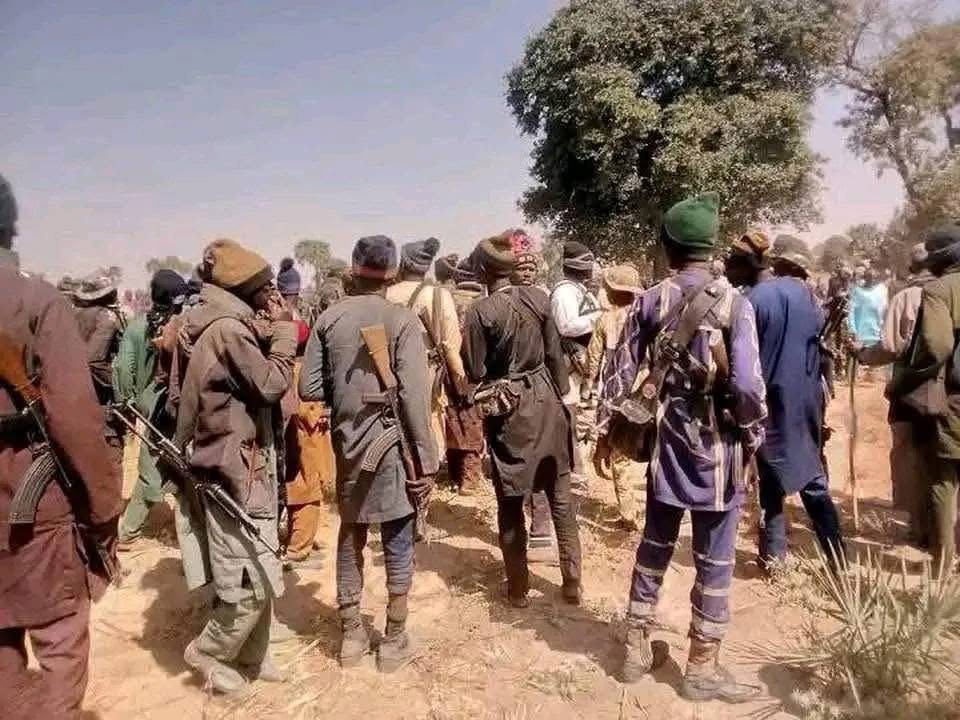
The echoes of the drums rolled out to celebrate the rescue of the 44 teachers and students, kidnapped from some schools in Oyo State, after 56 days in the bush, would surely be disrupted abruptly, with the divergent echoes of a fresh abduction, this time coming from Kogi State.
Reports indicate that the gunmen, struck on Tuesday at the Government Secondary School, Odo-Ekina, in Dekina Local Government Area of the state, abducting four students, the school principal and a National Examinations Council (NECO) ad hoc staff member.
Authorities of the Kogi State Police Command, who immediately unleashed their operatives in hot pursuit of the abductors, said the attack occurred at about 5:25 p.m. while the students were writing their NECO examination.
Saliu Oyiza Afusat, an Assistant Superintendent of Police (ASP) and spokesman of the command, said a combined team of police personnel and other security agencies has launched a search-and-rescue operation following the incident.
Informing that one of the students was actually rescued immediately, she said efforts were ongoing to secure the release of the remaining victims and apprehend the attackers, adding that Naziru Bello Kankarofi, the state Commissioner of Police, alongside the Brigade Commander and the State Security Adviser to the Governor, Commodore Jerry Omodara (Rtd), were already on the way to the scene for an on-the-spot assessment.



-

 News6 days ago
BREAKING: Mystery death! *Female student dies a day after arriving Umahi’s home!
-

 News6 days ago
Don’t jump to conclusion! *Umahi speaks on mysterious death of female students!
-

 News3 weeks ago
BREAKING: Court sentences Nigerien, two others to death over terrorism
-
 News2 weeks ago
BREAKING: EX-SSG mowed down by gunmen! *He resisted being kidnapped – driver
-

 News4 weeks ago
Two hours after Igboho’s ‘red-eyes’ to ‘Fulani’ leaders, gunmen free kidnap victims!
-

 News4 weeks ago
Abductors of Oyo teachers panicking, freedom coming for victims soon!
-
 News2 days ago
BREAKING: Terrorists strikes another school! *Kidnap principal, students, NECO official!
-
 News4 weeks ago
Chicagogate: Nigerians return to court! *Move to stop Tinubu from 2027 polls