

News
Visa restriction: We didn’t target Nigeria because of BRICS – US


Nigeria is not being punished with visa restrictions for its association with BRICS – the group of major emerging national economies comprising of Brazil, Russia, India, China, and South Africa, with aims to strengthen economic, political, and social cooperation among its members, and whose activities Washington has become wary of.
Donald Trump, US President had vowed to punish countries associated with the outfit, which also has as one of its agenda to move away from the US dollar as medium of trade among its members, a move that is likely to have impact on the country’s economy.

On the heels of the threat by the POTUS, at the time the outfit was holding a meeting in Brazil, with Nigeria, still not a member in attendance, the US rolled out a new immigration policy limiting most non-immigrant and non-diplomatic visas issued to the country’s citizens to single-entry and a three-month validity.
The US in a statement by the Department of State on Tuesday said the updated policy, which took effect on July 8, 2025, applies to new visa issuances and will not affect visas granted before that date.
“U.S. visa criteria and standards are designed to protect the integrity of U.S. immigration systems. These standards are based on global technical and security benchmarks. The U.S. Mission is working with the Government of Nigeria to ensure that Nigeria can meet the criteria.”
Further explaining that the new policy was subject to continuous review and could be adjusted at any time, including changes to the number of permitted entries and visa validity periods, the move, was restricted to only non-immigrant and non-diplomatic categories and would be applied to most short-term travelers for business, tourism, and study, which would now receive visas valid for just three months and for one entry into the US.
Amid the dust the development raised the US mission in Nigeria on Friday said the changes were only part of a global effort to align visa policies with security priorities, not a country-specific decision.
“This reduction is not the result of any nation’s stance on third-country deportees, introduction of e-visa policies, or affiliations with groups like BRICS. The reduction in validity is part of an ongoing global review of the use of U.S. visas by other countries using technical and security benchmarks to safeguard U.S. immigration systems.
“We value our longstanding partnership with Nigeria and remain committed to working closely with the Nigerian public and government officials to help them meet those criteria and benchmarks, thereby ensuring safe, lawful, and mutually beneficial travel between our nations.”
Since his return to power in January 2024, Trump had pursued his strict immigration policy, a major leg of his campaign with a lot of vigour, which has led to a lot of deportations and tightening of the noose on foreigners entering the country and even those already residing there.
Diplomatic sources had said Trump has been putting pressure on many countries to serve as temporary homes for asylum seekers until their cases are treated, and this usually takes up to seven years.
A few countries have already received some deportees. However, Nigeria has refused to be part of the arrangement. Discussions took place but were unsuccessful owing to Nigeria’s unwillingness to accept non-citizens, many of whom had a number of years left to finalise their asylum applications.
The sources said Nigeria’s refusal to accept asylum seekers from the United States is partly responsible for the recent visa restrictions.







The echoes of the drums rolled out to celebrate the rescue of the 44 teachers and students, kidnapped from some schools in Oyo State, after 56 days in the bush, would surely be disrupted abruptly, with the divergent echoes of a fresh abduction, this time coming from Kogi State.
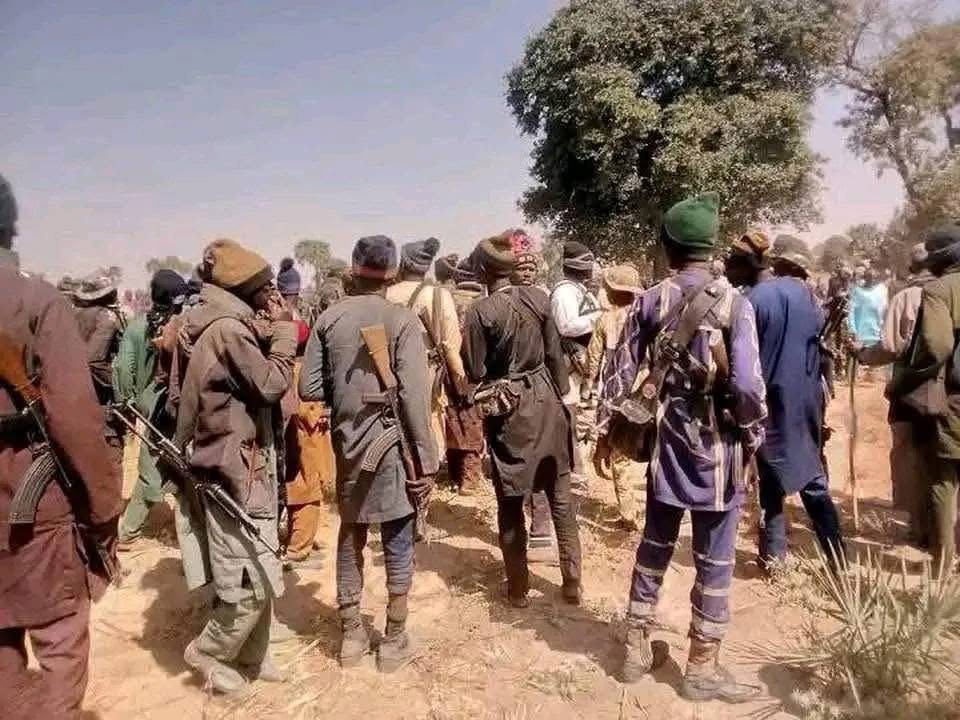
Reports indicate that the gunmen, struck on Tuesday at the Government Secondary School, Odo-Ekina, in Dekina Local Government Area of the state, abducting four students, the school principal and a National Examinations Council (NECO) ad hoc staff member.
Authorities of the Kogi State Police Command, who immediately unleashed their operatives in hot pursuit of the abductors, said the attack occurred at about 5:25 p.m. while the students were writing their NECO examination.
Saliu Oyiza Afusat, an Assistant Superintendent of Police (ASP) and spokesman of the command, said a combined team of police personnel and other security agencies has launched a search-and-rescue operation following the incident.
Informing that one of the students was actually rescued immediately, she said efforts were ongoing to secure the release of the remaining victims and apprehend the attackers, adding that Naziru Bello Kankarofi, the state Commissioner of Police, alongside the Brigade Commander and the State Security Adviser to the Governor, Commodore Jerry Omodara (Rtd), were already on the way to the scene for an on-the-spot assessment.

Oil prices are expected to go down now with the announcement of Donald Trump, US President that he will no longer impose a 20 percent “safe passage” fee on ships passing through the Strait of Hormuz.
The POTUS, hinged his reversal of the decision on the intervention from some Gulf countries, who pleaded with him not to toe the line due to the massive economic impact the decision would make on the region.
Indeed, oil prices had shot up immediately Trump announced the new levy on Monday while declaring the US ‘the guardians of the Hormuz strait,’ a measure which he said was to pay for the cost of guarding the volatile area in order keep supply of oil flowing.
Reports said that Gulf allies of the US worked frantically to get Trump on the phone in time to talk him out of the idea altogether, while a flurry of appeals came from Saudi Arabia, the United Arab Emirates, Bahrain and Qatar.
In response, the POTUS, posting on his Truth Social platform, wrote: “Based on highly productive conversations with Middle East leadership, I have decided to replace the 20% United States Reimbursement Fee with Trade and Investment Deals that the various Gulf States will be making into the United States.”
Trump, who said the investments would be “MASSIVE but, at the same time, extraordinarily good for them, and their future,” added that the deals would see factories, plants, and equipment pour into the US at “Historic levels.”
The Gulf nations have committed to invest trillions of dollars in the US, though it remains unclear how much of that they will actually spend over the next several years.
Meanwhile, the US continues to bomb Iran in what appears to be a resumption of active conflict between both countries, despite an ongoing roadmap to end the conflict.
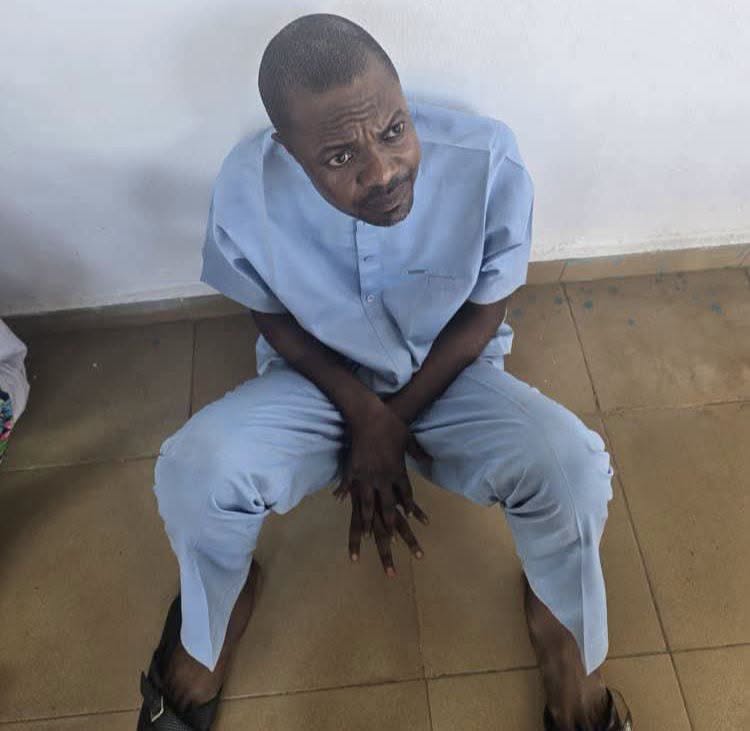
Reports say operatives of the Osun State Police Command, and those of the Department of State Services (DSS) had tracking the trail of Adeniyi Adeyemi, controversial Director General of the Presidential Foreign Intervention Promotion Council (PFIPC), for weeks, before he was eventually pulled out of his hole on Tuesday.
However, the duo, were said to have pulled back after failing to track him through his mobile phones, which he had reportedly switched off for about two days, making it difficult to locate him, leaving the stage for the members of the Police Intelligence Response Team (PI-RT) led by Moses Lohor, a Chief Superintendent of Police (CSP).
Lohor, said to have previously served as the Commander of the Anti-Kidnapping Squad of Osun State, and reported to have been involved in high-profile security operations and controversies, after taken over fielded his men to pick up signals from their well-oiled signal networks.
Regarded by many Osun residents as one of the key security officers who contributed significantly to the peace and stability enjoyed in Ilesa and other parts of the state during his tenure, he was said to have relied on his contacts before his transfer out of the state, said to have raised concerns from the public about the security situation he would be leaving behind.
His exit from the state was said to be hinged on an incident in 2024, in which he allegedly shot one Iyanda Alowonle, then Chairman of Osun State Motor Transport System, in the stomach at the police station in the state prompting an order for his arrest by then Inspector General of Police (IGP).
His effort was said to have paid off when he successfully tracked down the controversial PFIPC, boss, who was seen on Tuesday evening, in a shot video on social media undergoing interrogation, and eventually handed him over to Ibrahim Gotan, Commissioner of Police in the state.
The PUNCH quoted one of the sources as saying: “The arrest (of Adeyemi) took place on Tuesday morning by the IRT squad, who immediately moved him to Abuja. After he was arrested, he was taken to Ibadan and from there to Abuja.”



-
 News5 days ago
BREAKING: Mystery death! *Female student dies a day after arriving Umahi’s home!
-

 News5 days ago
Don’t jump to conclusion! *Umahi speaks on mysterious death of female students!
-

 News3 weeks ago
BREAKING: Court sentences Nigerien, two others to death over terrorism
-
 News2 weeks ago
BREAKING: EX-SSG mowed down by gunmen! *He resisted being kidnapped – driver
-

 News4 weeks ago
Two hours after Igboho’s ‘red-eyes’ to ‘Fulani’ leaders, gunmen free kidnap victims!
-

 News3 weeks ago
Abductors of Oyo teachers panicking, freedom coming for victims soon!
-
 News1 day ago
BREAKING: Terrorists strikes another school! *Kidnap principal, students, NECO official!
-
 News3 weeks ago
Chicagogate: Nigerians return to court! *Move to stop Tinubu from 2027 polls