

News
Nwosu comes with fresh impetus, as ADC coalition tsunami hits Anambra


By Sunny Igboanugo
One of the oft-asked questions regarding the mess, critics accuse Charles Chukwuma Soludo of making in and of Anambra, is what is the alternative? It is a response that comes from the mindset of seeing the current political trajectory in state as one in a quandary.

Well, that question may not be necessary anymore because a tsunami is in the offing. The tempest about to sweep through the streets is already rumbling at the bottom of the sea preparatory to unleashing its full strength with an echo that would reverberate far beyond the state to the national level and even beyond in tow.
Many people had come to the conclusion that in their political choices, they had actually sold the dog to buy the monkey in the state, by electing Soludo governor in 2021 as replacement for Willie Obiano, his predecessor, whose underwhelming performance could only be captured in that symbolic picture of the obviously-rattled and confused lone man sitting in the Abuja office of the Economic and Financial Crimes Commission (EFCC), with eyes darting in different directions like a frightened rat captured by a trap.
No doubt many had thought that Soludo would bring the breath of fresh air from the preceding eight years of binges, revellings and sheer debauchery in the state. They had believed in the flowery tales of instant transformation of that enclave in the manner never seen before in Nigeria and even in black Africa.
They could not wait to see the Anambra version of the Burj Khalifa, or something even more remarkable than the world’s tallest building, which today, symbolises Dubai as the biggest thing to happen to the world since the days of Egyptian pyramids.
How would anyone blame them? This was their son, who had hitherto crossed the proverbial seven wildernesses and seven seas. They saw him once play at the big stage, hobnobbing with the high and mighty and they believed as one in that crowd the anointing of mega tales associated to them would reach the state.
Is it every day that the land sprouts out the Governor of the Central Bank of Nigeria? How many of their neighbours have been so privileged? So, they believed him when he said he would install air-conditioners in the streets of Awka, Onitsha and Nnewi and line the lands of Ekwulobia, Ihiala and Nteje with pure gold.
They heard him say that these towns under him would mimic and replicate the Silicon Valley, the United States hub housing all manner of global industrial icons and that everywhere would become a galaxy of glittering stars with breathtaking modern edifices dotting every part of Anambra landscape. They heard all these and shouted in unison – voila! – the Dubai-Taiwan of Africa is here.
But it is more than three years hence and counting and what did the people see? Like the proverbial shell of the snail asked where the mother is – nowhere to be found. No Burj Khalifa! No Silicon Valley! No glittering skies. The Anambra Government House, he is showcasing – where the commonwealth of the people is supposedly sunk, is not even his idea.
It was a project conceived as far back as the days of Chukwuemeka Ezeife, the first civilian governor of the state. It was that government that did the design and ancillary spade-works, before it was awarded by his successors. In fact, it is said that the late Chinwoke Mbadinuju had even done more than 40 per cent of the construction work in the complex, before he was kicked out of office.
He not only did the adjourning environment, which he named the Ekwueme Square, after Alex Ekwueme, former Vice President of Nigeria and his former boss, but the dual carriageway to the complex. While Peter Obi, characteristically did not look in that direction, Chris Ngige and Obiano, could also have added one brick here and rod there.
Yet Soludo carries on and prances about as if it is his exclusive. Daily, he rolls out the drums to celebrate it. Indeed, Soludo’s exclusive idea might not go beyond the Ekwulobia flyover. But that project is not even up to the standard of the Agege Bridge in Lagos. There are also a sprinkle of other local roads here and there.
The question in most lips, remains, is this the limit of all his tall idea? Is this all the people would get from showcasing a former CBN governor after spending four years at the helm of affairs in a state like Anambra? Where is the record of the state maintaining the first position in Education in Nigeria? How come that record has now sunk to the extent that the state is struggling at the bottom ladder? Even the Uga-Amawbia road, the most ambitious of them all, count for nothing in terms of his promises and expectations. In four years?
But had he stopped at that dismal outing in terms of not meeting the terms of agreement with his employers, had he stopped at scoring zero on the Dubai-Taiwan delivery, there might be some leg-room to negotiate the obvious catastrophe. But the monumental failure has since been accentuated with bad politics. As governor, Soludo ought to naturally assume the political leadership of the state. In other words, it ought to be his remit to point the political direction to the people.
Now, that is where the disaster has become more evident. Out of sheer selfishness and personal survival the governor has delved into a most dangerous political hara-kiri. His gambit to drag the state into the APC – a political Golgotha akin to handing the people over to be crucified permanently on the cross by their sworn enemies.
The highpoint of that posturing was the recent endorsement of President Bola Tinubu for a second term in office in 2027 – a unilateral decision taken by himself and perhaps the coterie of hangers-on within his circle – with neither consultation now approval with the people. Not only that APC from the days of Muhammadu Buhari, its first President was an anathema to Anambra people, who had rejected it from the outset but that Tinubu’s twin actions of handing the South East the short end of the stick in national affairs and his disastrous performance in office, made matters all the worse.
Indeed, not a few found Soludo’s fawning and grovelling around Tinubu during his official visit to Anambra in May, not only completely distasteful but the endorsement offer, utterly gutting and nauseating. What is more? The governor’s gesture is seen as not out of conviction, but totally personal, propelled out of fear of losing the second term in office.

The meaning is that he simply offered the people on a slaughter slab to clearly demonstrable sworn enemies just to preserve himself and his political future, exclusive of their collective interest. This not only amounts to a cowardly act, but a new low. Anambra political trajectory is known for resistance. His predecessors had displayed uncommon bravery and courage while facing similar threats with Chris Ngige and Obi as demonstrable examples.
This obvious betrayal at the political front is not the final blow but the major push! Now ndi-Anambra have risen. The swords are out, unsheathed from the scabbards for what pundits say is going to be a never-seen-before political battle. The battle-cries are becoming louder by the day. Stop him now! Soludo must go! Down APC! Down Soludo! Two sides of the same coin! They not only ring in the heart of the people, but in the streets, the markets and the homes.
Before the new turn of political events, the state had found itself in the dilemma of either-or. For obvious reasons, many pundits saw the battle for the November 8 governorship election in the state as a choice limited between either Soludo or APC’s Nicholas Ukachukwu. It was supposed to be a fait accompli situation.
But enter the African Democratic Congress (ADC)! Since the party was mentioned as the choice for the proposed national coalition of political parties, the nickel dropped. It has now become the new destination for many politicians in the state looking for escape route from the asphyxiating political firmament currently prevalent not only in the state, but across Nigeria.
Enter John Chumah Nwosu! He is the new name reverberating across the entire political spectrum today – the new kid on the block – the arrowhead and beneficiary of the new momentum. An Information Communication Technology (ICT) guru, Nwosu, a native of Oduda, Newichi, Nnewi, and the Founder and Chief Executive Officer of Jetlink Group Limited, appears to come fully-packed.
Urbane, unobtrusive and soft-spoken, he is currently gathering the arsenal to launch a major political battle in the state billed to commence in few weeks from now. His intention is to liberate Anambra from what he calls Soludo’s years of inertia, decked in empty promises. Listening to him unpack his package gives the impression of a man planning to lead a major revolution.
The agenda of his government, he told WhirlwindNews, would be erected on the foundation of what he calls SHEEEMS – Security, Health, Education, Economy, Enterprise, Market and Social Welfare. The focus, he says would be on infrastructure, including a rail-line for the Onitsha-Nnewi-Awka axis of the state, fair taxation and business-friendly environment, that would focus on a balance of modern and smart method of taxation and compassion for the peoples economic survival.
Hear him: “I believe in the power of good governance. I know that, with the right leadership, Anambra can rise to greater heights and become a beacon of hope and progress, not just for the South East but for all of Nigeria. My vision is to provide a government that is grounded in equity, efficiency, and empathy – one that prioritizes the wellbeing of its citizens above all else.
“This is more than a political aspiration. It is a heartfelt call to service for my people. I envision a government that prioritises the grassroots, one that brings security, development, and prosperity to every corner of Anambra. Together, we can create a future where opportunities are endless and the lives of our people are uplifted.”
Political talks? May be, may be not! But the more important dimension is that Anambra people no longer have a fait accompli situation handed to them in either choosing from a Soludo or the APC, considered two sides of a badly-damaged coin. They now have a choice in a third force – the ADC – in Nwosu. That in itself has become an elixir to the suffocating political firmament in the state.
In fact, the revolution many envisage might happen in Nigeria in 2027, should the coalition politicians are putting together succeed, is envisioned to commence with the Anambra election. This is more so, with Peter Obi, former governor of the state coming into the picture.
It is a big boost that the Labour Party (LP) candidate, who has become one of the biggest events in Nigeria’s history, since breaking into the scene with his monstrous political movement, and becoming one of the biggest names in today’s politics, is playing a major role in that coalition arrangement.
In fact, with the LP, which ought to be the biggest political force in the state completely out of the way, having been relegated to the background due to unending crises pummelling it from all sides, the fortunes of the ADC is predictable. It simply provided the succour to those who could not stand the hitherto syndicate in the state.
That obviously accounts for the vibe across informed political circles. There are talks that Agu Awka, the seat of power in the state is in panic. Officials, hitherto haughty shoulder-raising are said to have switched into a jittery mode graduating int frenzy as they attempt to fashion out a credible response to the political behemoth welling up against them.
As the threat of an abrupt end to the tenancy at that magnificent edifice in Awka he has just completed, becomes real, his traducers have dug in. They have kept up the pressure, reminding the people what true leadership truly looks like and what they are missing in the state. They cite the neighbouring Abia for instance.
Now hear this: “Two governors, same region. One a former Managing Director of bank, decided to convert a government house built by his predecessor into a hotel because he deemed it too luxurious and costly to maintain in line with cost, value and responsible governance. The other governor, a Professor of Finance and former Governor of the Central Bank, made it a priority to build a brand-new extravagant government house – and even held a lavish commissioning ceremony to unveil it.
“When faced with the same issues, they made completely different choices. This is why educational qualification should not be the only basis for selecting leaders…True leadership is about values, vision and the willingness to put people above personal legacy.” Does this sound familiar? Well, that is the new message today.
Of course, given the nation’s political experience, especially in recent years, those plotting the impending tsunami against Soludo confess the task ahead would not be a walk in the park. They know there are still many barriers to destroy and many hurdles to scale over. But many of them are battle-tested, old political war-horses.
Will the earthquake happen? Big question. What is sure, however, is as all eyes focus on Anambra once again and as the storms gather with the ADC train continuing to garner the momentum, while speeding through the rails, not a few people in the state will breathe better with the new opportunity in view.
Who would blame them if they permit themselves a few drinks, even if they may not yet call the party? After all, have they not seen enough?









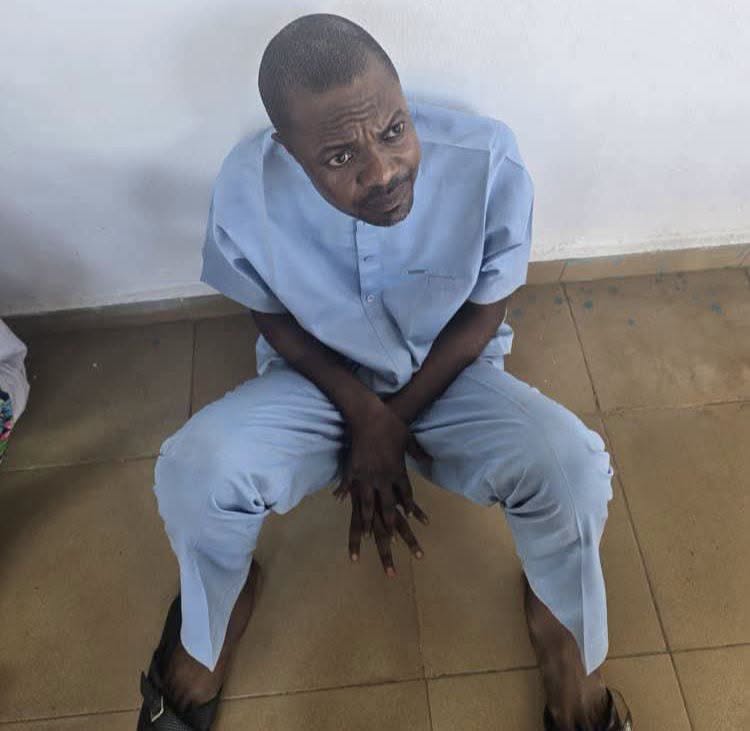
Hours after Justice Mohammed Umar of the Federal High Court, Abuja, ordered issued a bench warrant for the arrest Adeniyi Adeyemi, the controversial Director General of the Presidential Foreign Intervention Promotion Council (PFIPC), is currently in the custody police authorities.
Pictures and videos of embattled PFIPC boss being questioned in what appeared an interrogation session, surfaced on social media on Tuesday evening, with few details still sketchy on whether the police actually hunted him down or he surrendered himself.
Latest information, indicate that he is currently in the custody of the Osun State Police Command, according to a report by Channels Television, who confirmed that he has been taken in.
The order came on the prompting of Wisdom Madaki, the police lawyer after Adeyemi failed to appear in court to take his plea before on an eight-count charge marked FHC/ABJ/CR/562/2025, which relates to forgery, fraud and impersonation.
The court took the decision despite the spirited efforts by Genesis Francis, Adeyemi’s lawyer to mitigate the situation when he told Umar: “The defendant is afraid for his life. He has to be alive to be able to face trial. They have been looking for him even without an order of court.”
Regardless, the judge, while brushing aside the defence, said he was minded to accede to the application for the issuance of a warrant of arrest against the defendant, noting since case was filed on November 27, 2025, with proceedings not commencing until December 4, 2025, Adeyemi did not appear before the court more than once.
“Since then, he has failed to appear before this court on four consecutive dates,” he said, while mandating security agencies to arrest and produce the embattled PFIPC boss before the court on September 30 for arraignment.
During trial, witnesses including Femi Gbajabiamila, Chief of Staff (CoS) to the President; Paul Emmanuel; Jeremiah Imoukhede; and Ituah Sylvester, are billed to testify for the prosecution alongside the Office of the Accountant General of the Federation (OAGF), Akimbo Shola and Adamu Balongu, as well as a Deputy Superintendent of Police.
The order is coming on the heels of Adeyemi’s outcry that his life was in danger, while debunking the allegation that he was a fugitive running away from the law, saying he would appear in court once he had assurance that he would be protected from those tracking him in attempts to take his life.
A guest of Politics Today, a public affairs programme on Channels Television, Adeyemi, had told his host on Monday: “I’m ready to show my face. I’m not hiding. I’m only fearing for my life because I have it on good authority that my life is in danger. There have been several attempts on my life,” Adeyemi added.
He also maintained his allegation that he paid N400 million through a proxy to President Tinubu’s Chief of Staff, Gbajabiamila, to secure his appointment as DG of the disputed council. I’m ready to show my face. I’m not hiding. I’m only fearing for my life because I have it on good authority that my life is in danger. There have been several attempts on my life.”
An interim police investigation report had exposed how the defendant allegedly forged appointment letters and official documents to create the impression that the PFIPC was a legitimate federal government agency.
Police disclosed that the investigation was initiated after the Office of the Chief of Staff to the President petitioned the Inspector-General of Police (IGP) on October 17, 2025, over the activities of individuals allegedly forging official appointment letters purportedly issued from the office.
The petition added that preliminary findings showed the forged documents contained falsified signatures, reference numbers, official seals, and the Nigerian Coat of Arms, and that they were allegedly used to appoint individuals into the non-existent PFIPC.
Adeyemi, who was identified as the principal suspect, allegedly presented himself as the DG of the council and operated from an office within the Federal Secretariat Complex, Phase III, Abuja.
One of those allegedly linked to the fraud, Dolapo Babatunde Tanimola, was said to have died in a fire incident at a hotel in Abuja.
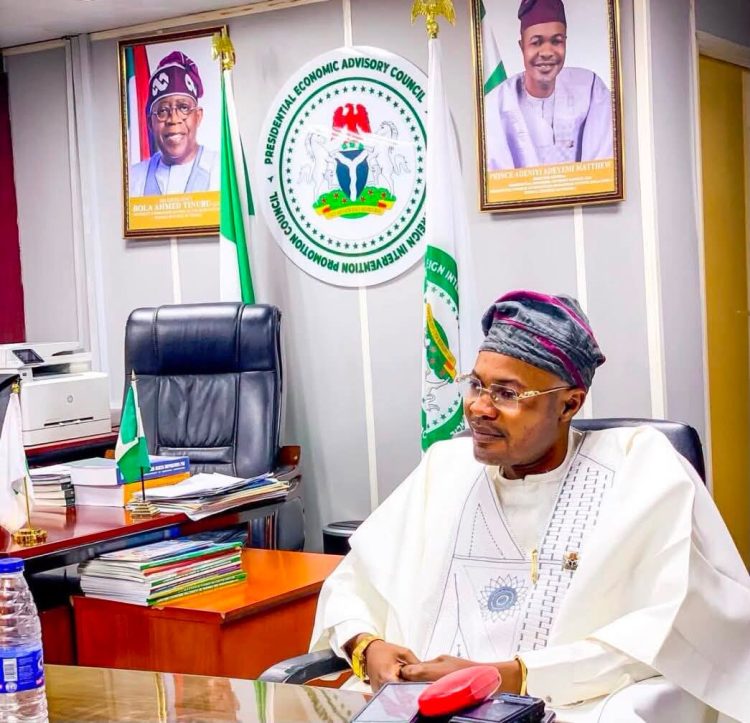
Justice Mohammed Umar of the Federal High Court, Abuja, on Tuesday, issued a bench warrant for the arrest of Adeniyi Adeyemi, controversial Director-General (DG) of an alleged “non-existent,” Presidential Foreign Investment Promotion Council (PFIPC).
The order came on the prompting of Wisdom Madaki, the police lawyer after Adeyemi failed to appear in court to take his plea before on an eight-count charge marked FHC/ABJ/CR/562/2025, which relates to forgery, fraud and impersonation.
The court took the decision despite the spirited efforts by Genesis Francis, Adeyemi’s lawyer to mitigate the situation when he told Umar: “The defendant is afraid for his life. He has to be alive to be able to face trial. They have been looking for him even without an order of court.”
Regardless, the judge, while brushing aside the defence, said he was minded to accede to the application for the issuance of a warrant of arrest against the defendant, noting since case was filed on November 27, 2025, with proceedings not commencing until December 4, 2025, Adeyemi did not appear before the court more than once.
“Since then, he has failed to appear before this court on four consecutive dates,” he said, while mandating security agencies to arrest and produce the embattled PFIPC boss before the court on September 30 for arraignment.
During trial, witnesses including Femi Gbajabiamila, Chief of Staff (CoS) to the President; Paul Emmanuel; Jeremiah Imoukhede; and Ituah Sylvester, are billed to testify for the prosecution alongside the Office of the Accountant General of the Federation (OAGF), Akimbo Shola and Adamu Balongu, as well as a Deputy Superintendent of Police.
The order is coming on the heels of Adeyemi’s outcry that his life was in danger, while debunking the allegation that he was a fugitive running away from the law, saying he would appear in court once he had assurance that he would be protected from those tracking him in attempts to take his life.
A guest of Politics Today, a public affairs programme on Channels Television, Adeyemi, had told his host on Monday: “I’m ready to show my face. I’m not hiding. I’m only fearing for my life because I have it on good authority that my life is in danger. There have been several attempts on my life,” Adeyemi added.
He also maintained his allegation that he paid N400 million through a proxy to President Tinubu’s Chief of Staff, Gbajabiamila, to secure his appointment as DG of the disputed council. I’m ready to show my face. I’m not hiding. I’m only fearing for my life because I have it on good authority that my life is in danger. There have been several attempts on my life.”
An interim police investigation report had exposed how the defendant allegedly forged appointment letters and official documents to create the impression that the PFIPC was a legitimate federal government agency.
Police disclosed that the investigation was initiated after the Office of the Chief of Staff to the President petitioned the Inspector-General of Police (IGP) on October 17, 2025, over the activities of individuals allegedly forging official appointment letters purportedly issued from the office.
The petition added that preliminary findings showed the forged documents contained falsified signatures, reference numbers, official seals, and the Nigerian Coat of Arms, and that they were allegedly used to appoint individuals into the non-existent PFIPC.
Adeyemi, who was identified as the principal suspect, allegedly presented himself as the DG of the council and operated from an office within the Federal Secretariat Complex, Phase III, Abuja.
One of those allegedly linked to the fraud, Dolapo Babatunde Tanimola, was said to have died in a fire incident at a hotel in Abuja.
Meanwhile, Adeyemi, who has since denied that the PFIPC was non-existent, demanded an independent, multi-stakeholder investigative panel to probe the controversy surrounding the alleged N1.3 billion budget insertion for the Council in the 2026 Appropriation Bill.
In an open letter to President Tinubu, Adeyemi said he was prepared to provide documentary evidence and fully cooperate with investigators once an independent panel was constituted.
He recommended the inclusion of representatives of civil society organisations, the Nigerian Bar Association (NBA), independent media organisations, international financial institutions, human rights groups, and diplomatic missions, as well as the ICPC and the EFCC, on the independent investigative panel.
Meanwhile, Adeyemi, who has since denied that the PFIPC was non-existent, demanded an independent, multi-stakeholder investigative panel to probe the controversy surrounding the alleged N1.3 billion budget insertion for the Council in the 2026 Appropriation Bill.
In an open letter to President Tinubu, Adeyemi said he was prepared to provide documentary evidence and fully cooperate with investigators once an independent panel was constituted.
He recommended the inclusion of representatives of civil society organisations, the Nigerian Bar Association (NBA), independent media organisations, international financial institutions, human rights groups, and diplomatic missions, as well as the ICPC and the EFCC, on the independent investigative panel.

Abdulrahman Bello, must die for the murder, Hafsoh Yetunde Lawal, a final-year student of the Kwara State College of Education, Ilorin, the Court of Appeal has insisted, rebuffing the attempt of the self-acclaimed Islamic cleric, to upturn the verdict of an Ilorin High Court.
Affirming the earlier death sentence imposed on cleric for the murder of the female student, said to be his lover, on February 10, 2025, at the Olunlade area of Ilorin, which attracted widespread public outrage across Kwara State and beyond, the appellate court said it found no reason to upturn the earlier verdict of the lower court.
Bello, who was one of the five people arraigned on charges bordering on conspiracy, murder, unlawful removal and possession of human parts and blood, also faced a rape charge, of which he was eventually acquitted by the trial court.
Justice Gabriel Omoniyi Kolawole, who led a three-man panel of the appellate court, while dismissing his appeal, held that the prosecution proved beyond reasonable doubt that he murdered the victim and was unlawfully in possession of human parts.
The appellate court consequently upheld the judgment of the Kwara State High Court, which sentenced Bello to death by hanging and imposed an additional 10-year jail term over his conviction for unlawful possession of human parts.
The court held that there was no merit in the appeal and consequently affirmed both the conviction and the sentence imposed by the trial court.
According to the appellate court, the trial court properly evaluated the evidence before it and rightly concluded that the prosecution established the offences beyond reasonable doubt.
The appellate court said it believed the position of Ibrahim Sulyman, Kwara State Attorney General and Commissioner for Justice, Issa Zakari, Chief State Counsel, and B.L. Abdulsalam, Assistant Chief State Counsel, who led the prosecution.
Hailing the judgment as another significant milestone in the state’s criminal justice administration, Sulyman, said in a statement: “The judgment underscores the commitment of the Kwara State Ministry of Justice and the judiciary to ensuring that criminal cases are determined strictly in accordance with the law and the evidence presented before the courts.
“It also reaffirms the principle that persons found guilty of grave offences, after a fair trial, will be held accountable under the law. The appellate court’s decision would strengthen public confidence in the justice system.
“The affirmation of the conviction and sentence represents another milestone in the administration of criminal justice and reinforces public confidence in the rule of law and the appellate process. The convict still retains any further rights of appeal available to him under the Constitution and other applicable laws.
Justice Hannah Ajayi of the Kwara State High Court, sitting at Ilorin, hand on July 2025 sentenced Bello to death after finding him guilty of murdering and dismembering Lawal, after describing his act as “the highest degree of human wickedness, and a premeditated and cold-blooded act.”
Dismissing Bello’s claims that he loved the deceased and intended to marry her as merely an afterthought designed to deceive the court, Ajayi, also ruled the convict’s conduct after committing the crime and before his arrest suggested that it might not have been his first involvement in such an act, while a book on money-making charms recovered from his apartment further strengthened the prosecution’s case.
Justice Ajayi further held that the video and written confessional statements obtained by operatives of the Department of State Services and the police were lawfully admitted in evidence, dismissing Bello’s allegation that he was tortured into making the confessions.
While acquitting Bello of the rape charge, the trial court convicted him of murder and unlawful possession of human parts, sentencing him to death by hanging for the murder and imposing a 10-year prison term, with an option of a N100,000 fine, for the human parts offence.
The court also discharged and acquitted the four other defendants in the case — Ahmed Abdulwasiu, Suleiman Muhydeen, Jamiu Uthman and Abdulrahman Jamiu — after holding that the prosecution failed to establish their involvement in the offences.
Reacting to the High Court judgment at the time, the Emir of Ilorin and Chairman of the Kwara State Traditional Rulers Council, Ibrahim Sulu-Gambari, described the killing as tragic and commended the judiciary for ensuring justice.
“The gruesome murder of Hafsoh Yetunde Lawal was pathetic, unfortunate, regrettable and worrisome,” the monarch said in a statement issued by his Press Secretary, Abdulazeez Arowona.
“The judgment has further brightened the hope and trust of the people in the judiciary and security agencies. May Almighty Allah repose the soul of the late Hafsoh Lawal and comfort her family members.”
The monarch also urged parents and guardians to be vigilant and closely monitor the activities and movements of their children and wards to prevent a recurrence of such incidents.



-
 News4 days ago
BREAKING: Mystery death! *Female student dies a day after arriving Umahi’s home!
-
 News4 weeks ago
BREAKING: Troops rescue wife of kidnapped General! *Terrorists flee scene
-

 News4 days ago
Don’t jump to conclusion! *Umahi speaks on mysterious death of female students!
-
 News4 weeks ago
BREAKING: Count me out, Okonkwo tells Atiku *Amaechi VP’s choice an insult to Ndigbo
-
 News3 weeks ago
BREAKING: Court sentences Nigerien, two others to death over terrorism
-
 News2 weeks ago
BREAKING: EX-SSG mowed down by gunmen! *He resisted being kidnapped – driver
-
 News3 weeks ago
Two hours after Igboho’s ‘red-eyes’ to ‘Fulani’ leaders, gunmen free kidnap victims!
-

 News3 weeks ago
Abductors of Oyo teachers panicking, freedom coming for victims soon!