

News
Natasha-Akpabio: What Senate integrity is Ned Nwoko talking about?


Only someone who has not met Godswill Akpabio, former Governor of Akwa Ibom State and now Nigerian Senate President and Chairman of the National Assembly, would fail to feel a sense of loss at what is happening today within his circle. Anyone who has, especially at close quarters would be touched deeply about the turn of events.
I have had the privilege of meeting him at such quarters many times, enough for me to place him where I believe he reasonably belongs in the political history of Nigeria. That leads me to the conclusion that there are very few, if anybody in that Senate, as presently constituted that could best him for that prime seat of primus inter pares. He is completely fit for purpose as POTS.

I dare say, as governor, Akpabio reflected some of the enchanting qualities of politicians of old – the flamboyance of Nnamdi Azikiwe and Abubakar Rimi, the debonair presence of Joseph Wayas, the wittiness of Chuba Okadigbo, the eloquence of Bola Ige, the vision and transformation skills of Obafemi Awolowo. See what he did with Akwa Ibom for starters. The sudden transformation of that hitherto nondescript and unknown space is ample evidence, of what I’m talking about.
How many Nigerians knew of that state before the arrival of Akpabio? For those who might think it was about the sudden huge wealth the state came into by acquiring some big oil wells, the question might be, how many of what Akwa Ibom was in Akpabio’s time is left today after his departure?
When he was there the state was arguably the Nigerian destination of choice for local and international events. Akwa Ibom not only found special place in the hearts of Nigerians but even elevated to the global map.
Is it still the same today? Hasn’t the state returned to its former status obscurity and ordinariness regardless of the wealth? Yes, those who came after him may have achieved some mind-blowing landmarks as well, but without the Akpabio shine, those efforts only revert to the biblical construct of lighting a candle and covering it with a vessel instead of putting it on a candlestand.
Elsewhere, he was clearly to then PDP what Nyesom Wike is today to the APC government without the brusqueness and obtrusiveness, even after office. Yes, there was the loudness, but not the rash, brash, impertinence, associated with the Minister of the FCT. Akpabio obviously didn’t talk down on Nigerians, he rather wooed them like a love-struck suitor and that left a different mark, more positive than negative, as in today’s switch of places.
Not that he did not have his fair share of scandals and nasty stories – who didn’t as a politician? Even Zik and Awo, in their primal attainment, had. But all those were subsumed in the hollows of the flowing gowns. That was also true of Akpabio.
That was before the APC came calling. No doubt that evil hand, made manifest under Muhammadu Buhari has obviously touched the man with uncommon phenomenon. He seems to have been tinkered to shape into the APC structure.
Imagining Akpabio sitting at the Senate today as the primus inter pares under the PDP, and the picture he depicts otherwise, leaves me with a dose of pity and sour taste, knowing what Nigeria must have missed. It confirms how anything and everything APC hammer touches, turns around from smooth and straight to rough and crooked.
So, when Ned Nwoko, Senator representing Delta North came a few days ago with his own version of Natasha Akpoti-Uduaghan in what some people have termed the Akpabiogate, and chose to go after the female Senator for, in his estimation, injuring the “integrity” and “reputation” of the Senate, the question is what integrity? What reputation?
In a piece I just read from the Senator, titled: Defending the Senate’s Integrity Against Emotional Manipulation and Misrepresentation, Nwoko, argued: “The recent outcry over the suspension of Senator Natasha Akpoti-Uduaghan has been twisted into a false narrative of victimisation and suppression. Let it be clear: what was before the Senate was not her petition – something she herself has confirmed – but her conduct on the Senate floor, which violated the decorum expected of lawmakers.”
After making a song and dance about the Senate rules and why they must be respected, he not only implied that it was appropriate that the neck of the Kogi Senator was put on the guillotine, for offending those rules, but emphasised why the allegation of sexual harassment must be concerned to the dustbin.
He even blamed the husband of the Senator for not hushing her up, stressing that he would have done exactly that if it were any of his wives that was involved. But where he seemed to have scraped the wounds of Nigerians was when he began to stress the importance of strong institutions. Instructively, he recognised it as the bulwark of strong democracies across the world.
Hear him: “The Senate must not bow to emotional blackmail or social media outrage fueled by half-truths. Nigeria’s democracy thrives when its institutions are strong, disciplined, and governed by rules – not when they are manipulated to serve personal or partisan interests. We must ensure that the principles of accountability, order, and respect remain the guiding forces of our legislative process. This is not about silencing anyone; it is about ensuring that the Senate remains a place of reasoned debate, not theatrical disruptions.”
I couldn’t agree more. In fact, Nwoko would not be the first to make the point of strong institutions being the vortex of democratic practice. On 11 July, 2009, Barack Obama, then President of the United States of America, while addressing the Ghanian Parliament, on his first visit to Africa, told his audience: “Africa doesn’t need strong men, it needs strong institutions.”
But then, where he failed, and fatally so, was in his rating of the suspension of Natasha among the ways to achieving this. No way! The issue of Natasha doesn’t even merit any reckoning considering what the situation in Nigeria and where the Senate comes in or ought to have come in, in that regard.
See what a strong institution looks like. On February 4, 2020, Nancy Pelosi, Speaker of the US House of Representatives, tore the State of the Union address presented by Donald Trump in the presence of the President of the United States and before global television cameras. How about that? Was she afraid that the entire roof of the capitol would collapse on her head? There was a strong bulwark to protect her. Otherwise, she wouldn’t dare.
Juxtapose that with the Ned Nwoko parliament in Abuja, where then of the PDP, he joined other opposition colleagues in singing – on your mandate we shall stand – for Bola Ahmed Tinubu in its hallowed chambers, just to lullaby and serenade the President. Imagine that! Imagine what people in sane climes would be thinking of that selfsame Senate.
Imagine too what would happen if the same Trump picked up his bag one hot afternoon in Washington, heads to Air Force One, and zooms off to Singapore and cause the White House to issue a statement telling Americans that the POTUS, would be spending the next two weeks in the country – on working visit – without prior notice and full details of the benefits to Americans. Imagine what the US congress would do.
But today, the same Tinubu is in France for 14 days on the same account. He did not even make a national broadcast to try and convince Nigerians on the raison d’etre for the trip and the critical nature of the choice. No! It was Bayo Onanuga, his spokesman that would deliver the fait accompli in the usual take-it-or-leave-it manner.
Yet, the same Senate that is craving integrity and reputation, sees no reason not to bark, even if it couldn’t bite, at least to demonstrate its presence. Of course, it wouldn’t be the first time. This was just few weeks after committing the blunder of approving the State of Emergency imposed in Rivers State and the demolition of the democratic institutions that come with it, for which the entire globe is still at a loss today.
So, that Nigerians sneer at not only the Senate, but the entire National Assembly today, cannot be because it failed or was unable to curtail the excesses of Natasha, as Nwoko attempted to infer, but because they know that it is completely bereft. It is neither representative of the people nor does it care about the country as a whole. Where then are the reputation and integrity to protect?
In the first place, such a mundane issue of seating arrangement bruhaha would not have arisen. In a serious Senate Natasha wouldn’t have had the temerity to put up the act of February 20, 2025 if she believed it was home to serious business. That she did, is a demonstrable example of what that critical institution has been reduced to.
So, either way – whether Akpabio actually wanted her to warm his bed or she simply made up the story – exploiting feminism sentiments, it still ends up an adumbration of the parlous state of the NASS as a whole and its notorious image particularly.
Moreover, Nwoko’s other arguments hold no water. I’m sure that he has heard that hell hath no fury than a woman scorned. The day the whole world would hear his dark secret is when he quarrels with his delectable Regina Daniels. Nobody knew that Churchill was a one-minute-man, until the day he called it quits with Tonto Dike.
So, asking why Natasha is just coming out to reveal what happened a year ago, resembles a naïve question a child would ask. Only a rookie would fail to know that in the heart of a woman lurks millions of secrets, which only she could reveal at the time that suits her. Place a mirror in that heart and see how much the inelastic capacity of a woman to conceal.
So, assuming, but not conceding that the Senate President actually toasted her, would it not be normal for her to keep it away from the husband in this context? And if she decided to squeal, wouldn’t it be an extra?
Even ugly women, married or single, get courted daily at the malls, markets, buses, airports and all manner of places. A woman, who comes home daily to regale her spouse of the number of men on her matter, is even more likely to be seen as flippant and unserious, especially in this clime, where women are expected to take care of themselves.
Natasha gave the impression that she had to come out because she felt the harassment was taking a toll on her job as a Senator because Akpabio, who would not take no for an answer decided to punish her for refusing his advances.
Might well be true. Might also be that she indeed sucked the attention and the munificence that came with it and might even have caved in later if the Senate President was patient enough and not have taken the said juicy committee away from her.
It might be, as many have also advanced that she was telling outright lies and simply leveraging on her endowments to hoodwink the unwary – a gambit her traducers accuse her of being adept at to make her public pitch.
Nobody knows. But what is clear is Natasha’s case would have paled to insignificance and reduced to the backwaters of national discourse if the Senate actually had a enough reputation and integrity. It is more likely to be the deficit of same that is at play.
If this were the same Senate under the NASS that displayed bribe money in its chambers or the one that killed that infamous Third Term Agenda, Natasha might not have been of any issue at all. She wouldn’t even dare.
Not only that nobody would believe her, but not a few would have derided it with the dismissive comment with which they treat everyday man-woman issue – so what?


Anyone can pay the N25,000 wrong packing penalty slammed on Peter Obi, candidate of the Nigeria Democratic Congress by Festus Keyamo, Minister of Aviation and Aerospace Development, last week.
This was the angle introduced by the Minister, on Friday, when he acceded to the request of one Nnaemeka Ikerionwu, who volunteered to pick up the tab against the former Governor of Anambra State and candidate of the Labour (LP), in the 2023 presidential election.
Keyamo, who directed to the volunteer to liaise with the Federal Airports Authority of Nigeria (FAAN), on the payment process, had last Friday, Keyamo, in a statement posted on his X handle, demanded that Obi tendered a public apology to airport officials and pay a N25,000 fine.
Though the minister’s latest response suggests that government is willing to accept payment of the fine through a third party, he was however silent on whether his earlier demand that Obi tender a public apology to airport officials had been waived.
The new twist came as a consequence of what the Minister said was his investigation after the former governor cried out about alleged harassment by the Federal Government, citing the clamping of his car by airport staff during one of his use of the facility as an example.
The Minister had released as part of the investigation, a Close Circuit Television (CCTV) footage, to prove that Obi’s vehicle was parked unattended in a restricted area, prompting airport security personnel to clamp its tyres.
Keyamo said Obi arrived at the domestic wing of the Nnamdi Azikiwe International Airport, Abuja, on July 4, 2026, and left the vehicle after being dropped off by a police driver.
Meanwhile, in a post on his X handle, the Minister responded to Ikerionwu’s offer to settle the fine on Obi’s behalf by asking him to meet with FAAN’s Director of Commercial and Business Development for guidance on the payment process.
He wrote: “Thank you for bringing this to my attention. Please, Mr Nnaemeka Ikerionwu should proceed to see the Director of Commercial and Business Development for the Federal Airports Authority of Nigeria (FAAN), and he will be directed on the mode of payment of the fine for the offender.
“Now that we have burst his bubble, next time, Peter Obi should think twice before making outlandish claims of being targeted at our airports or anywhere for that matter in order to get ‘sympathy votes’.”
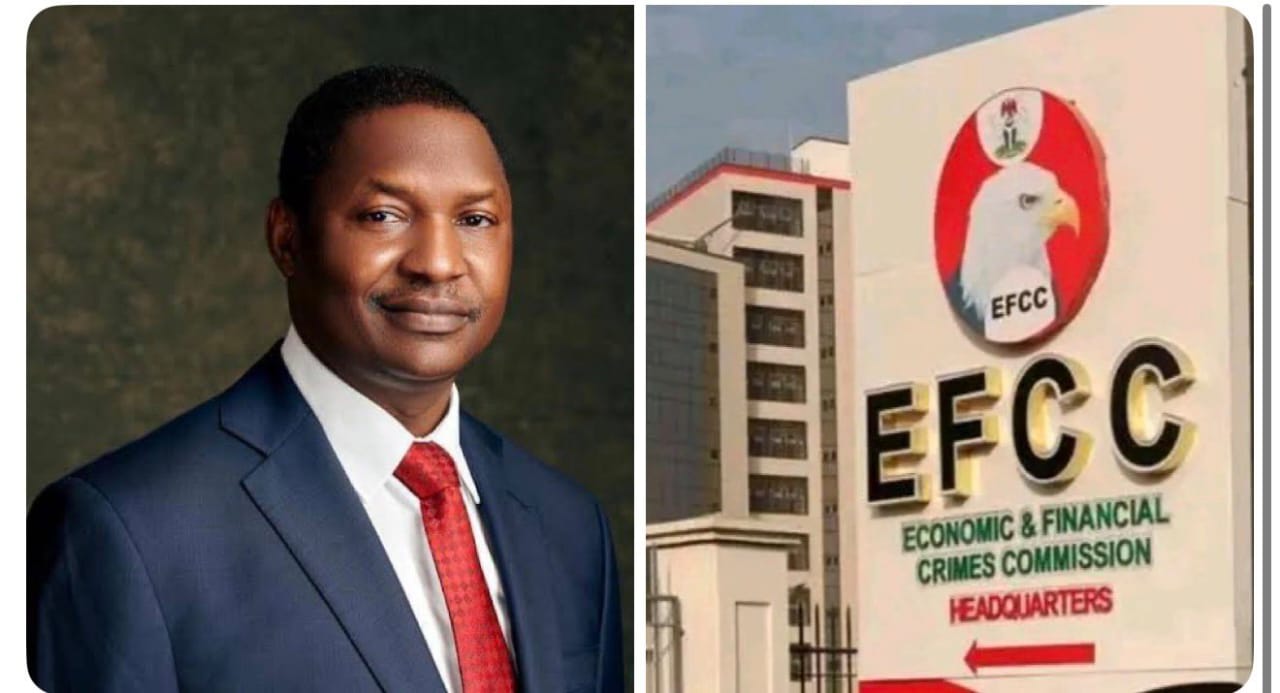
Abubakar Malami, is going upstairs to get the Court of Appeal quash the judgement of the Federal High Court, Abuja, empowering the Federal Government to seize 40 properties allegedly linked to him.
Justice Joyce Abdulmalik of the Federal High Court, Abuja, had ordered the forfeiture of the properties valued at N212.8billion, after the Economic and Financial Crimes Commission (EFCC), convinced him that they were obtained through illegal means by the former AGF-MoJ.
Before delivering the substantive judgment, the judge dismissed several applications, motions on notice and applications to show cause filed by Malami, his family members, and some companies linked to the properties, describing them as “wanting in merit”.
She held that the issue before the court was not “who owns the property, but how legitimate are the funds used to acquire the properties, adding that Malami, had “not dislodged the reasonable suspicion that the property was acquired by unlawful activities.”
But the ex-AGF-MoJ, in a statement conveyed through Bello Doka, his spokesman on Friday, stated that he respectfully disagreed with aspects of the judgment, though he remained fully committed to the rule of law and the independence of the judiciary.
He said he had instructed his legal team to immediately challenge the decision at the Court of Appeal, in line with his fundamental rights, adding that the judgement of the lower court was not the final stamp on the matter.
“The appellate process exists to ensure that every legal issue is thoroughly examined, and Mr. Malami is confident that justice will ultimately prevail,” he said, urging the public and the media to avoid premature conclusions while the judicial process runs its full course. Respect for due process remains the cornerstone of every democratic society.
Expressing his sincere appreciation of the prayers, goodwill, and steadfast support of the people of Kebbi State and Nigerians across the country, over the matter, he assured them that the development would not distract him from his unwavering commitment to serving the people and advancing his vision for a peaceful, secure, and prosperous Kebbi State.
“Supporters are encouraged to remain calm, peaceful, and law-abiding while allowing the courts to perform their constitutional role,” he said.
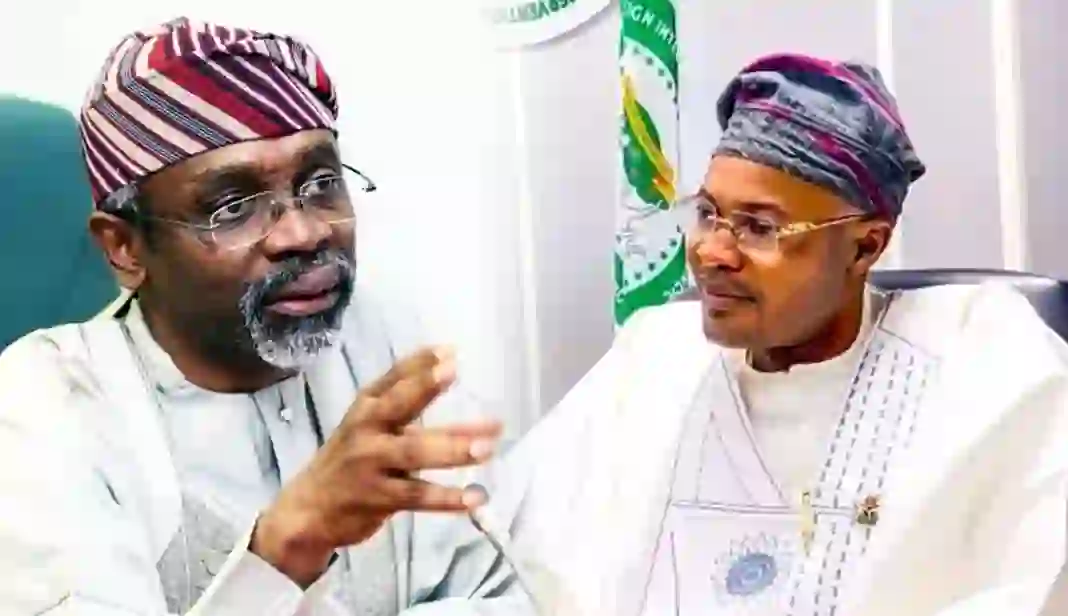
Adeniyi Adeyemi, controversial Director General of the Presidential Foreign Intervention Promotion Council (PFIPC), is to cough out a whopping N15billion, should he be found guilty of defaming Femi Gbajabiamila, Chief of Staff (CoS) to President Bola Tinubu.
The former Speaker of the House of Representatives, has approached the Federal Capital Territory (FCT) High Court, Abuja, Gbajabiamila, with a suit to compel the payment after flatly denying the allegation of the embattled DG, having ignored his earlier demand of N10billion and an apology from Adeyemi as the only option to stop the legal action.
Adeyemi, who was on Tuesday, arrested by the police in Osun State, barely hours after Justice Mohammed Umar of a Federal High Court in Abuja issued a warrant for that purpose, had publicly accused Gbajabiamila during a press conference on June 25, 2026, of demanding a 48 per cent kickback from a N27.3 billion take-off grant, after receiving an initial N400 million through a proxy, and demanded an additional N200 million balance.
Gbajabiamila, who handed him a 72-hour ultimatum to retract the allegation and tender a public apology or face legal action, in the suit filed on Thursday is seeking N10 billion as general damages, N5 billion as aggravated damages, N200 million as cost of the action, and an order compelling Adeyemi to publish a full retraction and apology in five national newspapers.
He is also asking the court to direct the defendant to pin the apology on all social media platforms and online channels where the alleged defamatory statements were published for 30 days.
The Chief of Staff, through his legal team from Pinheiro LP led by Kemi Pinheiro, SAN, described the allegations as false, malicious and defamatory.
In the statement of claim, Gbajabiamila denied ever meeting or communicating with Adeyemi or authorising anyone to act on his behalf.
Adeyemi, who had alleged at a press conference that a disagreement arose after Gbajabiamila purportedly demanded a 48 per cent kickback from the agency’s N27.3 billion take-off grant, had also claimed that N400 million had already been paid through a proxy on behalf of the Chief of Staff, while an additional N200 million was required to secure presidential approvals.
“The claimant has never met the defendant, never held any meeting with him and has never authorised any intermediary, representative, agent or proxy to demand or receive money on his behalf,” the court filing stated.
The suit also referred to Adeyemi’s claims regarding the alleged mysterious death of an intermediary, Mr. Babatunde Tanimola, whom he claimed served as the link between himself and the Chief of Staff.
Adeyemi alleged that Tanimola died in a suspicious hotel fire in Utako, Abuja, on October 22, 2025, a day after Gbajabiamila allegedly petitioned the police.
He further claimed that he narrowly escaped an assassination attempt along the Abuja-Kaduna Expressway in September 2025, and alleged that a “directive from above” instructed the Department of State Services, DSS, and the Nigeria Police Force to discontinue efforts to recover his stolen mobile phones, which he claimed contained crucial evidence.



-

 News7 days ago
BREAKING: Mystery death! *Female student dies a day after arriving Umahi’s home!
-

 News7 days ago
Don’t jump to conclusion! *Umahi speaks on mysterious death of female students!
-

 News3 weeks ago
BREAKING: Court sentences Nigerien, two others to death over terrorism
-
 News2 weeks ago
BREAKING: EX-SSG mowed down by gunmen! *He resisted being kidnapped – driver
-
 News4 weeks ago
Two hours after Igboho’s ‘red-eyes’ to ‘Fulani’ leaders, gunmen free kidnap victims!
-

 News4 weeks ago
Abductors of Oyo teachers panicking, freedom coming for victims soon!
-

 News3 days ago
BREAKING: Terrorists strikes another school! *Kidnap principal, students, NECO official!
-
 News4 weeks ago
Chicagogate: Nigerians return to court! *Move to stop Tinubu from 2027 polls