

News
Nigeria to get fresh $2.2 billion World Bank loan in 2025


A fresh loan package totalling $2.2 billion is coming to Nigeria from the World Bank for the development in six sectors of the Nigerian economy in 2025, increasing the stakes for a country already bent on its shoulders from the weight of domestic and foreign debts.
Part of the projections from the Bank is $500 million for the ‘Community Action (for) Resilience and Economic Stimulus Programme,’ which is due for approval by March 17, while another approval for $552 million would be made on March 31 for the “HOPE for Quality Basic Education for All’ and $800 million for ‘Accelerating Nutrition Results in Nigeria 2.0.”

July 15 would see to another approval of $300 million for the “Solutions for the Internally Displaced and Host Communities Project” and another $300 million for the “Health Security Programme,” on August 19, and yet another termed “Building Resilient Digital Infrastructure for Growth (BRIDGE)” of $500 million approval scheduled for September 15.
World Bank said the BRIDGE initiative and the Health Security Programme are in the concept review stage, implying that they are still in the early stages of assessment and planning.
Also, the Accelerating Nutrition Results in Nigeria 2.0 and the HOPE for Quality Basic Education projects have progressed to the negotiation stage.
The multilateral lender gave Nigeria $1.5 billion in 2024 for a number of significant development initiatives meant to strengthen the country’s ability to mobilise resources and maintain economic stability.
On November 19, 2024, TheCable reported that Nigeria’s loan exposure from the World Bank’s International Development Association (IDA) rose to $17.1 billion as of September 30, 2024.
According to the IDA’s financial statement for September 2024, Nigeria maintained the third spot in the latest top 10 borrowers’ list.
As of December 31, 2024, Nigeria’s exposure dropped to $16.8 billion, but it still retained its position as the third-largest debtor to the World Bank’s IDA.








President Bola Ahmed Tinubu, on Friday, signed the Presidential Executive Order on Virtual Assets Coordination, 2026, to harmonise the regulation of virtual assets, strengthen cooperation among the nation’s financial, revenue and capital markets agencies.
The order is also to, protect citizens from fraud, and safeguard the integrity of the financial system while enabling responsible innovation, a statement by Bayo Onanuga, presidential spokesman, who the intention was pursuant to Section 5 of the Constitution of the Federal Republic of Nigeria, 1999 (as altered).
Stating that the directive took immediate effect, the statement added that the order was a response to a regulatory environment that had become fragmented as virtual assets increasingly blur the traditional boundaries between currencies, money, commodities and securities.
It said: “With relevant agencies operating in silos, overlapping in some areas and leaving gaps in others, the country has been exposed to risks, including money laundering, terrorism financing, cybersecurity and data privacy threats, fraud, and revenue losses. Too often, unregistered and fraudulent operators have exploited these gaps to prey on unsuspecting Nigerians, costing families their savings.
“The Order is designed to close these gaps through supervisory coordination, without introducing new layers of regulation or displacing the mandates of existing agencies. To achieve this, the Order establishes a Virtual Asset Council, chaired by the Central Bank of Nigeria (CBN), with the Nigeria Revenue Service (NRS) and the Securities and Exchange Commission (SEC) as vice-chairs, and comprising the Nigerian Financial Intelligence Unit (NFIU) and the Office of the National Security Adviser (ONSA).
“The Council will provide policy direction, promote synergy among the participating agencies, and work with the Attorney-General of the Federation to develop a harmonised legal and institutional framework that aligns the sector with Nigeria’s national security, economic and social objectives.
“The Order also establishes a Virtual Asset Office, the Council’s operational body, with its secretariat domiciled at the CBN. The Office will be responsible for the day-to-day coordination of information sharing, applications, and reporting among the agencies, supported by an integrated supervisory technology platform that provides shared visibility while preserving each agency’s ownership and control of its data.
“Significantly, the Order does not create a new regulator or transfer powers between agencies. Each institution retains its full statutory mandate and independence, and the framework coordinates their work rather than replacing it.
“To provide certainty for operators and protection for the public, registration will follow the nature of the activity and the asset involved: activities like securities will be registered by the SEC, while payment, settlement, custody and related services involving non-security virtual assets will be registered by the CBN, with the Council resolving any case in which responsibility cannot be readily determined.
“This closes the gaps through which unregistered operators have previously escaped oversight. As part of the coordinated approach, the Central Bank of Nigeria is proceeding with a regulatory sandbox for virtual assets.
“The sandbox will provide a controlled environment in which eligible operators can test and operate virtual asset products, services, and blockchain-based solutions under close supervision, enabling the participating agencies to assess the implications for monetary sovereignty, financial stability, market integrity, consumer protection, financial inclusion, and revenue administration before products reach the wider market. It will help ensure that innovations that reach Nigerians have been properly examined and supervised.
“The CBN will announce further details of the sandbox. In the same spirit, the Nigerian Revenue Service will release a tax policy for the virtual assets sector. The policy operationalises Nigeria’s tax laws as they apply to virtual assets, providing greater certainty for taxpayers and service providers, strengthening voluntary compliance, and ensuring that the sector contributes fairly to national revenue as it grows.
“It complements the coordination framework by aligning revenue administration with the work of the other participating authorities. The NRS will provide further details. The Federal Government is also finalising a comprehensive Virtual Assets White Paper, which will set out the country’s longer-term policy direction and implementation priorities and serve as a roadmap for stakeholders across the sector.
“The Council has been directed to develop a Harmonised Implementation Framework within 30 days to guide the participating agencies in giving effect to the Order and to ensure its expedited implementation.”
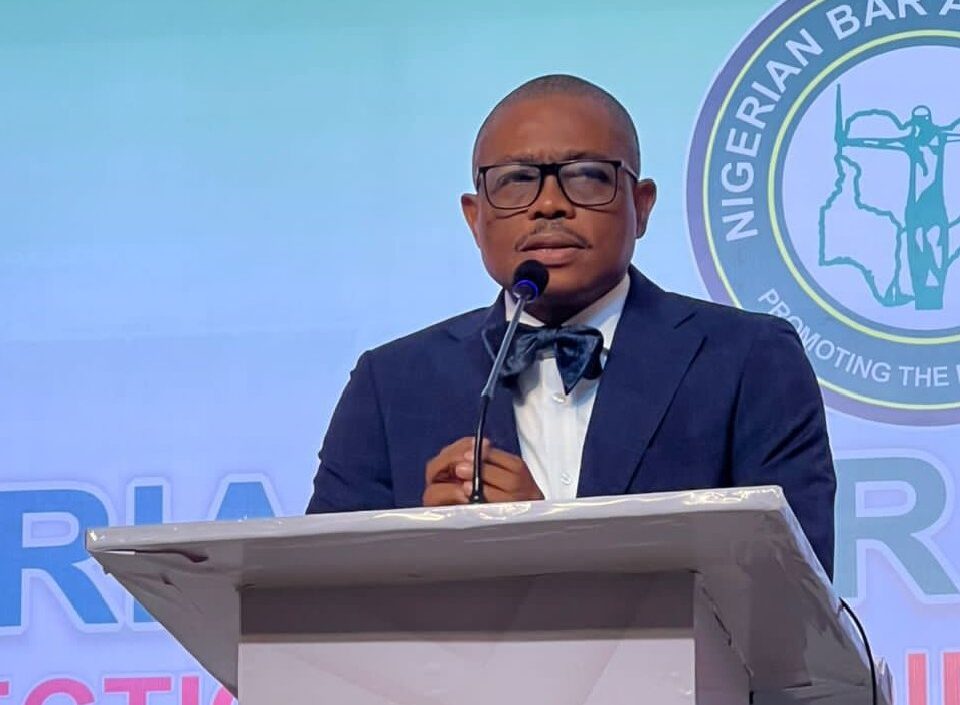
As the Nigerian Bar Association (NBA) prepares to elect its next set of national officers on Saturday, July 18, the process has been troubled by court battles, an unprecedented intervention from the office of the attorney-general of the federation, allegations of bias against the association’s leadership, and disputes over zoning arrangements.
This has turned what should have been a routine internal election into one of the most contested election processes in the NBA’s recent history.
With over 82,000 lawyers across 139 branches of the NBA eligible to vote, three senior advocates (SANs) running for the presidency, and legal challenges still pending hours before polls open, the outcome — whether it will be broadly accepted across the profession — remains genuinely uncertain.
HOW IT STARTED
The process for the 2026 election formally began at a national executive council meeting in Edo state on November 20, 2025, where a five-member Electoral Committee of the Nigerian Bar Association (ECNBA) was approved, chaired by Aham Ejelam, SAN, with Ibrahim Aliyu Nassarawa as secretary.
Section 10(1) of the NBA’s 2015 Constitution (amended 2025) establishes the ECNBA as an independent body that runs elections for the association’s national offices and for NBA representatives on the General Council of the Bar.
By June 18, the ECNBA had cleared 35 candidates to contest the various national offices, with three senior advocates emerging as presidential contenders: Olumuyiwa Akinboro of the Abuja branch, Oyinkansola Badejo-Okusanya (the only woman among recent presidential candidates) of the Lagos branch and Lateef Akangbe, also of Lagos.
COURT CASES/ZONING TENSIONS

Trouble surfaced early. On March 4, Gabriel Opayinka, judge of the Oyo state high court, granted an interim order restraining the NBA from taking further steps toward the election, and barring Afam Osigwe, NBA president, from constituting or supervising the ECNBA. The order came following a suit filed by four lawyers — Ibrahim Lawal, Raymond Oki, Omotan Olusola Ogunmodede and Chief Gabriel Ojo Adekunle Ijalana — challenging the legitimacy of the process. In the suit, the applicants contested the legitimacy of the electoral process and the role allegedly played by the NBA leadership in the composition of the ECNBA.
Also, Egbe Amofin O’odua, an association of lawyers of Yoruba extraction, has been pushing for Akinboro to be adopted as the sole western-zone candidate, arguing that he is the zone’s consensus choice.
On February 24, Y. S. Adekunle, the presiding judge, granted an interim injunction barring the NBA from recognising or processing nominations outside the Yoruba lawyers’ consensus candidate arrangement for the presidency.
CALLS FOR OSIGWE’S RESIGNATION
Weeks before the courts got involved, the dispute had already turned personal. At an NEC meeting in Maiduguri, Borno state, on February 5, Akinboro and Akangbe, candidates vying for the presidential office, accused Osigwe of bias. They alleged that the NBA president, while responding to concerns raised over campaign materials being distributed at the venue, declared he could not remain neutral in the election because he holds voting rights as a member. In a letter dated February 15 to the NBA board of trustees, the two candidates cited that remark, along with what they called a pattern of partisan conduct, as grounds to demand Osigwe’s immediate resignation.
AGF’S ‘INTERVENTION’
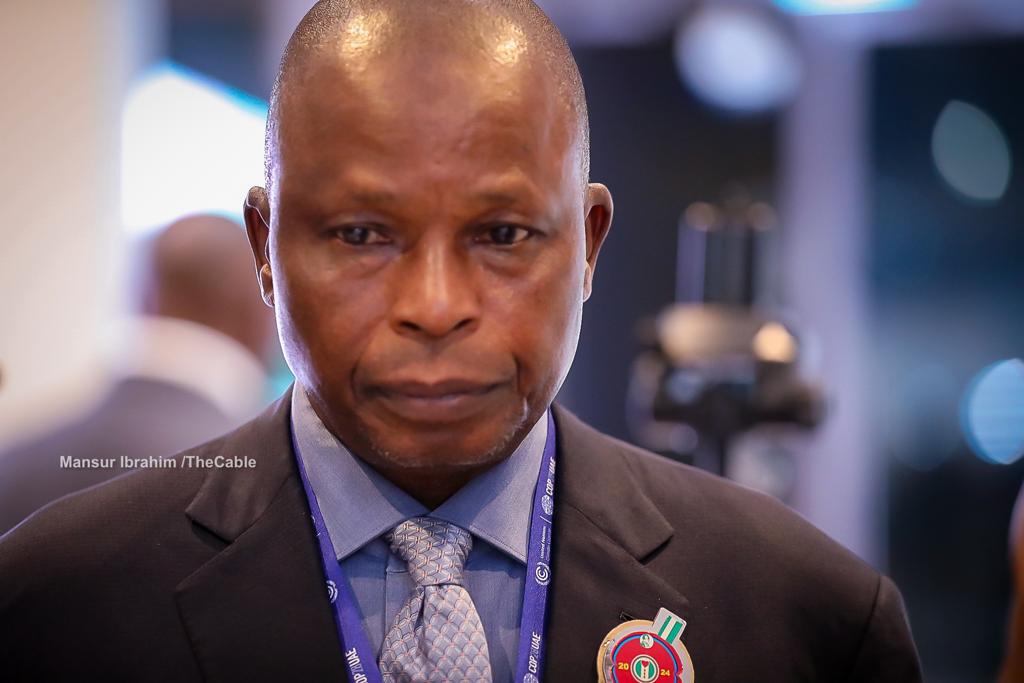
The dispute heightened after Lateef Fagbemi, attorney-general of the federation (AGF), allegedly issued a directive that the election be pushed from July into August. A document said to contain a sub-committee report and comments attributed to Fagbemi, which circulated online, reportedly went further by calling for the ECNBA to be disbanded, its election technology vendor replaced, a caretaker committee installed, NIN verification introduced, and even the NBA constitution altered to curtail universal suffrage.
However, Osigwe rejected the intervention outright. In a statement, he argued that only the NBA’s national executive council has constitutional power to alter or suspend the election, and described the alleged directives as unconstitutional and beyond the AGF’s authority.
The NBA also defended its election vendor and said its own risk assessment had found that introducing NIN verification at this stage could disrupt the vote, partly because the national identity database might not handle the surge in authentication requests.
As tensions built, a document falsely claiming the election had been suspended began circulating and had to be publicly debunked by the ECNBA, which said it had no connection to the AGF’s office.
On July 14, the court of appeal, Ibadan division, set aside Opayinka’s interim order, which restrained the association from taking further steps towards the election.
In a unanimous judgement, a three-member panel of the appellate court held that the Oyo state high court never had jurisdiction to hear it in the first place. The appellate court held that jurisdiction is foundational to any judicial proceeding and that everything built on a jurisdiction-less order, including the injunction that had restrained the ECNBA and Osigwe, was void. The appeal had been brought by ECNBA chairman Aham Ejelam and other committee members against the four lawyers who filed the original suit, as well as against Osigwe and others.
WHERE THINGS STAND
With voting just one day away, the ECNBA has confirmed a final register of 82,213 eligible voters across 139 branches, published on July 10. The committee has repeatedly said the July 18 date is fixed and that there is no legal barrier to proceeding and said election observers, including the Department of State Services (DSS), the Nigeria Police Force, Economic and Financial Crimes Commission (EFCC) and the Independent Corrupt Practices and Other Related Offences Commission (ICPC), are expected to monitor the process from a central control room at the NBA’s Abuja secretariat.
Voting is due to run electronically from midnight to 11:59 p.m. on Saturday, with results expected Sunday.
Culled from TheCable

By Ken Harries Esq
“Vision is the art of seeing what is invisible to others,” observed Jonathan Swift. Every generation encounters leaders who solve today’s problems, but far fewer produce leaders who design tomorrow’s possibilities. The true measure of visionary leadership lies in the ability to recognise opportunities long before they become obvious, to imagine possibilities where others see only limitations, and to lay foundations whose full significance may not be appreciated until years later. History’s greatest builders are remembered not merely for the projects they completed, but for the future they envisioned before anyone else believed it was possible.
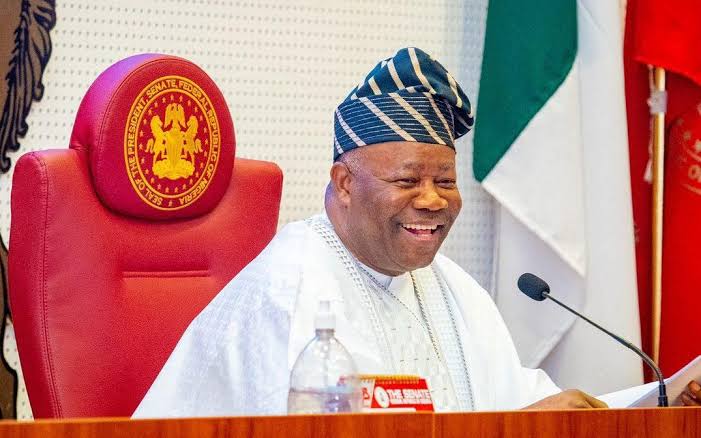
The true measure of visionary leadership lies not in the number of projects conceived, but in the ability to understand how seemingly unrelated sectors of the economy can reinforce one another to produce lasting prosperity. That was the deeper story behind Senator Godswill Akpabio’s presentation at the 2nd South South Economic Summit in Asaba in April 2012.
Many remember the address for its most celebrated proposal—the Ibom Deep Seaport. Yet the speech revealed something far more profound: a philosophy of development that viewed infrastructure not as isolated monuments, but as interconnected instruments of economic prosperity and social transformation.
That philosophy permeated virtually every aspect of the presentation. It was evident in aviation. At a time when aircraft maintenance in Nigeria depended almost entirely on foreign facilities, Akpabio announced plans for what he described as West Africa’s first Maintenance, Repair and Overhaul (MRO) facility alongside the Akwa Ibom International Airport. Once again, the objective was not merely to construct another public facility. It was to retain within Nigeria the economic value, technical expertise, and skilled employment that routinely left the country whenever aircraft were serviced abroad.
Long before expressions such as local value addition, industrial self-reliance, and reducing capital flight became part of mainstream policy discussions across Africa, those ideas had already found practical expression in the development strategy he articulated in Asaba.
Even his brief remarks on state policing now possess remarkable contemporary relevance. Years before today’s broad national consensus that Nigeria’s security architecture requires fundamental reform, he argued that governors could not reasonably be held fully accountable for security while operational control remained centralised. Over time, national debate has steadily moved closer to the position he advanced.
Vision, however, should never be mistaken for perfection. Every transformative project encounters obstacles—financing constraints, regulatory hurdles, political transitions, implementation delays, and public controversy. The Ibom Deep Seaport has experienced each of these realities. When Governor Udom Emmanuel renamed the project from the Ibaka Deep Seaport to the Ibom Deep Seaport, many perceived the change as accompanying a relocation of the proposed site from Ibaka in Mbo Local Government Area to a coastal location in Ibeno Local Government Area. Government maintained that the final location emerged from rigorous technical evaluation, but the episode illustrated how even the most carefully conceived projects can become entangled in local sensitivities and competing interests.
Yet the endurance of the underlying idea is precisely what makes the original vision remarkable.
Governments changed. Political actors came and went. Debates arose and subsided. But the central economic concept endured. The Federal Executive Council approved the project’s business case in 2015, and successive administrations have continued to advance it under the Ibom Deep Seaport name. Good ideas possess a resilience that often outlives the administrations that first conceive them.
Therein lies perhaps the greatest lesson of the Asaba address. Vision is not measured by how loudly it is proclaimed, but by how far ahead it sees. History’s greatest builders were rarely those who merely responded to the demands of their own generation and time. They were those who imagined opportunities others could not yet see and laid foundations whose full value would only be appreciated years later.
Nigeria’s development story will ultimately belong not only to those who completed great projects, but also to those who first conceived them. The true legacy of public leadership is not merely the structures that rise from the ground, but the ideas that continue to shape a nation’s future long after the speeches have ended and the applause has faded. Judged by that standard, the Akpabio’s Asaba address remains an enduring lesson in visionary leadership.
•Ken Harries Esq is an Abuja based development Communication Strategist



-

 News6 days ago
BREAKING: Mystery death! *Female student dies a day after arriving Umahi’s home!
-

 News6 days ago
Don’t jump to conclusion! *Umahi speaks on mysterious death of female students!
-

 News3 weeks ago
BREAKING: Court sentences Nigerien, two others to death over terrorism
-
 News2 weeks ago
BREAKING: EX-SSG mowed down by gunmen! *He resisted being kidnapped – driver
-

 News4 weeks ago
Two hours after Igboho’s ‘red-eyes’ to ‘Fulani’ leaders, gunmen free kidnap victims!
-

 News4 weeks ago
Abductors of Oyo teachers panicking, freedom coming for victims soon!
-
 News2 days ago
BREAKING: Terrorists strikes another school! *Kidnap principal, students, NECO official!
-
 News4 weeks ago
Chicagogate: Nigerians return to court! *Move to stop Tinubu from 2027 polls