

News
Name INEC HQ after Nwosu, APGA boss tells Tinubu


Until Humphrey Nwosu, the arrowhead of the historic event, is fully recognised, the essence of the June 12, 1993 presidential election, will not assume its full meaning, even with its current being reenactment in the country, by the acknowledgement of Ibrahim Badamasi Babangida that Moshood Kashimawo Olawale (MKO) Abiola as the winner.
This was the position of Chekwas Okorie, founder of the All Progressives Grand Alliance (APGA), as he weighed in on the reverberating echoes of the event, some 32 years after the election was annulled by the same Babangida, which led to the sustained political upheaval in the country that eventually claimed the life of Abiola, a foremost Nigerian business magnet and acclaimed philanthropist.


Buhari, while chronicling the events that led to the nullification of the election, in his book A Journey in Service, which was launched in Abuja last Thursday, not only acknowledged Abiola as the winner of the election, but actually released the contentious result, three decades after.
However, scant mention was made of Nwosu, the former prolific university teacher who as Chairman of the now defunct National Electoral Commission (NEC), created the feat with his Option A-4 model to conduct the election, which has now been acknowledged as the freest and fairest exercise in the history of the country.
Bemoaning a situation, in which the input of a man who was central to the historic would be completely relegated to the background while other stakeholders were being celebrated, Okorie urged for a redemption, so that the former NEC boss be given a pride of place and for the June 12 story to come to a complete closure.
Hear him: “It is sad that the most visible unsung hero of the much-celebrated June 12, 1993 presidential election in Nigeria is Professor Humphrey Nwosu, the National Chairman of the National Electoral Commission (NEC) which later became INEC.
“Nigerians commended President Muhammadu Buhari for declaring June 12 as Democracy Day in the place of May 29. He also affirmed late Chief M.K.O Abiola, the winner of the June 12 presidential election, along with Alhaji Babagana Kingigbe as his running mate.
“The two were accordingly honored with the requisite National Honors of GCFR and GCON, respectively. Regrettably, no mention was made of Professor Humphrey Nwosu in the honors list for the historic June 12 election. Professor Nwosu had long before President Buhari honored the June 12 heroes written his book where he gave account of the true outcome of the June 12, 1993, presidential election, including the figures scored by Chief MKO Abiola the presidential candidate of the Social Democratic Party (SDP), and Alhaji Bashir Tofa, the presidential candidate of the National Republican Convention (NRC), showing Chief Abiola’s resounding victory in that election.
“The undisputed fact is that there would be no June 12 celebration in Nigeria without Professor Humphrey Nwosu. He stuck out his neck in the face of obvious threats to his life by a military junta determined to scuttle the election and announced the actual election results. This did not prevent General Ibrahim Babangida, the military President of Nigeria, from proceeding to annul the election.
“After more than three decades, General Ibrahim Babangida publicly presented his memoir in which he vindicated Professor Humphrey Nwosu. He even boasted that it was under his watch that Nigeria had the fairest and freest presidential election.
“Yet the architect of this unprecedented national feat remained unsung. The big question is, when will Nigeria have the good fortune to have the likes of Professor Humphrey Nwosu to preside over our Independent National Electoral Commission again?”
Okorie, who acknowledged the role former President, President Muhammadu Buhari played in the entire sequence of events by recognising the importance of the historic event, suggested the naming of the national headquarters of the Independent National Electoral Commission (INEC), as one of the befitting ways of acknowledging Nwosu’s role.
He added: “President Muhammadu Buhari has done his own bit by giving Nigeria a more acceptable Democracy Day, which is June 12, and honored late MKO Abiola as former President and a posthumous award of the Grand Commander of the Federal Republic, GCFR.
“The ball is now in the court of President Bola Ahmed Tinubu to give Professor Nwosu a befitting National Honor. Unfortunately, Professor Humphrey Nwosu died recently and his burial program has been announced by his family.
“It is the expectation of Nigerians that President Tinubu should authorise a national burial for him. It will be to the credit of President Tinubu, the only true civilian to be elected President of Nigeria after President Shehu Shagari and Dr. Goodluck Jonathan to approve the National Headquarters of the Independent National Electoral Commission, INEC, to be named after PROFESSOR HUMPHREY NWOSU. President Bola Ahmed Tinubu should seize the moment.”



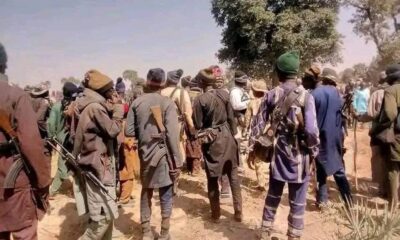




By the time they discovered that were surrounded, and had no escape route, the terrorists were the ones now begging to be let off, but their pleas were rebuffed due to the determination of the operatives to finish the job once and for all.
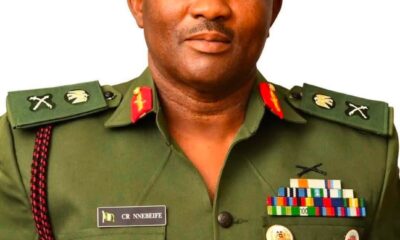
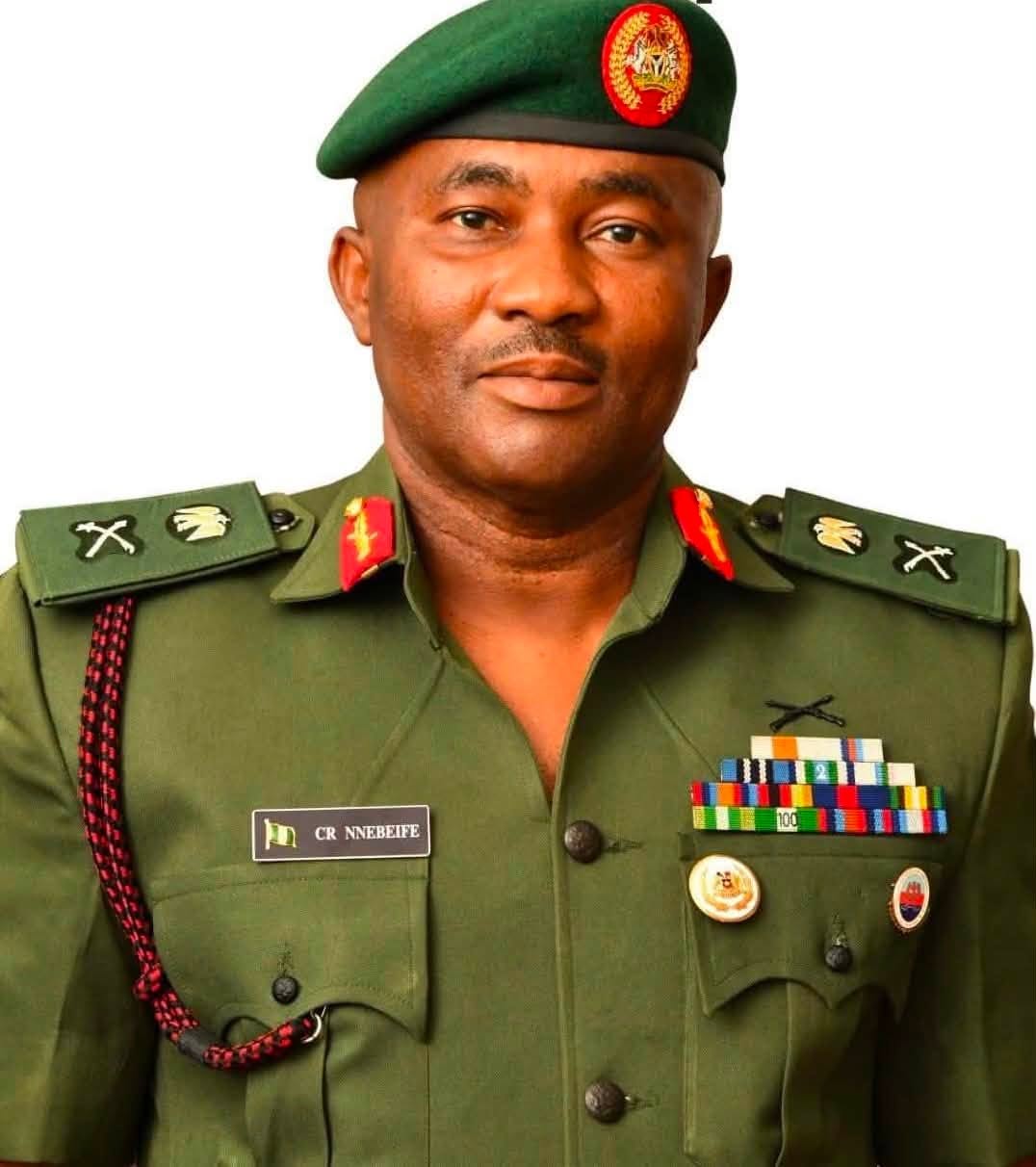
This was part of the account of Chinedu Nnebeife, a Major General and the General Officer Commanding (GOC), 2 Division, Nigerian Army, who led the rescue operations to free the 44 pupils and teachers, victims of the kidnap incident in Oyo State, last weekend.
Hear him: “We went in with some hunters and local vigilantes, but nothing positive happened that day. By the grace of God, on the 10th of July, we successfully rescued 44 of them. I have always said we will never yield to terrorists’ demands. We will not, and we never will.
“At the last phase of the operation that we had, we were blocking their major logistic. We went to a town called Ashamu to block the place, and it finally put pressure on them, and it was now they were willing to release unconditionally. But we are not giving up on them.
“We said, no, it’s not about releasing. We must see to the end of the terrorists operating in that particular region, and of course, indeed, the whole part of the country, and the glory of God, we have them here.”
Giving some details that led to the successful operation, the GOC described how drones of the Nigerian Air Force (NAF), deployed to locate the actual spot the abducted victims were kept, failed because they could not penetrate through the thick canopy of the Old Oyo National Park.
Stating how the failure of aerial surveillance forced troops into a ground assault that claimed the lives of an officer and a soldier, Nnebeife told reporters, on Monday: “Because of the nature of the forest, how thick it is, we had drone teams, we have Nigerian Air Force following up, but in some of those areas, you can’t even see, if you are under that base, you can’t see the rays of sunlight from those places and the Air Force flew, they couldn’t see anything.
“The drone team also flew, we didn’t get anything from those things and that was how we insisted on ground operation. It has to be ground, we have to go deep into the forest, and it’s during one of these operations that we lost the officer and the soldier, that particular day, and some other ones who were wounded. One of them is actually serious because he has a broken arm due to gunshot wound.
“The operation continued and we had to like involve a lot of agents, and I had to take over the whole operation completely from the garrison commander because we had to now bring in troops and forces from different places, providing intelligence, and I had to coordinate all these teams together.”
The ordeal of the victims who spent 56 days in captivity after gunmen stormed three schools in the Ahoro-Esiele, Yawota and Alawusa communities on May 15 and took them away, raised a lot of dust within Nigeria and across the globe.
Speaking further on the ugly situation, the military top brass listed the units that took part in the operation to include the Office of the National Security Adviser (NSA), the National Counter-Terrorism Unit tactical team, and the Defence Headquarters Special Forces team made up of personnel from the Army, Navy, Air Force, Police, Department of State Services (DSS), National Security and Civil Defence Corps (NSCDC) and the National Intelligence Agency (NDA).
Stating how the Nigerian Police also deployed separately from the special forces, alongside a DSS team from Oyo State and an Air Force Tactical Operations Group unit drawn from Kainji with fighter aircraft support, while troops from Operation Savannah Shield in Gwara formed a blocking force on the northern flank of the state, he said the first attempt to reach the victims, carried out with hunters and local vigilantes soon after the abduction, also failed.
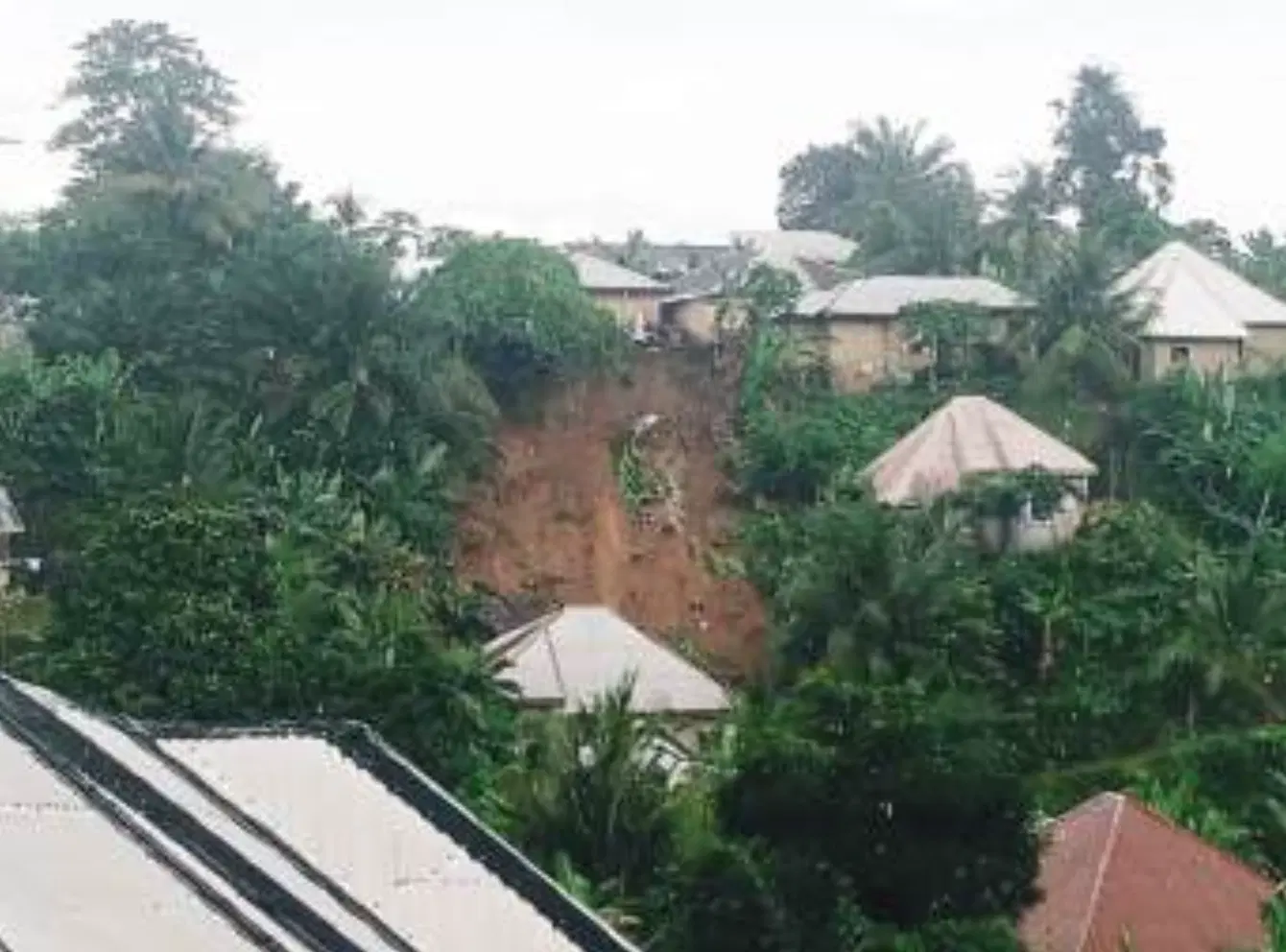
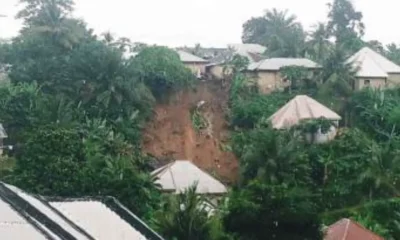
Words and acts of consolations, seem quite inadequate so far to assuage the deep sorrow of the family of Kingsley and Mercy Edu, a major victim in the torrential rain that caused havoc within Ikot Awatin community, Calabar municipality, Cross River State and environs at the weekend.
Four children from the family identified as Bright, 18; Godswill, 12; Daniel, 11; and Richard, 10, were reportedly buried alive alongside another identified, simply as Mr. Udo, a tanker driver attached to a fuel depot, in a mudslide that accompanied the rain.
The tragic incident occurred just three days after floodwaters claimed the life of a one-year-old child and destroyed property worth millions of naira along Mayne Avenue by Atu Street in Calabar South Local Government Area.
Attempts to save the victims, were said to have failed, as community youths, working through the night with bare hands and shovels, were too late by the time they finished digging through the rubble, as all five victims were recovered dead.
The mother of the children, popularly known within the community as Mama Uwana, was said to have taken her children to church for evening service, only for them to leave the service for home as the rain worsened, to beat the storm, while their father, a security officer, was away on official duty.
Unaware of the fate awaiting them, the children were said to have changed into dry clothes, and lay down to rest, unaware that the saturated earth above their home was already giving way, only for the soil to give way, trapping them beneath the caved earth.
Wailing uncontrollably, the distraught mother, said to be a waterleaf farmer who lost not just her children but everything she owned, could barely find words for her loss, loudly bewailed her fate.
Hear her: “Everything was buried in the landslide, taking my children and leaving us hopeless and homeless. Why me? Four out of seven are gone in one day. My husband never buys anything for himself because he wants his children to go to school, three boys and a girl, all gone.”
For her husband, his still silence, which contrasted sharply from his wife, betrayed his own deep emotions, as he stood at the scene speechless, while sympathisers and neighbours gathered around in almost futile attempts at consolation.
The four children were buried shortly after their bodies were recovered, while the remains of Mr. Udo were deposited in a morgue, with his family left to grapple with the sudden loss of a breadwinner who had simply been doing his job on a stormy night.
Residents and sympathisers who trooped to the scene were shocked by the scale of the devastation, calling on the Cross River State Government and well-meaning Nigerians to come to the aid of the Edu family, who in a single night lost four children and the roof over their heads.
Efa Nyong, Director General of the Cross River State Emergency Management Agency (CR-SEMA), led other agencies including Disaster Management Unit of the Nigerian Red Cross Society, conducted a three-hour, on-the-spot assessment of the site on Saturday.
The team, which included the Red Cross’s Disaster Management Officer, Agbor Okim, and CR-SEMA’s Head of Relief and Rehabilitation, Preye Obo, walked through the wreckage, spoke with grieving family members, and documented the extent of the destruction.
Nyong described the loss of the children as heartbreaking and conveyed the sympathy of the state government to the bereaved families, assuring residents that the government would work with relevant stakeholders to provide support.
Explaining that the assessment was designed to guide the government’s response, from immediate humanitarian intervention to longer-term measures aimed at reducing the risk of future disasters, he urged residents in landslide and erosion-prone communities to remain vigilant, to promptly report signs of soil movement or land cracks, and to cooperate with authorities when evacuation becomes necessary.
Bassey Patrick, who spoke on behalf of the deceased family, thanked the assessment team for responding promptly despite the difficult circumstances and called for more emergency assistance for survivors who, in his words, had lost loved ones and struggling to cope with the aftermath of the disaster.
The idea of blanket pardoning of terrorists instead of punishing them is a disservice to their victims, Christian Association of Nigerian Americans (CANAN), has said, urging the Federal Government to halt the programme which has since raised a lot of dust within the polity.
The group told reporters during a zoom meeting that reintegrating suspected terrorists into society without first putting them through the judicial process amounted to great injustice which should never be allowed to happen.
Dr James Fadel, and Banjo Olaniyan, President, and Executive Director of the body, while outlining its position on terrorism, religious freedom and security reforms, also reviewed the thinking of Enoch Adejare Adeboye, General Overseer of the Redeemed Christian Church of God, Pastor, during the recent U.S.–Nigeria Faith Heroes Award in Washington, D.C. on the volatile security situation in Nigeria.
It said: “CANAN remains concerned about reports that some captured terrorist suspects have been reintegrated into society without transparent judicial processes.
“We respectfully urge the Federal Government to ensure that all persons accused of terrorism are handled in accordance with the rule of law. Justice must not only be done but must also be seen to be done. Upholding due process honours the memory of victims, strengthens public confidence in the justice system, and discourages future acts of violent extremism,” the association said.
Expressing excitement on some of the feats recorded by security operatives in recent times, the group, particularly commended them over the arrest of suspected commanders of Boko Haram and the Islamic State West Africa Province (ISWAP), saying those efforts should be followed by diligent prosecution in line with the Terrorism (Prevention and Prohibition) Act, 2022.
Hear the group: “Due process, accountability, and appropriate punishment for those found guilty are essential to justice for victims and to deterring future acts of terrorism.”
The association equally welcomed continued counterterrorism cooperation between Nigeria and the United States, saying every successful operation against terrorist groups strengthens hope for lasting peace, protects innocent lives and contributes to Nigeria’s stability and development.
On the proposed State Police, CANAN congratulated the National Assembly and President Bola Ahmed Tinubu for advancing constitutional reforms to establish the new policing structure, describing it as an important step in strengthening Nigeria’s security architecture.
It, however, urged the authorities to include credible civil society representatives in State Police oversight structures to promote transparency, accountability, public confidence and respect for human rights.
The briefing also drew attention to Pastor Adeboye’s message at the Faith Heroes Award, where he thanked the United States Government for supporting Nigeria’s counterterrorism efforts but stressed that the country still faced an uphill battle against terrorism.
Recalling Adeboye’s remarks, the association quoted him as saying: “While I deeply appreciate the support of the United States Government, the mission is far from over. Innocent Nigerians continue to be killed almost daily by terrorist groups.”
CANAN said the cleric also encouraged Nigerians in the diaspora to engage U.S. policymakers on the need for stronger American support for Nigeria’s counterterrorism campaign.
The cleric also said: “The administration should intensify efforts to identify, investigate, and bring to justice not only those who carry out terrorist attacks but also those who sponsor, finance, and benefit from terrorism.
“Dismantling the entire network behind terrorism is indispensable if Nigeria is to bring this menace to an end.”
The association said Adeboye also appealed to Christians across the country and everyone who values religious freedom to stand together against terrorism and violent extremism.
It noted that he expressed concern over attacks on Christian communities in Northern Nigeria, pointing out that the Redeemed Christian Church of God has more than 8,000 churches across the region.
CANAN further recalled Adeboye’s reflection on a time when Christians, Muslims and adherents of traditional religions lived peacefully together and freely practised their faith, saying he described the current wave of religious violence and intolerance as a departure from those ideals.
The association said it would continue to advocate justice, religious freedom, national unity and the protection of every Nigerian, regardless of faith or ethnicity.
“For the sake of the innocent victims, the displaced, and future generations, we will not keep silent. We will continue to work with governments, faith leaders, civil society organisations, and international partners to promote peace, defend human dignity, and support communities affected by terrorism,” the association said.



-
 News3 days ago
BREAKING: Mystery death! *Female student dies a day after arriving Umahi’s home!
-
 News4 weeks ago
BREAKING: Troops rescue wife of kidnapped General! *Terrorists flee scene
-

 News3 days ago
Don’t jump to conclusion! *Umahi speaks on mysterious death of female students!
-
 News4 weeks ago
BREAKING: Count me out, Okonkwo tells Atiku *Amaechi VP’s choice an insult to Ndigbo
-
 News3 weeks ago
BREAKING: Court sentences Nigerien, two others to death over terrorism
-
 News2 weeks ago
BREAKING: EX-SSG mowed down by gunmen! *He resisted being kidnapped – driver
-
 News3 weeks ago
Two hours after Igboho’s ‘red-eyes’ to ‘Fulani’ leaders, gunmen free kidnap victims!
-
 News3 weeks ago
Abductors of Oyo teachers panicking, freedom coming for victims soon!