

News
On Tinubu, you’re on your own, ACF tells Ganduje *We’re wiser now


It does not lie in the mouth of Abdullahi Ganduje, National Chairman of the All Progressives Congress (APC) or any othe party’s big-wigs from the North to corral the people into voting for President Bola Tinubu in 2027, as the people were now wiser and more prudent to make crucial decisions.
This much was delivered by Arewa Consultative Forum (ACF), a pro-North socio-political organisation, as a clapback to the assurance of Ganduje, former Governor of Kano State to the effect that the people would have no choice but to allow the President do two terms in office as was allowed Muhammadu Buhari, his predecessor.

The PUNCH, in a report, quoted ACF and other northern leaders as declaring that no individual could claim to be the mouthpiece of the North and, as such, it was wrong for the ACF boss to ask the North to wait till 2031 before vying for the Presidency.
Ganduje who spoke on Tuesday, urging politicians nursing presidential ambition in 2027 to bury the idea, as Tinubu would complete two terms in office, told a delegation of the Tinubu Media Centre and Tinubu Northern Youth Forum at the APC National Secretariat in Abuja that it would be unfair to deny Tinubu the chance of being re-elected after a fellow northerner was allowed to finish his tenure of eight years.
His words: “When a leader from the northern part of this country was in office for eight years, we advocated that the next president in our party should come from the south. Luckily enough, we worked very hard with the cooperation of Nigerians. Our president has come from the south and is going, Insha Allah, for a second term come 2027. And after that, it will be the turn of the northern part of this country.”
The PUNCH, however quoted Tukur Muhammad-Baba,National Publicity Secretary of the ACF, as saying that the comment credited to the former governor was a reflection of the cult-like nature of the presidency, where allegiance to the president is paramount.
His words: “Given the nature of the Presidency, it has become something like a cult; a personality cult and allegiance to the president because it looks like the president wants total allegiance and nothing else.
“We are in the season of politics and you should expect that those who are near the corridors of power should express those things. But it’s not constitutional.
“There’s nothing new in what Ganduje said. So many people have said so before. Not too long ago, the Secretary to the Government of the Federation, Senator George Akume said the same thing that northerners should forget about it until 2031.
“He or she or party members cannot influence voters by force. So, what he said was an opinion and his personal opinion and it’s up to the voters to endorse, reject or modify what he said. I think voters are becoming wise as to where the president comes from. In 2015, we were sold a dummy of anti-corruption.
“We were sold a dummy of many things and people have realised that it wasn’t true. Then, of course, the Renewed Hope came in 2023 and the hope is turning into a nightmare. What will sell President Bola Tinubu, I think and I hope, is not whether he will contest or not, it will be his policies and their impact on the people. If they buy it, fine.”
Mallam Salihu Lukman, former APC National Vice Chairman (North-West), who echoed the same sentiment, was also quoted as saying: “El-Rufai is not saying anything different from what I have been saying all thise while. The only difference is that he is talking for the North while I talk for the whole country.”
Also, Bauchi State Governor, Bala Mohammed, has declared once again that he remains the right candidate for President in the 2027 general elections.
Reacting to Ganduje’s admonition for the North to wait till 2031 for Tinubu to finish his second term before aspiring for the Presidency, Mohammed, who spoke through his Commissioner for Natural Resources Development, Maiwada Bello, described Ganduje’s comment as silly.
Bello urged the youths to rally around Governor Mohammed, saying that he had set a national precedent by appointing more youths into key positions in government than any other governor in Nigeria.
The commissioner said the Bauchi governor’s bold move underscores his administration’s commitment to youth empowerment and inclusive governance, adding that he deserves the collective support of the Nigerian populace to propel him to the country’s highest political office in 2027.
He said, “We are committed to building a government that reflects the energy and innovation of the youth. No other administration in the country has given young people as many opportunities to serve in high-level positions as my administration.”
In an interview, a former ally-turned-foe of the President Tinubu, Babachir Lawal, affirmed that the North can never forgive Tinubu over the manner he allegedly brought suffering to the region through his nail-biting reforms.
The former SGF reiterated El-Rufai’s warning that the North is massively mobilising its people ahead of the 2027 polls.
He stated, “The North is seriously mobilising with a consensus that Bola Tinubu must give way in the 2027 election. This is no doubt about the consensus. There’s no argument about that. I may not have been supporting El-Rufai’s position. But on this one, I will join him to see how we can stop Bola Tinubu from winning the 2027 election. Because if he does win, you know there will be one large refugee camp.’
“So, there’s that consensus. Everybody understands that if we are to continue with these policies for another four years, northern Nigeria will become one large refugee camp. So, there’s a consensus that for self-preservation alone, we must look for another candidate.”
Babachir said the state of origin of the candidate doesn’t matter, noting that the important thing is for the candidate to understand the need for one Nigeria.
He added, “Now, that is where quite a number of people think that it is only right to find someone who is patriotic and sees Nigeria as one, even if it’s from the South or the North. Some want it to come from the South while others are saying we cannot take the risk of bringing a southerner for self-preservation alone. So, that is where the divergence is.
“But we all agree that we must look for a substitute for Bola Tinubu. Unfortunately, quite a lot of people like Ganduje and other northerners benefiting directly from this government are just irritants. They are people who are talking to justify their positions in this rogue government. So they are justifying their place in it not caring what the other parts of northern Nigeria are going through.
“So, if we can get a good southerner that can rule with equity, we are okay. It’s not actually about the elite consensus. It’s about the masses and what they are saying at the bottom. Even if some elite pretend to be supporting Bola, they will not vote for him because they are the ones at the receiving end of this thing. They are also the ones directing us, political elites of northern origin, to make sure this man doesn’t have a second chance.”
Commenting on the development, a Peoples Democratic Party chieftain and lawmaker representing Benue South Senatorial District, Abba Moro, also observed that what is playing out is an alignment of forces ahead of the electoral contest.
Moro also noted that El-Rufai and Ganduje’s remarks smacked of political alignment
He said, “There are several fireworks that are going on in the political firmament at the moment. These are attempts at alignment and realignment. Ambitions are on display and people are expressing sentiments in line with their ambitions.
“My take is that with time, the picture will become clearer as to the direction of things takes shape. Nigerians will make up their minds as to where to go. Don’t forget that this present government is barely a year and a few months old.”
However, taking a different position on the matter, a former Secretary General of the Arewa Consultative Forum, Anthony Sani, submitted that El-Rufai and Ganduje do not speak for the North.
He said, “There is nothing controversial about the statements of the two. This is because none of the two people you have mentioned speaks for the North in so far as partisan politics is concerned. This is because the North can be united politically on issues of real concern to northerners but when it comes to partisan politics, the North does not act in unison.”
He recalled that in the Second Republic, “Shehu Shagari contested against Nnamdi Azikiwe of the Nigeria People’s Party while Obafemi Awolowo of Unity Party of Nigeria from the South and with Mallam Aminu Kano of Peoples Redemption Party from Kano and Alhaji Waziri Ibrahim of famous ‘politics without bitterness’ from the North joined forces together.
“During the third and the current Fourth Republics, the North voted for Moshood Abiola against their son, Bashir Tofa, and voted for Bola Tinubu in 2023 from the South against the son of the soil, Atiku Abubakar. This should also inform political pundits that the North can use contingency in its approach to politics depending on the situation on the ground,” he elaborated.
The National Chairman of the Peoples Redemption Party, Malam Falalu Bello, expressed disappointment that El-Rufai and Ganduje were playing ethnic or religious politics.
Bello said though the constitution of the country gives Tinubu the privilege of running for re-election, the PRP would field a sellable candidate in 2027.
He said, “The Constitution of the Federal Republic of Nigeria does not allow for an eight-year term for the President of the Federal Republic but a four-year term which for President Ahmed Bola Tinubu comes to an end in 2027 at the end of which he must face the Nigerian electorate to seek for another mandate.
“The PRP had a candidate in the presidential elections of 2023 who came 8th out of the 19 presidential candidates and would, Insha Allah, field its presidential candidate in the 2027 election to face President Tinubu or whoever APC decides as its candidate and our choice will be any Nigerian to bring good governance to Nigerians.”
The Immediate past Publicity Secretary of the PDP in Benue State, Chief Bemgba Iortyom, warned El-Rufai to stop heating the polity with his posturing as the mouthpiece of the north.
The PDP chieftain said playing the south against the North in the name of promoting the interest of the region is an ill wind that will bring no good.
He said, “So I asked again, who are the northerners? Are they Almajiris who are the real face of poverty or El-Rufai, whose children are part of the bourgeois? I think one of his sons is in the House of Reps, right? You have his children in the upper echelons of life. He wants you to understand that he and his children and those Talakawa and the downtrodden are all North.
“He should basically be trying to pacify certain areas where he has caused so much strife within the polity of that state. El-Rufai had placed himself in a larger perspective in the eyes of Nigerians as an ethnic and religious extremist. He’s not the sort of person that should be talking about the north and the south dichotomy. As far as I’m concerned, he’s only leading a crusade in the wrong direction.”
The National Secretary of the APC, Senator Ajibola Basiru, described the claim that Tinubu brought poverty to the North as laughable.
He said, “First and foremost, El-Rufai and others cannot speak for the North. Lukman, on the other hand, is a hireling of El-Rufai. So, whatever he says is from the same person and the way they going about it is laughable. I don’t know when El-Rufai turned himself to the mouthpiece of the north.
“He should, first of all, go and make peace with the Kaduna chapter of the APC before talking about national leadership. Then two, this idea of trying to represent the North is for his personal and egoistic interest because when you look at the structure of government we have in place now, you cannot be saying anybody is anti-north.
“The Ministry of Defence, Ministry of Budget and National Planning, the national chairman of the party, the Vice President, Speaker of the House of Representatives, deputy senate president, and key other ones from the North. So, we don’t know what they meant meant. This is not even a military government. It’s a democratic one.
“The structure and setup of the Nigerian Constitution does not even facilitate or allow marginalisation of any part of the country. There’s no northern state that does not have members in the Federal Executive Council. So, where did El-Rufai and others come up with their theory of Tinubu being anti-North? Even as we speak, the North now North-West, North-East and North Central Development Commissions. All of them have been activated?”
The APC scribe emphasised that El-Rufai was free to exit the APC if he so wished without levelling any false claim.
Basiru also advised that the former governor should have been engaging in penance over the manner he managed Kaduna State amid the turbulence, killings and rife state of insecurity that rocked the state under his watch.
“We all know he is working together with Atiku. He should not divert from the implementation of the Renewed Hope Agenda of Mr President. He has also been going about alleging that they want to arrest him and put him in a dungeon. Who does that in a democratic society? The president is a detribalised Nigeria.
“That was why the Federal Government also gave out N150bn support to Kaduna State. But El-Rufai turned around and claimed it was a bribe to Governor Uba Sani. We are talking about funds that will benefit farmers and the agricultural structure in the state. Rather than commending the federal government and seeing it as charitable, he is labelling it as a bribe to his governor.’’







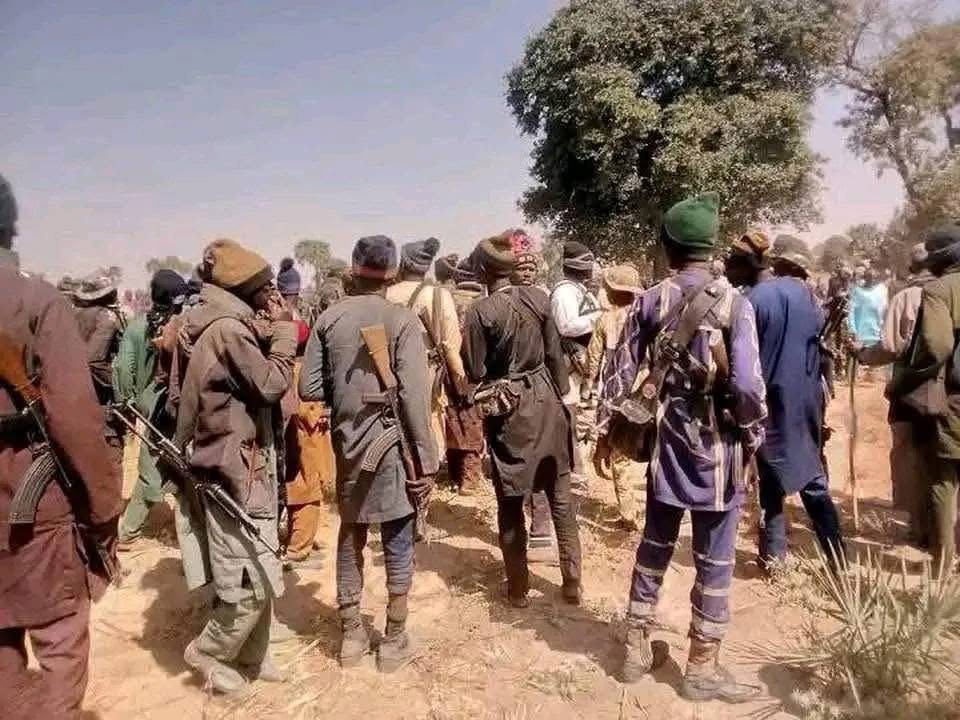
The idea of blanket pardoning of terrorists instead of punishing them is a disservice to their victims, Christian Association of Nigerian Americans (CANAN), has said, urging the Federal Government to halt the programme which has since raised a lot of dust within the polity.
The group told reporters during a zoom meeting that reintegrating suspected terrorists into society without first putting them through the judicial process amounted to great injustice which should never be allowed to happen.
Dr James Fadel, and Banjo Olaniyan, President, and Executive Director of the body, while outlining its position on terrorism, religious freedom and security reforms, also reviewed the thinking of Enoch Adejare Adeboye, General Overseer of the Redeemed Christian Church of God, Pastor, during the recent U.S.–Nigeria Faith Heroes Award in Washington, D.C. on the volatile security situation in Nigeria.
It said: “CANAN remains concerned about reports that some captured terrorist suspects have been reintegrated into society without transparent judicial processes.
“We respectfully urge the Federal Government to ensure that all persons accused of terrorism are handled in accordance with the rule of law. Justice must not only be done but must also be seen to be done. Upholding due process honours the memory of victims, strengthens public confidence in the justice system, and discourages future acts of violent extremism,” the association said.
Expressing excitement on some of the feats recorded by security operatives in recent times, the group, particularly commended them over the arrest of suspected commanders of Boko Haram and the Islamic State West Africa Province (ISWAP), saying those efforts should be followed by diligent prosecution in line with the Terrorism (Prevention and Prohibition) Act, 2022.
Hear the group: “Due process, accountability, and appropriate punishment for those found guilty are essential to justice for victims and to deterring future acts of terrorism.”
The association equally welcomed continued counterterrorism cooperation between Nigeria and the United States, saying every successful operation against terrorist groups strengthens hope for lasting peace, protects innocent lives and contributes to Nigeria’s stability and development.
On the proposed State Police, CANAN congratulated the National Assembly and President Bola Ahmed Tinubu for advancing constitutional reforms to establish the new policing structure, describing it as an important step in strengthening Nigeria’s security architecture.
It, however, urged the authorities to include credible civil society representatives in State Police oversight structures to promote transparency, accountability, public confidence and respect for human rights.
The briefing also drew attention to Pastor Adeboye’s message at the Faith Heroes Award, where he thanked the United States Government for supporting Nigeria’s counterterrorism efforts but stressed that the country still faced an uphill battle against terrorism.
Recalling Adeboye’s remarks, the association quoted him as saying: “While I deeply appreciate the support of the United States Government, the mission is far from over. Innocent Nigerians continue to be killed almost daily by terrorist groups.”
CANAN said the cleric also encouraged Nigerians in the diaspora to engage U.S. policymakers on the need for stronger American support for Nigeria’s counterterrorism campaign.
The cleric also said: “The administration should intensify efforts to identify, investigate, and bring to justice not only those who carry out terrorist attacks but also those who sponsor, finance, and benefit from terrorism.
“Dismantling the entire network behind terrorism is indispensable if Nigeria is to bring this menace to an end.”
The association said Adeboye also appealed to Christians across the country and everyone who values religious freedom to stand together against terrorism and violent extremism.
It noted that he expressed concern over attacks on Christian communities in Northern Nigeria, pointing out that the Redeemed Christian Church of God has more than 8,000 churches across the region.
CANAN further recalled Adeboye’s reflection on a time when Christians, Muslims and adherents of traditional religions lived peacefully together and freely practised their faith, saying he described the current wave of religious violence and intolerance as a departure from those ideals.
The association said it would continue to advocate justice, religious freedom, national unity and the protection of every Nigerian, regardless of faith or ethnicity.
“For the sake of the innocent victims, the displaced, and future generations, we will not keep silent. We will continue to work with governments, faith leaders, civil society organisations, and international partners to promote peace, defend human dignity, and support communities affected by terrorism,” the association said.
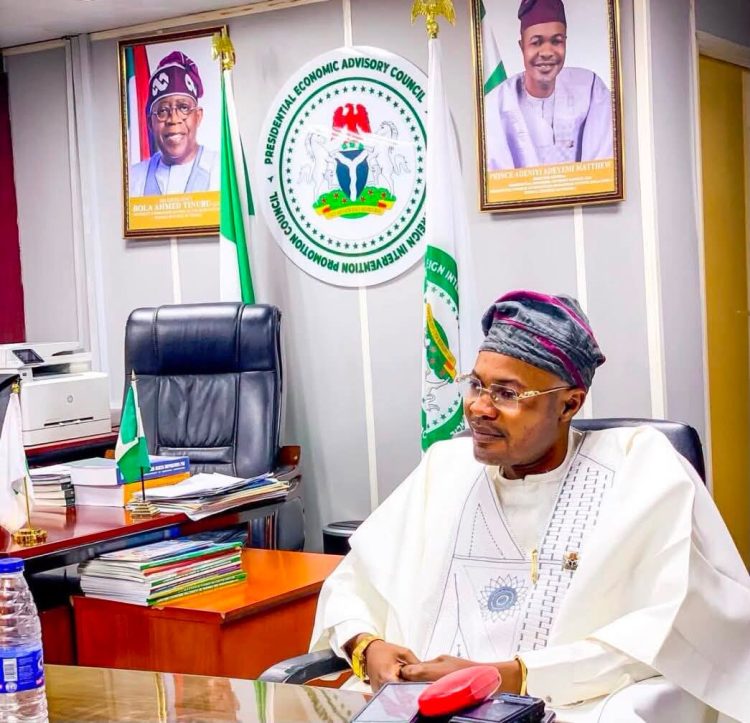
Nothing outside external intervention free from direct and indirect government influences, will assuage the feelings of Adeniyi Adeyemi, controversial Director General of the Presidential Foreign Intervention Promotion Council (PFIPC), in his current ordeal with the Federal Government
He wants President Bola Tinubu to constitute an independent, multi-stakeholder investigative panel to probe the controversy surrounding the council and the alleged N1.3 billion budget allocation.
Adeyemi, who made the request through an open letter to the President is emphatic that the current efforts by the Independent Corrupt Practices and Other Related Offences Commission (ICPC) to investigate the PFIPC scandal, would yield little positive result.
Maintaining that he did not believe the agency would come up with the true picture of what transpired, in the saga, which has seized the national space in the last three weeks, Adeyemi, said impartiality under the current framework of ICPC was almost zero.
In the letter copied to both Nigerian and global institutions, he wrote: “I commend your recent directive tasking the Independent Corrupt Practices and Other Related Offences Commission (ICPC) with investigating the circumstances surrounding the PFIPC Scandal and ₦1.3 billion allocation inserted into the 2026 Appropriation Bill.
“This directive is a vital first step, but the structural realities of this investigation compel me to speak out of a profound desire for absolute transparency.
“Under the current framework, obtaining a truly impartial hearing presents severe structural challenges. The public narrative emanating from official channels remains heavily weighted toward my immediate arrest, effectively overshadowing the gravity of the systemic vulnerabilities and high-level involvement I have brought to light. True accountability cannot be achieved when the agency conducting the investigation answers directly to the branch of government within which the core allegations lie.
“Furthermore, I must state clearly that walking freely into custody under the current arrangement poses an immediate, existential threat to my life. I have received verified, highly reliable intelligence indicating that I am targeted for elimination the moment I surface in an unmonitored environment.
“This is not an unfounded fear. My concerns are deeply validated by the highly alarming events surrounding Mr. Dolapo Babatunde Tanimola, a central intermediary in this matter.
Official reports claim Mr. Tanimola tragically died in a sudden fire incident at Kachi Hotel in Utako, Abuja. Yet, there remains a total absence of independent eyewitness or media verification of any such inferno.
“More disturbingly, under highly unclear circumstances and without the official involvement of any federal capital regulatory agency, the entire Kachi Hotel structure was swiftly invaded by unidentified armed actors and manually demolished down to the rubble days later — effectively erasing a vital physical crime scene and erasing material evidence.
“Following this calculated destruction of a key locus of this investigation, alongside multiple direct attempts on my life and the safety of my family, I am forced to communicate from a secure, undisclosed location.
“If this investigation is to command the absolute trust of the Nigerian public and the international community, it must transcend standard bureaucratic boundaries. Therefore, I respectfully urge Your Excellency to expand the scope of this inquiry by establishing an independent, multi-stakeholder investigative panel.
“To guarantee complete neutrality, this panel should comprise:
- Civil Society Organisations: Specifically Amnesty International, the Socio-Economic Rights and Accountability Project (SERAP) and other transparency Organisations.
- The Nigerian Bar Association (NBA): To guarantee strict adherence to constitutional due process.
- Independent Media Representatives: Selected members from reputable print and broadcast institutions to ensure unfettered, transparent access to documentation.
- International Financial Observers: Representatives from the World Bank and the IMF, given that the funds in question tie directly to multilateral credit frameworks.
- Human Rights Observers: Amnesty International, to monitor compliance with international safety and legal standards.
- Diplomatic Observers: Representatives from the United Nations, United States, the United Kingdom, the European Union, ECOWAS and the African Union.
- Statutory Enforcement: The ICPC and EFCC, serving as technical partners within this broader, independent coalition.
“The moment this independent, multi-stakeholder panel is constituted, I will immediately step forward to present comprehensive documentation and verifiable evidences. A system cannot credibly investigate itself when its own key actors are central to the discourse.
“By broadening this panel, you will demonstrate to the world that your administration’s commitment to anti-corruption is absolute, institutional, and above palace politics. The international community is closely watching how Nigeria handles this test of fiscal integrity and governance.
“I remain fully prepared to present the facts and cooperate entirely with a balanced, secure and independent panel.”

All is now set for the wholesome debate on President Bola Tinubu’s proposal for the creation of state police, with members of the House of Representatives, abandoning their own version of the pitch in favour of that of the executive.
The development, which was part of Tuesday’s plenary, saw the members began an accelerated hearing on the version of the legislation submitted by the President recently, leading to its speedily racing through the first and second readings to rest at the committee stage.
After the Green Chambers adopted the presidential version, effectively suspending the House’s earlier proposal, and attention shifted to the Executive-backed amendment, the document was transported to the House Committee on Constitutional Review for further legislative action.
The Executive bill is expected to undergo detailed scrutiny at the committee stage, where lawmakers will examine its key provisions before it is returned to the floor for further consideration.



-
 News3 days ago
BREAKING: Mystery death! *Female student dies a day after arriving Umahi’s home!
-
 News4 weeks ago
BREAKING: Troops rescue wife of kidnapped General! *Terrorists flee scene
-

 News3 days ago
Don’t jump to conclusion! *Umahi speaks on mysterious death of female students!
-
 News4 weeks ago
BREAKING: Count me out, Okonkwo tells Atiku *Amaechi VP’s choice an insult to Ndigbo
-
 News3 weeks ago
BREAKING: Court sentences Nigerien, two others to death over terrorism
-
 News2 weeks ago
BREAKING: EX-SSG mowed down by gunmen! *He resisted being kidnapped – driver
-
 News3 weeks ago
Two hours after Igboho’s ‘red-eyes’ to ‘Fulani’ leaders, gunmen free kidnap victims!
-
 News3 weeks ago
Abductors of Oyo teachers panicking, freedom coming for victims soon!