
News
Akpabio, Barau not fighting over tax reform bill – Senate


Godswill Akpabio, Senate President, is not disagreeing with Jubrin Barau, his deputy not to talk of overruling him over the issues relating to the tax bill proposed by President Bola Tinubu, which has been raising a lot of dust in recent weeks.
There is also no basis for suggesting that Akpabio’s comments on Thursday that the bill had been suspended when Barau indicated otherwise, by stating on Wednesday that the Senate leadership had directed that everything about the proposal “halted” meant a disagreement.


The clarifications were made on Friday by Abba Moro, Senate Minority Leader, Chairman of the Committee raised with the upper legislative chambers of the National Assembly to liaise with the executive to iron out the grey areas of the bill, following the massive challenge it is facing by some forces, especially influential people from the North, including the Northern Governors’ Forum (NGF).
Moro, a guest on Sunrise Daily, a breakfast programme on Channels Television, told his hosts on Friday that there was no case of overruling by anyone, adding that the public were interpreting, was “a mere adjustment of membership and procedures to adopt in the process.”
On Thursday, Akpabio had while reaffirming the Senate’s commitment to advancing the Tax Reform Bills, stated that no aspect of the bills had been suspended or withdrawn, adding that the Senate remained focused on its mandate to represent the interest of Nigerians and would not be intimidated by external pressures.
The comment was immediately interpreted as a repudiation of Barau’s position during plenary on Wednesday, where he stated that the Finance Committee, which was supposed to hold public hearing had been ordered to halt further action pending the outcome of troubleshooting by Moro’s committee, directed to interface with Lateef Fagbemi, Attorney General and Minister of Justice (AGF-MoJ) on the contentious issues in the bills.
In a pushback, Moro, said: “I don’t see it as an overruling as such. The deputy Senate President presided over the session; on the next day, the Senate President presided over the session. This idea of setting up a committee, the idea of interfacing with the executive on the bills before the House was muted on Thursday the previous week.
“So, the list was drawn and of course under normal circumstances adjustments are permissible and that is what was done. I think it doesn’t have any insinuation of one overruling the other, it’s just a mere adjustment of membership and procedures to adopt in the process.”
Moro, also used the opportunity to speak to the fears in the academia, as highlighted by Emmanuel Osodeke, President of the Academic Staff Union of Universities (ASUU), who while appeared on the same Channels programme on Thursday stressed that the Tax Reform Bills could systematically phase out the Tertiary Education Trust Fund (TETFund).
The ASUU boss, was quoted by the network to have also regretted that the union was not being carried along in the consultations regarding the Bills which could affect TETFund, a critical part of the university system in the country.
But dousing the fears, Moro, however said that ASUU would be involved in their consultations if it became necessary, adding: “If it is necessary, definitely ASUU will be involved but our mandate is to interface with the executive. Senators are open to all kinds of inputs on critical issues that affect the lives of the people.”







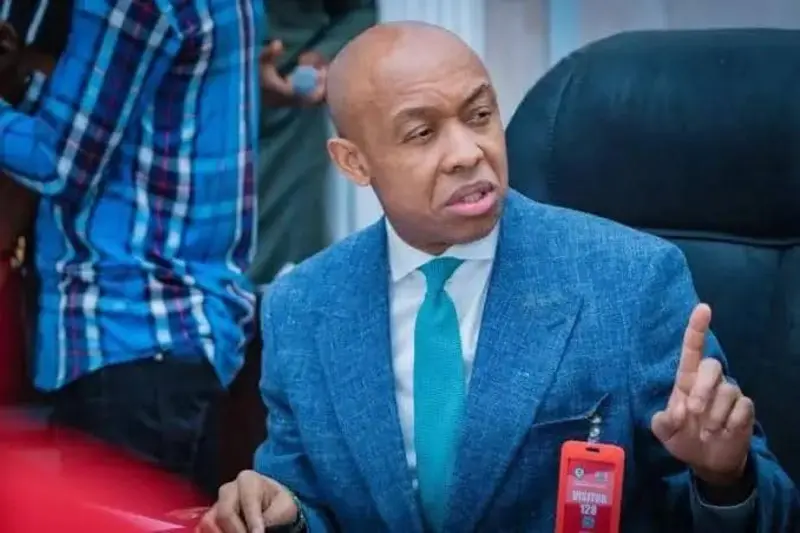
Chidi Odinkalu, Nigeria’s fiery lawyer, law teacher and former Chairman of the National Human Rights Commission (NHRC), is emphatic that President Bola Tinubu is pushing to perpetuate himself in office, beginning with gaming the electoral process in 2027.
Odinkalu, Professor of Practice in International Human Rights Law at the Fletcher School, told his host Naija Unfiltered, a popular Nigerian podcast programme, that he was as sure as death that the President would not exit office in 2031, if he succeeded with his current gambit to remain in power beyond next year.
Hear him: “Yes. But as I said, let me repeat myself. There’ll be a third term. President Tinubu has not done all of this just for another four years. There will be a third term. And anybody who is doing, ‘it is not our portion,’ is not reading the evidence.”
To achieve this aim, the activist, who was also emphatic that the National Assembly, would play a role, added: “The current National Assembly is anything but national or an assembly. And if it’s an assembly, it’s not a parliamentary one. Many people have called it a rubber stamp, but I think that is actually abusive of rubber stamps. I think this National Assembly is a disgrace.
Citing how bizarre and completely compliant the national legislature had become to Tinubu, the ex-NHRC’s boss, stated: “If you can change your national anthem in less than 24 hours with no public hearing, no public consultation, no public involvement, it tells you you don’t have a country because a national anthem is fundamental to the construction of a national identity.”
Also referring to the current move by the President to introduce state police, Odinkalu, wondered how the Nigerian Senate would introduce the bill to that effect and proceed towards the first and second readings, as well as committee stage and passage in less than two hours, questioning how that was possible in normal clime.
Hear him: “Once we finish our elections, we’re going to amend our Constitution, introduce a single six-year presidential term. The current incumbent will be elected until 2031. In 2031, what will happen? The question will be, will he be entitled to run on the six-year term or will he not?
“You will then get the best Senior Advocates in Nigeria telling you the law is not retrospective. That is why the administration is supporting the litigation over President Jonathan’s tenure—not because the Constitution is not clear, but because they will say there is precedent. There will be a third term, and I’m prepared to bet on it.”

“If we continue to pay ransom, we are encouraging these criminals to kidnap more people. The cycle will only continue unless we stop rewarding criminality,” were the words of Dauda Lawal, Governor of Zamfara State, with which he blamed those in the habit of paying ransoms as the major factor fuelling the current wave of kidnapping incidents across the country.
Lawal, on Thursday at the ARISE News/THISDAY Town Hall Conference on State Police and National Security in Abuja, told his audience how he flatly refused to pay a ₦300 million ransom demanded by kidnappers who abducted his brothers in 2019.
Reiterating his opposition to negotiating with bandits and renewed his support for the establishment of state police, Lawal, while recounting the incident, said: “My own brothers were kidnapped in 2019, and the kidnappers demanded about ₦300 million. I told them I was not going to pay a dime. If they wanted to kill them, they could go ahead.”
Stating that his brothers were eventually released without any ransom being paid, he argued that paying ransom usually emboldened criminal groups by providing financial incentives for further kidnappings.
He added: “My position on ransom payments remains unchanged. I will not negotiate, and I will not pay ransom to any criminal, no matter what happens.”
Endorsing the move for the establishment of state police, to enable governors have greater operational authority over security within their states, he regretted that the current constitutional arrangement left governors with responsibility for security without corresponding powers to direct security agencies.
His words: “In as much as I am called the chief security officer of the state, I do not have the command-and-control authority to direct the operations of the security agencies. I’m prepared to support the funding of state police if the proposed policing structure is established. I’m confident that decentralised policing will improve intelligence gathering, response time and the overall fight against insecurity.”
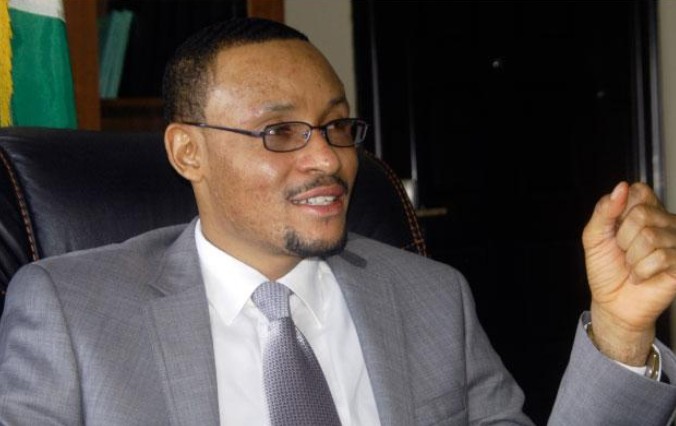
Exactly seven years, two months and four days after he forced Walter Onnoghen, the 16th Chief Justice of Nigeria (CJN) out of office, Danladi Umar, former Chairman of the Code of Conduct Tribunal (CCT), on Thursday, found himself in Kuje prison.
Justice Peter Kekemeke, of the High Court of the Federal Capital Territory (FCT), sitting in Maitama, handed the ex-CCT boss the unwelcome package on Thursday, following his arraignment by the Federal Government on a four-count corruption charge.
Umar’s ordeal began after an investigations revealed that he abused his official position by conferring an undue advantage on himself while serving as head of the tribunal, having in 2021, reportedly using his wife’s bank account to collect the sum of N5.5 million from a contractor engaged to paint the headquarters of the CCT in Abuja.
He was also accuse of using the same account to collect another N6million on January 25, 2024, from a contractor who handled the digitisation of the CCT’s records and yet another N2.43 million a contractor paid as tuition fee of his daughter at Baze University, Abuja.
After pleading not guilty to offences, said to be punishable under section 19 of the Corrupt Practices and Other Related Offences Act, 2000, Christopher Mshelia, lawyer to the FG, prosecuting the matter, applied for his remand in a correctional facility, while urging the court to set a date for the commencement of trial.
His pleas to be freed on bail pending the determination of the case, was opposed by the prosecution, which drew the court’s attention to the fact that it had just been served with the bail application, saying it needed time to respond to it, forcing Kekemeke to adjourn the case till July 15 for hearing while the former CCT boss remained behind bars.
Umar, had as CCT Chairman, on January 23, 2019, issued a controversial ex parte order that led to the removal of a serving Chief Justice of Nigeria (CJN), Justice Walter Onnoghen.
Following the ex parte order, the late President Muhammadu Buhari, on January 25, swore in the next most senior jurist of the Supreme Court, Justice Tanko Muhammad, to take over the leadership of the judiciary as Acting CJN.
Even though Onnoghen later voluntarily resigned his position as CJN on April 4, Umar went ahead and convicted him on April 18, 2019, on the federal government’s allegation that he had failed to properly declare his assets as required by law.
He gave the federal government the go-ahead to confiscate all monies in five accounts belonging to the former CJN, and also removed him as Chairman of both the NJC and the Federal Judiciary Service Commission (FJSC).



-
 News4 weeks ago
BREAKING: Troops rescue wife of kidnapped General! *Terrorists flee scene
-
 News4 weeks ago
BREAKING: Count me out, Okonkwo tells Atiku *Amaechi VP’s choice an insult to Ndigbo
-

 News2 weeks ago
BREAKING: Court sentences Nigerien, two others to death over terrorism
-
 News4 weeks ago
Dickson: Obi, a big asset to NDC, we’re working together … but!
-

 News4 weeks ago
Ovia, ex-Zenith Bank boss swings into luxury apartments *Flats hit $2.8million price tag
-
 News7 days ago
BREAKING: EX-SSG mowed down by gunmen! *He resisted being kidnapped – driver
-

 News3 weeks ago
Abductors of Oyo teachers panicking, freedom coming for victims soon!
-
 News3 weeks ago
Two hours after Igboho’s ‘red-eyes’ to ‘Fulani’ leaders, gunmen free kidnap victims!