

News
In Enugu, its policing for sale, lawyers cry out *Call for urgent action


Operatives of the Enugu State Police Command have come under intense attack by lawyers in the state, who accuse them of high-handedness and commercialisation of their operations, amid other unprofessional conducts in their dealings with the public.
The lawyers shared their individual experiences while dissecting a paper presented by Danie Ogbe, titled: Commercialization of Policing in Enugu State: Implication on Human Rights, at the ongoing Law Week of the Enugu Branch of the Nigerian Bar Association (NBA), were emphatic that the conduct of many of the operatives left much to be commended.


Ogbe, a human rights lawyer, had led the argument in his lead paper, where he x-rayed the unbecoming activities of the police in the state, describing them as not only against the grains of law and justice, but ultimately constituting infringements on the rights of the citizens.
Stressing that the “the Nigeria Police Force in Enugu State, which is expected to exemplify respect for law, order and protection of rights, appears to have recently engaged in activities that curtail and violate human rights, contrary to its role as a state institution,” governorship aspirant in the state in 2023, however acknowledged that there were still some officers and personnel within the command, who could be exempted from the identified bad behaviours.
Such officers and men remained partners in upholding the rule of law, having diligently worked and continued to work within their respective areas of influence to ensure they did not suppress the voices of those seeking justice, while avoiding the legally prohibited conduct in the execution of their duties, he said.
Particularly frowning at situations where complainants in criminal cases are charged huge sums of money running into hundreds of thousands of Naira by the investigating Police Officers (IPOs) before commencing investigations on petitions approved and assigned to them by the office of the Commissioner of Police, he regretted that the tendency transcended from the low rank to the officer cadre.
His words: “It is widely acknowledged, albeit unofficially, that the higher the rank within the police force approached in Enugu State, the greater the financial expectation placed on the victim or initial complainant before any substantial attention is given to a criminal complaint. It is particularly concerning that in certain police divisions in Enugu State, citizens with grievances are required to pay exorbitant sums, amounting to hundreds of thousands, to have their complaints addressed.
“The arrest of a suspect following a criminal complaint provides an additional avenue for revenue generation for the officers and personnel of the Nigeria Police Force. A suspect who is eligible for an administrative bail, may not be able to exercise this right to temporary release from the police custody if unable to pay a fee determined solely by the police, commonly known as bail administrative fee”, despite the well-known police declaration and mantra that “Bail is free.”
Other unconstitutional acts by the police include, acting as debt recovery agents and adjudicators of preliminary civil disputes, which have been ruled against by the courts in numerous cases including Iheanacho v N.P.F. (2017) 12 N.W.L.R. (pt. 1580) 424 C.A., and Imam & Anor. V Usman & Anor. (2023) LPELR-60203 (cA); charging monies for verification of sureties for bail in courts; mounting of illegal road blocks and extorting monies from road users among others.
Ogbe noted that the act of commercialisation of police activities by certain police officers contradicts the provisions of Article 29 (3) of the African Charter on Human and Peoples Rights (Ratification and Enforcement) Act, Cap. A9, Vol 1. Laws of the Federation of Nigeria 2004 (hereinafter referred to as the African Charter) which mandates every Nigerian citizen to uphold the security of the State.
“Consequently, the obstruction of the crime victims’ efforts to prosecute suspects, exacerbated by the extortionate conduct of some police officers in Enugu State, constitutes a violation of the fundamental rights enshrined in Article 29 93) of the African Charter” and “the monetization of responsibilities by the Nigeria Police Force in Enugu State leads to individuals resorting to self-help, resulting in the infringement of Nigerian citizens’ fundamental rights to equal access to public property and services, as enshrined in Articles 3(1) and 13(3) of the African Charter”.
Obiajulu Nnamchi, Okey Omeh, Uche Maduemesi and Maximus Ikechukwu, who dissected the paper were unanimous that the rot in the police force was not limited to state command alone but the nation at large, called on the police authorities to stem the tide of corruption within its rank as their activities were eroding the confidence the public had in them.
Admonishing lawyers to be in the vanguard of the change being clamoured and sought for as they were the only people who had the instruments of the law to protect the vulnerable in the public space, they also observed that in discussing a volatile issue as that involving the police, the operatives ought to be invited to listen and react where necessary, pointing out that being present at the session would enable the command know the actions to take to stem the rot.
The Law week continues Wednesday with a Bar and Bench Forum to be chaired by the Enugu State Chief Judge, Justice A. R. Ozoemena and later in the afternoon a paper: Conflicting Court Judgments and Subversion of Judicial Precedents: Role of the judiciary in enthroning Bad governance in Nigeria, to be delivered by Jibrin Sam Okutepa, SAN.



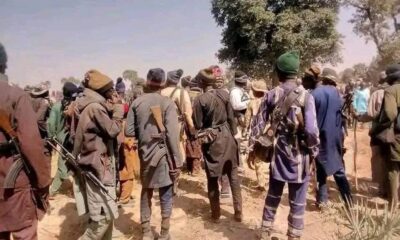








In a quick riposte on Saturday, Dave Umahi, Minister of Works, has cautioned Nigerians to be circumspect in the manner they react to the story of the death of a female student in his home in Ebonyi State, warning against the temptation of jumping to conclusion.
Conveying his position on the highly-volatile matter through Francis Nwaze, his spokesman, Umahi, former Governor of Ebonyi State and a key figure in the government of President Bola Tinubu, said caution was needed to enable the police conduct unfettered investigation into the matter.
It was his response to breaking of how one Mary Habila, a female physiotherapist reportedly died in his palatial home at Uburu, Ohaozara Local Government Area of Ebonyi State, on June 27, hours after arriving the day before.
Nwaze, a Senior Special Assistant on Media and Publicity, specifically cautioned against speculations by “tale bearers,” while conveying the Minister’s shock over the matter and his eagerness for the authorities to get at the root of the matter through forensic investigations.
He wrote in the statement: “The attention of the Media Office of the Honourable Minister of Works, Senator Engr. David Nweze Umahi, has been drawn to a publication by a publication concerning the unfortunate passing of Miss Mary Habila in Uburu, Ebonyi State, alleging that the circumstances surrounding her death were shrouded in secrecy.
“The Honourable Minister received the news with profound shock and sadness and has since extended his heartfelt condolences to the bereaved family. For the avoidance of doubt, immediately the unfortunate incident occurred, appropriate emergency steps were taken. Medical personnel, including the Chief Medical Director of the David Umahi Federal University of Health Sciences, Uburu, were contacted without delay, while the Nigeria Police was promptly notified in accordance with the law.
“Following confirmation of Miss Habila’s passing, the Honourable Minister personally received her parents, conveyed his sincere condolences, and advised that an autopsy be conducted to scientifically establish the exact cause of death. At the time, however, the family declined the recommendation.
“It is important to clarify that Miss Mary Habila and Miss Anita Baski are employees of the David Umahi Federal University of Health Sciences, Uburu, who had been on secondment to the Federal Ministry of Works as physiotherapists for the past three years until the unfortunate passing of Miss Habila.
“Following the recent developments and in the interest of ensuring that the truth is established beyond doubt, the Honourable Minister has again reiterated his position that an autopsy must be conducted. He remains convinced that this is the most credible and responsible path to resolving all questions surrounding the unfortunate incident.
“We therefore urge the public to exercise restraint, refrain from speculation or premature conclusions, and allow the relevant authorities to carry out their responsibilities without interference. At this difficult time, our thoughts and prayers remain with the family of the deceased, and we pray that God grants them the strength to bear this irreparable loss.”
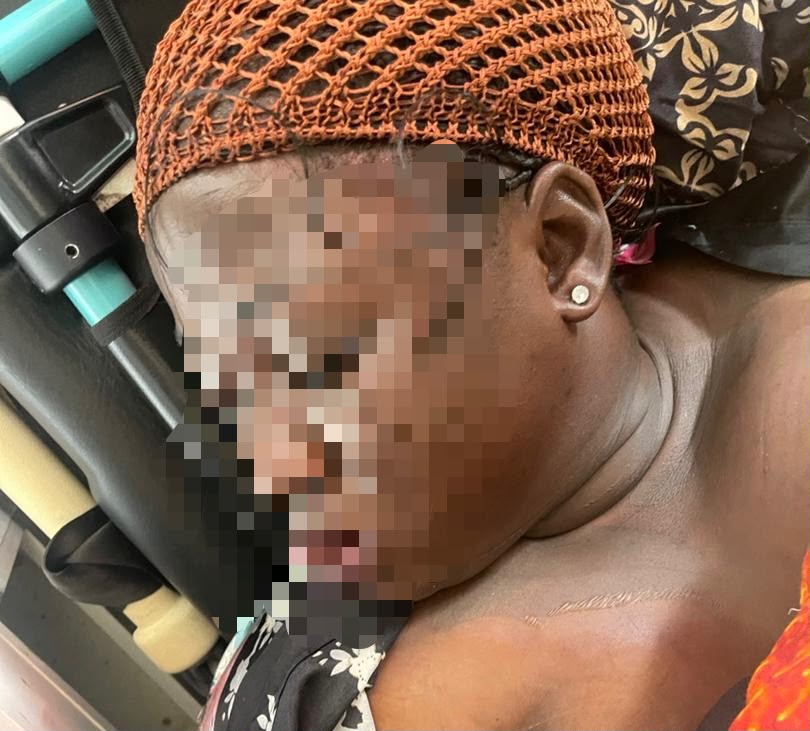
The circumstances that led to the sudden death of Mary Habbila, a Nigerian female student died in the Uburu, Ohaozara Local Government Area of Ebonyi State, home of Dave Umahi, Minister of Works, has now thrown the entire household and environs into serious quandary.
SaharaReporters, which first broke the revealed that the incident, which happened since June 27 this year, has been shrouded in secrecy, with both the Ebonyi State Government and the state police command maintaining silence over the matter.
The incident, the report, added, took place barely a day after Habbila and another woman, Anita Baski, both from Kaduna State, were reportedly brought to the minister’s residence, triggering a police investigation, with the case transferred from the Ohaozara Divisional Police Headquarters to the Ebonyi State Criminal Investigation Department (SCID) in Abakaliki.
Habbila and Baski reportedly arrived at the minister’s residence on June 26 to “attend” to him, only for Habbila to be found dead inside the residence the following morning under circumstances investigators are still trying to establish.
Police sources were quoted by the paper as saying that Jonathan Bawado, a police officer who serves as Senator Umahi’s Personal Assistant and previously worked as his Aide-de-Camp (ADC) during his tenure as Governor of Ebonyi State, alerted medical personnel after Habbila was discovered unresponsive.
Subsequently, a doctor and an ambulance were dispatched to the residence, while Tobechukwu Godwin, Chief Superintendent of Police (CSP) Divisional Police Officer (DPO) of Ohaozara Police Division, was notified of the incident, the report said, adding that at the hospital Chihurumnanya Alo, a Professor and Consultant Public Health Physician, Infectious Diseases Specialist and Chief Medical Director of the David Umahi Federal University Teaching Hospital (DUFUTH), Uburu, was also alerted about the incident.
The police who subsequently conveyed Habbila’s body to a mortuary, were said to have handed over the identification tag attached to Habbila’s to the Ebonyi State Police Command by the said DPO, as part of the ongoing investigation.
SaharaReporters, quoted a senior police officer, with knowledge of the case as saying: “The case has been transferred to the State Criminal Investigation Department in Abakaliki,” but, however declined to provide further details, citing the ongoing investigation.
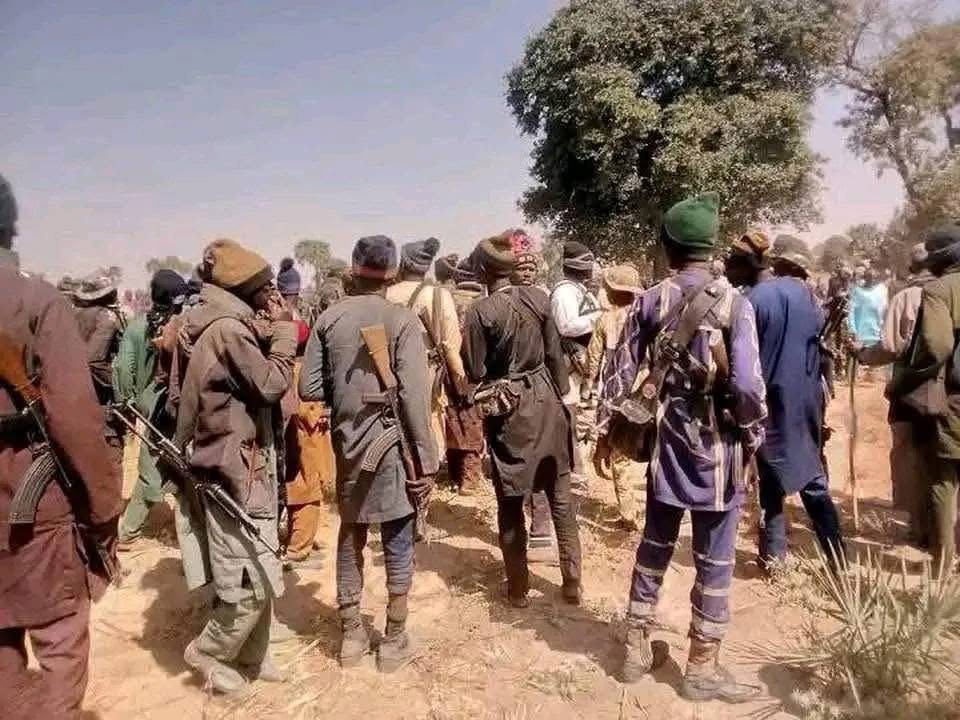
Unlike in other cases, security operatives in Nigeria have upped the ante by adding the arrest of perpetrators to the menu of rescue operations, with the announcement of the capture of eight terrorists who participated in the abduction of school teachers and students in Oyo State on May 15.
All the 46 pupils, students and teachers abducted by terrorists from three schools in Oriire Local Government Area of Oyo State, regained their freedom on Friday, after about 56 days in captivity, with several others reportedly also neutralised during the operation.
Giving a clue of what transpired during the operation, Bayo Onanuga, who broke the story of the feat, said it was the outcome of sustained security operations, which also foiled the attempt by the abductors to secure the release of one of their captured leaders.
Onanuga, Special Adviser to the President on Information and Strategy, using his X handle to give details about the operation, said: “Finally, all the kidnapped pupils and teachers in Orire, Oyo have been rescued by our security agencies. In the course of the rescue operation, eight of the kidnappers were arrested and are now in DSS custody, while some of them were neutralised.”
“There was no quid pro quo in the rescue as one of the terrorists, a kingpin, that the kidnappers demanded his release, is being prosecuted for his atrocities. The security agencies will give full account soon.”
The victims were abducted on May 15 when heavily armed bandits attacked Community Grammar School, Baptist Nursery and Primary School, and L.A. Primary School in the Esiele and Yawota communities of Oriire Local Government Area, seizing dozens of pupils, students and teachers.
The abduction sparked nationwide outrage, with parents, labour unions, traditional rulers and civil society groups mounting sustained pressure on the authorities to secure the victims’ release.
The incident also triggered an indefinite strike by the Nigeria Union of Teachers in Oyo State over growing insecurity in schools.
President Bola Tinubu had condemned the attack and ordered security agencies to intensify intelligence-led operations to rescue the captives and bring the perpetrators to justice.
The President subsequently dispatched a high-powered Federal Government delegation to the affected communities, approved the deployment of specialised rescue assets and authorised the recruitment of 1,000 forest guards to strengthen security across Oyo State.



-

 News9 hours ago
BREAKING: Mystery death! *Female student dies a day after arriving Umahi’s home!
-
 News4 weeks ago
BREAKING: Troops rescue wife of kidnapped General! *Terrorists flee scene
-
 News2 weeks ago
BREAKING: Court sentences Nigerien, two others to death over terrorism
-
 News4 weeks ago
BREAKING: Count me out, Okonkwo tells Atiku *Amaechi VP’s choice an insult to Ndigbo
-
 News1 week ago
BREAKING: EX-SSG mowed down by gunmen! *He resisted being kidnapped – driver
-

 News3 weeks ago
Abductors of Oyo teachers panicking, freedom coming for victims soon!
-

 News3 weeks ago
Two hours after Igboho’s ‘red-eyes’ to ‘Fulani’ leaders, gunmen free kidnap victims!
-
 News3 weeks ago
Chicagogate: Nigerians return to court! *Move to stop Tinubu from 2027 polls